
Bastet's Festival: Unveiling the Wild Celebrations of the Cat Goddess in Ancient Egypt

Welcome, seekers of ancient whispers and keepers of forgotten lore!
Prepare to journey beyond the veil of time and delve into the heart of Mythology and Legends. Ever wondered about the intoxicating celebrations that once echoed through the Nile Valley, honoring the feline deity Bastet? Unlock the secrets of Ancient Egyptian cat festival rituals and discover a world where reverence for cats reached ecstatic heights. What did these captivating ceremonies entail, and what can they tell us about ancient Egyptian beliefs? The answers await within...
- Introduction to Bastet and Her Significance
- The Bastet Festival: A Deep Dive
- Rituals and Celebrations
- The Festival's Wild Side: Excess and Religious Ecstasy
- Archaeological Evidence
- Decline of the Festival
- Comparing Bastet's Festival with Other Ancient Egyptian Festivals
- Conclusion
-
Frequently Asked Questions
- What was the main purpose of Bastet's Festival in Ancient Egypt?
- Where did the largest and most famous Bastet festival celebrations typically take place?
- What were some common rituals or activities performed during Bastet's Festival?
- How did the Ancient Egyptians view cats, and how did this relate to Bastet's Festival?
- What impact did Bastet's Festival have on Ancient Egyptian society beyond religious observance?
- Final Reflection: The Enduring Legacy of Bastet's Wild Celebrations
- Unleash Your Inner Egyptian!
Introduction to Bastet and Her Significance
The Divine Cat: Bastet's Role in Egyptian Mythology
Bastet, often depicted as a graceful feline or a woman with a cat's head, held a unique and beloved position within the vast pantheon of Ancient Egyptian deities. Unlike some of the more fearsome gods or those associated with the afterlife's judgment, Bastet was primarily linked to aspects of daily life and well-being.
Her association with cats, animals revered for their ability to protect grain stores from pests like rodents and snakes, naturally connected her to concepts of protection, home, and prosperity. This made her a highly approachable and popular goddess among the common people, whose lives revolved around the rhythms of agriculture and the safety of their households.
Her evolution in iconography is noteworthy. Initially, Bastet was sometimes depicted as a lioness, linking her to Sekhmet, a fierce goddess of war and healing. Over time, however, her imagery softened, and she became predominantly associated with the domesticated cat, reflecting her role as a protector of the home and family.
This transformation highlights a shift in focus from a potentially terrifying deity to one embodying gentle power, fertility, and joy. The reverence for cats in Egypt, extending to laws protecting them and even the mummification of beloved pets, underscored Bastet's importance and the deep cultural connection between the Egyptians and felines.
Bastet: Goddess of Home, Fertility, and Protection
Bastet's primary domains were the home, fertility, childbirth, music, dance, and protection from evil spirits and disease. As a protector of the household, she was invoked to ensure the safety and happiness of the family, particularly women and children. Her role as a fertility goddess was crucial in a society dependent on successful reproduction, both human and agricultural. Women would often carry amulets depicting cats or Bastet herself to aid in conception and childbirth.
Beyond the domestic sphere, Bastet's protective aspect extended to the pharaoh and the sun god Ra, whom she was sometimes said to defend from the serpent Apep. This dual nature—gentle domesticity combined with fierce protective power—made her a complex and potent figure. She embodied the ideal balance between the nurturing aspects of life and the necessary strength to defend against threats, a balance reflected in the vibrant and sometimes chaotic Ancient Egyptian cat festival rituals held in her honor.
The Bastet Festival: A Deep Dive
Origins of the Festival
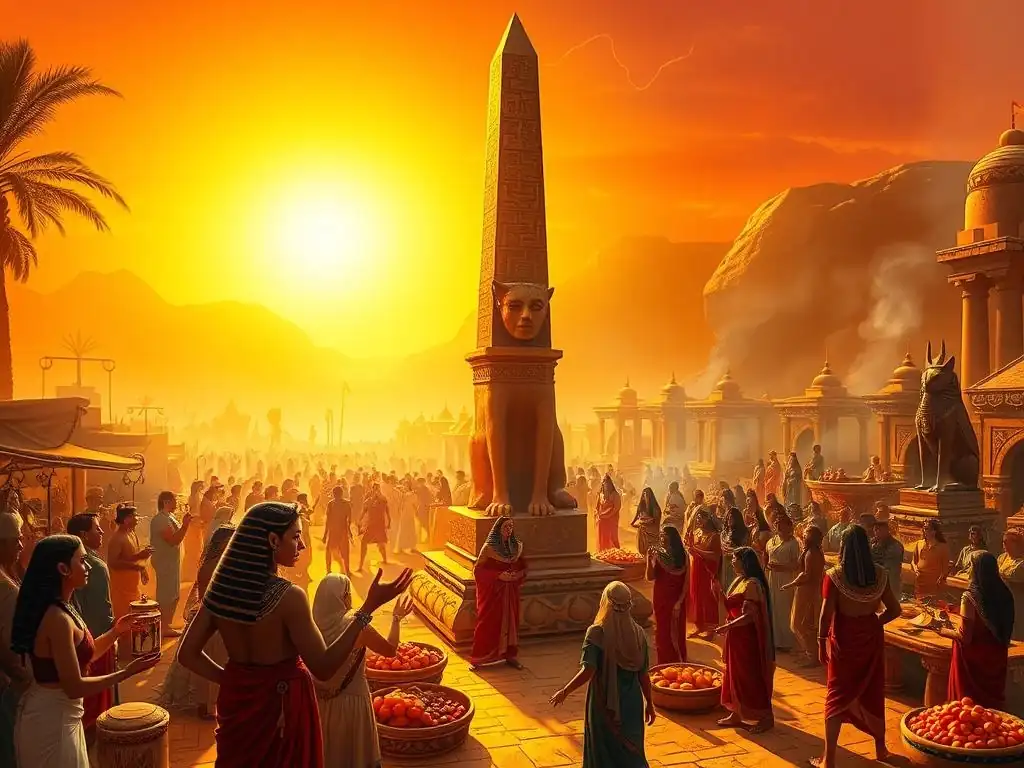
The festival of Bastet, known as the 'Procession of Bastet' or the 'Drunken Festival', was one of the most significant and eagerly anticipated religious celebrations in Ancient Egypt. Its origins are deeply rooted in the veneration of Bastet as a benevolent deity essential for the prosperity and well-being of the land and its people. While the precise date of its inception is debated, it flourished particularly during the New Kingdom period (circa 1550-1070 BCE) and continued to be celebrated well into the Late Period and Ptolemaic era, attracting pilgrims from across Egypt and even beyond its borders.
The festival was likely tied to the agricultural calendar, possibly occurring during the inundation or harvest season, periods of abundance and renewal. It served as a time for communal celebration, thanksgiving, and reaffirming the bond between the people and their protective goddess. Unlike some more somber or exclusive rituals, the Bastet festival was characterized by its accessibility and emphasis on popular participation, making the Ancient Egyptian cat festival rituals a truly nationwide event focused on joy and revelry.
Bubastis: The Center of Bastet Worship
Bubastis (modern-day Tell Basta) in the Nile Delta was the principal cult center and the heart of Bastet worship. This city was home to her grand temple, described by the Greek historian Herodotus (circa 5th century BCE) as one of the most beautiful temples in Egypt, surrounded by canals that gave it the appearance of an island. Herodotus's account provides some of the most vivid details about the scale and nature of the annual festival held there.
Pilgrims would travel to Bubastis by boat, often in large numbers. Herodotus estimated that as many as 700,000 people (men, women, and children) attended the festival during his visit, a figure that, while potentially an exaggeration, underscores the immense popularity and scale of the event. The journey itself was part of the celebration, with participants singing, dancing, and making noise as they sailed along the Nile, setting the tone for the intense revelry awaiting them at the temple complex. Bubastis became synonymous with these lively Ancient Egyptian cat festival rituals.
Rituals and Celebrations
Offerings to Bastet
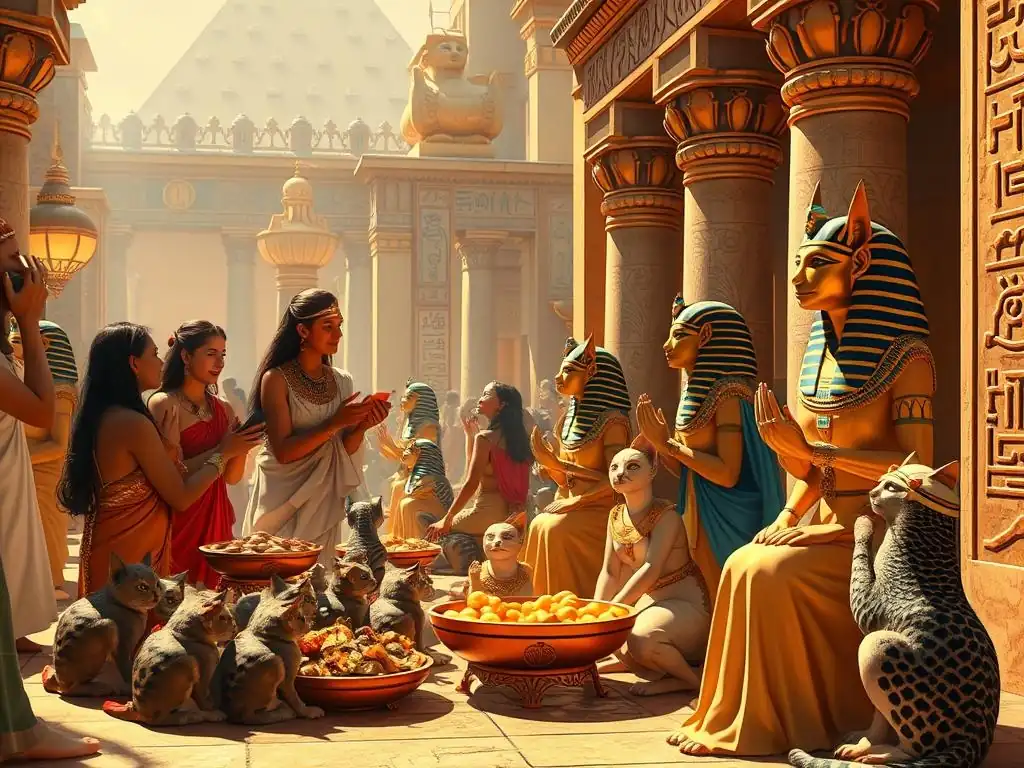
A central component of the Ancient Egyptian cat festival rituals was the presentation of offerings to Bastet. Pilgrims brought gifts to her temple at Bubastis as acts of devotion and to seek her favor. These offerings varied in value and type, reflecting the diverse socio-economic backgrounds of the attendees. Common offerings included food items such as bread, cakes, fruits, and meat, representing sustenance and abundance.
Libations of beer and wine were also poured, especially significant given the role of alcohol in the festival's revelry. Perhaps most iconic were the votive offerings related to cats and Bastet herself. These included small bronze figurines of cats, often depicted sitting or nursing kittens, and amulets bearing Bastet's image. These artifacts, many of which have been discovered by archaeologists, serve as tangible evidence of the devotion and the specific nature of the offerings made during the festival at Bubastis and other Bastet shrines.
Music, Dance, and Merriment
The festival of Bastet was renowned for its atmosphere of uninhibited joy, music, and dance. Unlike many state-sponsored religious processions which could be more formal, Bastet's celebration encouraged widespread participation and exuberant expression. Herodotus describes women shaking sistra (percussion instruments) and men playing flutes, creating a lively musical backdrop. Singing was also a prominent feature, often involving call-and-response songs between groups of revelers on the boats traveling to Bubastis.
Dancing was central to the merriment, with participants engaging in energetic and sometimes wild movements. This emphasis on music and dance was directly linked to Bastet's attributes as a goddess of these arts and of joy itself. The rhythmic sounds and movements were believed to help induce a state of religious ecstasy, allowing participants to feel closer to the divine and to fully immerse themselves in the spirit of the festival. These lively activities were core Ancient Egyptian cat festival rituals.
The Role of Alcohol
Alcohol, particularly beer and wine, played a significant and deliberate role in the Bastet festival. Accounts suggest that the consumption of alcohol was not merely incidental but was actively encouraged as a means to facilitate the intense revelry and reach a state of religious ecstasy. Herodotus mentions that more wine was consumed during this festival than at any other time of the year, indicating the sheer scale of drinking.
The intoxication achieved through heavy drinking was seen as a way to shed inhibitions, transcend ordinary consciousness, and connect more directly with the divine energy of Bastet. It was a sanctioned period of excess, allowing participants to release societal constraints and fully embrace the joyous, sometimes chaotic, spirit of the goddess. This deliberate use of alcohol for spiritual purposes is a distinctive feature of the Ancient Egyptian cat festival rituals dedicated to Bastet.
The Festival's Wild Side: Excess and Religious Ecstasy
Accounts of Excess
Historical accounts, primarily from Herodotus, paint a vivid picture of the extraordinary level of excess that characterized the Bastet festival. He describes the journey to Bubastis as a raucous procession by boat, with women lifting their skirts and shouting insults at people on the riverbanks, as well as singing and clapping. Upon arrival at Bubastis, the intensity escalated further.
Herodotus states that during the festival, "they consume more grape-wine on this one day than during the whole of the rest of the year." This indicates not just drinking, but drinking on an unprecedented scale. While the exact details might be embellished, the consistent portrayal of the festival as a time of significant intoxication, uninhibited behavior, and immense crowds underscores its reputation as the wildest of Ancient Egypt's major celebrations. These accounts highlight the truly unique nature of these Ancient Egyptian cat festival rituals.
Religious Significance of Revelry
The apparent "excess" during the Bastet festival was not simply chaotic behavior but held deep religious significance. The uninhibited singing, dancing, and drinking were seen as acts of veneration, designed to please Bastet and align the participants with her joyful and fertile nature. Reaching a state of ecstasy, often induced by alcohol and the collective energy of the crowd, was a form of communion with the goddess.
This ecstatic state was believed to allow individuals to experience a temporary transcendence, shedding their earthly limitations and connecting with the divine realm. It mirrored the regenerative powers associated with Bastet and was possibly linked to the myth of Sekhmet's pacification through drunkenness, transforming her fierce rage into benevolent calm. Thus, the revelry was a structured, albeit wild, component of the Ancient Egyptian cat festival rituals, serving a specific spiritual purpose aimed at ensuring the goddess's favor and the land's fertility.
Archaeological Evidence
Discoveries at Bubastis
Archaeological excavations at Tell Basta (ancient Bubastis) have provided significant corroborating evidence for the historical descriptions of Bastet's cult and festival. While the temple complex itself was largely dismantled over millennia, foundation stones, architectural fragments, and vast quantities of artifacts have been unearthed. These findings support the city's importance as Bastet's cult center and offer insights into the practices performed there.
One of the most striking discoveries at Bubastis is the extensive cat cemetery, or bubasteum, located near the temple. Excavations have revealed hundreds of thousands, potentially millions, of mummified cats buried there. These were not merely pets but sacred animals associated with Bastet, often mummified and buried as votive offerings by pilgrims. The sheer scale of this cemetery provides compelling physical evidence of the intense devotion to Bastet and the central role of cats in her worship, directly supporting accounts of the Ancient Egyptian cat festival rituals.
Artifacts and Depictions
Beyond the cat mummies, archaeological finds at Bubastis and throughout Egypt further illuminate Bastet's worship and festival. Numerous bronze statuettes of cats and Bastet have been discovered, many bearing inscriptions indicating they were votive offerings. These figurines, often small and portable, would have been easy for pilgrims to carry and dedicate at the temple during the festival.
Other artifacts include amulets depicting Bastet, sistra (the musical instruments associated with her worship and mentioned by Herodotus), and fragments of pottery that might have been used in feasting and libations. Wall carvings and tomb paintings also occasionally depict scenes that may be related to the festival's activities, showing people dancing, making music, and presenting offerings. Collectively, these artifacts provide tangible links to the vibrant Ancient Egyptian cat festival rituals and the material culture surrounding Bastet's cult.
Decline of the Festival
Political and Religious Shifts
The decline of the Bastet festival, like many aspects of Ancient Egyptian religion, was a gradual process influenced by significant political and religious shifts over centuries. With the conquest of Egypt by various foreign powers—Persians, Greeks (under Alexander the Great and the Ptolemies), and finally Romans—the traditional Egyptian priesthood and their festivals faced new pressures. While the Ptolemies initially supported Egyptian cults to legitimize their rule, Roman rule saw a decline in state support for many indigenous religious practices.
The rise and spread of Christianity within Egypt, particularly from the Roman period onwards, also played a crucial role. As Christianity gained followers, traditional polytheistic festivals were increasingly abandoned or suppressed. The elaborate and often costly rituals associated with deities like Bastet became less relevant to a population converting to monotheism. The focus shifted away from the ancient temples and their specific Ancient Egyptian cat festival rituals.
Bastet's Legacy in Modern Culture
Despite the decline of her formal worship and festival in antiquity, Bastet has maintained a notable presence in modern culture. Her image and association with cats make her one of the most recognizable Ancient Egyptian deities today. She frequently appears in literature, art, video games, and other forms of popular media, often embodying traits like grace, independence, protection, and mystery.
Archaeological discoveries, particularly the vast cat cemeteries and beautiful bronze statues, continue to fascinate researchers and the public alike, keeping the memory of her cult alive. While the wild celebrations described by Herodotus are confined to history books, the image of Bastet as the benevolent cat goddess endures, a symbol of ancient reverence for felines and the vibrant, life-affirming spirit of her unique Ancient Egyptian cat festival rituals.
Comparing Bastet's Festival with Other Ancient Egyptian Festivals
Similarities and Differences: The Opet Festival and the Sed Festival
Ancient Egypt boasted a calendar filled with numerous religious festivals, each with its unique purpose and rituals. Comparing the Bastet festival to major state festivals like the Opet Festival or the Sed Festival reveals both commonalities and striking differences. The Opet Festival, celebrated annually at Thebes, involved a grand procession of the statues of Amun, Mut, and Khonsu from Karnak Temple to Luxor Temple.
It was primarily a state-sponsored event focused on the rejuvenation of the king's ka (life force) and the legitimacy of his rule. Similarly, the Sed Festival was a jubilee celebrated after a pharaoh had reigned for 30 years (and periodically thereafter) to renew his power and vitality through elaborate rituals, often involving mock races and ceremonies reaffirming his kingship over Upper and Lower Egypt.
Like Bastet's festival, Opet and Sed involved processions, religious offerings, and feasts. However, they were typically more formal, state-controlled, and centered around the divine legitimacy of the pharaoh and the major state gods. The Opet Festival involved a journey, often by sacred barge, similar to the river journey to Bubastis, but the atmosphere was generally more solemn and focused on priestly rites and royal participation.
The Sed Festival was even more exclusive, primarily involving the pharaoh and high-ranking officials. In contrast, the Ancient Egyptian cat festival rituals for Bastet were characterized by their popular, decentralized nature, emphasis on widespread participation, and deliberate encouragement of uninhibited revelry.
The Uniqueness of the Bastet Celebration
The Bastet festival stood out among Ancient Egyptian festivals primarily due to its focus on popular, uninhibited celebration and its association with a deity of domesticity and joy rather than kingship or the afterlife. While other festivals had periods of feasting and music, none are described with the same level of widespread intoxication, wild dancing, and seemingly chaotic merriment as the festival at Bubastis. The sheer number of ordinary people involved, traveling from all corners of Egypt, underscored its accessibility and popularity.
Furthermore, the specific rituals involving cats and the vast numbers of cat mummies buried as offerings were unique to Bastet's cult. The deliberate use of alcohol to induce religious ecstasy was also a distinctive feature, setting these Ancient Egyptian cat festival rituals apart from the more structured and symbolic rites of festivals like Opet or Sed, which focused on cosmic order, royal power, and the cycles of the sun and Nile. Bastet's festival was a celebration of life, fertility, and protection, expressed through joyful, sometimes excessive, communal participation.
Conclusion
The Enduring Appeal of Bastet
Bastet remains one of Ancient Egypt's most beloved and recognizable deities, her enduring appeal largely tied to her association with the graceful and enigmatic cat. As a goddess of home, fertility, protection, music, and dance, she embodied life's joyful and nurturing aspects, making her a highly relatable figure for the ancient Egyptians. Her transformation from a fierce lioness to a gentle domestic cat reflects a nuanced understanding of divine power, capable of both protection and comfort.
Even millennia after her temples fell silent, Bastet continues to capture the imagination, serving as a potent symbol of ancient Egyptian culture's deep connection with animals and the divine. Her image persists in art and popular culture, a testament to the lasting power of her mythology and the unique reverence she commanded in antiquity.
Lessons from Ancient Egyptian Celebrations
Studying Ancient Egyptian cat festival rituals like those dedicated to Bastet offers valuable insights into the religious beliefs, social structure, and daily life of this ancient civilization. These festivals were not merely religious ceremonies but vital social and cultural events that reinforced community bonds, marked the rhythms of the year, and provided outlets for communal expression. The Bastet festival, in particular, highlights the Egyptian capacity for joyful, even ecstatic, religious devotion, a stark contrast to the more austere image sometimes associated with ancient cultures.
From the scale of pilgrimage and offering to the role of music, dance, and alcohol in achieving spiritual states, these celebrations reveal a complex interplay between the divine and the human, the sacred and the profane. They remind us that ancient religious practices were diverse and dynamic, capable of encompassing both formal state rites and popular, uninhibited expressions of faith and joy, centered around figures like the protective and celebrated cat goddess.
Frequently Asked Questions
What was the main purpose of Bastet's Festival in Ancient Egypt?
The primary purpose was to honor the goddess Bastet, associated with fertility, protection, and domesticity. The festival aimed to ensure good fortune and blessings from the cat goddess.
Where did the largest and most famous Bastet festival celebrations typically take place?
The biggest and most renowned celebrations occurred in Bubastis, Bastet's cult center in the Nile Delta. This city held grand processions and elaborate rituals.
What were some common rituals or activities performed during Bastet's Festival?
Rituals included processions with music and dancing, offerings of gifts to Bastet's temple, and feasting. Pilgrims often traveled great distances to participate in the celebrations.
How did the Ancient Egyptians view cats, and how did this relate to Bastet's Festival?
Cats were revered as sacred animals, embodying Bastet's spirit and qualities. The festival was a reflection of this reverence, celebrating the feline's importance in their culture.
What impact did Bastet's Festival have on Ancient Egyptian society beyond religious observance?
The festival fostered a sense of community and unity, becoming a major social and economic event. It also reinforced the importance of family and domestic life.
Final Reflection: The Enduring Legacy of Bastet's Wild Celebrations
The vibrant rituals surrounding Bastet's festival weren't merely ancient practices; they offer a powerful lens through which to understand the complex relationship between humans and animals, faith, and societal structures in ancient Egypt. These celebrations, far from being mere historical footnotes, resonate deeply with our contemporary understanding of religious expression and the enduring power of animal symbolism. The echoes of Bastet's festival continue to shape our perceptions of ancient Egypt and the multifaceted nature of its culture.
The enduring popularity of cats, even today, speaks volumes about the deep connection humans have forged with these creatures throughout history. Bastet's festival, with its joyous processions and elaborate offerings, serves as a potent reminder of this ancient bond. The cat was worshipped in Egypt not only for its grace and beauty, but also for its mysterious and independent nature, qualities that mirrored the divine.
This quote encapsulates the essence of Bastet's appeal, transcending time and cultural boundaries to speak to the enduring human fascination with the feline world and the spiritual significance attributed to animals.
Consider, for a moment, the implications of Bastet's festival. What can we learn from the ancient Egyptians' ability to integrate their reverence for animals into their daily lives and religious practices? How can we, in our own time, cultivate a deeper appreciation for the natural world and the spiritual significance it holds?
Let the legacy of Bastet's wild celebrations inspire you to explore the rich tapestry of your own beliefs and to find new ways to connect with the world around you. Embrace the wild spirit of celebration, the reverence for nature, and the enduring power of faith as you reflect on the enduring legacy of the Cat Goddess.
Unleash Your Inner Egyptian!
Thanks for joining us on this fascinating journey into the vibrant world of Bastet's Festival! We hope you gained a deeper appreciation for the rich history and captivating rituals surrounding the cat goddess. Now it's time to take that newfound knowledge and put it into action!
- Craft your own miniature Bastet statue: Unleash your creativity and channel the spirit of ancient Egypt by creating a small figurine of Bastet. This is a fantastic way to personalize your newfound knowledge!
- Share your favorite detail about Bastet's Festival: Did a specific ritual or tradition particularly resonate with you? Let the community know in the comments below! Let's spark a conversation about this intriguing aspect of ancient Egyptian culture.
- Explore Bastet's mythology further: Delve deeper into the rich tapestry of ancient Egyptian beliefs and mythology. There's a whole world of stories waiting to be discovered!
What aspect of Bastet's Festival inspires you the most, and how will you share that inspiration with others?