
Theseus and the Minotaur: Navigating the Labyrinth of Truth

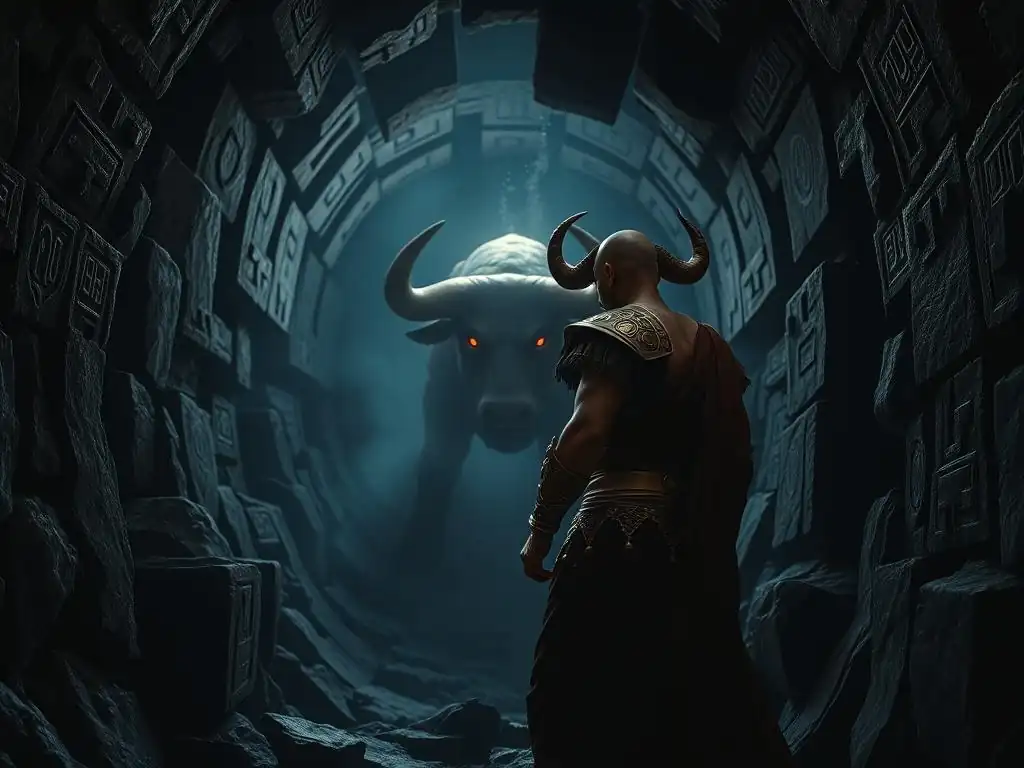
Welcome to Mythology and Legends.
Dare to venture into the labyrinth of ancient tales? The myth of Theseus, the Minotaur, and the labyrinth is more than just a thrilling adventure; it's a reflection of humanity's eternal struggle against inner demons and societal monsters. Unravel the threads of this classic Greek myth and discover the surprising truths hidden within its winding corridors. Are you ready to confront the Minotaur? Read on…
- The Apollo 11 Mission: Humanity's First Steps on the Moon
- Introduction to the Apollo 11 Mission
- The Space Race Origins: A Nation's Ambition
- The Saturn V Rocket: A Marvel of Engineering
- The Crew of Apollo 11: Three Pioneers of Space Exploration
- The Journey to the Moon: A Four-Day Voyage
- The Lunar Landing: "The Eagle Has Landed"
- The First Moonwalk: "One Small Step..."
- Return to Earth: A Splashdown in the Pacific
- Quarantine and Analysis: Studying the Lunar Samples
- The Legacy of Apollo 11: Inspiration and Scientific Advancement
- Conclusion: Apollo 11's Enduring Impact
-
Frequently Asked Questions
- What is the significance of the Theseus and the Minotaur myth within Greek mythology?
- What was the Labyrinth, and why was it built?
- Who was the Minotaur, and how did it come to be trapped in the Labyrinth?
- How did Theseus manage to defeat the Minotaur?
- What are some interpretations of the Theseus and the Minotaur myth in contemporary society?
- Final Reflection: Unraveling the Labyrinth Within
- Unravel Your Own Labyrinth: Discover the Power of Truth
The Apollo 11 Mission: Humanity's First Steps on the Moon
Introduction to the Apollo 11 Mission
Within the vast tapestry of ancient Greek myth, few narratives capture the imagination quite like the tale of Theseus and the Minotaur. This iconic story, a cornerstone of Greek mythology, plunges into themes of heroism, sacrifice, and the confrontation of monstrous challenges. It is a journey into the unknown, a venture into a place of confusion and terror, mirroring humanity's own explorations into the perilous and the mysterious. The myth serves not just as an exciting adventure but as a profound reflection on the struggles faced by early civilizations against overwhelming power and fear.
This exploration of the Theseus Minotaur labyrinth Greek myth delves into the layers of meaning embedded within the narrative. We will navigate the complexities of this ancient story, examining the motivations of its key figures, the symbolic weight of its settings, and its enduring legacy in Western thought and culture. It is a tale that has resonated across millennia, adapting and evolving while retaining its core message of courage in the face of the seemingly insurmountable.
The Historical Significance of the Apollo 11 Mission
While not a historical event in the conventional sense, the myth of Theseus and the Minotaur holds immense historical and cultural significance, particularly for ancient Athens. The story became deeply intertwined with Athenian identity, portraying their hero, Theseus, as a courageous figure who liberated them from oppressive Cretan dominance. This narrative reinforced Athenian pride and their burgeoning sense of supremacy among the Greek city-states. It provided a foundational myth for their political and social structures, positioning Athens as a beacon of civilization overcoming barbarity, symbolized by the beastly Minotaur and the tyrannical King Minos of Crete.
The myth also served as a moral and cautionary tale, exploring themes of hubris, fate, and the consequences of both heroic action and tragic error. For the ancient Greeks, myths were not mere stories but vehicles for understanding their world, their gods, and themselves. The Theseus Minotaur labyrinth Greek myth, therefore, functioned as a cultural touchstone, shaping beliefs about heroism, justice, and the complex relationship between humans and the divine or monstrous forces in the world. Its retelling in plays, art, and philosophy cemented its place as a fundamental element of Greek heritage.
Overview: Astronauts, Spacecraft, and the Lunar Landing's Significance
The core figures in the Theseus Minotaur labyrinth Greek myth are primarily three: Theseus, the heroic prince of Athens; the Minotaur, the monstrous half-man, half-bull creature; and Ariadne, the Cretan princess who aids Theseus. The "spacecraft" in this ancient journey is the ship that carries Theseus and the sacrificial youths from Athens to Crete, a vessel of fate transporting its passengers towards an uncertain doom or glorious triumph.
The "lunar landing" moment is the confrontation within the heart of the Labyrinth, the successful slaying of the Minotaur, and the subsequent escape – a moment of immense significance marking the liberation of Athens from the oppressive tribute and the hero's defining victory.
The significance of this "landing" or triumph lies in its multifaceted impact. For Athens, it meant freedom from the annual tribute of fourteen youths and maidens sent to be devoured by the Minotaur. For Theseus, it was a validation of his heroic status and a step towards claiming his rightful place as king.
For the broader mythological landscape, it added another chapter to the sagas of great heroes who faced and overcame impossible odds, solidifying the archetype of the labyrinthine challenge. The Theseus Minotaur labyrinth Greek myth encapsulates a pivotal moment of transition from suffering to liberation, a powerful narrative echoed throughout human history.
The Space Race Origins: A Nation's Ambition
The origins of the conflict that necessitated Theseus's perilous journey are rooted in a tragic event and the subsequent power dynamics between Athens and Crete. The story begins with the death of King Minos's son, Androgeus, in Athens. While the exact circumstances vary in different accounts – some say he was killed out of jealousy for his success in games, others that he was sent on a dangerous task by King Aegeus of Athens – Minos held Athens responsible.
As a powerful ruler of the seas, Minos exacted a harsh penalty, imposing a tribute that would plague Athens for years. This act initiated a period of profound tension and suffering for the Athenians, setting the stage for a desperate act of defiance.
The imposition of the tribute – seven young men and seven young women sent periodically to Crete to be fed to the Minotaur – highlights the stark imbalance of power. Crete, under Minos, represented a dominant, almost tyrannical force, while Athens was compelled to submit to this cruel demand.
This oppressive situation fueled a deep desire within Athens for liberation, a collective ambition to break free from Crete's yoke and reclaim their autonomy and dignity. It was this simmering resentment and the desperate plight of the sacrificial victims that provided the impetus for a hero to emerge and challenge the established order.
Cold War Tensions and the Push for Technological Supremacy
Drawing a parallel, the mythological tension between Athens and Crete under King Minos can be seen as a form of ancient "cold war," albeit one marked by direct, brutal imposition of power rather than indirect conflict. Minos's dominance was not merely military but also technological, in a mythical sense. His control of the seas granted him strategic superiority, while the construction of the Labyrinth by the master craftsman Daedalus represented a unique, terrifying form of engineered control and confinement. This architectural marvel, designed to be inescapable, symbolized Crete's power to trap and destroy its enemies within its complex heart.
This push for a kind of "supremacy" by Minos, enforcing his will through terror and inescapable structures like the Labyrinth, created an environment of fear and subjugation for Athens. The annual tribute was a constant reminder of their vulnerability and Minos's unassailable position.
It wasn't a race for technological advancement in the modern sense, but a struggle against a power that used extraordinary means (a monstrous creature and an impenetrable prison) to maintain its control. The Athenians' pushback, embodied by Theseus, was a desperate attempt to counter this dominance not with comparable technology, but with courage, cunning, and divine (or semi-divine) aid.
Kennedy's Vision: Landing a Man on the Moon Before the Decade's End
In the context of the Theseus Minotaur labyrinth Greek myth, Theseus embodies a vision akin to a national ambition: the resolute decision to end the tribute and defeat the Minotaur. Upon learning of the plight of the youths and maidens, Theseus, filled with heroic resolve, volunteers to be one of the fourteen sacrifices. His goal was not merely to die bravely, but to confront the source of the suffering directly and eliminate it. This was a bold, almost audacious plan, given the terror the Minotaur and the Labyrinth inspired.
Theseus's vow to his father, King Aegeus, to change the ship's sails from black (mourning) to white (triumph) if he succeeded, highlights the definitive nature of his undertaking. It was a commitment to achieving a monumental goal – liberation from Crete's tyranny – within a single, perilous journey. This ambition was fueled by a sense of duty to his people and a desire to prove his heroic mettle. It was a personal "moonshot," a seemingly impossible task undertaken with the hope of achieving a victory that would fundamentally alter the future of his "nation," Athens.
The Saturn V Rocket: A Marvel of Engineering
While the Theseus Minotaur labyrinth Greek myth doesn't feature a technological marvel like the Saturn V rocket, the journey itself and the structures within it serve analogous roles. The ship that carried Theseus and the tribute from Athens to Crete was the vessel of their fate, requiring seaworthiness and skill to navigate the Aegean Sea controlled by Minos.
More significantly, the Labyrinth designed by Daedalus is the true "marvel of engineering" in this myth, albeit one of confusion and entrapment rather than propulsion. It was a structure so complex and disorienting that escape was considered impossible, a testament to Daedalus's genius and Minos's desire for an inescapable prison for his monstrous stepson.
The design of the Labyrinth was its defining feature: a bewildering maze of corridors, dead ends, and twisting paths specifically crafted to prevent anyone who entered from finding their way out. Estimates of its complexity are, of course, mythical, but its reputation ensured that merely entering it was considered a death sentence, second only to the Minotaur itself. Daedalus's skill in creating such an intricate structure underscores the seemingly insurmountable physical challenge Theseus faced. It wasn't just about fighting a monster; it was about navigating an environment designed explicitly for failure, a psychological as well as physical trap.
Designing the Colossus: Power and Precision for Lunar Travel
The Labyrinth, as designed by Daedalus, was a metaphorical colossus built not for scale in height, but for impenetrable complexity across a significant area beneath Minos's palace or courtyard. Its power lay in its ability to disorient and trap. The precision was in its cunning layout, ensuring that every turn led deeper into confusion or to a dead end, making a systematic exploration or mapping virtually impossible for anyone without prior knowledge or external aid. This precision in design made it the perfect prison for the violent Minotaur and a fatal trap for the Athenian tribute.
For Theseus's "lunar travel" – his journey into and out of this deadly maze – the necessary precision wasn't in piloting a spacecraft, but in navigating the chaotic structure. This required a different kind of "design": not of a rocket, but of a plan. Theseus's success hinged not on brute force within the maze, but on the ingenious solution provided by Ariadne: the thread. This seemingly simple tool, combined with a plan to secure one end at the entrance and unwind it, provided the necessary precision to counter the Labyrinth's design and ensure a path for return.
The Three Stages: Propelling Apollo 11 Beyond Earth's Gravity
If we stretch the analogy to the Theseus Minotaur labyrinth Greek myth, the journey can be seen in "three stages" propelling Theseus towards his goal. The first stage is the voyage from Athens to Crete, overcoming the dangers of the sea ruled by Minos and successfully reaching the island undetected or unchallenged in a way that prevented immediate execution. This stage requires successful navigation and arrival.
The second stage is the preparation within Crete – gaining the favor of Ariadne, receiving her crucial aid (the thread and possibly a weapon), and preparing mentally and physically for the ordeal ahead. This is the stage of acquiring the means for penetration.
The third stage is the most critical: entering the Labyrinth, confronting and defeating the Minotaur, and successfully navigating the return journey out of the maze using Ariadne's thread. This stage is the core of the mission, the direct engagement with the central challenge. These three phases – arrival, preparation/aid, and penetration/escape – sequentially move Theseus from the known world of Athens to the terrifying unknown of the Labyrinth's heart and back again, much like stages in a journey to a distant, dangerous target and returning home.
The Crew of Apollo 11: Three Pioneers of Space Exploration
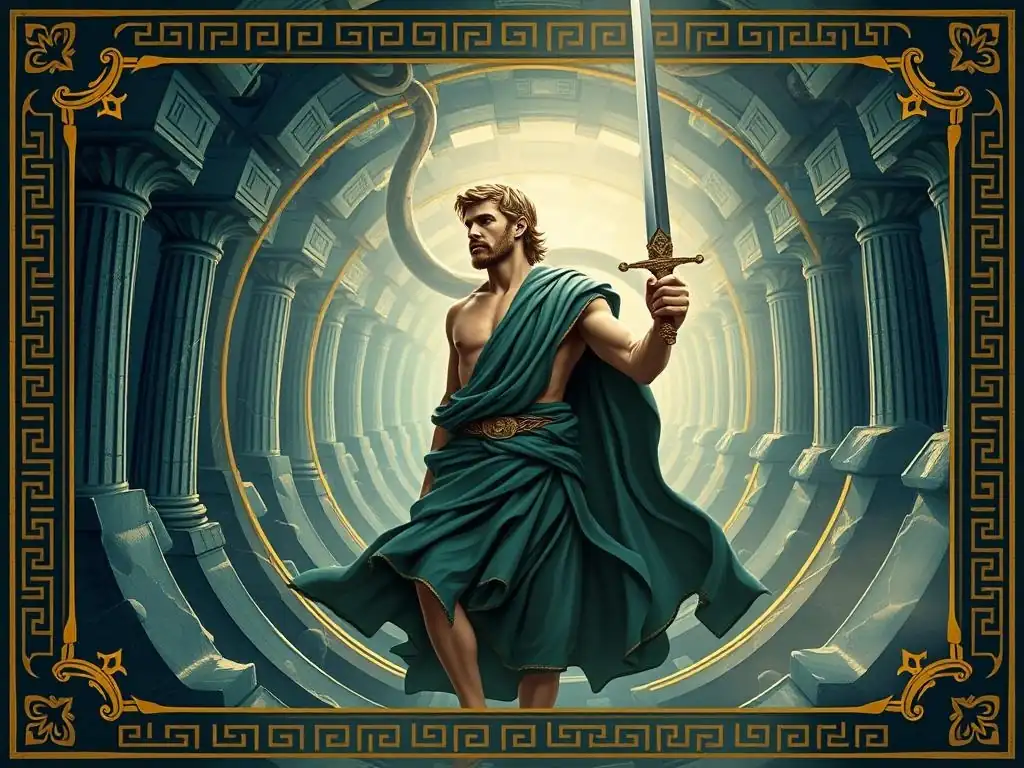
In the narrative of the Theseus Minotaur labyrinth Greek myth, the key figures who drive the central action and determine its outcome can be seen as the "crew." While not a crew in the sense of working together towards a common goal (indeed, their goals are often opposed), Theseus, the Minotaur, and Ariadne are the pivotal players whose interactions define the climax of the story. Theseus is the protagonist, the hero undertaking the quest. The Minotaur is the target, the beast residing in the depths. Ariadne is the crucial facilitator, providing the means for success.
These three figures represent different forces at play: Theseus, human courage and heroic ambition; the Minotaur, bestial power and the monstrous consequence of divine displeasure and human transgression; and Ariadne, love, cunning, and the potential for betrayal or salvation. Their intertwined destinies within the confines of Crete and the Labyrinth are what give the myth its enduring power. Understanding the roles and motivations of this central trio is essential to navigating the narrative's complexities.
Neil Armstrong: The First Man to Walk on the Moon
Theseus, in the context of this analogy, is the "first man to walk on the moon" – the one who bravely steps into the absolute unknown and confronts the ultimate danger. He is the hero who volunteers for the deadly tribute, travels to Crete, and, most significantly, is the first (and intended to be the last) to successfully enter the Labyrinth with the goal of returning. His decision to face the Minotaur directly, armed with courage and Ariadne's tools, marks him as the primary agent of change in the narrative.
His journey into the Labyrinth is the mythological equivalent of a giant leap into the void. While others had entered as helpless victims, Theseus entered as a challenger. His confrontation with the Minotaur at the heart of the maze is the climax, the moment of truth where the fate of Athens and his own life are decided. His success in this endeavor makes him the central figure, the pioneer who ventured into the most terrifying corner of the mythic world and emerged victorious.
Buzz Aldrin: Lunar Module Pilot and Second Man on the Moon
The Minotaur occupies a unique role in the Theseus Minotaur labyrinth Greek myth. While not a collaborator, he is the essential element that defines the "mission." He is the target, the monstrous inhabitant of the Labyrinth, whose existence and appetite necessitate Theseus's quest. In a strained analogy, if Theseus is the one who enters to act, the Minotaur is the reason for the action, the fixed point within the maze. He is the "pilot" of the Labyrinth in the sense that he is its primary, deadly occupant, guiding its function as a prison and execution ground.
The Minotaur is the second crucial element Theseus encounters within the Labyrinth's depths. After navigating the maze (or preparing to), the hero's ultimate test is the confrontation with the beast. Accounts vary on the fight – some say Theseus used a sword provided by Ariadne, others his bare hands. Regardless, the Minotaur represents the raw, terrifying power that must be overcome for the mission to succeed. His defeat is the objective fulfilled, the "second step" in completing the Labyrinth challenge after successfully entering it.
Michael Collins: Command Module Pilot Orbiting Above
Ariadne serves as the indispensable "command module pilot" in the Theseus Minotaur labyrinth Greek myth – the one who remains outside the immediate danger zone but provides the critical support system necessary for the "landing" party's success and return. Without Ariadne's love for Theseus and her betrayal of her father, Minos, by giving Theseus the thread and instruction, the hero's entry into the Labyrinth would have been a guaranteed death sentence. She doesn't enter the maze herself, but her actions from the "outside" are paramount.
Ariadne provides the "orbital support" in the form of the ball of thread (the clew) and the knowledge of how to use it to retrace one's steps. This simple yet ingenious tool is the technological key that unlocks the Labyrinth's puzzle. While Theseus faces the physical danger within, Ariadne ensures his ability to return, making her role as vital as the hero's own courage and strength. She is the connection to the outside world, the lifeline that makes the impossible journey survivable.
The Journey to the Moon: A Four-Day Voyage
The journey from Athens to Crete was a significant undertaking in the ancient world, covering approximately 200 nautical miles across the Aegean Sea. While not a four-day voyage like Apollo 11's trip to the moon (sea travel times varied greatly depending on winds and currents, but it would have taken several days, perhaps a week or more, for a typical ancient ship), it represented a substantial passage into foreign and potentially hostile territory. This voyage was the physical separation from the safety of Athens and the commitment to facing the dangers associated with Crete and King Minos.
The sea journey itself could be perilous, subject to storms and the general uncertainties of ancient navigation. Furthermore, traveling to Crete meant entering the domain of a powerful king who had imposed a brutal tribute. The voyage was not just a physical transit but a psychological passage towards a confrontation with fear and destiny. Each day at sea brought them closer to the island where the Labyrinth and the Minotaur awaited.
Launch and Earth Orbit: Preparing for Trans-Lunar Injection
The mythological "launch" begins in Athens with the selection of the fourteen youths and maidens and Theseus's voluntary inclusion among them. This departure from Athenian shores marks the initial break from the familiar world. The "Earth orbit" phase could be seen as the initial leg of the sea journey, perhaps the time spent navigating the relatively safer, known waters closer to Athens before heading into the open Aegean towards Crete. This phase involves the final preparations aboard the ship, the emotional farewells, and the mental readiness for the trials ahead.
During this initial part of the voyage, the youths and Theseus would prepare themselves for their grim fate or the audacious plan. The ship itself, often depicted as having black sails as a symbol of mourning for the tribute, represents the vessel carrying Athenian hopes and fears. This stage is about leaving the point of origin and setting a course towards the destination, gathering momentum and committing fully to the journey, much like a spacecraft entering orbit before the final push towards the moon.
Lunar Orbit Insertion: Entering the Moon's Gravitational Pull
The mythological equivalent of "Lunar Orbit Insertion" is the arrival of the ship in Crete and the disembarking of Theseus and the tribute. This moment signifies entering Minos's sphere of influence, stepping onto the island where the Labyrinth is located and where the Minotaur resides. This is the point of no return, where the abstract threat becomes a tangible reality. Upon arrival, the youths and Theseus would be taken into custody by Minos's guards, their fate seemingly sealed.
It is during this critical phase, while held in Crete before being sent into the Labyrinth, that Theseus encounters Ariadne. This interaction is the narrative's "gravitational pull," drawing Theseus into a relationship that will fundamentally alter the course of his mission. Securing Ariadne's aid – the thread and the instructions – is the crucial step taken upon "entering orbit," providing the necessary tools and knowledge to navigate the dangerous environment they are about to enter, much like a spacecraft adjusting its trajectory upon entering lunar orbit.
The Lunar Landing: "The Eagle Has Landed"
The pivotal moment of the Theseus Minotaur labyrinth Greek myth, analogous to the "lunar landing," is the entry into the Labyrinth itself. This is the point where Theseus and the remaining youths are delivered into the heart of Minos's terror. Stepping across the threshold of the Labyrinth is the ultimate commitment, a descent into a world designed for confusion and death. It is the point where the journey shifts from external travel to internal navigation of a treacherous, contained space.
The phrase "The Eagle Has Landed" could be mythologically translated to "Theseus Has Entered" or "Into the Labyrinth." It signifies the successful penetration of the seemingly impenetrable barrier. Despite the terror the Labyrinth inspired, Theseus, armed with Ariadne's thread and his own courage, takes this decisive step. This entry is the culmination of the voyage and preparation, the moment the hero confronts the challenge on its own terrifying ground.
Detaching the Lunar Module: Separating for the Descent
Upon entering the Labyrinth, the "detachment" occurs as Theseus prepares for the ultimate confrontation. While accounts vary, some suggest Theseus entered the deepest, most dangerous parts of the Labyrinth alone or with only a few companions, leaving the others near the entrance or in a less perilous section. This separation allows Theseus to focus on the primary objective: finding and defeating the Minotaur. It's a strategic move, isolating the hero for the critical task while ensuring the relative safety of the others and maintaining a connection to the outside (via Ariadne's thread).
This act of separating from the main group for the "descent" into the Labyrinth's core emphasizes Theseus's role as the primary agent. It highlights the personal nature of the heroic task – ultimately, only Theseus can face the beast. The thread, held either by Theseus or a companion at the entrance, acts as the umbilical cord, the crucial link back to safety and the waiting world, much like the command module orbiting above during a lunar descent.
The Landing Site: Tranquility Base and the Historic Touchdown
The "landing site" in the Theseus Minotaur labyrinth Greek myth is the lair of the Minotaur deep within the Labyrinth. This is the destination within the maze, the terrifying heart of the engineered confusion. It is here, in this specific location, that the historic confrontation takes place. Accounts describe the Minotaur's lair as a central chamber or area within the maze, where the beast awaited its victims. This site is anything but tranquil; it is a place of dread and violence.
The "historic touchdown" is the moment Theseus encounters the Minotaur and engages in combat. This fight is the climax of the entire myth, the resolution of the conflict between Athenian hope and Cretan terror. Whether Theseus uses a weapon or his bare hands, his victory over the Minotaur is the definitive act that breaks the cycle of tribute and despair. This "touchdown" marks the successful completion of the primary objective within the Labyrinth, paving the way for the crucial return journey.
The First Moonwalk: "One Small Step..."
Following the defeat of the Minotaur, the "first moonwalk" phase in the Theseus Minotaur labyrinth Greek myth involves navigating the path out of the Labyrinth. While the fight itself is the climax, the escape is equally vital. Using Ariadne's thread, Theseus and the surviving youths retrace their steps through the bewildering maze. This act of finding the way back, guided by the thread, is the practical application of the aid received and the crucial "walk" that leads them from the point of danger back to safety.
"One small step for a man, one giant leap for mankind" can be loosely paralleled by Theseus's first step out of the Minotaur's lair and onto the path guided by the thread. This step, and the subsequent methodical retracing of their path, represents the crucial phase of consolidating the victory. It is the action that transforms the slaying of the beast from a final, trapped act of defiance into a triumphant liberation, allowing the hero and the saved youths to return to the world outside the Labyrinth.
Planting the Flag: Symbolizing National Pride and Achievement
While there's no literal flag-planting in the Theseus Minotaur labyrinth Greek myth, the act of defeating the Minotaur and emerging from the Labyrinth served as a powerful symbol of Athenian pride and achievement. Theseus's victory was not just a personal triumph but a liberation for his city-state. It demonstrated Athenian courage, resourcefulness (thanks to Ariadne's aid), and the potential to overcome even the most fearsome adversaries imposed by powerful rivals like Crete.
The safe return of Theseus and the surviving youths, emerging from the dreaded Labyrinth, was the ultimate symbol of this victory. It validated Athens' hope and proved that they were not forever subject to Minos's cruel demands. This achievement became a cornerstone of Athenian identity, celebrated in art, literature, and public discourse for centuries, much like a flag represents a nation's accomplishment on a new frontier.
Collecting Lunar Samples: Gathering Scientific Data from the Moon's Surface
The analogy of "collecting lunar samples" is difficult to apply directly to the Theseus Minotaur labyrinth Greek myth, as its purpose is not scientific exploration. However, if we interpret "samples" as tangible proof or results of the mission, then the surviving youths themselves could be seen as the most important "samples" collected – living proof of the mission's success and the end of the tribute. Their rescue is a primary objective alongside defeating the Minotaur.
Additionally, some versions of the myth mention Theseus taking a trophy, such as the Minotaur's hide or horn, as proof of his deed. This would be the closest mythological equivalent to collecting a physical sample, a tangible piece of evidence from the dangerous "surface" of the Labyrinth's interior. While not scientific data, these "samples" served to validate the heroic achievement and provide tangible proof of the Theseus Minotaur labyrinth Greek myth's successful conclusion within the maze.
Return to Earth: A Splashdown in the Pacific
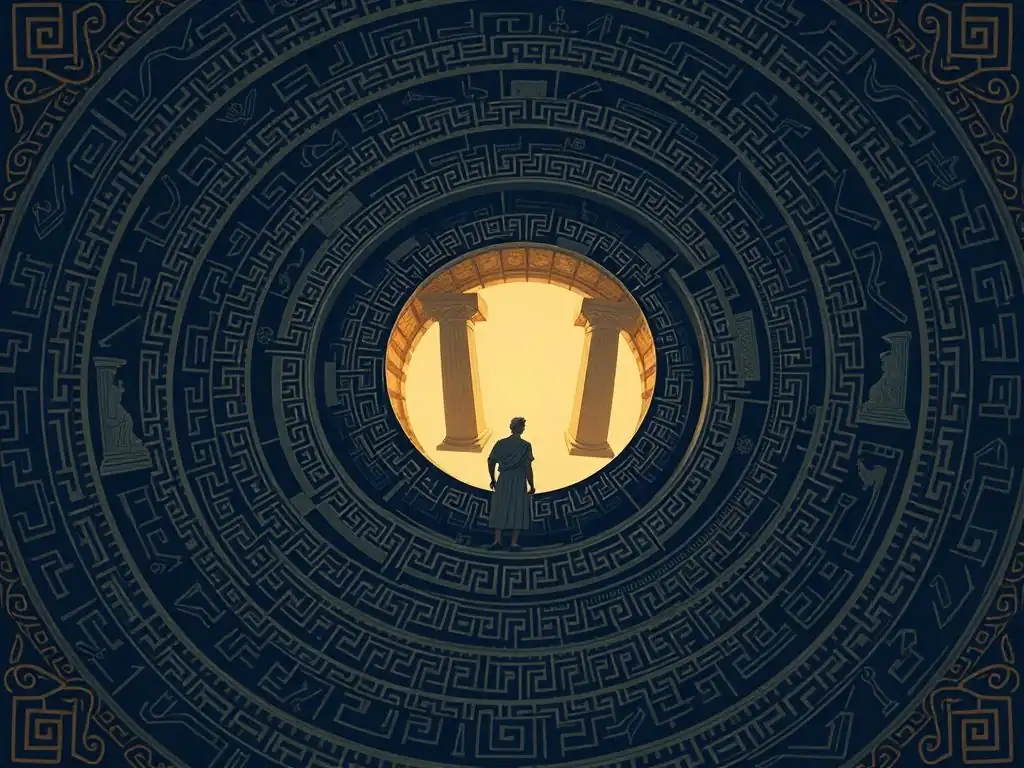
The "Return to Earth" phase in the Theseus Minotaur labyrinth Greek myth is the voyage back from Crete to Athens. Having escaped the Labyrinth and presumably left Crete (often with Ariadne, though her fate varies in different versions), Theseus and the surviving youths embark on the sea journey home. This return voyage is meant to be a triumphant passage, carrying the news of liberation and victory back to Athens.
Unlike the precise landing site of a spacecraft, the "splashdown" would be the ship's arrival back in the Athenian harbor. This return journey is fraught with its own mythological events, most notably Theseus's tragic forgetting to change the sails from black to white, leading to his father King Aegeus's despair and death. Thus, the return, while signifying the successful completion of the mission to Crete, is tinged with sorrow, highlighting the complex nature of fate and memory in Greek myth.
Lunar Ascent and Rendezvous: Rejoining the Command Module
Following their escape from the Labyrinth, Theseus and the youths needed to leave Crete. This "Lunar Ascent" involves getting back to their ship. Having navigated the maze and defeated the Minotaur, they would have rejoined their companions (if any remained outside) at the Labyrinth's entrance and made their way back to the harbor where their ship awaited. This phase is about successfully exiting the immediate danger zone and preparing for the journey home.
The "Rendezvous" is re-boarding their ship, the vessel that serves as their "Command Module." This act signifies re-establishing their connection to the means of returning to Athens. With the crew (surviving youths) and the "pilot" (Theseus) safely aboard, the ship is ready to depart from Crete, leaving behind the island of the Labyrinth and the defeated Minotaur, and setting sail for home, carrying the weight of their experience and victory.
Re-entry and Recovery: A Safe Return to Earth
The "Re-entry" is the final leg of the sea journey, the approach to Athenian shores. As the ship nears home, the tension builds for those awaiting news. The "Recovery" is the ship's arrival in the harbor and the disembarking of Theseus and the youths. This is the moment the mission is officially completed in terms of travel. However, as mentioned, the return is marked by tragedy due to the black sails.
Despite the sorrow of Aegeus's death, the arrival itself is a "safe return" in the sense that Theseus and the youths survived the perilous journey and the ordeal in Crete. Their physical recovery from the trauma of the Labyrinth and the encounter with the Minotaur begins upon reaching home. The sight of the ship, even with the wrong sails, signals the end of the long wait and the return of the hero and the saved tribute.
Quarantine and Analysis: Studying the Lunar Samples
In the context of the Theseus Minotaur labyrinth Greek myth, there isn't a literal "quarantine" period like that imposed on the Apollo 11 astronauts and samples. However, the period immediately following Theseus's return to Athens involves integration back into society and dealing with the consequences of his actions and the tragic death of his father. This period is less about preventing contamination and more about political transition and processing the trauma and triumph of the mission.
The "analysis" phase can be interpreted as the period where the events are processed and understood within the Athenian context. The "lunar samples" – the story of the victory, the account of the Labyrinth, the surviving youths – are "studied" by the Athenian populace and leadership. Theseus recounts his experiences, the details of the Labyrinth and the Minotaur become part of the city's lore, and the end of the tribute is celebrated. This "analysis" helps solidify the narrative of Theseus's heroism and its impact on Athens.
Post-Mission Quarantine: Ensuring No Lunar Contamination
While not a physical quarantine, Theseus's return marks a period of significant change and adjustment in Athens. His father, King Aegeus, is dead, and Theseus is now king. This transition involves navigating the political landscape and establishing his rule. There's no concern about "lunar contamination" in the biological sense, but there is a metaphorical need to integrate the extraordinary, violent experience of the Labyrinth and the Minotaur back into the civic order of Athens without allowing the "contamination" of chaos or tyranny to take root.
Theseus, as the returning hero and new king, must establish stability after a period of tribute and uncertainty. His actions upon becoming king, such as potentially unifying Attica, represent the "analysis" and application of the lessons learned from the dangers faced under external oppression. The "post-mission" period is about consolidating the gains of the heroic deed and ensuring the city benefits from the liberation achieved through facing the Theseus Minotaur labyrinth Greek myth's central challenge.
Scientific Discoveries: Unveiling the Moon's Secrets
The "scientific discoveries" from the Theseus Minotaur labyrinth Greek myth are not empirical data, but rather insights into human nature, divine will, and the nature of heroism and fate. The myth unveils "secrets" about the world as the ancient Greeks understood it: the consequences of human actions (Minos's offenses leading to the Minotaur), the importance of cleverness alongside strength (Ariadne's thread), the potential for both triumph and tragedy in heroic endeavors (Theseus's victory coupled with his father's death).
The story provides a framework for understanding complex relationships – between gods and mortals, rulers and subjects, men and monsters. It offers "data" on themes like courage, love, betrayal, and the cyclical nature of power. The "secrets" unveiled are philosophical and moral, contributing to the collective wisdom and cultural identity of Athens and influencing subsequent Greek thought and literature. The Theseus Minotaur labyrinth Greek myth serves as a rich source for "studying" the values and beliefs of ancient Greek society.
The Legacy of Apollo 11: Inspiration and Scientific Advancement
The legacy of the Theseus Minotaur labyrinth Greek myth is profound and enduring, resonating through centuries of art, literature, and thought. It has served as a powerful source of inspiration, not for space exploration, but for understanding heroism, facing inner and outer demons, and navigating complex, confusing situations. The story's core elements – the brave hero, the terrifying monster, the intricate maze, the life-saving thread – are archetypes that continue to appear in countless stories across cultures and time periods.
The myth inspires reflection on human resilience, the importance of aid and connection in overcoming isolation (the thread), and the consequences of actions and forgetfulness (the black sails). It encourages contemplation of the nature of monsters, whether literal beasts or metaphorical challenges. The narrative's structure and symbolism provide a rich foundation for creative and philosophical exploration, demonstrating the lasting power of myth to speak to fundamental human experiences.
Inspiring Future Generations: The Dream of Space Exploration
The Theseus Minotaur labyrinth Greek myth has inspired generations, not towards space, but towards embodying courage and facing difficult challenges. The figure of Theseus became a model hero for Athenians and later Greeks, representing the ideal of a strong, intelligent, and just leader capable of confronting threats to the community. The story instilled a sense of possibility – that even seemingly insurmountable obstacles, like an inescapable labyrinth and a fearsome beast, could be overcome with bravery and ingenuity.
The "dream" inspired by this myth is one of human agency and potential. It suggests that individuals, even when facing overwhelming odds imposed by powerful forces (like Minos), can find a way to fight back and achieve liberation. The narrative of Theseus's journey into the unknown and his victorious return fuels the human desire to explore limits, confront fears, and strive for a better future, albeit on a mythological and personal scale rather than a cosmic one.
Technological Advancements: Innovations Spurred by the Apollo Program
While the Theseus Minotaur labyrinth Greek myth didn't spur technological advancements in the modern sense, it influenced developments in areas like philosophy, drama, and art. The myth provided a complex narrative structure that playwrights like Euripides adapted. Its visual elements – Theseus, the Minotaur, the Labyrinth – inspired countless vase paintings, sculptures, and frescoes, contributing to the evolution of Greek artistic styles and iconography.
The intellectual "innovations" spurred by the myth lie in its contribution to Western thought. Philosophers and writers have used the Labyrinth as a metaphor for complex problems, the human mind, or the confusing journey of life. Ariadne's thread has become a universal symbol for finding a solution or a way out of difficulty. The Theseus Minotaur labyrinth Greek myth provided a rich source material for exploring abstract concepts through narrative, influencing the development of symbolic language and storytelling techniques across various forms of media throughout history.
Conclusion: Apollo 11's Enduring Impact
The Theseus Minotaur labyrinth Greek myth, like the Apollo 11 mission in its own domain, represents a monumental achievement against formidable odds. Its enduring impact lies in its power as an archetypal story of confronting the monstrous, navigating confusion, and achieving liberation. It remains a cornerstone of Greek mythology, a tale that continues to captivate and inform our understanding of ancient Greek culture and the universal themes it explores.
The myth's relevance today is found in its exploration of courage, fear, ingenuity, and the consequences of both victory and human error. The concept of the labyrinth as a metaphor for life's challenges, the Minotaur as our inner or outer demons, and Ariadne's thread as the help or insight needed to overcome them, are ideas that still resonate deeply. The Theseus Minotaur labyrinth Greek myth provides a timeless framework for discussing bravery, fate, and the complex journey through the challenges we face.
The Mission's Relevance Today: Remembering Human Achievement
The Theseus Minotaur labyrinth Greek myth remains relevant today as a powerful reminder of human achievement in the face of seemingly impossible circumstances. It highlights the capacity for heroism, not just in physical strength, but in strategic thinking and accepting help (Ariadne's role). The story serves as a cultural touchstone, illustrating the values ancient Greeks admired and the fears they grappled with. Remembering this myth is remembering a foundational narrative about overcoming tyranny and confronting the monstrous unknown.
It speaks to the human drive to solve problems, even those as bewildering as a Daedalian labyrinth, and to confront threats, even those as terrifying as the Minotaur. The Theseus Minotaur labyrinth Greek myth encourages us to consider what constitutes a monster, what it means to be trapped, and what tools – internal or external – are necessary for escape and triumph.
Reflecting on the Timeless Achievement: Apollo 11 and the Human Spirit.
Reflecting on the Theseus Minotaur labyrinth Greek myth is reflecting on a timeless achievement of the human spirit within the realm of mythology. It embodies the courage to venture into darkness, the ingenuity to find a way through complexity, and the resilience to return changed but victorious. The story captures the essence of the human spirit's capacity to dream of overcoming limitations and to act boldly to achieve that dream, whether the "labyrinth" is a physical maze, a political oppression, or a personal challenge.
The myth's persistence across millennia is a testament to its power. It speaks to the universal human experience of facing fears, navigating confusion, and striving for liberation. The Theseus Minotaur labyrinth Greek myth, in its exploration of these fundamental struggles, continues to offer insights into the enduring capabilities and complexities of the human spirit, much like historical achievements inspire reflection on what humanity can accomplish.
Frequently Asked Questions
What is the significance of the Theseus and the Minotaur myth within Greek mythology?
The myth of Theseus and the Minotaur is significant because it represents heroism, courage, and the triumph over monstrous evil. It also explores themes of political oppression and liberation.
What was the Labyrinth, and why was it built?
The Labyrinth was a complex and inescapable maze built by Daedalus. It was constructed to imprison the Minotaur, a creature that was half-man, half-bull, born from Pasiphae, the wife of King Minos.
Who was the Minotaur, and how did it come to be trapped in the Labyrinth?
The Minotaur was a monstrous creature born from a cursed union. King Minos, to hide the shame and contain the beast, ordered Daedalus to build the Labyrinth to keep it contained.
How did Theseus manage to defeat the Minotaur?
Theseus, aided by Ariadne, used a ball of thread to navigate the Labyrinth. He confronted the Minotaur and slayed it in combat, freeing Athens from its tribute to Crete.
What are some interpretations of the Theseus and the Minotaur myth in contemporary society?
The myth is often interpreted as a metaphor for confronting inner demons, overcoming challenges, and navigating complex situations. The Labyrinth can represent life's difficulties, and Theseus's journey symbolizes personal growth and resilience.
Final Reflection: Unraveling the Labyrinth Within
The enduring power of the myth of Theseus and the Minotaur lies not just in its ancient origins, but in its startling relevance to our modern world. We, too, navigate labyrinths of misinformation, political maneuvering, and personal struggles, constantly seeking the thread of truth amidst the monstrous complexities of life. The challenge remains the same: to find our way out, to confront the darkness within and without, and to emerge transformed.
The story's impact resonates deeply because it speaks to our inherent human desire for clarity and justice. The Minotaur, representing the destructive forces of deception and unchecked power, continues to find new forms in our society. We see echoes of its malevolence in the spread of fake news, the rise of authoritarianism, and the persistent struggle against injustice. As the poet T.S. Eliot wrote, We shall not cease from exploration / And the end of all our exploring / Will be to arrive where we started / And know the place for the first time.
This journey of self-discovery, mirroring Theseus's quest, is a lifelong pursuit, requiring courage, resilience, and a steadfast commitment to truth.
Consider your own "labyrinth." What monsters are you facing? What threads of truth are you following? This myth is not just a story; it's a call to action. It urges us to confront our inner Minotaurs, to cultivate the courage to seek truth, and to never lose sight of the Ariadne's thread of reason and integrity that guides us towards a more just and enlightened future. Embrace the challenge, and like Theseus, emerge victorious, transformed by the journey itself.
Unravel Your Own Labyrinth: Discover the Power of Truth
Thanks for exploring the compelling tale of Theseus and the Minotaur! We hope you gained a new perspective on the enduring struggle between truth and deception. Now it's time to put your newfound insights into action.
- Craft your own "thread of Ariadne": Identify a challenge in your life that feels like a labyrinth. Write down one specific step you can take today to navigate towards clarity and truth. This is your personal path out of your own Minotaur's lair.
- Share your "hero's journey": Discuss your chosen step with a trusted friend or family member. Talking about it can help solidify your commitment and provide valuable support.
- Explore further: Research historical figures who faced similar challenges. How did they overcome obstacles and discover their truth?
What single truth, hidden within your own personal labyrinth, are you most eager to uncover?