
The Role of Music and Dance in Ancient Greek Temple Rituals

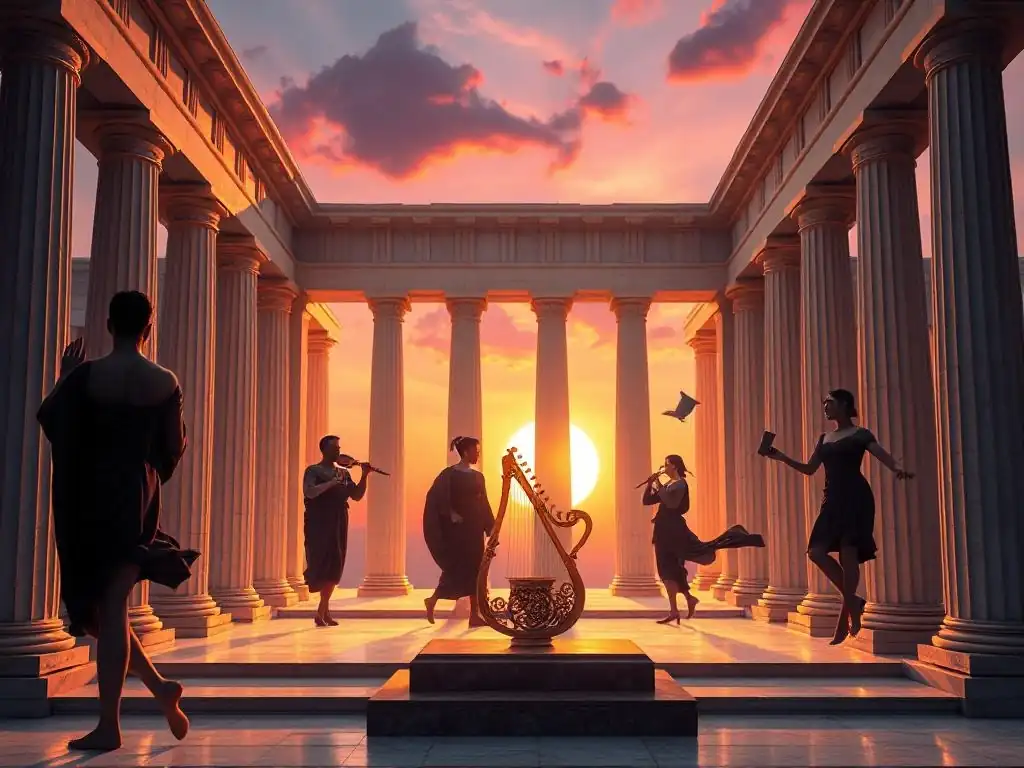
Welcome to Mythology and Legends, your gateway to the captivating world of ancient narratives! Ever wondered how music and dance shaped the sacred rituals of the past? Delve into the heart of Ancient Greek temple music dance, where rhythmic movements and melodic hymns once echoed through hallowed halls. Prepare to uncover the secrets behind these ancient practices and their profound connection to the gods. What stories did they tell, and what power did they hold? Let's explore...
- Introduction: Ancient Greek Temple Rituals and the Performing Arts
- The Power of Music in Ancient Greek Temples
- Sacred Dance in Ancient Greek Temples
- The Gods and Goddesses of Music and Dance
- The Integration of Music and Dance in Specific Temple Rituals
- Beyond Religious Observances: The Influence on Greek Theatre
- The Gods and Goddesses of Music and Dance
- The Integration of Music and Dance in Specific Temple Rituals
- Beyond Religious Observances: The Influence on Greek Theatre
- The Legacy of Ancient Greek Temple Music and Dance
- Conclusion: The Enduring Harmony of Music, Dance, and Worship in Ancient Greece
-
Frequently Asked Questions
- What was the overall purpose of music and dance in Ancient Greek temple rituals?
- What types of musical instruments were commonly used in Ancient Greek temple rituals?
- What role did the chorus play in the musical performances within temple rituals?
- How did specific dance movements contribute to the meaning of the rituals?
- Can the influence of Ancient Greek temple music and dance be seen in modern society?
- Final Reflection: The Enduring Echo of Ancient Greek Ritual Music and Dance
- Unleash the Spirit of Ancient Greece!
Introduction: Ancient Greek Temple Rituals and the Performing Arts
Ancient Greek religious practice was deeply intertwined with communal activity, and central to these activities were the magnificent temples erected across the Hellenic world. These structures were not merely static houses for divine statues but vibrant centers of worship, sacrifice, and public ceremony. The rituals conducted within and around these sacred spaces were complex, involving priests, priestesses, supplicants, and performers, all participating in acts designed to honor the gods, ensure prosperity, and maintain cosmic balance. Understanding the function of these temples requires looking beyond architecture to the dynamic performances that animated them.
Within the rich tapestry of ancient Greek religious observance, music and dance were not peripheral embellishments but fundamental, integrated components. They served essential functions, from invoking the deity's presence to expressing collective devotion and narrating mythological events. These performing arts were considered divine gifts, capable of elevating the human spirit and facilitating communion with the divine realm. The sounds of lyres and aulos, coupled with structured or ecstatic movements, created an immersive sensory experience integral to the efficacy and meaning of the rituals performed in ancient Greek temples.
Setting the Stage: The Significance of Temples in Ancient Greece
Temples in ancient Greece were the focal points of polis religious life, serving as more than just places of worship. They housed cult statues, stored votive offerings, and often acted as treasuries for the city-state. Major temples, like the Parthenon in Athens or the Temple of Apollo at Delphi, represented the wealth, power, and cultural identity of their patrons. They were sites of major festivals, processions, and sacrifices, drawing large crowds and fostering a sense of community and shared religious identity. The careful design and construction of these buildings reflected the reverence held for the deities they honored.
Beyond their architectural and economic significance, temples were perceived as liminal spaces where the human and divine realms intersected. Rituals performed here were believed to influence the gods, securing their favor and averting their wrath. The solemnity and grandeur of the temple setting amplified the impact of the ceremonies, making participants feel closer to the divine. This sacred atmosphere provided the ideal environment for the heightened emotional and spiritual states often associated with ancient Greek temple music and dance.
Music and Dance as Integral Components of Religious Observances
Music and dance were inextricably linked to ancient Greek religious rituals, considered vital for propitiating the gods and participating in sacred mysteries. From the simple act of accompanying a libation with a hymn to the elaborate choreography of a festival procession, these arts permeated every level of worship. Ancient texts and visual evidence, such as vase paintings and temple friezes, consistently depict musicians and dancers as central figures in religious scenes, highlighting their indispensable role.
The integration of music and dance in ancient Greek temple rituals served multiple purposes. Musically, rhythm and melody helped structure the ritual, marking different phases of a ceremony. Dance provided a physical language of devotion, expressing emotions like joy, reverence, or lamentation through movement. Together, they created a powerful, multisensory experience designed to purify participants, evoke divine presence, and facilitate spiritual connection. This dynamic interplay was a defining characteristic of public worship in ancient Greece.
The Power of Music in Ancient Greek Temples
Hymns and Prayers: Musical Offerings to the Gods
Hymns were fundamental to ancient Greek temple worship, serving as direct musical addresses to the gods. These were not merely spoken prayers but carefully composed songs, often performed by a chorus or skilled soloists, accompanied by musical instruments. The content of hymns typically praised the deity's attributes, recounted their myths, invoked their aid, or expressed gratitude for past blessings. Examples include the Homeric Hymns, which, though perhaps not all performed in temples, reflect the form and content of such musical offerings.
The performance of these hymns in the sacred space of the temple was believed to be particularly pleasing to the gods. The melody, rhythm, and poetic meter were thought to carry the prayer more effectively to the divine ear. Historical accounts suggest that competitions for hymn performance were sometimes part of major festivals, like those at the Temple of Apollo in Delphi, indicating the high value placed on musical skill in religious contexts. The act of singing together also fostered a sense of communal piety among worshippers.
Instruments of Worship: Lyres, Aulos, and Percussion in Temple Music
A variety of musical instruments were employed in ancient Greek temple music, each contributing distinct timbres and symbolic associations. The lyre (or kithara, a larger version) was often associated with Apollo and considered an instrument of harmony, order, and intellectual pursuits. Its clear, resonant tones were well-suited for accompanying hymns and lyrical poetry within the temple precincts. Depictions on pottery and friezes frequently show processions and rituals featuring lyre players.
The aulos, a double-reed instrument producing a more piercing, reedy sound, was associated with Dionysus and often linked to ecstatic and passionate aspects of worship. While sometimes viewed with suspicion by those favoring the lyre's restraint, the aulos was indispensable in many rituals, particularly those involving processions, dances, and emotional displays. Percussion instruments, such as tympana (hand drums) and cymbals, provided rhythm and energy, especially in more dynamic or ecstatic ancient Greek temple music and dance performances.
The Emotional Impact of Music: Evoking Divine Presence and Religious Fervor
Music in ancient Greek temples was a powerful tool for manipulating and channeling emotion, crucial for facilitating religious experience. Different modes (harmoniai) were believed to evoke specific feelings or states of mind. The Dorian mode, for instance, was often associated with solemnity and piety, suitable for serious hymns, while the Phrygian mode was linked to passion and ecstasy, used in Dionysian rites. Philosophers like Plato and Aristotle debated the ethical implications of these modes, highlighting music's perceived power over the psyche.
The collective experience of hearing music within the sacred space, combined with the visual spectacle of the ritual and the shared belief in the deity's presence, could induce states of awe, reverence, and even rapture. The repetitive rhythms, hypnotic melodies, and the sheer volume of sound from instruments and voices created an immersive environment that could transport worshippers beyond the mundane, making the divine presence feel imminent and palpable. This emotional arousal was a key element in the effectiveness of ancient Greek temple music dance rituals.
Sacred Dance in Ancient Greek Temples
Types of Ritual Dances: From Processions to Ecstatic Performances
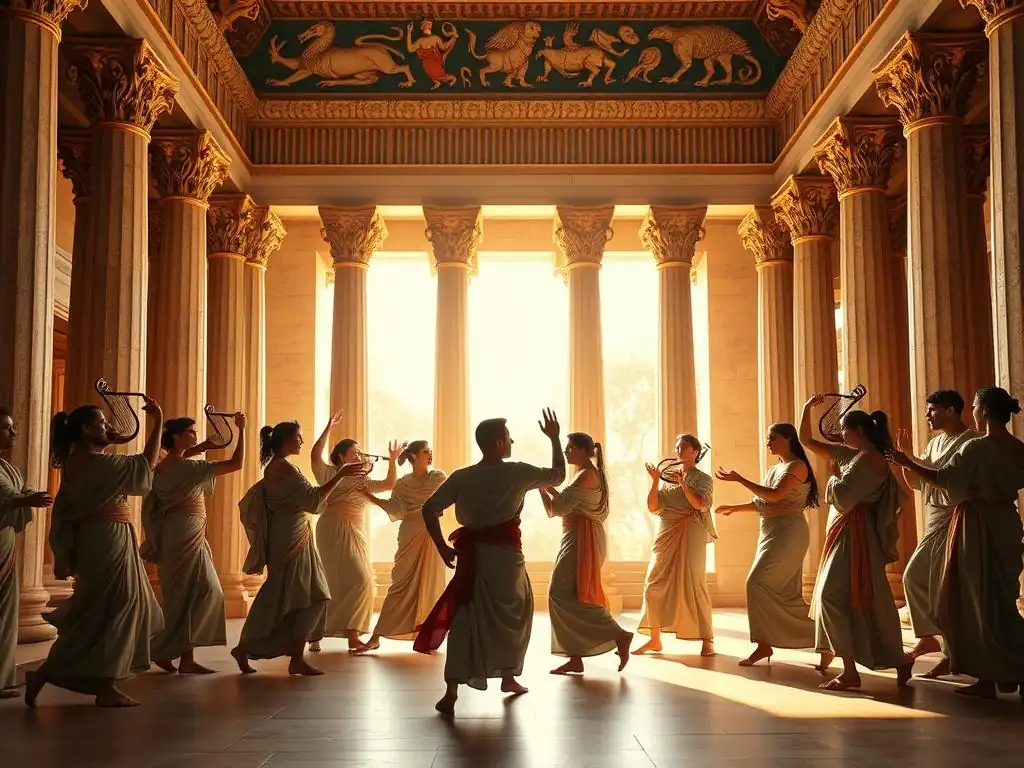
Sacred dance in ancient Greece encompassed a wide spectrum of forms, from highly structured processions to spontaneous, ecstatic movements. Processional dances (like the pompe) were common in major festivals, involving large groups moving rhythmically towards the temple or altar, often carrying sacred objects or sacrificial animals. These dances were orderly and communal, symbolizing unity and collective devotion.
In contrast, some rituals, particularly those dedicated to Dionysus or other chthonic deities, involved ecstatic dances ( orgia). These performances were characterized by wild, often improvisational movements, sometimes involving whirling, leaping, and shouting. Participants might enter trance-like states, believed to signify possession by the deity. These ecstatic forms represented a different mode of communion, emphasizing emotional release and transcendence within ancient Greek temple music dance.
The Chorus: Uniting Voice and Movement in Temple Rituals
The chorus was a central element in many ancient Greek temple rituals, particularly those involving performance and narrative. Composed of trained individuals, the chorus would sing hymns, chant prayers, and simultaneously perform choreographed movements. This unification of voice and body allowed the chorus to express complex religious ideas, recount myths, and guide the emotional response of the spectators or participants.
The chorus's movements were often symbolic, representing actions of the deity, events from mythology, or the collective feelings of the community. Their synchronized singing and dancing created a powerful, cohesive performance that reinforced the narrative and emotional core of the ritual. The training and discipline required for choral performance highlight the sophistication of ancient Greek temple music dance as a religious art form.
Symbolic Gestures and Choreography: Conveying Meaning and Religious Narratives
Ancient Greek sacred dance was rich in symbolic gestures and deliberate choreography. Movements were not merely aesthetic but were intended to convey specific meanings related to the deity being honored, the purpose of the ritual, or mythological narratives. For example, gestures might imitate the actions of gods or heroes, mimic agricultural tasks to request fertility, or represent the act of offering or receiving divine favor.
Choreography could be complex, involving intricate patterns, formations, and interactions between dancers. While detailed manuals are lost, descriptions in ancient texts and depictions on artifacts suggest a sophisticated understanding of how movement could tell a story or embody abstract religious concepts. This symbolic language of dance allowed participants and observers to engage with the divine in a visceral, non-verbal way through ancient Greek temple music dance.
Pyrrhichios: A War Dance Dedicated to Athena
Among the specific forms of sacred dance, the Pyrrhichios stands out, particularly in Athens where it was dedicated to the goddess Athena, patron of the city and warfare. This was a vigorous, armed dance performed by young men, often wearing armor and carrying shields and spears. The movements mimicked actions of combat – parrying blows, thrusting spears, dodging attacks – but performed to a specific rhythm and melody.
The Pyrrhichios was performed in religious contexts, including festivals honoring Athena like the Panathenaia. Its performance in the sacred space of the temple or during processions served multiple purposes: it honored the warrior goddess, demonstrated the physical prowess of the city's youth, and perhaps symbolically enacted the city's readiness for defense. This specific example illustrates how ancient Greek temple music dance could be deeply integrated with civic identity and military preparedness.
The Gods and Goddesses of Music and Dance
Apollo: Patron of Music, Harmony, and Order
Apollo was one of the most significant deities associated with music, often depicted holding his lyre. As the god of music, poetry, light, healing, and prophecy, he represented harmony, order, and intellectual pursuits. His temples, most famously at Delphi, were centers for musical performance, particularly hymns and kithara playing. Musical contests, like the Pythian Games held at Delphi, were dedicated to him.
Worship of Apollo often involved measured, orderly music and dance, reflecting his association with cosmic harmony. The lyre, his primary instrument, symbolized balance and restraint. Rituals dedicated to Apollo sought to invoke his benevolent power through beautiful, structured performances that appealed to his love of order and artistic perfection, central elements of ancient Greek temple music dance dedicated to him.
Dionysus: God of Ecstasy, Wine, and Ritual Dance
In contrast to Apollo's order, Dionysus embodied the wilder, ecstatic aspects of music and dance. As the god of wine, fertility, theatre, and religious ecstasy, his worship often involved passionate, uninhibited performances. His followers, particularly the maenads, engaged in frenzied dances ( orgia) accompanied by the aulos and percussion, sometimes leading to trance states or acts of ritual madness.
Dionysian rituals often took place not just within temples but also in wild, natural settings. However, temples dedicated to Dionysus also hosted performances that tapped into this ecstatic energy. The music and dance associated with Dionysus were intended to break down inhibitions, allow worshippers to transcend their ordinary selves, and experience direct communion with the divine through intense physical and emotional release. This represented the more untamed side of ancient Greek temple music dance.
The Muses: Inspiring the Arts and Guiding Temple Performances
The Muses were nine sister goddesses, daughters of Zeus, who presided over the arts and sciences, including music, dance, poetry, and tragedy. They were considered the source of inspiration for artists and performers. Temples and shrines dedicated to the Muses (Mouseia) existed, where individuals would gather to study and practice the arts in a sacred context.
While not typically the primary recipients of major temple cults themselves, the Muses were invoked at the beginning of performances, including those in temples, to ensure divine inspiration and artistic success. Their influence underscores the belief that music and dance were not merely human skills but divine gifts, requiring divine favor for their effective performance in religious settings, shaping the quality and spirit of ancient Greek temple music dance.
The Integration of Music and Dance in Specific Temple Rituals
Panathenaia: Musical Competitions and Processions Honoring Athena
The Panathenaia was the most important festival in Athens, honoring the city's patron goddess, Athena Polias. Held annually, with a greater festival every four years, it prominently featured music and dance. The grand procession (the pompe) involved thousands of citizens, moving from the city gates to the Acropolis, culminating at the Temple of Athena Polias and the Parthenon. This procession included groups performing music on auloi and kitharas, as well as rhythmic movement that can be considered a form of processional dance.
Beyond the procession, the greater Panathenaia included athletic contests and, crucially, musical and rhapsodic competitions held in areas near the temples. Prizes were awarded for kithara playing, aulos playing, and singing accompanied by the kithara. These competitions were religious acts, dedicating the highest artistic skill to the goddess. The festival demonstrates the multifaceted role of ancient Greek temple music dance, combining processional devotion with competitive artistic offerings. Historical sources suggest the musical contests alone attracted significant numbers of participants and spectators, perhaps numbering in the hundreds for major events.
Eleusinian Mysteries: Dance and Music in the Underworld Journey
The Eleusinian Mysteries, centered at the Sanctuary of Demeter and Persephone in Eleusis, were secret initiation rites promising a blessed afterlife. While the details remain largely unknown due to their secrecy, ancient sources indicate that music and dance were crucial elements of the rituals. Initiates participated in a procession from Athens to Eleusis, which likely involved singing and dancing.
Within the sanctuary, during the climactic nocturnal rites in the Telesterion (initiation hall), music and dance are believed to have played a significant role in inducing altered states of consciousness and facilitating the mystical experience. Descriptions from later periods mention rhythmic chanting, the playing of auloi and tympana, and possibly ecstatic group dances. These performances were integral to the symbolic journey through the underworld and the revelation of the mysteries, highlighting the transformative power of ancient Greek temple music dance in secret cults.
Rituals at the Temple of Delphi: Prophecy and Sacred Performances
The Temple of Apollo at Delphi was renowned for its oracle, where the Pythia delivered prophecies inspired by the god. Music was central to the sanctuary's activities, reflecting Apollo's patronage. The Pythian Games, held every four years, included prestigious musical competitions alongside athletic events. These contests, featuring kithara players, aulos players, and singers, were performed within the sacred precinct, often near the temple itself.
While the precise role of music and dance during the Pythia's oracular pronouncements is debated, it is known that musical performances preceded the prophecies, creating a sacred atmosphere. Hymns to Apollo were regularly sung. Archaeological evidence and historical accounts suggest that processional dances also took place within the sanctuary. The Delphic rituals underscore the importance of music not just as an offering, but as a means of establishing a divine connection and preparing the ground for sacred communication through ancient Greek temple music dance.
Beyond Religious Observances: The Influence on Greek Theatre
The Origins of Greek Drama in Temple Rituals
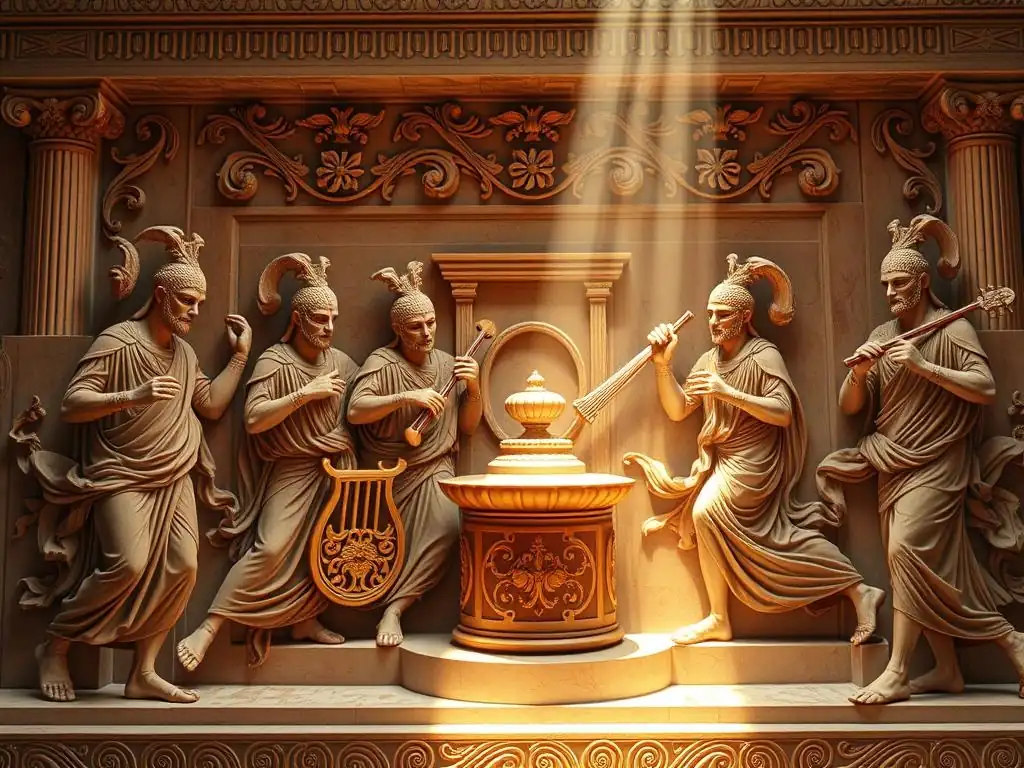
Ancient Greek theatre is widely believed to have originated from religious rituals, particularly those dedicated to Dionysus. Early forms of drama evolved from choral performances, such as the dithyramb, a hymn sung and danced in honor of Dionysus. These performances often took place in the sacred precinct of Dionysus, near his temple, and involved a chorus interacting with a leader or a small number of actors.
The structure and themes of early Greek tragedy and comedy retained strong links to their ritualistic origins. The inclusion of a chorus, the use of masks (perhaps derived from cultic practices), and the exploration of mythological narratives all point back to the religious performances that occurred in or near ancient Greek temples. The theatre, in essence, became a public performance space that formalized and expanded upon elements of ancient Greek temple music dance and storytelling.
The Chorus in Greek Tragedy: Echoes of Temple Performance
The chorus remained a fundamental element of Greek tragedy throughout its classical period, serving functions reminiscent of its role in temple rituals. The tragic chorus commented on the action, provided background information, expressed the community's reactions, and offered moral or philosophical reflections. Their lines were often sung or chanted, accompanied by music, and their performance involved choreographed movements within the orchestra (the circular dancing area).
The chorus's performance in the theatre echoed the unified singing and dancing of temple choruses. It maintained the tradition of using voice and movement together to convey meaning and evoke emotion. While the context shifted from direct worship to dramatic narrative, the techniques and aesthetic principles of ancient Greek temple music dance clearly informed the development and performance style of the tragic chorus.
Music and Dance as Storytelling Devices in Ancient Theatre
In ancient Greek theatre, music and dance were not mere interludes but integral to the storytelling. Choral odes, sung and danced, often recounted mythological episodes relevant to the play's plot or theme. Music underscored emotional moments, heightened tension, or provided transition between scenes. Dance could represent specific actions, emotions, or states of being, contributing to the narrative flow.
For example, a playwright might use a mournful melody and slow, lamenting movements for a tragic chorus reacting to death, drawing directly from the vocabulary of ancient Greek temple music dance used in funerary or chthonic rites. Conversely, a celebratory dance with lively music might accompany a scene of victory or divine favor, mirroring festive temple performances. This continuity demonstrates how the expressive language developed in religious contexts was adapted and expanded for dramatic purposes.
The Gods and Goddesses of Music and Dance
Apollo: Patron of Music, Harmony, and Order
Apollo was one of the most significant deities associated with music, often depicted holding his lyre. As the god of music, poetry, light, healing, and prophecy, he represented harmony, order, and intellectual pursuits. His temples, most famously at Delphi, were centers for musical performance, particularly hymns and kithara playing. Musical contests, like the Pythian Games held at Delphi, were dedicated to him.
Worship of Apollo often involved measured, orderly music and dance, reflecting his association with cosmic harmony. The lyre, his primary instrument, symbolized balance and restraint. Rituals dedicated to Apollo sought to invoke his benevolent power through beautiful, structured performances that appealed to his love of order and artistic perfection, central elements of ancient Greek temple music dance dedicated to him.
Dionysus: God of Ecstasy, Wine, and Ritual Dance
In contrast to Apollo's order, Dionysus embodied the wilder, ecstatic aspects of music and dance. As the god of wine, fertility, theatre, and religious ecstasy, his worship often involved passionate, uninhibited performances. His followers, particularly the maenads, engaged in frenzied dances ( orgia) accompanied by the aulos and percussion, sometimes leading to trance states or acts of ritual madness.
Dionysian rituals often took place not just within temples but also in wild, natural settings. However, temples dedicated to Dionysus also hosted performances that tapped into this ecstatic energy. The music and dance associated with Dionysus were intended to break down inhibitions, allow worshippers to transcend their ordinary selves, and experience direct communion with the divine through intense physical and emotional release. This represented the more untamed side of ancient Greek temple music dance.
The Muses: Inspiring the Arts and Guiding Temple Performances
The Muses were nine sister goddesses, daughters of Zeus, who presided over the arts and sciences, including music, dance, poetry, and tragedy. They were considered the source of inspiration for artists and performers. Temples and shrines dedicated to the Muses (Mouseia) existed, where individuals would gather to study and practice the arts in a sacred context.
While not typically the primary recipients of major temple cults themselves, the Muses were invoked at the beginning of performances, including those in temples, to ensure divine inspiration and artistic success. Their influence underscores the belief that music and dance were not merely human skills but divine gifts, requiring divine favor for their effective performance in religious settings, shaping the quality and spirit of ancient Greek temple music dance.
The Integration of Music and Dance in Specific Temple Rituals
Panathenaia: Musical Competitions and Processions Honoring Athena
The Panathenaia was the most important festival in Athens, honoring the city's patron goddess, Athena Polias. Held annually, with a greater festival every four years, it prominently featured music and dance. The grand procession (the pompe) involved thousands of citizens, moving from the city gates to the Acropolis, culminating at the Temple of Athena Polias and the Parthenon. This procession included groups performing music on auloi and kitharas, as well as rhythmic movement that can be considered a form of processional dance.
Beyond the procession, the greater Panathenaia included athletic contests and, crucially, musical and rhapsodic competitions held in areas near the temples. Prizes were awarded for kithara playing, aulos playing, and singing accompanied by the kithara. These competitions were religious acts, dedicating the highest artistic skill to the goddess. The festival demonstrates the multifaceted role of ancient Greek temple music dance, combining processional devotion with competitive artistic offerings. Historical sources suggest the musical contests alone attracted significant numbers of participants and spectators, perhaps numbering in the hundreds for major events.
Eleusinian Mysteries: Dance and Music in the Underworld Journey
The Eleusinian Mysteries, centered at the Sanctuary of Demeter and Persephone in Eleusis, were secret initiation rites promising a blessed afterlife. While the details remain largely unknown due to their secrecy, ancient sources indicate that music and dance were crucial elements of the rituals. Initiates participated in a procession from Athens to Eleusis, which likely involved singing and dancing.
Within the sanctuary, during the climactic nocturnal rites in the Telesterion (initiation hall), music and dance are believed to have played a significant role in inducing altered states of consciousness and facilitating the mystical experience. Descriptions from later periods mention rhythmic chanting, the playing of auloi and tympana, and possibly ecstatic group dances. These performances were integral to the symbolic journey through the underworld and the revelation of the mysteries, highlighting the transformative power of ancient Greek temple music dance in secret cults.
Rituals at the Temple of Delphi: Prophecy and Sacred Performances
The Temple of Apollo at Delphi was renowned for its oracle, where the Pythia delivered prophecies inspired by the god. Music was central to the sanctuary's activities, reflecting Apollo's patronage. The Pythian Games, held every four years, included prestigious musical competitions alongside athletic events. These contests, featuring kithara players, aulos players, and singers, were performed within the sacred precinct, often near the temple itself.
While the precise role of music and dance during the Pythia's oracular pronouncements is debated, it is known that musical performances preceded the prophecies, creating a sacred atmosphere. Hymns to Apollo were regularly sung. Archaeological evidence and historical accounts suggest that processional dances also took place within the sanctuary. The Delphic rituals underscore the importance of music not just as an offering, but as a means of establishing a divine connection and preparing the ground for sacred communication through ancient Greek temple music dance.
Beyond Religious Observances: The Influence on Greek Theatre
The Origins of Greek Drama in Temple Rituals
Ancient Greek theatre is widely believed to have originated from religious rituals, particularly those dedicated to Dionysus. Early forms of drama evolved from choral performances, such as the dithyramb, a hymn sung and danced in honor of Dionysus. These performances often took place in the sacred precinct of Dionysus, near his temple, and involved a chorus interacting with a leader or a small number of actors.
The structure and themes of early Greek tragedy and comedy retained strong links to their ritualistic origins. The inclusion of a chorus, the use of masks (perhaps derived from cultic practices), and the exploration of mythological narratives all point back to the religious performances that occurred in or near ancient Greek temples. The theatre, in essence, became a public performance space that formalized and expanded upon elements of ancient Greek temple music dance and storytelling.
The Chorus in Greek Tragedy: Echoes of Temple Performance
The chorus remained a fundamental element of Greek tragedy throughout its classical period, serving functions reminiscent of its role in temple rituals. The tragic chorus commented on the action, provided background information, expressed the community's reactions, and offered moral or philosophical reflections. Their lines were often sung or chanted, accompanied by music, and their performance involved choreographed movements within the orchestra (the circular dancing area).
The chorus's performance in the theatre echoed the unified singing and dancing of temple choruses. It maintained the tradition of using voice and movement together to convey meaning and evoke emotion. While the context shifted from direct worship to dramatic narrative, the techniques and aesthetic principles of ancient Greek temple music dance clearly informed the development and performance style of the tragic chorus.
Music and Dance as Storytelling Devices in Ancient Theatre
In ancient Greek theatre, music and dance were not mere interludes but integral to the storytelling. Choral odes, sung and danced, often recounted mythological episodes relevant to the play's plot or theme. Music underscored emotional moments, heightened tension, or provided transition between scenes. Dance could represent specific actions, emotions, or states of being, contributing to the narrative flow.
For example, a playwright might use a mournful melody and slow, lamenting movements for a tragic chorus reacting to death, drawing directly from the vocabulary of ancient Greek temple music dance used in funerary or chthonic rites. Conversely, a celebratory dance with lively music might accompany a scene of victory or divine favor, mirroring festive temple performances. This continuity demonstrates how the expressive language developed in religious contexts was adapted and expanded for dramatic purposes.
The Legacy of Ancient Greek Temple Music and Dance
Rediscovering Ancient Sounds: Archaeological Evidence and Reconstructions
Reconstructing the exact sounds and movements of ancient Greek temple music dance is a complex task, relying on fragmented evidence. Sources include:
- Ancient Greek musical notation (rare and difficult to interpret fully)
- Descriptions in philosophical and literary texts
- Depictions of musicians and dancers on vases, sculptures, and friezes
- Surviving musical instruments or fragments
Scholars and musicians use this evidence to attempt reconstructions of ancient melodies and rhythms. While speculative, projects have recreated hymns like the Seikilos Epitaph (a later example but indicative of musical structure) or the Delphic Hymns, offering glimpses into the sonic world of ancient worship. Similarly, studying depictions provides clues about postures, formations, and types of movement involved in sacred dance.
Despite the challenges, ongoing research combines archaeological findings with textual analysis and musical theory to bring the sounds of ancient Greek temple music dance back to life. Modern performances based on these reconstructions offer a tangible connection to the sensory experience of ancient rituals. For instance, depictions on the Parthenon frieze provide detailed visual data on the Panathenaic procession, including musicians and figures whose postures suggest rhythmic movement.
The Enduring Influence on Western Art, Music, and Dance
The principles and forms of ancient Greek temple music dance, particularly as they transitioned into early drama, have exerted a profound and lasting influence on Western artistic traditions. The concept of the chorus in opera and theatre, the use of specific musical modes to evoke emotion, and the idea of dance as a narrative or expressive form can all trace roots back to ancient Greek practices.
Renaissance artists and theorists, inspired by rediscovered classical texts, attempted to revive aspects of ancient Greek performance, influencing early opera which sought to recreate Greek tragedy's unity of music, text, and drama. Later periods, from the Neoclassical era to modern interpretations, have continued to draw inspiration from the perceived harmony, structure, or ecstatic energy found in accounts of ancient Greek temple music dance.
Modern Interpretations and Performances Inspired by Ancient Rituals
Today, artists, choreographers, and musicians continue to explore and interpret the legacy of ancient Greek temple music dance. This ranges from scholarly performance groups attempting historically informed reconstructions to contemporary artists creating new works inspired by ancient myths and rituals.
These modern interpretations often blend academic research with creative expression, seeking to capture the spirit and function of ancient performances rather than strictly replicate them. Examples might include:
- Performances of reconstructed ancient hymns.
- Choreography based on poses and movements depicted in ancient art.
- Theatrical productions that incorporate elements of ancient chorus and ritual dance.
- Musical compositions using ancient Greek scales and instruments.
These efforts demonstrate the enduring fascination with the power and meaning embedded in ancient Greek temple music dance, keeping this vibrant aspect of classical culture alive for contemporary audiences.
Conclusion: The Enduring Harmony of Music, Dance, and Worship in Ancient Greece
Music and dance were far more than mere entertainment in ancient Greek religious life; they were essential, sacred arts that facilitated communion with the divine, expressed communal identity, and gave form to complex theological concepts. Integrated into every level of temple ritual, from solemn hymns to ecstatic dances, they created a dynamic, sensory environment crucial to the experience of worship.
The instruments used, the types of dances performed, and the specific deities honored through these arts reveal a sophisticated understanding of how sound and movement could shape emotion, convey meaning, and bridge the gap between the human and divine realms. The legacy of this ancient Greek temple music dance is not confined to history books but lives on in the foundational principles of Western theatre, music, and dance, a testament to the enduring power of these performing arts in human spiritual expression.
Frequently Asked Questions
What was the overall purpose of music and dance in Ancient Greek temple rituals?
The primary purpose was to honor the gods and invoke their presence. Music and dance were considered forms of communication and offerings.
What types of musical instruments were commonly used in Ancient Greek temple rituals?
Common instruments included the aulos (a double-pipe wind instrument), the lyre (a stringed instrument), and percussion instruments like cymbals and drums. These created sacred soundscapes.
What role did the chorus play in the musical performances within temple rituals?
The chorus often performed hymns and chants, providing a narrative context or commentary on the ritual action. They were crucial for guiding the emotional atmosphere.
How did specific dance movements contribute to the meaning of the rituals?
Dance movements were often symbolic and mimetic, representing aspects of the god's power or narrating mythological stories. They were carefully choreographed to enhance the ritual's efficacy.
Can the influence of Ancient Greek temple music and dance be seen in modern society?
Yes, elements can be traced in modern theatrical performances and religious ceremonies. The emphasis on music and movement as spiritual expression persists in various cultural contexts.
Final Reflection: The Enduring Echo of Ancient Greek Ritual Music and Dance
The vibrant tapestry of sound and movement woven into Ancient Greek temple rituals continues to resonate today, reminding us of the profound connection between spirituality, art, and community. The intricate relationship between music, dance, and religious practice wasn't merely entertainment; it was a vital component of their societal fabric, shaping their beliefs and fostering a shared identity. Understanding this connection offers a powerful lens through which to examine the enduring human need for ritual and artistic expression.
The influence of Ancient Greek music and dance extends far beyond the crumbling ruins of their temples. Their rhythmic patterns, melodic structures, and choreographic forms laid the groundwork for much of Western artistic tradition. We see echoes of their innovations in countless musical and theatrical performances, even today. Music is the universal language of mankind,
said Henry Wadsworth Longfellow, and the Greeks understood this universality profoundly, using it to connect with the divine and with each other. Their legacy serves as a potent reminder of the power of art to transcend time and culture, shaping our understanding of the human experience.
Consider the ways in which music and dance still shape your own life, your own rituals, and your own communities. Think about the power of shared experience, the emotional release found in movement, and the spiritual connection fostered through collective artistic expression. Let the echoes of Ancient Greece inspire you to explore the transformative potential of music and dance in your own life, to find your own rhythm, your own voice, and your own connection to something larger than yourself.
Unleash the Spirit of Ancient Greece!
Thank you for delving into the fascinating world of ancient Greek temple rituals! We hope you gained a deeper appreciation for the power of music and dance in shaping their religious life. Now it's time to put your newfound knowledge into action.
- Deepen your understanding: Research a specific ancient Greek deity and explore the types of music and dance associated with their worship. This could even involve composing a short piece inspired by your findings!
- Share your discoveries!: Discuss your research or create an engaging post on social media, using the hashtag #AncientGreekRituals to connect with other enthusiasts.
- Experience the rhythm: Find a local dance class or music group that focuses on ancient or world music – it's a fantastic way to physically connect with this historical era!
Ready to bring the spirit of ancient Greece to life? What aspect of ancient Greek music and dance most surprised or intrigued you, and why?