
The Myth of Medusa: Tracing the Evolution of the Gorgon

Welcome, seekers of ancient lore!
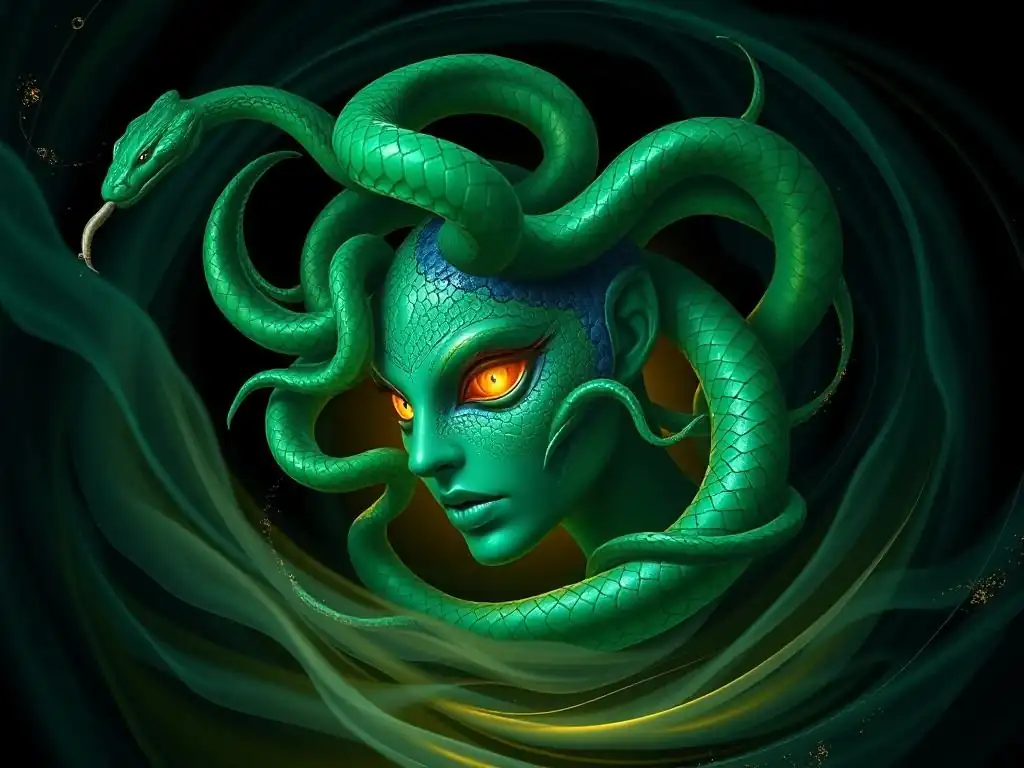
Delve into a world where gods and monsters clash, and stories whisper through the ages. Are you ready to uncover the truth behind the legends? Prepare to be captivated as we embark on a journey to explore the captivating transformation of one of mythology's most iconic figures. Our journey begins with a deep dive into the Medusa Gorgon myth evolution, tracing its origins and impact. What secrets lie within her gaze? Let's unravel the threads of this enduring tale together.
Defining the Opioid Crisis: Key Statistics and Trends
While seemingly unrelated to modern health crises, examining the Medusa Gorgon myth evolution reveals shifts in how this powerful figure has been defined across different eras and cultural interpretations. Early Greek sources, such as Hesiod's Theogony (circa 700 BCE), introduce Medusa as one of three Gorgon sisters—Stheno, Euryale, and Medusa—daughters of the sea deities Phorcys and Ceto. Notably, Hesiod describes them dwelling "beyond glorious Ocean" in the direction of Night, portraying them primarily as formidable, monstrous beings.
The key early "statistic" is that Medusa is the only mortal among her sisters, making her vulnerable to Perseus. This foundational definition as a monstrous, mortal entity is the starting point from which her myth would later diverge significantly.
Subsequent classical depictions, particularly in Ovid's Metamorphoses (circa 8 CE), introduce a dramatic shift in Medusa's narrative, adding layers that were absent in earlier accounts. Ovid presents Medusa not initially as a monster, but as a beautiful maiden, a priestess in the temple of Athena. Her transformation into the serpentine-haired Gorgon is depicted as a punishment inflicted by Athena after Medusa was violated by Poseidon within the goddess's sanctuary.
This later Roman interpretation adds a tragic backstory, changing the "trends" of her portrayal from pure monster to victim of divine wrath. Understanding this shift is crucial for tracing the full Medusa Gorgon myth evolution.
In the context of the Medusa myth, the "devastating consequences" manifest primarily through her petrifying gaze, which represents a form of "mortality" or "morbidity" for those who encounter her directly. Greek myths recount numerous victims turned to stone by Medusa, illustrating the deadly power attributed to the Gorgon.
The narrative of Perseus's quest emphasizes this danger, requiring divine aid—a polished shield from Athena and winged sandals from Hermes—to avoid looking upon her directly and thus escape her fatal power. The stone statues left in her lair serve as chilling markers of her destructive capability, a literal representation of lives halted.
Beyond individual mortality, the "social costs" within the myth involve the terror she inspires and the challenge she poses to heroes. Medusa and her sisters are often depicted as figures of chaos and fear, representing primal, untamable forces.
Her defeat by Perseus is framed as a heroic act that brings order or removes a significant threat. Furthermore, the use of her severed head as a weapon by Perseus, capable of petrifying adversaries like Atlas and Polydectes, demonstrates that her "consequence" extends even beyond her own death, impacting the outcome of other conflicts and shaping subsequent mythological events, reinforcing her lasting symbolic weight in the Medusa Gorgon myth evolution.
Factors Contributing to the Crisis: A Complex Web of Influences
Several factors contributed to the evolution and differing interpretations of the Medusa Gorgon myth over centuries. Early oral traditions and regional variations across ancient Greece likely played a role before myths were standardized in written form. The transition from Hesiod's straightforward monstrous figure to Ovid's tragic victim highlights the influence of different cultural contexts and literary purposes. Greek society's evolving views on gods, heroes, and the role of women may have subtly shaped how the myth was told and received.
The adoption and adaptation of Greek myths by Roman culture, as seen in Ovid's version, is a significant influence. Roman authors often reinterpreted Greek narratives through their own cultural lens, sometimes adding moralizing elements or focusing on different aspects of the story. The spread of these myths through literature, art (like vase painting and sculpture), and later, through philosophical and psychoanalytic interpretations, further diversified the Medusa Gorgon myth evolution, creating the complex figure known today, viewed variously as a monster, victim, symbol of female rage, or even a protective emblem.
- Defining the Opioid Crisis: Key Statistics and Trends
- The Devastating Consequences: Mortality, Morbidity, and Social Costs
- Factors Contributing to the Crisis: A Complex Web of Influences
- What are the earliest known depictions of Medusa, and how do they differ from later versions?
- How did Ovid's version of the Medusa myth contribute to the character's portrayal as a victim?
- What is the significance of Medusa's gaze turning people to stone within the myth?
- Besides art and literature, how has the Medusa myth been used in contemporary society?
- How did interpretations of Medusa evolve from ancient Greece to modern times?
The Role of Prescription Opioids: From Pain Management to Addiction
The Rise of Prescription Opioid Use: Over-Prescribing and Marketing
Within the narrative arc of the Medusa Gorgon myth evolution, one could metaphorically view the "rise" of specific interpretations as forms of "over-prescribing" or "marketing" certain aspects of her story. For instance, the monstrous depiction from early Greek sources became widely "prescribed" in classical art and literature, emphasizing her terrifying appearance—snakes for hair, often tusks, scales, and a horrifying face. This visual "marketing" made the Gorgon image instantly recognizable and synonymous with danger and the monstrous feminine, becoming a dominant cultural trope that overshadowed other potential readings for centuries.
Later, the Ovidian narrative, focusing on Medusa's initial beauty and her punishment, can be seen as a different form of "prescription," offering a more sympathetic or tragic lens. This version was "marketed" through Roman literature and subsequently rediscovered and amplified during later periods, like the Renaissance and Victorian era, when classical texts were revisited. This shift in focus introduced the idea of Medusa as a victim, a radical departure from the purely monstrous figure and a significant phase in the Medusa Gorgon myth evolution, showing how narratives can be reshaped and "re-marketed" over time.
The Link Between Prescription Opioids and Heroin Use
Drawing a metaphorical parallel in the Medusa Gorgon myth evolution, one could explore how emphasis on certain "prescribed" aspects of her myth (like her monstrous nature) might lead to a cultural "dependence" or "use" of related symbolic elements, akin to the link between prescription opioids and heroin. The powerful, terrifying image of Medusa became linked to various symbolic "uses," such as warding off evil (the apotropaic function of the Gorgoneion, her head used as an amulet or on armor) or representing female power and danger. This "use" of her image became widespread, almost an "addiction" to its symbolic potency.
Furthermore, the transition from a purely monstrous Medusa to one with a tragic backstory (the "prescription" of the Ovidian myth) didn't erase the older, monstrous image but rather added complexity, sometimes creating a tension between the two. This is akin to how prescription opioid use doesn't replace illicit drug use but can sometimes lead to it, creating a more complex and dangerous situation. The Medusa Gorgon myth evolution shows how layers of meaning can build upon each other, with later interpretations influencing but not entirely replacing earlier ones, resulting in a multifaceted and sometimes contradictory figure.
Regulatory Efforts and Their Impact on Prescription Opioid Availability
Considering "regulatory efforts" in the context of the Medusa Gorgon myth evolution requires a metaphorical interpretation, perhaps focusing on how cultural or artistic conventions have "regulated" or shaped the popular perception and "availability" of certain narrative versions. For centuries, classical interpretations, heavily influenced by prominent writers like Hesiod and Ovid, acted as a form of "regulation," setting the standard for how the myth was understood and retold. The dominance of these literary sources limited the "availability" or prominence of alternative, less-known versions or interpretations.
Later cultural periods, such as the feminist interpretations of the late 20th and 21st centuries, can be seen as new "regulatory efforts" challenging the established narratives. These interpretations often re-examine Medusa through a lens of victimhood, survival, and female power, seeking to counter the traditional portrayal solely as a monster or a punished woman. This challenges the historical "availability" of the myth, making space for new readings and adding further layers to the complex Medusa Gorgon myth evolution, demonstrating how cultural shifts can "regulate" how myths are perceived and disseminated.
The Emergence of Fentanyl: A Deadly Catalyst

The Characteristics and Potency of Fentanyl
In the Medusa Gorgon myth evolution, if we seek a "deadly catalyst" akin to Fentanyl, it might be the introduction of specific, high-impact narrative elements that dramatically altered the myth's trajectory or symbolic "potency." The detail of Medusa's petrifying gaze, while present early on, gained immense "potency" as it became the defining characteristic of her danger. This single, lethal ability became the focal point of the myth, making her defeat a task requiring extraordinary cunning and divine intervention. This "characteristic" is arguably the most "potent" element of her legend.
Another element that acts as a catalyst is the Ovidian addition of Medusa's origin story as a beautiful maiden. This detail, though introduced much later than the core Gorgon myth, dramatically increased the narrative's complexity and emotional weight. It transformed Medusa from a simple monster into a figure of tragedy, adding layers of victimhood and divine injustice. This "characteristic" fueled entirely new interpretations and significantly impacted the subsequent Medusa Gorgon myth evolution, acting as a catalyst for re-evaluation and re-imagining the Gorgon figure.
The Illicit Fentanyl Supply Chain: Sources and Distribution
Mapping the "illicit supply chain" onto the Medusa Gorgon myth evolution requires considering how different narrative "sources" and "distribution" methods contributed to the myth's spread and transformation. The primary early "sources" were oral traditions and early Greek poets like Hesiod and Pindar. Their works served as the initial points of "supply" for the myth, distributing it through performance and recitation across ancient Greece.
Later, Roman writers like Ovid became significant "sources," adapting the myth and distributing it through written literature across the Roman world. The "supply chain" expanded further through visual arts—sculptures, vase paintings, and architectural elements featuring the Gorgoneion—which provided widespread visual "distribution" of Medusa's image, often detached from her full narrative. In modern times, the "supply chain" includes books, films, video games, and online platforms, each acting as a "source" and "distribution" channel, contributing to the ongoing and diverse Medusa Gorgon myth evolution across global cultures.
The Impact of Fentanyl on Overdose Deaths and Public Health
While the Medusa Gorgon myth doesn't involve "overdose deaths" or "public health" crises in a literal sense, its impact within the realm of mythology and cultural symbolism can be seen as having profound effects on narrative and artistic "health." The introduction of Medusa's petrifying gaze had a powerful, almost "fatal" impact on anyone within the narrative who encountered her unprepared, leading to their symbolic "deaths" (turning to stone). This element became a central focus, sometimes overshadowing other aspects of the Gorgons.
Furthermore, the later addition of her tragic origin story in Ovid significantly impacted the "health" of the myth's interpretation, adding complexity but also potentially diluting the primal terror of the earlier purely monstrous figure for some audiences. The Medusa Gorgon myth evolution shows how narrative elements can have significant "impact," altering the character's perception and symbolism, sometimes leading to a proliferation of diverse, even conflicting, interpretations within the cultural "public sphere."
Addressing the Crisis: Prevention, Treatment, and Harm Reduction Strategies
Prevention Efforts: Educating the Public and Reducing Demand
In the context of the Medusa Gorgon myth evolution, "prevention efforts" could be seen as the ways in which storytellers, artists, and later interpreters have attempted to "educate the public" about the various facets of the myth, potentially "reducing demand" for simplistic or harmful interpretations. For example, emphasizing the Ovidian version of Medusa as a victim serves as a form of "education," challenging the purely monstrous portrayal and encouraging a more nuanced understanding of her story's origins and Athena's controversial role.
Efforts to highlight the apotropaic function of the Gorgoneion—its use as a protective symbol to ward off evil—also "educate the public" about a different aspect of Medusa's image, shifting focus from her as a source of danger to her image as a defense against it. This "reduces demand" for seeing her solely as a figure of terror. These various retellings and interpretations contribute to a richer understanding of the Medusa Gorgon myth evolution, acting as forms of cultural "prevention" against monolithic or superficial readings.
Treatment Options: Medication-Assisted Treatment and Behavioral Therapies
Applying the concept of "treatment options" to the Medusa Gorgon myth evolution involves examining how different cultural or academic approaches have sought to "treat" or re-evaluate the myth's entrenched meanings. Modern critical interpretations, particularly from feminist perspectives, can be seen as a form of "behavioral therapy" for the myth, analyzing its historical context and challenging patriarchal readings that portray Medusa solely as a dangerous female figure who must be subdued. This "therapy" aims to correct historical biases.
Psychoanalytic interpretations, such as Freud's analysis of the Medusa head as a symbol of castration anxiety, represent another form of "treatment," offering a specific psychological framework through which to understand the myth's power and persistence. While not "medication-assisted," these academic approaches provide new lenses ("medication" in a metaphorical sense) for understanding the myth's complex "pathology" or enduring psychological impact, contributing significantly to the ongoing Medusa Gorgon myth evolution by offering alternative ways to process and interpret the ancient narrative.
Harm Reduction Strategies: Naloxone Distribution and Syringe Services Programs
Within the Medusa Gorgon myth evolution, "harm reduction strategies" can be understood as the ways in which the myth has been adapted or re-framed to mitigate potentially negative or simplistic interpretations. The widespread use of the Gorgoneion as a protective amulet or architectural feature (like on temple pediments) is an ancient form of "harm reduction." Instead of fearing Medusa's image, people used it to ward off harm, turning her terrifying power into a protective force. This is akin to "distributing Naloxone"—using a potentially dangerous element (her image) to counter a greater threat (evil).
Contemporary artistic and literary retellings that focus on Medusa's perspective, portraying her as a survivor of assault and divine punishment, represent modern "harm reduction." These narratives aim to "reduce harm" by counteracting centuries of portrayal solely as a monster, offering a more empathetic and complex view that acknowledges the injustices she suffered. These strategies contribute to a more nuanced understanding of the Medusa Gorgon myth evolution, providing alternative narratives that mitigate the "harm" of one-dimensional interpretations.
The Role of Government and Policy: Legislative and Regulatory Responses
Federal Initiatives: Funding, Research, and Law Enforcement
Considering "federal initiatives" in the context of the Medusa Gorgon myth evolution involves thinking about overarching cultural forces or authorities that have influenced its development. In ancient times, the patronage of powerful city-states like Athens or the influence of major religious centers could be seen as analogous to "federal funding" or "initiatives," supporting the creation and dissemination of certain versions of myths through commissioned art, poetry, and plays. The inclusion of the Gorgoneion on Athena's shield (a symbol of Athens) represents a form of official "policy" or "initiative" integrating Medusa's image into state iconography.
Later, institutions like universities and academic presses, through "research" and publication, act as modern "federal initiatives," funding and disseminating scholarly analysis of the myth's origins and evolution. While not "law enforcement" in a literal sense, the establishment of classical studies as a discipline has "regulated" the study of myths, setting standards for textual analysis and historical context, thereby influencing how the Medusa Gorgon myth evolution is understood and taught globally.
State and Local Responses: Innovative Programs and Policies
Expanding on the idea of governing bodies, "state and local responses" in the Medusa Gorgon myth evolution can be likened to regional variations and specific artistic or literary schools that developed distinct interpretations. Different Greek city-states or regions might have had slightly different versions of the Gorgon myth, reflecting local traditions or emphases. For instance, the style of depicting the Gorgon in Corinthian pottery differs from that in Attic pottery, showing "local responses" in artistic "policy."
Individual artists, playwrights like Euripides (who wrote a play Phorcides about the Gorgons, now lost), or philosophers also offered "innovative programs" in interpreting the myth, contributing unique perspectives that added to its complexity. These "state and local" level contributions, while perhaps less universally impactful than major pan-Hellenic or Roman versions, played a vital role in the diverse tapestry of the Medusa Gorgon myth evolution, showing how localized interpretations added depth and variety.
Legal Battles: Holding Pharmaceutical Companies Accountable
Applying "legal battles" and "holding companies accountable" to the Medusa Gorgon myth evolution is a significant metaphoric stretch, but one could view it as the ongoing critical engagement with the myth that "holds accountable" historical narratives for their portrayal of Medusa. Modern feminist critiques, for example, engage in a form of "legal battle" against traditional interpretations that they argue have unfairly demonized Medusa, portraying her as solely a monster rather than acknowledging her victimhood or potential as a symbol of female power.
These critical analyses "hold accountable" the historical "producers" of the myth (ancient authors and artists) for perpetuating potentially harmful stereotypes or for omitting crucial aspects of her story (like the Ovidian backstory). This constant re-evaluation and challenging of established meanings is a form of intellectual "litigation" that drives the continued Medusa Gorgon myth evolution, ensuring that the myth remains a site of dynamic interpretation rather than a static, unchallenged narrative.
The Human Cost: Stories of Individuals, Families, and Communities
Personal Narratives: Voices of Those Affected by Opioid Addiction
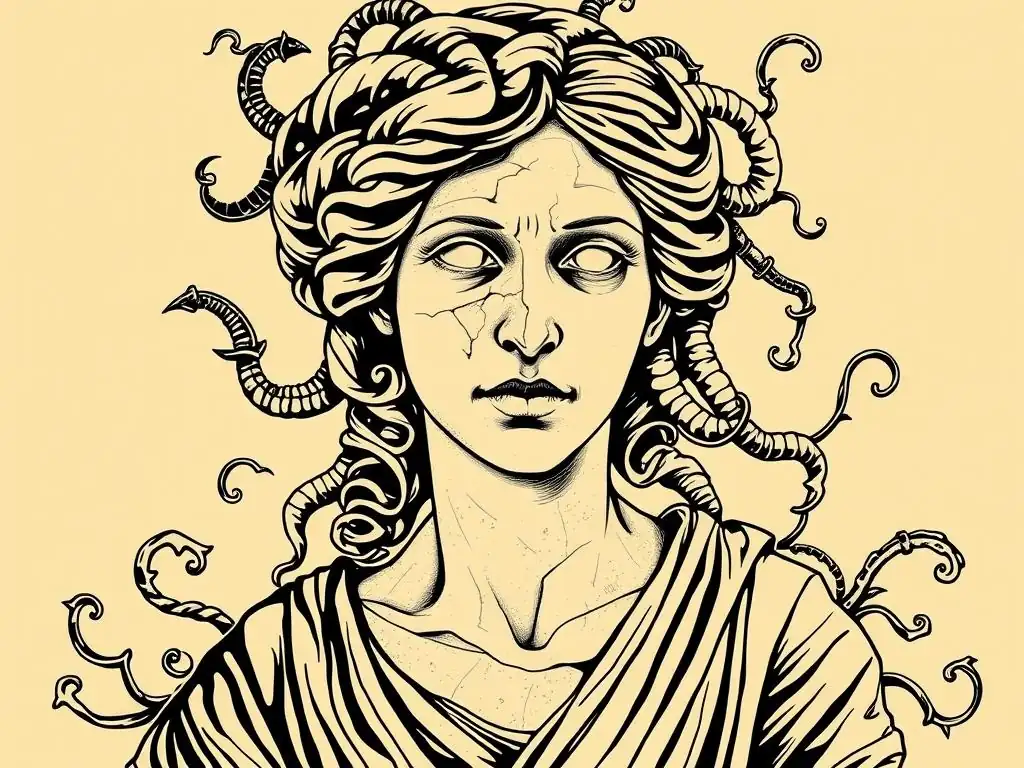
While Medusa is a mythical figure, the "human cost" in her story can be explored through the "personal narratives" of characters affected by her power or her myth. Perseus's story is the central "personal narrative," detailing his quest, his fear, and his triumph over the Gorgon. His "experience" of needing divine help and using Medusa's severed head reflects the profound impact she had on individuals within the myth's world. The "voices" of her victims, though silent in their petrified state, speak volumes about her terrifying power within the narrative.
Beyond the myth itself, the "personal narratives" of artists, writers, and interpreters throughout history reveal their individual fascination and engagement with the Medusa figure. Examining how figures like Caravaggio depicted her severed head or how later poets re-imagined her story provides "voices" showing the enduring personal impact of the Medusa Gorgon myth evolution on human creativity and thought across centuries, demonstrating her power to inspire and provoke diverse responses.
The Impact on Families and Children: Trauma, Loss, and Foster Care
The "impact on families and children" in the Medusa Gorgon myth evolution can be seen in the disruption and consequences within the mythological world she inhabits. Perseus's actions, driven by his need to protect his mother Danaë from the unwanted advances of King Polydectes, lead him on the quest to kill Medusa. His success directly impacts his family, allowing him to save Danaë and eventually overthrow Polydectes, but also causing "loss" for Medusa's own family, her immortal Gorgon sisters who mourn her death.
Furthermore, the birth of Pegasus and Chrysaor from Medusa's neck after her decapitation represents a complex "impact" on her "family" lineage. These offspring, born from her death, go on to have their own significant roles in mythology, creating a legacy that stems directly from the violent end of their mother. This element adds another layer to the myth's "human cost," illustrating how even in death, Medusa's story continues to affect mythological "families" and lineages, a key part of the Medusa Gorgon myth evolution.
The "community-level impacts" of Medusa within her myth involve the terror she inspires and the threat she poses to order and safety, representing a "strain" on the social fabric of the mythological world. Her presence in a region renders it dangerous and uninhabitable, a significant "strain on resources" as areas become no-go zones due to her petrifying power. The quest to defeat her is often undertaken for the benefit of a community or kingdom, highlighting the collective relief and restoration of order that follows her demise.
The widespread use of the Gorgoneion image across ancient Greek society—on temples, shields, coins, and pottery—demonstrates a different kind of "community-level impact." This pervasive use indicates how deeply Medusa's image was integrated into the social fabric, serving a collective purpose (apotropaic protection) and reflecting shared cultural beliefs about fear and protection. This cultural integration is a powerful example of the Medusa Gorgon myth evolution's impact on ancient communities.
Future Directions: Towards a Sustainable Solution
Research and Innovation: Developing New Treatments and Prevention Strategies
Exploring "future directions" for the Medusa Gorgon myth evolution involves ongoing "research and innovation" in how the myth is interpreted and utilized. Academic "research" continues to uncover new historical context and analyze the myth through various theoretical lenses (feminist, psychoanalytic, anthropological), constantly "developing new treatments" for understanding its complex symbolism. This scholarly work prevents the myth from becoming static, ensuring its continued relevance.
"Innovation" in artistic and literary interpretations constantly "develops new prevention strategies" against simplistic readings. Contemporary novels, poems, and visual art that reimagine Medusa's story offer fresh perspectives, challenging traditional views and encouraging audiences to engage with the myth in novel ways. This continuous creative and scholarly engagement is vital for the sustainable life of the Medusa Gorgon myth evolution.
In the metaphorical realm of the Medusa Gorgon myth evolution, "collaboration and coordination" can be seen in the interplay between different cultural forms and interpretations. The myth's survival and evolution depend on the "integration" of various "services"—literary retellings, visual art, academic analysis, and popular culture adaptations—each contributing to the overall understanding and dissemination of the story. No single source or interpretation exists in isolation.
The dialogue between these different forms of engagement—how a new novel influences academic thought, or how an art exhibition sparks public interest—represents a form of "collaboration and coordination" that ensures the myth remains dynamic and accessible. This integrated approach, rather than relying on a single "healthcare" or "social service," allows the Medusa Gorgon myth evolution to thrive across diverse cultural landscapes and academic disciplines.
Addressing the Root Causes: Poverty, Mental Health, and Trauma
To find a "sustainable solution" for understanding the Medusa Gorgon myth evolution in its full complexity, one might argue for "addressing the root causes" within the narrative itself, such as divine injustice and victimhood ("trauma"), which contribute to her transformation. While not "poverty" or "mental health" in a literal sense, the myth touches upon themes of powerlessness and suffering that resonate with these modern concepts. Examining Athena's role in punishing a victim of assault, for instance, highlights a "root cause" of Medusa's monstrous state in the Ovidian version.
By focusing on these narrative "root causes"—the circumstances that led to her transformation—interpreters can gain a deeper understanding of the myth's layers beyond the surface-level monster narrative. This approach contributes to a more complete picture of the Medusa Gorgon myth evolution, moving towards a "sustainable solution" for appreciating its enduring cultural power and psychological depth by acknowledging the complex origins of her story.
Conclusion: A Call to Action
The Urgency of Continued Efforts
The Medusa Gorgon myth evolution is not a closed chapter; it is an ongoing cultural process. There is an "urgency of continued efforts" to explore its nuances, challenge simplistic interpretations, and appreciate its multifaceted symbolism. As society evolves, so too does our understanding and application of ancient myths. Scholars must continue their research, artists their reinterpretations, and the public their engagement to keep the myth alive and relevant.
Ignoring the complexity of Medusa's story—reducing her solely to a monster or a victim—misses the richness that centuries of interpretation have added. The need for ongoing critical and creative engagement is urgent to ensure that the full scope of the Medusa Gorgon myth evolution is recognized and appreciated, moving beyond superficial understandings to grasp the enduring power of this ancient figure.
Hope for the Future: Reducing Suffering and Building Resilient Communities
Finding "hope for the future" in the context of the Medusa Gorgon myth evolution lies in its potential to serve as a powerful narrative for exploring complex themes like victimhood, transformation, female power, and the nature of monstrosity. By engaging with the myth in a critical and empathetic way, we can use it as a tool for understanding human experiences and challenging societal norms, potentially "reducing suffering" by providing narratives that resonate with contemporary issues.
The myth's capacity for constant reinterpretation demonstrates the "resilience" of cultural narratives and the communities that engage with them. Each new interpretation builds upon the last, creating a richer, more complex figure that can speak to new generations. By continuing to explore and debate the Medusa Gorgon myth evolution, we contribute to building "resilient communities" of thinkers and storytellers who understand the power of ancient narratives to illuminate modern life.
Frequently Asked Questions
What are the earliest known depictions of Medusa, and how do they differ from later versions?
The earliest depictions often portrayed Medusa as a fearsome goddess or apotropaic symbol meant to ward off evil. These early versions often lacked the tragic backstory that became prominent later in the myth's evolution.
How did Ovid's version of the Medusa myth contribute to the character's portrayal as a victim?
Ovid's Metamorphoses introduced the narrative of Medusa being raped by Poseidon in Athena's temple, leading to her transformation as punishment. This portrayal significantly shifted her image to one of a tragic victim of circumstance.
What is the significance of Medusa's gaze turning people to stone within the myth?
The petrifying gaze is often interpreted as a symbol of female power, fear, and the destructive potential of repressed rage. It also represents the silencing and objectification women can face.
Besides art and literature, how has the Medusa myth been used in contemporary society?
Medusa's image and story are used in contemporary society as a symbol of feminist empowerment, female rage, and a critique of patriarchal structures. She represents a woman wronged fighting back.
How did interpretations of Medusa evolve from ancient Greece to modern times?
The interpretations evolved from a monster to be feared to a symbol of female strength and resilience. Modern interpretations often focus on her victimization and the societal forces that shaped her fate.
Final Reflection: Medusa's Enduring Gaze: A Legacy of Power and Misunderstanding
The enduring power of the Medusa myth isn't just a relic of ancient Greece; it's a potent reflection of our own anxieties about female power and the societal forces that shape our narratives. The story of Medusa, far from being a simple tale of a monstrous woman, continues to resonate because it speaks to deeply ingrained fears and prejudices that persist even today. We see echoes of her in modern representations of the "femme fatale," the misunderstood outcast, and the woman punished for her perceived transgression.
Medusa's evolution throughout history reveals a fascinating interplay between societal values and the creative interpretation of myth. Her image has been manipulated and reinterpreted countless times, shifting from a terrifying monster to a symbol of female empowerment, a victim of patriarchal violence, and even a figure of artistic inspiration. The monster is always a mirror reflecting our deepest fears and anxieties,
a sentiment that perfectly encapsulates Medusa's enduring relevance. Her story forces us to confront uncomfortable truths about the ways we construct narratives around women and power, and how those narratives can be both destructive and transformative.
Consider the ways in which Medusa's story has impacted your own understanding of mythology, feminism, and the power of narrative. How can we, as individuals and as a society, learn to rewrite these narratives, to reclaim the stories of those who have been marginalized and misunderstood?
Let Medusa's gaze challenge you to examine your own biases and to actively participate in creating a more equitable and nuanced understanding of the world around us. Her legacy is not simply one of horror, but also one of resilience, transformation, and the enduring power of the human spirit to reinterpret and redefine its own history.
Unmask Medusa's Legacy: Dive Deeper into Gorgon Lore!
Thanks for exploring the fascinating world of Medusa with us! We hope you gained a new appreciation for the complexities of this iconic figure beyond the typical monstrous portrayal. Ready to continue your journey into Greek mythology?
- Craft your own Medusa-inspired artwork or story: Let your creativity flow and reinterpret Medusa's tale from a fresh perspective. This could be a drawing, a short story, a poem—whatever sparks your imagination!
- Share this article with a friend who loves mythology: Let them delve into the myths surrounding Medusa and discover her surprising history.
- Explore other fascinating mythological figures on our site. You might discover a new favourite myth!
What unexpected aspect of Medusa's story resonated most with you, and how might it inspire your own creative explorations?