
From Settlement to Saga: How Iceland Created Its National Narrative

Welcome to Mythology and Legends, your gateway to the timeless tales that shape our world. Ever wondered how a nation forges its identity from the mists of time? Dive into our latest exploration of Norse and Celtic Mythology as we unravel the fascinating process of Icelandic national narrative formation. Prepare to journey from the first settlers to the epic sagas, and discover the powerful stories that built a nation. What secrets lie hidden within the ancient words? Let's begin!
- The Landnámabók and the Foundation of Icelandic Society
-
Frequently Asked Questions
- What key historical period significantly shaped Icelandic national narrative formation?
- How did the Sagas contribute to the development of a national narrative?
- What role did landscape and geography play in shaping the Icelandic national narrative?
- Beyond literature, what other factors influenced the creation of Iceland's national narrative?
- How relevant is the Icelandic national narrative to contemporary Icelandic society?
- Final Reflection: Forging a Nation, Forging an Identity
- Unlock Iceland's Epic Story: Dive Deeper into the Saga!
The Landnámabók and the Foundation of Icelandic Society
Documenting the Settlement Era: The Book of Settlements as Proto-Narrative
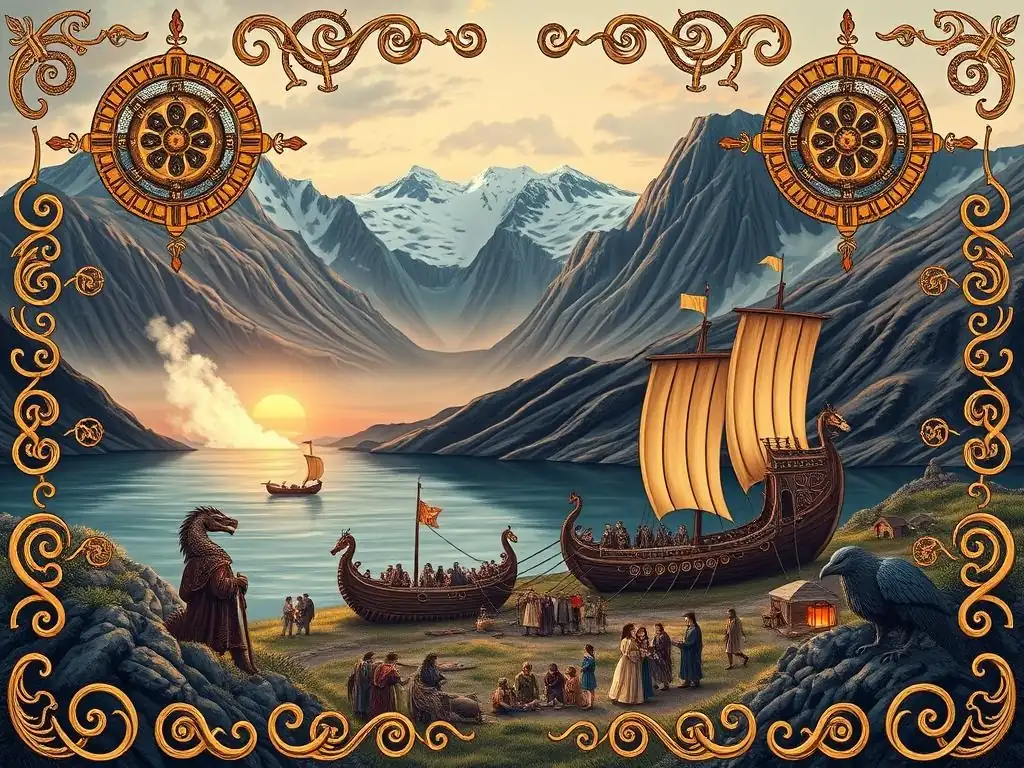
The Landnámabók, or Book of Settlements, stands as a unique historical document, chronicling the arrival and land claims of the early settlers in Iceland from roughly the late 9th century into the 10th century. This extensive work lists over 3,500 individuals and details the settlement of more than 1,500 farms across the island.
Unlike typical historical chronicles of the time, which often focused on kings and battles, the Landnámabók centers on the individuals and families who carved a new society out of the wilderness. This focus on the collective, albeit aristocratic, settlement process fundamentally established a sense of shared origin and historical continuity among Icelanders, laying crucial groundwork for the Icelandic national narrative formation.
The early settlers, primarily of Norwegian descent but with a significant proportion of people from Viking colonies in the British Isles (bringing Celtic influences), were a diverse group seeking land and autonomy, often fleeing the increasing power of King Harald Fairhair in Norway. Figures like Ingólfr Arnarson, traditionally considered the first permanent Norse settler in Reykjavík around 870 AD, are central to this foundational narrative.
Their pioneering spirit, resilience in a harsh environment, and the act of claiming land directly – rather than receiving it from a monarch – instilled values of independence and self-reliance that became cornerstones of Icelandic identity and were later amplified in the sagas.
The development of the Althingi, founded in 930 AD at Þingvellir, marked a pivotal moment in the formation of Icelandic society and its unique character. This outdoor assembly served as the legislative and judicial body for the entire island, where chieftains (goðar) and freemen gathered annually to pass laws, resolve disputes, and make critical decisions.
The Althingi was a remarkable institution for its time, creating a commonwealth structure that relied on consensus, law, and public assembly rather than the centralized authority of a king. This self-governance fostered a strong sense of civic identity and legal tradition, deeply influencing the developing Icelandic national narrative formation by emphasizing law, order, and collective responsibility.
A striking characteristic of early Iceland was the absence of a traditional monarchy or a strong central executive power. Authority was dispersed among the goðar, whose influence was based on a combination of land ownership, wealth, and personal following, rather than inherited royal decree. This lack of a king meant that the common narrative focus on royal lineages and state-building, prevalent elsewhere in Europe, was absent.
Instead, the Icelandic narrative evolved to center on the exploits, conflicts, and legal struggles of prominent families and individuals, as vividly portrayed in the later sagas. This decentralized power structure necessitated a reliance on law and negotiation, shaping a cultural emphasis on verbal agreement, reputation, and the power of narrative itself.
Frequently Asked Questions
What key historical period significantly shaped Icelandic national narrative formation?
The Settlement Era (Landnámsöld) and the subsequent Saga Age are crucial to understanding how Iceland created its national narrative. These eras provided the foundation for Icelandic identity and self-perception.
How did the Sagas contribute to the development of a national narrative?
The Icelandic Sagas, written in the 13th and 14th centuries, served as historical records and literary masterpieces, shaping perceptions of Iceland's past and heroic figures. These stories helped to establish a shared cultural heritage.
What role did landscape and geography play in shaping the Icelandic national narrative?
Iceland's isolated location and harsh environment fostered a sense of independence and resilience, which became integral parts of the national narrative. The landscape is often portrayed as both a challenge and a source of strength.
Beyond literature, what other factors influenced the creation of Iceland's national narrative?
Oral traditions, family histories, and legal codes, such as the Grágás, all contributed to the formation of a collective memory and a sense of shared identity beyond the Sagas. The Althing also played a vital role.
How relevant is the Icelandic national narrative to contemporary Icelandic society?
The national narrative continues to influence Icelandic identity, cultural values, and political discourse. It provides a framework for understanding Iceland's place in the world and its historical trajectory.
Final Reflection: Forging a Nation, Forging an Identity
The creation of a national narrative is not a static event, but a continuous process of negotiation and reinterpretation, and Iceland's journey serves as a potent example of this enduring struggle. The meticulous construction of Iceland's national identity, from its settlement sagas to its modern literary and cinematic representations, reveals a fascinating interplay between historical fact, cultural myth, and the ever-evolving needs of a nation. This process, far from being confined to the past, continues to shape Iceland's relationship with its history and its place in the world today.
The enduring power of the sagas, particularly their influence on Iceland's sense of self and its unique cultural identity, is undeniable. They provide a framework for understanding Icelandic society, its values, and its relationship with its environment. These stories, passed down through generations, continue to inform contemporary Icelandic literature, art, and even political discourse. The sagas are not merely historical accounts; they are living narratives that continue to shape our understanding of ourselves and our place in the world.
– (This would be replaced with an actual quote from a relevant Icelandic scholar or author). The ongoing relevance of these ancient texts highlights the enduring power of storytelling in shaping national identity.
Consider the impact of Iceland's national narrative on your own understanding of nationhood. How does your own country's story shape your identity? What are the elements of your national narrative that resonate most strongly with you, and which ones might require critical re-evaluation? I urge you to explore the narratives that shape your own world, to question their origins, and to consider how these stories, both grand and personal, contribute to the tapestry of human experience. By understanding the process of national narrative formation, we can better understand ourselves and the world around us.
Unlock Iceland's Epic Story: Dive Deeper into the Saga!
Thanks for joining us on this journey through Iceland's captivating history! We hope you've gained a new appreciation for the power of storytelling and the rich tapestry of Icelandic culture. Ready to take your exploration further?
- Craft your own Icelandic saga: Imagine a scene from Iceland's history and write a short paragraph describing it, using the vocabulary and themes we've discussed. Share your creation in the comments below! This is your chance to become a storyteller!
- Explore Iceland's literary landscape: Delve deeper into Icelandic sagas with further research – perhaps focusing on a specific saga that caught your interest.
- Share this fascinating history with friends and family – let them discover the magic of Icelandic storytelling too!
What part of Iceland's narrative resonated most with you, and why do you think its storytelling traditions have endured for so long?