
Fomorians: Primordial Foes of the Tuatha Dé Danann Unveiled

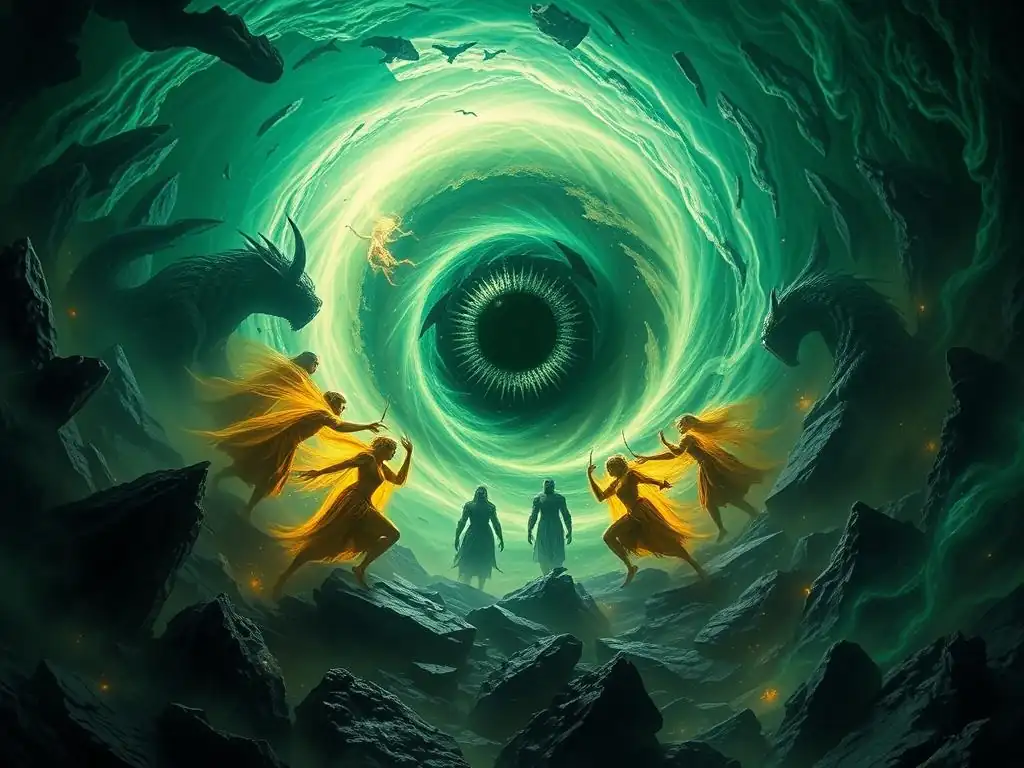
Welcome to Mythology and Legends, your gateway to the world's most captivating stories! Ever wondered about the shadowy figures lurking behind the vibrant tales of Irish folklore? Prepare to descend into the primordial darkness as we unveil the Fomorians: the fearsome foes of the Tuatha Dé Danann. Their ancient battles shaped the landscape of myth, but who were they really, and what drove their relentless war? Discover the secrets within...
- Introduction to the Fomorians: Ancient Enemies in Irish Mythology
- The Fomorians: A Deep Dive into Their Origins and Appearance
- Key Fomorian Figures in Irish Mythological Battles
- The Battles Between the Tuatha Dé Danann and the Fomorians: A Clash of Civilizations
- The Significance of the Fomorians in Tuatha Dé Danann Mythology and Celtic Folklore
- The Legacy of the Fomorians: From Ancient Myths to Modern Interpretations
- Fomorian Mythology: Exploring the Dark Side of Irish Legends
-
Frequently Asked Questions
- What role did the Fomorians play in Tuatha Dé Danann mythology?
- Who were some of the most prominent Fomorian figures mentioned in the myths?
- What were the defining characteristics that distinguished the Fomorians from the Tuatha Dé Danann?
- How did the conflicts between the Tuatha Dé Danann and the Fomorians shape the landscape of Irish mythology?
- What is the lasting significance of the Fomorians in understanding Irish folklore and culture?
- Final Reflection: Echoes of Ancient Conflict, Modern Relevance
- Unleash Your Inner Mythologist: Dive Deeper into Fomorean Lore!
Introduction to the Fomorians: Ancient Enemies in Irish Mythology
Exploring the Origins of the Fomorians in Celtic Lore
In the rich tapestry of Irish mythology, the Fomorians stand as ancient, often monstrous figures, predating even the arrival of the divine Tuatha Dé Danann. Their origins are shrouded in mystery and varying accounts across different texts. Some legends depict them as indigenous inhabitants of Ireland, elemental forces tied to the sea and the wild, untamed aspects of nature. Other narratives suggest they were supernatural beings who arrived on the island in primordial times, establishing themselves as the dominant power before the coming of later races like the Nemedians, Fir Bolg, and ultimately, the Tuatha Dé Danann.
These early accounts, found primarily in medieval Irish texts such as the Lebor Gabála Érenn (The Book of Invasions), paint a picture of the Fomorians as a force of chaos and opposition. They are often described as existing from the very beginning, emerging from the depths or the darkness. Their presence represents a fundamental challenge to the ordered world brought by subsequent invaders. This foundational status positions them not merely as conquerors, but as a primal force against which all subsequent mythological inhabitants of Ireland had to contend, solidifying their role as the ultimate Tuatha Dé Danann mythology foes.
The Fomorians' Role as Antagonists of the Tuatha Dé Danann
The conflict between the Fomorians and the Tuatha Dé Danann is one of the central themes in Irish mythological cycles. The Fomorians represent the disruptive, often malevolent force that stands in opposition to the more divine and ordered nature of the Tuatha Dé Danann. This antagonism is not merely a territorial dispute but a clash of fundamental cosmic principles – chaos versus order, wildness versus civilization, darkness versus light. Their role as the primary Tuatha Dé Danann mythology foes is cemented in the narratives of occupation, oppression, and ultimately, epic battles.
The Fomorians subjected earlier inhabitants, and eventually the Tuatha Dé Danann themselves, to harsh tribute and tyrannical rule. Texts like the Cath Maige Tuired (The Battle of Mag Tuired) detail the oppressive taxes levied by the Fomorians, including demands for a significant portion of harvests and even children. This period of subjugation highlights their position as cruel overlords and provides the impetus for the great conflicts that define the relationship between these two powerful mythological groups. Their existence provides the dramatic tension and epic scale necessary for the grand narratives of conquest and resistance in Irish lore.
The Fomorians: A Deep Dive into Their Origins and Appearance
Unraveling the Etymology of "Fomorian": What Does the Name Mean?
The etymology of the name "Fomorian" is debated among scholars, adding another layer to their mysterious nature. The most common interpretation suggests the name comes from Old Irish elements: fo meaning "under" or "below," and muir meaning "sea." This would render the name as something like "those from under the sea" or "sub-marine beings." This aligns with some mythological descriptions that associate the Fomorians with the ocean depths or islands off the coast, reinforcing their connection to a realm outside the human or divine land.
Another proposed etymology links fo with a root meaning "hostile" or "evil," combined with mór meaning "great." This interpretation would suggest "great evil ones" or "great demons," emphasizing their role as antagonists and monstrous figures. A third theory connects muir to a word meaning "hostile multitude." While definitive proof remains elusive, the prevailing "under the sea" interpretation highlights their elemental, non-human origin, often contrasting with the sky-dwelling or land-based associations of the Tuatha Dé Danann, solidifying their image as the primordial Tuatha Dé Danann mythology foes.
Physical Descriptions of the Fomorians: Monstrous Forms and Deformed Appearances
Descriptions of the Fomorians vary widely across mythological texts, but a recurring theme is their grotesque and monstrous appearance. Unlike the often beautiful and human-like Tuatha Dé Danann, the Fomorians are frequently depicted with deformities or hybrid forms. Some are described as having only one eye, one arm, and one leg, embodying asymmetry and imperfection. Others possess animalistic features, such as the head of a goat, a bull, or other beasts, or even multiple limbs or heads.
Perhaps the most famous example of Fomorian deformity is Balor, often called Balor of the Evil Eye, who possessed a single, venomous eye capable of killing with a single glance. Another figure, Indech mac Dé Domnann, is described as having three rows of teeth and a horrific appearance. These physical characteristics serve to visually distinguish the Fomorians from the more idealized forms of the Tuatha Dé Danann and emphasize their connection to the wild, chaotic, and non-human forces they represent. Their monstrous forms reinforce their role as the primal, fearsome Tuatha Dé Danann mythology foes.
Fomorian Society: Hierarchy and Alliances
While often portrayed as a chaotic force, Fomorian society, as depicted in the myths, appears to have had a structure, albeit one based on might and fear. They were led by powerful kings and warriors who commanded vast numbers. Figures like Balor, Indech, and Bres (who was half-Fomorian, half-Tuatha Dé Danann) held positions of authority. The Cath Maige Tuired mentions a grand assembly of Fomorian kings and leaders gathering their forces, indicating a level of organization and alliance among different Fomorian factions or tribes when facing a common enemy like the Tuatha Dé Danann.
Their alliances were often strategic and ruthless. They formed pacts with earlier inhabitants, like the Nemedians, only to later oppress or betray them. The marriage alliance between Bres and Brigit of the Tuatha Dé Danann was a political maneuver intended to solidify Fomorian dominance, ultimately failing due to Bres's tyrannical rule. This demonstrates a capacity for complex, albeit often brutal, social and political structures within their ranks, necessary for maintaining their position as dominant antagonists and formidable Tuatha Dé Danann mythology foes for extended periods.
Key Fomorian Figures in Irish Mythological Battles
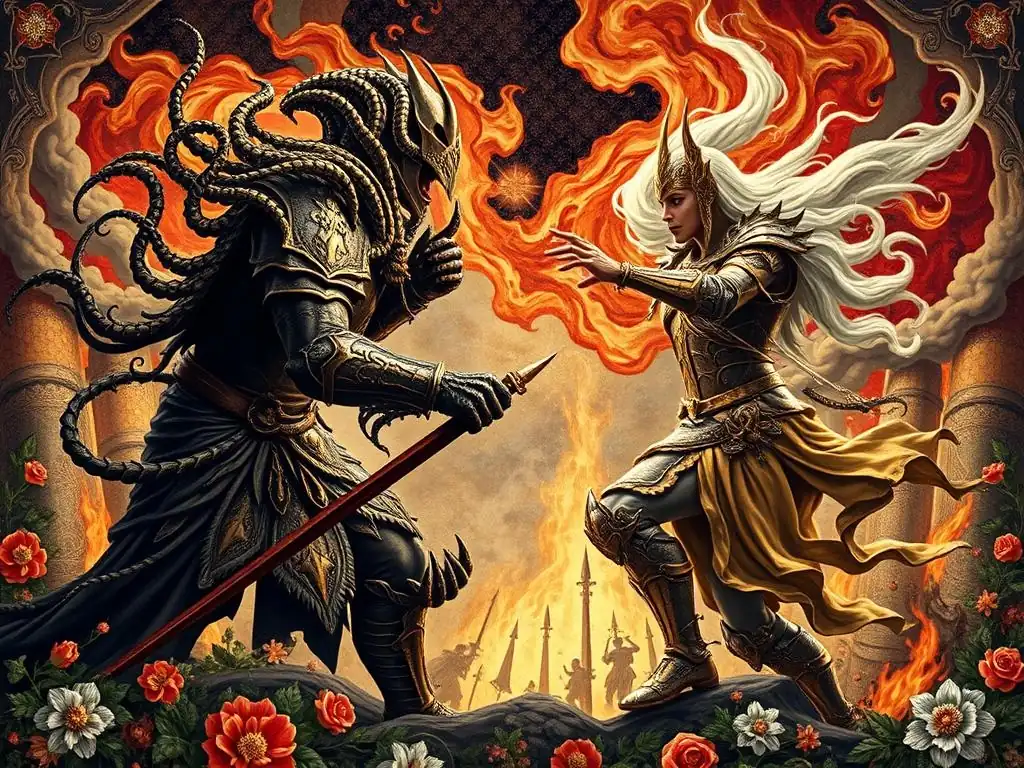
Balor of the Evil Eye: The Most Fearsome Fomorian Warrior
Balor is arguably the most iconic and fearsome figure among the Fomorians. His most striking feature was his single, enormous eye, located either in his forehead or the back of his head, which possessed immense destructive power. According to legend, this eye was capable of unleashing a deadly gaze that could wither armies or slay opponents instantly. The power of the eye was so great that it usually remained closed or covered, requiring multiple attendants to lift the lid in battle.
Balor is prominently featured in the Second Battle of Mag Tuired, where he leads the Fomorian forces against the Tuatha Dé Danann. His death is a pivotal moment in the battle and the larger mythological cycle. Prophecy foretold that he would be killed by his own grandson.
This prophecy came to pass when Lugh Lámhfhada, a champion of the Tuatha Dé Danann and Balor's grandson, slew him using a sling-shot stone hurled into his deadly eye. Balor's defeat marked a significant turning point, symbolizing the eventual triumph of the Tuatha Dé Danann over their most formidable Tuatha Dé Danann mythology foes.
Other Prominent Fomorian Leaders and Their Deeds
While Balor is preeminent, several other Fomorian leaders played significant roles in the conflicts with the Tuatha Dé Danann and earlier races. Indech mac Dé Domnann is another major figure mentioned in the Cath Maige Tuired as a powerful king and warrior who was killed by Lugh during the great battle. His name, possibly meaning "son of the goddess Domnu" (associated with the deep sea), reinforces the Fomorians' ties to the ocean depths.
Bres mac Elatha is a complex character, being the son of Elatha, a Fomorian king, and Ériu, a woman of the Tuatha Dé Danann. He was installed as king of the Tuatha Dé Danann after their victory in the First Battle of Mag Tuired, but his oppressive rule, forcing the Tuatha Dé Danann to pay tribute and work like slaves, led to his downfall. His reign highlights the Fomorian capacity for tyranny and exploitation, ultimately uniting the Tuatha Dé Danann against him and his Fomorian allies.
Elatha himself is sometimes portrayed in a less monstrous light than other Fomorians, known for his beauty, suggesting some diversity within the Fomorian ranks. These figures, through their leadership and actions, underscore the significant threat posed by the Fomorians as the primary Tuatha Dé Danann mythology foes.
The Battles Between the Tuatha Dé Danann and the Fomorians: A Clash of Civilizations
The First Battle of Mag Tuired: A Fomorian Victory?
The First Battle of Mag Tuired (also known as Mag Tuireadh or Moytura) is the initial major confrontation between the newly arrived Tuatha Dé Danann and the Fomorians who were allied with or ruling over the resident Fir Bolg. This battle is recounted in the Lebor Gabála Érenn. The Tuatha Dé Danann, led by their king Nuada, fought valiantly against the combined forces. While the Tuatha Dé Danann ultimately defeated the Fir Bolg and gained control of Ireland, the battle came at a significant cost.
During the fighting, King Nuada lost his hand (or arm) in combat against the Fir Bolg champion, Sreng. According to Irish law, a king must be physically perfect, and the loss of his hand meant Nuada had to abdicate the kingship.
This created a power vacuum and led to the controversial choice of Bres, the half-Fomorian, as the new king. Although the immediate opponent was the Fir Bolg, the Fomorians were deeply involved through their alliances and influence, and the battle's outcome indirectly led to a period of Fomorian oppression under Bres, setting the stage for the even greater conflict to come and highlighting the ongoing threat posed by these Tuatha Dé Danann mythology foes.
The Second Battle of Mag Tuired: The Triumph of the Tuatha Dé Danann Over the Fomorians
The Second Battle of Mag Tuired is the definitive clash between the Tuatha Dé Danann and the Fomorians, detailed primarily in the epic tale Cath Maige Tuired. This battle occurred after the Tuatha Dé Danann overthrew the tyrannical Bres and restored Nuada (with a silver hand) and later Lugh to the kingship. The Fomorians, enraged by Bres's deposition and determined to reassert their dominance, gathered a massive army led by powerful figures like Balor and Indech. The Tuatha Dé Danann, bolstered by the leadership of Lugh, a master of all arts, prepared for a final confrontation.
The battle was fought on the plain of Mag Tuired and was a cataclysmic event. It involved vast numbers of warriors on both sides, with mythological accounts often citing tens of thousands. Key moments included Lugh's inspiring leadership, the magical interventions of the Tuatha Dé Danann druids and healers, and the direct confrontations between champions.
The battle culminated in the death of Balor at the hands of Lugh, a moment that broke the Fomorian army's morale. The Tuatha Dé Danann achieved a decisive victory, driving the surviving Fomorians back into the sea or the wild places, effectively ending their reign as the dominant Tuatha Dé Danann mythology foes on the island.
Key Moments and Turning Points in the Tuatha Dé Danann and Fomorian Conflicts
Several critical moments define the long conflict between these two mythological races.
- The initial arrival of the Tuatha Dé Danann and their victory over the Fir Bolg at the First Battle of Mag Tuired, which, despite being a victory, led to the vulnerability exploited by the Fomorians.
- Nuada's injury and subsequent abdication, creating the opportunity for Bres's Fomorian-backed kingship.
- Bres's oppressive rule, which united the Tuatha Dé Danann in their suffering and resolve to overthrow him.
- The gathering of forces for the Second Battle of Mag Tuired, showcasing the sheer scale of the conflict.
- The leadership of Lugh Lámhfhada, whose diverse skills and strategic genius were crucial to the Tuatha Dé Danann's success.
- The death of Balor, which is widely considered the turning point of the Second Battle, breaking the Fomorian power structure and leading to their rout.
These events illustrate the ebb and flow of power, the impact of leadership, and the high stakes involved in the struggle for control of Ireland between the divine Tuatha Dé Danann and their ancient Tuatha Dé Danann mythology foes.
The Significance of the Fomorians in Tuatha Dé Danann Mythology and Celtic Folklore
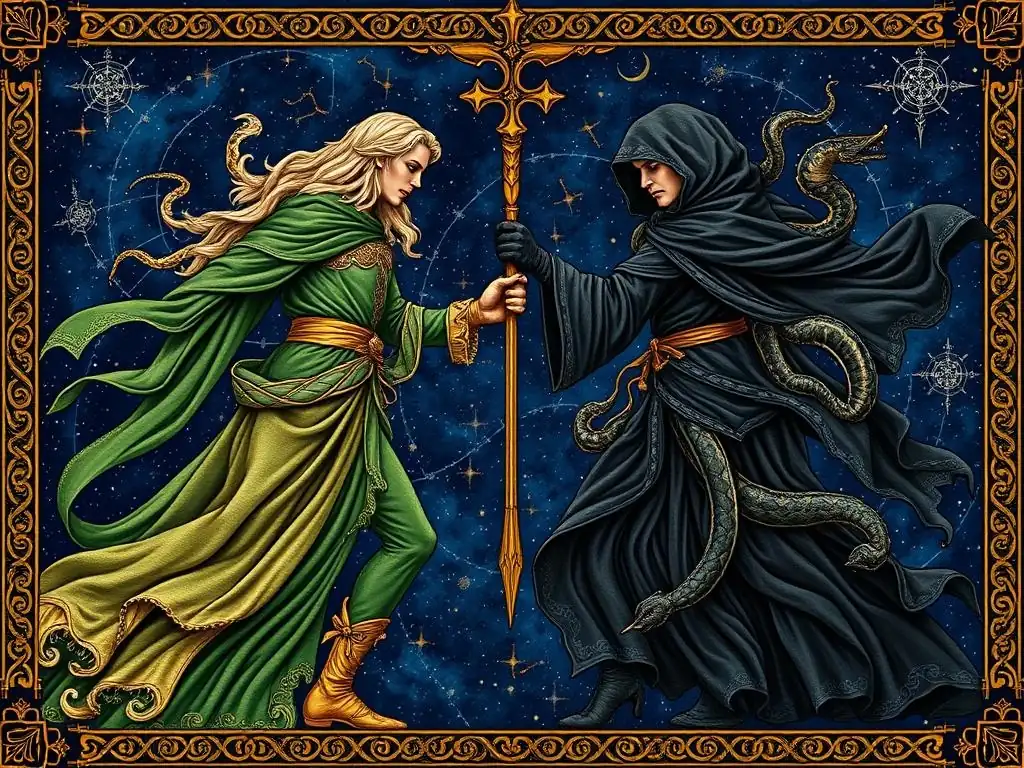
Fomorians as Symbols of Chaos and Destruction in Celtic Beliefs
In Irish mythology, the Fomorians frequently embody the forces of chaos, destruction, and the untamed wilderness that exists outside the boundaries of human or divine order. Their monstrous appearances, association with the sea and dark places, and their tyrannical actions position them as antagonists to the more structured and benevolent (though not always entirely good) world of the Tuatha Dé Danann. They represent the primal, disruptive energy that must be overcome or contained for civilization and order to flourish.
This symbolic role is evident in their actions: they demand crippling tribute, inflict suffering, and their very presence threatens the stability of the land. The conflicts against them can be interpreted as mythological reflections of the struggle between order and disorder, cultivation and wildness, or perhaps even human society and the unpredictable power of nature. Their defeat by the Tuatha Dé Danann signifies the mythological establishment of a more ordered, if still magical, world, where the divine beings hold sway over the primal Tuatha Dé Danann mythology foes.
The Fomorians' Influence on the Development of Irish Mythology and Legends
The Fomorians are integral to the structure and themes of Irish mythology. Their existence provides the necessary conflict and challenge that allows the heroes and gods of the Tuatha Dé Danann to demonstrate their power, wisdom, and right to rule. Without the formidable threat posed by the Fomorians, the epic battles and heroic deeds that define the mythological cycle would lack their dramatic weight and significance.
Their presence also helps to define the nature of the Tuatha Dé Danann by contrast. The Fomorians' monstrousness highlights the beauty and perfection of the Tuatha Dé Danann; their tyranny makes the Tuatha Dé Danann's rule seem just (at least initially); and their chaotic nature contrasts with the Tuatha Dé Danann's association with arts, magic, and sovereignty. The narratives of conquest and resistance against these ancient Tuatha Dé Danann mythology foes are foundational to the Irish origin myths, shaping the identity and history presented in texts like the Lebor Gabála Érenn.
Contrasting the Fomorians with the Tuatha Dé Danann: Order vs. Chaos
The fundamental difference between the Fomorians and the Tuatha Dé Danann lies in their symbolic representation: the Tuatha Dé Danann are often associated with order, civilization, arts, crafts, and a form of divine sovereignty, while the Fomorians embody chaos, wildness, destruction, and primal forces.
Consider these contrasting points:
- Appearance: Tuatha Dé Danann are typically described as beautiful, human-like, and perfect (with exceptions like Nuada's injury). Fomorians are often monstrous, deformed, and hybrid.
- Origin: Tuatha Dé Danann arrived from islands to the north, bringing magical knowledge and artifacts. Fomorians are often seen as indigenous primal forces, linked to the sea or darkness.
- Rule: Tuatha Dé Danann kingship, while sometimes contested, is based on merit (like Lugh's skills) or divine right. Fomorian rule, as exemplified by Bres, is tyrannical, based on subjugation and tribute.
- Nature: Tuatha Dé Danann are associated with light, magic, and the prosperity of the land. Fomorians are linked to darkness, destruction, and the wild, uncontrollable aspects of nature.
This stark contrast makes the Fomorians the perfect foil for the Tuatha Dé Danann, providing the primary external conflict that drives the central narratives of Irish mythology and cements their status as the archetypal Tuatha Dé Danann mythology foes.
The Legacy of the Fomorians: From Ancient Myths to Modern Interpretations
Fomorian Motifs in Contemporary Literature and Art
The powerful imagery and thematic depth associated with the Fomorians continue to inspire artists and writers. Their monstrous forms, their connection to primal chaos, and their role as ancient antagonists provide rich material for creative works. While direct, faithful adaptations of Fomorian myths exist, their influence is often seen in the use of motifs: the ancient, monstrous race dwelling in dark places, the struggle against overwhelming, primal forces, or the concept of a hidden, hostile world beneath the surface.
Authors drawing on Celtic mythology often incorporate Fomorian-like creatures or themes. Artists depict their grotesque forms or the epic battles against the Tuatha Dé Danann. For instance, some modern fantasy literature set in or inspired by Celtic lands might feature deep-dwelling or sea-dwelling monstrous races that bear a clear resemblance to the Fomorians. This demonstrates the enduring power of these ancient figures as symbols of primal opposition, even outside strict mythological retellings.
Fomorians in Modern Fantasy and Pop Culture
The Fomorians, as ancient, monstrous antagonists, fit readily into the tropes of modern fantasy and pop culture. They appear in various forms in novels, role-playing games, and even video games inspired by Celtic lore. In these contexts, they are often portrayed as powerful, evil creatures, sometimes retaining their aquatic or monstrous characteristics.
- In some fantasy literature, they might be depicted as a race of giants or deep-sea dwellers.
- Role-playing games might feature Fomorians as high-level monsters with specific weaknesses or resistances tied to their mythological origins.
- While not always explicitly named Fomorians, creatures with similar physical descriptions (one eye, monstrous limbs) or thematic roles (ancient, chaotic enemies) populate many fantasy worlds, showing the indirect influence of these powerful Tuatha Dé Danann mythology foes.
Their adaptability as a concept – the monstrous, ancient enemy – ensures their continued presence in creative media that seeks to tap into the rich vein of mythological archetypes.
The Enduring Appeal of the Fomorian Myth: Why We're Still Fascinated
The Fomorian myth holds an enduring appeal for several reasons. Firstly, their mysterious origins and monstrous appearances tap into a primal fascination with the unknown and the grotesque. They represent the 'other,' the forces outside the comfortable boundaries of the known world. Secondly, their role as the ultimate antagonists provides a compelling narrative drive for the myths of the Tuatha Dé Danann, highlighting themes of struggle, survival, and the triumph of order over chaos.
Furthermore, the Fomorians embody fundamental fears and anxieties: the fear of the deep sea, the fear of the wilderness, the fear of invasion by monstrous forces, and the fear of oppressive tyranny. By giving these fears a concrete, albeit mythological, form, the stories allowed ancient audiences to explore and confront them. This symbolic depth, combined with the epic scale of their battles with the Tuatha Dé Danann, ensures that the Fomorians remain a captivating and significant element of Irish mythology and continue to fascinate audiences today as the archetypal Tuatha Dé Danann mythology foes.
Fomorian Mythology: Exploring the Dark Side of Irish Legends
The Fomorians' Connection to the Sea and the Wild
A persistent theme in Fomorian mythology is their deep connection to the sea and the wild, untamed aspects of nature. Many accounts place their strongholds on islands off the coast of Ireland, like Tory Island (Oileán Thoraí), or describe them emerging from the ocean depths. This association links them to the unpredictable and often dangerous power of the sea, a force that is vast, ancient, and indifferent to human concerns.
Their connection to the wild extends beyond the sea to the desolate, uncultivated parts of the land. They are depicted as inhabitants of dark forests, caves, and other places far removed from human settlement or divine order. This reinforces their symbolic role as representatives of chaos and the forces that resist domestication and civilization. This ties them directly to the primal, pre-human landscape of Ireland, emphasizing their status as ancient beings opposed to the subsequent, more ordered inhabitants like the Tuatha Dé Danann, who sought to cultivate and rule the land.
Fomorian Magic and Powers: Exploring their Supernatural Abilities
While the Tuatha Dé Danann are renowned for their sophisticated magic (druidry, shape-shifting, illusion), the Fomorians also possessed formidable supernatural abilities, though often depicted as more raw, destructive, or primal. Balor's deadly eye is the most famous example, a power of pure destruction that few could withstand. Other Fomorians are implied to have immense physical strength, resilience, or control over natural forces, particularly those related to the sea or storms.
Some texts suggest they had the power to blight the land or influence the weather, aligning with their role as forces of chaos and destruction. While the specifics are less detailed than the magical practices of the Tuatha Dé Danann, the Fomorians' powers were clearly potent enough to make them formidable opponents, capable of enslaving entire races and challenging the divine beings. Their supernatural abilities were crucial to their long-held position as the dominant and fearsome Tuatha Dé Danann mythology foes.
The Fomorians as a Reflection of Ancient Fears and Beliefs
The Fomorians can be interpreted as mythological embodiments of the fears and anxieties of the ancient Irish people. Their monstrous forms reflect fears of physical deformity and the unknown 'other.' Their association with the sea and wild places speaks to the dangers inherent in nature and the vast, uncontrollable forces that lie beyond human control. Their oppressive rule under figures like Bres mirrors the fear of tyranny and subjugation by powerful enemies.
Furthermore, they might represent the collective memory or mythological understanding of earlier, possibly hostile, inhabitants or forces that the ancestors had to overcome. Their depiction as ancient, chaotic beings against whom the divine race must struggle provides a narrative framework for understanding the establishment of order and sovereignty in the world. In essence, the Fomorians served as a mythological canvas onto which the ancient Irish projected their deepest fears and anxieties about chaos, invasion, and the unpredictable nature of the world, solidifying their role as the ultimate Tuatha Dé Danann mythology foes.
Frequently Asked Questions
What role did the Fomorians play in Tuatha Dé Danann mythology?
The Fomorians were the primordial enemies of the Tuatha Dé Danann, representing chaos, darkness, and destruction. They were often depicted as monstrous beings challenging the Tuatha Dé Danann's claim to Ireland.
Who were some of the most prominent Fomorian figures mentioned in the myths?
Figures such as Balor of the Evil Eye and Indech, the Fomorian king, are among the most well-known. They frequently appear as powerful adversaries in key battles.
What were the defining characteristics that distinguished the Fomorians from the Tuatha Dé Danann?
The Fomorians were often portrayed as deformed, monstrous, and associated with the sea. This contrasted sharply with the Tuatha Dé Danann's depiction as godlike beings of beauty and skill.
How did the conflicts between the Tuatha Dé Danann and the Fomorians shape the landscape of Irish mythology?
The battles, like the Second Battle of Magh Tuiredh, are pivotal in shaping the narrative. They demonstrate the struggle between order and chaos, a common theme in mythology.
What is the lasting significance of the Fomorians in understanding Irish folklore and culture?
The Fomorians represent ancient threats and the triumph of civilization over barbarism. They continue to influence modern interpretations of Irish identity and storytelling.
Final Reflection: Echoes of Ancient Conflict, Modern Relevance
The enduring mythos of the Fomorians, and their conflict with the Tuatha Dé Danann, offers more than just a captivating tale; it provides a potent lens through which to examine enduring themes of power, societal upheaval, and the struggle for dominance. These ancient narratives, far from being relics of a bygone era, resonate deeply with contemporary anxieties about social order, environmental destruction, and the very nature of civilization itself. The Fomorians, with their chaotic and often monstrous representations, serve as a powerful archetype for the forces that threaten stability and progress.
The ongoing fascination with the Fomorians and their battles with the Tuatha Dé Danann speaks volumes about our own cultural anxieties. These myths, passed down through generations, continue to shape our understanding of conflict and the precarious balance between order and chaos. Myth is a powerful instrument of culture, shaping our perceptions of the world and our place within it.
This quote highlights the enduring influence of these stories, not just on Irish culture, but on the broader human experience of grappling with the unknown and the forces that seem to threaten our existence.
Consider the parallels between the Fomorians' perceived savagery and the challenges we face today – from environmental degradation to social injustice. What forces in our own world mirror the chaotic energy attributed to these primordial beings?
You, the reader, are now invited to reflect on these connections, to examine the echoes of ancient conflict in your own life, and to consider how the lessons embedded within these myths might guide your understanding of the world and your role within it. Let the stories of the Tuatha Dé Danann and their formidable foes inspire you to confront the challenges of our time with courage, wisdom, and a renewed appreciation for the enduring power of myth.
Unleash Your Inner Mythologist: Dive Deeper into Fomorean Lore!
Thanks for exploring the fascinating world of the Fomorians with us! We hope you gained a deeper appreciation for their complex role in Irish mythology. Ready to take your knowledge further?
- Delve into primary sources: Research original Irish texts mentioning the Fomorians – you might uncover fascinating new interpretations!
- Share your thoughts: What aspects of Fomorean mythology resonated most with you, and why? Join the discussion in the comments below!
- Create your own Fomorean character: Imagine their motivations, powers, and place in a new story – let your creativity run wild!
What unique perspective on Fomorean mythology will you bring to light?