
The Saga of the Greenlanders: Hardship, Hope, and Discovery

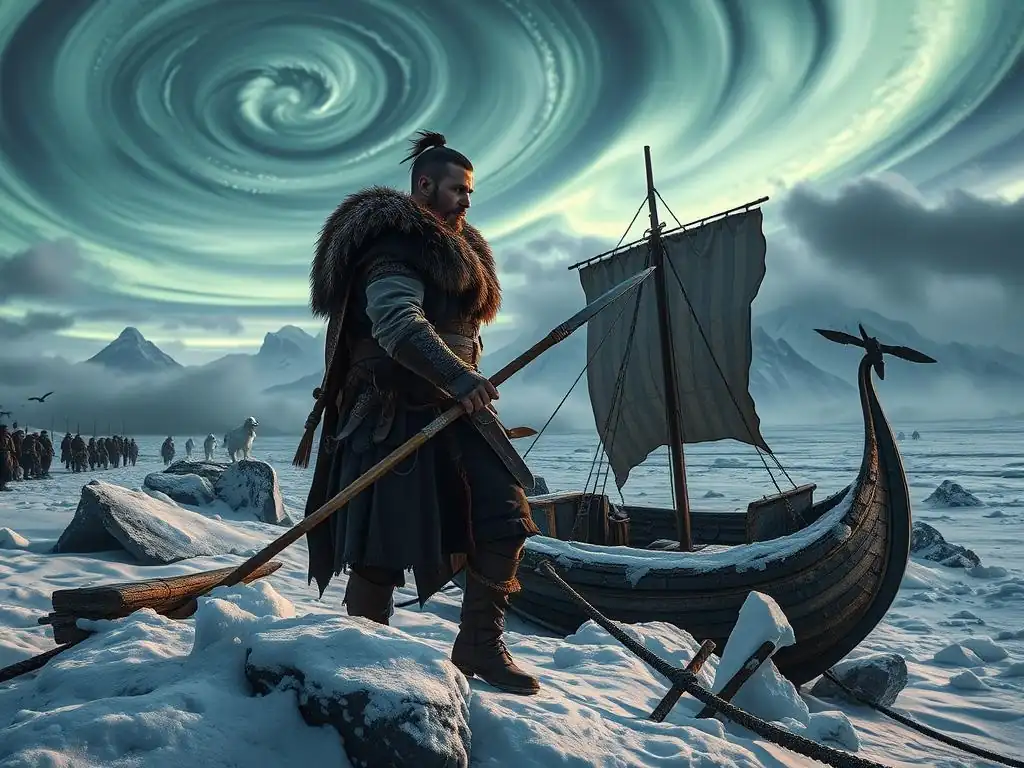
Welcome, seeker of forgotten tales!
Prepare to delve into a world where gods and mortals intertwine, where courage battles fate, and echoes of ancient wisdom resonate through the ages. Here at Mythology and Legends, we unearth the stories that have shaped civilizations. Today, embark on a chilling journey north as we explore the Greenland saga hardship exploration stories. What drove these Norse adventurers to the icy shores of a new world, and what price did they pay for their ambition? Discover the trials, the triumphs, and the ultimate legacy of these intrepid explorers... and perhaps, uncover a truth or two about ourselves.
- The Saga of the Greenlanders: Exploration, Adaptation, and Decline
- Introduction to the Greenland Saga: Norse Expansion Westward
- Norse Voyages and Greenland Colonization: Establishing a Foothold
- Life in Norse Greenland: Sustaining a Community in a Harsh Environment
- Key Figures and Expeditions: Encounters in the New World
- Decline and Abandonment of the Greenland Settlements: Factors Leading to Collapse
- Legacy of the Greenland Saga: Historical Significance and Cultural Impact
- Analyzing the Greenland Saga: Source Criticism and Interpretation
- Conclusion: The Greenland Saga - A Window into Norse Exploration and Resilience
-
Frequently Asked Questions
- What are the main themes explored in the Greenland sagas?
- What makes the Greenland sagas significant historical documents?
- What kind of hardships did the Greenlanders face?
- How do the Greenland sagas portray the exploration of new lands?
- What impact do the Greenland sagas have on contemporary society?
- Final Reflection: Echoes of the Norse in a Changing World
- Unleash Your Inner Explorer: Discover Greenland's Untold Stories!
The Saga of the Greenlanders: Exploration, Adaptation, and Decline
Introduction to the Greenland Saga: Norse Expansion Westward
The Greenland Saga: Primary Source for Norse Greenland History
Eiríks saga Rauða (Erik the Red's Saga) and Grænlendinga saga (The Saga of the Greenlanders) are two cornerstone texts providing accounts of the Norse settlement of Greenland and voyages further west to North America. These sagas, written down in Iceland likely in the 13th or 14th century, centuries after the events they describe, offer invaluable, though sometimes conflicting, narratives about this ambitious period of Norse expansion.
They detail the motivations behind the voyages, the challenges faced during settlement, and the initial encounters with lands across the Atlantic, forming the basis of much of our understanding of this fascinating chapter in history.
While both sagas cover similar ground, they present different perspectives and details, particularly regarding the chronology and key figures of the Vinland voyages. Grænlendinga saga, for instance, attributes the initial discovery of Vinland to Bjarni Herjólfsson, while Eiríks saga credits Leif Erikson.
Despite these discrepancies, their combined information paints a vivid picture of the Norse drive for new lands, the hardships of establishing a community in a harsh environment, and the exploration stories that emerged from these daring journeys across the North Atlantic. They are crucial to understanding the ambition and resilience inherent in the Greenland saga hardship exploration stories.
Historical Context: Viking Age Seafaring and Settlement
The Viking Age (roughly 793 to 1066 AD) was characterized by significant Norse maritime activity, involving raiding, trading, and settlement across Europe and the North Atlantic. This period saw Scandinavians push the boundaries of known geography, establishing settlements in areas like the British Isles, Normandy, Iceland, and eventually Greenland. Their longships, renowned for their seaworthiness and versatility, enabled these long-distance voyages, carrying colonists, livestock, and supplies across treacherous waters.
The settlement of Iceland, beginning in the late 9th century, served as a crucial stepping stone for the further expansion to Greenland. By the mid-10th century, Iceland's arable land was becoming scarce, and political tensions sometimes led to exile. This pressure, combined with the inherent Norse desire for new resources and land, provided a strong impetus for exploration westward. The skills developed in navigating the North Atlantic and adapting to subarctic conditions in Iceland were directly applicable to the even greater challenges presented by Greenland, setting the stage for the Greenland saga hardship exploration stories that would follow.
Norse Voyages and Greenland Colonization: Establishing a Foothold
Erik the Red: Exile and Founder of Greenland Settlements
Erik Thorvaldsson, known as Erik the Red due to the color of his hair and beard, was a pivotal figure in the Norse settlement of Greenland. Born in Norway, his family was exiled to Iceland. Following in his father's footsteps, Erik himself was exiled from Iceland around 982 AD for manslaughter. Rather than sailing east, he headed west, having heard rumors of land sighted by earlier sailors like Gunnbjörn Ulfsson. Erik spent three years exploring the southwest coast of this new land.
Upon returning to Iceland, Erik strategically named the land "Greenland" ( Grænland), suggesting it was fertile and appealing, a clever marketing tactic to attract settlers despite the often icy reality. He organized a fleet of 25 ships carrying hundreds of prospective colonists, livestock, and provisions. While many ships were lost or turned back due to severe weather, around 14 ships successfully reached Greenland around 985-986 AD, marking the official beginning of the Norse colony and the start of their struggle for survival documented in the Greenland saga hardship exploration stories.
Eastern and Western Settlements: Initial Colonization Efforts
The initial Norse settlement in Greenland was concentrated in two main areas along the southwest coast, the most hospitable regions they could find. The larger was the Eystribyggð (Eastern Settlement), located near present-day Qaqortoq (Julianehåb), which eventually comprised hundreds of farms and several churches. The smaller was the Vestribyggð (Western Settlement), located further north near present-day Nuuk, with fewer farms but still a significant community. These settlements were separated by a considerable distance, requiring sea travel between them.
Life in these settlements was centered around farming, primarily raising sheep, goats, cattle, and pigs, though the short growing season and limited pasture were constant challenges. Archaeological evidence, such as findings at Brattahlíð, Erik the Red's farm in the Eastern Settlement, shows turf houses, barns, and rudimentary agricultural tools. The colonists quickly realized the necessity of supplementing farming with hunting and fishing, targeting seals, caribou, birds, and fish to survive the long, harsh winters and secure vital resources, a testament to the resilience portrayed in the Greenland saga hardship exploration stories.
Life in Norse Greenland: Sustaining a Community in a Harsh Environment
Agriculture and Resource Management: Adapting to the Arctic
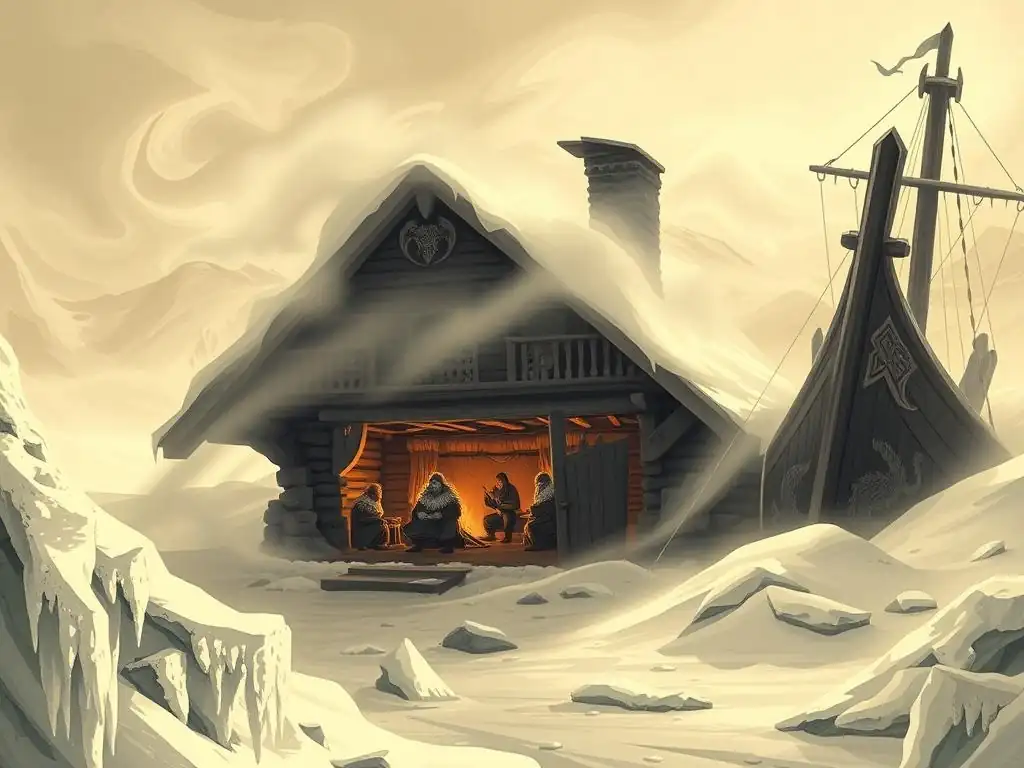
Sustaining a community in Norse Greenland demanded remarkable adaptation to a subarctic environment that was significantly colder than Iceland. While the settlers attempted to replicate their farming practices from Iceland, the limited arable land, thin soil, and short, cool summers severely restricted crop cultivation, primarily focusing on barley for animal feed rather than human consumption. Animal husbandry, particularly sheep and goats, formed the backbone of their diet, providing meat, milk, wool, and hides. However, maintaining adequate fodder for overwintering livestock was a persistent challenge, often requiring creative solutions like gathering seaweed.
Crucially, survival hinged on mastering local resources. Hunting and fishing became paramount. Seal hunting, especially the annual migrations of harp seals, provided essential protein, fat, and skins. Caribou hunting offered meat and hides, while fishing in fjords and coastal waters supplemented their diet. Walrus ivory and hides became important trade goods. The intricate balance between limited farming and extensive hunting and gathering, managing finite resources in a fragile ecosystem, underscores the daily struggle and ingenuity inherent in the Greenland saga hardship exploration stories.
The social structure in Norse Greenland largely mirrored that of Iceland, based on a system of chieftains ( goðar) and freemen. The colony was organized into districts, each likely overseen by a local leader. Law and disputes were handled through local assemblies ( thing), similar to the Icelandic Althing, although on a smaller scale.
The main assembly for the entire colony is believed to have been held annually at Erik the Red's farm, Brattahlíð, serving as a central point for legal decisions, political discussions, and social gatherings. This structure provided a framework for cooperation and conflict resolution in a challenging and isolated environment.
Christianity was adopted relatively early in Greenland, around the year 1000 AD, shortly after its official adoption in Iceland. Churches were built in both settlements, and a bishopric was established at Garðar in the Eastern Settlement in the early 12th century. The presence of a bishop and clergy further integrated Greenland into the wider European Christian world and added another layer to the social hierarchy. This blend of traditional Norse chieftainship and ecclesiastical authority helped maintain order and identity within the remote colony, highlighting the community aspect of the Greenland saga hardship exploration stories.
Trade and Communication: Links to Europe and the Outside World
Despite its isolation, Norse Greenland maintained vital links with the outside world, primarily through trade with Iceland and Norway. Ships would typically sail between Greenland and Iceland during the short summer season, bringing essential supplies that could not be produced locally, such as iron, timber, grain, and other finished goods. In return, Greenland exported valuable commodities like walrus ivory (highly prized in Europe for carvings), polar bear skins, gyrfalcons, and seal skins. This trade was crucial for the colony's survival and economic viability.
Communication relied entirely on these infrequent ship voyages. News, letters, and travelers would arrive only once or twice a year, if at all, depending on weather and sea conditions. This meant the colony was often months, sometimes even a year or more, behind events in Europe. The dependency on these tenuous links made the colony vulnerable to disruptions in trade routes or political changes in Norway, which eventually gained suzerainty over Greenland. Maintaining these connections amidst the vast ocean underscored the precariousness of the colony's existence, a key element in the Greenland saga hardship exploration stories.
Key Figures and Expeditions: Encounters in the New World
Thorfinn Karlsefni's Vinland Expedition: Attempting a Permanent Settlement
Thorfinn Karlsefni, an Icelandic merchant, led the most ambitious attempt to establish a permanent Norse settlement in North America, known as Vinland, as detailed in both sagas, though with differing specifics. Inspired by earlier voyages, Karlsefni organized a large expedition from Greenland, involving multiple ships, about 160 settlers (including women), and livestock. His goal was not just exploration but colonization, aiming to exploit the resources of this seemingly richer land, which the sagas describe as having forests, wild grapes (or berries), and potentially self-sown wheat.
The expedition spent at least one, possibly up to three, winters in Vinland. They established a base camp and explored the surrounding area.
Archaeological evidence at L'Anse aux Meadows in Newfoundland, Canada, dating to around 1000 AD, provides tangible proof of a Norse presence in North America, though it appears to have been more of a temporary base camp or repair station rather than a long-term settlement like Karlsefni envisioned. The failure of Karlsefni's mission, recounted in the Greenland saga hardship exploration stories, was largely attributed to conflicts with the indigenous inhabitants and the logistical challenges of sustaining a remote outpost.
Encounters with Indigenous Peoples: Interactions with the Skraelings
The Norse explorers in Vinland encountered indigenous peoples, whom they called Skraelings (a term likely meaning 'wretches' or 'barbarians'). The sagas describe initial attempts at trade, where the Norse exchanged milk products for furs. However, these interactions quickly escalated into hostility. The sagas recount battles where the Norse, despite their iron weapons, were eventually overwhelmed by the sheer numbers and unfamiliar tactics of the Skraelings, who used slings and other projectiles.
These violent clashes played a significant role in the Norse decision to abandon their attempts at settling Vinland. The sagas portray the Skraelings as formidable adversaries, and the constant threat of conflict made long-term survival and colonization too difficult and costly. While the sagas' depiction is from a Norse perspective and likely biased, the archaeological record at L'Anse aux Meadows shows no signs of long-term cohabitation or peaceful integration, supporting the idea that interactions were brief and ultimately unsuccessful for the Norse, adding a layer of conflict to the Greenland saga hardship exploration stories.
Leif Erikson's Discovery: The First Norse Contact with North America
Leif Erikson, son of Erik the Red, is credited in Eiríks saga Rauða with being the first Norseman to intentionally reach North America, around the year 1000 AD. According to this saga, Leif sailed west from Norway, was blown off course, and landed on a new shore. He then explored three areas, naming them Helluland (Flat-stone Land, possibly Baffin Island), Markland (Forest Land, likely Labrador), and Vinland (Wine Land or Pasture Land, possibly Newfoundland or areas further south). While Grænlendinga saga attributes an earlier sighting to Bjarni Herjólfsson, it agrees that Leif was the first to explore and land.
Leif's voyage was primarily an exploratory one, not a colonization attempt like Karlsefni's. He built temporary shelters, known as Leifsbudir (Leif's Booths), in Vinland and wintered there before returning to Greenland. His discovery opened the door for subsequent, more ambitious expeditions like Karlsefni's. Leif's journey represents the initial successful step in the Norse exploration of lands west of Greenland, a foundational part of the Greenland saga hardship exploration stories and a key event in pre-Columbian transatlantic contact.
Decline and Abandonment of the Greenland Settlements: Factors Leading to Collapse
Climate Change: The Little Ice Age and its Impact
A significant factor contributing to the decline of the Norse settlements in Greenland was the onset of the Little Ice Age, a period of cooling that began in the 13th or 14th century. While the exact start and severity varied regionally, the cooling trend in the North Atlantic had a profound impact on Greenland. Winters became longer and harsher, summers shorter and cooler. This directly affected the already marginal farming capabilities, making it harder to grow fodder for livestock and reducing the productivity of the land.
The increased severity of the climate also led to the expansion of sea ice, making sea travel between Greenland and Iceland/Norway more difficult and dangerous. This disrupted the vital trade routes that supplied the colony with essential goods like iron and timber, isolating the settlements further. Studies of ice cores and sediment layers corroborate the timing of this climatic shift. The inability to adapt fully to the worsening conditions put immense pressure on the colony's food supply and connectivity, exacerbating the challenges described in the Greenland saga hardship exploration stories.
Economic Challenges: Diminishing Trade and Resource Depletion
Beyond climate change, economic factors played a crucial role in the colony's demise. The demand for Greenland's primary export, walrus ivory, declined significantly in Europe during the 13th and 14th centuries. This was partly due to the availability of elephant ivory from Africa via new trade routes and changing artistic styles. As the market for ivory diminished, so did Greenland's ability to acquire necessary imports through trade.
Simultaneously, local resources may have been depleted. Evidence suggests that the Norse relied heavily on hunting seals and walruses, and increased hunting pressure over centuries could have reduced local populations, making these vital food and trade sources harder to obtain. The disruption of trade meant fewer ships arriving, leading to shortages of critical materials like iron, forcing the settlers to rely on less efficient bone or stone tools. This economic squeeze, coupled with environmental pressures, weakened the colony's resilience, contributing to the hardship in the Greenland saga hardship exploration stories.
Loss of Contact: Weakening Ties with Norway and Iceland
The increasingly difficult sea conditions caused by climate change, combined with the declining economic viability of the Greenland trade, led to a gradual weakening and eventual cessation of regular contact with Norway and Iceland. Ship voyages became less frequent and more perilous. Historical records indicate that sailings became sporadic in the 14th century, with the last known voyage from Norway to Greenland recorded in 1410 AD.
This loss of contact meant the colony was cut off from essential supplies, new settlers, and information. It also left them vulnerable to external threats, although there is little evidence of direct conflict contributing to the final disappearance. Without resupply and reinforcement, the small, isolated population faced insurmountable challenges.
The Eastern Settlement seems to have persisted longer than the Western Settlement, but both eventually vanished. The precise fate of the last Norse Greenlanders remains a subject of debate, but the loss of their lifeline to Europe was undeniably a critical factor in their disappearance, a somber conclusion to the Greenland saga hardship exploration stories.
Legacy of the Greenland Saga: Historical Significance and Cultural Impact
The Greenland Saga's Contribution to Norse History: Insights into Viking Exploration
The Greenland sagas are indispensable sources for understanding the furthest reaches of Norse expansion during the Viking Age. They provide detailed, albeit often heroic and sometimes contradictory, accounts of the voyages to Greenland and North America, offering insights into the motivations, methods, and challenges of Norse long-distance seafaring and exploration. Without these texts, our knowledge of these ambitious transatlantic ventures would be limited to sparse mentions in other historical records and archaeological findings alone.
These sagas illuminate the complex interplay between exploration, settlement, and adaptation in marginal environments. They describe not just voyages of discovery but also the arduous process of establishing communities, managing resources, and interacting with new landscapes and peoples. The narratives embedded within the Greenland saga hardship exploration stories reveal the resilience, ingenuity, and ultimately, the limitations of Norse society when confronted with extreme environmental and social challenges far from their homeland.
Archaeological Evidence: Corroborating and Expanding the Narrative
Archaeological investigations in Greenland and Canada have played a crucial role in corroborating and expanding upon the narratives found in the sagas. In Greenland, extensive excavations at sites like Brattahlíð, Garðar, and farms in both the Eastern and Western Settlements have uncovered the remains of turf houses, churches, graveyards, tools, artifacts, and evidence of agricultural practices, hunting, and trade. These findings provide tangible proof of the Norse presence and offer insights into their daily lives, diet, and economic activities, often aligning with saga descriptions.
Perhaps most significantly, the discovery and excavation of the Norse site at L'Anse aux Meadows in Newfoundland, Canada, provided definitive archaeological confirmation of Norse voyages to North America, supporting the saga accounts of Vinland expeditions. Dated to around 1000 AD, the site features turf buildings identified as workshops, living quarters, and a smithy, consistent with a temporary base camp. While it doesn't perfectly match the saga descriptions of a large settlement like Karlsefni's, it undeniable proof of the Norse presence across the Atlantic, giving real-world weight to the exploration stories in the Greenland saga hardship.
Lessons from Greenland: Sustainability, Adaptation, and the Limits of Colonization
The history of the Norse settlements in Greenland, as recounted in the sagas and revealed through archaeology, offers valuable lessons about human interaction with the environment, the limits of colonization, and the importance of adaptation and sustainability. The Norse settlers initially attempted to transplant their familiar way of life to a fundamentally different ecosystem. Their eventual failure highlights the dangers of environmental inflexibility and the consequences of failing to adapt adequately to local conditions, particularly during periods of climatic stress.
The story serves as a compelling case study in the fragility of remote, resource-dependent communities. Their reliance on tenuous trade links and potentially unsustainable hunting practices, combined with the unforgiving Arctic climate, ultimately proved their undoing. The Greenland saga hardship exploration stories thus provide a cautionary tale about the delicate balance between human ambition and environmental realities, reminding us of the challenges inherent in pioneering new frontiers and the critical need for long-term ecological and economic sustainability.
Analyzing the Greenland Saga: Source Criticism and Interpretation
Reliability of the Saga: Oral Tradition and Written Transmission
Assessing the reliability of Grænlendinga saga and Eiríks saga Rauða requires understanding their origins in oral tradition before being written down centuries after the events they describe. Oral histories are subject to changes over time as they are passed down, with details potentially being altered, embellished, or forgotten. When they were finally transcribed, the scribes may have introduced their own biases, literary conventions, or interpretations. This process means the sagas should be viewed as complex historical sources that blend factual accounts with literary elements and cultural perspectives.
Historians and scholars employ source criticism to evaluate the sagas, comparing them with other contemporary texts (like Icelandic annals or papal letters) and, crucially, with archaeological evidence. Discrepancies between the two sagas regarding the Vinland voyages, for example, highlight the challenges of relying solely on one narrative. While they provide invaluable insights into Norse perceptions and experiences, their details must be critically examined and corroborated where possible, adding layers of complexity to the interpretation of the Greenland saga hardship exploration stories.
Comparing with Other Norse Sources: Contextualizing the Greenland Saga
Placing the Greenland sagas within the broader context of other Norse historical and literary sources is essential for a comprehensive understanding. Icelandic Annals, for instance, provide chronological entries of key events, including the settlement of Greenland and mentions of voyages to Vinland, offering a more detached, factual timeline that can help anchor the saga narratives. Works like Adam of Bremen's 11th-century history mention Vinland based on Danish accounts, providing an external perspective on the Norse discoveries.
Comparing the sagas with other Sagas of Icelanders ( Íslendingasögur) also reveals shared themes, narrative structures, and character types, helping scholars understand the literary conventions at play. While the Greenland sagas focus on exploration and settlement in new lands, they share the emphasis on family feuds, legal disputes, and the lives of prominent individuals characteristic of the saga genre. This comparative analysis helps distinguish historical core from literary framing within the Greenland saga hardship exploration stories.
The Saga as Literature: Narrative Structure and Character Development
Beyond their value as historical sources, the Greenland sagas are also significant works of medieval literature. They employ a distinctive narrative style, typically lean and direct, focusing on action and dialogue rather than extensive introspection. The structure often follows the lives of key individuals, detailing their journeys, challenges, and interactions. Characters, while sometimes presented in heroic terms, also face relatable human struggles, such as conflict, loss, and difficult decisions.
The sagas utilize literary devices like foreshadowing, dramatic irony, and vivid descriptions of places and events to engage the audience. For example, the description of the different lands visited in Vinland (Helluland, Markland, Vinland) serves a narrative as well as potentially geographical purpose. Understanding the sagas as literary creations as well as historical records is crucial for interpreting their content, recognizing that the shaping of events and portrayal of characters may have been influenced by the storytellers' need to create compelling narratives, adding depth to the Greenland saga hardship exploration stories.
Conclusion: The Greenland Saga - A Window into Norse Exploration and Resilience
Reflecting on the Norse Greenland Experience: Successes and Failures
The Norse experience in Greenland was a remarkable feat of human endeavor, representing one of the most ambitious expansionist movements of the Viking Age. For nearly 500 years, a European community managed to survive and even thrive in a challenging subarctic environment, thousands of miles from their cultural heartland. They successfully established settlements, developed adaptive strategies for resource management, and maintained social and religious structures. This longevity in such a marginal environment stands as a testament to their resilience and ingenuity, key themes in the Greenland saga hardship exploration stories.
However, the story is also one of ultimate failure. Despite their initial successes, the Norse settlements in Greenland eventually collapsed. This decline was not due to a single cause but a confluence of factors: a changing climate, economic vulnerabilities, and the eventual loss of vital external connections. Their inability to fully integrate with the local environment, perhaps best seen in their limited adoption of Inuit technologies and hunting methods, ultimately proved detrimental. The Greenland saga encapsulates both the triumphs and the tragic limitations of this pioneering venture.
The Enduring Appeal of the Greenland Saga: A Tale of Human Endeavor
The appeal of the Greenland saga endures today, captivating readers and researchers alike with its tales of daring voyages, encounters with the unknown, and the struggle for survival against overwhelming odds. These stories speak to fundamental aspects of the human condition: the drive to explore, the challenge of adapting to new environments, the complexities of inter-cultural contact, and the vulnerability of communities to environmental and economic shifts. The narrative of the Greenland saga hardship exploration stories resonates deeply, offering a glimpse into the lives of people who pushed the boundaries of their world.
As we continue to grapple with issues of climate change, resource management, and the sustainability of human societies, the historical experience of the Norse in Greenland serves as a compelling, albeit ancient, case study. The sagas, supported by archaeological findings, provide a rich narrative that continues to inform our understanding of past human migrations, resilience in the face of adversity, and the intricate relationship between culture, environment, and survival. The Saga of the Greenlanders remains a powerful and relevant tale of human endeavor.
Frequently Asked Questions
What are the main themes explored in the Greenland sagas?
The Greenland sagas primarily explore themes of hardship, exploration, and survival in a harsh and unforgiving environment. They also touch upon themes of family dynamics and cultural clashes.
What makes the Greenland sagas significant historical documents?
Despite their legendary elements, the sagas offer valuable insights into the Viking Age and the early colonization of Greenland. They are considered important sources for understanding Norse society and their interactions with indigenous populations.
What kind of hardships did the Greenlanders face?
The Greenlanders faced extreme environmental challenges, including harsh winters, limited resources, and a short growing season. They also struggled with isolation and conflicts with the Inuit people.
How do the Greenland sagas portray the exploration of new lands?
The sagas depict exploration as a perilous but rewarding endeavor, driven by a desire for new resources and greater opportunities. They showcase the courage and resourcefulness of the Norse explorers.
What impact do the Greenland sagas have on contemporary society?
The sagas provide a fascinating glimpse into the past and offer valuable lessons about human resilience and adaptation. They continue to inspire art, literature, and historical research.
Final Reflection: Echoes of the Norse in a Changing World
The struggles faced by the Norse Greenlanders resonate deeply with our modern anxieties about climate change, resource management, and the fragility of human endeavors in the face of nature's power. Their story isn't just a historical curiosity; it's a stark warning, a cautionary tale etched in ice and bone, reminding us of the consequences of unsustainable practices and the importance of understanding our environment. The saga of the Greenlanders serves as a potent reminder that even the most seemingly successful societies can crumble under the weight of unforeseen challenges.
The enduring legacy of the Norse in Greenland transcends mere historical record; it speaks to the human spirit's capacity for both remarkable achievement and devastating failure. Their story continues to shape our understanding of exploration, colonization, and the complex interplay between human ambition and environmental realities. The past is never dead. It's not even past.
– William Faulkner. This quote perfectly encapsulates the ongoing relevance of the Greenland saga, its lessons echoing through the centuries, influencing our present-day perspectives on sustainability and the delicate balance between humanity and the natural world.
Consider the choices made by the Norse settlers, the challenges they faced, and the ultimate outcome of their ambitious venture. Reflect on how their story might inform your own understanding of resilience, adaptation, and the importance of respecting the limits of our planet. What can we learn from their successes and failures to better navigate the complexities of our own time? Let the saga of the Greenlanders inspire you to engage with the world around you with a renewed sense of responsibility and a deeper appreciation for the delicate balance of life on Earth.
Unleash Your Inner Explorer: Discover Greenland's Untold Stories!
Thanks for joining us on this fascinating journey through the saga of the Greenlanders! We hope you gained a new appreciation for their resilience and the mysteries surrounding their history. Ready to delve even deeper?
- Dive into further research: Explore online resources dedicated to Norse Greenlandic history and archaeology. Look for documentaries and academic papers – you might uncover fascinating details we missed!
- Share your thoughts: What aspect of the Greenlanders' story resonated most with you, and why? Leave a comment below and let's spark a discussion!
- Craft your own Greenlandic saga: Try writing a short story inspired by what you've learned, imagining the lives and challenges faced by these early settlers. Let your imagination run wild!
What hidden narratives of the Greenlanders do you think are still waiting to be discovered?