
Whispers from the Past: Reconstructing Norse Rituals Today

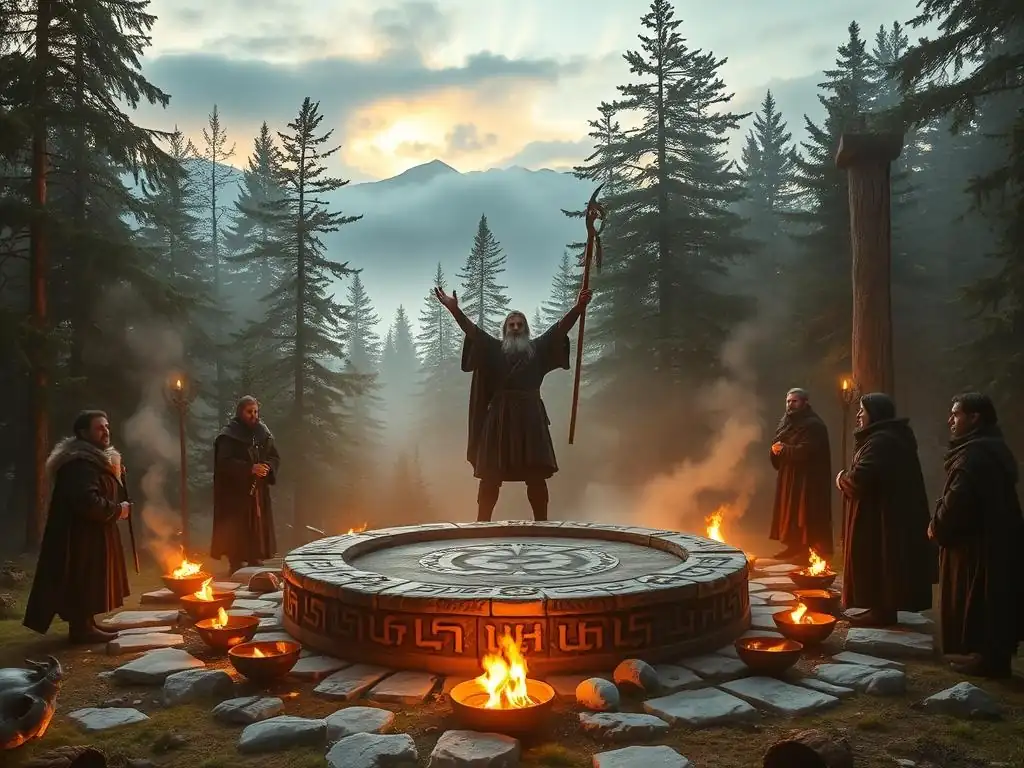
Welcome, seeker of ancient wisdom!
Delve into the captivating realm of Mythology and Legends, where echoes of forgotten gods and heroic tales resonate across time. Are you intrigued by how the whispers of the past still shape our present? Then prepare to embark on a journey into the heart of Norse lore, as we unravel the mysteries behind Norse rituals and their modern interpretations. Discover how these ancient practices are being reimagined and reinterpreted in today’s world. What secrets will you unearth? Read on, and let the sagas begin!
Exploring Primary Sources: Sagas and Archaeological Evidence of Norse Practices
Understanding the ancient world of Norse rituals relies heavily on piecing together information from various primary sources, none of which provides a complete or straightforward guide. Among the most significant are the Icelandic sagas and the Eddas, composed centuries after the Viking Age but containing echoes of earlier beliefs and practices. Texts like Snorri Sturluson's Heimskringla offer descriptions, albeit sometimes filtered through a Christian lens, of large-scale public rituals such as the great blót festivals held at sites like Uppsala in Sweden.
While these literary accounts provide narrative context and mention key elements like sacrifice, feasting, and the invocation of deities, they are not ritual handbooks. They often focus on the social and political aspects surrounding these events rather than the precise liturgical details, presenting a challenge for those seeking accurate Norse rituals modern interpretations.
The Poetic Edda, another crucial source, contains mythological poems that allude to beliefs and cosmological structures underpinning ritual actions, but again, lacks explicit instructions for performing ceremonies. Researchers attempting to reconstruct Norse rituals must critically analyze these texts, discerning potential historical kernels from later literary or theological additions.
Archaeological evidence provides a vital, often complementary, perspective on ancient Norse ritual practices. Excavations at sites across Scandinavia and areas settled by Norse peoples have unearthed material remains that corroborate or expand upon the literary accounts. Finds such as votive deposits in bogs, grave goods accompanying burials (including sacrifices of animals or even humans in rare, debated cases), and evidence of feasting halls or cultic buildings offer tangible clues about ritual activities.
For instance, excavations at Uppåkra, Sweden, revealed a long-lived cultic center with evidence of repeated sacrifices and feasting over centuries, providing physical proof of practices mentioned in sagas. Similarly, burial mounds and ship burials like those at Oseberg or Gokstad show complex funerary rituals involving significant wealth and symbolic items.
While archaeology provides concrete data on what was done and where, it often cannot fully explain the why or the specific words and intentions behind the actions, highlighting the inherent difficulties in creating comprehensive Norse rituals modern interpretations based solely on physical remains. Combining insights from both textual and archaeological sources is essential for any serious attempt at reconstructing these ancient practices.
- How accurate are modern interpretations of Norse rituals?
- What are some common Norse rituals that are being revived or reinterpreted today?
- What impact do modern interpretations of Norse rituals have on contemporary society?
- Are there any ethical considerations when practicing reconstructed Norse rituals?
- Where can I learn more about authentic Norse rituals and their modern interpretations?
Frequently Asked Questions
How accurate are modern interpretations of Norse rituals?
Modern interpretations are largely reconstructions, based on archaeological evidence and Old Norse texts, which can be incomplete or open to interpretation. There's no single, definitive "authentic" way to practice them.
What are some common Norse rituals that are being revived or reinterpreted today?
Popular rituals include blóts (sacrifices or offerings), sumbels (ritual drinking gatherings), and seiðr (a form of Norse magic). These are often adapted to fit modern contexts and beliefs.
What impact do modern interpretations of Norse rituals have on contemporary society?
These practices can foster a sense of community and connection to ancestral heritage. They also offer alternative spiritual paths outside of mainstream religions.
Are there any ethical considerations when practicing reconstructed Norse rituals?
It's crucial to avoid cultural appropriation and misrepresentation when engaging with Norse traditions. Respectful and informed practice is key, acknowledging the historical context.
Where can I learn more about authentic Norse rituals and their modern interpretations?
Resources include academic research on Norse mythology, reputable historical societies, and ethical reconstructionist groups. Be wary of sources promoting harmful or inaccurate information.
Final Reflection: Echoes of the Gods in the Modern World
The resurgence of interest in Norse mythology and its associated rituals is not merely a nostalgic trend; it's a powerful testament to humanity's enduring need for connection, meaning, and a sense of belonging. The practices explored in this article – from blót offerings to the significance of runes – offer a tangible pathway to explore these ancient traditions, even in a vastly different modern context. This isn't about blind imitation, but about understanding the underlying principles and adapting them to resonate with contemporary life.
The enduring appeal of Norse rituals lies in their ability to foster a deeper connection with nature, community, and the self. They provide a framework for introspection, self-discovery, and the cultivation of personal strength. The gods do not give us what we want, but what we need.
This quote, though not directly from Norse sources, encapsulates the essence of the spiritual journey many find within these practices. It's a journey of self-improvement, not a quest for magical shortcuts or easy answers. The rituals themselves are tools, not ends in themselves.
Consider the themes explored within this article – the importance of community, the power of nature, and the enduring human search for meaning. How can you integrate these principles into your own life? What rituals, both large and small, can you create to foster a stronger connection with yourself, your community, and the world around you? Embrace the whispers from the past, not as a rigid doctrine, but as a source of inspiration for building a richer, more meaningful present and future. Let the echoes of the gods guide you on your own unique path.
Unlock the Ancient Mysteries: Embrace the Norse Spirit Today!
Thanks for taking the time to journey with us through the fascinating world of Norse rituals! We hope you've gained a deeper appreciation for their rich history and enduring significance. Now it's time to take your exploration further.
- Craft your own modern Norse ritual: Based on what you've learned, create a small, personal ritual reflecting the aspects that resonated most with you. It could be as simple as a mindful walk in nature or a symbolic offering of gratitude.
- Share your insights and discoveries: Engage with our community! Tell us about your experience with Norse mythology, your thoughts on the rituals discussed, or perhaps even share your own creative interpretations.
- Deepen your knowledge: Explore the wealth of resources available on Norse mythology – discover the deeper meanings behind the symbols and learn more about the deities and their stories.
Have you considered which aspect of Norse tradition calls to you the most, and how might you incorporate that into your own life today?