
The Legacy of Greek Heroes: From Ancient Myths to Modern Pop Culture

Welcome to Mythology and Legends!
Ever wondered how echoes of ancient Greek heroes resonate even today? Delve into the captivating world where myths meet modern pop culture, and discover how these timeless narratives continue to shape our stories, characters, and even our understanding of heroism itself. Prepare to be amazed as we unravel the enduring legacy of Greek heroes in modern pop culture and beyond. What makes them so compelling, even after millennia? Let's explore!
- Greek Heroes in Modern Pop Culture: A Resurgence of Ancient Legends
-
Frequently Asked Questions
- How are Greek heroes portrayed in modern pop culture?
- What aspects of Greek heroes resonate with modern audiences?
- Can you give an example of a Greek hero's influence on a contemporary character?
- Why are Greek heroes still relevant in a world filled with new stories?
- How does pop culture contribute to the ongoing legacy of Greek heroes?
- Final Reflection: Echoes of Olympus in the Modern World
- Unlock Your Inner Hero: Embrace the Legacy of Greece!
Greek Heroes in Modern Pop Culture: A Resurgence of Ancient Legends
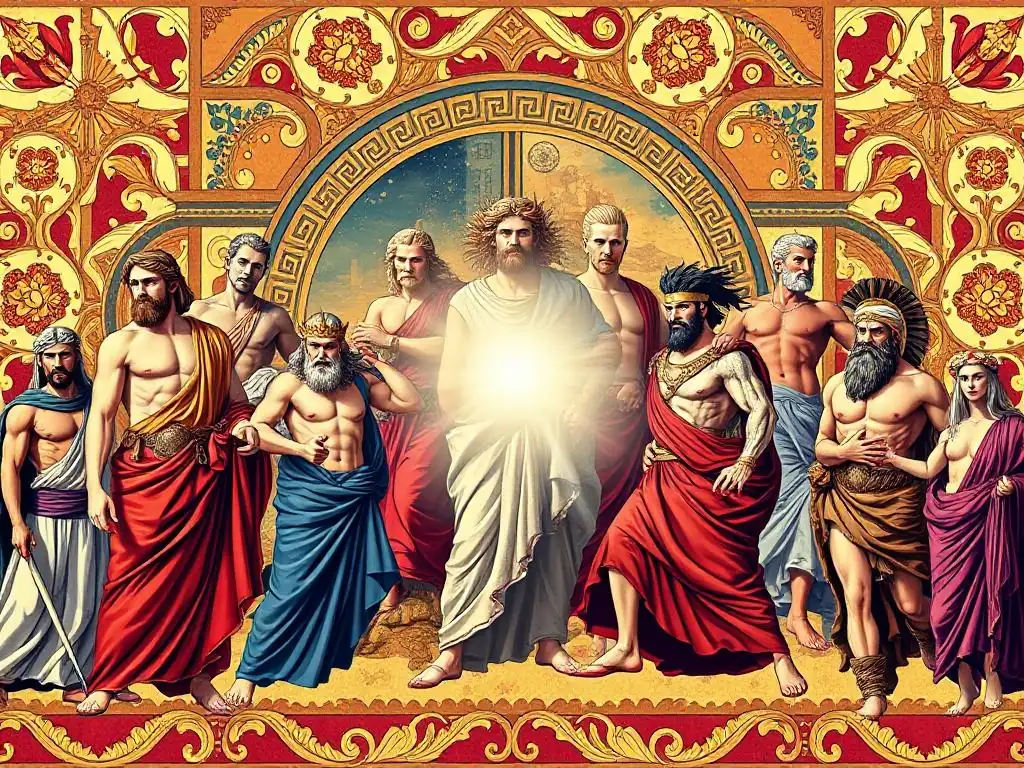
The fascination with ancient Greek heroes has not waned with the passage of millennia; instead, it has experienced a vibrant resurgence in contemporary media. From the silver screen to interactive digital worlds, Greek heroes are being reimagined and presented to new generations, proving their narratives possess a timeless quality that resonates across diverse cultural landscapes. This integration of Greek heroes into modern pop culture serves not only as entertainment but also as a bridge connecting ancient mythology with contemporary themes and sensibilities.
This modern interpretation often takes creative liberties with the original myths, adapting them to suit different genres, target audiences, and narrative goals. While some adaptations aim for a degree of historical or mythological accuracy, others use the foundational stories and characters as a springboard for entirely new adventures. The continued presence of Greek heroes in modern pop culture highlights the enduring power of these archetypal figures and the universal appeal of their struggles, triumphs, and flaws.
Greek Heroes in Film and Television: Adaptations and Interpretations
Film and television have been particularly fertile ground for bringing the stories of Greek heroes to life for mass audiences. Major motion pictures and television series have tackled these myths with varying degrees of faithfulness and spectacle, introducing characters like Achilles, Hercules, and Odysseus to millions unfamiliar with their ancient origins. These visual adaptations often focus on the dramatic potential of the myths, emphasizing action, romance, and the epic scale of the heroes' journeys.
Notable examples demonstrate the range of approaches taken. Troy (2004), for instance, offered a large-scale cinematic interpretation of Homer's Iliad, focusing primarily on the human drama and warfare, though it significantly altered certain mythological elements and character fates for narrative impact. This film, while debated for its historical accuracy, brought the story of Achilles and the Trojan War to a global audience, reportedly grossing over $497 million worldwide and sparking renewed interest in the ancient epic.
Hercules (Disney, 1997) represents a completely different take, presenting a family-friendly animated musical comedy. This adaptation significantly simplifies and alters the darker, more complex myths surrounding Heracles (Hercules in Roman mythology), portraying him as a charming, somewhat awkward hero trying to find his place in the world. Despite its departure from the source material, the film was commercially successful, reportedly earning over $252 million globally, and solidified a popular, if highly stylized, image of the hero for a generation of children.
More recent examples, like Percy Jackson & The Olympians: The Lightning Thief (2010) and its sequels, as well as the subsequent Disney+ series (2023), transplant Greek heroes and gods into a contemporary setting, depicting them interacting with the modern world. These adaptations, based on Rick Riordan's popular book series, target a young adult audience, using the mythology as a foundation for urban fantasy adventures. The film adaptation reportedly grossed over $226 million worldwide, demonstrating the commercial viability of presenting Greek heroes within a modern context for a younger demographic.
Greek Heroes in Literature and Comics: Modern Retellings and Interpretations
Literature and comics have long been platforms for reimagining and reinterpreting classic myths, and Greek heroes are no exception. Beyond the original epic poems like Homer's The Odyssey, which remains a cornerstone of Western literature, modern authors and artists continue to engage with these stories, offering fresh perspectives, expanding on lesser-known characters, or placing the heroes in entirely new scenarios.
Stephen Fry's Mythos (2017), for example, provides a humorous and accessible retelling of various Greek myths, including the tales of heroes like Perseus and Heracles, aiming to introduce the stories to a broad contemporary readership. The book became a bestseller, indicating a significant appetite for engaging, modern presentations of ancient narratives. Other literary works delve deeper into specific characters, exploring their psychology or placing them in different genres, such as historical fiction or fantasy.
Comics and graphic novels also offer unique visual interpretations of Greek heroes. Rachel Smythe's webtoon series Lore Olympus (begun in 2018), while primarily focusing on the gods Hades and Persephone, features heroes like Heracles and Theseus in supporting roles, reimagined within a contemporary, visually striking setting. This popular series, which has garnered millions of readers online and has been released in print editions, exemplifies how Greek mythology, including its heroic figures, can be successfully adapted for modern digital platforms and visual storytelling formats, reaching a vast and diverse audience.
Beyond direct retellings, the archetypes established by Greek heroes frequently inspire characters in original literary and comic works. Elements of Achilles' tragic fate, Odysseus's cunning, or Hercules's impossible labors can be found woven into the fabric of countless modern fictional narratives, demonstrating the deep and lasting influence of these ancient figures on contemporary storytelling techniques and character development.
Greek Heroes in Video Games: Interactive Storytelling and Heroic Journeys
The interactive nature of video games provides a unique medium for players to engage directly with the narratives and challenges associated with Greek heroes. Games allow players to step into the shoes of these legendary figures, confront mythological monsters, and navigate complex moral choices, offering a highly immersive experience of the heroic journey. This format has proven incredibly popular, bringing Greek mythology to a massive global gaming audience.
The God of War series (beginning in 2005) is perhaps one of the most prominent examples, reimagining the Greek hero Kratos, a Spartan warrior who becomes embroiled in brutal conflicts with the Olympian gods and various mythological figures. While taking significant creative liberties with the original myths, the series has been critically acclaimed and commercially successful, with entries like God of War (2018) selling over 23 million units worldwide by late 2022. This franchise demonstrates how the raw power and tragic elements of Greek heroic narratives can be translated into compelling, action-packed interactive experiences.
Hades (2020), a roguelike dungeon crawler, offers a different perspective, centering on Zagreus, the son of Hades, who attempts to escape the Underworld. While Zagreus is not a classical Greek hero in the vein of Heracles or Perseus, the game is deeply steeped in Greek mythology, featuring numerous gods, heroes, and mythological locations as characters and settings. Its success, selling over 1 million copies by late 2020, highlights the appeal of exploring the mythological world from a different angle and engaging with a wide cast of figures from the myths, including spectral versions of deceased heroes.
Assassin's Creed Odyssey (2018) places players directly into a richly rendered open-world version of ancient Greece during the Peloponnesian War. While the protagonists are original characters (Kassandra or Alexios), their journey intersects with many historical figures and mythological elements, including creatures and quests inspired by the labors of Greek heroes. The game allows players to experience the world that shaped these legends, providing context for their stories and reportedly selling over 10 million units by 2020, further solidifying the enduring appeal of ancient Greece and its heroic tales in interactive entertainment.
Frequently Asked Questions
How are Greek heroes portrayed in modern pop culture?
Greek heroes are frequently reimagined and reinterpreted in various forms of modern pop culture, including movies, TV shows, and books. These portrayals often emphasize their heroic qualities while adapting their stories for contemporary audiences.
What aspects of Greek heroes resonate with modern audiences?
The themes of bravery, sacrifice, and overcoming adversity found in Greek hero myths continue to resonate today. Modern audiences connect with the humanity of these flawed yet admirable figures and their struggles.
Can you give an example of a Greek hero's influence on a contemporary character?
Many characters in modern media draw inspiration from Greek heroes. For example, the Superman character archetype parallels Heracles (Hercules), embodying immense strength and a commitment to justice.
Why are Greek heroes still relevant in a world filled with new stories?
The enduring power of Greek mythology lies in its timeless themes and archetypes. These stories provide a framework for understanding human nature and exploring universal experiences in new and engaging ways.
How does pop culture contribute to the ongoing legacy of Greek heroes?
Pop culture revitalizes and popularizes Greek myths, making them accessible to wider audiences. By adapting these stories, pop culture ensures that the legacy of Greek heroes continues to inspire and entertain future generations.
Final Reflection: Echoes of Olympus in the Modern World
The enduring power of Greek heroes isn't confined to dusty museum exhibits; their influence resonates powerfully in our contemporary world. These mythical figures, born from ancient storytelling, continue to shape our narratives, our ideals, and our understanding of heroism itself. Their stories, once whispered around campfires, now echo in blockbuster films, popular video games, and even everyday conversations.
The impact of these archetypes on our cultural landscape is undeniable. From the brooding intensity of a modern-day Achilles to the cunning strategizing of a contemporary Odysseus, we see reflections of these classic heroes in countless characters. Their struggles with fate, their triumphs over adversity, and even their flaws, continue to inspire and challenge us. Myth is a public dream,
as Joseph Campbell famously stated, and the dreams of ancient Greece continue to shape our collective unconscious. We find ourselves drawn to their stories because they grapple with timeless themes of love, loss, ambition, and the search for meaning – themes that remain profoundly relevant today.
Consider the heroes you admire, the stories that resonate with you. Do you find yourself drawn to the unwavering strength of Heracles, the intellectual prowess of Athena, or the unwavering loyalty of Hector? Take a moment to reflect on how these ancient archetypes have shaped your own understanding of heroism, morality, and the human condition. Let the legacy of these iconic figures inspire you to confront your own challenges with courage, wisdom, and a touch of divine inspiration. The echoes of Olympus still call to us; will you answer?
Unlock Your Inner Hero: Embrace the Legacy of Greece!
Thanks for taking the time to explore the enduring legacy of Greek heroes! You've now gained a deeper understanding of their influence on our world. Ready to take that knowledge further?
- Dive deeper: Explore the myths and legends of specific heroes that resonated most with you. Research their individual stories, uncovering hidden details and alternative interpretations. What new perspectives can you find?
- Share your favorite hero: Which hero's journey inspires you the most, and why? Let us know in the comments below – let's spark a discussion!
- Create your own hero: Using the archetypes and themes we discussed, design your own modern Greek hero. What challenges would they face, and what would be their defining strength?
What heroic qualities will you embrace in your own life, inspired by these ancient tales?