
Gods and Goddesses in Your Timeline: Social Media's Mythic Avatars

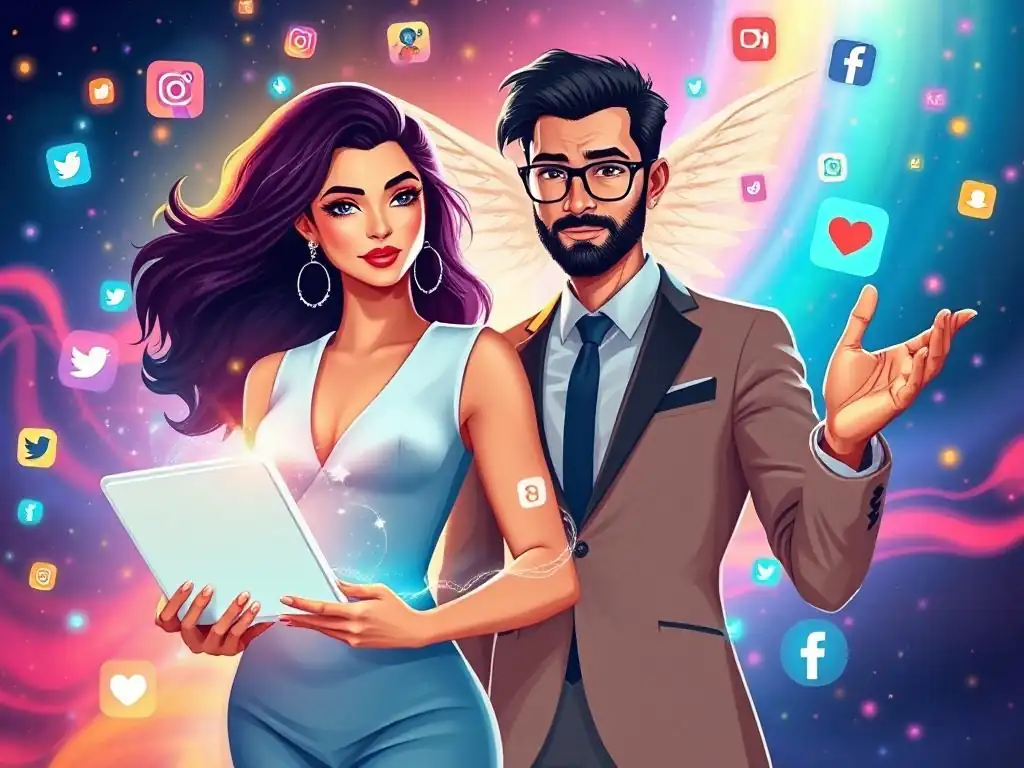
Welcome to Mythology and Legends, your gateway to timeless tales! Ever wondered if the ancient pantheon has found a new Olympus in the digital realm? Dive into our exploration of " Social Media Gods and Goddesses" and discover how mythical archetypes are being reborn in your very own timeline. Prepare to unravel the captivating parallels between age-old narratives and the modern world – who knew your favorite influencer might just be the new Aphrodite?
- The Pantheon of Platforms: Different Gods for Different Social Media
-
Frequently Asked Questions
- How has social media appropriated the characteristics of ancient gods and goddesses?
- What are some specific examples of how social media influencers resemble mythological figures?
- In what ways can social media be considered a "modern mythology"?
- What are the potential dangers of idealizing social media personalities as "gods" or "goddesses"?
- How can we critically analyze the "deification" of social media figures and promote a healthier relationship with these platforms?
- Final Reflection: The Enduring Power of Myth in the Digital Age
- Unleash Your Inner Mythmaker: Craft Your Digital Pantheon!
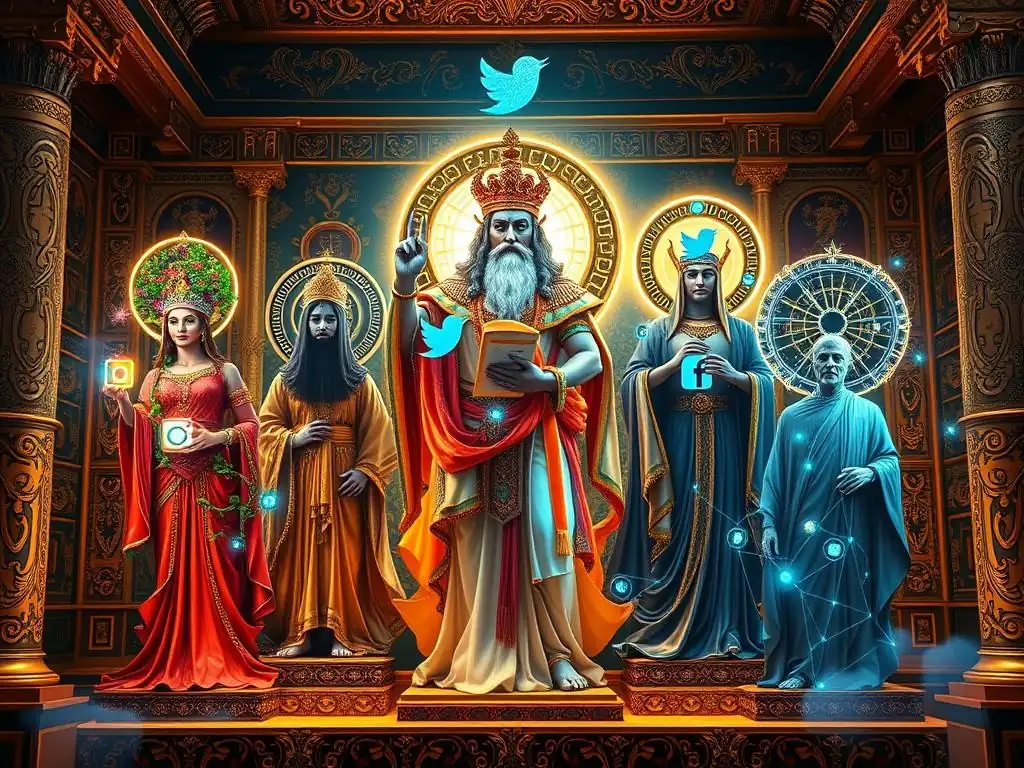
Just as the ancient world had diverse pantheons with deities governing distinct domains, the modern digital landscape features various social media platforms, each fostering a unique environment that seems to align with particular mythic archetypes. These platforms, through their design and the behaviors they encourage, become stages where users enact roles reminiscent of ancient social media gods goddesses, embodying specific traits and powers within their digital realms. Understanding these alignments helps us appreciate the deeper cultural currents flowing through our online interactions, revealing how timeless human drives for connection, status, and expression find new forms in the 21st century.
Each major platform cultivates a specific culture and set of norms, attracting users who thrive within those structures. From the visual spectacle of Instagram to the rapid-fire discourse of Twitter, the spontaneous creativity of TikTok, and the strategic networking of LinkedIn, different platforms seem to favor different 'divine' characteristics. This isn't a one-to-one mapping, as human behavior is complex, but observing the dominant trends and user interactions on each platform reveals fascinating parallels to the characteristics traditionally associated with certain gods and goddesses, highlighting the multifaceted nature of social media gods goddesses in the digital age.
Instagram's Aphrodite: Visual Beauty and Curated Perfection
Instagram is arguably the realm of Aphrodite, the goddess of love, beauty, pleasure, and procreation. The platform is built on visual aesthetics, encouraging users to share highly curated images and videos that present an idealized version of reality. Millions of users worldwide meticulously craft their profiles, focusing on stunning photography, fashionable outfits, exotic travel destinations, and seemingly perfect lifestyles. This emphasis on visual appeal and the pursuit of 'likes' and followers mirrors Aphrodite's domain, where beauty is power and desirability is a form of currency.
The platform's culture often revolves around showcasing physical attractiveness, aspirational experiences, and material possessions, driving trends in fashion, beauty, and luxury goods. Influencers, acting as high priestesses of this digital Aphrodite, command vast followings – some exceeding hundreds of millions – by consistently projecting an image of effortless perfection and desirable living. Brands leverage this visual focus, investing billions in influencer marketing to promote products, capitalizing on the platform's ability to turn visual appeal into tangible influence and economic power, much like offerings made to a deity of beauty and desire.
Twitter's Hermes: Quick Wit and Instant Communication
Twitter embodies the spirit of Hermes, the messenger of the gods, known for speed, communication, wit, and travel. The platform's core function is rapid dissemination of information, characterized by short, concise messages (originally limited to 140 characters, now extended but still favoring brevity). It's the go-to place for breaking news, live updates, and real-time commentary on events unfolding globally. The pace is frenetic, demanding quick thinking and sharp articulation to capture attention in a fast-scrolling feed.
Like Hermes, who carried messages between Olympus and the mortal world, Twitter users act as digital messengers, sharing news, opinions, and observations at lightning speed. Viral tweets, often characterized by their wit, urgency, or emotional resonance, can spread across the globe in minutes, demonstrating the platform's immense power as a communication conduit. Political discourse, social movements, and cultural trends often originate or gain significant momentum on Twitter, highlighting its role as a dynamic, sometimes chaotic, but undeniably swift marketplace of ideas, where words fly as fast as Hermes' winged sandals.
TikTok feels like the domain of Dionysus, the god of wine, revelry, madness, and spontaneous creativity. The platform thrives on short-form video content that is often raw, energetic, and driven by viral trends, challenges, and sounds. It's a space where users embrace impulsivity, participate in collective rituals (like trending dances or lip-sync challenges), and celebrate uninhibited self-expression, sometimes veering into chaotic or absurd territory, much like a Dionysian festival.
The algorithm's power to make content 'go viral' overnight gives ordinary users the chance to achieve sudden, widespread fame, echoing the unpredictable nature of Dionysus's blessings. Trends emerge rapidly, spread globally, and then often fade just as quickly, reflecting the ephemeral and transformative energy of the god of revelry. This platform fosters a culture of participation, encouraging users not just to consume but to remix, respond, and contribute to the ever-evolving stream of content, creating a collective, celebratory, and sometimes overwhelming digital bacchanal.
LinkedIn's Athena: Professional Networking and Strategic Growth
LinkedIn aligns closely with Athena, the goddess of wisdom, crafts, strategic warfare, and reasoned endeavor. The platform is primarily focused on professional networking, career development, and sharing industry knowledge. Users cultivate their profiles like strategic resumes, highlighting skills, experience, and achievements. The interactions tend to be more formal and purposeful than on other platforms, centered around building professional connections, seeking employment, and establishing oneself as a thought leader or expert.
Like Athena, who advised heroes and guided strategic decisions, LinkedIn users engage in calculated networking, share insights on business and industry trends, and participate in discussions aimed at professional advancement. The platform is a space for demonstrating expertise, seeking mentorship, and executing career strategies. It emphasizes logic, skill, and planned growth over impulsive sharing or purely aesthetic presentation, providing a structured environment where professional ambition and intellectual pursuits are highly valued, embodying the strategic and wise aspects associated with the goddess.
Frequently Asked Questions
Social media platforms often embody qualities associated with specific deities. For example, Facebook can be seen as a modern-day Panoptes, constantly observing and connecting individuals. Instagram frequently promotes images of beauty and influence, mirroring the roles of goddesses like Aphrodite or Venus.
Influencers often cultivate a sense of unattainable perfection and charisma, much like ancient gods and goddesses. Their carefully curated online personas can inspire both adoration and envy, reflecting the complex relationships humans had with the divine. They strive to be the ultimate authority on their respective niches.
Social media creates its own narratives, heroes, and villains. Viral trends and online challenges can be viewed as contemporary myths, shaping collective beliefs and behaviors. The platforms themselves act as digital realms where users interact and create new legends.
The constant exposure to perfected online personas can lead to feelings of inadequacy and low self-esteem. The pursuit of online validation can become all-consuming, potentially harming mental health. We must be careful to separate fantasy from reality.
We need to be aware of the curated nature of online content. Encouraging critical thinking skills helps users recognize the difference between reality and the idealized versions presented online. Promoting authentic self-expression over manufactured perfection is key.
Final Reflection: The Enduring Power of Myth in the Digital Age
The curated perfection of social media profiles, with their carefully crafted narratives and aspirational aesthetics, reveals a modern-day pantheon of gods and goddesses. We are not merely observing these digital deities; we are actively participating in their creation and worship, shaping our own identities in relation to their idealized versions of success, beauty, and influence. This isn't a fleeting trend; it's a fundamental shift in how we understand identity and aspiration in the 21st century.
The constant pressure to present a flawless online persona, to curate a life worthy of likes and followers, reflects a deep-seated human need for belonging and validation, a need that has been channeled and amplified by the very structure of social media. This echoes the ancient impulse to create and venerate gods and goddesses, figures who embody our hopes, fears, and desires. Myth is a powerful tool for understanding the human condition, and social media, in its own way, is creating a new mythology for our time.
This new mythology, however, demands critical engagement. We must be mindful of the potential for unrealistic expectations and the erosion of genuine self-acceptance in the pursuit of digital divinity.
Consider the impact of this digital pantheon on your own life. Are you striving to emulate the idealized versions of self presented on your feeds? Do you find yourself comparing your "real" life to the meticulously crafted narratives of others? Take a moment to disconnect from the curated perfection of social media and reconnect with your own authentic self. Challenge the narratives that dictate your self-worth, and remember that true fulfillment comes not from the fleeting validation of likes and followers, but from a deeper understanding and acceptance of your own unique and imperfect humanity.
Unleash Your Inner Mythmaker: Craft Your Digital Pantheon!
Thanks for exploring the fascinating world of social media avatars and their mythological parallels! You've now gained insights into how these digital representations reflect ancient archetypes and power dynamics. Ready to put your newfound knowledge into action?
- Design your own mythological avatar: Think about which god or goddess best embodies your online persona and create a profile picture or banner that reflects their essence. Consider going beyond the obvious choices – what less-known deity resonates with you?
- Analyze your feed: Take a look at the avatars of your followers and friends. What myths and archetypes are represented? Do you see patterns emerge? What does it tell you about your online community?
- Share your discoveries: Discuss your personal mythological avatar and the insights you gained in the comments below! Let's build a vibrant community of digital mythmakers.
What surprising aspects of your online personality will your mythological avatar unveil?