
The Hero's Metamorphosis: From Caterpillar to Legend


Welcome to Mythology and Legends, where ancient tales come alive! Ever wondered how the humblest of creatures could inspire epic narratives of change? Dive into the enchanting world of caterpillar myth transformation stories and discover the profound symbolism behind these seemingly simple beings. Uncover the secrets hidden within their metamorphosis and how cultures across the globe have woven them into captivating legends of heroes and rebirth. What profound lessons await in the humble caterpillar's journey? Let's explore!
- Introduction: Transformation Stories in Heroic Narratives
- The Caterpillar as a Symbol of Potential and Transformation
- Cultural Interpretations of Transformation Stories
- The Hero's Journey: Parallels with Metamorphosis
- Examples of "Caterpillar to Legend" Narratives in World Mythology
- The Psychological Interpretation: Transformation Stories and Personal Growth
- The Legacy of Transformation Stories in Contemporary Society
- Conclusion: The Enduring Power of Transformation and the Hero's Journey
-
Frequently Asked Questions
- What is the central theme explored in "The Hero's Metamorphosis: From Caterpillar to Legend"?
- How does the article connect caterpillar metamorphosis to the broader study of mythology?
- Does the article focus on specific cultural examples of "caterpillar myth transformation stories"?
- What is the significance of the "Hero's Journey" in the context of caterpillar transformation myths?
- How does the article relate ancient myths to contemporary society's understanding of transformation?
- Final Reflection: Embracing the Chrysalis of Change
- Unlock Your Inner Legend: Embark on Your Hero's Journey!
Introduction: Transformation Stories in Heroic Narratives
Exploring the Archetype of Transformation in Mythology
Transformation is a fundamental motif woven into the fabric of myths and legends across the globe. It represents a profound shift in form, state, or essence, often signifying a journey of growth, overcoming adversity, and achieving a higher state of being. This archetype speaks to the human experience of change, whether physical, psychological, or spiritual, resonating deeply with our innate understanding of life's cyclical nature and the potential for renewal. Many cultures feature rich caterpillar myth transformation stories, using the humble insect's life cycle as a powerful metaphor for this process.
The narrative of transformation frequently involves a period of struggle, isolation, or vulnerability before the ultimate change occurs. Heroes and mythological figures undergo startling metamorphoses, turning from human to animal, mortal to immortal, or weak to strong. These tales serve not merely as fantastical stories but as symbolic blueprints for personal development and societal change, illustrating that significant growth often requires leaving behind the familiar and embracing a period of uncertainty.
The Significance of Metamorphosis in Hero Myths and Legends
Within heroic narratives, metamorphosis often marks a pivotal moment or is the central theme of the hero's journey. It signifies a break from the hero's ordinary world and the beginning or culmination of their quest. This change is rarely superficial; it fundamentally alters the character's capabilities, perspective, or destiny, equipping them to face trials they could not have otherwise overcome. The power of caterpillar myth transformation stories lies in their accessible symbolism, illustrating that even the most unassuming beginnings can lead to extraordinary outcomes.
Metamorphosis in myths can serve multiple narrative functions: it can be a reward for virtue, a punishment for hubris, a necessary adaptation for survival, or a symbolic representation of inner change. For the hero, it is typically tied to their growth and the fulfillment of their potential. This process parallels the hero's journey, where the protagonist leaves their known world, faces challenges, and returns transformed, often bringing a boon back to their community.
The Caterpillar as a Symbol of Potential and Transformation
From Humble Beginnings: The Caterpillar's Earthly Existence
The caterpillar begins its life as a small, often unassuming creature focused primarily on consumption and growth. Its existence is earthbound, characterized by crawling and a constant need for nourishment. This initial stage serves as a potent symbol of potential hidden within a humble form. In many caterpillar myth transformation stories, the hero starts their journey in a state of perceived weakness, insignificance, or unawareness of their true capabilities, much like the caterpillar before its miraculous change.
This phase represents the hero's 'ordinary world'—a state before the call to adventure or the recognition of their extraordinary destiny. It highlights the idea that greatness can emerge from the most unlikely origins, emphasizing humility and the foundational work required before any significant transformation can occur. The caterpillar's relentless eating, for instance, can be seen metaphorically as the hero's early life spent gathering experiences, skills, or knowledge, preparing unknowingly for the change to come.
Dormancy and the Promise of Change: The Chrysalis Stage
Following a period of intense growth, the caterpillar enters the chrysalis or pupa stage—a phase of apparent dormancy and isolation. Within this protective shell, a radical and complete biological transformation takes place. This stage is a powerful metaphor for the trials, introspection, and internal struggles that heroes face on their journey. It represents the 'inmost cave' or the period of intense challenge where the hero must confront their deepest fears or undergo a fundamental internal restructuring.
The chrysalis is a space of vulnerability and hidden activity, where the old form dissolves and the new one is created. In the context of caterpillar myth transformation stories, this parallels the hero's withdrawal from the world, perhaps to train, heal, or undergo a spiritual crisis, before they can emerge fully realized. It underscores that transformation is not instantaneous but requires a necessary period of isolation, breakdown, and internal work.
Cultural Interpretations of Transformation Stories
Ancient Egyptian Beliefs: Khepri and the Scarab Beetle's Transformation
In Ancient Egypt, the scarab beetle, Scarabaeus sacer, was a potent symbol of transformation, rebirth, and the rising sun. The deity Khepri, often depicted as a scarab or a human with a scarab head, represented the morning sun, pushing the sun disc across the sky much like the beetle rolls a ball of dung. The Egyptians observed the scarab's life cycle, particularly the emergence of the beetle from the dung ball (where eggs were laid), interpreting this as spontaneous generation and a powerful metaphor for creation and rebirth from apparent decay.
While not a direct caterpillar myth transformation story in the insect's literal sense, the scarab's perceived transformation from hidden life within the earth or dung ball to winged beetle emerging into the light deeply influenced Egyptian cosmology. This natural phenomenon became a central symbol in funerary practices, representing the deceased's hope for rebirth in the afterlife. Scarab amulets were widely used, placed over the heart during mummification to ensure resurrection, embodying the belief in cyclical renewal and eternal life.
Greek Mythology: The Myth of Cadmus and Transformation
Greek mythology is replete with tales of metamorphosis, often inflicted by gods upon mortals or other deities. One notable example, though not a caterpillar myth transformation story, is the fate of Cadmus and Harmonia. After a long and eventful life, which included founding the city of Thebes, Cadmus and his wife Harmonia were transformed into serpents. This transformation is often interpreted not as a punishment but as a final, divine blessing or a transition to a different, perhaps immortal, state tied to the earth.
Another famous Greek transformation involves Arachne, a skilled weaver who challenged the goddess Athena and was turned into a spider. This myth serves as a cautionary tale about hubris but also explains the origin of the spider's weaving ability. These Greek myths illustrate the diverse reasons and outcomes of transformation, showing it as a force that can elevate or humble, grant new abilities or impose limitations, reflecting the complex relationship between mortals and the divine.
Native American Folklore: Caterpillar Symbolism in Hopi Culture
In various Native American traditions, insects often hold significant symbolic meaning, and caterpillars are no exception. While specific caterpillar myth transformation stories vary, the Hopi people, for example, have traditions that connect insects, including caterpillars and butterflies, to themes of transformation, emergence, and fertility. The Butterfly Dance (Palhik' Mana) is a significant ceremony performed by young women, symbolizing maidenhood and fertility, and referencing the transformation from pupa to butterfly.
Caterpillars and butterflies are seen as part of the natural world's cycles of change and renewal. They can appear in origin stories, agricultural myths related to growth, or tales about personal journeys. This symbolism often ties the insect's life cycle directly to human experiences of change, resilience, and the potential for beautiful emergence after a period of growth and confinement. The reverence for these creatures highlights a deep connection to the natural world as a source of profound metaphorical wisdom.
The Hero's Journey: Parallels with Metamorphosis
The Call to Adventure: The Instinct to Change
The hero's journey, as described by Joseph Campbell, begins with the Call to Adventure, which disrupts the hero's ordinary world and beckons them towards the unknown. This can be likened to the biological imperative that drives the caterpillar to eat and grow, eventually leading it to seek a place for pupation. It's an internal or external force that initiates the process of leaving the familiar behind and moving towards a state of fundamental change. In the context of caterpillar myth transformation stories, the 'call' is the inherent drive towards metamorphosis.
This call is often initially resisted by the hero, just as the transition from a crawling, eating machine to a seemingly inactive pupa might seem counter-intuitive. However, it represents the undeniable pull towards growth and destiny. It signifies the moment when the potential inherent in the 'caterpillar' phase is activated, setting the stage for the trials and transformations that will follow.
Trials and Tribulations: The Struggles Within the Chrysalis
Once the hero accepts the call, they enter a phase of trials, challenges, and often isolation—a symbolic descent into the unknown, much like the caterpillar entering the chrysalis. Within the chrysalis, the caterpillar's body undergoes a radical breakdown and reorganization; it's a period of intense, unseen struggle and vulnerability. This stage parallels the hero's journey through challenges, confronting allies and enemies, and facing internal doubts and fears.
This phase is crucial for the hero's development. Just as the chrysalis protects the delicate process of metamorphosis while also being a state of confinement, the hero's trials forge their character and test their resolve. It is a necessary period of breakdown and rebuilding, where the old self is shed or transformed to make way for the new. These struggles within the 'chrysalis' are essential for the hero to emerge stronger and fundamentally changed.
The Ultimate Transformation: Emergence as a Powerful Hero/Butterfly
The climax of both the caterpillar's life cycle and the hero's journey is the emergence. From the chrysalis emerges not a larger caterpillar, but a winged creature capable of flight and reproduction—a butterfly. Similarly, the hero emerges from their trials fundamentally transformed, possessing new knowledge, skills, or a changed perspective that enables them to overcome the ultimate challenge and fulfill their destiny. This is the culmination of the caterpillar myth transformation stories.
The butterfly symbolizes freedom, beauty, and the successful realization of potential, capable of traversing new realms (the air) previously inaccessible. The hero's emergence is likewise marked by a new capacity to navigate their world effectively, often returning to their community as a leader, savior, or bringer of wisdom. This final transformation is the validation of the entire arduous process, demonstrating that the struggles within the 'chrysalis' were necessary for achieving this elevated state.
Examples of "Caterpillar to Legend" Narratives in World Mythology
Psyche: A Metaphorical Transformation
The myth of Psyche and Eros in Greek mythology serves as a powerful metaphorical caterpillar myth transformation story, illustrating the soul's journey through suffering to achieve divine status. Psyche, a mortal woman, faces numerous trials imposed by Aphrodite after falling in love with Eros. These trials include seemingly impossible tasks, periods of despair, and even a symbolic descent into the underworld.
Psyche's journey is one of profound growth, moving from a state of naive beauty and curiosity to one of resilience, determination, and unwavering love. Each trial strips away a layer of her former self and builds her inner strength. Her eventual union with Eros and ascent to Olympus as an immortal goddess represents her ultimate transformation—a spiritual metamorphosis from a vulnerable mortal 'caterpillar' into a divine, winged 'butterfly' or soul, having successfully navigated the 'chrysalis' of her trials.
Indra: An Example of Rebirth and Renewal
In Hindu mythology, the king of the gods, Indra, while already a powerful figure, undergoes cycles of decline and renewal that echo the transformative process. While not a literal physical transformation like a caterpillar, Indra's narratives often involve periods where he loses his power or kingdom due to hubris or defeat, only to regain it through penance, divine intervention, or overcoming a great threat.
One story tells of Indra temporarily losing his throne and having to perform austerities or rely on the aid of a sage or another deity to be restored. These episodes represent a symbolic death and rebirth, a shedding of the old, flawed state to emerge renewed and re-empowered. This cyclical pattern of losing status and regaining it through struggle and introspection functions as a metaphor for the transformative journey required even of the mighty, aligning with the broader theme of caterpillar myth transformation stories where a period of vulnerability precedes renewal.
The Role of Sacrifice and Suffering in Achieving Heroic Status
A common thread in "caterpillar to legend" narratives is the necessity of sacrifice and suffering. The caterpillar must effectively dissolve its old self within the chrysalis—a biological 'sacrifice' of its form—to become a butterfly. Similarly, heroes often endure immense suffering, make significant sacrifices (of comfort, loved ones, or even their own lives), or face symbolic death to achieve their transformation and heroic status.
This suffering is not gratuitous; it is the crucible in which the hero's new self is forged. It tests their limits, purifies their motives, and forces them to confront their deepest vulnerabilities. The trials within the 'chrysalis' of the hero's journey are the suffering required for the emergence of the 'butterfly.' This theme underscores the profound idea that true transformation often comes at a great cost, demanding the hero give up something fundamental to gain their new form or power.
The Psychological Interpretation: Transformation Stories and Personal Growth
Overcoming Obstacles: The Journey as a Model for Resilience
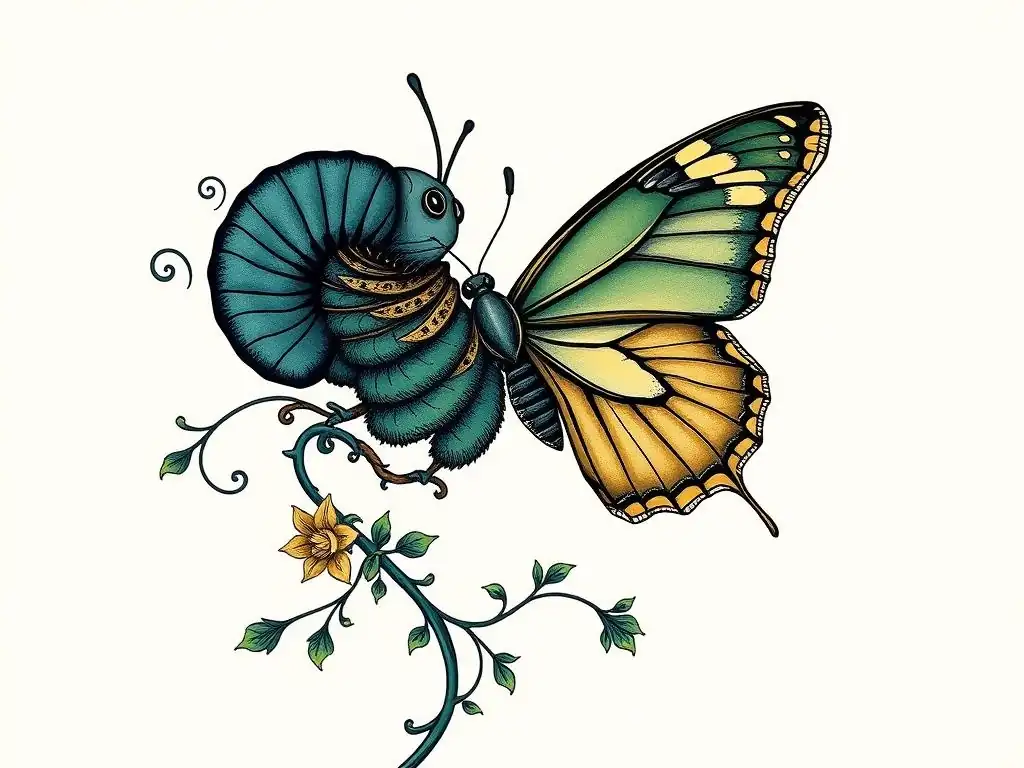
Transformation stories, particularly those echoing the "caterpillar to legend" pattern, offer powerful models for psychological resilience. The hero's journey, with its inherent challenges and the eventual emergence of a transformed individual, mirrors the process of overcoming personal obstacles and trauma. The narrative provides a framework for understanding that difficulties are not endpoints but necessary stages in a larger process of growth.
The 'chrysalis' stage, representing struggle and isolation, validates the human experience of facing difficult periods. The hero's perseverance within this stage, despite vulnerability and internal turmoil, serves as an inspiration for developing resilience in our own lives. These caterpillar myth transformation stories teach us that enduring hardship is often prerequisite to achieving a higher state of being or realizing our full potential.
Self-Discovery and Empowerment: Embracing Change
The act of transformation in myths is intrinsically linked to self-discovery. As the hero navigates their trials, they learn about their strengths, weaknesses, and true capabilities. The shedding of the old self and emergence of the new represents a profound act of self-acceptance and empowerment. By embracing the necessity of change—entering the 'chrysalis'—the hero gains agency over their own destiny.
This psychological interpretation suggests that our own periods of significant change, even those that feel like dissolving within a chrysalis, are opportunities for deep introspection and self-discovery. Accepting and actively participating in our personal metamorphosis leads to empowerment, enabling us to emerge with a stronger sense of self and a greater capacity to navigate the world.
Finding Your Wings: Achieving Potential
The ultimate outcome of the caterpillar's transformation is the ability to fly, symbolizing freedom and the realization of its full potential as a butterfly. In human terms, this corresponds to achieving our own potential, breaking free from limitations, and gaining a new perspective or capacity to interact with the world. Caterpillar myth transformation stories beautifully illustrate this process of gaining 'wings.'
This final stage represents not just survival, but flourishing. It is the moment where the hero's struggles culminate in the ability to achieve something previously impossible, whether it's saving a kingdom, gaining enlightenment, or simply living a more authentic life. Finding one's wings is the powerful promise held within every transformative journey: that the challenges of the chrysalis are worth enduring for the freedom and capability that await.
The Legacy of Transformation Stories in Contemporary Society
Symbolism in Literature and Art
The powerful symbolism of transformation, particularly the caterpillar-to-butterfly motif, persists vividly in contemporary literature, art, and popular culture. Authors and artists use these narratives to explore themes of personal growth, overcoming adversity, identity shifts, and liberation. From children's books about change to complex novels about character development, the journey from a limited state to a more expansive one remains a compelling subject.
Visual arts often depict the chrysalis and butterfly as direct symbols of hope, change, and resurrection. The image is universally recognized and resonates across cultures, making it a powerful tool for conveying complex ideas about the human condition. This enduring presence demonstrates the timeless relevance of caterpillar myth transformation stories as metaphors for life's most significant changes.
The Enduring Appeal of Transformation Narratives
Transformation narratives hold an enduring appeal because they speak to universal human experiences: the desire for improvement, the struggle against limitations, and the hope for a better future. They offer a framework for understanding change not as an ending, but as a necessary, albeit sometimes difficult, part of growth. The idea that something beautiful and capable can emerge from a humble, struggling form is inherently optimistic and inspiring.
These stories provide a sense of hope, suggesting that even in our 'caterpillar' phases—when we feel limited, vulnerable, or stuck—there is potential for radical change and emergence. They reassure us that the 'chrysalis' of struggle is a temporary, albeit vital, stage leading towards a more empowered state. This fundamental message contributes significantly to the widespread and lasting popularity of such tales.
How "Caterpillar to Legend" Stories Inspire Us Today
Ultimately, caterpillar myth transformation stories inspire us today by providing relatable models for personal development and resilience. They encourage us to view challenges not as insurmountable obstacles but as necessary steps in our own journey of metamorphosis. They remind us that growth often requires periods of discomfort, introspection, and breaking down old patterns.
These narratives empower us to believe in our own potential for change, regardless of our starting point. They suggest that within each of us lies the capacity to undergo significant transformation, to overcome our limitations, and to emerge as a more complete, capable, and authentic version of ourselves—to find our wings and become the legends of our own lives.
Conclusion: The Enduring Power of Transformation and the Hero's Journey
Reflecting on the Lessons Learned from Transformation Stories
Reflecting on caterpillar myth transformation stories reveals profound lessons about the nature of change, growth, and resilience. These narratives teach us that beginnings are often humble, that periods of struggle and isolation are essential for internal restructuring, and that true emergence involves shedding the old to embrace the new. They underscore the cyclical nature of life and the potential for renewal that exists even in moments of apparent dormancy or decay.
The hero's journey, viewed through the lens of metamorphosis, highlights the courage required to answer the call to adventure, endure trials within the 'chrysalis,' and emerge fundamentally changed. These stories validate our own struggles, offering a roadmap for navigating personal transformation and finding meaning in the process of becoming.
Embracing Our Own Metamorphosis: Becoming the Legends We Are Meant to Be
Inspired by the powerful archetype of the caterpillar turning into a butterfly, we are encouraged to embrace our own processes of metamorphosis. Recognizing our 'caterpillar' phase as a necessary beginning, accepting the 'chrysalis' of challenges as a period of vital internal work, and trusting in the potential for 'emergence' allows us to actively participate in our own growth.
By drawing parallels between these ancient myths and our modern lives, we can find strength and guidance in facing change. The legacy of caterpillar myth transformation stories empowers us to pursue self-discovery, overcome obstacles, and ultimately, to find our wings and become the fullest, most capable versions of ourselves—the legends we are meant to be.
Frequently Asked Questions
What is the central theme explored in "The Hero's Metamorphosis: From Caterpillar to Legend"?
The article explores transformation stories where characters undergo significant change, drawing parallels to the caterpillar's metamorphosis, ultimately achieving legendary status. It examines how these narratives resonate across cultures.
How does the article connect caterpillar metamorphosis to the broader study of mythology?
The article uses the caterpillar's transformation as a metaphor for personal growth, resilience, and the potential for extraordinary change found in many mythological narratives.
Does the article focus on specific cultural examples of "caterpillar myth transformation stories"?
While not solely focused on caterpillars, the article examines various cultural myths that feature themes of metamorphosis and transformation, reflecting the universal archetype of growth and change.
What is the significance of the "Hero's Journey" in the context of caterpillar transformation myths?
The "Hero's Journey" archetype aligns with the caterpillar's journey by highlighting the stages of departure, initiation, and return, reflecting profound personal and spiritual transformation.
How does the article relate ancient myths to contemporary society's understanding of transformation?
The article argues that ancient transformation myths still hold relevance today by offering insights into resilience, adaptation, and the capacity for personal growth and reinvention in modern life.
Final Reflection: Embracing the Chrysalis of Change
The journey from caterpillar to butterfly, a seemingly simple transformation, holds profound metaphorical weight in our own lives. It's a potent symbol of growth, resilience, and the inevitable necessity of shedding old skins to embrace our truest selves. This concept, explored through various myths and legends across cultures, remains strikingly relevant in a world constantly demanding adaptation and personal evolution.
The enduring power of the caterpillar myth lies in its ability to resonate with our own internal struggles. We all face moments where we feel trapped, insignificant, or even repulsive in our current state. Yet, within that perceived vulnerability lies the potential for breathtaking transformation. What lies behind you and what lies in front of you, pales in comparison to what lies inside of you.
- Ralph Waldo Emerson. This quote perfectly encapsulates the inner work required for true metamorphosis, a journey often fraught with challenges but ultimately leading to a more beautiful and authentic existence.
Consider the lessons of the caterpillar's journey. It isn't a passive process; it requires courage, patience, and a willingness to surrender to the unknown. You, too, possess this inner strength. Dare to embrace the discomfort of your own "chrysalis," the period of seeming inactivity where profound change occurs. Allow yourself the time and space to shed what no longer serves you, to grow, and to emerge, not just as a different person, but as the legend you were always meant to be.
Unlock Your Inner Legend: Embark on Your Hero's Journey!
Thanks for taking the time to explore the fascinating world of the hero's journey! We hope you've gained a new perspective on the transformative power of myth and legend. Ready to take the next step?
- Craft your own hero's journey: Spend some time today reflecting on your own life experiences. What challenges have you overcome? What transformations have you undergone? Start journaling your personal "myth." This is your primary action, the starting point of your own epic tale.
- Share your inspiration: Did a particular aspect of the article resonate with you? Share your thoughts and insights in the comments below – let's build a community of aspiring heroes!
- Discover more legendary tales: Explore our archives for more compelling stories of metamorphosis and triumph – there are countless epic adventures waiting to be uncovered!
What unique challenge will you transform into your own personal triumph today?