
The Divine Spark: What Made Mortals Worthy of Godly Attention


Welcome, seeker of ancient truths!
Ever wondered what made certain mortals so captivating that the gods themselves took notice? Delve into a world where divine intervention and human ambition intertwine. Prepare to unravel the mysteries of those mortals worthy of divine attention, and discover the qualities that elevated them from the ordinary to the legendary. The journey begins now...
- Divine Favor: Why Mortals Earned the Attention of the Gods
- Introduction: Exploring the Divine-Mortal Relationship
-
Qualities That Attracted Divine Attention: A Detailed Analysis
- Piety and Sacrifice: Demonstrating Religious Fervor and Loyalty
- Examples: Iphigenia and Abraham
- Courage and Skill: Overcoming Obstacles Through Bravery and Competence
- Examples: Achilles and David
- Wisdom and Prophecy: Possessing Insight and Foresight
- Examples: Cassandra and Tiresias
- Justice and Compassion: Upholding Moral Principles and Showing Empathy
- Examples: Antigone and Ruth
- The Divine Perspective: Motivations Behind Godly Intervention
- Case Studies: Examining Specific Instances of Divine Intervention
- The Role of Free Will and Predestination: Exploring the Balance
- Modern Relevance: Interpreting Divine Intervention in Contemporary Contexts
- Conclusion: The Lasting Impact of Divine-Mortal Interactions
-
Frequently Asked Questions
- What qualities or actions typically made mortals worthy of divine attention in mythology?
- Did all gods and goddesses value the same characteristics in mortals?
- How did myths about mortals receiving divine attention influence ancient societies?
- Besides direct intervention, what other forms did divine attention take in the lives of worthy mortals?
- What are some examples of mortals who were considered particularly worthy of divine attention and why?
- Final Reflection: Echoes of Divinity in the Mortal Realm
- Ignite Your Inner Mythmaker!
Divine Favor: Why Mortals Earned the Attention of the Gods
Introduction: Exploring the Divine-Mortal Relationship
Setting the Stage: Understanding the Hierarchy in Ancient Belief Systems
Across ancient cultures, belief systems typically depicted a clear hierarchy with powerful, immortal deities residing in celestial realms or sacred spaces, distinct from the mortal world. These gods and goddesses possessed immense power, often controlling natural phenomena, human destiny, and cosmic order. Mortals, by contrast, were finite beings, subject to death, suffering, and the whims of fate.
Their existence was often seen as fragile and dependent on the favor or indifference of the divine. This inherent distance and power imbalance between the immortal and the mortal realm raises a fundamental question: why would such powerful beings take notice of, let alone intervene in, the lives of fleeting humans?
This perceived separation wasn't absolute. Ancient myths are replete with tales of interaction, where the divine intersects directly with human affairs. Whether through omens, dreams, visitations, or direct intervention, the gods demonstrated an occasional, yet profound, interest in the mortal world. Understanding this dynamic requires looking beyond the simple power structure and exploring the complex motivations attributed to both gods and the mortals worthy of divine attention.
The Question of Divine Interest: What Motivated Gods to Intervene?
The motivations behind divine intervention are as varied and complex as the pantheons themselves. It wasn't always benevolence that drove a god to interact with a mortal; sometimes it was curiosity, anger, a desire for entertainment, or the need to maintain cosmic balance. However, the catalyst for this attention often lay with the mortal. What specific qualities, actions, or circumstances in a human life were significant enough to pierce the divine veil and capture the notice of an immortal being?
Exploring this question reveals fascinating insights into the values and moral codes embedded within these ancient narratives. Were the gods drawn to piety, strength, wisdom, or perhaps something less conventional? The qualities that made mortals worthy of divine attention varied across myths and cultures, but certain themes recur, suggesting universal ideas about what constitutes human excellence or significance in the eyes of the divine.
Qualities That Attracted Divine Attention: A Detailed Analysis
Piety and Sacrifice: Demonstrating Religious Fervor and Loyalty
One of the most consistently praised qualities in ancient texts is piety, the devout reverence and faithful service shown towards the gods. This wasn't merely passive belief but active worship, involving prayer, offerings, and adherence to religious customs and laws. Mortals who demonstrated exceptional piety, often through significant personal sacrifice, were frequently depicted as earning divine favor or at least avoiding divine wrath. Such actions affirmed the mortal's recognition of the divine hierarchy and their submission to its power.
Sacrifice, in particular, was a tangible expression of this piety. It could range from offering valuable goods or animals to, in rare and extreme cases, the willingness to sacrifice a loved one or even oneself. The act of giving up something precious demonstrated the depth of one's devotion and trust in the deity. Myths suggest that such profound acts of faith could not only avert disaster but also make mortals worthy of divine attention, prompting gods to respond, sometimes with blessings, sometimes with tests.
Examples: Iphigenia and Abraham
The story of Iphigenia from Greek mythology provides a stark example of sacrifice aimed at appeasing a deity. When the Greek fleet was stalled at Aulis by unfavorable winds on their way to Troy, the seer Calchas declared that the goddess Artemis was angered by Agamemnon's earlier offense and demanded the sacrifice of his daughter, Iphigenia.
Agamemnon, after much anguish, agreed to the sacrifice to secure passage for his army. While the outcome varies in different versions of the myth (some say Artemis replaced Iphigenia with a deer at the last moment, others that she was sacrificed), the narrative hinges on the belief that a deity demanded and was mollified by such a profound act of piety and sacrifice, illustrating the extreme measures undertaken to gain divine favor.
Similarly, the biblical narrative of Abraham and Isaac in the Book of Genesis presents a profound test of faith and willingness to sacrifice. God commands Abraham to sacrifice his son Isaac as a burnt offering. Abraham, despite his anguish, prepares to obey, demonstrating absolute trust and obedience to God's command.
At the crucial moment, an angel intervenes, stopping Abraham and providing a ram instead. This act of unwavering faith, the willingness to sacrifice his only son, is seen as the ultimate demonstration of piety, solidifying Abraham's covenant with God and making him a figure deemed exceptionally worthy of divine attention and blessing.
Courage and Skill: Overcoming Obstacles Through Bravery and Competence
Physical prowess, martial skill, and sheer bravery were also qualities that frequently drew the attention of the gods. Heroes who faced impossible odds, battled monsters, or demonstrated exceptional competence in battle or other endeavors often found themselves aided or challenged by deities. This wasn't just about strength; it was about the spirit with which challenges were met, the refusal to yield in the face of overwhelming danger. Such qualities reflected a spark of the divine, an extraordinary human potential that resonated with the power of the gods.
Exceptional skill in areas like craftsmanship, music, or strategic thinking could also be a source of divine interest, sometimes leading to divine patronage, but occasionally to divine jealousy if the mortal's skill approached or surpassed that of a deity (as seen in myths like that of Arachne). Nevertheless, demonstrating peak human capability, whether physical or mental, marked certain mortals worthy of divine attention.
Examples: Achilles and David
Achilles, the greatest warrior of the Achaeans in Homer's Iliad, is a prime example of courage and skill attracting divine notice. His near-invincibility (save for his heel) and unparalleled martial prowess were legendary, earning him the favor and assistance of several gods, most notably his mother, the sea nymph Thetis, and sometimes Athena, who intervened on his behalf in battle. His rage, sorrow, and heroic deeds were central to the divine drama unfolding around the Trojan War, making him a focal point of divine interest and manipulation.
The biblical King David is another figure whose courage and skill, particularly in his youth, earned him divine favor. His famous victory over the giant Goliath was not merely an act of bravery but was explicitly attributed to God's power working through him. Later, as a skilled military leader and king, David's actions were often guided or judged by divine prophets, and he was considered a man after God's own heart, highlighting how competence and courage, when coupled with faith, could make mortals worthy of divine attention and support in their endeavors.
Wisdom and Prophecy: Possessing Insight and Foresight
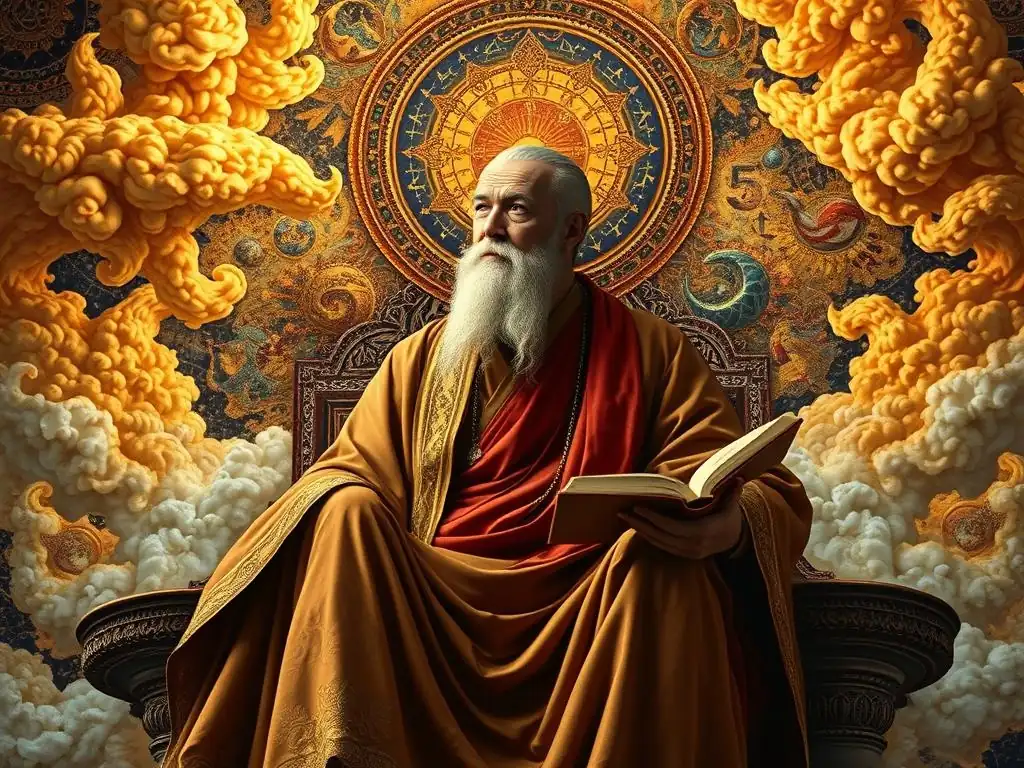
The ability to understand divine will, interpret signs, or possess foresight into the future were rare and potent qualities that inherently connected a mortal to the divine realm. Prophets, seers, and wise individuals who could commune with or receive messages from the gods held a unique position. Their insights could alter the course of human events, making them valuable (or dangerous) figures in the eyes of both mortals and immortals. This connection often came with a cost, as divine knowledge could be a heavy burden.
Wisdom, beyond just foresight, the ability to make just decisions, understand the nature of the world, or solve complex problems, was also valued. Mortals known for their profound wisdom could become advisors to kings, mediators in disputes, or figures whose very existence embodied principles valued by certain deities. Such intellectual or spiritual depth could make mortals worthy of divine attention, sometimes leading to divine teaching or enlightenment.
Examples: Cassandra and Tiresias
Cassandra, a princess of Troy in Greek mythology, was blessed with the gift of prophecy by the god Apollo, who desired her. When she rejected him, he cursed her so that her prophecies, though true, would never be believed. Her story tragically illustrates how divine gifts, particularly foresight, could make a mortal intensely significant to the gods, yet also lead to profound suffering and isolation within the human community. Her accurate warnings about the Trojan Horse and the city's downfall, ignored by her people, highlight the terrible burden of unwanted divine attention.
Tiresias, the famous blind prophet of Thebes in Greek myth, gained his prophetic abilities through divine interaction, though the exact circumstances vary. One common version recounts that he was blinded by Hera for siding against her in a dispute, but then given the gift of foresight by Zeus to compensate.
Another tells of him seeing Athena bathing, for which he was blinded, but then given understanding of birdsong and prophecy by the goddess. Regardless of the origin, Tiresias served for generations as a conduit for divine will, advising rulers like Oedipus and Creon, demonstrating how receiving and interpreting divine insight made him exceptionally worthy of divine attention and consultation throughout a long, mythic life.
Justice and Compassion: Upholding Moral Principles and Showing Empathy
In many ancient belief systems, gods were seen as arbiters of justice and order. Mortals who demonstrated a strong commitment to fairness, upheld moral laws (often seen as divinely ordained), and acted with compassion towards others could earn divine approval. Conversely, acts of injustice, cruelty, or hubris frequently incurred divine wrath. Living a righteous life, treating others justly, and showing empathy were not just social virtues but could be seen as actions aligning with divine principles, potentially making mortals worthy of divine attention.
This didn't always mean adherence to human laws, which could sometimes conflict with perceived divine mandates, as seen in the tragic choices faced by many mythological figures. Rather, it often referred to a deeper sense of righteousness, integrity, and a willingness to act based on moral conviction, even at great personal risk.
Examples: Antigone and Ruth
Sophocles' play Antigone centers on the conflict between human law and divine law. Antigone chooses to defy King Creon's decree forbidding the burial of her brother Polyneices, believing that the unwritten laws of the gods, which demand proper burial rites, are paramount.
Her courageous stand for what she believes is divine justice, despite facing a death sentence, portrays a mortal prioritizing heavenly mandates over earthly ones. While her fate is tragic, her actions are presented as morally righteous, resonating with a sense of divine order and making her a figure whose principles might be seen as worthy of divine attention or approval, even if the gods do not directly intervene to save her.
The biblical Book of Ruth tells the story of a Moabite widow who shows extraordinary loyalty and compassion towards her Israelite mother-in-law, Naomi, returning with her to Israel and embracing her people and her God. Ruth's kindness, faithfulness, and integrity in difficult circumstances are consistently highlighted.
She is blessed with a new marriage and becomes an ancestor of King David and, later, Jesus. Her story is often interpreted as an example of how steadfast loyalty, humility, and compassionate action towards others can lead to divine favor and make a mortal worthy of divine attention and blessing, even if they are an outsider.
The Divine Perspective: Motivations Behind Godly Intervention
Seeking Entertainment and Diversion: Gods as Patrons of the Arts and Games
While piety and virtue were often reasons for positive attention, sometimes the gods' motives were far less noble or predictable. Ancient myths frequently depict deities experiencing human-like emotions such as boredom, jealousy, or a desire for amusement. The complex, often dramatic lives of mortals could serve as a form of entertainment for the immortal residents of Olympus, Asgard, or other divine abodes. The Trojan War, for instance, is portrayed in part as a cosmic drama where gods took sides, manipulated events, and even engaged in physical conflict, viewing the human struggle below as a grand spectacle.
Gods also showed interest in human creativity and competition. Apollo was associated with music and poetry, Athena with crafts and wisdom, Dionysus with theatre and revelry.
Mortals who excelled in these areas might attract divine patronage, mentorship, or sometimes, dangerous rivalry if their skill was perceived as a challenge. These divine interactions, while sometimes beneficial, often stemmed from the gods' own interests and desire for diversion rather than solely from the mortal's intrinsic worth, highlighting that even negative or capricious divine attention could be directed towards certain mortals worthy of divine attention simply by virtue of their engaging lives or talents.
A fundamental driver for divine interaction was the assertion and maintenance of divine authority. Gods often intervened to punish impiety, correct perceived slights, or reward exceptional devotion, thereby reinforcing the need for worship, respect, and obedience from mortals. Neglecting sacrifices, breaking sacred oaths, or committing acts of hubris (excessive pride or defiance towards the gods) were frequent triggers for divine wrath, demonstrating the consequences of failing to recognize the divine order.
Conversely, public acts of devotion, building temples, or leading one's community in worship could earn divine favor and protection. These interactions served as powerful object lessons, reminding all mortals of the gods' power and their expectation of reverence. Making mortals worthy of divine attention through acts of piety wasn't just about personal salvation; it was often about upholding the social and cosmic order that acknowledged divine supremacy.
Establishing Lineage and Influence: Creating Powerful Descendants
Many myths feature gods fathering or mothering children with mortals, leading to the birth of demigods or heroes. These divine-mortal unions served multiple purposes from the divine perspective. They allowed gods to directly influence the mortal world through their powerful offspring, creating lineages of kings and heroes who often possessed extraordinary abilities or divine favor. This extended the god's reach and influence into the human realm, shaping history and ensuring their name and power were interwoven with human destiny.
Figures like Hercules (son of Zeus), Perseus (son of Zeus), and Romulus and Remus (sons of Mars) are prime examples of heroes whose divine parentage made them inherently worthy of divine attention and often destined for greatness, albeit frequently through trials imposed by other gods. These stories highlight a divine motivation centered on legacy, power projection, and the creation of a link between the immortal and mortal worlds through bloodlines.
Enforcing Cosmic Order: Maintaining Balance and Preventing Chaos
Perhaps the most significant motivation for divine intervention was the need to maintain cosmic order (often referred to as dharma in Indian traditions or reflected in concepts like maat in Egyptian belief or themis and dike in Greek thought). Gods were often seen as the guardians of the fundamental laws of the universe, which included the cycles of nature, the balance between creation and destruction, and the moral order governing human society. When this order was threatened, whether by monstrous entities, hubristic mortals, or other divine beings, gods would intervene to restore balance.
Flood myths, for example, are found in many cultures (e.g., Noah in the Bible, Utnapishtim in the Epic of Gilgamesh, Deucalion and Pyrrha in Greek myth) and often depict divine intervention as a response to pervasive human wickedness that has disrupted the intended order. Divine punishment for breaking oaths, violating hospitality, or committing unforgivable sins also falls under this category. In these cases, the mortals worthy of divine attention might be those whose actions, positive or negative, significantly impacted the cosmic balance, prompting a divine response to either correct the imbalance or support those striving to uphold order.
Case Studies: Examining Specific Instances of Divine Intervention
The Story of Moses: Leading the Israelites with God's Guidance
The biblical narrative of Moses is perhaps one of the most detailed and sustained accounts of direct divine intervention in human history. According to the Book of Exodus, God appears to Moses in a burning bush, commissioning him to lead the Israelites out of slavery in Egypt. This initial encounter marks Moses as a mortal specifically chosen and empowered by the divine. His subsequent interactions with God are frequent and direct, involving audible communication, miraculous signs (the plagues of Egypt), and the parting of the Red Sea to allow the Israelites passage.
Furthermore, God provides Moses with detailed laws and instructions on Mount Sinai, shaping the religious and social structure of the Israelite nation. Moses acts as a mediator between God and his people, relaying divine commands and interceding on their behalf. His entire leadership is depicted as being under constant divine guidance and protection, making him an unparalleled example of a mortal whose life and actions were fundamentally directed by divine attention and purpose.
The Tale of Joan of Arc: Inspired by Divine Visions to Lead France
The historical figure of Joan of Arc (Jeanne d'Arc, c. 1412–1431) provides a powerful example from a later period, where belief in divine intervention profoundly impacted historical events. During the Hundred Years' War, the young peasant girl claimed to hear the voices of Saint Michael, Saint Catherine, and Saint Margaret, who instructed her to support Charles VII and expel the English from France. Believing her to be divinely inspired, she was granted permission to lead troops.
Joan's military successes, including the lifting of the Siege of Orléans in 1429, were widely attributed by her contemporaries and followers to divine favor. She became a symbol of French resistance and divine backing for their cause. Although eventually captured and executed, her conviction in her divine mission and the extraordinary impact she had on the war's trajectory highlight a historical instance where a mortal was believed to be exceptionally worthy of divine attention and guidance, leading to significant real-world consequences.
The Legend of Rama: An Avatar of Vishnu Restoring Dharma
In the Hindu epic the Ramayana, Rama is the protagonist and is widely revered as an avatar (incarnation) of the god Vishnu, the preserver of the universe. Vishnu incarnates on Earth in various forms whenever dharma (righteousness or cosmic order) is threatened by powerful evil forces. Rama's birth and life are thus inherently linked to a divine purpose: to combat the demon king Ravana and restore balance.
Throughout the epic, Rama exhibits divine qualities and receives divine aid, though he lives much of his life as a seemingly mortal prince and king. His story is one of upholding righteousness, fulfilling duty ( dharma), and battling cosmic evil. His existence as a divine being living a mortal life, dedicated to restoring order, makes him the ultimate example of a being who is not just worthy of divine attention, but is the divine attention itself manifested in mortal form, acting to guide and save humanity.
The Epic of Sundiata: Divine Protection and the Founding of the Mali Empire
The Epic of Sundiata (Sundiata Keita, c. 1217–c. 1255), the founder of the Mali Empire in West Africa, contains elements that suggest divine or spiritual protection and destiny. While not always framed in terms of a single, transcendent deity like in monotheistic traditions, the narrative incorporates powerful spiritual forces, jinns, and blessings from the spirit world that guide and aid Sundiata. Born with a physical disability, he overcomes it in a seemingly miraculous manner, a feat often interpreted as a sign of his destined greatness and divine favor.
Throughout his struggles against the sorcerer-king Soumaoro Kanté, Sundiata receives aid and guidance from various sources, including wise counselors who possess spiritual knowledge and powerful totems. His victory and the subsequent establishment of the vast and prosperous Mali Empire are often presented not just as a result of his leadership and military skill, but also as the fulfillment of prophecy and the outcome of powerful spiritual forces aligning to support him.
This makes Sundiata a figure whose life story is seen as marked by significant, though perhaps less anthropomorphic, divine attention, leading to the creation of a major historical empire.
The Role of Free Will and Predestination: Exploring the Balance

Examining the Debate Between Choice and Divine Plan
Ancient myths often wrestle with the complex relationship between human agency and divine predetermination. Are the mortals worthy of divine attention simply actors playing out a script written by the gods or fate, or do their choices genuinely influence their destiny and the divine response? Narratives frequently present scenarios where human decisions seem to defy or alter a prophetic outcome, while others emphasize the inescapable grip of fate or a divine plan. This inherent tension reflects a deep philosophical debate about the nature of existence and the extent of human control.
Some myths suggest that while the broad strokes of destiny might be set by the gods or cosmic forces, the details and the manner in which that destiny unfolds are shaped by mortal choices, particularly the choices made under pressure or during moral tests. A hero might be fated for greatness, but their path there is paved with decisions about loyalty, courage, and justice. This suggests that while divine attention might highlight certain individuals, their response to that attention and their subsequent actions are crucial.
The Influence of Fate and the Power of Individual Agency
The concept of fate ( moira in Greek mythology, wyrd in Anglo-Saxon belief) is often portrayed as a force that can bind even the gods. Yet, heroes frequently strive against it, sometimes successfully, sometimes tragically. Myths like that of Oedipus, whose every attempt to escape his prophecy only brings him closer to fulfilling it, highlight the power of an unyielding fate. Conversely, Odysseus's journey home is fraught with divine interference and fated challenges, but his cunning, resilience, and choices play a significant role in his eventual success.
This interplay suggests that while fate or divine will might set the stage or present obstacles, individual agency—the capacity to make choices, exercise virtues like courage and cunning, and persevere—is also a powerful force acknowledged within these narratives. The mortals worthy of divine attention are often those whose individual agency, whether in alignment with or in defiance of perceived fate, is particularly potent or dramatic, making their stories compelling to both mortal and immortal audiences.
Modern Relevance: Interpreting Divine Intervention in Contemporary Contexts
Finding Meaning and Purpose in a Secular World
In many parts of the modern world, literal belief in anthropomorphic gods directly intervening in daily life has waned. Yet, the ancient stories of mortals worthy of divine attention continue to resonate. They offer powerful frameworks for understanding human experience, morality, and the search for meaning, even in a secular context. These myths explore universal themes: the struggle against external forces, the consequences of moral choices, the pursuit of excellence, and the desire for connection to something greater than oneself.
Interpreting these narratives today can help individuals explore questions of purpose, destiny, and the impact of their actions. The qualities that attracted divine attention in myths—piety (interpreted as dedication to a cause or principle), courage, skill, wisdom, justice, and compassion—remain highly valued human virtues. The stories provide archetypal examples of these virtues in action, offering guidance and inspiration for navigating the complexities of modern life, even without a literal belief in divine patrons or adversaries.
The Enduring Power of Archetypes and Moral Lessons
The figures and narratives of divine-mortal interaction have seeped deep into the collective consciousness, shaping literature, art, psychology, and philosophy. The archetypes of the hero blessed by the gods, the prophet burdened by truth, or the pious soul rewarded for faith continue to appear in contemporary storytelling. These archetypes provide shorthand for understanding complex human roles and motivations.
Furthermore, the moral lessons embedded in these myths remain relevant. The dangers of hubris, the rewards of humility and justice, the importance of fulfilling one's duty, and the consequences of impiety or cruelty are timeless themes. By examining what made mortals worthy of divine attention (or wrath) in these ancient stories, we can gain insight into the enduring human values that have shaped cultures for millennia and continue to inform our understanding of right and wrong, success and failure, connection and alienation.
Conclusion: The Lasting Impact of Divine-Mortal Interactions
Summarizing the Motivations and Qualities Involved
The question of what made mortals worthy of divine attention in ancient myths reveals a complex interplay of human qualities and divine motivations. Mortals who demonstrated exceptional piety, courage, skill, wisdom, justice, and compassion were often noticed by the gods, sometimes earning favor, sometimes becoming subjects of divine tests or conflicts. From the divine perspective, interventions could stem from a desire for entertainment, the need to assert authority, the goal of establishing powerful lineages, or the imperative to maintain cosmic order.
These interactions highlight a belief that certain human actions and characteristics possessed a significance that transcended the mundane, capable of capturing the notice of even the most powerful beings. The resulting narratives underscore the potential for human greatness and the complex, often unpredictable relationship between the finite and the infinite.
The Continuing Influence of These Stories on Culture and Belief
The myths and legends detailing the interactions between gods and mortals worthy of divine attention have had a profound and lasting impact on human culture. They have shaped religious beliefs, influenced ethical systems, inspired countless works of art and literature, and provided psychological frameworks for understanding human potential and limitations.
Even as societies change and beliefs evolve, the core narratives of mortals interacting with powerful, unseen forces, striving for excellence, and grappling with destiny continue to resonate. These stories remind us of humanity's enduring fascination with the divine, the quest for meaning beyond the ordinary, and the timeless qualities that elevate a mortal life to one potentially worthy of cosmic notice.
Frequently Asked Questions
What qualities or actions typically made mortals worthy of divine attention in mythology?
Mortals often earned favor through exceptional piety, unwavering loyalty, or remarkable acts of heroism. Their inherent goodness or potential for greatness also played a role.
Did all gods and goddesses value the same characteristics in mortals?
No, different deities had varying standards and interests. Some favored strength and courage, while others valued wisdom, artistry, or even cunning. It depended on the god's domain and personality.
How did myths about mortals receiving divine attention influence ancient societies?
These myths served as moral lessons, highlighting desired virtues and warning against hubris. They also reinforced belief in the power and influence of the gods in daily life.
Besides direct intervention, what other forms did divine attention take in the lives of worthy mortals?
Divine attention could manifest as blessings, protection, or guidance through dreams and omens. Sometimes, it involved bestowing special abilities or gifts upon the chosen mortal.
What are some examples of mortals who were considered particularly worthy of divine attention and why?
Hercules, for his unmatched strength and service to humanity. Psyche, for her beauty and unwavering love. Odysseus, for his cunning and resilience.
Final Reflection: Echoes of Divinity in the Mortal Realm
The quest to understand what makes mortals worthy of divine attention remains profoundly relevant today, a question echoing through the ages and resonating in our modern anxieties and aspirations. We grapple with purpose, meaning, and our place in the grand scheme of things, mirroring the very struggles explored throughout history by those seeking divine favor. The search for worthiness, whether defined by piety, compassion, or sheer resilience, continues to shape our individual journeys and collective narratives.
The exploration of this theme has profoundly impacted how we perceive our own humanity and the potential for greatness within each of us. The very act of seeking divine connection, regardless of one's belief system, speaks to a deep-seated yearning for something greater than ourselves. The highest form of human intelligence is the ability to observe without judgment.
This quote, though not directly about divinity, speaks to the acceptance and understanding that are often prerequisites for experiencing the divine spark within ourselves and others, qualities that make us worthy of attention, not through merit alone, but through our capacity for growth and empathy.
Consider the implications of this exploration in your own life. What qualities do you believe make a mortal worthy of attention, not just from a divine perspective, but from the perspective of your fellow human beings? What actions can you take today to cultivate those qualities within yourself and to recognize them in others? Let this reflection be a catalyst for self-discovery and a renewed appreciation for the inherent worth and potential that resides within each of us, a divine spark waiting to be ignited.
Ignite Your Inner Mythmaker!
Thanks for exploring the fascinating world of divine intervention! You’ve uncovered some incredible stories of mortals who caught the eye of the gods—and now it’s your turn to create your own.
Here’s how you can keep the mythic flame alive:
- Craft your own legend: Think about a modern-day mortal worthy of a divine encounter. What makes them special? What challenges do they face? Write a short story or poem about their journey. This is your chance to become a storyteller!
- Share your insights: Discuss your favorite mythical figure or the most compelling aspect of divine intervention in the comments below. Let's build a community of myth lovers!
- Explore further: Dive deeper into the mythology of your favorite culture. What other stories resonate with you, and what lessons can you draw from them?
What unexpected qualities might make a modern-day mortal worthy of godly attention?