
Echoes of Avalon: Experiencing Arthurian Legend in the British Isles.

Welcome to Mythology and Legends!
Delve into the enchanting world where ancient stories come alive. What if the whispers of Avalon were more than just tales? Join us as we embark on a journey to uncover the enduring power of the Arthurian legend in the British Isles. Prepare to explore the myths, unravel the mysteries, and discover how these captivating narratives continue to shape our world. Are you ready to rediscover King Arthur?
- Unveiling the Arthurian Legend in the British Isles: A Journey Through History & Myth
- Planning Your Arthurian Adventure: Essential Steps
- Experiencing Arthurian Sites: Immersive Activities
- Beyond the Sites: Immersing Yourself in Arthurian Culture
- Continuing Your Arthurian Exploration
-
Frequently Asked Questions
- What geographical areas within the British Isles are most strongly associated with Arthurian Legend?
- How has Mythology and Legends approached the study of Arthurian Legend within the British Isles?
- What are some common themes or motifs found in Arthurian Legend as it's told in the British Isles?
- How accurate are the historical claims that certain locations in the British Isles are authentic Arthurian sites?
- Beyond the traditional tales, what impact has Arthurian Legend had on contemporary British culture?
- Final Reflection: The Enduring Magic of Arthurian Legend
- Unlock the Magic: Your Arthurian Adventure Awaits!
Unveiling the Arthurian Legend in the British Isles: A Journey Through History & Myth
The Arthurian legend, a tapestry woven from myth, history, and folklore, holds a powerful grip on the imagination. At its heart lies the British Isles, a landscape saturated with sites and stories purportedly linked to King Arthur, his knights, and the mystical realm of Camelot.
Exploring the Arthurian legend British Isles is not merely a historical or literary pursuit; it is a journey through rugged coastlines, ancient forests, and atmospheric ruins that seem to whisper tales of knights, magic, and chivalry. This enduring narrative, shaped over centuries by chroniclers, poets, and storytellers, has left an indelible mark on the cultural identity of Britain and continues to draw pilgrims and enthusiasts from around the world seeking to connect with its legendary past.
Tracing the footsteps of Arthur and his companions requires navigating the blurred lines between documented history and fantastical myth. While scholarly debate continues regarding the historical basis for a figure like King Arthur, the places associated with the legend in the British Isles are very real, offering tangible connections to the stories that have captivated generations.
From the windswept cliffs of Cornwall to the rolling hills of Somerset and the ancient Roman strongholds of Wales, each location contributes a unique thread to the complex fabric of the Arthurian legend British Isles. This article serves as a guide for those wishing to embark on their own quest, exploring the key sites and immersing themselves in the rich cultural landscape that fostered these timeless tales.
Planning Your Arthurian Adventure: Essential Steps
1. Deciding Where to Begin Your Arthurian Pilgrimage
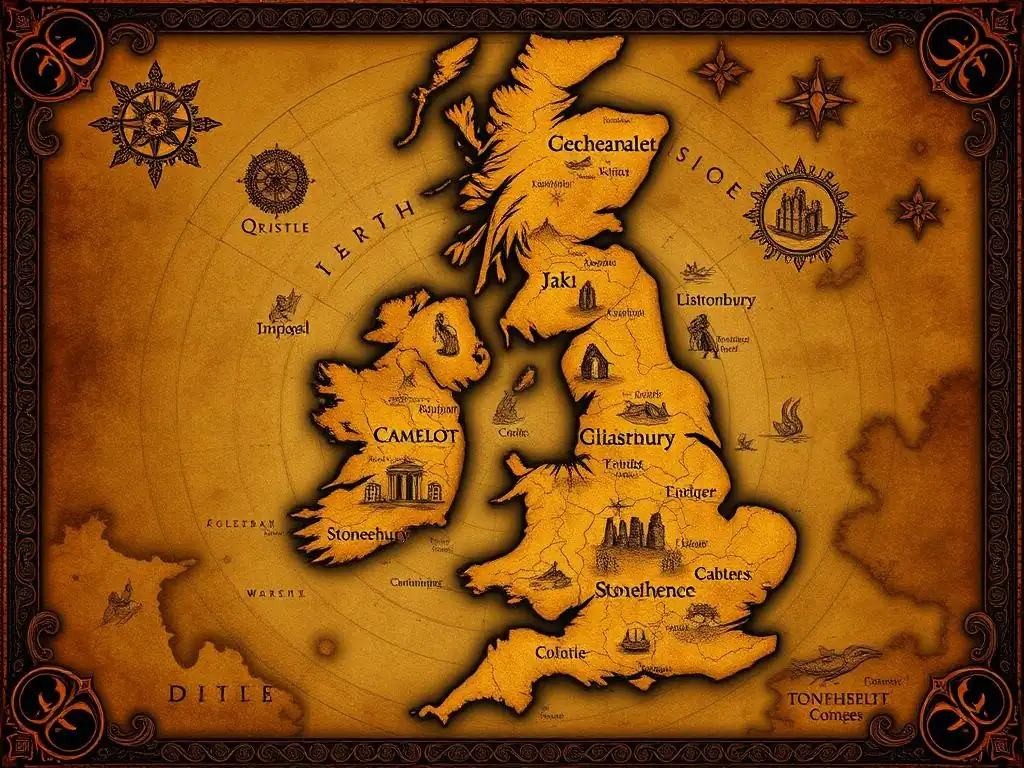
Embarking on a journey through the Arthurian legend British Isles requires careful consideration of the many potential starting points, each offering a distinct flavour of the mythos. The sheer number of sites associated with King Arthur and his court across England, Wales, and even Scotland can be overwhelming.
Therefore, selecting a primary focus or a logical route based on geographical proximity and personal interest is crucial for a fulfilling experience. Whether drawn to the mystical associations of Avalon, the dramatic history linked to Arthur's birth, or the echoes of Roman Britain often tied to Camelot, your choice of starting point will shape the narrative of your personal quest.
Consider the key regions most strongly connected to the Arthurian legend British Isles. Cornwall, with its dramatic coastal landscapes, is central to tales of Arthur's conception and early life. Somerset is inextricably linked with the Isle of Avalon and the quest for the Holy Grail.
Wales boasts numerous locations associated with Arthurian figures and battles, often rooted in earlier Celtic lore. Each region offers a unique perspective on the legend, from the wild, untamed magic of the west country to the more structured, potentially historical settings of Roman Britain. Researching the specific legends and historical claims tied to each area will help you decide where your Arthurian journey should begin.
- Glastonbury, Somerset: The Isle of Avalon Beckons:
- Tintagel Castle, Cornwall: Birthplace of a King?:
- Caerleon Amphitheatre, Wales: A Roman Fortress and Arthurian Stronghold:
2. Essential Resources: Books, Maps, and Guided Tours
To truly appreciate the depth and complexity of the Arthurian legend British Isles while visiting its associated sites, arming yourself with relevant resources is paramount. Books, ranging from classic literary works to historical analyses and modern guidebooks, can provide invaluable context and deepen your understanding of the narratives linked to each location. Familiarizing yourself with key texts like Sir Thomas Malory's Le Morte d'Arthur or Geoffrey of Monmouth's History of the Kings of Britain will enrich your experience, allowing you to see the sites through the lens of the stories that made them famous.
Navigating the diverse landscapes of the British Isles to find these scattered Arthurian locations requires practical tools. Detailed maps, whether physical or digital, are essential for planning routes, understanding geographical relationships between sites, and ensuring smooth travel, particularly if driving through rural areas.
Travel guides focused on history, mythology, or specific regions can offer practical advice on transport, accommodation, and local attractions near Arthurian sites. Additionally, consider the value of guided tours or hiring local experts; their knowledge can unlock hidden layers of history and folklore, providing insights you might miss exploring independently and connecting you more profoundly with the Arthurian legend British Isles.
- Arthurian Literature: Diving Deeper into the Legend:
- Navigating the British Isles: Maps and Travel Guides:
- Expert Guidance: Guided Tours and Historical Experts:
Experiencing Arthurian Sites: Immersive Activities
1. Glastonbury: Exploring Avalon and the Holy Grail
Glastonbury is arguably the spiritual heart of any quest related to the Arthurian legend British Isles, primarily due to its strong association with the mythical Isle of Avalon and the legend of the Holy Grail. The town and its surrounding landscape are steeped in centuries of myth and history, creating an atmosphere unlike anywhere else. Visitors can spend days exploring the various sites, each offering a piece of the puzzle that links this seemingly ordinary Somerset town to the extraordinary tales of Arthur, Guinevere, Lancelot, and the quest for the ultimate sacred object.
The activities in Glastonbury are diverse, ranging from spiritual contemplation to historical exploration. The act of simply walking through the town, with its unique shops and vibrant energy, is part of the experience. However, the key sites offer tangible connections to the legends. Climbing Glastonbury Tor, visiting the ruins of the Abbey, and experiencing the tranquility of the Chalice Well Gardens provide distinct perspectives on the layers of myth and history that have accumulated here, making it a cornerstone for anyone exploring the Arthurian legend British Isles.
- Climbing Glastonbury Tor
Climbing Glastonbury Tor is a quintessential experience for anyone visiting the town with an interest in the Arthurian legend British Isles. This prominent conical hill, capped by the roofless St. Michael's Tower, offers panoramic views of the surrounding Somerset Levels, a landscape often identified with the watery realm of Avalon. The ascent, while relatively short (the Tor rises to about 500 feet or 158 meters), can be steep, but the reward is a breathtaking vista that helps visualize the historical geography and the potential isolation of the 'Isle' of Avalon in ancient times when the levels were often flooded.
The Tor is steeped in myth and legend, long before the Arthurian connections became prominent. It has been associated with Celtic mythology, pagan rituals, and early Christian hermits. In Arthurian lore, it is strongly linked to Avalon, the place where Arthur was taken to recover from his wounds after the Battle of Camlann.
Some legends even place the entrance to the underworld or the realm of the Fae within the Tor itself. Standing at the summit, feeling the wind and surveying the landscape, provides a profound sense of connection to these ancient stories and the enduring mystique of the Arthurian legend British Isles.
- Visiting Glastonbury Abbey
Glastonbury Abbey is another cornerstone site for exploring the Arthurian legend British Isles, particularly due to the medieval claims that it is the burial place of King Arthur and Queen Guinevere. While now a magnificent ruin, the Abbey was once one of the wealthiest and most powerful monasteries in England, with a history stretching back potentially to the 7th century (though some traditions suggest earlier Christian presence). The remains of the Lady Chapel, the Great Church, and the Abbot's Kitchen provide a glimpse into its former grandeur and its significant role in medieval religious and political life.
In 1191, monks at the Abbey claimed to have discovered the coffins of Arthur and Guinevere buried deep within the grounds. This discovery, conveniently occurring after a devastating fire that required funds for rebuilding, significantly boosted the Abbey's profile and pilgrim numbers.
Although modern archaeology and historical analysis cast doubt on the authenticity of the find, the purported burial site (marked today by a simple sign) remains a powerful symbol of the Abbey's deep entanglement with the Arthurian legend British Isles. Walking among the ruins, one can contemplate the layers of history and myth that converge in this sacred space.
- The Chalice Well Gardens: A Place of Peace and Legend:
Nestled at the foot of Glastonbury Tor lies the Chalice Well Gardens, a tranquil and beautiful space deeply intertwined with the legends of the Holy Grail and Joseph of Arimathea. The well itself is a natural spring, known for its iron-rich water which gives it a reddish hue.
According to legend, Joseph of Arimathea, after bringing Christianity to Britain, buried the chalice used at the Last Supper near the Tor, and the spring is said to flow from this spot. This connection firmly places the Chalice Well within the narrative of the Arthurian legend British Isles, particularly the quest for the Grail.
The gardens surrounding the well are designed as a place of contemplation and peace, offering a serene contrast to the dramatic landscape of the Tor. Visitors can drink the water from the wellhead, meditate by the peaceful pools, and wander through the thoughtfully designed paths and flowerbeds. The Vesica Piscis design on the well cover, a symbol with both Christian and pagan interpretations, adds another layer of mystical significance. The Chalice Well Gardens offer a unique opportunity for quiet reflection and a tangible link to the spiritual dimensions of the Arthurian legend British Isles.
2. Tintagel Castle: Stepping Back in Time
Tintagel Castle, perched dramatically on a rugged headland on the Cornish coast, is one of the most iconic sites associated with the Arthurian legend British Isles. Its windswept location, accessible via a modern footbridge that spans a deep chasm, feels inherently legendary. According to Geoffrey of Monmouth's 12th-century history, Tintagel was the stronghold where Arthur was conceived, through a magical deception orchestrated by Merlin. This powerful origin story has cemented Tintagel's place in the popular imagination as the very starting point of the King Arthur narrative.
Managed by English Heritage, the site encompasses not only the medieval castle ruins but also evidence of earlier occupation, including significant findings from the Romano-British period (roughly 3rd-7th centuries AD). These archaeological discoveries, including pottery from the Mediterranean, suggest Tintagel was a high-status settlement with international connections during the time frame often associated with a historical Arthur. Exploring the castle requires navigating steep paths and steps, but the effort is rewarded with stunning coastal views and a palpable sense of ancient history and enduring myth, making it a vital stop for anyone exploring the Arthurian legend British Isles.
- Exploring the Ruins
Exploring the ruins of Tintagel Castle is an immersive experience that allows visitors to piece together the history and legend of this dramatic site. The ruins are spread across the mainland and the island part of the headland, connected by a modern footbridge opened in 2019, replacing a steeper, more challenging route. The bridge itself is a feat of engineering, spanning approximately 200 feet (60 meters) and offering spectacular views down into the cove and the sea below. Walking across it provides a sense of entering a separate, ancient realm.
Once on the island, visitors can explore the remains of the Great Hall, the chapel, and various other structures dating primarily from the 13th century, when Richard, Earl of Cornwall, built the castle. However, archaeological excavations have revealed evidence of much earlier, high-status activity on the site dating back to the 5th and 6th centuries, a period closer to the traditional timeframe of King Arthur. Signs and information boards provided by English Heritage help interpret the different phases of occupation and highlight the connections to the Arthurian legend British Isles, allowing visitors to walk through layers of time.
- Merlin's Cave
Below Tintagel Castle's headland, accessible at low tide, is Merlin's Cave, a long sea cave that cuts through the island. This natural feature has become firmly embedded in the Arthurian legend British Isles, specifically through its association with the wizard Merlin. Legend tells that Merlin used this cave, or perhaps resided within it, playing a role in Arthur's conception or early life near Tintagel. While the historical basis for this connection is purely mythical, the cave's dramatic location adds another layer of mystique to the Tintagel experience.
Visiting Merlin's Cave requires careful timing, as it is only accessible at low tide. Check local tide times before attempting to explore. The cave runs for approximately 100 yards (90 meters) through the rock. Exploring the cool, damp interior, with the sound of the waves echoing, provides a visceral connection to the wild, magical elements often associated with Merlin and the earlier, more mystical versions of the Arthurian legend. It's a simple but powerful site that captures the imagination and reinforces the deep ties between this landscape and the Arthurian legend British Isles.
- Tintagel Village: A Charming Cornish Experience:
The village of Tintagel, situated just a short walk from the castle entrance, complements the historical and legendary experience of the site. While the castle provides the ancient backdrop, the village offers a taste of modern Cornish life intertwined with the Arthurian legend British Isles theme. The village is home to a variety of shops selling souvenirs, local crafts, and Arthurian-themed items, as well as pubs, cafes, and restaurants.
Exploring Tintagel village allows visitors to relax after exploring the castle and soak in the local atmosphere. You can find everything from traditional Cornish pasties to unique artwork inspired by the legend. The village also houses the King Arthur's Great Halls, a striking building constructed in the 1930s, featuring stained glass windows depicting Arthurian scenes, which adds another layer to the area's dedication to the legend. Spending time in the village provides context for how the Arthurian legend British Isles continues to influence local culture and tourism today.
3. Caerleon: Uncovering Roman and Arthurian History
Caerleon, located near Newport in South Wales, offers a different perspective on the Arthurian legend British Isles, one that is strongly rooted in the region's significant Roman past. While not as universally recognized as Glastonbury or Tintagel in popular Arthurian lore, Caerleon has strong historical claims to being a potential site for Camelot or a major centre of Arthurian activity. Its importance stems from its history as Isca Augusta, one of only three permanent Roman legionary fortresses in Britain, established around 75 AD for the Legio II Augusta.
The impressive Roman remains at Caerleon provide a tangible link to the post-Roman period in Britain, the era in which a historical Arthur figure might have existed as a Romano-British leader defending against invaders. Geoffrey of Monmouth identified Caerleon as a major city and a seat of Arthur's court, describing a magnificent palace and the famous Round Table here.
While the palace remains are unproven, the substantial Roman ruins – including a remarkably preserved amphitheatre and bathhouse – offer a realistic glimpse into the kind of infrastructure that could have supported a powerful leader and his retinue, providing a grounding in potential history for the Arthurian legend British Isles.
- Walking the Walls of the Roman Fortress
Walking the perimeter and surviving sections of the Roman fortress walls in Caerleon is a powerful way to connect with the deep history of the site and its potential links to the Arthurian legend British Isles. Isca Augusta was a vast military complex, covering an area of approximately 50 acres (20 hectares) and housing around 5,500 legionaries. While much of the original fortress lies beneath the modern town, significant portions of the defensive walls and corner towers are still visible and accessible.
Tracing the line of the walls gives a sense of the scale and importance of this Roman stronghold. These fortifications were built to last, constructed from earth and timber initially, later reinforced with stone. Standing on the ramparts, you can imagine the daily life of the legionaries who defended Roman Britain and potentially the subsequent Romano-British leaders who may have utilized these structures in the post-Roman period. This tangible connection to a powerful military base from the relevant era adds weight to Caerleon's place within discussions of the Arthurian legend British Isles.
- Visiting the Roman Legion Museum
The National Roman Legion Museum in Caerleon is an essential stop for anyone exploring the Roman history of the site and its potential connection to the Arthurian legend British Isles. Located within the boundaries of the former fortress, the museum houses an impressive collection of artifacts unearthed from the Caerleon excavations. These objects provide detailed insights into the daily lives of the Roman soldiers and the civilians who lived alongside them.
Exhibits showcase everything from military equipment, weapons, and armor to domestic items like pottery, coins, jewelry, and tools. There are also fascinating displays on religious practices, burial customs, and the administrative functions of the fortress. Seeing these real objects helps to humanize the history and understand the sophisticated society that existed here. By exploring the museum, visitors gain a deeper appreciation for the historical context of Caerleon as a major centre in Roman Britain, strengthening the argument for its potential role in the Arthurian legend British Isles.
- Attending a Performance at the Amphitheatre
Caerleon boasts the most complete Roman amphitheatre in Britain, a remarkably preserved structure that adds significant weight to the town's historical importance and its potential link to the Arthurian legend British Isles. Built around 90 AD, the amphitheatre could seat approximately 5,000 spectators and was used for military parades, training exercises, and potentially gladiatorial contests or animal hunts. Its circular shape and tiered seating have led to its popular association with King Arthur's legendary Round Table, a connection popularized by the antiquarian William Camden in the 16th century.
While no definitive proof links the amphitheatre directly to Arthur, its existence as a large, central gathering place in a major Roman stronghold fits the description of a significant court or meeting place. Visitors can walk into the arena and sit on the ancient banking, imagining the spectacles that took place here nearly two millennia ago. Occasionally, the amphitheatre is used for modern performances, plays, or historical re-enactments. Attending an event here, if possible, offers a unique way to experience this ancient space and ponder its enduring connection to the Arthurian legend British Isles.
Beyond the Sites: Immersing Yourself in Arthurian Culture
Exploring the physical sites associated with the Arthurian legend British Isles is just one part of a complete immersive experience. The legend is not confined to ruins and landscapes; it lives on in cultural expressions, local traditions, and contemporary interpretations. To truly deepen your connection to the Arthurian world, consider engaging with the broader cultural context that keeps these stories alive. This involves seeking out opportunities that go beyond simply visiting historical locations and delve into the living legacy of the legend.
Engaging with Arthurian culture means looking for festivals, performances, and storytelling events that celebrate the myths. It also involves exploring the ways the legend influences modern art, literature, and even local businesses. Seeking out these experiences provides a richer, more nuanced understanding of how the Arthurian legend British Isles has evolved and continues to resonate in contemporary society, offering different perspectives than those gained solely from historical sites.
1. Arthurian Festivals and Events
Throughout the British Isles, particularly in regions strongly associated with the Arthurian legend, various festivals and events celebrate the myths and history. While not always exclusively focused on Arthur, many historical or folklore festivals in areas like Somerset, Cornwall, or Wales incorporate elements of the legend. These events can range from small village gatherings with local storytellers to larger historical re-enactments or arts festivals that feature Arthurian themes.
For example, towns near key sites might host medieval fairs or historical weekends during the summer months, sometimes including jousting displays, archery, or costumed characters that evoke the Arthurian era. While specific "Arthurian Festivals" may vary year to year, looking at local event listings for areas like Glastonbury, Tintagel, or Caerleon around key times (like summer or bank holidays) can uncover opportunities to experience the legend within a festive community setting. These events offer a chance to see the Arthurian legend British Isles celebrated through performance and public engagement.
2. Experiencing Arthurian Storytelling
The Arthurian legend British Isles is fundamentally a collection of stories, passed down through generations. Experiencing these narratives through live storytelling offers a powerful and traditional way to connect with the material. While reading the classic texts is essential, hearing the tales recounted by skilled storytellers brings them to life in a unique way, echoing the oral traditions that likely predated the written versions.
Look for opportunities to attend storytelling sessions in pubs, community centers, or at historical sites. Some museums or heritage organizations might host specific events featuring tellers who specialize in folklore and legend. Engaging directly with someone sharing these ancient narratives allows for a more personal and evocative experience than simply reading. It highlights the enduring power of the spoken word and its role in preserving the Arthurian legend British Isles through the ages.
3. Indulging in Arthurian-Themed Accommodation
To fully immerse yourself in the atmosphere of the Arthurian legend British Isles, consider seeking out accommodation that reflects the theme or is located in a historically significant setting. Staying in an ancient inn, a hotel near a key site, or even a uniquely themed B&B can enhance the sense of stepping back in time and living within the legendary landscape.
Many areas popular with Arthurian enthusiasts offer a range of accommodation options, from charming guesthouses in villages like Tintagel or Glastonbury to historic hotels with potential (or claimed) connections to the past. Some places might even offer specific Arthurian-themed rooms or packages. Choosing lodging that resonates with the historical or mythical context of your journey adds an extra layer of enjoyment and immersion to your exploration of the Arthurian legend British Isles.
Continuing Your Arthurian Exploration
Your journey through the Arthurian legend British Isles need not end after visiting the most famous sites. The legend is vast and multifaceted, with countless other locations across England, Wales, and Scotland claiming connections to Arthur, Merlin, Guinevere, and the Knights of the Round Table. From potential battle sites like Badon or Camlann (locations of much historical debate) to lesser-known castles, caves, and landscapes linked to specific episodes or characters, the possibilities for further exploration are extensive.
Consider delving deeper into specific aspects of the legend – focusing on Merlin sites, exploring potential locations of Camelot beyond Caerleon, or researching the historical figures and events that may have inspired the myths. The Arthurian legend British Isles is a living tradition, constantly reinterpreted in literature, film, and art. Continuing to engage with these new perspectives, alongside revisiting the ancient sites, ensures that your connection to this enduring saga remains vibrant and enriching.
Frequently Asked Questions
What geographical areas within the British Isles are most strongly associated with Arthurian Legend?
Arthurian Legend is most strongly tied to Southwest England (Cornwall and Glastonbury) and Wales, although sites across Britain claim Arthurian connections. These areas often boast locations linked to Camelot, the Holy Grail, and Arthur's final battle.
How has Mythology and Legends approached the study of Arthurian Legend within the British Isles?
Mythology and Legends offers a comprehensive exploration of Arthurian narratives, examining their historical roots and cultural significance across the British Isles. We delve into variations of the tales and their influence on modern literature and art.
What are some common themes or motifs found in Arthurian Legend as it's told in the British Isles?
Common themes include chivalry, courtly love, the quest for the Holy Grail, and the struggle between good and evil. These motifs are often interwoven with elements of Celtic mythology and historical figures.
How accurate are the historical claims that certain locations in the British Isles are authentic Arthurian sites?
The historicity of Arthurian Legend is heavily debated. Many sites are associated with Arthur through folklore and later literary elaborations, not necessarily verifiable historical evidence. Archeological findings remain inconclusive.
Beyond the traditional tales, what impact has Arthurian Legend had on contemporary British culture?
Arthurian Legend has profoundly influenced British literature, art, and film. It continues to inspire national identity and tourism, with numerous sites promoting their Arthurian connections. The legend also informs modern interpretations of leadership and heroism.
Final Reflection: The Enduring Magic of Arthurian Legend
The echoes of King Arthur resonate far beyond the pages of medieval texts; they reverberate through the very landscape of the British Isles, shaping our understanding of identity, heroism, and the enduring power of myth. The stories, woven into the fabric of castles, churches, and rolling hills, continue to inspire awe and wonder, proving that the legend's grip on our collective imagination remains as strong as ever.
The enduring influence of the Arthurian legend is undeniable; it's a tapestry woven from threads of history, folklore, and artistic interpretation, constantly being reimagined and reinterpreted. Its impact extends beyond tourism, shaping our perceptions of chivalry, justice, and the very nature of good versus evil. Once upon a time, and perhaps still,
as J.R.R. Tolkien might have said, "there was a King Arthur." This quote speaks to the timeless quality of the legend, its ability to transcend time and continue to speak to us today. The stories, imbued with both tragedy and triumph, offer a powerful reflection on human nature and the enduring search for meaning.
Consider the impact of Arthur's legend on your own life. Have you ever felt the pull of a mysterious, ancient place? Have you ever been inspired by tales of courage and self-sacrifice?
Let the echoes of Avalon inspire you to seek out your own personal Camelot, to embrace the spirit of adventure, and to strive for a world that reflects the ideals of justice and chivalry that Arthur's legend embodies. The journey to understanding Arthur's legacy is a personal one, and it's a journey that continues to unfold with each new interpretation and each new visitor to the sites that bear witness to his enduring tale.
Unlock the Magic: Your Arthurian Adventure Awaits!
Thanks for joining us on a journey through the captivating world of Arthurian legend! We hope you've gained a deeper appreciation for the rich history and enduring mystique surrounding King Arthur and his knights. Ready to take your exploration further?
- Embark on your own Arthurian quest: Research a specific aspect of Arthurian lore that piqued your interest – perhaps delve into the historical basis of Camelot, explore the symbolism of Excalibur, or investigate the various interpretations of the Lady of the Lake.
- Share your favorite Arthurian legend or character: Let's build a community! Post a comment below and tell us which aspect of Arthurian lore resonated most with you.
- Uncover hidden Arthurian connections in your own life: Consider the parallels between Arthurian themes (courage, loyalty, chivalry) and aspects of your own life. What lessons can be drawn from these timeless tales?
So, what part of Arthurian legend will you explore next? Let's continue the conversation!