
Tales in Verse: Best Books Featuring Mythology's Greatest Epics

Welcome to Mythology and Legends, where the whispers of ancient worlds echo through the ages. Ever wondered how the rhythmic cadence of verse shaped the tales that define our understanding of heroes, gods, and monsters? Delve into our exploration of " Mythology books verse epics" and uncover the best volumes that bring these timeless narratives to life. What secrets lie hidden within the meter and rhyme? Let's find out...
- Exploring the Timeless Allure of Mythology Books in Verse
-
The Best Mythology Books Verse Epics: Our Top Picks
- 1. The Odyssey (Emily Wilson Translation): A Modern Take on Homer's Classic
- 2. Beowulf (Seamus Heaney Translation): Old English Heroism Reimagined
- 3. The Iliad (Stephen Mitchell Translation): War, Gods, and Human Fate in Ancient Greece
- 4. The Aeneid (Robert Fagles Translation): Rome's Founding Myth in Epic Poetry
- 5. The Divine Comedy (Various Translations): A Journey Through Hell, Purgatory, and Paradise
- Comparing the Best Mythology Books Verse Epics: Which is Right for You?
- Maximizing Your Reading Experience: Tips for Enjoying Mythology in Verse
- Conclusion: Embrace the Power of Mythology Books Verse Epics
-
Frequently Asked Questions
- What is the main difference between a mythology book and an epic poem?
- Why would someone choose to read epic poems over simply reading a summarized version of the myth?
- Are there any specific epic poems that are considered essential reading for understanding Greek Mythology?
- How do mythology books and epic poems contribute to our understanding of contemporary society?
- Where can I find a good selection of both mythology books and translated versions of epic poems?
- Final Reflection: Echoes of Gods and Heroes in Verse
- Unlock the Power of Myth: Dive Deeper into Epic Tales!
Exploring the Timeless Allure of Mythology Books in Verse
Experiencing the foundational narratives of human culture through poetry offers a unique and profound connection to the past. While prose translations make these stories accessible, reading mythology books verse epics allows us to encounter them in a form closer to their original oral or written composition, where the rhythm, meter, and sound of the language were integral to their power and meaning.
Why Read Mythology's Great Epics in Poetic Form?
Reading mythology books in verse allows readers to delve into the artistic craft that shaped these foundational stories for millennia. Many ancient epics, like those of Homer or the Anglo-Saxon Beowulf, were composed for oral performance, relying on mnemonic devices like meter and alliteration to aid the storyteller and captivate the audience. Experiencing these tales in poetic form helps us appreciate this performance aspect, feeling the pulse and flow of the narrative as it was originally intended. This rhythmic quality can enhance the emotional impact, making scenes of heroism, sorrow, or divine intervention feel more immediate and visceral.
Furthermore, verse often utilizes more elevated or stylized language than prose, employing rich metaphors, similes, and epithets that are characteristic of epic poetry. This specific use of language is not merely decorative; it carries cultural weight and deepens the thematic resonance of the story.
For instance, Homer's recurring epithets ("rosy-fingered Dawn," "swift-footed Achilles") serve both metrical needs and characterization, building a familiar world through formulaic language. Engaging with mythology books verse epics allows readers to appreciate these layers of meaning and artistry, gaining a fuller understanding of why these stories have endured and continued to inspire across ages and cultures.
The Best Mythology Books Verse Epics: Our Top Picks
1. The Odyssey (Emily Wilson Translation): A Modern Take on Homer's Classic
Emily Wilson's 2017 translation of Homer's The Odyssey marked a significant moment in the world of classical translation, being the first complete English version by a woman. Her goal was to create a translation that was both accurate and accessible, stripping away some of the archaic language that can sometimes make older translations feel distant. This approach has introduced a new generation of readers to the adventures of Odysseus, making this cornerstone of mythology books verse epics feel remarkably contemporary.
Wilson's translation employs a consistent iambic pentameter, giving the poem a steady, readable rhythm without sacrificing its poetic nature. Her language is direct and often stark, highlighting the human drama and ethical complexities within the narrative. For example, her translation notably uses more consistent and less euphemistic language when describing violence or the roles of women and slaves, offering a fresh perspective on familiar passages. This focus on clarity and modernity has made her Odyssey a popular choice for both academic study and general reading, proving that ancient mythology books verse epics can still be vibrant and engaging today.
Features of Wilson's Odyssey: Accessibility and Impact
Wilson's translation stands out for its commitment to accessibility without oversimplification. She uses clear, contemporary English vocabulary, avoiding overly academic jargon or outdated phrasing that might alienate modern readers. This deliberate choice ensures that the complex narrative and deep emotional currents of The Odyssey are immediately understandable. For instance, her rendering of the famous opening line, "Tell me about a complicated man," is both concise and immediately engaging, setting a tone of directness that carries throughout the epic.
Another key feature is her consistent use of a ten-syllable line, which provides a steady, unobtrusive beat that guides the reader through the lengthy poem. While traditional Homeric meter (dactylic hexameter) is notoriously difficult to replicate naturally in English, Wilson's iambic pentameter offers a familiar and pleasing rhythm to English-speaking ears. This rhythmic consistency, combined with her clear language, makes reading this edition of The Odyssey a smooth and immersive experience, cementing its place among highly recommended mythology books verse epics.
Price and Where to Buy The Odyssey (Wilson): Best Deals
The Emily Wilson translation of The Odyssey is widely available across various formats. The paperback edition is commonly found retailing for around $15 to $20 USD, making it quite accessible for students and general readers alike. Hardcover versions, often featuring more durable binding or special introductions, may range from $25 to $35 USD.
For those who prefer digital formats, the Kindle or other e-book versions are typically priced slightly lower than the paperback, often between $10 and $15 USD. Audiobook versions, sometimes read by acclaimed narrators, are also available, with prices varying based on platform and subscription models. Checking major online book retailers or local independent bookstores is the best way to find current pricing and potential deals on this celebrated addition to mythology books verse epics.
Why The Odyssey Still Resonates: Enduring Themes
Centuries after its composition, The Odyssey continues to resonate deeply with readers because it explores fundamental aspects of the human condition. The epic's central theme of homecoming and the struggle to return to one's identity and place in the world is universally relatable. Odysseus's journey is not just a physical one across treacherous seas and mythical lands, but also a psychological and spiritual quest to reclaim his status as a husband, father, and king after two decades away.
The poem also grapples with themes of identity, fate versus free will, the consequences of arrogance (hubris), the importance of hospitality (xenia), and the nature of justice. The encounters with mythical creatures like the Cyclops, the Sirens, and Circe, alongside the challenges posed by human adversaries like the suitors, serve as powerful metaphors for the obstacles and temptations faced in life. These timeless explorations ensure The Odyssey remains a vital and compelling work among mythology books verse epics, offering insights into human nature that remain relevant today.
2. Beowulf (Seamus Heaney Translation): Old English Heroism Reimagined
Seamus Heaney, the Nobel laureate poet, brought his considerable poetic talent to the task of translating Beowulf in 1999. Beowulf is the oldest surviving epic poem in the English language, a cornerstone of Anglo-Saxon literature and mythology. Heaney's translation was highly anticipated and widely praised for its ability to capture the raw power, intricate alliteration, and unique voice of the original Old English text, making this ancient epic accessible to a modern audience while preserving its historical weight.
Heaney's approach was deeply informed by his own background in rural Ireland, where he was familiar with a dialect rich in vocabulary related to farming, craftsmanship, and the natural world – echoes of the world depicted in Beowulf. He successfully rendered the complex kennings (compound metaphorical expressions like "whale-road" for the sea) and the strong, percussive alliteration that defines Old English poetry.
His translation feels both ancient and alive, conveying the heroic code, the brooding sense of fate, and the stark beauty of the poem's world. This version is often cited as a benchmark for translating mythology books verse epics from vastly different linguistic landscapes.
Heaney's Beowulf: Capturing the Alliterative Force of the Original
Heaney's genius in translating Beowulf lies in his masterful recreation of the original poem's alliterative verse form. Old English poetry does not rely on rhyme or strict meter in the way much modern poetry does; instead, it uses alliteration (the repetition of initial consonant sounds) across the caesura (a pause in the middle of the line) to create rhythm and connection between half-lines. Heaney, himself a poet deeply attuned to the sounds and rhythms of language, found ways to replicate this effect in compelling modern English.
For example, where the original might have a line like "Hwæt! We Gār-Dena in geārdagum..." (Listen! We of the Spear-Danes in olden days...), Heaney renders it with striking alliteration: "So. The Spear-Danes in days gone by..." This careful attention to sound and rhythm ensures that the reader experiences Beowulf not just as a story, but as a piece of powerful oral art. His translation captures the brooding atmosphere, the clash of shields, and the weight of heroic boasts, making it an essential version for anyone exploring mythology books verse epics from the Germanic tradition.
Beowulf Price and Availability: Finding the Best Edition
Seamus Heaney's translation of Beowulf is a standard text and is readily available in numerous editions. A typical paperback edition might range from $12 to $18 USD. Many editions include helpful supplementary materials such as introductions discussing the historical context, notes on the translation choices, and sometimes even a glossary of names and terms, which are invaluable aids when engaging with ancient mythology books verse epics.
Hardcover versions and scholarly editions with more extensive notes or facing-page Old English text are also available, often priced between $20 and $40 USD. For auditory learners, a highly acclaimed audiobook version narrated by Heaney himself is available, offering a unique opportunity to hear the poem read by its translator. Checking major online book retailers, university presses, and independent bookstores will yield various options and current pricing for this landmark translation.
Unpacking the Anglo-Saxon World: Beowulf's Cultural Significance
Beowulf offers a rare and invaluable window into the values, beliefs, and social structures of the Anglo-Saxon world around the 8th to 11th centuries. The poem is steeped in the heroic code, emphasizing loyalty to one's lord, the pursuit of glory and reputation through brave deeds, and the importance of gift-giving (ring-giving) as a means of solidifying social bonds. The feasting hall (Heorot) serves as the central symbol of community, safety, and civilization, constantly under threat from the chaotic forces of the wilderness represented by monsters like Grendel and his mother.
Furthermore, the poem reflects the complex transition period when England was moving from paganism towards Christianity. While featuring overtly Christian elements and a narrator who often speaks from a Christian perspective, the story is populated with pagan heroes driven by fate (wyrd) and the desire for earthly fame.
This tension between Christian faith and pagan fatalism adds a fascinating layer to the narrative, providing scholars and readers with insights into the cultural dynamics of the era. Beowulf's exploration of heroism, monster-slaying, and the inevitable decay of even the greatest kingdoms makes it a foundational text among mythology books verse epics and a crucial source for understanding early English culture.
3. The Iliad (Stephen Mitchell Translation): War, Gods, and Human Fate in Ancient Greece
Stephen Mitchell, known for his accessible translations of Rilke and the Tao Te Ching, turned his hand to Homer's The Iliad, publishing his version in 2011. While many excellent translations of The Iliad exist, Mitchell's aims for a balance of poetic grace and modern readability, making the brutal, complex world of the Trojan War immediate for contemporary readers. His work is a strong contender for those seeking compelling mythology books verse epics that capture the intensity of ancient conflict.
Mitchell chose to translate The Iliad into free verse, eschewing a strict meter or rhyme scheme to prioritize clarity, emotional impact, and the natural flow of English speech. This approach allows him flexibility in rendering Homer's long, complex sentences and vivid descriptions of battle, grief, and divine intervention.
The result is a translation that feels both elevated and direct, emphasizing the human cost of war and the often-fickle involvement of the gods. It's a translation that focuses on the dramatic momentum and the psychological depth of the characters, from the wrath of Achilles to the sorrow of Hector and Andromache.
Mitchell's Iliad: A Powerful and Accessible Verse Rendering
Stephen Mitchell's translation of The Iliad is distinguished by its powerful and accessible free verse. By not adhering to a strict metrical pattern, Mitchell gains the freedom to shape lines and stanzas in ways that best convey the meaning and emotional weight of the original Greek. His language is clear and often stark, particularly in depicting the graphic realities of combat, which are central to the epic. This directness ensures that the reader fully confronts the horror and heroism of the Trojan battlefield.
The translation excels in capturing the distinct voices of the numerous characters, from the commanding presence of Agamemnon to the wise counsel of Nestor and the poignant exchanges within the Trojan royal family. Mitchell's free verse allows these voices to feel natural and compelling. For example, his rendering of Achilles's famous rejection of Agamemnon's peace offering conveys the hero's bitter disillusionment with striking clarity. This focus on character and emotional truth makes Mitchell's Iliad a highly recommended choice among mythology books verse epics for readers seeking a vivid and moving experience of the Trojan War.
The Iliad: Cost and Purchase Options
Stephen Mitchell's translation of The Iliad is readily available in various formats. The paperback edition typically ranges from $16 to $22 USD, providing an affordable entry point for many readers. Hardcover versions, often featuring more durable binding or special introductions, can be found for $25 to $35 USD.
Digital versions, such as Kindle or e-book formats, are also widely available, usually priced slightly lower than the paperback, often between $10 and $16 USD. Audiobook versions, bringing the epic's dramatic events to life through performance, are also an option. To find the most current pricing and availability for this edition of The Iliad, checking major online book retailers or visiting a local bookstore is advisable. It remains a popular choice among mythology books verse epics.
The Enduring Power of the Trojan War: The Iliad's Timeless Themes
The Iliad focuses intensely on a few weeks in the tenth year of the Trojan War, exploring themes that remain acutely relevant to the human experience. At its heart is the concept of wrath, embodied by Achilles, and how unchecked anger can lead to devastating consequences, not only for the individual but for entire communities. The epic is a profound meditation on war – its glory, its brutality, and its impact on soldiers, families, and societies. It unflinchingly depicts the suffering endured by both Achaeans and Trojans.
Beyond war, The Iliad examines themes of fate and free will, the capricious nature of the gods and their involvement in human affairs, the bonds of camaraderie and loyalty, and the universal experience of grief and loss. The poignant scenes between Hector and his family, or the moving encounter between Achilles and Priam as they mourn their respective losses, highlight the deep humanity within the epic's violent framework. These timeless explorations ensure The Iliad continues to be studied and appreciated as a masterwork among mythology books verse epics, offering enduring insights into conflict, mortality, and the human spirit.
4. The Aeneid (Robert Fagles Translation): Rome's Founding Myth in Epic Poetry
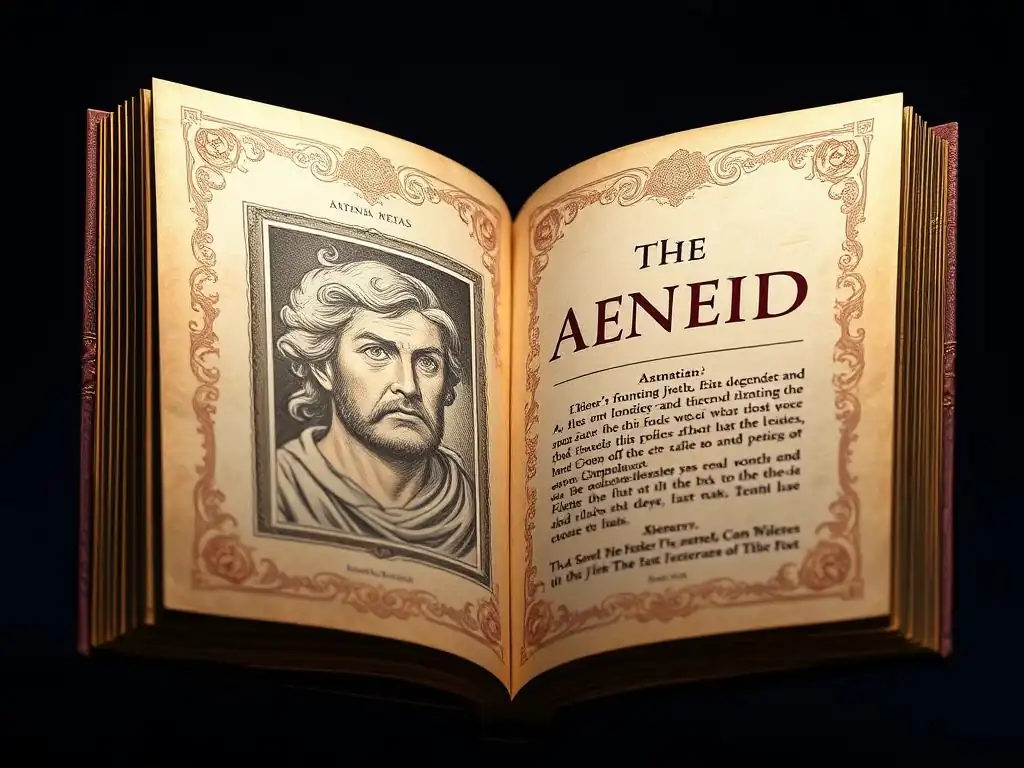
Virgil's The Aeneid, composed in the 1st century BCE, is Rome's national epic, deliberately crafted to rival Homer's Iliad and Odyssey and provide the Roman people with a foundational myth. Robert Fagles, celebrated for his translations of Homer, delivered his acclaimed translation of The Aeneid in 2dce. Fagles's version is widely respected for capturing the grandeur, pathos, and complex layers of Virgil's original Latin, making it a cornerstone for exploring Roman mythology books verse epics.
Fagles translated The Aeneid into a dynamic, flexible blank verse (unrhymed iambic pentameter). His language is elevated and often majestic, reflecting the epic's purpose of celebrating Rome's destiny and the virtues of its legendary founder, Aeneas. Yet, Fagles also captures the deep human emotion and suffering that permeate the poem, particularly in the tragic story of Dido and the brutal battles of the later books. His translation conveys both the public, political scope of the epic and its private, human cost, offering a rich reading experience for anyone interested in mythology books verse epics from the Roman world.
Fagles' Aeneid: Capturing the Grandeur of Virgil's Vision
Robert Fagles's translation of The Aeneid is lauded for its ability to convey the epic sweep and elevated tone of Virgil's Latin while remaining compellingly readable in English. He employs a blank verse that is both formal and flexible, allowing the narrative to flow naturally while maintaining a sense of poetic dignity appropriate for Rome's national epic. Fagles masterfully renders Virgil's famous opening lines, "Wars and a man I sing—an exile driven by Fate..." immediately establishing the epic's themes of destiny, struggle, and founding a new civilization.
One of the strengths of Fagles's translation is his handling of Virgil's renowned pathos. He captures the deep sorrow and sacrifice inherent in Aeneas's destiny, particularly in the poignant portrayal of his doomed love affair with Queen Dido of Carthage and the tragic fates of warriors on both sides of the conflict in Italy. Fagles's language evokes the weight of Aeneas's pietas (duty to gods, family, and state) and the often-brutal means by which fate is fulfilled. This emotional depth, combined with the epic scope, makes Fagles's Aeneid a preeminent version among mythology books verse epics.
The Aeneid Price and Where to Find It: Latest Deals
Robert Fagles's translation of The Aeneid is a widely published and readily available text. Paperback editions typically range in price from $18 to $25 USD, offering a good value for this substantial work. Hardcover editions, often featuring more robust construction or scholarly introductions, can be found for $25 to $40 USD. Many editions include helpful notes, maps, and genealogies that enhance the reading experience of this complex epic.
Digital versions, such as Kindle or other e-book formats, are also available, usually priced somewhat lower than the paperback, often between $12 and $18 USD. Audiobook versions, bringing Virgil's grand narrative to life through narration, are another option. Consulting major online book retailers, university presses, and local bookstores is the best way to find current pricing and availability for this essential work in mythology books verse epics.
The Legacy of Rome: The Aeneid's Influence on Western Culture
The Aeneid is far more than just a mythological story; it is a work of political and cultural propaganda that profoundly shaped Roman identity and, subsequently, Western literature and thought. Virgil composed the epic during the reign of Emperor Augustus, and it serves to legitimize Augustus's rule by tracing his lineage back to Aeneas and emphasizing the divine mandate behind Rome's rise to power. The poem champions Roman virtues like pietas (duty), gravitas (seriousness), and virtus (manliness/excellence).
Beyond its political role, The Aeneid's narrative structure (combining elements of the Odyssey in its first half and the Iliad in its second) and its complex characters have influenced countless writers and artists throughout history. Its themes of founding new societies, the conflict between individual desire and collective destiny, and the burden of leadership continue to resonate.
The tragic figure of Dido, in particular, has become an enduring character in literature and opera. The Aeneid's exploration of fate, empire, and the sacrifices required to build a civilization makes it a cornerstone among mythology books verse epics and a vital text for understanding the foundations of Western culture.
5. The Divine Comedy (Various Translations): A Journey Through Hell, Purgatory, and Paradise
Dante Alighieri's The Divine Comedy, written in the early 14th century, is one of the most significant works of world literature and a cornerstone of Christian theology and medieval cosmology. It is a monumental epic poem in three parts – Inferno, Purgatorio, and Paradiso – chronicling Dante's allegorical journey through the afterlife, guided first by the Roman poet Virgil and then by Beatrice. While rooted in Christian doctrine, it draws heavily on classical mythology and philosophy, making it a unique entry among mythology books verse epics.
Translating The Divine Comedy from its original Italian (specifically, Dante's Tuscan dialect) into English verse is an immense challenge. Dante wrote in terza rima, a complex interlocking rhyme scheme (ABA BCB CDC, etc.) that is difficult to maintain naturally in English over 14,000 lines. Consequently, translators have taken various approaches, from attempting to replicate the rhyme scheme to using blank verse or other forms. Choosing the right translation is crucial for unlocking the poem's profound layers of meaning, intricate structure, and vivid imagery.
Exploring The Divine Comedy: Finding the Right Verse Translation
Given the complexity of Dante's terza rima and the depth of his theological, philosophical, and historical allusions, finding the "right" verse translation of The Divine Comedy is often a matter of personal preference and reading goals. Some translations prioritize replicating the terza rima rhyme scheme, which can sometimes lead to forced rhymes but preserves a key element of Dante's artistry. John Ciardi's translation is a well-known example that attempts this, offering a vigorous and accessible, though sometimes colloquial, version.
Other translators opt for blank verse or a looser structure to prioritize capturing Dante's meaning and tone without the constraints of rhyme. Allen Mandelbaum's translation, for instance, uses a flexible blank verse that effectively conveys the poem's epic scope and moral weight. Robert Pinsky's translation of the Inferno uses a loose terza rima without full rhyme, focusing on line-by-line energy.
For readers seeking a balance of poetic form and clarity, a translation like the one by Robert and Jean Hollander (which includes extensive notes drawing on Robert Hollander's scholarly work) or the recently acclaimed translation by Robin Kirkpatrick might be excellent choices. Each offers a different path into this profound example of mythology books verse epics, blending Christian vision with classical thought.
The Divine Comedy Price and Options: Hardcover, Paperback, and Digital
Due to the numerous translations available, the price and format options for The Divine Comedy vary significantly. Standard paperback editions of popular translations (like Ciardi, Mandelbaum, or Hollander) typically range from $18 to $30 USD, often depending on whether it's a single volume or a boxed set of all three canticles ( Inferno, Purgatorio, Paradiso). Editions with extensive notes and commentary, which are highly recommended for understanding the poem's many layers, may be priced higher.
Hardcover editions, including scholarly versions or beautifully illustrated volumes, can range from $30 to $60+ USD. Digital versions (e-books) are widely available, with prices often between $10 and $25 USD, again depending on the translation and whether it includes supplementary materials. Audiobook versions are also available, with some notable recordings by acclaimed actors. Checking major online book retailers, university presses, and specialized literary bookstores will provide a wide array of options and current pricing for this monumental work among mythology books verse epics.
Dante's Vision of the Afterlife: A Journey of Spiritual Discovery
The Divine Comedy is, at its core, an allegorical journey of the soul towards God, representing the medieval Christian understanding of sin, repentance, and salvation. Dante's vivid descriptions of the nine circles of Hell, the seven terraces of Purgatory, and the spheres of Paradise have profoundly influenced Western imagination and art for centuries. The poem is a comprehensive synthesis of medieval knowledge, incorporating classical mythology, philosophy (particularly Aristotle and Aquinas), history, astronomy, and contemporary Florentine politics.
The journey itself is a metaphor for the spiritual path each individual must take, confronting sin, undergoing purification, and finally ascending towards divine grace. The poem explores themes of justice, punishment, redemption, free will, and the nature of love.
Dante's interactions with the souls he encounters, from famous mythological figures and historical persons to his contemporaries, provide a rich tapestry of human experience and a critique of the moral state of his world. This complex blend of personal journey, universal themes, and encyclopedic knowledge makes The Divine Comedy a unique and essential work among mythology books verse epics, bridging the classical and medieval worlds.
Comparing the Best Mythology Books Verse Epics: Which is Right for You?
Choosing among the best mythology books verse epics depends heavily on your interests, desired reading experience, and tolerance for different translation styles. Each of the epics discussed offers a distinct window into a specific culture and era, presented through the interpretive lens of its translator.
Key Features Comparison: Translation Style, Readability, and Price
Here's a brief comparison to help you differentiate:
- The Odyssey (Wilson): Known for its modern, clear language and consistent iambic pentameter. Highly readable and accessible, good for newcomers. Typically mid-range price ($15-$30). Focuses on homecoming, identity, and human resilience.
- Beowulf (Heaney): Praised for capturing the alliterative force and rhythm of the original Old English. More challenging language than Wilson's Odyssey, but deeply rewarding. Price often similar to The Odyssey ($12-$30). Focuses on heroism, fate, and community in a transitional pagan/Christian society.
- The Iliad (Mitchell): Uses free verse for dramatic impact and clarity, especially in battle scenes. Highly readable and emotionally direct. Price is often comparable to The Odyssey ($16-$35). Focuses intensely on war, wrath, and human mortality.
- The Aeneid (Fagles): Employs dynamic blank verse to convey grandeur and pathos. Elevated language, captures epic scope and emotional depth. Price slightly higher than Homeric epics ($18-$40+). Focuses on destiny, duty, empire, and the founding of Rome.
- The Divine Comedy (Various): Translations vary widely in form (terza rima attempts, blank verse, etc.) and readability. Requires significant notes for full understanding. Price varies significantly based on edition and translator ($18-$60+). Focuses on a Christian allegorical journey through the afterlife, synthesizing medieval thought and classical influences.
Choosing Your First Epic Poem: Recommendations Based on Interests
If you're new to mythology books verse epics, the choice can feel daunting. Consider your existing interests:
- For Greek Mythology and Adventure: Emily Wilson's The Odyssey is an excellent starting point due to its accessibility and engaging narrative of journey and survival.
- For Greek Mythology and War/Tragedy: Stephen Mitchell's The Iliad offers a powerful and direct encounter with the human cost of conflict, even if challenging at times due to its focus on battle.
- For Anglo-Saxon Culture and Heroism: Seamus Heaney's Beowulf is essential, offering a unique taste of Old English poetry and a stark, powerful story of monsters and warriors.
- For Roman History and the Founding of Empires: Robert Fagles's The Aeneid provides a majestic account of Rome's origins and the concept of destiny.
- For Medieval Literature, Theology, or Allegory: The Divine Comedy (perhaps starting with Inferno and a well-annotated translation) is a profound but demanding journey into medieval thought and Christian cosmology, blending classical references within its framework.
Ultimately, the best way to choose among mythology books verse epics is to read a few pages of different translations online or at a bookstore to see which translator's voice resonates most with you.
Maximizing Your Reading Experience: Tips for Enjoying Mythology in Verse
Reading mythology books verse epics can be a deeply rewarding experience, but it sometimes requires a different approach than reading prose. These ancient texts were composed for a specific audience and context, and understanding some key elements can significantly enhance your appreciation.
Understanding Poetic Devices: Alliteration, Metaphor, and More
Epic poetry utilizes specific literary devices that contribute to its rhythm, meaning, and memorability. Becoming familiar with some common ones can unlock deeper layers of the text. For instance, alliteration (the repetition of initial consonant sounds, prominent in Beowulf) creates a strong sonic texture and links words together.
Metaphor and simile are used extensively to create vivid imagery, comparing complex ideas or actions to familiar concepts (e.g., comparing warriors to lions or wolves). Epithets (descriptive phrases repeatedly associated with a character, like "grey-eyed Athena" or "man-killing Hector" in Homer) help fill out the meter and provide characterization. Recognizing these devices helps you appreciate the translator's craft and the original poet's artistry, enriching your engagement with mythology books verse epics.
Exploring the Cultural Context: Historical Background and Mythology
To fully grasp mythology books verse epics, it is immensely helpful to explore their historical and cultural context. Understanding the society in which the epic was composed – its values, beliefs, social structures, and historical events – sheds light on the characters' motivations and the significance of the plot. For The Iliad and Odyssey, knowing about Mycenaean Greece, the Greek pantheon, and concepts like kleos (glory) and nostos (homecoming) is vital.
For Beowulf, understanding Anglo-Saxon society, the comitatus (warrior band), and the blend of pagan and Christian elements is key. For The Aeneid, knowledge of Roman history, the transition from Republic to Empire, and Roman virtues like pietas is essential.
For The Divine Comedy, familiarity with medieval Florence, Catholic theology, and classical figures is crucial. Many editions provide excellent introductions and notes that offer this necessary background, transforming the reading of mythology books verse epics from a mere story into a journey through time and culture.
Conclusion: Embrace the Power of Mythology Books Verse Epics
Exploring mythology through the lens of verse epics offers a unique and powerful connection to the foundational stories that have shaped cultures for millennia. Works like Homer's Odyssey and Iliad, Beowulf, Virgil's Aeneid, and Dante's Divine Comedy, presented in skilled translations, allow us to experience the rhythm, artistry, and profound emotional depth of these narratives in a form close to their original power. These are not just stories; they are complex works of art that use the very structure and sound of language to convey meaning, evoke feeling, and preserve cultural memory.
Reading mythology books verse epics challenges us to engage with different linguistic styles and cultural worldviews, expanding our understanding of human history, belief, and the enduring power of storytelling. Whether you are drawn to the heroic code of the Anglo-Saxons, the dramatic conflicts of ancient Greece, the imperial destiny of Rome, or the spiritual journey of the medieval soul, there is an epic poem in verse waiting to transport you.
By diving into these timeless tales, you connect with the voices of the past and discover why these mythology books verse epics continue to captivate and inspire readers around the globe.
Frequently Asked Questions
What is the main difference between a mythology book and an epic poem?
While both explore myths and legends, a mythology book typically presents a comprehensive overview of various myths, while an epic poem is a long, narrative poem focused on the heroic deeds of a central figure within those myths.
Why would someone choose to read epic poems over simply reading a summarized version of the myth?
Epic poems offer a richer, more immersive experience. They provide greater detail, character development, and often explore the emotional and psychological depths of the mythical figures involved.
Are there any specific epic poems that are considered essential reading for understanding Greek Mythology?
Absolutely! Homer's Iliad and Odyssey are fundamental texts for understanding Greek mythology. They provide a foundation for many other myths and legends.
How do mythology books and epic poems contribute to our understanding of contemporary society?
Both mythology books and epic poems reveal universal human themes and archetypes that continue to resonate today. They offer insights into cultural values and beliefs that have shaped societies across time.
Where can I find a good selection of both mythology books and translated versions of epic poems?
Many online retailers and bookstores offer a wide variety of mythology books and translated epic poems. Look for editions with critical introductions and notes to enhance your understanding.
Final Reflection: Echoes of Gods and Heroes in Verse
The enduring power of mythological epics, woven into verse, continues to resonate deeply within our modern world. These tales, far from being relics of the past, offer timeless explorations of humanity's triumphs and failures, our hopes and fears, mirrored in the struggles of gods and heroes. They provide a framework for understanding our own narratives, reminding us that the human condition, despite technological advancements, remains fundamentally unchanged.
The impact of these epic poems on literature, art, and even our subconscious understanding of the world is undeniable. They have shaped our cultural landscapes, influencing everything from blockbuster films to everyday expressions. These stories, passed down through generations, continue to inspire awe and wonder. As the poet John Keats eloquently stated, A thing of beauty is a joy forever: Its loveliness increases; it will never Pass into nothingness; but still will keep A bower quiet for us, and a sleep Full of sweet dreams, and health, and quiet breathing.
This sentiment perfectly encapsulates the lasting legacy of these mythological verses, offering solace and inspiration in equal measure.
Consider the heroes and villains, the gods and monsters, that populate these epic poems. Reflect on their flaws and their strengths, their triumphs and their defeats. What lessons can you glean from their journeys? How can these ancient narratives inform your own understanding of life, love, loss, and the enduring human spirit? Let the echoes of these timeless tales inspire you to explore your own inner mythology, to discover the epic within yourself, and to share the power of these stories with others.
Unlock the Power of Myth: Dive Deeper into Epic Tales!
Thanks for exploring the world of mythological epics with us! We hope you discovered some new literary adventures to embark on. Ready to take your journey further?
- Begin your epic read: Grab your favorite book from our list and lose yourself in the magic of ancient stories. Which hero's journey will you follow first?
- Share your mythical musings: Discuss your favorite mythological tales and characters with other readers in the comments below. Let's build a community of epic lovers!
- Uncover hidden lore: Research the historical and cultural influences behind the myths you found most compelling. You might be surprised by what you discover!
What hidden depths of mythology will you unveil next?