
Festivals of the Gods: Immersive Cultural Experiences Rooted in Myth.

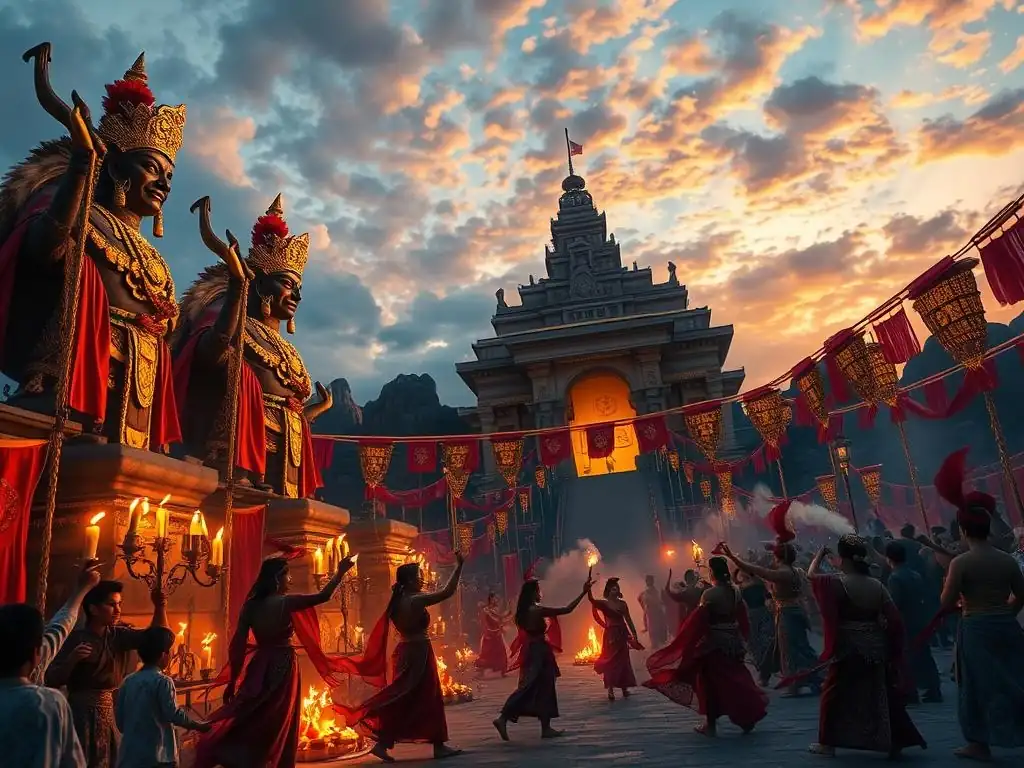
Welcome to Mythology and Legends, your gateway to the captivating world of ancient stories! Ever wondered how ancient gods festival traditions still echo in our modern celebrations? Delve into the rich tapestry of myths and folklore that shape cultures worldwide, and discover the fascinating origins behind the rituals and customs we observe today. What secrets will you uncover as you explore the immersive cultural experiences rooted in myth? Read on to find out...
Inti Raymi: The Inca Sun Festival in Cusco, Peru
Among the most vibrant examples of ancient gods festival traditions is Inti Raymi, a grand celebration honoring Inti, the Inca sun god. Held annually on June 24th in Cusco, Peru, this festival marks the winter solstice in the Southern Hemisphere, a crucial time in the agricultural calendar when the Inca people prayed for the sun's return and the continuation of life.
Originally a massive ceremony involving thousands of participants and intricate rituals, Inti Raymi was suppressed by the Spanish conquistadors in the 16th century but was revived in the 20th century as a cultural and historical reenactment. Today, it serves as a powerful testament to the enduring legacy of the Inca civilization and its deep connection to celestial cycles and the divine.
The modern Inti Raymi reenactment draws tens of thousands of spectators and participants to Cusco each year, culminating in a spectacular performance at the Sacsayhuamán fortress complex overlooking the city. The event meticulously recreates elements of the original Inca ceremony, featuring elaborate costumes, traditional music, and symbolic rituals performed by actors portraying the Sapa Inca (emperor), the Coya (empress), priests, nobles, and warriors. This elaborate theatrical production not only entertains but also educates, offering a tangible link to the spiritual practices and worldview of the ancient Inca and providing a unique window into their ancient gods festival traditions.
Immersing Yourself in the Sun God's Glory: A Detailed Look at Inti Raymi
The Inti Raymi celebration unfolds across three key locations in Cusco. It begins at the Qorikancha, the ancient Temple of the Sun, where the Sapa Inca performs an invocation to Inti. From there, a grand procession moves through the Plaza de Armas, the city's main square, filled with costumed performers, dancers, and musicians.
The final and most significant part of the ceremony takes place at Sacsayhuamán, where the Sapa Inca leads rituals including the symbolic sacrifice of a llama (represented by a theatrical performance) and the reading of the omens. These rituals were historically vital for ensuring the sun's favor and the prosperity of the empire.
The scale and detail of the Inti Raymi reenactment are impressive. The main stage at Sacsayhuamán is set against the backdrop of the monumental Inca stone walls, enhancing the sense of historical authenticity. Performers wear detailed replicas of Inca attire, and the music features traditional instruments like panpipes and drums.
While not a direct religious ceremony in the way it was for the ancient Inca, the modern Inti Raymi is a profound cultural event that honors the spiritual beliefs and practices that defined the empire. Witnessing the carefully choreographed rituals provides deep insight into the significance of the sun god Inti and the complex ancient gods festival traditions of the Andes.
Travel Packages and Cultural Tours for Inti Raymi
Experiencing Inti Raymi is a highlight for many travelers to Peru, and numerous travel packages are specifically designed around the festival dates in late June. These packages often include accommodation in Cusco, guided tours of the city and nearby Inca sites like Machu Picchu, and crucially, tickets to the main Inti Raymi event at Sacsayhuamán. Given the festival's popularity, securing good seats requires booking well in advance, sometimes up to a year ahead. Packages vary widely, from budget-friendly options to luxury tours that include private guides and exclusive viewing areas.
Beyond just attending the main performance, cultural tours centered around Inti Raymi provide a more immersive experience. These tours might include visits to local communities, workshops on traditional Andean crafts or music, and opportunities to learn about the history and significance of the festival from local experts. Some tours incorporate elements of Andean spirituality, connecting the ancient Inca reverence for nature and the cosmos with contemporary practices. Choosing a tour that emphasizes cultural exchange can significantly enrich your understanding of the context and meaning behind these ancient gods festival traditions.
Authentic Inca Crafts and Souvenirs: A Tangible Connection to the Past
Visiting Cusco during Inti Raymi also offers an excellent opportunity to acquire authentic Inca-inspired crafts and souvenirs. Local markets and artisan shops throughout the city and the Sacred Valley sell a wide array of goods crafted using traditional techniques. Items often feature Inca motifs and symbols, such as the Chakana (Andean cross), representations of Inti the sun god, or figures of llamas and alpacas. These range from intricately woven textiles made from alpaca wool, including blankets, scarves, and ponchos, to pottery, silver jewelry, and carved gourds.
When seeking authentic items, it's advisable to look for products made locally and ideally purchase directly from artisans or reputable cooperatives. For instance, textiles from communities in the Sacred Valley are highly prized for their quality and traditional patterns. Purchasing these crafts not only provides a tangible reminder of your experience with ancient gods festival traditions but also supports local economies and helps preserve traditional skills. Look for items that feel handmade and reflect the rich artistic heritage of the Inca and Andean cultures, offering a deeper connection than mass-produced souvenirs.
- What is the significance of Ancient Gods Festival Traditions?
- How do Ancient Gods Festival Traditions vary across different cultures?
- What is the role of folklore in shaping Ancient Gods Festival Traditions?
- How have Ancient Gods Festival Traditions influenced contemporary society?
- Where can I find more information about specific Ancient Gods Festival Traditions?
Frequently Asked Questions
What is the significance of Ancient Gods Festival Traditions?
These traditions offer a direct link to ancestral beliefs and provide a platform to reaffirm cultural identity. They often involve rituals and performances that are deeply symbolic.
How do Ancient Gods Festival Traditions vary across different cultures?
The variations are vast, reflecting each culture's unique pantheon and history. Some emphasize seasonal cycles and agricultural prosperity, while others focus on honoring specific deities or commemorating historical events.
What is the role of folklore in shaping Ancient Gods Festival Traditions?
Folklore acts as the narrative backbone, providing stories and explanations for the rituals. These stories, passed down through generations, reinforce the festival's meaning and purpose.
How have Ancient Gods Festival Traditions influenced contemporary society?
Many elements have been adapted or incorporated into modern celebrations and artistic expressions. They provide inspiration for literature, art, and even modern festivals, demonstrating a lasting cultural impact.
Where can I find more information about specific Ancient Gods Festival Traditions?
Resources like "Mythology and Legends" offer comprehensive information on various cultures and their traditions. Academic research and ethnographic studies can also provide in-depth analysis.
Final Reflection: Echoes of the Divine in Modern Celebration
The vibrant tapestry of ancient festivals, woven from myth and ritual, continues to resonate powerfully in our modern world. These celebrations, far from being relics of a bygone era, offer a vital connection to our shared human heritage and a potent reminder of the enduring power of storytelling. They provide a framework for understanding not only the beliefs of past civilizations but also the fundamental human need for community, ritual, and a sense of the sacred.
The enduring influence of these ancient traditions is undeniable; they shape our cultural landscapes, our artistic expressions, and even our subconscious understanding of the world. From the echoes of Dionysian revelry in modern carnivals to the quiet reverence of a harvest festival echoing ancient agricultural rites, the threads of these ancient celebrations are woven into the fabric of our lives. The past is never dead. It's not even past.
– William Faulkner. This quote perfectly encapsulates the persistent and transformative power of these ancient festivals, their influence subtly shaping our present realities.
Consider the impact these festivals have had on your own life, even if indirectly. Perhaps you've felt the thrill of a community gathering, the joy of shared celebration, or the awe inspired by a breathtaking spectacle.
Take a moment to reflect on the enduring power of myth and ritual, and how these ancient traditions continue to shape our understanding of ourselves and the world around us. Let the echoes of the divine inspire you to seek out and celebrate the rich cultural heritage that connects us all, fostering a deeper appreciation for the stories and traditions that have shaped humanity's journey.
Unleash Your Inner Myth-Maker!
Thank you for exploring the fascinating world of ancient festivals and their mythical roots! We hope you discovered new perspectives and a deeper appreciation for these rich cultural traditions. Now it's time to take your journey further.
- Dive deeper: Research a festival that particularly resonated with you. Explore its historical context, rituals, and symbolic meaning – you might be surprised by what you uncover!
- Share your insights: Discuss your favorite festival and its impact on you in the comments below. Let's build a community of myth enthusiasts!
- Consider creating your own small, modern ritual inspired by one of the festivals. Even a simple act of remembrance or celebration can connect you to these powerful narratives.
Ready to share your own mythical explorations? What festival will you delve into next?