
Dumuzid/Tammuz: The Dying God of Mesopotamia


Welcome to Mythology and Legends!
Delve into the captivating world of ancient narratives, where gods and mortals intertwine, and stories echo across millennia. Ever wondered about the powerful tales that shaped early civilizations? Prepare to be intrigued as we unravel the mysteries surrounding Mesopotamian dying god myths, starting with the poignant story of Dumuzid/Tammuz. What fate awaited this deity, and what secrets does his legend hold about life, death, and rebirth in the ancient world? Join us as we explore the fascinating depths of Mesopotamian mythology and discover the enduring legacy of these powerful figures.
- Dumuzid/Tammuz: Unveiling the Mesopotamian Dying God Myth
- The Origins and Identity of Dumuzid/Tammuz
- The Core Myth: Dumuzid/Tammuz's Death and Descent
- Symbolism and Significance of Dumuzid/Tammuz
- Dumuzid/Tammuz in Mesopotamian Religious Practices
- The Lasting Influence of Mesopotamian Dying God Myths
- The Enduring Appeal of Dumuzid/Tammuz: A Reflection on Mortality and Renewal
- Conclusion: Remembering Dumuzid, the Mesopotamian Dying God
-
Frequently Asked Questions
- What is a "dying god" myth, and how does Dumuzid/Tammuz fit into this category?
- Why is Dumuzid/Tammuz considered the "dying god" of Mesopotamia?
- What is Dumuzid/Tammuz's relationship with the goddess Inanna/Ishtar?
- How did the Mesopotamians mourn Dumuzid/Tammuz's death, and what rituals were involved?
- What is the lasting impact of the Dumuzid/Tammuz myth on contemporary society and culture?
- Final Reflection: The Enduring Echo of Dumuzid
- Unveil the Mysteries of Dumuzid: Dive Deeper into Mesopotamian Myth!
Dumuzid/Tammuz: Unveiling the Mesopotamian Dying God Myth
Introduction: Exploring the Enigmatic Figure of Dumuzid/Tammuz
Dumuzid, later known as Tammuz among Semitic peoples, stands as one of the most compelling and complex figures within the rich tapestry of Mesopotamian mythology. His story, primarily known through Sumerian and Akkadian literature dating back as early as the 3rd millennium BCE, centers around themes of life, death, fertility, and the cyclical nature of the cosmos. As a central figure in Mesopotamian dying god myths, Dumuzid embodies the perennial mystery of renewal and loss that resonated deeply with the agricultural societies of ancient Mesopotamia.
The narratives surrounding Dumuzid are fragmented across various cuneiform tablets, including hymns, laments, and epic poems such as Inanna's Descent to the Underworld. These texts reveal a divine figure closely associated with shepherds, the fertility of the land, and the changing seasons. His tragic fate, involving death and a period spent in the underworld, became a focal point for religious rituals and widespread public mourning, illustrating his profound significance in the religious and cultural life of ancient Sumer and later civilizations across the Near East.
The Origins and Identity of Dumuzid/Tammuz
Dumuzid: From Shepherd King to Mesopotamian Deity
The earliest layers of tradition portray Dumuzid as a lugal, or king, specifically associated with the ancient Sumerian city of Uruk. The Sumerian King List, an ancient text chronicling rulers of Mesopotamia, includes a Dumuzid, the Shepherd, as one of the predynastic kings who reigned before the Great Flood. While the King List blends mythical and historical figures, it suggests a very early, perhaps even historical or proto-historical, origin for the character, rooted in the pastoral life that was fundamental to early Mesopotamian society.
Over time, Dumuzid transitioned from a potentially historical or legendary king figure into a fully divine being. His epithets frequently refer to him as "the Shepherd," highlighting his connection to flocks, milk, and the abundance they represented. This divine association with pastoral fertility became integral to his identity, positioning him as a god crucial for the sustenance and prosperity of the community, distinct from deities primarily associated with grain agriculture, though eventually linked to both aspects of fertility.
Tammuz: The Semitic Adaptation of the Dying God Figure
As Semitic peoples, such as the Akkadians, Babylonians, and Assyrians, rose to prominence in Mesopotamia, they adopted and adapted the Sumerian pantheon and its myths. Dumuzid was assimilated into their religious system under the name Tammuz (Akkadian: Tammuzu). This name became widely known throughout the Near East and is even referenced in the Hebrew Bible (Ezekiel 8:14), where women are described weeping for Tammuz at the temple gate in Jerusalem, indicating the widespread influence of this Mesopotamian dying god myth.
The core narratives and characteristics of Dumuzid were largely preserved in the Tammuz figure, maintaining his association with fertility, his relationship with the goddess Inanna (known as Ishtar in Akkadian), and his tragic death. The Akkadian versions of the myths, while sharing the same fundamental plot as the Sumerian ones, often present slightly different nuances or focus on different aspects of the story, such as Ishtar's more assertive or even vengeful role in his demise, compared to some Sumerian accounts.
Distinguishing Dumuzid and Tammuz: Name Variations and Regional Differences
While often used interchangeably to refer to the same divine figure and the associated Mesopotamian dying god myths, "Dumuzid" specifically refers to the Sumerian name and tradition, whereas "Tammuz" is the Akkadian/Semitic name. The transition reflects the broader cultural and linguistic shifts in Mesopotamia over millennia. Sumerian texts are generally older, providing the foundational narratives, while Akkadian texts preserve, adapt, and sometimes elaborate upon these earlier traditions.
Regional variations also played a role. While the cult of Dumuzid was prominent throughout Sumerian city-states like Uruk, Ur, and Lagash, the worship of Tammuz spread with the Akkadian, Babylonian, and Assyrian empires, reaching as far as the Levant. These regional differences might manifest in specific hymns, local festival calendars, or the emphasis placed on certain aspects of the deity's mythology or function. For example, the intensity and nature of the public lamentation rituals could vary from city to city or period to period.
The Core Myth: Dumuzid/Tammuz's Death and Descent
The Narrative of Dumuzid's Death: A Tragedy in Mesopotamian Mythology
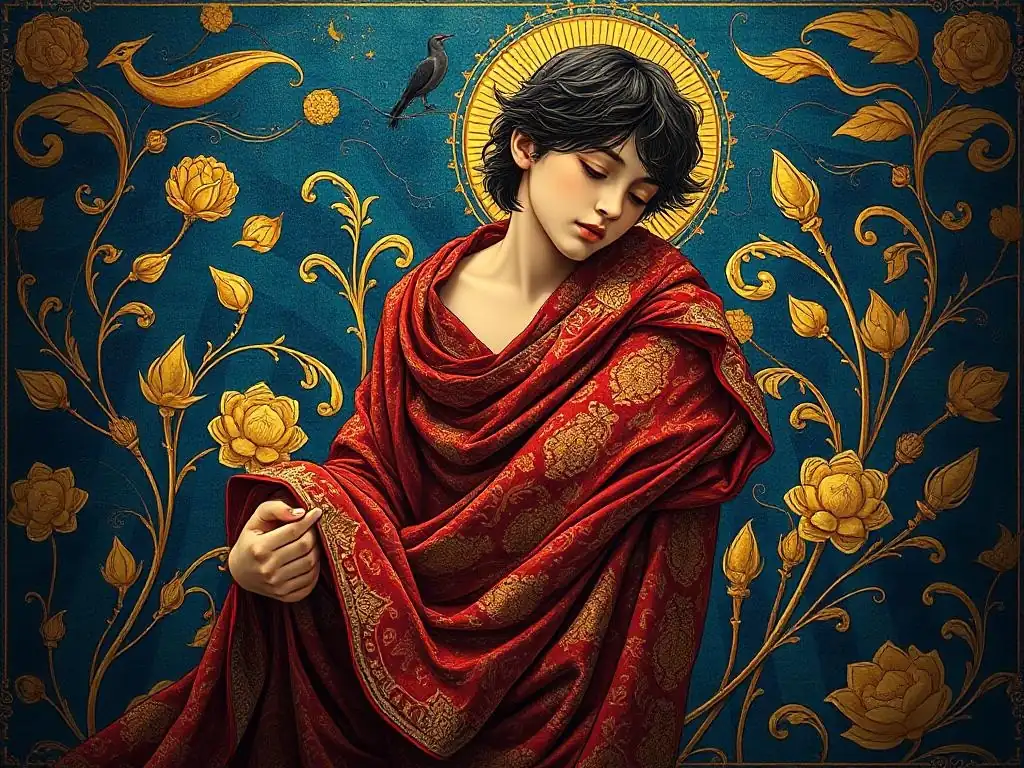
The most famous and central narrative involving Dumuzid is the account of his death and subsequent journey or presence in the underworld, a key element of the Mesopotamian dying god myths. While details vary across different texts, a common thread involves Dumuzid being seized by demons ( galla) and dragged to the netherworld. The reasons for this vary; some texts imply it was a consequence of his failure to adequately mourn or show respect for his consort, Inanna, upon her return from the underworld.
One prominent version of the story depicts Inanna returning from the realm of Ereshkigal and being accompanied by galla demons who demand a substitute to take her place. When Inanna sees Dumuzid sitting on his throne, seemingly unaffected by her ordeal, she designates him to the demons with the words "Take him! Take Dumuzid, the Shepherd, away!" This act of betrayal or punishment by the goddess leads directly to his tragic end and descent into the land of the dead.
Inanna/Ishtar's Descent to the Underworld and Dumuzid's Fate
The myth of Inanna's (or Ishtar's) Descent is inextricably linked to Dumuzid's fate and is perhaps the most complete surviving account detailing the events leading to his death, making it a cornerstone of Mesopotamian dying god myths. Inanna, driven by ambition or curiosity, decides to visit the realm of her older sister, Ereshkigal, queen of the underworld. She passes through seven gates, at each losing a piece of her divine regalia and power, arriving naked and powerless before Ereshkigal.
Ereshkigal condemns Inanna, and the assembly of the underworld gods turns her into a corpse, hanging on a hook. The upper world suffers greatly from the absence of the goddess of love and fertility. Eventually, through the intervention of the god Enki (or Ea), Inanna is revived but is not allowed to leave the underworld unless she provides a substitute. It is upon her return to the living world, accompanied by terrifying galla demons, that she finds Dumuzid and ultimately condemns him to take her place, initiating his role as the dying god.
Ereshkigal's Role in Dumuzid's Death and the Underworld's Governance
Ereshkigal, the formidable queen of the Great Below, plays a crucial, albeit indirect, role in Dumuzid's descent, as she is the ruler of the destination of his tragic journey within the Mesopotamian dying god myths. It is her domain that Inanna invades, and it is under her authority that Inanna is initially trapped and judged. Ereshkigal embodies the harsh, unyielding reality of death from which there is no permanent escape for mortals or even many deities.
While Ereshkigal does not directly cause Dumuzid's death in most narratives – that action is usually attributed to the galla demons acting under Inanna's direction – her governance of the underworld is the force that necessitates a substitute for Inanna. Dumuzid's descent is not a punishment from Ereshkigal herself, but rather a consequence of the strict, inescapable laws of her realm: life cannot leave without death entering. Thus, Ereshkigal represents the finality and balance of the cosmos that the cycle of Dumuzid's death and partial return attempts to mediate.
Symbolism and Significance of Dumuzid/Tammuz
The Dying and Rising God Archetype: Dumuzid as a Prime Example
Dumuzid is often cited as a prime example of the "dying and rising god" archetype found in various world mythologies, a central theme within Mesopotamian dying god myths. While the specifics of his return vary – some texts suggest a cyclical return, others a temporary stay in the underworld with his sister Geshtinanna taking his place for half the year – his story clearly embodies the concept of a deity associated with life and fertility who undergoes death and a subsequent return or partial return.
This archetype reflects humanity's observations of natural cycles: the death of vegetation in winter or drought and its rebirth in spring or after rain. Dumuzid's journey to the underworld and his anticipated or actual return symbolize this perennial cycle of life overcoming death, or at least coexisting with it in a rhythmic pattern. He is not resurrected in the sense of conquering death permanently, but his story represents the hope and reality of renewal that follows periods of decline.
Fertility and Agriculture: Dumuzid's Connection to the Land's Bounty
The connection between Dumuzid/Tammuz and fertility is profound and multifaceted, making him essential to understanding Mesopotamian dying god myths related to agricultural life. His identity as a shepherd links him directly to flocks, milk, and dairy products, which were vital components of the Mesopotamian economy and diet. Hymns praise him as the source of abundance from the pastures.
Furthermore, his tragic death and subsequent absence are explicitly linked in lamentation texts to the cessation of growth and fertility on Earth. When Dumuzid is in the underworld, the cows cease to calve, the lambs cease to be born, and the pastures dry up. His return, or the rituals commemorating his potential return, were believed to ensure the land's productivity, the health of the flocks, and the overall prosperity of the community, highlighting his role as a vegetation and fertility deity.
The Cycle of Seasons: Dumuzid's Death as a Metaphor for Winter's Arrival
The myth of Dumuzid's descent is strongly associated with the changing seasons, particularly the transition from the productive summer/autumn months to the barrenness of winter or the dry season, a common interpretation of Mesopotamian dying god myths. In Mesopotamia, the hot, dry summer could be a period of hardship for pastures, while winter brought necessary rains but also a pause in active growth for some crops.
Dumuzid's descent to the underworld is often interpreted as a mythical explanation for the decline of vegetation and fertility during the less productive parts of the year. His absence mirrors the dormancy of nature. The period of mourning for Dumuzid, often observed in the summer month named after Tammuz, coincided with the wilting of vegetation under the intense sun, reinforcing his role as a deity whose fate was intertwined with the earth's life cycle.
Lamentation Rituals: Celebrating and Mourning Dumuzid's Death in Ancient Mesopotamia
The death of Dumuzid was not merely a narrative but a central element of religious practice, involving elaborate public rituals of lamentation throughout Mesopotamia. Texts known as balag and eršemma are hymns specifically composed for the temple cult, often expressing deep sorrow and mourning for the lost god. These laments were performed by priests and professional mourners, particularly women, creating a widespread public expression of grief.
These rituals were performed annually, particularly during the month of Tammuz. Archaeological evidence from sites like Ur and Uruk suggests that mourning rites could involve processions, wailing, and symbolic acts representing the god's absence and the resulting desolation. These public displays of grief were believed to be essential for persuading the gods, or the underworld, to allow Dumuzid's return or to ensure the eventual renewal of fertility, underscoring the performative aspect of Mesopotamian dying god myths.
Dumuzid/Tammuz in Mesopotamian Religious Practices
Temple Cults and Offerings: Worshipping the Dying God
Dumuzid/Tammuz was venerated in temple cults across Mesopotamia, receiving offerings and prayers from devotees. While he might not have had massive temple complexes dedicated solely to him in every city, he was a significant figure in the pantheons of major centers like Uruk, often associated with the temple of Inanna (Eanna). Priests and priestesses maintained his shrines and performed daily rituals in his honor.
Offerings to Dumuzid typically included agricultural products – milk, butter, cheese from his domain as a shepherd god, and potentially grain or produce linked to his role as a fertility deity. These offerings were intended to appease the god, secure his favor, and ensure the continued abundance he represented. The existence of specific hymns and lamentations indicates a well-established liturgical practice centered around his mythology, integral to the broader system of Mesopotamian dying god myths and worship.
The Sacred Marriage: Dumuzid and Inanna's Ritual Union
A pivotal ritual involving Dumuzid, particularly in Sumerian tradition, was the hieros gamos or "sacred marriage" ( akītu festival in later periods). This ceremony ritually enacted the divine union between the king of the city-state (acting as the embodiment of Dumuzid) and a high priestess (embodying Inanna). The purpose of this ritual marriage was explicitly to ensure the fertility and prosperity of the land and its people for the coming year.
Texts describe the preparations for this union, the procession, and the sacred coupling, often in highly poetic and explicit language found in hymns like Inanna and Dumuzid. This ritual was one of the most important annual events in some Sumerian cities, believed to harness the divine power of the goddess of love and fertility and her consort, the shepherd/fertility god, for the benefit of the entire community, demonstrating a practical application of Mesopotamian dying god myths focused on renewal.
Annual Festivals and Celebrations: Commemorating Dumuzid's Journey
The mythology of Dumuzid/Tammuz was commemorated through a cycle of annual festivals that marked significant moments in his story, forming a calendar of Mesopotamian dying god myths and rituals. The sacred marriage festival, often associated with the New Year (spring), celebrated the union and the promise of fertility. Later in the year, particularly in the summer month of Tammuz, the focus shifted dramatically to mourning the god's death and descent to the underworld.
These festivals involved public participation, processions, and the performance of lamentations. The contrast between the joyous celebration of the sacred marriage and the deep sorrow of the summer mourning rituals highlights the cyclical nature of the god's story and his connection to the rhythms of the natural world. The festivals served to engage the community directly with the fundamental themes of life, death, and renewal embodied in the Mesopotamian dying god myths.
The Lasting Influence of Mesopotamian Dying God Myths
Dumuzid/Tammuz's Legacy in Later Religious Traditions
The figure of Dumuzid/Tammuz and the Mesopotamian dying god myths associated with him exerted a significant influence on later religious thought and mythology in the ancient Near East. As mentioned, the cult of Tammuz spread beyond Mesopotamia, influencing cultures in the Levant, Anatolia, and even Greece. The weeping for Tammuz mentioned in the Book of Ezekiel (8:14) indicates his worship reached Jerusalem during the Babylonian exile period, around the 6th century BCE.
Scholars have long debated the extent of this influence, particularly on later myths involving deities who die and return. While direct lines of transmission are sometimes hard to trace definitively, the thematic parallels suggest a cultural diffusion of ideas. The concept of a divine being whose death impacts the fertility of the world and whose fate is tied to a powerful female deity and the underworld appears in various later traditions, pointing to the enduring resonance of the Mesopotamian prototype.
Parallels with Other Dying and Rising Gods in World Mythology
The archetype of the dying and rising god, of which Dumuzid is a primary example within Mesopotamian dying god myths, appears in numerous mythologies across the globe. These figures share common traits: association with fertility, vegetation, or agriculture; a premature or tragic death; a journey to or period spent in the underworld; and a subsequent return, resurrection, or cyclical presence that coincides with the renewal of life on Earth.
Exploring these parallels helps illuminate universal human concerns about mortality, seasonality, and the hope for renewal. While each myth is unique to its cultural context, comparing figures like Dumuzid with deities from other traditions reveals shared ways of understanding the fundamental cycles of nature and existence. This comparative approach highlights the profound human need to mythologize and ritualize the experiences of loss and regeneration.
Osiris, Adonis, and Attis: Comparative Analysis
Several deities from other ancient cultures offer compelling parallels to Dumuzid/Tammuz and the Mesopotamian dying god myths. Osiris, the Egyptian god of the afterlife, vegetation, and kingship, is murdered by his brother Seth, dismembered, and later resurrected by his wife Isis to become ruler of the underworld and ensure the fertility of Egypt through the Nile flood. Like Dumuzid, his fate is tied to both kingship and agricultural renewal.
Adonis, a figure prominent in Greek and Phoenician mythology, is a beautiful youth loved by Aphrodite (or Astarte) who is killed by a wild boar. His death is widely mourned, and in some traditions, he spends part of the year in the underworld (with Persephone) and part with Aphrodite in the upper world, symbolizing the seasonal cycle.
Attis, the consort of the Anatolian mother goddess Cybele, castrates himself and dies, his death associated with the wilting of flowers, and his worship involved fervent mourning rituals and celebrations of rebirth, echoing the laments for Tammuz. These figures, while distinct, share the core elements of tragic death, connection to fertility, and seasonal cycles seen in the Mesopotamian dying god myths.
The Enduring Appeal of Dumuzid/Tammuz: A Reflection on Mortality and Renewal
Dumuzid/Tammuz in Modern Interpretations and Art
Despite originating thousands of years ago, the story of Dumuzid/Tammuz and the Mesopotamian dying god myths continues to resonate and find expression in modern art, literature, and scholarship. Mythologists, historians, and artists explore the themes of love, loss, betrayal, and the cycle of life and death embedded in these ancient narratives.
While not as widely known as Greek or Egyptian myths, Dumuzid's story is studied for its insights into ancient Mesopotamian cosmology, religious practice, and the origins of the dying-and-rising god archetype. Modern retellings or allusions can be found in various creative works that draw upon mythological themes to explore contemporary human experiences of change, grief, and the enduring power of nature's cycles.
Louise Gluck's "Persephone the Wanderer": A Modern Retelling
A notable example of modern literary engagement with these themes, though primarily drawing from the Greek myth of Persephone, is Louise Gluck's collection "Ararat" and other poems. Gluck's work often explores mythological figures and narratives, including Persephone's annual journey to the underworld, as metaphors for psychological states, familial relationships, and the human condition. While not directly about Dumuzid, her focus on the goddess's descent and the cyclical return mirrors the core dynamic found in the Mesopotamian dying god myths involving Inanna and Dumuzid.
Gluck's use of myth highlights how ancient stories about deities traversing life and death, separation and reunion, continue to provide a framework for understanding profound human experiences. The parallel between Persephone's time in the underworld causing winter and Dumuzid's absence causing barrenness demonstrates the enduring power of these ancient seasonal myths.
Understanding the Mesopotamian Dying God Myth in a Contemporary Context
Studying the Mesopotamian dying god myth of Dumuzid/Tammuz in a contemporary context offers valuable insights. It provides a window into the worldview of one of the world's earliest complex civilizations, revealing their fundamental concerns about survival, fertility, and the unpredictable forces of nature. The myths and rituals demonstrate how ancient peoples sought to understand and influence the natural world through religious practice.
Furthermore, the story's exploration of themes like divine relationships (Inanna and Dumuzid), the harsh reality of death (Ereshkigal's realm), and the possibility of renewal speaks to universal human experiences. In an age increasingly disconnected from natural cycles, these ancient Mesopotamian dying god myths serve as a powerful reminder of humanity's deep historical ties to the rhythms of the earth and the perennial hope for regeneration following periods of decline.
Conclusion: Remembering Dumuzid, the Mesopotamian Dying God
Dumuzid/Tammuz, the shepherd god of Mesopotamia, remains a pivotal figure for understanding ancient Near Eastern religion and the broader landscape of world mythology. His complex narrative, woven through ancient hymns, epics, and rituals, embodies fundamental human concerns regarding life, death, fertility, and the relentless cycle of the seasons. From his potential origins as a historical shepherd-king to his deification and assimilation across cultures, Dumuzid's story is a testament to the adaptive and enduring nature of myth.
As a central figure in Mesopotamian dying god myths, his descent to the underworld and the subsequent mourning and hope for his return provided a framework for Mesopotamians to comprehend and cope with the natural world's fluctuations. The rituals performed in his honor, from sacred marriages celebrating union and fertility to public lamentations mourning loss, underscore his vital importance to the well-being of the community.
The legacy of Dumuzid/Tammuz persists not only in academic study but also in the echoes of his archetype found in later myths, reminding us of the shared human experience of navigating mortality and yearning for renewal.
Frequently Asked Questions
What is a "dying god" myth, and how does Dumuzid/Tammuz fit into this category?
A "dying god" myth typically involves a deity who dies or descends to the underworld, resulting in a period of hardship or famine on Earth. Dumuzid/Tammuz fits this as he descends to the underworld in place of Inanna, causing agricultural decline.
Why is Dumuzid/Tammuz considered the "dying god" of Mesopotamia?
Dumuzid/Tammuz is considered the "dying god" because the myths surrounding him narrate his annual death and descent into the underworld. This cycle mirrors the seasonal decline of vegetation and the dry season in Mesopotamia.
What is Dumuzid/Tammuz's relationship with the goddess Inanna/Ishtar?
Dumuzid/Tammuz and Inanna/Ishtar have a complex relationship involving love, marriage, and sacrifice. He ultimately takes her place in the underworld to save her, highlighting the themes of devotion and cyclical rebirth.
How did the Mesopotamians mourn Dumuzid/Tammuz's death, and what rituals were involved?
The Mesopotamians mourned Dumuzid/Tammuz's death with elaborate rituals involving wailing, lamentations, and processions. These rituals aimed to ensure his eventual return and the restoration of fertility to the land.
What is the lasting impact of the Dumuzid/Tammuz myth on contemporary society and culture?
Though not directly worshipped today, the Dumuzid/Tammuz myth has influenced archetypal figures and themes in literature and art. It also provides insight into ancient Mesopotamian beliefs about life, death, and the natural world.
Final Reflection: The Enduring Echo of Dumuzid
The myth of Dumuzid, the dying and resurrecting god, isn't merely a relic of ancient Mesopotamia; it resonates powerfully with our contemporary understanding of cyclical change and the enduring human struggle against mortality. His story, woven into the very fabric of Mesopotamian society, continues to offer profound insights into our relationship with nature, loss, and the cyclical nature of life itself. The themes of sacrifice, renewal, and the constant interplay between life and death remain strikingly relevant in a world grappling with environmental challenges and existential anxieties.
The impact of Dumuzid's myth extends far beyond the dusty tablets where it was first recorded. His story, a potent symbol of the agricultural cycle and the inevitable passage of time, has subtly shaped our cultural understanding of seasonal change and the human experience of loss. The gods do not die, but they are always dying and being reborn.
This sentiment, though not directly from Mesopotamian texts, captures the essence of Dumuzid's enduring power – a testament to the cyclical nature of existence that continues to inspire awe and reflection. His myth serves as a powerful reminder of the ephemeral nature of power and the cyclical nature of life, death, and rebirth.
Consider, for a moment, the parallels between Dumuzid's descent into the underworld and the challenges we face today. What cyclical patterns in your own life mirror his journey? How can understanding the ancient Mesopotamian perspective on death and rebirth inform your own approach to loss, renewal, and the inevitable changes life presents? Embrace the cyclical nature of existence, learn from the past, and find strength in the promise of renewal, just as the Mesopotamians found solace in the cyclical return of Dumuzid.
Here's a CTA tailored for the article "Dumuzid/Tammuz: The Dying God of Mesopotamia" on MythologyAndLegends.org:
Unveil the Mysteries of Dumuzid: Dive Deeper into Mesopotamian Myth!
Thanks for exploring the fascinating world of Dumuzid/Tammuz with us! We hope you gained a new appreciation for the complexities of Mesopotamian mythology and its enduring impact. Ready to delve even further?
- Explore the rich symbolism of Dumuzid's story: Consider the parallels between his myth and other dying-and-rising deities. What resonates most with you? Write a short reflection and share it in the comments!
- Research related Mesopotamian deities and myths: Ishtar's role in Dumuzid's story is particularly compelling. Discover how her actions influenced his legend.
- Share this article with a friend: Let's spread the word about these ancient stories and the fascinating culture that birthed them! Who in your network would be captivated by the mysteries of Dumuzid?
What other Mesopotamian myths intrigue you, and what connections do you see between Dumuzid's story and other cultures' mythological narratives?