
Antigone's Defiance: Dying for Divine Law Over Human Decree


Welcome to Mythology and Legends, where ancient stories come alive.
Ever wondered what happens when divine law clashes with human decree? Delve into the heart of Greek tragedy as we unravel the powerful tale of Antigone’s fate, exploring her unwavering defiance in the face of impossible choices. Her story is more than just a myth; it's a question mark etched in time. Prepare to be challenged. What does it mean to stand alone against the world?
- Introduction: Exploring Antigone's Tragedy and the Clash of Laws
- Antigone's Act of Defiance: Burying Polynices
- Creon's Response: The King's Unwavering Stance
- The Consequences of Defiance: Death and Despair
- The Martyrdom of Antigone: A Symbol of Resistance
- Analyzing the Themes of Greek Tragedy: Fate, Free Will, and Divine Law
- Antigone in Modern Interpretations: Relevance and Resonance
- Conclusion: Antigone's Fate and the Power of Moral Conviction
-
Frequently Asked Questions
- What is the central conflict in Antigone and how does it relate to divine law versus human decree?
- How does Antigone's defiance ultimately lead to her fate?
- What role does fate play in Antigone and how does it influence the characters' actions?
- Why is Antigone considered a Greek tragedy and what are its defining characteristics?
- How does Antigone's story resonate with contemporary society in terms of defiance of unjust laws?
- Final Reflection: The Enduring Echo of Antigone's Choice
- Unleash Your Inner Antigone: Embrace Moral Courage Today!
Introduction: Exploring Antigone's Tragedy and the Clash of Laws
Setting the Stage: The Theban Cycle and Antigone's Place Within It
The story of Antigone is deeply embedded within the larger narrative known as the Theban Cycle, a collection of ancient Greek myths concerning the city of Thebes and its ruling family, the House of Labdacus. This cycle recounts generations of tragedy, beginning with King Laius, who was prophesied to be killed by his son. That son, Oedipus, unknowingly fulfilled the prophecy, killing his father and marrying his mother, Jocasta.
Their children were Eteocles, Polynices, Ismene, and Antigone. After Oedipus's tragic downfall and exile, his sons Eteocles and Polynices were meant to share the throne, but their rivalry led to a devastating civil war, culminating in both brothers killing each other in battle. It is in the immediate aftermath of this fratricide that Sophocles' play Antigone begins, setting the stage for the titular character's pivotal choice.
Antigone, as a daughter of Oedipus and Jocasta, inherits a lineage steeped in suffering and divine curse. Her position is one of profound loss, having witnessed the ruin of her family and the death of her brothers. This background is crucial to understanding her motivations and the weight of the decisions she faces.
Unlike her more cautious sister Ismene, Antigone feels an intense obligation to her family and to the perceived will of the gods, even when it conflicts with the authority of the state, newly ruled by her uncle, Creon. This complex web of familial duty, divine expectation, and political power forms the backdrop against which the central conflict unfolds.
The Central Conflict: Divine Law vs. Human Decree in Sophocles' Antigone
The core dramatic tension in Sophocles' Antigone arises from the direct confrontation between two fundamentally opposing concepts of law: the unwritten, ancient divine laws and the newly asserted, explicit human decree. Creon, as the new ruler of Thebes, issues an edict forbidding the burial of Polynices, labeling him a traitor for attacking the city.
This decree is a clear assertion of state power and the priority of civil order over traditional customs. Polynices is to be left unburied, his body exposed to the elements and scavengers, a fate considered a profound dishonor and a violation of religious duty in ancient Greek belief.
Conversely, divine law, or themis and dike, dictated that all the dead, regardless of their status in life, were entitled to proper burial rites to ensure their passage to the underworld and appease the gods. This was not a law written on stone tablets but understood as an eternal, universal moral imperative passed down through generations.
Antigone believes this divine law holds higher authority than any mortal ruler's command. Her decision to bury her brother, despite Creon's explicit prohibition, is thus not merely an act of personal grief or defiance, but a conscious choice to uphold what she perceives as a higher, sacred order, setting the stage for her tragic Greek tragedy defiance Antigone’s fate.
Antigone's Act of Defiance: Burying Polynices
The Edict of Creon: A King's Proclamation Against a Traitor
Upon assuming the throne after the mutual deaths of Eteocles and Polynices, Creon's first act is to establish his authority and define the principles of his rule. He declares that Eteocles, who died defending Thebes, will receive an honorable state funeral. However, Polynices, who attacked the city with a foreign army, is to be left unburied outside the city walls. This edict is not merely a punishment; it is a political statement designed to deter future acts of treason and solidify Creon's position as a strong, decisive ruler who prioritizes the state above familial ties or individual sentiment.
Creon's proclamation is absolute and carries the weight of the death penalty for anyone who dares to violate it. He explicitly states that anyone attempting to bury or mourn Polynices will be publicly executed. This harsh decree is intended to ensure compliance through fear and demonstrate the supremacy of his law. It reflects a view of governance where the ruler's word is unquestionable law, and loyalty to the state overrides all other obligations, including those to family or the gods. This sets a clear boundary that Antigone will soon cross, directly challenging the very foundation of Creon's nascent authority.
Antigone's Moral Imperative: Honoring Family and the Gods
For Antigone, the duty to bury her brother transcends Creon's earthly law. She views the prohibition as impious and a direct affront to the gods of the underworld, particularly Hades and Persephone, and the Furies, who punished those who neglected familial duties. In ancient Greek belief, denying burial rites was a grave offense that could have consequences not only for the deceased's soul but also for the living community, potentially incurring divine wrath. Antigone feels this responsibility acutely, seeing it as an undeniable moral imperative dictated by divine law and the bonds of kinship.
Her conversation with her sister Ismene highlights this conviction. While Ismene is terrified of Creon's decree and the penalty it carries, arguing for obedience to the state and acknowledging their weakness as women, Antigone is resolute. She declares that she will bury Polynices regardless of the danger, stating that she fears displeasing the gods more than she fears death at the hands of a mortal ruler. This unwavering commitment to what she believes is right, based on sacred tradition and familial love, defines her character and drives her fateful decision.
The Burial Rite: A Symbolic Act of Rebellion
Antigone's act of burying Polynices is performed in secret, initially covering his body with a light dusting of earth. While perhaps not a full, elaborate funeral rite, this symbolic gesture fulfills the essential requirement of burial in the eyes of the gods and traditional custom. It is a deliberate and conscious violation of Creon's direct command, making it a profound act of rebellion. The simple scattering of dust over the corpse is enough to appease the divine requirement for burial, yet it is a capital offense under Creon's law.
This single, seemingly small act carries immense symbolic weight. It represents the individual conscience and adherence to divine or moral law standing against the absolute power of the state. It is a physical manifestation of Antigone's Greek tragedy defiance, a challenge thrown down before the king. When the sentry discovers the partially buried body and reports it, the wheels of fate are set in motion, leading directly to Antigone's confrontation with Creon and the tragic unfolding of events that define Antigone’s fate in this pivotal Greek tragedy.
Creon's Response: The King's Unwavering Stance
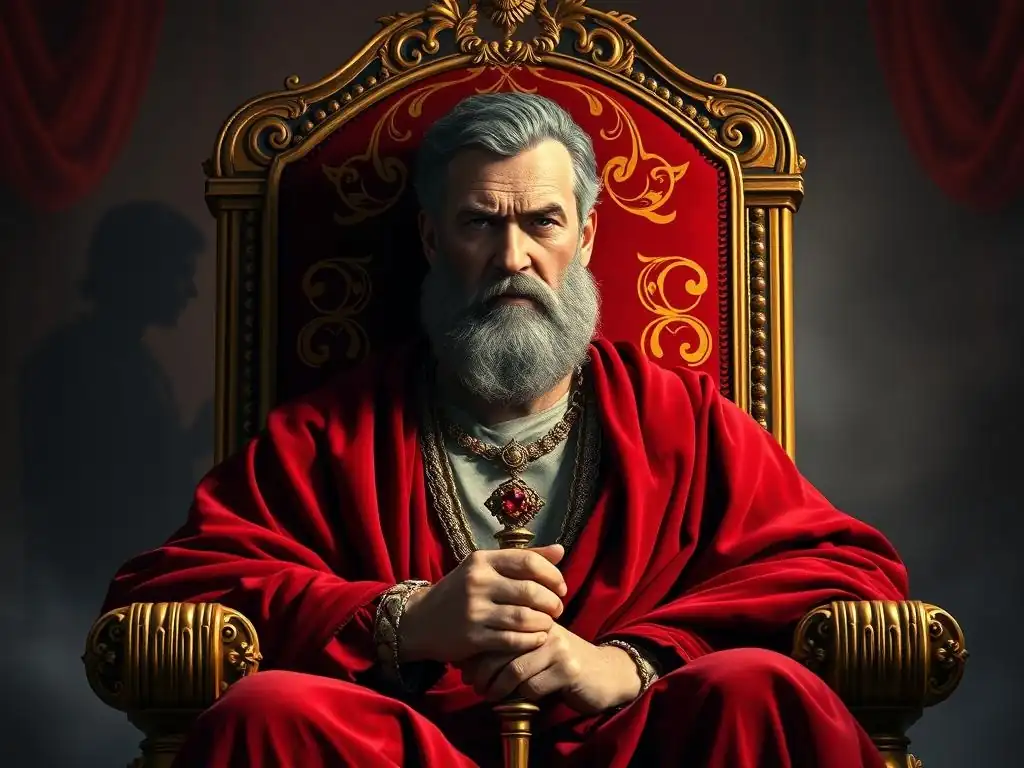
The Arrest and Interrogation of Antigone
When the sentry reports that Polynices' body has received a partial burial, Creon is furious and initially suspects a conspiracy or bribery. He orders the body uncovered and demands that the culprit be found. The sentry, after uncovering the body, witnesses Antigone returning to perform the rites again, mourning her brother. She makes no attempt to hide her actions and is promptly arrested and brought before Creon. Her capture is swift, highlighting the stark reality of Creon's power and the immediate consequences of defying him.
The interrogation that follows is a dramatic clash of wills and ideologies. Creon, confident in his authority, questions Antigone, expecting denial or remorse. Instead, Antigone openly admits her actions, justifying them by appealing to a higher law. She does not beg for mercy or deny her guilt under Creon's law, but rather asserts the righteousness of her conduct according to divine law. This bold admission and justification further enrages Creon, who sees her not just as a lawbreaker, but as a woman challenging his male authority and the established order of the polis (city-state).
Creon's stance is rooted in his belief that the stability and security of the state are paramount. He views Polynices as a traitor who sought to destroy Thebes, and therefore, denying him burial is a just punishment and a necessary deterrent. From Creon's perspective, allowing a traitor to be honored with burial rites would undermine the authority of the state and encourage disloyalty. He argues that a good ruler must be firm and unwavering, prioritizing the well-being of the city above personal relationships or sentimental concerns.
He sees his law as the only legitimate authority within the city. He cannot tolerate dissent, especially from a woman and a member of his own family, as it would weaken his position and set a dangerous precedent. His pronouncements are full of rhetorical questions designed to assert his logic and dismiss Antigone's arguments, such as questioning whether she was not afraid to break his laws. He is convinced that his actions are necessary for good governance and the preservation of the state, even if it means enforcing a decree that violates traditional religious customs.
The Inevitability of Conflict: Two Unyielding Wills
The core of the dramatic tension lies in the unyielding nature of both Antigone and Creon. Antigone is absolutely convinced of the righteousness of her cause, prioritizing divine law and familial duty above all else. She is prepared to die for her beliefs, viewing death as a lesser evil than betraying her conscience and the gods. Her resolve is absolute, leaving no room for compromise or negotiation.
Similarly, Creon is equally stubborn in his conviction that his authority as king is supreme and that his law must be obeyed without question. Any challenge to his edict is perceived as a direct threat to his power and the order of the city. He cannot back down without appearing weak, particularly after making such a public declaration.
The clash between these two inflexible wills makes a tragic outcome almost inevitable. There is no middle ground where their opposing principles can coexist, setting them on a collision course that will lead to profound suffering for both and exemplify the tragic Greek tragedy defiance Antigone’s fate.
The Consequences of Defiance: Death and Despair
Antigone's Imprisonment and Suicide
Following her unwavering confession and defiance, Creon sentences Antigone to death. However, perhaps swayed slightly by public opinion or his son Haemon's pleas, he alters the sentence. Instead of public stoning, he orders her to be sealed alive in a tomb in the wilderness, with only a small amount of food, leaving her fate ostensibly to the gods. This method is perhaps intended to absolve the state of direct responsibility for her death, framing it as a divine judgment rather than a human execution.
Antigone is led away to her tomb, lamenting her fate but not regretting her actions. She maintains her conviction that she acted justly according to divine law. Inside the tomb, facing a slow, isolated death, Antigone chooses to take her own life by hanging herself. This final act underscores her determination to control her own end rather than suffer a prolonged fate dictated by Creon, solidifying her status as a martyr for her cause and bringing about her tragic Greek tragedy defiance Antigone’s fate.
Haemon's Plea and Creon's Rejection
Creon's son, Haemon, is betrothed to Antigone. He comes to his father to plead for her life, initially attempting a diplomatic approach by praising Creon's wisdom and suggesting that the citizens of Thebes secretly sympathize with Antigone, believing her act was pious. Haemon argues that a wise ruler should listen to his people and be flexible, not rigid.
However, Creon rejects Haemon's counsel outright, seeing it as insolence and a challenge to his authority fueled by romantic attachment. Their exchange escalates into a heated argument, with Haemon accusing Creon of tyranny and Creon threatening to kill Antigone in front of him. The confrontation ends with Haemon storming off, vowing never to see his father again. This scene highlights Creon's isolation and his refusal to heed advice, even from his own son, sealing his own tragic destiny.
The Prophet Teiresias' Warning: The Gods' Displeasure
As the tragic events unfold, the blind prophet Teiresias arrives to warn Creon. Teiresias, guided by his attendant, reports ominous signs – the birds are fighting violently, and the sacrifices he attempts are failing, indicating divine displeasure. He explains that the gods are angry because Crebes has been polluted by the unburied body of Polynices and the unjust entombment of Antigone, a living person.
Teiresias urges Creon to reverse his decrees, to bury Polynices and release Antigone. He warns Creon that the Furies and the gods of the underworld are preparing to punish him with suffering equal to that he has inflicted. Specifically, he prophesies that Creon will pay "corpse for corpse" from his own family as punishment for denying burial to Polynices and effectively killing Antigone. This prophecy is a clear divine intervention, explicitly stating that Creon's law has violated sacred principles and will lead to ruin.
The Downfall of Creon: A King's Tragic Realization
Initially, Creon dismisses Teiresias's prophecy as bribery or a plot against him. However, the chorus leader reminds him that Teiresias has never been wrong. Terrified by the prophet's words and the potential wrath of the gods, Creon finally relents. He rushes out to bury Polynices and free Antigone, but it is too late.
Upon reaching the tomb, Creon finds that Antigone has killed herself. As he is mourning her, his son Haemon appears, distraught over Antigone's death. Haemon attempts to attack his father but fails, then turns his sword upon himself, dying beside Antigone.
The news of Haemon's death is brought back to the palace, where Creon's wife, Eurydice, upon hearing of her son's fate, also takes her own life, cursing Creon with her dying breath. Creon is left utterly alone, his family destroyed, his authority shattered, and realizing the terrible cost of his pride and stubbornness. His tragic realization is the culmination of his conflict with Antigone's Greek tragedy defiance and the devastating outcome of Antigone’s fate.
The Martyrdom of Antigone: A Symbol of Resistance
Antigone as a Tragic Heroine: Defining Characteristics
Antigone embodies many characteristics of a tragic heroine in Greek drama. She is of noble birth, belonging to the cursed House of Labdacus. She possesses a fatal flaw, often interpreted as excessive stubbornness or piety, which leads directly to her destruction. However, unlike many tragic figures whose downfall is primarily due to their own errors or hubris (like Creon), Antigone's fate is also a consequence of her unwavering commitment to a higher moral code.
Her defining characteristics include:
- Unwavering Conviction: She is absolutely certain of the righteousness of her cause.
- Moral Courage: She defies the king's decree despite the clear threat of death.
- Commitment to Divine Law: She prioritizes the unwritten laws of the gods over human laws.
- Familial Loyalty: Her act is driven by a deep sense of duty to her deceased brother.
- Dignity in Suffering: She faces her punishment with sorrow but without regret for her actions.
These traits elevate her struggle from a simple act of rebellion to a profound statement on moral integrity and the limits of state power.
Divine Justice and Human Law: Thematic Implications
The central theme of Antigone's story is the stark contrast and potential conflict between divine justice and human law. Sophocles presents a scenario where the laws of the state, as decreed by Creon, directly violate the ancient, unwritten laws believed to be ordained by the gods. Antigone's defiance forces the audience to consider which set of laws holds ultimate authority and what the consequences are when the two conflict.
The tragic outcome suggests that while human laws are necessary for societal order, they must not disregard fundamental moral and religious principles. Creon's downfall serves as a cautionary tale about the dangers of hubris (excessive pride) and the belief that a mortal ruler's will can supersede divine will.
Antigone's death, while tragic, is often interpreted as a victory for divine law, as the gods ultimately punish Creon for his impiety. The play explores the idea that true justice might lie beyond the reach of human legislation and that upholding moral duty, even unto death, can be a form of spiritual triumph.
Antigone's Legacy: Inspiration for Civil Disobedience and Moral Courage
Antigone's story has resonated throughout history and continues to inspire discussions about civil disobedience, individual conscience, and resistance to unjust laws. Her willingness to sacrifice her life for her beliefs has made her a powerful symbol for those who challenge oppressive regimes or discriminatory laws based on a higher moral standard.
- Example: The concept of following one's conscience when laws conflict with deeply held moral or religious beliefs is a direct echo of Antigone's position.
- Example: Figures throughout history who have engaged in non-violent resistance or civil disobedience against state authority, citing a higher moral or divine law, can be seen as embodying the spirit of Antigone's defiance.
Her legacy lies in the enduring question she poses: What is the individual's responsibility when the laws of the state are perceived as unjust or immoral? Her story serves as a powerful reminder of the potential for conflict between state authority and individual conscience, and the courage required to stand against power in the name of principle, cementing her place as an icon of Greek tragedy defiance.
Analyzing the Themes of Greek Tragedy: Fate, Free Will, and Divine Law

The Role of Fate in Antigone's Destiny
Fate, or Moira, plays a significant role in Greek tragedy, and Antigone is no exception. The tragic lineage of the House of Labdacus is marked by a curse that seems to predetermine suffering for its members. Antigone is born into this cursed family, a daughter of Oedipus, whose own fate was sealed by prophecy. This familial destiny casts a shadow over her life and choices.
While Antigone makes conscious decisions, the context of her actions is framed by the inescapable suffering that has plagued her family. Her brothers' mutual death, dictated by the cycle of violence and curses, creates the very situation that forces her choice. Some interpretations argue that given her background and the divine laws she revered, Antigone's path to defiance and death was, in a sense, fated, an inevitable outcome of her character combined with the circumstances she inherited.
Free Will and Moral Choice: Antigone's Agency
Despite the strong presence of fate, Antigone's story is also a powerful exploration of free will and moral choice. Antigone is not compelled by an external force to bury Polynices; she makes a deliberate decision based on her beliefs and values. Her sister Ismene chooses obedience and survival, highlighting that an alternative path was available. Antigone actively chooses the path of defiance, fully aware of the potential consequences.
Her agency is most evident in her justification of her actions and her refusal to compromise. She articulates her reasons clearly, stating that she chose to please the dead and the gods rather than the living ruler. Her final act of suicide, while tragic, can also be seen as an ultimate assertion of her free will, choosing the manner of her death rather than passively submitting to Creon's slow entombment. This interplay between predetermined circumstances and individual choice is a hallmark of Greek tragedy, illustrating how character and decision-making interact with destiny to shape Antigone’s fate.
The Interpretation of Divine Law in Ancient Greece
Understanding divine law in the context of ancient Greece is crucial to appreciating Antigone's motivation. These were not codified laws like modern statutes but ancient customs, traditions, and religious beliefs that were deeply ingrained in society. They governed relationships, hospitality ( xenia), reverence for the gods, and duties to the dead and family ( oikos). Burying the dead was considered a fundamental religious obligation, necessary for the soul's journey to the underworld and to prevent the deceased's spirit from troubling the living.
Creon's edict is seen as impious precisely because it violates this ancient, unwritten law. While the polis had its own laws, the gods were believed to be the ultimate arbiters of justice, and their laws were considered eternal and universal. Antigone's argument that divine law is not of "today or yesterday, but lives forever" reflects this belief in its timeless and supreme nature. The play suggests that mortal rulers ignore these ancient religious obligations at their peril, as demonstrated by the divine punishment that ultimately befalls Creon.
Antigone in Modern Interpretations: Relevance and Resonance
Antigone's Influence on Literature and Art
Sophocles' Antigone has exerted a profound influence on Western literature, philosophy, and art for over two millennia. Its timeless themes of conflict between state and individual, law and morality, and duty and conscience have inspired countless adaptations, reinterpretations, and analyses.
- Literature: Writers from various eras have revisited Antigone's story. George Steiner's book Antigones (1984) meticulously traces the play's afterlife through European literature and thought, detailing over 150 different versions, adaptations, and critical responses.
- Philosophy: Philosophers like G.W.F. Hegel interpreted the conflict between Antigone and Creon as a clash between the principles of the family ( oikos) and the state ( polis), or between divine law and human law, seeing it as a fundamental dialectic in the development of civil society.
- Art: While direct visual depictions from antiquity are rare, later periods have seen artistic representations inspired by the play's dramatic moments, such as Antigone burying Polynices or her confrontation with Creon.
The enduring power of the narrative lies in its ability to speak to fundamental human dilemmas that remain relevant across different cultures and historical periods.
The Enduring Appeal of Antigone's Story: A Modern-Day Perspective
The core conflict presented in Antigone continues to resonate deeply in the modern world because it addresses universal questions about power, justice, and individual responsibility. In societies grappling with issues of authoritarianism, civil rights, and the balance between national security and personal freedoms, Antigone's stand against Creon's decree feels remarkably current.
Her story prompts audiences to consider:
- When is it permissible, or even obligatory, to disobey the law?
- What constitutes a just law?
- Where does the ultimate authority lie – with the state, the individual conscience, or a higher power/moral code?
- What are the consequences of rigid adherence to principle versus pragmatic compromise?
These questions are as pertinent today as they were in 5th century BCE Athens, ensuring the play's continued study and performance and highlighting the timeless nature of Antigone's Greek tragedy defiance.
Antigone's Influence in Contemporary Works: Anouilh's "Antigone" and Fugard's "The Island"
Modern playwrights have explicitly adapted or drawn inspiration from Antigone to comment on contemporary political and social issues. Jean Anouilh's Antigone, written in 1942 during the Nazi occupation of France, is a famous example. Anouilh's version uses the myth to explore themes of resistance, fate, and existential choice under totalitarian rule.
His Antigone is a young woman who chooses defiance and death as an act of purity and refusal to compromise with a corrupt world, contrasting sharply with Creon, depicted as a weary pragmatist burdened by the necessities of power. The play premiered in Paris in 1944 and was interpreted by audiences as either a call to resistance or an argument for passive acceptance, demonstrating the myth's flexibility in adaptation.
Another significant modern adaptation is Athol Fugard's The Island (1973), co-created with John Kani and Winston Ntshona. Set in South Africa's Robben Island prison during the apartheid era, the play features two inmates rehearsing a production of Antigone.
The characters' performance of Antigone's defiance becomes a powerful metaphor for their own struggle against an oppressive regime and their commitment to human dignity and freedom, even within the confines of imprisonment. These adaptations demonstrate how the fundamental narrative of Antigone's Greek tragedy defiance and Antigone’s fate can be transplanted to different historical and political contexts while retaining its core power and relevance.
Conclusion: Antigone's Fate and the Power of Moral Conviction
The Enduring Question: Was Antigone Right?
The question of whether Antigone was "right" in her actions is one of the central debates the play provokes and one that has fueled philosophical and critical discussion for centuries. From a religious perspective, her act was undeniably pious and correct according to ancient Greek beliefs about duties to the dead and the gods. From the perspective of Creon's state law, however, she was a criminal who defied legitimate authority and disrupted public order.
The play does not provide a simple answer. While Creon is clearly punished by the gods for his arrogance and impiety, Antigone's fate is also tragic – she dies young, unmarried, and isolated.
The play suggests that both absolute adherence to human law (Creon) and absolute adherence to divine law/conscience (Antigone) without any room for compromise can lead to destruction. Ultimately, the audience is left to ponder the complex interplay of competing claims – state vs. individual, human vs. divine, law vs. morality – and decide for themselves where justice truly lies in this tragic Greek tragedy defiance Antigone’s fate.
Reflections on Antigone's Greek tragedy defiance and legacy.
Antigone's story remains a cornerstone of Western literature and a powerful exploration of themes central to the human condition. Her defiance in the face of overwhelming power, her unwavering commitment to her beliefs, and her tragic fate continue to resonate because they speak to universal struggles concerning justice, authority, and conscience.
- Key Takeaways:
- The potential for conflict between state law and a higher moral or divine law.
- The dangers of tyrannical power and inflexible rule.
- The courage required for individual conscience to stand against unjust authority.
- The tragic consequences that can arise when fundamental values clash.
Antigone's legacy is not just that of a character in an ancient play, but that of a symbol of moral courage and resistance. Her story challenges us to consider our own values, the laws we live under, and what we would be willing to stand for, even in the face of death. The enduring power of this Greek tragedy lies in its timeless depiction of one woman's profound defiance and the tragic Antigone’s fate that followed, forcing us to confront uncomfortable truths about law, justice, and the human spirit.
Frequently Asked Questions
What is the central conflict in Antigone and how does it relate to divine law versus human decree?
The central conflict revolves around Antigone's decision to bury her brother Polynices against Creon's decree. She believes in the supremacy of divine law and familial duty, even if it means defying the human decree of the king.
How does Antigone's defiance ultimately lead to her fate?
Antigone's defiance of Creon's order results in her imprisonment and subsequent death. Her unwavering commitment to her beliefs seals her fate, highlighting the tragic consequences of challenging authority.
What role does fate play in Antigone and how does it influence the characters' actions?
Fate, preordained by the gods, heavily influences the characters' actions and ultimate destinies. Although they attempt to exert their will, they are ultimately bound by the fate woven into their lives.
Why is Antigone considered a Greek tragedy and what are its defining characteristics?
Antigone is a Greek tragedy because it explores themes of suffering, moral dilemmas, and the downfall of a noble character. It adheres to the conventions of Greek tragedy, including a tragic hero, a chorus, and a cathartic ending.
How does Antigone's story resonate with contemporary society in terms of defiance of unjust laws?
Antigone's story continues to resonate with contemporary society as a powerful example of defiance against unjust laws. Her courage in standing up for her beliefs inspires individuals to challenge authority when it conflicts with their conscience and principles of justice.
Final Reflection: The Enduring Echo of Antigone's Choice
Antigone's defiance, a clash between divine law and human decree, remains profoundly relevant today. We still grapple with the tension between personal conscience and societal expectations, between individual morality and the dictates of power. Her tragic fate serves as a stark reminder of the potential consequences of unwavering commitment to one's beliefs, even in the face of overwhelming opposition.
Antigone's story continues to resonate because it speaks to the fundamental human struggle to reconcile our inner truths with the external pressures of the world. Her unwavering loyalty to family and the gods, even unto death, forces us to confront our own capacity for similar conviction. The only true wisdom is in knowing you know nothing.
While not directly from Sophocles, this Socratic quote encapsulates the humbling uncertainty Antigone faces, and the enduring question of whether absolute certainty in one's beliefs justifies ultimate sacrifice. Her legacy compels us to examine the nature of justice, authority, and the very definition of right and wrong.
Consider Antigone's choice. It wasn't simply about burying her brother; it was about upholding a sacred duty, a moral imperative that transcended earthly laws. What unwavering principles guide your life? What are you willing to sacrifice for what you believe in? Antigone's story is not merely a historical account; it's a call to introspection, a challenge to examine the depth of our own convictions and the courage of our own hearts. Let her tragic fate inspire you to live authentically, to find the strength to stand for your beliefs, even when the cost is high.
Unleash Your Inner Antigone: Embrace Moral Courage Today!
Thanks for exploring the complex world of Antigone and her unwavering defiance! You've now gained a deeper understanding of the power of conscience and the enduring conflict between divine and human law. Ready to take that understanding further?
- Share Antigone's story: Discuss her choices with friends, family, or online communities. Spark a conversation about when personal morality should outweigh societal expectations – you might be surprised by the responses!
- Explore other tales of defiance: Delve deeper into our archives and discover other legendary figures who challenged authority for what they believed in. Find your next inspirational story.
- Reflect on your own moral compass: What boundaries would you refuse to cross, even if it meant facing consequences? Journal your thoughts and share your insights in the comments below.
What personal principle are you ready to stand up for, inspired by Antigone's courageous example?