
The Power Dynamics of the Roman Divine Hierarchy

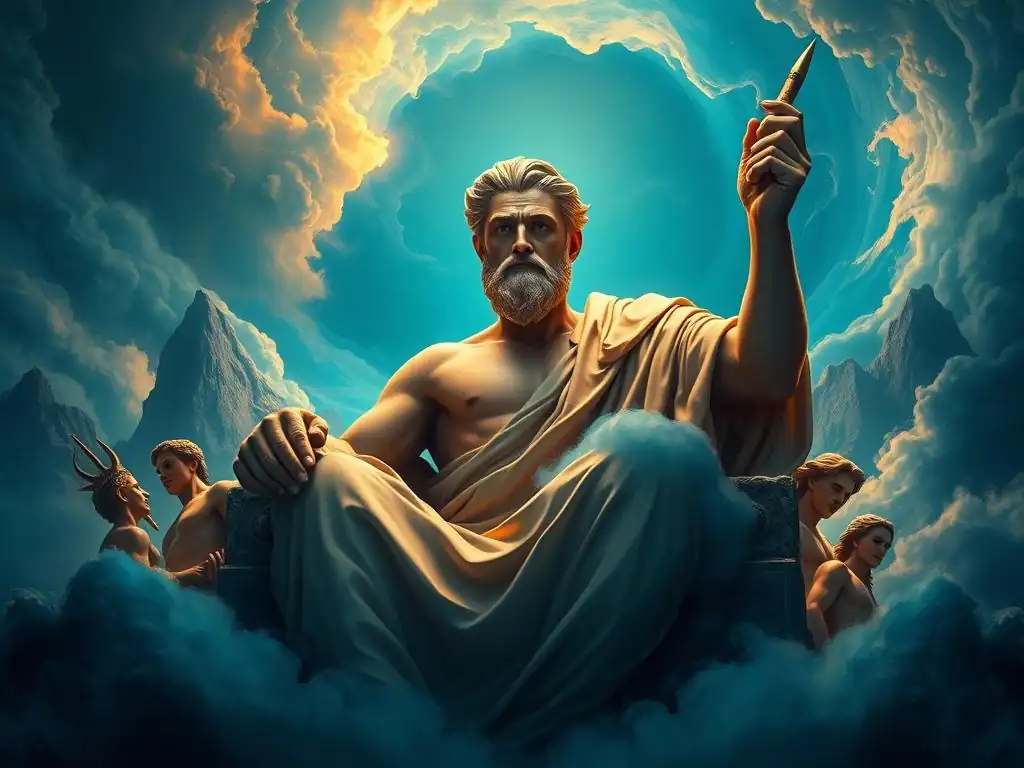
Welcome to Mythology and Legends, where ancient whispers still echo! Ever wondered just how much power Jupiter really wielded over Neptune? Dive deep into the fascinating world of Roman gods hierarchy power dynamics and uncover the intricate web of influence, ambition, and divine drama that shaped an empire. Prepare to be captivated...the secrets of Olympus await!
- Understanding the Roman Pantheon: A Hierarchy of Gods and Goddesses
-
Key Figures in the Roman Gods Hierarchy
- Jupiter: Supreme Ruler and God of the Sky and Thunder
- Juno: Queen of the Gods and Protector of Marriage
- Neptune: God of the Sea and Earthquakes
- Mars: God of War and Roman Military Prowess
- Venus: Goddess of Love, Beauty, and Fertility
- Apollo: God of Music, Poetry, and Light
- Diana: Goddess of the Hunt and the Moon
- Minerva: Goddess of Wisdom, Strategic Warfare, and Crafts
- Vulcan: God of Fire, Metalworking, and the Forge
- Mercury: Messenger of the Gods and God of Commerce
- Ceres: Goddess of Agriculture and Grain
- Power Dynamics Within the Roman Divine Hierarchy
- The Influence of Roman Emperors and the Divine
- Divine Attributes and Spheres of Influence
- Roman Rituals and the Reinforcement of Divine Power
- The Decline of the Roman Pantheon and the Rise of Christianity
- Roman Gods Hierarchy Power Dynamics: A Summary and Conclusion
-
Frequently Asked Questions
- How was the Roman pantheon's hierarchy structured?
- What role did Jupiter play in the Roman gods hierarchy?
- How did the Roman gods hierarchy influence Roman society?
- What were some of the key power dynamics between Roman gods and goddesses?
- How did the Roman adoption of Greek mythology affect their gods hierarchy power dynamics?
- Final Reflection: Unraveling the Celestial Power Plays of Rome
- Unveil Your Inner Roman God: Explore the Pantheon's Power Plays!
Understanding the Roman Pantheon: A Hierarchy of Gods and Goddesses
Introduction to Roman Mythology and Divine Power
Roman mythology, though heavily influenced by Greek predecessors, developed its own distinct characteristics, particularly concerning the structure and application of divine power. Unlike the often capricious and anthropomorphic interactions depicted in Greek myths, Roman religion tended to be more focused on ritual, duty, and the practical relationship between the divine and the state.
This emphasis shaped the Roman gods hierarchy power dynamics, creating a system where the gods' authority was intrinsically linked to their roles in maintaining the order and prosperity of Rome. The pantheon wasn't just a collection of powerful beings; it was a celestial reflection of Roman society, with clear lines of authority and specialization.
The core of Roman religious practice involved appeasing the gods through precise rituals to ensure the well-being of the individual, family, and state. This focus on pax deorum (peace of the gods) meant understanding the specific powers and responsibilities of each deity was crucial.
The hierarchy wasn't always rigid or universally agreed upon in every detail across the vast Roman Republic and Empire, but a clear structure emerged with certain deities holding supreme authority, while others governed specific aspects of life, nature, or the state. The dynamic interaction between these divine powers, their influence over human affairs, and their relationships with each other defined the complex power structure of the Roman pantheon.
The Roman Adaptation of Greek Gods: A Shift in Power Structures?
When the Romans encountered Greek culture, they readily syncretized many of their own deities with their Greek counterparts, adopting Greek myths and iconographies. Jupiter became associated with Zeus, Juno with Hera, Neptune with Poseidon, and so on.
However, this wasn't a mere renaming; the Romans often reinterpreted these deities through their own cultural lens, subtly altering their primary attributes and, consequently, their position within the Roman gods hierarchy power dynamics. For instance, while Zeus was the king of gods and associated with justice, the Roman Jupiter was more explicitly tied to the Roman state, oaths, and military victory, reflecting Rome's militaristic and legalistic society.
This adaptation process led to shifts in emphasis and sometimes even power. Roman deities like Janus, the god of beginnings and transitions, and Quirinus, an early Sabine god associated with the Roman people and war (later identified with the deified Romulus), held significant roles with no direct Greek equivalents in terms of their specific Roman functions.
The prominence given to gods like Mars, the god of war, in a society built on conquest and military strength, highlights how Roman values influenced the adopted pantheon's structure. While the core Olympian structure was mirrored, the specific weight and importance assigned to certain deities, and their interactions, reflected unique Roman priorities, subtly but significantly reshaping the power dynamics compared to the Greek model.
Key Figures in the Roman Gods Hierarchy
Jupiter: Supreme Ruler and God of the Sky and Thunder
Jupiter, also known as Jove, stood at the apex of the Roman gods hierarchy power dynamics. As the king of the gods and the god of the sky, lightning, and thunder, his authority was paramount, mirroring the power of the Roman state itself.
He was the protector of Rome, the god of justice and oaths, and the patron deity of the Flamen Dialis, the highest-ranking priest in Roman religion. Temples dedicated to Jupiter Optimus Maximus (Jupiter the Best and Greatest) were central to Roman religious and civic life, most notably the grand temple on the Capitoline Hill in Rome, a symbol of Roman power and divine favor.
His role extended beyond the heavens; Jupiter was invoked in treaties, military campaigns, and the assemblies of the Roman people. His power was seen as essential for maintaining pax deorum, the divine favor that ensured Rome's prosperity and security. Roman generals celebrated triumphs by offering sacrifices to Jupiter on the Capitoline, acknowledging his supreme authority over war and victory. His position as the ultimate arbiter among the gods solidified his status, making him the central figure in understanding the overall Roman gods hierarchy power dynamics.
Juno: Queen of the Gods and Protector of Marriage
Juno, consort of Jupiter and queen of the gods, held a position of immense power and influence within the Roman pantheon, second only to her husband. As Juno Moneta, she was associated with the minting of money, highlighting her connection to the wealth and stability of the state. More importantly, she was the protectress of women, marriage, childbirth, and the Roman state itself, particularly its finances. Her major festival, the Matronalia, celebrated on March 1st, underscored her role as a patron of married women and family life.
Juno's power dynamics often involved her complex relationship with Jupiter, marked by both partnership and conflict, reflecting the challenges within divine and human relationships. While Jupiter represented the ultimate authority, Juno's influence was pervasive, touching upon the foundational elements of Roman society: family, state finance, and the well-being of its citizens, particularly women. Her temple on the Capitoline Hill, part of the Capitoline Triad with Jupiter and Minerva, further cemented her high status and importance within the Roman gods hierarchy power dynamics.
Neptune: God of the Sea and Earthquakes
Neptune (Greek counterpart Poseidon) was the powerful god of the sea, freshwater, storms, and earthquakes. His domain encompassed the vast oceans and rivers, crucial for a growing maritime power like Rome. While not as central to daily Roman life as deities of agriculture or state, his power was immense and feared, capable of unleashing destructive forces. Sailors and those whose lives depended on the sea paid particular homage to Neptune, seeking safe passage and calm waters.
His power was often depicted as wild and untamable, distinct from Jupiter's ordered authority. While Jupiter ruled the sky and the affairs of gods and men, Neptune held sway over a vast, unpredictable realm. His major festival, the Neptunalia, was celebrated during the hot summer months, possibly as a way to seek relief from drought or ensure a good water supply. Although his direct involvement in the Roman gods hierarchy power dynamics concerning state governance was less pronounced than Jupiter or Mars, his control over a fundamental element of nature gave him significant, albeit often distant, power.
Mars: God of War and Roman Military Prowess
Mars (Greek counterpart Ares) held a far more prominent and respected position in the Roman gods hierarchy power dynamics than his Greek counterpart Ares did in the Greek pantheon. Mars was not just the god of brutal warfare but also an agricultural deity in early Rome, associated with spring and fertility, highlighting the interconnectedness of war and the land's prosperity in a society where citizen-soldiers defended their farms. He was considered the father of Romulus and Remus, the legendary founders of Rome, giving him a foundational link to the city's origins and destiny.
His importance grew with Rome's military expansion. Mars became the central deity for the Roman legions, invoked before battles and honored in triumphs. The Campus Martius (Field of Mars) in Rome was dedicated to him, used for military training and assemblies. His priests, the Salii ("leaping priests"), were among the most ancient and revered, performing war dances and rituals. Mars' direct influence on Rome's defining characteristic – its military might – placed him exceptionally high in the Roman gods hierarchy power dynamics, often seen as the divine force behind Roman conquest and security.
Venus: Goddess of Love, Beauty, and Fertility
Venus (Greek counterpart Aphrodite) was the Roman goddess of love, beauty, sex, fertility, prosperity, and victory. Like Mars, Venus held a unique and elevated status in Rome, partly due to her mythical lineage connecting her to the Roman people. She was considered the divine mother of Aeneas, the legendary founder of the Roman race, making her an ancestral goddess of Rome itself, particularly revered by the Julian family, who claimed descent from Aeneas.
This connection gave Venus a political dimension beyond her traditional roles. Julius Caesar dedicated a temple to Venus Genetrix ("Venus the Ancestress"), emphasizing his family's divine origins and using religion to legitimize his power. While her domain of love and beauty might seem less central to state power than war or justice, her association with fertility and prosperity was vital for the growth and continuation of the Roman people. Her role as an ancestress gave her significant symbolic power within the Roman gods hierarchy power dynamics, especially as Rome's identity became increasingly tied to its mythical past.
Apollo: God of Music, Poetry, and Light
Apollo (Greek counterpart Apollo) was a widely venerated deity in Rome, adopted relatively early and integrated smoothly into the pantheon. He was the god of music, poetry, light, healing, plague, and prophecy. Unlike some other gods, Apollo's adoption by Rome didn't drastically change his core attributes, but his importance grew, particularly under Emperor Augustus, who credited Apollo with his victory at the Battle of Actium in 31 BCE and built a magnificent temple to Apollo on the Palatine Hill.
Apollo's association with prophecy and healing gave him significant influence, as Romans sought divine guidance and relief from illness. His role as a god of light and order complemented Jupiter's authority. While not traditionally part of the oldest Roman triad, his patronage by emperors like Augustus elevated his status and influence within the Roman gods hierarchy power dynamics, demonstrating how imperial favor could shift divine prominence. His power lay in his diverse attributes and his connection to the arts, healing, and the ability to reveal fate.
Diana: Goddess of the Hunt and the Moon
Diana (Greek counterpart Artemis) was the Roman goddess of the hunt, the moon, wild animals, and childbirth. She was revered, particularly in rural areas and by women seeking help in labor. Her sanctuary at Lake Nemi, known as the "Mirror of Diana," was a significant cult center, attracting pilgrims from across Italy. This shrine was presided over by a priest who had gained his position by killing the previous priest, a unique and ancient ritual highlighting the fierce, untamed aspect of her power.
Diana's power was associated with the wilderness, the moon's cycles, and the protection of women. While she was a virgin goddess, her connection to childbirth shows the multifaceted nature of Roman deities. Her independence and association with the wild made her a powerful figure, distinct from the more urban or state-focused deities. Her cult's persistence, particularly at Nemi, illustrates her enduring significance within the Roman gods hierarchy power dynamics, especially outside the immediate sphere of Rome's civic center.
Minerva: Goddess of Wisdom, Strategic Warfare, and Crafts
Minerva (Greek counterpart Athena) was a key goddess in the Roman gods hierarchy power dynamics, especially within the context of the state. She was the goddess of wisdom, strategic warfare (distinguished from Mars' brute force), handicrafts, and the arts. She was part of the Capitoline Triad, alongside Jupiter and Juno, marking her as one of the most important deities in Rome's official religion. Her temple on the Capitoline Hill was a central site for state rituals.
Minerva's power was associated with intelligence, skill, and tactical planning, qualities highly valued by the Romans in both war and peace. She was the patroness of artisans, teachers, and students. Her position in the Capitoline Triad placed her among the supreme rulers of the pantheon, signifying her crucial role in the intellectual and strategic strength of Rome. While Mars represented military might, Minerva embodied the wisdom and skill necessary for victory and civilized life, making her a vital component of the divine structure supporting the Roman state.
Vulcan: God of Fire, Metalworking, and the Forge
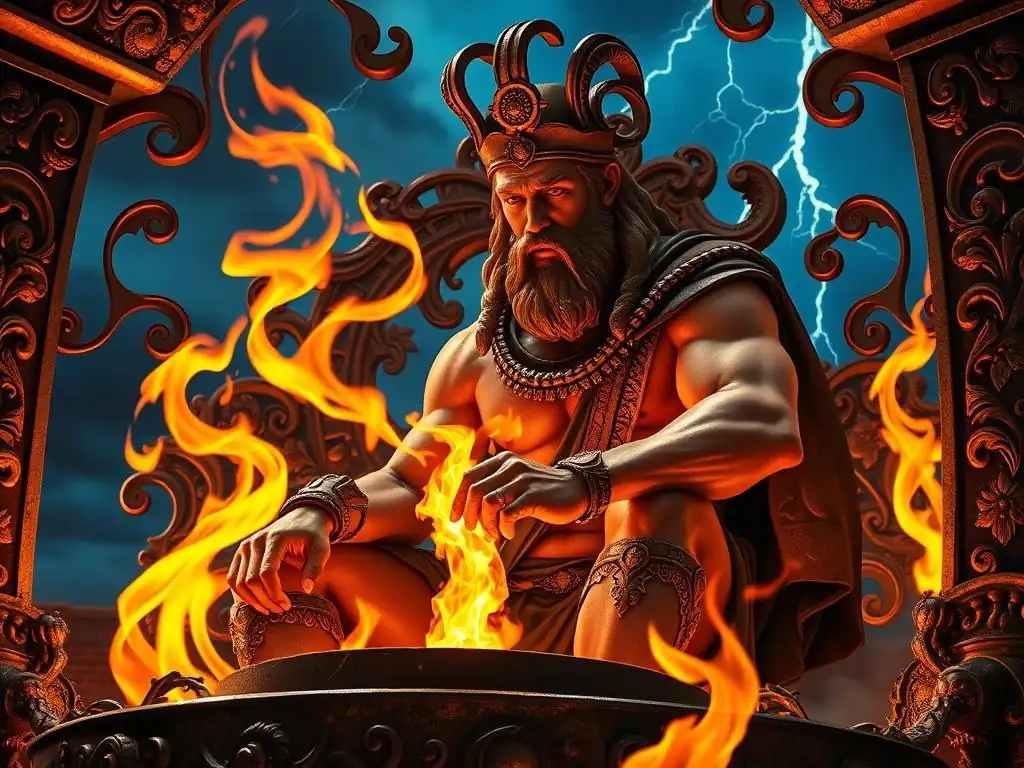
Vulcan (Greek counterpart Hephaestus) was the Roman god of fire, volcanoes, metalworking, and the forge. His power was associated with destructive forces like volcanic eruptions but also with the creative power of craftsmanship, particularly in metal. He was the divine smith, creating armor and weapons for the gods. His forge was often located beneath Mount Etna or other volcanic regions, linking his power directly to the earth's fiery core.
Vulcan's festival, the Volcanalia, was celebrated on August 23rd, a time when the risk of fires was high, suggesting his role in both causing and averting destructive blazes. While not as prominent in civic cult as Jupiter or Mars, his domain was essential for Roman society, providing the tools, weapons, and infrastructure built from metal. His power was vital for both war and peace, representing the mastery of fire and metal, placing him as a crucial, albeit often subterranean, figure in the Roman gods hierarchy power dynamics.
Mercury: Messenger of the Gods and God of Commerce
Mercury (Greek counterpart Hermes) was the swift messenger of the gods, as well as the god of trade, profit, merchants, travelers, boundaries, and even thieves. His speed and ability to traverse realms (sky, earth, underworld) gave him a unique position as an intermediary within the Roman gods hierarchy power dynamics. He guided souls to the underworld and delivered messages between deities and mortals.
His role as the god of commerce became increasingly important as Rome grew into a vast trading empire. Merchants prayed to Mercury for good fortune and profit. His festival, the Mercuralia, was celebrated on May 15th by merchants who sprinkled themselves and their goods with water from his sacred well near the Porta Capena to purify themselves and ensure success. Mercury's power was less about overt authority and more about facilitation, communication, and the flow of wealth, making him essential to the practical, economic life of Rome.
Ceres: Goddess of Agriculture and Grain
Ceres (Greek counterpart Demeter) was the Roman goddess of agriculture, grain crops, fertility, and motherly relationships. Her domain was fundamental to the survival and prosperity of Rome, a society whose wealth was based heavily on agricultural production. She was particularly associated with the plebeian class, and her temple on the Aventine Hill served as a center for plebeian activities and record-keeping.
Ceres' power was directly tied to the earth's bounty and the cyclical nature of planting and harvest. Her major festival, the Cerealia, involved sacrifices and games to ensure a good harvest. Along with Liber (Bacchus) and Libera (Proserpina), she formed the Aventine Triad, an important set of deities for the common people, paralleling the Capitoline Triad of Jupiter, Juno, and Minerva. Ceres' essential role in providing sustenance gave her immense, fundamental power within the Roman gods hierarchy power dynamics, representing the vital connection between Rome and its land.
Power Dynamics Within the Roman Divine Hierarchy
Jupiter's influence was the bedrock of the Roman gods hierarchy power dynamics. As the supreme deity, his primary role was to maintain cosmic and political order. He was the source of divine authority, capable of bestowing favor or unleashing wrath, often symbolized by his lightning bolt. Roman state rituals, treaties, and significant political acts were often performed under his auspices, emphasizing that his approval was necessary for Rome's legitimacy and success.
His power wasn't absolute tyranny; it was often depicted as the ultimate judgment and enforcement of divine law. Other gods might have their specific domains and powers, but Jupiter's authority superseded them in matters of overall cosmic balance and the fate of Rome. Historical accounts and religious texts frequently portray other deities deferring to Jupiter's decisions, even if they initially disagreed, illustrating his ultimate position in the divine chain of command and his essential role in stabilizing the complex Roman gods hierarchy power dynamics.
Alliances and Conflicts: The Shifting Power Balance Among the Gods
While Jupiter held supreme authority, the Roman gods hierarchy power dynamics were far from static. Relationships between deities involved complex alliances, rivalries, and conflicts, often mirroring human political maneuvering. The most famous example is the often-strained relationship between Jupiter and Juno, whose quarrels were a common theme in mythology, reflecting tensions within marriage and power struggles at the highest level.
Other dynamics included the partnership between Mars and Venus, representing the intertwined forces of war and desire, or the rivalry between deities with overlapping domains, such as Neptune and Minerva competing for patronage of the city of Athens (in the Greek version, but illustrating the potential for divine competition).
These interactions, depicted in myths and alluded to in religious practices, showed that even within a hierarchical structure, power was negotiated, contested, and constantly shifting based on divine personalities and the specific contexts of their involvement in human affairs, adding layers to the understanding of the Roman gods hierarchy power dynamics.
Familial relationships played a significant role in shaping the Roman gods hierarchy power dynamics. The core of the pantheon was structured around a divine family, with Jupiter and Juno as the ruling couple, surrounded by their siblings and children. This structure naturally created inherent power dynamics based on kinship, seniority, and lineage, much like noble families in Roman society. Deities like Neptune and Pluto (god of the underworld, Greek Hades) held significant power by virtue of being Jupiter's brothers, ruling vast realms alongside him.
Children of Jupiter, such as Mars, Minerva, Apollo, and Diana (though their parentage varies in some accounts), also held prominent positions, their authority often derived or influenced by their connection to the supreme god. These familial bonds could be sources of alliance, as seen in the Capitoline Triad (Jupiter, Juno, Minerva), or conflict, as depicted in the myths of Juno's jealousy. This intricate web of relationships meant that power within the divine hierarchy was not solely based on function but also on birthright and familial status, further complicating the Roman gods hierarchy power dynamics.
The Role of Fate (Fatum) in Shaping Divine Actions
An intriguing aspect of the Roman gods hierarchy power dynamics was the concept of Fate, or Fatum. While the gods were powerful, they were often depicted as being subject to a greater, overarching destiny that even they could not fully control or understand. Fatum represented the predetermined course of events, the inevitable destiny of individuals, cities, and the cosmos. This concept introduced a layer of power external to the gods themselves, suggesting limits to their agency.
Major events, such as the founding of Rome as prophesied for Aeneas, were often presented as being dictated by Fatum, which the gods could only attempt to facilitate, hinder, or understand, but not ultimately defy. While deities like Jupiter might interpret or execute aspects of Fatum, they were not its masters. This idea placed Fatum as a force potentially superior even to Jupiter, adding another dimension to the Roman gods hierarchy power dynamics and highlighting the Roman belief in a cosmic order that transcended even divine will.
The Influence of Roman Emperors and the Divine
Emperor Worship and the Deification of Roman Rulers
A unique and significant development in the Roman gods hierarchy power dynamics was the rise of emperor worship, or the imperial cult. Beginning cautiously with Augustus, Roman emperors, or at least their genius (guardian spirit), were increasingly venerated, and after their deaths, many were formally deified by the Senate, becoming divi (divine ones). Temples were erected, priests appointed, and rituals established for these deified emperors across the Empire.
This practice blurred the lines between the human and the divine. Emperors were presented as having a special relationship with the gods, sometimes even being equated with them (e.g., Augustus often associated with Apollo). The deification of rulers placed them, at least officially, within or adjacent to the traditional Roman gods hierarchy power dynamics, creating a new category of divine beings directly linked to the state's leadership. This wasn't just religious practice; it was a powerful tool for political legitimation and unifying the diverse provinces of the Empire under a common object of veneration.
Political Manipulation of Religious Beliefs
The Roman state actively managed and often manipulated religious beliefs and practices for political ends, significantly impacting the Roman gods hierarchy power dynamics. The college of pontiffs, headed by the Pontifex Maximus (a title later held by the emperors), controlled the state cult and interpreted divine signs (omens and auspices) to ensure state actions were favored by the gods. This control allowed the ruling elite to legitimize policies, declare war, or postpone assemblies based on religious interpretations.
Emperors like Augustus strategically promoted certain deities (like Apollo and Mars Ultor - the Avenger) to associate themselves with specific divine powers and virtues, reinforcing their own authority and narrative. Public festivals and temple building projects were used to showcase imperial piety and connect the emperor's welfare with the state's divine favor. This deliberate intertwining of politics and religion meant that the perceived power and prominence of deities within the Roman gods hierarchy power dynamics could be influenced and shifted by imperial and senatorial agendas.
The Impact of Imperial Cults on the Traditional Divine Hierarchy
The introduction and proliferation of imperial cults had a profound impact on the traditional Roman gods hierarchy power dynamics. While the old gods were never formally abolished, the veneration of living or deified emperors introduced new figures of divine authority directly tied to contemporary power structures. In provinces, the imperial cult often became the primary focus of religious loyalty, serving as a unifying force across the vast empire.
This didn't necessarily displace the traditional gods entirely, but it added layers to the hierarchy. Deified emperors existed alongside the ancient deities, sometimes even being depicted interacting with them. The emphasis on the emperor's numen (divine power) or genius shifted some focus from the distant Olympian figures to a more immediate, tangible source of divine favor associated with the ruler. This evolution demonstrated the dynamic nature of the Roman gods hierarchy power dynamics, constantly adapting to the changing political and social landscape of Rome.
Divine Attributes and Spheres of Influence
Assigning Domains of Power: Defining Each God's Responsibilities
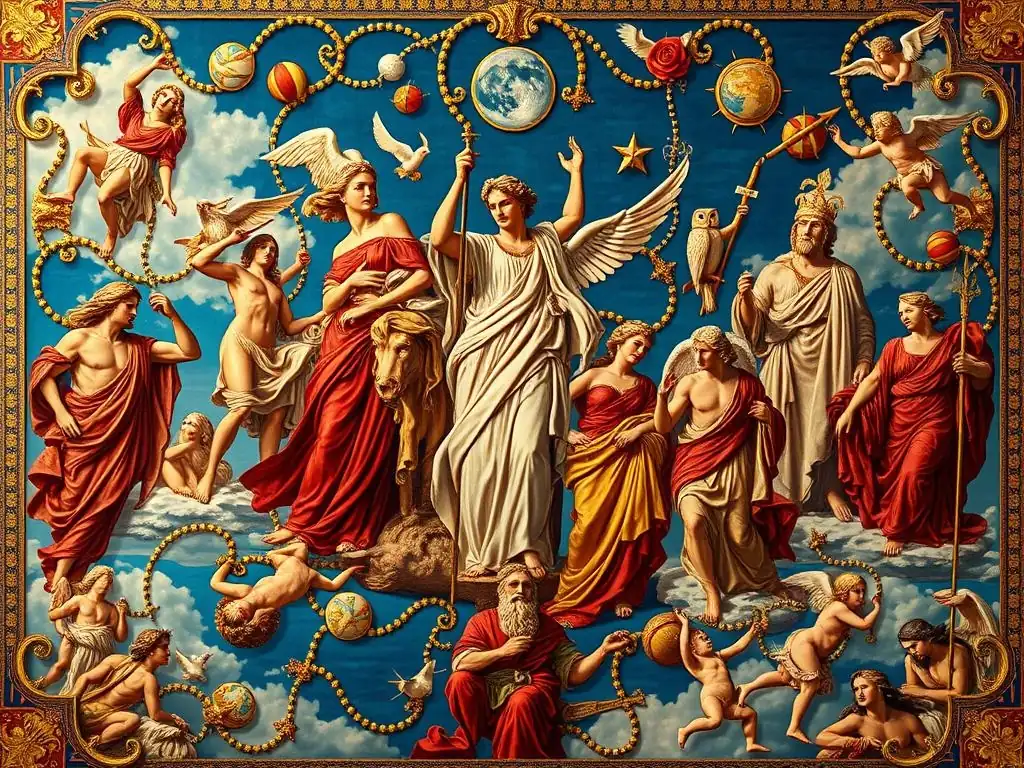
Each deity within the Roman gods hierarchy power dynamics was assigned specific domains or spheres of influence, defining their responsibilities and the areas where their power was most potent. Jupiter ruled the sky and state; Neptune the sea; Mars war; Venus love and fertility; Ceres agriculture, and so on. This division of labor created a complex system where different gods were invoked for specific needs or situations.
This assignment of domains wasn't always exclusive, but it provided a framework for understanding the gods' roles and how they interacted with the world. For example, while Mars was the god of war, Minerva was the goddess of strategic warfare, highlighting a distinction between brute force and intelligent planning within the military sphere. This specialization meant that worshipping the appropriate deity for a particular concern was crucial for obtaining divine favor, underscoring the ordered and functional nature of the Roman gods hierarchy power dynamics.
Interdependence and Collaboration: How the Gods Worked Together
Despite their individual domains and occasional conflicts, the gods within the Roman gods hierarchy power dynamics were often depicted collaborating or relying on each other. The concept of the Capitoline Triad (Jupiter, Juno, Minerva) is a prime example of key deities whose powers were seen as collectively protecting the state. Jupiter's authority was supreme, but Juno's protection of the state's finances and Minerva's wisdom in strategy were equally vital for Rome's well-being.
Myths and religious practices also show gods working together on specific tasks, such as Vulcan crafting items for other deities or Mercury acting as messenger between different divine realms. This interdependence meant that the power of the pantheon wasn't just the sum of individual divine strengths but also resulted from their combined efforts and interactions. Understanding these collaborations was key to comprehending the full scope of the Roman gods hierarchy power dynamics.
Overlapping Powers: Sources of Conflict and Competition
While domains were assigned, some powers inevitably overlapped, leading to potential sources of conflict and competition within the Roman gods hierarchy power dynamics. For instance, both Mars and Minerva had influence over warfare, albeit different aspects. Both Venus and Ceres were associated with fertility, though Venus focused more on human procreation and desire, while Ceres governed the fertility of the land.
These overlaps could be explained through different facets of a concept or could represent areas where deities might vie for greater influence or recognition. The rivalry between gods in myths, such as Juno's antagonism towards Jupiter's various lovers, also illustrates inherent tensions within the divine family structure. These areas of overlap and potential competition added complexity and dynamism to the Roman gods hierarchy power dynamics, preventing it from being a rigid, static structure.
Roman Rituals and the Reinforcement of Divine Power
Sacrifices and Offerings: Appeasing the Gods and Maintaining Favor
Central to Roman religious practice and the reinforcement of the Roman gods hierarchy power dynamics were sacrifices and offerings. Romans believed that performing the correct rituals, known as ritus, was essential for maintaining pax deorum, the peace and favor of the gods. Sacrifices, ranging from simple offerings of grain or wine to complex animal sacrifices, were performed at temples and altars for specific deities depending on the request or occasion.
The scale and type of sacrifice often reflected the importance of the deity and the magnitude of the favor sought. A major state crisis might warrant a large public sacrifice to Jupiter Optimus Maximus, while a personal request for fertility might involve a smaller offering to Venus or Ceres. These acts were not just symbolic; they were seen as tangible ways to communicate with the divine, acknowledge their power, and ensure their continued benevolent intervention in human affairs, thereby constantly reaffirming the gods' authority within the Roman gods hierarchy power dynamics.
The Roman calendar was filled with numerous festivals and celebrations dedicated to specific deities, serving to honor the divine and publicly affirm their authority and place in the Roman gods hierarchy power dynamics. Major festivals like the Cerealia for Ceres, the Neptunalia for Neptune, or the lengthy celebrations for Jupiter (like the Ludi Romani) involved processions, games, feasts, and public sacrifices.
These events were vital for civic and religious life, bringing communities together to pay homage to the gods responsible for their well-being. The prominence and grandeur of a deity's festival often reflected their importance in the state cult. For example, the elaborate Ludi Romani for Jupiter underscored his supreme position. These public displays of devotion reinforced the collective belief in the gods' power and their hierarchical structure, embedding the Roman gods hierarchy power dynamics into the social fabric of Rome.
The Role of Priests and Priestesses in Mediating Divine Power
Priests and priestesses played a crucial role as intermediaries between the human and divine realms, managing rituals and interpreting divine will, thus upholding the Roman gods hierarchy power dynamics. The various priestly colleges, such as the Pontifices, Augures, and the specialized flamines for major deities (like the Flamen Dialis for Jupiter), were responsible for ensuring that rituals were performed correctly and that the state maintained pax deorum.
These religious officials held significant authority, interpreting omens (auspices) to guide state decisions and ensuring the proper veneration of the gods according to tradition. The Vestal Virgins, priestesses of Vesta (goddess of the hearth and home), held particular sanctity and influence, their perpetual virginity and guarding of Rome's sacred fire being seen as directly tied to the city's safety. The power wielded by these religious figures stemmed directly from their connection to the divine and their role in managing the Roman gods hierarchy power dynamics on Earth.
The Decline of the Roman Pantheon and the Rise of Christianity
Challenges to the Traditional Roman Belief System
Over centuries, the traditional Roman belief system and the Roman gods hierarchy power dynamics faced numerous challenges. Internal factors included increasing philosophical skepticism among the educated elite and the rise of mystery cults (like those of Isis, Mithras, and Cybele) that offered more personal salvation or mystical experiences than the formal state cult. Externally, the most significant challenge came from the rapid spread of Christianity.
Christianity's monotheistic nature directly conflicted with the polytheistic Roman pantheon. Early Christians refused to participate in state cults, including emperor worship, which was seen as disloyal and even treasonous. This fundamental incompatibility led to periods of persecution, but the new religion continued to grow, attracting followers from all social strata with its message of universal salvation and a personal relationship with God, offering an alternative to the traditional Roman gods hierarchy power dynamics.
As Christianity gained ground, the authority of the traditional Roman gods gradually eroded, impacting the Roman gods hierarchy power dynamics. Emperor Constantine's conversion in the early 4th century CE marked a turning point, leading to Christianity becoming increasingly favored and eventually the official religion of the Roman Empire. Imperial patronage shifted away from the old temples and priesthoods towards the Christian church.
Legislation was eventually enacted prohibiting pagan worship, closing temples, and dismantling the traditional religious infrastructure. While pockets of paganism persisted for some time, the state support and public prominence that had underpinned the Roman gods hierarchy power dynamics for centuries were withdrawn. The gods were no longer officially recognized or worshipped by the state, their temples fell into disrepair or were converted into churches, and their priesthoods vanished.
The Legacy of the Roman Gods and Their Enduring Influence on Western Culture
Despite the official decline of their worship, the Roman gods and the principles behind their hierarchy left an enduring legacy that continues to influence Western culture. Their names live on in the names of planets (Mars, Venus, Jupiter, Saturn, Neptune, Uranus, Mercury, Pluto), months (March, May, June, July, August), and countless artistic, literary, and architectural works.
The concepts associated with the Roman gods hierarchy power dynamics – divine specialization, the relationship between gods and the state, the use of myth to explain origins and values – have shaped subsequent thought. Roman mythology provided a rich source of allegory and symbolism during the Renaissance and later periods. While no longer objects of worship, the figures of the Roman pantheon remain powerful cultural archetypes, their stories and perceived powers continuing to fascinate and inform our understanding of ancient civilization and the development of religious ideas.
Roman Gods Hierarchy Power Dynamics: A Summary and Conclusion
Reaffirming the Key Concepts
The Roman gods hierarchy power dynamics was a complex system shaped by indigenous Roman beliefs, adaptation of Greek mythology, and the evolving socio-political landscape of Rome. At its core was Jupiter, the supreme ruler, whose authority over the state, law, and cosmic order formed the apex. Beneath him lay a pantheon of deities with specialized domains – Mars for war, Neptune for the sea, Ceres for agriculture, Minerva for wisdom, and so on – whose power was vital for the functioning and prosperity of Rome.
Key factors defining these dynamics included familial relationships among the gods, alliances and rivalries, the concept of Fate, and significantly, the influence of the Roman state and emperors, who manipulated religion for political ends and eventually introduced the imperial cult. Rituals, sacrifices, and festivals were crucial in reinforcing this hierarchy and maintaining the vital pax deorum. Understanding this structure reveals much about Roman values, their view of the cosmos, and the intricate relationship they perceived between the divine and human realms.
The Enduring Appeal of Roman Mythology
The enduring appeal of Roman mythology lies in its rich narratives, compelling characters, and the insights it offers into the Roman mind. The stories of the gods, their interactions, and their influence on mortals continue to captivate audiences. The figures of the Roman gods hierarchy power dynamics represent archetypal forces of nature, human emotions, and societal structures that resonate across time and cultures.
From literature and art to modern fantasy and popular culture, the Roman pantheon remains a potent source of inspiration. The power struggles among the gods, their flaws and virtues, and their grand roles in the cosmic drama provide timeless themes that explore fundamental aspects of the human condition. This continued fascination ensures that the legacy of the Roman gods remains vibrant, long after their temples have fallen silent.
Further Exploration of Minor Deities and Household Gods
While this article has focused on the major figures of the Roman gods hierarchy power dynamics, the Roman religious landscape was far more expansive. Further exploration could delve into the multitude of minor deities, spirits ( numina), and household gods ( Lares and Penates) that played significant roles in the daily lives of Romans. These lesser-known figures governed highly specific aspects of existence, from the god of door hinges (Cardea) to spirits of specific places or activities.
Understanding these minor deities reveals a deeper, more localized layer of the Roman belief system and its power dynamics. It shows how the divine permeated every aspect of life, offering a more nuanced picture than focusing solely on the Olympian-level gods. Investigating these household and functional deities provides valuable insights into the personal piety and folk religion that existed alongside the grand state cult, completing the picture of the rich and complex Roman gods hierarchy power dynamics.
Frequently Asked Questions
How was the Roman pantheon's hierarchy structured?
The Roman pantheon was structured as a hierarchy, with Jupiter at the top. Other gods and goddesses held varying degrees of power and influence based on their roles and relationships.
What role did Jupiter play in the Roman gods hierarchy?
Jupiter was the king of the gods, wielding immense power. He oversaw law, order, and justice, thus sitting atop the power dynamics.
How did the Roman gods hierarchy influence Roman society?
The hierarchy mirrored Roman societal structures, reinforcing notions of authority and social order. This influenced political and social thought.
What were some of the key power dynamics between Roman gods and goddesses?
Power dynamics often involved familial relationships, alliances, and rivalries. For example, Jupiter's relationship with his wife, Juno, was often fraught with conflict and negotiation.
How did the Roman adoption of Greek mythology affect their gods hierarchy power dynamics?
The adoption of Greek mythology significantly influenced the Roman pantheon's power dynamics. Many Greek gods were assimilated and given Roman names, but their pre-existing relationships and roles often shifted within the new Roman context.
Final Reflection: Unraveling the Celestial Power Plays of Rome
The intricate web of power dynamics within the Roman pantheon remains strikingly relevant today. Understanding the shifting alliances, rivalries, and evolving roles of Roman gods offers a powerful lens through which to examine the very human nature of power struggles, both ancient and modern. The ambition, manipulation, and ultimately, the fragility of even divine authority, resonate deeply with contemporary political and social structures.
The Roman gods, far from being static figures, were constantly renegotiating their positions within the celestial hierarchy. Their influence extended far beyond the religious sphere, shaping Roman identity, law, and even military strategy. The gods themselves are subject to fate, and their power is not absolute.
This observation, though not directly from a Roman source, perfectly encapsulates the dynamic and often unpredictable nature of the divine power structure, mirroring the complexities of human governance. The constant interplay between Jupiter's authority and the ambitions of other deities, like Juno or Mars, serves as a timeless allegory for the inherent instability of power.
Consider the implications of this understanding in your own life. How do you navigate power dynamics in your personal relationships, your workplace, or your community? Are you aware of the subtle ways in which power influences your decisions and actions? By studying the Roman divine hierarchy, we gain not only historical knowledge but also a valuable framework for understanding and critically examining the pervasive influence of power in our own world. Let the lessons of the Roman gods inspire you to engage with power consciously, ethically, and with a keen awareness of its inherent complexities.
Unveil Your Inner Roman God: Explore the Pantheon's Power Plays!
Thanks for diving deep into the fascinating power dynamics of the Roman pantheon! You've gained valuable insights into the complex relationships between gods and goddesses – now it's time to put that knowledge to use.
- Craft your own Roman deity: Based on what you've learned, design a new god or goddess, complete with powers, domains, and relationships to existing figures. Imagine their place within the existing hierarchy!
- Share your insights: Discuss your favorite power struggle depicted in the article, or share your newly created deity with others in the comments section below. Let's build a mythological world together!
- Explore further: Delve into the myths and legends surrounding specific Roman deities mentioned in the article to understand their stories in greater detail.
What unique power dynamic would you introduce to the Roman pantheon to shake things up?