
From Page to Canvas: Ovid's Metamorphoses as Art's Enduring Muse

Welcome to Mythology and Legends, where the echoes of ancient tales still resonate! Ever wondered how the whispers of Ovid's Metamorphoses continue to shape the world of art centuries later? Delve into the fascinating connection between classical literature and visual masterpieces, and uncover the enduring power of myth to inspire. Prepare to be transformed.
- Ovid's Metamorphoses: A Timeless Source of Artistic Inspiration
- Thematic Resonance: Metamorphoses' Key Themes and Artistic Interpretations
- Key Episodes from Metamorphoses and Their Artistic Depictions
- Artistic Mediums: How Metamorphoses Has Been Represented Across Art Forms
- The Influence of Ovid's Metamorphoses on Contemporary Art
- Analyzing the Enduring Connection: Ovid’s Metamorphoses & Art History
-
Frequently Asked Questions
- What is Ovid's Metamorphoses and why is it so important for art?
- How has Ovid's Metamorphoses influenced art across different historical periods?
- What specific stories from Metamorphoses are most often depicted in art?
- What art forms have been most influenced by Ovid's Metamorphoses?
- Why does Ovid's Metamorphoses continue to be relevant as an artistic inspiration today?
- Final Reflection: Echoes of Myth, Whispers of Creation
- Unleash Your Inner Artist: Bring Ovid's Myths to Life!
Ovid's Metamorphoses: A Timeless Source of Artistic Inspiration
Exploring the Enduring Appeal of Ovid's Tales for Artists
Ovid's Metamorphoses, a sprawling epic poem completed around 8 AD, has served as a profound and persistent fount of inspiration for artists across centuries and continents. Its collection of myths, centered around the theme of transformation, offered visual artists a rich tapestry of dramatic narratives, vivid characters, and powerful emotional arcs. Unlike simpler mythological accounts, Ovid's version often provided intricate details and psychological depth to the characters' experiences before, during, and after their transformations, making the stories particularly compelling for visual interpretation. This deep well of storytelling ensured that Ovid’s Metamorphoses art inspiration remained a constant throughout art history.
The poem's structure, moving fluidly from one tale to the next, provided artists with individual, self-contained narratives that could be easily translated into single paintings, sculptures, or series. From the Renaissance masters seeking classical subjects to Baroque artists reveling in dramatic motion and emotion, and even modern artists exploring themes of identity and change, Metamorphoses offered adaptable content.
The sheer variety of transformations – from human to animal, plant, stone, or constellation – presented unique artistic challenges and opportunities, pushing the boundaries of depicting dynamic change and the human (or former-human) condition. This consistent engagement highlights the significant role of Ovid’s Metamorphoses art inspiration in shaping artistic output.
Why Ovid's Metamorphoses Continues to Captivate Visual Artists
The inherent visual nature of Ovid's descriptions is a primary reason for its continued appeal to visual artists. Ovid often describes the physical process of transformation in striking detail, providing artists with a clear, albeit fantastical, blueprint for depicting these moments of change. The dramatic tension embedded in these narratives – moments of pursuit, escape, despair, divine intervention, or tragic love – offers potent subject matter perfectly suited for visual storytelling. This dramatic potential has consistently drawn artists seeking powerful themes.
Furthermore, the universal themes explored in Metamorphoses resonate deeply across time. Themes of love (both sacred and profane), loss, desire, hubris, divine power, human vulnerability, and the ephemeral nature of life are central to Ovid's tales. These are themes that artists throughout history have sought to explore and express. The transformations themselves can be interpreted metaphorically, allowing artists to comment on societal changes, personal identity shifts, or the impact of powerful forces (political, social, or divine) on individuals. This layered meaning ensures that Ovid’s Metamorphoses art inspiration remains relevant, offering a framework for exploring timeless human experiences.
Thematic Resonance: Metamorphoses' Key Themes and Artistic Interpretations
Transformation as a Central Motif in Ovid and Art
The core concept of transformation, or metamorphosis, is the unifying thread of Ovid's poem and its most significant contribution to artistic subject matter. Ovid presents transformation not merely as a physical change but as a consequence of intense emotion, divine will, or fate, often serving as punishment, escape, or reward. Artists seized upon this motif, finding in it a powerful visual metaphor for change, transition, and the interface between the mortal and the divine.
In art, depicting metamorphosis became a way to explore the boundary between states of being. For instance, the transformation of Daphne into a laurel tree allows artists to capture a moment of desperate flight and sudden, radical change, freezing the dynamic process in a static medium. This artistic challenge – representing fluidity and change in a fixed form – pushed technical and conceptual boundaries. The theme of transformation rooted in Ovid’s Metamorphoses art inspiration provided a fertile ground for exploring themes of identity, the body, nature, and the often-capricious relationship between gods and mortals.
Love, Loss, and Power: Recurring Themes in Metamorphoses-Inspired Art
Beyond transformation itself, the narratives in Metamorphoses are steeped in universal human experiences like love, loss, desire, and the dynamics of power. Ovid explores the destructive nature of unrequited love (Narcissus), the tragic consequences of divine desire (Actaeon), the power of artistic creation and love (Pygmalion), and the pain of separation and loss (Orpheus and Eurydice). These emotional cores make the stories intensely relatable and dramatically compelling.
Artists have consistently been drawn to these emotional narratives. Renaissance and Baroque painters, in particular, excelled at capturing the pathos and drama of these tales. Titian's series on Diana and Actaeon or Diana and Callisto vividly portrays the moments of confrontation, divine wrath, and tragic outcome driven by desire and power dynamics. The exploration of these powerful emotions, often leading directly to the physical transformations, provided artists with rich psychological landscapes to depict, solidifying Ovid’s Metamorphoses art inspiration as a source for exploring the full spectrum of human (and divine) feeling.
Mortality and Immortality: Exploring Life's Transience Through Ovidian Lenses
Ovid's Metamorphoses, while featuring gods and immortal beings, frequently juxtaposes divine permanence with human transience and mortality. Many transformations are a direct result of a mortal's interaction with the divine, often ending in a state that is either permanently altered (like a tree or stone) or leads to death. The poem grapples with the fleeting nature of human life, the inevitability of change, and the ways in which individuals seek to transcend their limitations, sometimes achieving a form of immortality through transformation into constellations or natural features.
Artists interpreting Ovid have used these stories to meditate on life, death, and memory. The transformation of characters into enduring natural elements or stars can be seen as a form of immortalization, a way for their stories to persist beyond their mortal lives. Conversely, tragic transformations resulting from divine caprice highlight human vulnerability and the stark contrast between mortal fragility and divine power. This philosophical depth, exploring themes of legacy, permanence, and the transient beauty of life, ensures that Ovid’s Metamorphoses art inspiration extends beyond mere narrative depiction to encompass deeper existential questions.
Key Episodes from Metamorphoses and Their Artistic Depictions
Apollo and Daphne: A Classic Example of Ovidian Transformation in Art
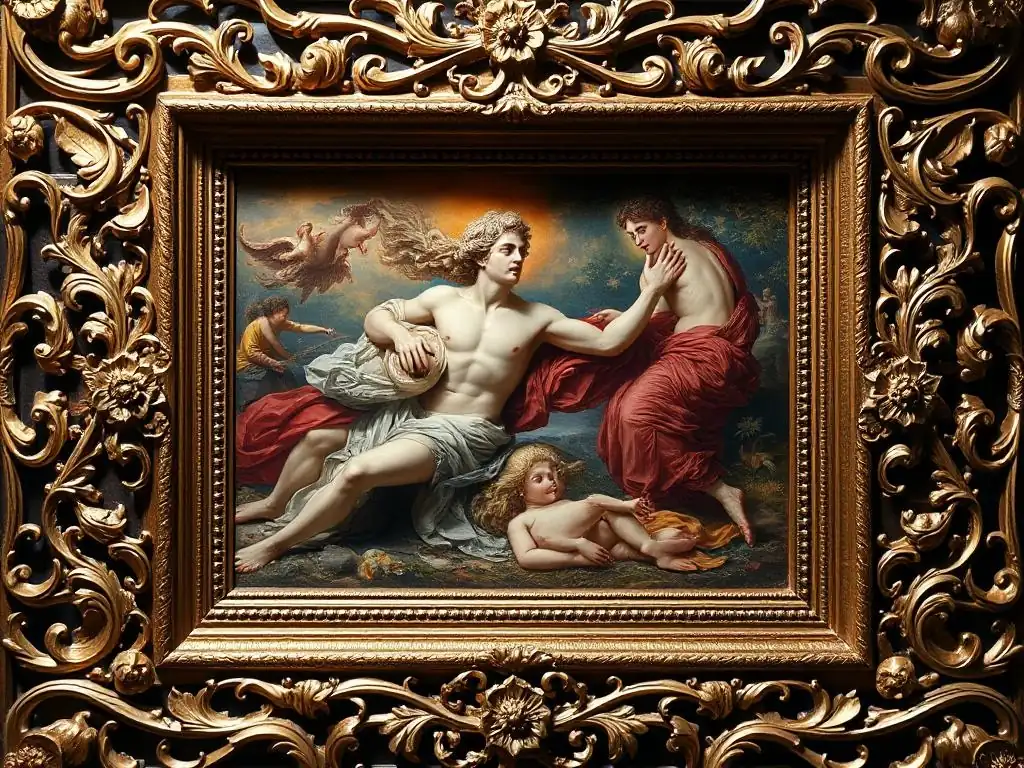
The myth of Apollo and Daphne, a tale of divine pursuit and virginal escape culminating in transformation, is perhaps one of the most frequently depicted episodes from Metamorphoses. Apollo, struck by Cupid's arrow, falls desperately in love with the nymph Daphne, who wishes to remain forever a virgin. As Apollo pursues her relentlessly, Daphne prays for help and is transformed by her father, the river god Peneus, into a laurel tree just as Apollo reaches her. This story offers a perfect blend of dramatic action, emotional intensity, and a visually striking transformation.
Artists across various periods have been captivated by this narrative. The moment of transformation, where bark encases skin and leaves sprout from fingers, provides a dynamic subject. The contrast between Apollo's passionate grasp and Daphne's desperate plea and subsequent vegetal change offers rich compositional possibilities. This narrative structure, combining chase, tension, and sudden, radical change, has made it a cornerstone of Ovid’s Metamorphoses art inspiration for sculptors and painters alike.
Analyzing Bernini's Apollo and Daphne Sculpture
Gian Lorenzo Bernini's marble sculpture Apollo and Daphne, completed between 1622 and 1625 and housed in the Galleria Borghese in Rome, is a quintessential Baroque interpretation of this myth. Bernini captures the absolute climax of the story: Apollo's hand is just about to touch Daphne's back, while her fingers are already sprouting laurel leaves and roots are gripping her feet. The sculpture is a marvel of dynamism and technical skill, depicting motion and metamorphosis simultaneously in static marble.
Bernini masterfully renders the textures of flesh, bark, and leaves, creating a sense of urgent motion and dramatic tension. Apollo's face is a mask of desperate desire, while Daphne's expresses terror and the beginning of her transformation. The spiraling composition forces the viewer to move around the sculpture, witnessing the myth unfold from multiple angles. This work is a prime example of how Ovid’s Metamorphoses art inspiration fueled the Baroque era's love for drama, movement, and emotional intensity.
Pollaiuolo's Apollo and Daphne: Depicting Dynamic Movement
Antonio del Pollaiuolo's painting Apollo and Daphne, created around 1470-1480 (now in the National Gallery, London), offers an earlier, Quattrocento Renaissance perspective. Compared to Bernini's singular, climactic moment, Pollaiuolo depicts the transformation within a landscape setting, showing Daphne with her legs already rooted and arms turning into branches, while Apollo stands close by, still in pursuit but witnessing the change.
Pollaiuolo emphasizes the linearity and anatomical precision characteristic of the Florentine Renaissance. The figures are dynamic, capturing the sense of the chase, though the transformation is shown in a slightly less dramatic, more illustrative manner than Bernini's. The landscape places the event in a natural context, highlighting the environmental aspect of the metamorphosis. This painting demonstrates how Renaissance artists utilized Ovid’s Metamorphoses art inspiration to combine classical narrative with developing interests in anatomy and landscape.
Pygmalion and Galatea: The Power of Art and Love
The story of Pygmalion, a sculptor who falls in love with his own creation, an ivory statue of a woman so perfect she surpasses mortal women, is another powerful narrative from Metamorphoses. Pygmalion prays to Venus, the goddess of love, to bring his statue to life, and she grants his wish. The statue, named Galatea in later versions of the myth, becomes a living woman, and they marry. This tale is unique in Ovid's collection as a story of transformation born not of divine wrath or desperate escape, but of love and the power of art itself.
This myth held particular appeal for artists, as it is a story about art and its ability to inspire love and even life. It touches upon the artist's relationship with their creation, the idealization of beauty, and the boundary between art and reality. The moment of transformation, when the cold ivory warms and softens into living flesh, is a visually compelling subject that explores the miracle of creation, making it a significant source of Ovid’s Metamorphoses art inspiration.
Gérôme's Pygmalion and Galatea: Bringing Sculpture to Life
Jean-Léon Gérôme's painting Pygmalion and Galatea, painted around 1890 (Metropolitan Museum of Art, New York), is a famous late academic interpretation. Gérôme depicts the precise moment the statue comes to life. Pygmalion embraces the statue, whose lower body is still marble but whose upper body and face are turning into warm, living flesh. The painting captures the wonder and tenderness of this miraculous transformation.
Gérôme, known for his detailed and polished style, emphasizes the contrast between the cool, smooth marble and the soft, living skin. The composition focuses tightly on the figures and their embrace, highlighting the intimacy of the moment. Behind them, other sculptures in Pygmalion's studio serve as a backdrop, emphasizing the artistic context of the story. Gérôme's work exemplifies how Ovid’s Metamorphoses art inspiration continued to fuel academic painters' interest in classical themes and dramatic moments, focusing on the narrative climax and emotional core.
Narcissus and Echo: Reflection, Vanity, and Loss
The tragic tale of Narcissus and Echo explores themes of unrequited love, vanity, and self-obsession, culminating in transformations that reflect the characters' fates. The nymph Echo is cursed to only repeat the last words spoken to her after Hera suspects her of delaying her while Zeus was with other nymphs. She falls in love with the beautiful youth Narcissus, who cruelly rejects her, causing her to waste away until only her voice remains.
Narcissus, in turn, is cursed by Nemesis to fall in love with his own reflection in a pool. Unable to grasp the object of his desire, he also wastes away and is transformed into the narcissus flower.
This double tragedy provides artists with powerful imagery: Echo's disembodied voice and physical decay, and Narcissus's self-absorbed gaze fixed upon his reflection. The visual metaphor of reflection, the beauty of the youth, and the tragic outcome of obsessive love have made this story a compelling subject for exploring psychological states and the destructive nature of vanity. It offers another rich vein of Ovid’s Metamorphoses art inspiration, particularly for artists interested in human psychology and the darker aspects of desire.
Caravaggio's Narcissus: A Study in Self-Obsession
Michelangelo Merisi da Caravaggio's painting Narcissus, created around 1597-1599 (Galleria Nazionale d'Arte Antica, Rome), is a striking and psychologically intense depiction. Caravaggio focuses solely on Narcissus, kneeling at the edge of a pool, utterly captivated by his own reflection. The composition is stark and dramatic, with Narcissus's body forming a circle with his reflection, emphasizing the closed loop of his self-absorption.
Caravaggio's signature use of dramatic chiaroscuro (strong contrasts between light and dark) highlights Narcissus's face and hands, drawing the viewer's attention to his intense gaze and the object of his fixation. The background is dark and minimal, isolating the figure and emphasizing his internal state. This painting is a powerful example of how Ovid’s Metamorphoses art inspiration could be used to create a psychological study, focusing on a single, defining moment of the myth with profound emotional depth.
Waterhouse's Echo and Narcissus: Romanticizing Tragic Love
John William Waterhouse's painting Echo and Narcissus, from 1903 (Walker Art Gallery, Liverpool), offers a Pre-Raphaelite interpretation that includes both figures. Echo is depicted watching from behind a tree with a look of longing and despair, while Narcissus is shown gazing intently at his reflection by the water's edge. Waterhouse places the figures in a lush, natural landscape, emphasizing the connection between the characters and their eventual transformations into natural elements.
Waterhouse's style is characterized by rich color, detailed rendering of nature, and a romanticized portrayal of mythological subjects. The painting captures the pathos of the story, highlighting the tragic unrequited love of Echo alongside Narcissus's fatal self-absorption. This work illustrates how Ovid’s Metamorphoses art inspiration was interpreted through the lens of late 19th and early 20th-century romanticism, focusing on emotional narrative and atmospheric beauty.
Actaeon: The Hunter Hunted, A Cautionary Tale
The myth of Actaeon is a cautionary tale about mortal transgression against divine power, resulting in swift and brutal punishment. Actaeon, a skilled hunter, accidentally stumbles upon the goddess Diana (Artemis) and her nymphs bathing naked in a secluded grove. Enraged at being seen unclothed by a mortal man, Diana splashes water upon him, transforming him into a stag. In his new form, Actaeon is then hunted down and killed by his own hounds, who do not recognize their master.
This story is particularly dramatic and violent, offering artists the opportunity to depict divine wrath, physical transformation, and the pathos of a tragic, undeserved death. The contrast between the hunter becoming the hunted provides a powerful visual and narrative irony. This brutal narrative served as a compelling source of Ovid’s Metamorphoses art inspiration for artists interested in depicting high drama, mythology, and the consequences of fate or divine power.
Titian's The Death of Actaeon: A Violent Depiction of Divine Retribution
Titian's painting The Death of Actaeon, from his series of mythological "poesies" for Philip II of Spain (circa 1559-1575, National Gallery, London), is a powerful and dynamic depiction of the myth's tragic climax. Titian shows Actaeon, already transformed into a stag's head and antlers on a human body, being attacked by his hounds. Diana is visible in the background, drawing her bow, emphasizing her role in his fate.
Titian's mastery of color and brushwork creates a sense of frantic movement and brutal violence. The dogs leap and tear at Actaeon, whose posture conveys desperate struggle. Diana's distant, yet purposeful, action underscores the inevitability of his doom. This painting is a prime example of how Ovid’s Metamorphoses art inspiration fueled Renaissance masters to create visually stunning and emotionally charged narratives, using myth to explore themes of fate, power, and tragedy.
Artistic Mediums: How Metamorphoses Has Been Represented Across Art Forms
Painting: From Renaissance Masters to Modern Interpretations
Painting has arguably been the most prolific medium for depicting scenes from Ovid's Metamorphoses. From the frescoes of Pompeii and Roman sarcophagi, which show early engagements with Ovidian themes, the tradition exploded during the Renaissance. Artists like Botticelli ( Primavera includes Daphne's transformation), Titian, Correggio, and Veronese created numerous works based on the myths, often for wealthy patrons who appreciated their classical education and the decorative appeal of the stories.
The Baroque era saw an even greater surge in Ovidian subjects in painting, as artists like Rubens, Poussin, and Bernini's contemporaries reveled in the dramatic narratives and opportunities for depicting dynamic movement and intense emotion. This continued through the Neoclassical period, which emphasized classical forms and subjects, and into the 19th century with artists like Waterhouse and the Symbolists who found allegorical depth in the tales. Even modern and contemporary painters continue to reference or reinterpret Ovidian myths, demonstrating the ongoing power of Ovid’s Metamorphoses art inspiration across diverse styles and periods.
Rubens' Landscape with Actaeon and Diana: A Baroque Interpretation
Peter Paul Rubens' Landscape with Actaeon and Diana (circa 1635-1640, Cleveland Museum of Art) is a notable Baroque example that integrates the mythological narrative into a vast landscape. While the figures of Actaeon and Diana are central, the painting emphasizes the natural setting of the hunt and the transformation. Actaeon is depicted mid-transformation, with antlers sprouting, as Diana confronts him.
Rubens' characteristic vigorous brushwork and rich colors bring the dynamic scene to life. The drama of the confrontation and the beginning of the metamorphosis are highlighted, but placed within a grand, almost overwhelming natural world. This approach shows how Ovid’s Metamorphoses art inspiration could be combined with other artistic interests, such as landscape painting, creating multifaceted works that capture both the mythological narrative and the beauty or power of nature.
Sculpture: Capturing Movement and Transformation in Three Dimensions
Sculpture, particularly in marble and bronze, proved an ideal medium for capturing the physical reality and dynamic process of Ovidian transformations. The challenge of rendering fluid change in solid material pushed sculptors to new heights of technical achievement. Ancient Roman sarcophagi often depicted scenes from Metamorphoses. The Renaissance saw renewed interest, though it was the Baroque period that truly embraced the potential for drama and movement.
Bernini's Apollo and Daphne is the most famous example, but other sculptors tackled Ovidian themes, depicting figures mid-flight, mid-change, or in moments of intense passion or despair. The three-dimensionality allowed viewers to experience the transformation from multiple viewpoints, emphasizing the physical struggle and the interplay between human and emerging non-human form. Sculpture provides a tangible expression of Ovid’s Metamorphoses art inspiration, making the fantastical transformations feel almost real.
Canova's Perseus with the Head of Medusa: A Neo-Classical Hero
Antonio Canova's Perseus with the Head of Medusa (original 1801, Vatican Museums) is a celebrated Neoclassical sculpture inspired by the Perseus myth, which is recounted in Ovid's Metamorphoses (Book IV). While Medusa's transformation into a Gorgon is a key element earlier in the myth, Canova's sculpture depicts the triumphant aftermath of Perseus's slaying of Medusa, holding her severed, still-terrifying head aloft.
Canova's style embodies Neoclassical ideals: idealized anatomy, heroic pose, and emotional restraint compared to the Baroque. The sculpture captures Perseus's victory and classical heroism. Although it depicts the result of a metamorphosis (Medusa's state), it draws directly from the Ovidian narrative and exemplifies how Ovid’s Metamorphoses art inspiration continued to fuel classical subject matter in later periods, focusing on themes of heroism and divine intervention.
Literature and Music: The Interplay Between Ovid's Text and Other Art Forms
The influence of Metamorphoses extends far beyond the visual arts, impacting literature and music significantly. Ovid's narrative style, his character development, and his thematic explorations have inspired countless writers, from Chaucer and Shakespeare, who directly reference or adapt his myths, to modern novelists and poets. The poem's structure, a collection of linked tales, has also served as a model.
In music, composers have drawn on the emotional and dramatic potential of Ovid's stories. Operas, ballets, symphonic poems, and smaller instrumental works have been composed based on specific myths like the tales of Orpheus, Actaeon, Apollo and Daphne, or the story of Phaethon. The inherent drama, character conflicts, and transformative elements provide rich material for musical interpretation, demonstrating the broad reach of Ovid’s Metamorphoses art inspiration across artistic disciplines.
Britten's Six Metamorphoses after Ovid: Musical Interpretations of Transformation
Benjamin Britten's Six Metamorphoses after Ovid, Op. 49 (1951) for solo oboe is a notable example of musical engagement with the text. Each of the six movements is titled after a character from Metamorphoses who underwent a transformation (Pan, Phaethon, Niobe, Bacchus, Narcissus, Arethusa). Britten uses the unique voice of the oboe to musically interpret the character and their specific transformation.
For instance, the movement "Narcissus" uses reflective, fragmented phrases, while "Phaethon" might evoke a sense of reckless energy or falling. This work demonstrates how Ovid’s Metamorphoses art inspiration can translate into abstract musical expression, using instrumental timbre and melodic shape to suggest narrative and character, offering a unique auditory perspective on Ovid's tales.
The Influence of Ovid's Metamorphoses on Contemporary Art
Modern Artists' Engagement with Ovidian Themes
While classical mythology might seem distant from contemporary art practices, Ovid's Metamorphoses continues to resonate with artists today. Contemporary artists engage with Ovidian themes not necessarily through literal depictions of ancient myths but by using the core concepts – transformation, identity, power, vulnerability, the relationship between humanity and nature – as a lens through which to explore modern issues. The idea of change, particularly forced or traumatic change, remains highly relevant.
Artists working in various media, including painting, sculpture, video art, performance art, and installation, find inspiration in Ovid's exploration of the unstable body, fluid identity, and the impact of external forces on the individual. The concept of metamorphosis serves as a powerful metaphor for contemporary experiences like technological change, genetic modification, gender identity, migration, or environmental degradation. This ongoing dialogue highlights the persistent power of Ovid’s Metamorphoses art inspiration to speak to new generations through relevant themes.
Metamorphoses as a Lens for Exploring Contemporary Issues
Contemporary artists often use Ovid's myths as a starting point to comment on societal issues. For example, the tales of divine punishment or the abuse of power can be reinterpreted to address modern forms of oppression or control. The transformations themselves can symbolize psychological shifts, societal pressures, or the impact of trauma. Artists might reference the myths obliquely, using titles or conceptual links rather than direct visual representation.
Consider artists who explore bodily autonomy or fluidity; Ovid's accounts of bodies changing shape, sometimes against the character's will, provide a historical and mythological context for these contemporary concerns. Similarly, environmental artists might look to the tales of humans turning into trees or other natural forms as a way to explore our connection to, or alienation from, the natural world. This demonstrates how Ovid’s Metamorphoses art inspiration provides a framework for allegorical exploration of complex modern challenges.
Ovid’s Enduring Legacy: Reinventing Classical Myths for a Modern Audience
The enduring legacy of Ovid's Metamorphoses in contemporary art lies in its capacity for reinvention. Modern artists do not simply illustrate Ovid; they reinterpret his stories, stripping them down to their core psychological or thematic elements and applying them to a contemporary context. This process keeps the myths alive and relevant, demonstrating their timelessness.
By engaging with Ovid, contemporary artists connect with a vast historical tradition while simultaneously offering fresh perspectives. They might challenge traditional interpretations, explore marginalized characters, or use the myths to critique power structures. This continuous process of adaptation and reinterpretation ensures that Ovid’s Metamorphoses art inspiration remains a dynamic force, proving that these ancient tales still possess the power to provoke thought and inspire creativity in the 21st century.
Analyzing the Enduring Connection: Ovid’s Metamorphoses & Art History
Tracing the Historical Influence of Ovid on Visual Arts
The influence of Ovid's Metamorphoses on visual arts can be traced as a continuous thread throughout Western art history, with peaks during periods of classical revival. Following the rediscovery and widespread dissemination of classical texts during the Renaissance, Metamorphoses quickly became a favored sourcebook for artists. This popularity continued unabated through the Baroque and Neoclassical eras, where mythological subjects were central to academic training and patronage.
While the 19th and early 20th centuries saw a diversification of subject matter, Ovidian themes persisted, particularly within academic and Symbolist circles. The mid to late 20th century saw less direct illustration but a continued conceptual engagement with the themes of transformation and identity. This long and rich history demonstrates that Ovid’s Metamorphoses art inspiration was not a fleeting trend but a foundational element of artistic education and creative practice for over five hundred years, leaving an indelible mark on the visual landscape.
How Ovid’s Metamorphoses Shaped Artistic Movements
Metamorphoses didn't just provide subjects; it arguably influenced the way artists depicted certain concepts. The need to visually represent transformation encouraged dynamism and narrative flow in painting and sculpture. The emotional intensity of Ovid's tales aligned perfectly with the goals of Baroque art, which sought to evoke strong feelings and capture dramatic moments. The focus on idealized forms and classical narratives in Metamorphoses fit seamlessly with the ideals of Neoclassicism.
Furthermore, the poem's collection of diverse stories provided a flexible framework that artists could adapt to different formats, from large fresco cycles illustrating multiple tales to single panel paintings focusing on a key scene, or sculptural groups capturing a pivotal moment. The complexity and variety of Ovid’s Metamorphoses art inspiration allowed it to be adapted and integrated into the stylistic and thematic preoccupations of successive artistic movements, proving its versatility and profound impact.
Conclusion: The Ongoing Dialogue Between Ovid's Text and Artistic Expression
Ovid's Metamorphoses stands as a monumental work of literature whose influence on art is both deep and broad. For centuries, it has provided artists with compelling narratives, vivid characters, and universal themes centered around the powerful concept of transformation. From the masters of the Renaissance and Baroque to contemporary artists exploring modern identities and challenges, the poem has served as a constant source of creative energy.
The dialogue between Ovid's text and artistic expression is ongoing. Artists continue to find new ways to interpret these ancient myths, reflecting the concerns and aesthetics of their own time. The enduring power of Ovid’s Metamorphoses art inspiration lies in its rich storytelling, its exploration of fundamental human experiences, and its central, infinitely adaptable motif of change. As long as artists seek to understand and depict the world around them, Ovid's tales of transformation will likely continue to offer fertile ground for creativity, ensuring its place as an eternal muse.
Frequently Asked Questions
What is Ovid's Metamorphoses and why is it so important for art?
Ovid's Metamorphoses is a collection of mythological stories focusing on transformations. Its importance lies in its rich imagery and narrative potential, serving as a constant source of inspiration for artists.
How has Ovid's Metamorphoses influenced art across different historical periods?
Throughout history, Metamorphoses has inspired artists from the Renaissance to modern times. Each era interprets the themes of transformation, love, and loss through their own artistic lens, creating diverse interpretations.
What specific stories from Metamorphoses are most often depicted in art?
Commonly depicted stories include Apollo and Daphne, Pygmalion, and Echo and Narcissus. These narratives offer dramatic visuals and compelling emotional themes, making them attractive subjects for artists.
What art forms have been most influenced by Ovid's Metamorphoses?
Metamorphoses has significantly influenced painting, sculpture, and even opera. The visual nature of the stories lends itself particularly well to these art forms, allowing for vivid depictions of mythological scenes.
Why does Ovid's Metamorphoses continue to be relevant as an artistic inspiration today?
The themes explored in Metamorphoses, such as change, identity, and the human condition, remain universal and timeless. This ensures its continued relevance, offering artists fresh perspectives and reinterpretations for modern audiences.
Final Reflection: Echoes of Myth, Whispers of Creation
Ovid's Metamorphoses isn't just a collection of ancient myths; it's a living, breathing testament to the enduring power of storytelling, a wellspring of inspiration that continues to resonate deeply within the artistic landscape of today. The transformations detailed within its pages—from Daphne fleeing Apollo to Narcissus consumed by his own reflection—continue to captivate and challenge artists across centuries and mediums, proving the timeless nature of human experience and the enduring power of myth.
The impact of Ovid's work on art is undeniable, a continuous dialogue between past and present. His narratives have provided a framework for countless masterpieces, shaping artistic movements and inspiring individual creators alike. The sheer breadth of interpretations, from the classical sculptures of antiquity to the surrealist paintings of the 20th century, underscores the malleability and enduring relevance of these ancient tales. The artist is nothing without the gift, but the gift is nothing without work.
– Emile Zola. This quote perfectly encapsulates the symbiotic relationship between Ovid's gift of narrative and the tireless work of artists who have transformed his words into visual masterpieces.
Consider the stories you've encountered within these pages. How have they resonated with you? What transformations have you witnessed in your own life, mirroring the metamorphoses detailed by Ovid? I urge you to seek out the artistic interpretations of these myths, to engage with them on a personal level, and to discover the enduring power of storytelling in shaping our understanding of ourselves and the world around us. Let Ovid's Metamorphoses be not just a source of artistic inspiration, but a catalyst for your own creative journey and a deeper understanding of the human condition.
Unleash Your Inner Artist: Bring Ovid's Myths to Life!
Thanks for exploring the enduring power of Ovid's Metamorphoses! You've now uncovered a rich source of inspiration for creative expression. Ready to translate these mythical tales into your own artistic vision?
- Illustrate your favorite myth: Choose a scene from Metamorphoses that resonates with you and create your own visual interpretation – a painting, drawing, sculpture, even a digital piece! Let your imagination run wild!
- Share your creation: Post your artwork online and tag #OvidInspiredArt – let's build a vibrant community celebrating this classical masterpiece.
- Explore other adaptations: Search for modern interpretations of Metamorphoses in film, music, or literature – how do other artists capture these timeless stories?
Which mythological transformation speaks most powerfully to your creative spirit, and why?