
The Bull: Apis, Fertility, and the Might of the Pharaoh

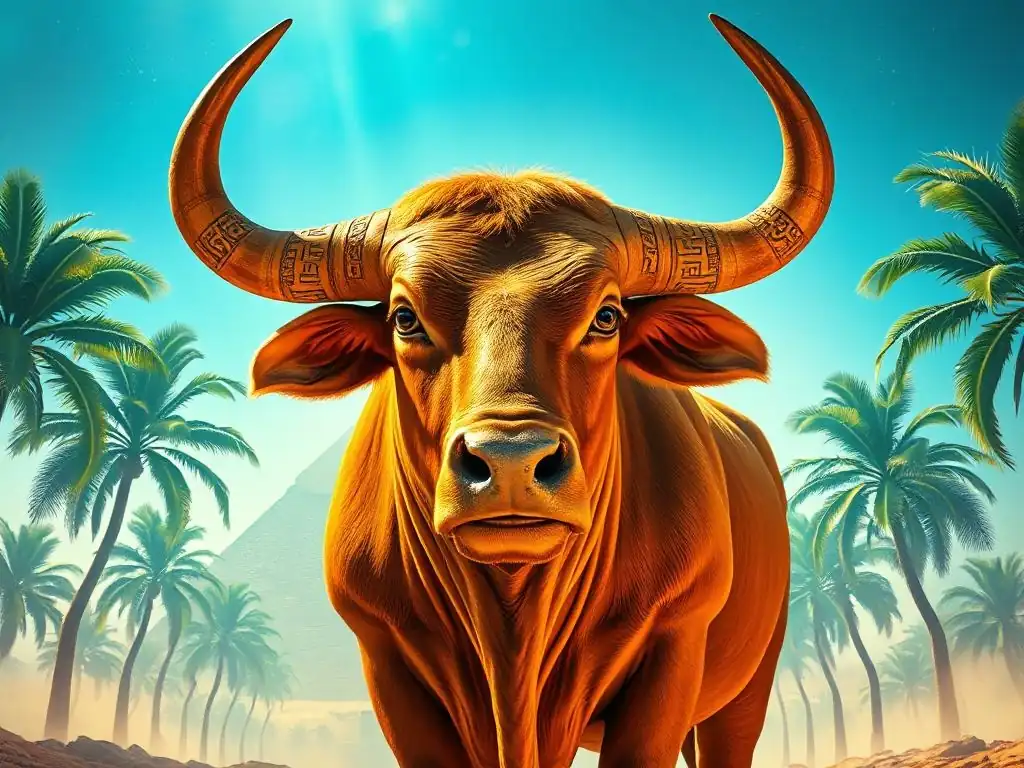
Welcome to Mythology and Legends, where the echoes of ancient stories resonate through time! Delve into the captivating world of myths and folklore, starting with a journey to the sands of Egypt. What secrets lie hidden within the powerful image of the bull? Unravel the mysteries of Ancient Egyptian bull symbolism meaning and discover how this sacred animal embodied fertility, strength, and the divine authority of the Pharaoh. Are you ready to uncover the profound significance of Apis and its enduring legacy?
- Introduction to Ancient Egyptian Bull Symbolism
- The Apis Bull: A Living God
- The Bull as a Symbol of Fertility and Power
- Ancient Egyptian Bull Deities Beyond Apis
- The Apis Bull's Burial and Afterlife
- Ancient Egyptian Bull Symbolism Meaning: A Deeper Dive
- Contrasting Bull Cults: Apis vs. Other Cultures
- The Legacy of the Bull in Modern Interpretations of Ancient Egypt
- Conclusion: The Lasting Impact of the Bull in Ancient Egypt
- Frequently Asked Questions
- Final Reflection: The Enduring Legacy of the Sacred Bull
- Unleash Your Inner Pharaoh: Connect with the Power of Apis
Introduction to Ancient Egyptian Bull Symbolism
Exploring the Significance of Bulls in Ancient Egyptian Culture
Bulls held a profound and multifaceted significance in Ancient Egyptian culture, far exceeding their role as mere livestock. They were powerful symbols intertwined with concepts of strength, fertility, kingship, and divinity. From the earliest dynastic periods, the image of the bull was invoked to represent the raw power and virility necessary for both agricultural prosperity and the might of the ruling pharaoh. This deep connection stemmed from observing the bull's physical prowess, its role in procreation within herds, and its indispensable contribution to farming through plowing.
This rich tapestry of meaning meant that bulls appeared prominently in religious beliefs, royal iconography, and daily life. The Ancient Egyptian bull symbolism meaning was understood across different social strata, serving as a visual shorthand for fundamental forces that governed their world. Whether depicted pulling plows, locking horns in combat, or represented as divine manifestations, the bull was a central figure embodying essential aspects of the Egyptian worldview.
The Enduring Power of the Bull Image in Mythology
The image of the bull maintained its powerful presence throughout the long history of Ancient Egypt, evolving yet consistently retaining core symbolic associations. In mythology, bulls were often linked to primeval creative forces and the strength of various deities. This enduring appeal speaks to the fundamental truths about power and vitality that the bull represented to the Egyptians. Its image transcended specific cults, appearing in various mythological narratives and artistic depictions across millennia.
The Ancient Egyptian bull symbolism meaning resonated deeply because it connected the earthly realm—agriculture, animal husbandry—with the divine and royal spheres. The bull's strength was seen as mirroring the pharaoh's ability to govern and protect, while its fertility mirrored the land's ability to yield crops, vital for survival. This potent blend of practical and symbolic significance ensured the bull's lasting legacy in Egyptian mythology and religious practice.
The Apis Bull: A Living God
Defining the Apis Bull: Unique Characteristics and Identification
The Apis bull, known in Egyptian as Hap, was the most revered of all sacred animals, considered a living manifestation, or ba, of the god Ptah, and later linked with Osiris and Sokar. Unlike ordinary cattle, the Apis bull was identified by a specific set of sacred markings, believed to indicate its divine nature. These markings were not random but followed a strict pattern that priests would diligently search for among herds.
Historical texts and depictions confirm these unique characteristics. An Apis bull was traditionally described as having a solid black coat with a white triangle on its forehead, a white crescent or scarab shape under its tongue, a white saddle shape on its back, and double hairs in its tail. The precise combination of these features was paramount; a single missing or incorrect mark meant the bull was not the true Apis. This meticulous identification process underscores the extreme importance placed on finding the legitimate divine animal.
The Sacred Life of the Apis Bull in Memphis
Once identified, the Apis bull was brought to Memphis, the ancient capital, where it lived a life of unparalleled luxury and veneration within the temple complex of Ptah. It was housed in special quarters, fed the finest food, and attended by a retinue of priests and servants. The Apis bull was not just an animal; it was treated as a god incarnate, a vital link between the divine realm and the earthly one.
Its presence in Memphis was central to the city's religious and political life. The bull participated in various processions and ceremonies, its movements and behavior often interpreted as divine omens. People traveled from across Egypt to witness the Apis bull and seek its blessings, highlighting its national significance. Its life was one of sacred duty, representing the vitality and power of the gods to the Egyptian people.
Apis Bull Cult Rituals and Ceremonies
The cult of the Apis bull involved elaborate rituals and ceremonies performed regularly in Memphis. These practices aimed to honor the living god and ensure the continued prosperity of Egypt. Daily offerings of food and incense were made, and hymns were sung to the bull. Priests would interpret its actions, such as whether it chose to enter one enclosure over another, as divine messages.
One of the most significant annual ceremonies was the procession of the Apis bull through the streets of Memphis, often during the inundation season, linking its fertility symbolism with the Nile's life-giving flood. The bull would be adorned with jewels and sacred regalia, paraded for the public to see and venerate. The death of an Apis bull was met with widespread mourning across the land, followed by an elaborate period of funerary rites and the immediate search for its successor, emphasizing the continuous nature of its divine presence.
The Bull as a Symbol of Fertility and Power
Bull Symbolism: Representing Male Virility and Procreation
At its core, much of the Ancient Egyptian bull symbolism meaning was tied to the bull's undeniable association with male virility and the power of procreation. Observing bulls in herds, their strength and role in siring offspring, naturally led the Egyptians to view them as potent symbols of fertility. This symbolism extended beyond animal reproduction to encompass human fertility and the general vitality of life itself.
This aspect of bull symbolism was particularly relevant in a society deeply concerned with lineage and continuation. Depictions of bulls in tombs and temples often subtly or overtly referenced this procreative power, connecting the deceased's hope for rebirth in the afterlife with the bull's endless cycle of generation. The bull was a powerful emblem of the life force, essential for the continuation of families and the nation.
Agricultural Abundance: Connecting Bulls to Harvest and Prosperity
Beyond procreation, bulls were indispensable to the agricultural backbone of Egypt, primarily for plowing fields. The heavy clay soil necessitated strong animals to prepare the land for planting after the Nile's annual inundation. The bull's strength was directly linked to the ability to cultivate the land, ensuring successful harvests and, consequently, the prosperity of the nation.
This practical role elevated the bull to a symbol of agricultural abundance and the sustenance of life. Scenes in tombs frequently depict bulls pulling plows, highlighting their crucial contribution to the food supply. The well-being of the bulls was seen as intrinsically linked to the health of the agricultural cycle. Thus, the Ancient Egyptian bull symbolism meaning encompassed not just raw power but also the vital connection between effort, fertility, and the resulting bounty that fed the population.
The Pharaoh and the Bull: Divine Kingship and Strength
The bull was one of the most ancient and enduring symbols used to represent the power and authority of the pharaoh. From the very beginnings of unified Egypt, the king was often depicted as a mighty bull trampling his enemies, symbolizing his overwhelming strength and dominance over chaos and foreign lands. This imagery reinforced the pharaoh's role as the protector of Egypt and the embodiment of cosmic order.
Perhaps the most famous early example is the Narmer Palette (dating to around 3100 BCE), which shows King Narmer as a powerful bull breaking through a wall and goring a fallen enemy. This potent image conveyed the pharaoh's physical might and his divine right to rule. The association of the pharaoh with the bull underscored the king's virility, essential for producing heirs and ensuring the continuity of the dynasty, further cementing the Ancient Egyptian bull symbolism meaning within the realm of kingship and divine authority.
Ancient Egyptian Bull Deities Beyond Apis
The Bull in the Cult of Osiris: Death and Rebirth
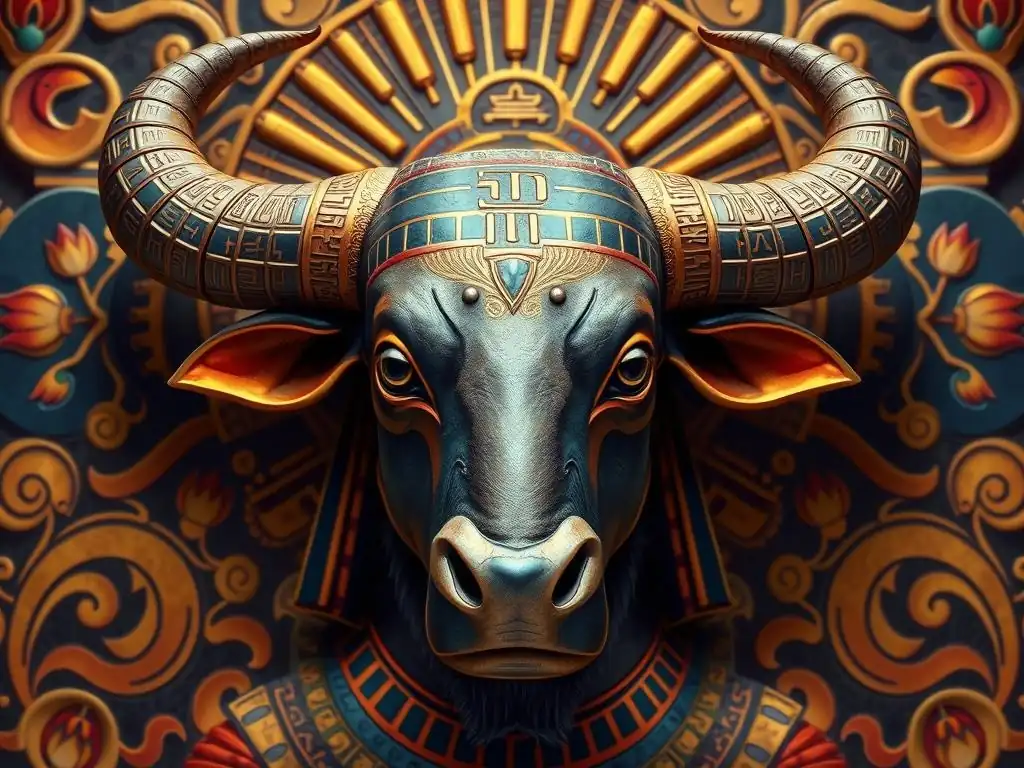
While the Apis bull was the most famous, bull symbolism extended to other deities, notably Osiris, the god of the afterlife, death, and rebirth. The bull was sometimes associated with Osiris, particularly in its role related to agricultural cycles—death (harvest) and rebirth (planting). The deceased Apis bull was syncretized with Osiris, becoming Osiris-Apis, a composite deity that later evolved into the Hellenistic god Serapis.
This connection highlighted the cyclical nature of life, death, and regeneration, mirroring the agricultural year and the journey of the soul in the afterlife. The strength and vitality of the bull were seen as forces that could overcome death and facilitate rebirth, aligning with Osiris's mythology. The Ancient Egyptian bull symbolism meaning in this context emphasized transition, regeneration, and the enduring power of life even after physical death.
Montu: The Falcon-Headed Bull God of War
Montu was an ancient falcon-headed god of war, whose power and ferocity were often symbolized by the bull. Originally a local deity of the Theban area, Montu rose to prominence during the Eleventh Dynasty when Theban princes unified Egypt. His association with the bull underscored his martial strength, aggression, and role as a divine protector who could overcome enemies.
Pharaohs, particularly those from Thebes like the rulers of the Twelfth Dynasty, often invoked Montu before battle, seeking his bullish strength and ferocity. Royal epithets sometimes referred to the pharaoh as a "mighty bull," directly linking the king's martial prowess to Montu's bovine aspect. This aspect of Ancient Egyptian bull symbolism meaning was specifically tied to military might, victory, and the protection of the state through force.
Beyond Apis, Osiris, and Montu, bull imagery appeared in connection with other deities, often representing aspects of their power or domain. The celestial bull was sometimes associated with the sky god, symbolizing the heavens or the power of storms. Bulls were also linked to the earth god Geb, representing the fertile ground itself.
Even goddesses could have bovine connections; Hathor, the goddess of love, beauty, music, motherhood, and joy, was frequently depicted with cow horns and ears, or even as a cow herself. While primarily a cow goddess, her association with fertility and nurturing life shares thematic links with the bull's procreative power. These diverse connections illustrate how deeply ingrained Ancient Egyptian bull symbolism meaning was across the entire pantheon, representing various facets of divine power and the natural world.
The Apis Bull's Burial and Afterlife
The Serapeum: Sacred Burial Ground of the Apis Bulls
Upon its death, the Apis bull was granted a burial befitting a god. Its body was transported to the Serapeum at Saqqara, a vast underground necropolis specifically dedicated to the interment of the sacred Apis bulls. This complex network of tunnels and chambers served as the final resting place for generations of these divine animals, a testament to their immense religious significance.
Archaeological excavations at the Serapeum have revealed enormous sarcophagi, many weighing over 60 tons, carved from single blocks of granite or basalt, placed within individual chambers lining the tunnels. While the exact number varies based on interpretation of fragmented evidence, it is believed that around 64 bulls were buried here over a period spanning roughly 1400 years, from the reign of Amenhotep III (circa 1390-1352 BCE) to the Ptolemaic period. The sheer scale and grandeur of the Serapeum underscore the extraordinary reverence paid to the deceased Apis bulls.
Mummification and Rituals Performed for Deceased Apis Bulls
Following its death, the body of the Apis bull underwent a complex process of mummification, similar to that performed for royalty and high-status individuals. This elaborate ritual aimed to preserve the bull's body, facilitating its transition into the afterlife and its identification with Osiris, the lord of the dead. The mummification process involved removing internal organs (which were then placed in canopic jars, sometimes found in the burial chamber), drying the body with natron, and wrapping it in linen bandages.
Accompanying the mummification were extensive funerary rituals and offerings designed to ensure the bull's successful journey to the next world. Priests performed purification rites, recited spells from funerary texts, and deposited grave goods within the burial chamber. These rituals were crucial for the bull's transformation into Osiris-Apis, a divine being in the afterlife, and for the continuity of the Apis cult on Earth through the discovery of a new living bull.
The Journey of the Apis Bull into the Afterlife
The death and burial of the Apis bull were not seen as an end but rather a transition. Through the elaborate mummification and funerary rituals, the bull was believed to merge with Osiris, the god of the underworld and resurrection. This syncretism created the deity Osiris-Apis, representing the deceased Apis bull's divine status in the afterlife and its continued connection to the cycles of life and death.
The Serapeum itself was considered a sacred gateway, facilitating the bull's journey. The belief was that the deceased Apis, now Osiris-Apis, continued to exert influence and power from the afterlife, ensuring the fertility of the land and the well-being of Egypt. The search for the new living Apis bull was initiated almost immediately after the burial, symbolizing the continuous cycle of life and the enduring presence of the divine bull on Earth.
Ancient Egyptian Bull Symbolism Meaning: A Deeper Dive
Interpreting the Ancient Egyptian bull symbolism meaning
Interpreting the Ancient Egyptian bull symbolism meaning requires understanding its multifaceted nature, encompassing physical power, procreative force, agricultural necessity, royal authority, and divine manifestation. The bull was not a static symbol but one whose meaning shifted slightly depending on the context—whether depicted on a temple wall, in a tomb painting, or embodied by the living Apis bull.
At its core, the bull represented potent energy and vitality. This energy could be harnessed for benevolent purposes, such as plowing fields or protecting the kingdom, or it could represent untamed, ferocious power. The duality reflected the Egyptians' understanding of the forces of nature and kingship—powerful entities that required reverence and control.
The bull as a symbol of protection and stability
Beyond raw strength and fertility, the bull also served as a powerful symbol of protection and stability. Just as a bull could defend its herd, the pharaoh, symbolized by the bull, protected Egypt from internal and external threats. The image of the bull trampling enemies or standing guard reinforced the idea of a strong, stable ruler who maintained order ( maat) against the forces of chaos ( isfet).
The stability aspect is also tied to the agricultural cycle; the reliable strength of the bull in plowing contributed directly to the stability of the food supply, a cornerstone of Egyptian society. Thus, the Ancient Egyptian bull symbolism meaning extended to the fundamental security and well-being of the state and its people, guaranteed by both divine and earthly power.
The Bull in Art and Architecture: Examples of Depictions
The bull's significance is vividly captured in Ancient Egyptian art and architecture across various periods. Examples abound on temple walls, tomb paintings, stelae, and even small amulets. The Narmer Palette, mentioned earlier, is a prime example of early dynastic art using the bull to symbolize royal power.
Later examples include depictions of pharaohs offering sacrifices to the Apis bull in temple reliefs, scenes of agricultural labor showing bulls plowing fields in New Kingdom tombs (like those in the Valley of the Nobles), and the monumental sarcophagi found in the Serapeum, which are architectural testaments to the bull's sacred status. These artistic representations consistently reinforce the varied Ancient Egyptian bull symbolism meaning, from divine strength to agricultural necessity and royal authority.
Contrasting Bull Cults: Apis vs. Other Cultures
Comparing Egyptian Bull Worship to Minoan Bull-Leaping
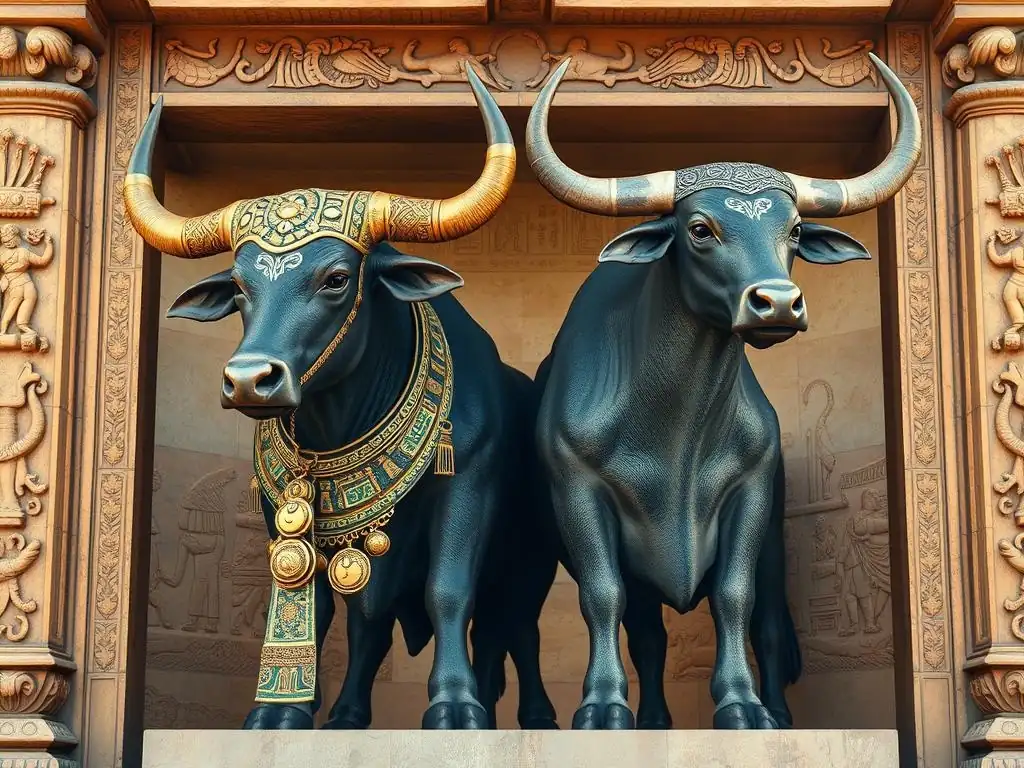
While bull veneration existed in various ancient cultures, the Egyptian Apis cult differed significantly from practices like the Minoan bull-leaping on the island of Crete (dating roughly 2700-1450 BCE). The Minoan practice, depicted in frescoes at Knossos, involved acrobats leaping over the backs of bulls, possibly as a religious ritual, a sport, or a rite of passage.
In contrast, the Egyptian Apis cult focused on identifying, housing, and venerating a single, divinely marked living animal as a manifestation of a god. The interaction was one of reverence and offering, not physical engagement in a dangerous performance. The Ancient Egyptian bull symbolism meaning in the Apis cult was centered on divine presence and continuity, whereas Minoan bull-leaping might have emphasized human skill, bravery, and perhaps a symbolic mastery over powerful natural forces.
Parallels and Differences with Mesopotamian Bull Imagery
Mesopotamian cultures also held the bull in high regard, often associating it with strength, power, and deities. The Lamassu, winged human-headed bulls or lions, guarded the entrances to palaces in Assyria (circa 9th-7th centuries BCE), symbolizing protective power. The Bull of Heaven appears in the Epic of Gilgamesh, representing a force of nature or divine punishment.
Parallels exist in the association of the bull with power and divinity. However, the specific focus on identifying a single living animal with precise markings as the embodiment of a god, as seen with the Egyptian Apis, is less prominent in Mesopotamian practices. Mesopotamian bull imagery often represented divine attributes or protective spirits rather than a god's ba residing within an animal. The Ancient Egyptian bull symbolism meaning thus included a unique concept of animal divinity that set it apart.
The Evolution of Bull Symbolism Across Ancient Civilizations
Tracing the evolution of bull symbolism across ancient civilizations reveals both shared roots in observing the animal's physical characteristics and divergent paths shaped by unique cultural and religious contexts. Early agricultural societies universally recognized the bull's strength and fertility. This led to widespread associations with earth, sky, storms, and procreative forces.
However, the specific rituals, mythological narratives, and artistic representations varied significantly. The Egyptian Apis cult developed a highly sophisticated system of animal divinity and burial, culminating in the vast Serapeum. Minoan culture developed a unique ritualistic interaction with bulls. Mesopotamian cultures integrated bull imagery into complex protective and mythological figures. This comparison highlights how the fundamental Ancient Egyptian bull symbolism meaning, while sharing some universal threads, developed into a distinct and deeply ingrained part of their religious and royal ideology.
The Legacy of the Bull in Modern Interpretations of Ancient Egypt
The Bull as a Symbol of Ancient Egyptian Civilization in Popular Culture
The powerful image of the bull, particularly the Apis bull, has endured and is often used as a symbol representing Ancient Egyptian civilization in popular culture. Its distinctive appearance and association with divine power make it instantly recognizable. From museum exhibits to historical documentaries and fictional works, the bull serves as a visual motif evoking the strength and mysticism of ancient Egypt.
While sometimes generalized or simplified, the popular representation often retains core elements of the Ancient Egyptian bull symbolism meaning: power, divinity, and connection to the pharaohs. The monumental sarcophagi of the Serapeum, for instance, are frequently featured in explorations of Egyptian archaeology, captivating modern audiences with the scale of reverence shown to these sacred animals.
The Enduring Appeal of Ancient Egyptian Bull Symbolism
The appeal of Ancient Egyptian bull symbolism meaning lies in its potent combination of earthly power and divine mystery. The idea of a god walking the earth in the form of an animal is a compelling concept. Furthermore, the symbols of strength, fertility, and protection embodied by the bull are universal themes that resonate across cultures and time.
The meticulous detail involved in identifying the Apis bull, the grandeur of its temple life, and the solemnity of its burial rites all contribute to the fascination. It offers a window into a worldview where the divine permeated the natural world and where animals could be revered as sacred beings, providing a rich subject for study and contemplation.
Modern Interpretations of the bull's significance
Modern interpretations of the bull's significance in Ancient Egypt often delve into the sociological, economic, and religious factors that contributed to its elevated status. Scholars analyze tomb paintings and temple inscriptions to understand the daily life and ritual practices surrounding the Apis cult. Archaeological findings from the Serapeum provide concrete evidence of the resources and effort dedicated to the bulls' sacred status.
Beyond academic study, the Ancient Egyptian bull symbolism meaning is explored in various creative works, sometimes highlighting its link to kingship and power, at other times focusing on the more esoteric aspects of animal divinity and the afterlife. These interpretations, while filtered through modern perspectives, continue to draw from the rich historical record left by the Egyptians, ensuring the bull's legacy as a powerful symbol of their civilization.
Conclusion: The Lasting Impact of the Bull in Ancient Egypt
The bull was far more than just an animal in Ancient Egypt; it was a cornerstone of their symbolic language, deeply intertwined with their religion, economy, and concept of kingship. From the earliest depictions of the pharaoh as a mighty bull to the veneration of the living Apis as a divine manifestation, the Ancient Egyptian bull symbolism meaning permeated every level of society.
Representing fertility, agricultural abundance, raw power, protection, and even the cycle of death and rebirth, the bull served as a potent emblem of vital forces. The elaborate cult of the Apis bull in Memphis and the monumental Serapeum at Saqqara stand as enduring testaments to the extraordinary reverence paid to this sacred animal. The legacy of the bull in Ancient Egypt is a powerful reminder of how deeply symbolic the natural world was to this ancient civilization and how animal forms could embody the most profound divine and earthly powers.
Frequently Asked Questions
What was the significance of the bull in Ancient Egyptian mythology?
The bull, particularly the Apis bull, held immense significance representing fertility, strength, and divine power. It was often associated with the pharaoh and the continuation of royal lineage.
How was the Apis bull identified and chosen?
The Apis bull wasn't just any bull; it had to meet specific, rare criteria. These included unique markings like a white diamond on its forehead and a vulture image on its back, indicating its divine nature.
What role did the Apis bull play in religious ceremonies?
The Apis bull was a central figure in numerous religious ceremonies. Its presence was believed to ensure the fertility of the land and the prosperity of the kingdom, with elaborate processions and sacrifices performed in its honor.
What happened to the Apis bull upon its death?
Upon its death, the Apis bull was treated with the utmost respect. It was mummified and buried in a lavish sarcophagus in the Serapeum, a dedicated burial complex reflecting its divine status and ensuring eternal life.
How did the symbolism of the bull relate to the pharaoh's power?
The bull's strength and virility were directly linked to the pharaoh's authority. By associating himself with the Apis bull, the pharaoh reinforced his image as a powerful ruler and a protector of the people, blessed with divine favor.
Final Reflection: The Enduring Legacy of the Sacred Bull
The enduring power of the Apis bull in ancient Egyptian culture remains strikingly relevant today. Its symbolism, far from being a relic of the past, speaks to our ongoing fascination with power, fertility, and the divine connection between the earthly and the spiritual. The bull's image continues to resonate, reminding us of the enduring human need to find meaning and stability in a complex world.
The impact of Apis worship on the social and cultural fabric of ancient Egypt was profound, shaping religious practices, artistic expression, and even political power structures. The careful selection, veneration, and elaborate burial rituals surrounding the sacred bull highlight the deeply held beliefs of the time. The bull was not merely an animal; it was a living manifestation of the god Apis, a conduit through which the divine interacted with the human world.
This quote encapsulates the profound spiritual significance attributed to the Apis bull, a significance that continues to inspire awe and wonder in modern audiences.
Consider, for a moment, the enduring power of symbolism in your own life. What images, objects, or ideas hold deep meaning for you? How do these symbols shape your understanding of the world and your place within it?
I invite you to explore the enduring legacy of the Apis bull not just as a historical artifact, but as a powerful lens through which to examine the enduring human need for meaning and connection to something greater than ourselves. Let the story of the sacred bull inspire you to reflect on the symbols that shape your own life and the enduring power of belief.
Unleash Your Inner Pharaoh: Connect with the Power of Apis
Thanks for delving into the fascinating world of Apis, the sacred bull! You've now gained insights into ancient Egyptian beliefs and the enduring power of this legendary creature. Ready to take your exploration further?
- Craft your own Apis-inspired artwork: Let the majestic bull inspire your creativity – a drawing, painting, or even a short story! Channel the energy of Apis and see what emerges.
- Share this article with fellow history buffs: Spread the knowledge and spark discussions about the fascinating symbolism of Apis. Let's build a community of mythology enthusiasts!
- Explore further research on ancient Egyptian religious practices: Delve deeper into the fascinating complexities of ancient Egyptian beliefs!
What other symbols of ancient Egypt resonate with you most, and why? Let's discuss!