
The World of the Sagas: Geography, Navigation, and Travel

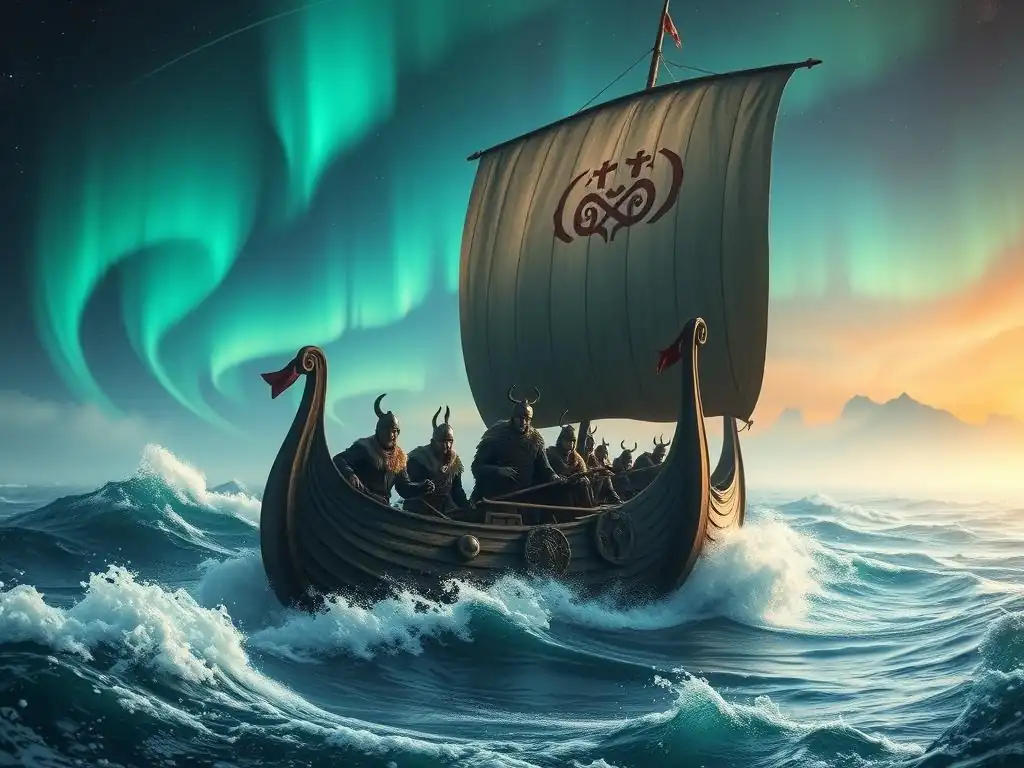
Welcome, intrepid explorer!
Delve into the enchanting world of Mythology and Legends, where ancient tales whisper secrets across time. Ever wondered how the legendary Vikings conquered the seas and navigated the vast, unforgiving oceans? Prepare to be amazed as we unravel the mysteries of their Viking seafaring techniques and routes, a cornerstone of Norse and Celtic lore. What were the secrets to their navigational prowess, and how did they shape the world we know? Let's embark on a journey to uncover the truth...
Viking Seafaring Techniques and Routes: An Overview
Viking seafaring was not merely a means of travel; it was a cornerstone of their society, enabling exploration, trade, and warfare on an unprecedented scale across Northern Europe and beyond. The sophistication of Viking seafaring techniques and routes allowed them to traverse vast distances, from the shallow coastal waters of Scandinavia to the treacherous open ocean of the North Atlantic. Their mastery of the waves stemmed from a deep understanding of their environment, combined with practical knowledge passed down through generations.
Unlike earlier seafarers who often hugged coastlines, the Vikings were among the first in the region to undertake deliberate, long-distance voyages across open water, a feat that required remarkable skill and courage. These complex Viking seafaring techniques and routes underpinned their expansion and are richly detailed in the sagas and archaeological records.
The extensive network of Viking seafaring techniques and routes stretched across a vast geographical area. In the west, routes extended to the British Isles, Ireland, Iceland, Greenland, and eventually North America (Vinland), often following the seasonal patterns of winds and currents. These voyages across the North Atlantic, covering distances of over 1,000 nautical miles to Iceland and further to Greenland, were remarkable feats of navigation.
To the east, Viking routes, often referred to as the "Eastern Way" or Austervegr, followed rivers and lakes deep into Eastern Europe, reaching the Byzantine Empire (Miklagard) and the Caspian Sea. This required adapting their longships for river travel and portaging between waterways, demonstrating the versatility of their Viking seafaring techniques and routes. Archaeological finds, such as coin hoards containing Islamic dirhams and Byzantine solidi, provide tangible evidence of the extensive trade networks facilitated by these voyages.
- How did the Vikings navigate the open sea without modern instruments?
- What types of ships did the Vikings use for their seafaring voyages?
- What were some of the major Viking seafaring routes?
- How did Viking geography and knowledge of the lands they visited impact their voyages?
- What role did storytelling and sagas play in preserving Viking seafaring knowledge?
Frequently Asked Questions
Vikings relied heavily on celestial navigation, using the sun, stars, and even observing bird flight patterns. They also used land-finding techniques and a possible, though debated, sunstone.
What types of ships did the Vikings use for their seafaring voyages?
The Vikings primarily used longships for raiding and warfare, known for their speed and maneuverability. They also utilized knarrs, sturdier cargo ships, for trade and exploration across vast distances.
What were some of the major Viking seafaring routes?
Significant routes included navigating the North Atlantic to Iceland, Greenland, and North America. They also sailed eastward through the rivers of Russia towards the Black and Caspian Seas for trade and conquest.
How did Viking geography and knowledge of the lands they visited impact their voyages?
Vikings possessed a detailed understanding of coastal geography, utilizing this knowledge to navigate safely and identify resources. Their sagas also indicate a keen awareness of prevailing winds and currents, crucial for efficient travel.
What role did storytelling and sagas play in preserving Viking seafaring knowledge?
Sagas served as a vital means of transmitting navigational knowledge and historical accounts of voyages. They contained practical details about routes, landmarks, and weather, preserving seafaring traditions across generations.
Final Reflection: Charting a Course Through Time and Tide
The Viking Age, far from being a relic of the past, continues to resonate in our understanding of exploration, adaptation, and the enduring human spirit. Their mastery of seafaring, detailed in this article, wasn't merely about conquest; it was a testament to ingenuity, resilience, and a profound connection with the natural world. Their voyages, meticulously planned and executed, fundamentally shaped the political and cultural landscape of Europe and beyond.
The impact of Viking navigation and seafaring extends far beyond the historical record; it continues to inspire awe and wonder. Their ability to navigate by the stars, currents, and the subtle cues of nature remains a remarkable feat of human achievement. Their ships, expertly crafted and adaptable to diverse conditions, represent a pinnacle of early shipbuilding technology. The sea was their highway, the stars their guide, and the wind their steed.
This simple phrase encapsulates the profound relationship Vikings held with the ocean, a relationship that continues to fascinate and inform modern maritime studies.
Consider the ingenuity of their longships, their adaptability to diverse conditions, and the courage it took to venture into the unknown. These are not just historical facts; they are lessons in human potential, resourcefulness, and the power of ambition. You too possess the capacity to navigate your own challenges, to chart your own course, and to leave your own indelible mark on the world. Let the legacy of Viking seafaring inspire you to embrace the unknown, to push your boundaries, and to discover your own unique path.
Chart Your Own Viking Voyage!
Thanks for exploring the fascinating world of Viking sagas and their incredible journeys! You've gained valuable insights into their navigational skills and the landscapes that shaped their epic tales. Now it's time to put that knowledge to the test!
- Craft your own Viking saga map: Imagine a new adventure, charting a course across the known (and unknown!) waters. Sketch out a route, noting key landmarks and potential challenges. Let your imagination run wild!
- Share your imagined voyage: Post your map on social media and tag us #VikingVoyage so we can see your creative interpretations of this incredible era.
- Explore further: Delve deeper into the historical context of Viking exploration – research specific sagas that sparked your interest.
What undiscovered lands would your Viking explorers set sail for? Let's hear your ideas in the comments!