
The Symbolism of Animal Companions in World Mythology

Welcome, seeker of ancient wisdom!
Delve into the rich tapestry of "Mythology and Legends," where we unravel the captivating narratives that have shaped civilizations. Prepare to embark on a journey exploring the profound symbolism woven into the tales of yore. Ever wondered about the deep connection between humans and the creatures of the wild in these ancient stories? Today, we'll unearth the hidden meanings behind animal companions mythology symbolism meanings, revealing how these loyal beasts reflect our deepest hopes, fears, and aspirations. What secrets do they hold about our own humanity? Continue reading to discover...
- Animal Companions in Mythology: An Introduction to Symbolic Meanings
- The Significance of Animal Companions: A Cross-Cultural Perspective
- Decoding the Symbolism: What Animal Companions Represent
- Animal Companions as Psychopomps and Guides to the Underworld
- The Enduring Legacy of Animal Companion Symbolism
- Conclusion: The Profound Meanings Behind Mythological Animal Companions
-
Frequently Asked Questions
- What role did animal companions typically play in mythological narratives?
- What are some common symbolic meanings associated with different animal companions in mythology?
- How did the depiction of animal companions vary across different cultures and mythologies?
- How did the presence of animal companions impact the narrative arc and character development of mythological figures?
- What is the lasting impact of the symbolism of animal companions from mythology on contemporary society?
- Final Reflection: Unraveling the Enduring Power of Animal Companions in Myth
- Unveil Your Inner Animal Guide: Dive Deeper into Mythology
Animal Companions in Mythology: An Introduction to Symbolic Meanings
Exploring the Universal Appeal of Animal Companions in Myth
Across diverse cultures and epochs, the presence of animal companions in mythology is a recurring and powerful motif. These creatures are far more than mere background elements; they are integral to the narratives, embodying profound symbolic meanings and often serving as reflections of human characteristics, divine attributes, or cosmic forces. The deep connection between humans and animals is ancient, predating recorded history, and this bond is vividly captured in the myths that shaped early worldviews. Exploring the universal appeal of these animal companions mythology symbolism meanings reveals a shared human intuition about the natural world and its spiritual dimensions.
From loyal protectors accompanying heroes on perilous quests to wise guides offering cryptic advice, the roles of animal companions are varied and significant. Their presence often highlights key themes such as nature's power, the cycle of life and death, or the divine presence in the world. Understanding the symbolism of animal companions in mythology provides insight into the values, fears, and aspirations of the cultures that created these stories, showcasing how animals were perceived not just as creatures, but as potent symbols imbued with spiritual or magical power.
Defining Animal Companions in Mythological Contexts
In mythological contexts, an animal companion is typically a non-human creature that shares a significant relationship with a deity, hero, or important figure. This relationship is often one of partnership, service, or symbolic representation, going beyond simple domestication or prey-predator dynamics. These companions frequently possess extraordinary abilities, exhibit human-like intelligence or emotions, or embody specific virtues or vices. The meanings of animal companions in myths are derived from observed animal behaviors, perceived natural powers, and cultural beliefs about the spiritual world.
Unlike random animals appearing in a story, mythological companions are chosen, fated, or uniquely connected to their human or divine counterparts. They serve as extensions of their associated figure's power or personality, or act as intermediaries between different realms – the mundane and the divine, the living and the dead. Studying the specific roles and animal companions mythology symbolism meanings helps decode the deeper layers of meaning embedded within ancient narratives, revealing how these creatures function as powerful narrative devices and carriers of cultural wisdom.
The Significance of Animal Companions: A Cross-Cultural Perspective
Ancient Egypt: Sacred Animals and Their Divine Associations
Ancient Egyptian civilization held a profound reverence for animals, viewing many species as sacred manifestations of the divine. This deep respect was woven into their religious practices, art, and mythology. Animals were not merely symbols of gods, but often seen as the gods themselves in animal form or as possessing spirits closely linked to deities. The symbolism of animal companions in Egyptian mythology is intricate, with specific animals tied to particular gods and cosmic principles, reflecting the Egyptians' detailed understanding of nature and their spiritual world.
This close association meant that harming certain animals could be considered a grave offense, potentially incurring divine wrath. Temples often housed sacred animals, cared for by priests, who were believed to embody the spirit of a deity. The animal form was seen as one of the ways a god could interact with the mortal realm, making these creatures potent intermediaries and symbols of divine power and presence within the world. Understanding this context is crucial to grasping the animal companions mythology symbolism meanings in Egyptian beliefs.
The Scarab Beetle: Rebirth and Transformation
The scarab beetle, specifically Scarabaeus sacer, held immense symbolic importance in ancient Egypt, primarily associated with rebirth, regeneration, and the cycle of the sun. Egyptians observed the beetle rolling a ball of dung across the ground, an act they likened to the god Khepri rolling the sun disc across the sky each day. Khepri, often depicted as a scarab or a man with a scarab head, was the god of the morning sun and creation, representing the dawn and the renewal of life.
Scarabs were widely used as amulets and seals, believed to offer protection and grant the wearer the power of rebirth. They were frequently placed on the chests of the deceased during burial rituals, intended to protect the heart and ensure safe passage and regeneration in the afterlife. This pervasive use highlights the scarab's central role in Egyptian beliefs about life, death, and the eternal cycle, making it a powerful example of animal companions mythology symbolism meanings tied directly to core religious concepts.
Greek Mythology: Beasts as Gods' Messengers and Allies
In Greek mythology, animals frequently interact with gods and heroes, often serving as messengers, disguises, or powerful allies. While not always "companions" in the sense of constant partners, certain animals are strongly associated with specific deities, embodying their power or acting on their behalf. The symbolism of animal companions in Greek mythology often reflects the attributes of the associated god or the natural characteristics of the animal itself, interpreted through a narrative lens.
Zeus, the king of the gods, frequently interacted with animals, sometimes transforming into them (like the swan or bull) for his amorous pursuits, or employing them as his personal symbols and messengers. Other gods also had strong animal associations, such as Athena with the owl (wisdom) or Poseidon with the horse and bull (power, seismic activity). These associations underscore the significant role animals played in conveying divine will and power within the Greek pantheon and its stories.
The Eagle: Zeus's Symbol of Power and Authority
The eagle was the principal bird and symbol of Zeus, the ruler of Mount Olympus. Known for its strength, speed, and ability to soar high above the earth, the eagle perfectly embodied Zeus's supreme power, authority, and dominion over the sky. It was often depicted carrying Zeus's thunderbolts or perched beside him, serving as a constant visual reminder of his regal status and might. The eagle was seen as his personal messenger, capable of traversing the vast distances between the heavens and the mortal world.
One famous myth tells how Zeus's eagle carried Ganymede, a beautiful young man, from earth to Mount Olympus to become the cupbearer of the gods. This act further cemented the eagle's role as an agent of Zeus's will and a symbol of divine favor or intervention. The eagle's association with Zeus is a prime example of how animal companions mythology symbolism meanings in Greek myth are directly linked to the attributes and narratives of the gods they represent.
Norse Mythology: Familiars and Power Animals of the Gods
Norse mythology is rich with powerful animals that serve as companions, mounts, or symbolic extensions of the gods. These creatures often possess supernatural abilities and play crucial roles in the cosmic order and the destinies of the gods. The symbolism of animal companions in Norse mythology is deeply intertwined with themes of strength, wisdom, fate, and the cycle of the cosmos, reflecting the harsh and often wild environment in which these myths originated.
Gods like Odin, Thor, and Freyja each have iconic animal companions or mounts that are central to their identity and power. Odin's ravens, Huginn and Muninn, his wolves, Geri and Freki, and his eight-legged horse, Sleipnir, are perhaps the most famous examples, each carrying significant symbolic weight and actively participating in Odin's activities. These animals are not just pets but powerful beings in their own right, highlighting the importance of the natural world and its creatures within the Norse worldview.
The Wolves Geri and Freki: Odin's Companions Representing Greed and Ravenousness
Odin, the Allfather, is famously accompanied by two wolves named Geri and Freki. Their names translate roughly to "the ravenous" or "greedy one," reflecting their inherent nature as wolves. In Völuspá, a key poem in the Poetic Edda, it is mentioned that Odin feeds all his meat to his wolves, as he himself only consumes wine. This detail emphasizes the wolves' constant hunger and Odin's unique relationship with them.
Geri and Freki symbolize more than just Odin's connection to the wild; they represent aspects of the god himself or his domain. Wolves in Norse culture were often associated with battle, scavenging, and sometimes chaos. Their presence alongside Odin, a god of war, death, wisdom, and magic, links him to these primal forces. They are constant companions, accompanying him even into battle, embodying the fierce, consuming aspects of his power and the reality of death on the battlefield. Their animal companions mythology symbolism meanings are deeply rooted in the raw, powerful imagery of the wolf in a warrior culture.
Native American Folklore: Spirit Animals and Totemic Connections
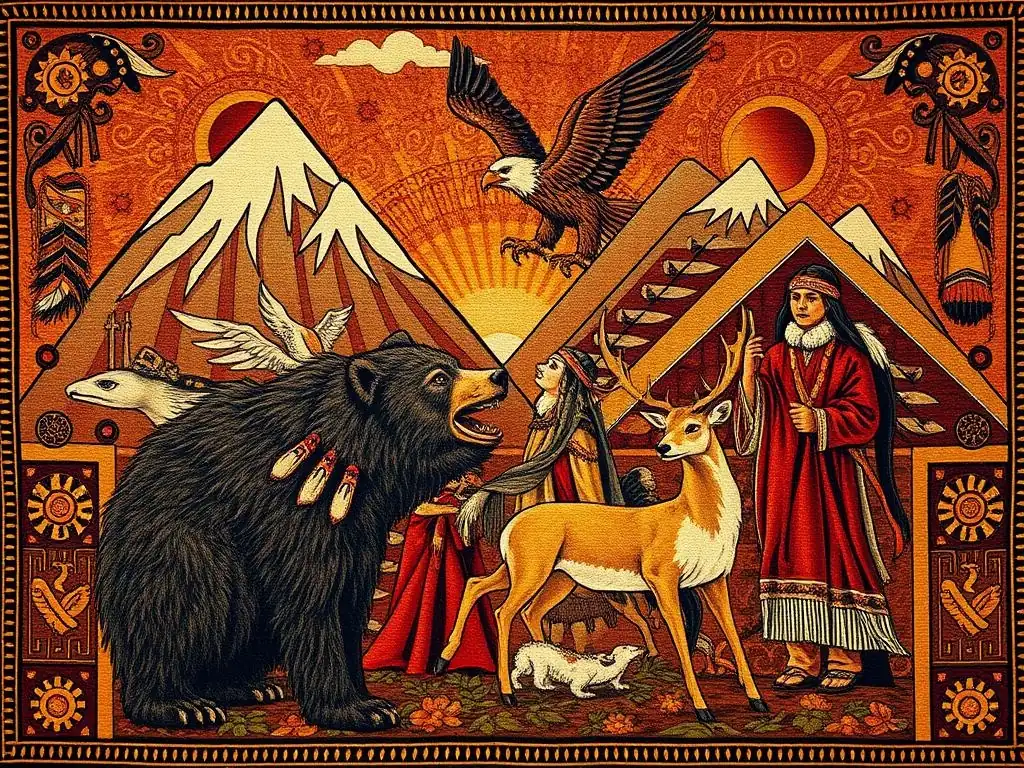
In many Native American traditions, the relationship between humans and animals is spiritual and deeply personal, often involving concepts of spirit animals, power animals, and totems. Animals are seen as teachers, guides, and members of a larger interconnected community of beings. The symbolism of animal companions in Native American folklore is diverse, varying significantly between tribes, but generally emphasizes respect for nature, the acquisition of wisdom or power from animal spirits, and the understanding of natural cycles.
Spirit animals are often revealed through dreams, visions, or personal encounters, offering guidance, protection, or embodying specific strengths and lessons for an individual. Totemic animals can represent entire clans or tribes, signifying shared ancestry, characteristics, or responsibilities. These connections are fundamental to identity and worldview, reflecting a belief that the natural world is imbued with spiritual power and that humans are intrinsically linked to it through these animal relationships.
The Bear: Symbol of Strength, Courage, and Healing
Across numerous Native American tribes, the bear holds significant symbolic importance, embodying a range of powerful attributes. It is widely recognized as a symbol of strength, courage, and leadership, qualities derived from its physical prowess and formidable nature. The bear's ability to hibernate was often interpreted as a form of entering the spirit world and returning, linking it to themes of death, rebirth, and transformation.
Beyond physical strength, the bear is also strongly associated with healing and medicine. Many tribes viewed the bear as a keeper of medicinal knowledge, observing its use of plants for healing. Shamans and healers often sought the bear's spirit as a guide or source of power in their healing practices. The bear's deep connection to the earth, its seasonal cycle, and its powerful presence make it a potent symbol of resilience, introspection (during hibernation), and the profound healing power found in nature, showcasing rich animal companions mythology symbolism meanings.
Asian Myths: Dragon Kings and Other Animal Deities
Across Asia, particularly in East and Southeast Asia, animal figures hold prominent places in mythology, often as powerful deities, benevolent spirits, or significant companions to gods and heroes. The symbolism of animal companions in Asian myths is vast and varied, encompassing creatures like dragons, tigers, turtles, and mythical birds, each carrying specific cultural and spiritual weight. These animals frequently govern natural forces, embody cosmic principles, or serve as protectors.
In cultures like China, Japan, Korea, and Vietnam, dragons are paramount, often associated with water, weather, and imperial power. Other animals, like the Fenghuang (Phoenix) or the Qilin (Kirin), represent auspiciousness, harmony, or justice. These creatures are not merely symbolic; they are active participants in the mythological landscape, interacting with humans and gods, shaping events, and reflecting core cultural values and beliefs about the natural and spiritual worlds.
The Dragon: Symbol of Imperial Power, Wisdom, and Good Fortune in Chinese Mythology
In Chinese mythology, the dragon (Lóng) is one of the most significant and revered mythological creatures. Unlike the often malevolent dragons of Western lore, Chinese dragons are typically benevolent beings associated with water, rain, rivers, and seas. They are seen as powerful, wise, and auspicious, bringing good fortune, prosperity, and harmony. The Dragon Kings, for example, are divine rulers of the seas and controllers of weather, vital for agriculture.
The dragon became a powerful symbol of the Emperor and imperial power, representing strength, authority, and divine protection. Its image adorned imperial robes, palaces, and banners. Beyond the imperial connection, dragons symbolize wisdom, longevity, and the Yang principle. Their ability to ascend to the heavens links them to transformation and transcendence. The multifaceted nature of the Chinese dragon makes it a prime example of the complex and positive animal companions mythology symbolism meanings found in Asian traditions.
Decoding the Symbolism: What Animal Companions Represent
Loyalty and Protection: The Dog as a Symbol of Devotion
The dog's role as a loyal companion to humans is mirrored in various mythologies around the world. Dogs are frequently depicted as protectors, guides, and steadfast allies, embodying unwavering loyalty and vigilance. In Greek myth, Argus, Odysseus's faithful dog, waits years for his master's return. In some underworld myths, dogs act as guardians or guides, such as Cerberus, though formidable, serving Hades by guarding the entrance.
This persistent association with loyalty stems directly from the observed behavior of domesticated dogs, whose bond with humans is ancient and profound. Their protective instincts and willingness to stand by their masters, even in the face of danger, have cemented their symbolic meaning as paragons of devotion and reliable companionship. The dog's presence in myths often highlights themes of fidelity, guardianship, and the strength found in trusting relationships.
Wisdom and Guidance: The Owl's Association with Knowledge
The owl is widely recognized across different mythologies as a symbol of wisdom, knowledge, and insight. This association likely arises from its nocturnal nature, silent flight, and large, forward-facing eyes, which give it an appearance of attentive observation and intelligence. In Greek mythology, the owl is the sacred animal of Athena, the goddess of wisdom, strategy, and crafts, solidifying its link to intellectual pursuits and strategic thinking.
Owls are often depicted in myths as messengers or advisors, possessing knowledge hidden from others or the ability to see clearly through darkness and deception. Their connection to the night can also link them to secrets, intuition, and the mysteries of the unseen world. The owl's symbolic meaning emphasizes the value of observation, learning, and the pursuit of deeper understanding, serving as a reminder that true wisdom often involves seeing beyond the obvious.
Strength and Courage: The Lion's Role as a Regal Symbol
The lion, with its majestic appearance, powerful build, and fearsome roar, is a near-universal symbol of strength, courage, and royalty. Its position at the top of the food chain in its natural habitat has contributed to its perception as a king among beasts. In many mythologies, lions are associated with powerful rulers, heroes, or deities who embody similar qualities of might and authority.
In Egyptian mythology, the goddess Sekhmet, associated with war and healing, is depicted with a lioness head, embodying fierce power and protection. In Greek myth, Heracles famously defeats the Nemean Lion, wearing its impenetrable hide as a cloak, symbolizing his immense strength and triumph over a formidable foe. The lion's presence in myth consistently underscores themes of power, bravery, leadership, and the overcoming of challenges through sheer force and will.
Transformation and Rebirth: The Serpent's Cycle of Renewal
The serpent, or snake, holds complex and often contradictory symbolism across various mythologies, but one of its most consistent associations is with transformation, rebirth, and healing, primarily due to its ability to shed its skin. This natural process of shedding the old self to reveal a new one is a powerful metaphor for renewal, cyclical time, and immortality.
In ancient Greek mythology, the Rod of Asclepius, the symbol of medicine, features a serpent coiled around a staff, representing healing and medicinal knowledge – a connection that persists to this day. The ouroboros, an ancient symbol depicting a serpent or dragon eating its own tail, represents eternal cyclic renewal, the infinite, and the concept of creation from destruction. While sometimes associated with danger or trickery, the serpent's primary symbolic meaning often revolves around life force, regeneration, and the mysteries of existence and renewal.
Fertility and Abundance: The Bull's Connection to Prosperity
The bull is a potent symbol of strength, virility, fertility, and abundance in numerous mythologies, particularly those of agricultural societies. Its physical power, association with cattle (a source of food, milk, and labor), and reproductive capacity made it a natural symbol for prosperity and the life-giving forces of nature. Bull worship was prevalent in many ancient cultures, including Minoan Crete, ancient Egypt, and the Near East.
In Greek mythology, Zeus transforms into a magnificent white bull to abduct Europa, symbolizing his potent desire and transformative power. The Minotaur, a creature with the head of a bull and the body of a man, represents a more monstrous aspect of bull symbolism, but still rooted in themes of primal force. Across diverse myths, the bull's presence signifies power, generative force, agricultural wealth, and the raw, untamed energy of the natural world, connecting directly to the prosperity and survival of communities.
Animal Companions as Psychopomps and Guides to the Underworld
Leading Souls: Animals that Bridge the Worlds of the Living and the Dead
A significant role played by animal companions in mythology is that of psychopomp – a guide for souls from the world of the living to the realm of the dead. These animals bridge the gap between the mundane and the afterlife, assisting souls on their perilous journey. This role highlights the deep connection many cultures perceived between animals, death, and the mysteries of the underworld. The animal companions mythology symbolism meanings associated with death and transition are often profound and sometimes unsettling.
Different animals are assigned this role depending on the culture and its specific beliefs about the afterlife. Birds, known for their ability to fly between the earth and the sky, are sometimes seen as carrying souls. Dogs, with their loyalty and ability to navigate complex paths, are also frequent guides. These animal psychopomps embody the transition itself, helping to navigate the unknown and providing a sense of continuity or guidance in the face of mortality.
Anubis (Jackal): Guiding Souls in Egyptian Mythology
In ancient Egyptian religion, Anubis, the god of death, mummification, embalming, and the afterlife, is famously depicted with the head of a jackal or as a full jackal. Jackals were often observed around cemeteries in ancient Egypt, scavenging near burial grounds, which likely led to their association with death and the dead. Anubis's role as a psychopomp involved guiding the souls of the deceased from their tomb into the underworld and presenting them for judgment in the Hall of Ma'at.
Anubis oversaw the mummification process, ensuring the body was preserved for the afterlife. He also played a crucial role in the Weighing of the Heart ceremony, where the heart of the deceased was weighed against the feather of Ma'at (truth). Anubis guarded the scales and ensured the process was conducted correctly. His jackal form symbolizes his connection to the liminal space between life and death and his function as a vigilant guardian and guide for souls transitioning to the next world, making him a central figure in animal companions mythology symbolism meanings related to death and judgment.
The Enduring Legacy of Animal Companion Symbolism
Animal Archetypes in Modern Literature and Art
The rich tapestry of animal companion symbolism in mythology continues to influence modern literature, art, and popular culture. Mythological animal archetypes appear in countless stories, films, and artworks, often carrying their ancient symbolic weight into new narratives. The loyal dog, the wise owl, the fierce lion, the transformative serpent – these figures resonate deeply with audiences because their symbolic meanings are rooted in millennia of cultural understanding and shared human experience.
Authors and artists draw upon these established symbols to add layers of meaning to their work, using animal characters or motifs to represent specific traits, forces, or aspects of the human psyche. A character's animal companion can reveal much about their nature, destiny, or connection to the spiritual or natural world. This enduring presence demonstrates the timeless power of animal companions mythology symbolism meanings to communicate complex ideas and evoke powerful emotions.
Influence on Contemporary Spiritual Practices and Beliefs
The ancient concept of animal companions and spirit animals also persists in various contemporary spiritual practices and belief systems. Many modern spiritual paths, including aspects of Neopaganism, Shamanism, and personal spiritual exploration, incorporate the idea of connecting with animal spirits for guidance, strength, or healing. People seek to identify their personal "power animal" or "spirit animal" to understand their own characteristics or navigate life's challenges.
Workshops, retreats, and literature dedicated to spirit animal journeys and totemism reflect a modern desire to reconnect with nature and explore symbolic meanings found in the animal kingdom. While distinct from traditional mythological or tribal practices, these contemporary approaches draw heavily on the ancient idea that animals possess spiritual significance and can serve as guides or sources of power. This highlights the lasting impact of animal companions mythology symbolism meanings on how people seek meaning and connection in the world today.
Understanding the Deep-Rooted Connection Between Humans and Animals in Mythology
At its core, the prevalence of animal companions in mythology underscores the deep-rooted and complex relationship between humans and the animal kingdom. Myths reflect a time when human survival and understanding of the world were intimately tied to observing and interacting with animals. These stories are not just fantasies; they are ancient attempts to make sense of the natural world, humanity's place within it, and the forces that govern existence.
The animals in myths serve as bridges between the human world and the divine, the natural and the supernatural. They embody forces humans sought to understand or control, represent qualities humans admired or feared, and act as partners in humanity's struggles and triumphs. Exploring animal companions mythology symbolism meanings is a journey into the collective human psyche, revealing our enduring fascination with the creatures that share our planet and our recognition of their profound significance beyond the purely physical realm.
Conclusion: The Profound Meanings Behind Mythological Animal Companions
Reflecting on the Diverse Roles and Symbolism of Animal Allies in World Myths
The journey through world mythology reveals a stunning diversity in the roles and symbolism attributed to animal companions. From the sacred beasts of Egypt and the divine messengers of Greece to the powerful familiars of Norse gods and the spirit guides of Native American folklore, animals are consistently portrayed as beings of great significance. They serve as protectors, guides, symbols of divine power, embodiments of natural forces, and reflections of human virtues and vices. The exploration of animal companions mythology symbolism meanings across cultures highlights both universal themes and unique cultural perspectives on the human-animal bond.
These mythological narratives demonstrate that ancient peoples recognized profound qualities in animals – loyalty, wisdom, strength, transformative power, and a connection to realms beyond human perception. The specific meanings of animal companions in myths are often rooted in careful observation of animal behavior, combined with spiritual beliefs and cultural values. Understanding these roles provides invaluable insight into the worldviews of these ancient civilizations and their deep reverence for the natural world.
Encouraging Further Exploration of Animal Symbolism in Mythology
The study of animal companions mythology symbolism meanings is a vast and rewarding field, offering endless opportunities for discovery. Each culture, each myth, and each animal companion presents unique layers of meaning waiting to be uncovered. Further exploration can delve into specific regions not covered extensively here, examine the evolution of animal symbolism over time, or analyze the psychological archetypes represented by these creatures.
Considering how these ancient symbols persist and transform in modern culture further underscores their enduring power and relevance. By continuing to explore the roles of animal companions in mythology, we gain a deeper appreciation for the intricate relationship between humans and the animal kingdom, the ways in which we have historically sought to understand our world through nature, and the timeless power of symbolism to convey profound truths about existence, highlighting the richness of animal companions mythology symbolism meanings.
Frequently Asked Questions
What role did animal companions typically play in mythological narratives?
Animal companions often served as helpers, guides, or protectors for heroes and deities. They could possess special abilities or represent qualities like courage, wisdom, or loyalty. They were often symbols of the deity they accompanied.
What are some common symbolic meanings associated with different animal companions in mythology?
Specific animals held distinct symbolic meanings. For instance, wolves might represent loyalty and guardianship, while eagles could symbolize power and freedom. These meanings varied across different cultures and mythologies.
How did the depiction of animal companions vary across different cultures and mythologies?
The perceived traits and roles of animal companions differed significantly. Some cultures viewed certain animals as sacred, while others associated them with negative qualities. This reflects cultural beliefs and environmental factors.
How did the presence of animal companions impact the narrative arc and character development of mythological figures?
Animal companions often influenced the hero's journey by providing assistance or insight. Their presence could highlight the hero's virtues or flaws, adding depth to their character arc. They might even sacrifice themselves for the hero.
What is the lasting impact of the symbolism of animal companions from mythology on contemporary society?
The symbolism of animal companions continues to influence our understanding of animals and their roles in our lives. It shapes our cultural narratives and artistic representations, and even our relationship with pets.
Final Reflection: Unraveling the Enduring Power of Animal Companions in Myth
The interwoven narratives of humanity and animal companions, explored throughout this article, resonate deeply with our modern understanding of interspecies relationships and the enduring power of symbolism. These myths, far from being relics of the past, offer a potent lens through which to examine our current anxieties and aspirations regarding our place in the natural world and our evolving relationship with other species. The very act of assigning symbolic meaning to animals speaks volumes about our innate need to find connection and meaning beyond ourselves.
The enduring influence of these animal companions in mythology is undeniable; they continue to shape our cultural narratives, artistic expressions, and even our personal beliefs. Their symbolic weight transcends geographical boundaries and temporal shifts, proving the universality of certain archetypes and the profound impact of the animal kingdom on the human psyche. Animals are such agreeable friends—they ask no questions; they pass no criticisms.
– George Eliot. This quote highlights the timeless appeal of the animal-human bond, a bond that mythology beautifully captures and elevates to a symbolic plane.
Consider the animals that resonate most deeply with you. What aspects of their symbolic representation in mythology speak to your own life, your own values, or your own understanding of the world? I invite you to explore this further, to delve into the rich tapestry of mythology and discover the animal companions that speak to your soul. Let their symbolic power inspire you to connect more deeply with the natural world and to appreciate the profound wisdom embedded within these ancient stories.
Unveil Your Inner Animal Guide: Dive Deeper into Mythology
Thanks for exploring the fascinating world of animal symbolism in mythology with us! You've gained valuable insights into the rich tapestry of meaning woven into these powerful representations. Now, it's time to take that knowledge further.
- Embrace your own animal totem: Reflect on the animals that resonate most deeply with you and research their symbolic meanings within different cultures. What hidden wisdom might they hold for you?
- Share your discoveries: Tell us in the comments which animal resonates most with you and why! Let's build a community of mythological exploration together.
- Create your own symbolic artwork: Express your understanding of these animal totems through a drawing, painting, or even a short poem. Let your creativity unlock new perspectives.
What powerful animal spirit guides your life journey, and how does its symbolism illuminate your path?