
Fafnir's Heart: Sigurd's Companion in Dragon Slaying?


Welcome to Mythology and Legends, where ancient tales whisper secrets of worlds beyond our own. Have you ever wondered what truly lay hidden within the heart of a dragon? Delve into the epic saga of Sigurd and the fearsome Fafnir as we unravel the potent symbolism of Sigurd Fafnir's heart meaning, a tale brimming with bravery, betrayal, and the profound connection between man and mythical beast. What hidden knowledge did it unlock, and how did it shape Sigurd's destiny? Begin your journey now...
- The Saga of Sigurd and Fafnir: Exploring Themes of Greed, Courage, and Fate
- Introduction: The Enduring Myth of Sigurd and Fafnir
- Sigurd: A Hero Forged in Destiny
- Fafnir: The Corrupted Guardian of Hoarded Treasure
- The Slaying of Fafnir: A Clash of Heroism and Greed
- The Power and Peril of Dragon's Blood
- Regin's Treachery and Sigurd's Moral Dilemma
- The Aftermath: Sigurd, the Treasure, and the Curse
- Modern Interpretations of the Fafnir Saga
- Conclusion: The Timeless Legacy of Sigurd and Fafnir
- Frequently Asked Questions
- Final Reflection: The Enduring Legacy of Fafnir's Heart
- Unleash Your Inner Hero: Explore the Legend of Fafnir!
The Saga of Sigurd and Fafnir: Exploring Themes of Greed, Courage, and Fate
Introduction: The Enduring Myth of Sigurd and Fafnir
Exploring the Norse Myth of Sigurd and Fafnir
The tale of Sigurd the dragon-slayer and the hoard-guarding dragon Fafnir is one of the most prominent and enduring narratives within Norse mythology. Found primarily in the Volsunga Saga, an Icelandic prose epic from the late 13th century, and alluded to in the Poetic Edda, this myth delves deep into complex human and supernatural themes.
It recounts the lineage of the hero Sigurd, his fateful encounter with the corrupted dwarf-turned-dragon Fafnir, and the tragic consequences that unfold from the cursed treasure he acquires. The saga explores concepts such as destiny, the corrupting power of greed, the definition of heroism, and the inescapable nature of fate as ordained by the Norns.
This myth stands as a cornerstone of Germanic heroic legend, influencing countless later works, including Wagner's Der Ring des Nibelungen. It provides a rich tapestry of gods, heroes, dwarves, and mythical beasts, all intertwined in a dramatic cycle of vengeance, betrayal, and ultimate doom. The story's structure, moving from the origins of the curse to its tragic conclusion, highlights the interconnectedness of events and the long shadow cast by past deeds, making it a compelling study of destiny and moral choice within a mythological framework.
The Significance of Fafnir's Death and its Consequences
Fafnir's death is not merely the end of a monstrous creature; it is the pivotal event that propels the rest of the saga forward and unlocks profound consequences for Sigurd and everyone connected to the cursed treasure. The act of slaying the dragon immediately elevates Sigurd to legendary status, marking him as a hero destined for greatness. However, this heroic deed is inextricably linked to the acquisition of the dragon's hoard, which is tainted by the curse placed upon it by the dwarf Andvari.
The immediate aftermath of Fafnir's demise is particularly significant. Sigurd is instructed by his foster-father, Regin, to roast Fafnir's heart, a task that leads directly to Sigurd gaining supernatural abilities. This moment, where Sigurd consumes a piece of the heart, gives Sigurd Fafnir’s heart meaning by granting him the ability to understand the language of birds. This newfound skill is crucial, as the birds reveal Regin's treacherous plan to kill Sigurd and claim the treasure for himself, forcing Sigurd to confront another moral challenge immediately after his victory over the dragon.
Sigurd: A Hero Forged in Destiny
Sigurd's Lineage and Early Life
Sigurd, also known as Siegfried in the continental Germanic tradition, is presented as a hero of exceptional lineage, tracing his ancestry back to the divine. He is the posthumous son of Sigmund, a great hero of the Volsung line, who was mortally wounded in battle against King Lyngvi, assisted by the god Odin. Sigmund's wife, Hjördis, takes refuge with King Alf of Denmark and later gives birth to Sigurd.
This noble and heroic background immediately sets Sigurd apart, marking him as a potential champion destined for great deeds. His early life is spent under the care of King Alf and Queen Hjördis, but his true destiny begins to unfold when he is placed under the tutelage of Regin.
Growing up, Sigurd displayed innate qualities of strength, courage, and nobility, characteristics befitting a descendant of the Volsungs, a lineage directly linked to Odin. His upbringing, while initially sheltered, prepared him for the rigorous training he would undergo. The early years are crucial in establishing his character before he is exposed to the darker aspects of the world and the machinations surrounding Fafnir's treasure, setting the stage for his fated journey into heroism and tragedy.
Tutelage Under Regin: The Path to Dragon-Slaying
Sigurd's education and training are primarily overseen by Regin, a skilled smith and one of the sons of Hreiðmarr, brother to Fafnir and Ótr. Regin takes Sigurd in as his foster-son and teaches him various skills, including lore, runes, and martial combat. However, Regin's true motive is not purely altruistic; he harbors a deep-seated desire for revenge against his brother Fafnir, who had murdered their father Hreiðmarr and seized the cursed treasure, including the ring Andvaranaut. Regin sees Sigurd as the ideal instrument to achieve this vengeance and reclaim the hoard.
Regin constantly speaks to Sigurd about the great dragon Fafnir and the immense treasure he guards, instilling in the young hero the ambition to perform a deed of unparalleled bravery – the slaying of a dragon. He recounts the history of the treasure and the injustice he suffered, carefully manipulating Sigurd's sense of honor and destiny. This tutelage is the direct path that leads Sigurd to confront Fafnir, shaping his immediate heroic quest and setting the stage for the events that follow the dragon's death, including the significant moment where Sigurd considers the meaning of consuming Fafnir’s heart.
Forging the Sword Gram: A Weapon of Legend
A crucial element in Sigurd's preparation for facing Fafnir is the forging of a sword capable of piercing the dragon's hardened hide. Regin, renowned for his smithing skills, attempts to forge a mighty sword for Sigurd, but each blade he creates breaks when tested against an anvil. Sigurd, frustrated by these failures, demands a sword worthy of his lineage and task. He brings Regin the shattered pieces of his father Sigmund's sword, Gram, which Odin himself had broken.
Regin, using his extraordinary skill, reforges the fragments of Gram into a new blade of unparalleled sharpness and strength. When Sigurd tests the reforged Gram, he cleaves the anvil in two with a single stroke, demonstrating the weapon's legendary power. This sword, Gram, becomes synonymous with Sigurd and is the instrument he uses to defeat Fafnir. The forging of Gram is more than just obtaining a weapon; it symbolizes the continuity of the Volsung heroic line and provides Sigurd with the physical means to fulfill his destiny as the dragon-slayer.
Fafnir: The Corrupted Guardian of Hoarded Treasure
The Origins of Fafnir: From Dwarf to Dragon
Fafnir was originally one of the sons of Hreiðmarr, a powerful dwarf or man who possessed great wealth. He was brother to Regin, the skilled smith, and Ótr, who could transform into an otter. Their family lived in a dwelling of gold, indicating their initial prosperity. However, their lives took a tragic turn when the god Loki, accompanied by Odin and Hœnir, accidentally killed Ótr, who was in his otter form. This act initiated a chain of events centered around a cursed treasure.
Hreiðmarr demanded a ransom for Ótr's death, requiring the gods to fill Ótr's skin with gold and cover it entirely with more gold. Loki, using a net given to him by the sea-goddess Rán, captured the dwarf Andvari, who possessed a vast treasure hoard and a powerful ring, Andvaranaut, which could create gold. Loki forced Andvari to give up his entire hoard, including the ring.
As Andvari was stripped of his wealth, he placed a potent curse upon the gold and the ring, stating that it would bring death and misfortune to whoever possessed it. This cursed hoard became the ransom paid to Hreiðmarr.
The Curse of Andvari's Ring and its Corrupting Influence
The treasure paid as ransom, particularly the ring Andvaranaut, carried a terrible curse from the dwarf Andvari. This curse was not merely a spoken threat but a magical blight intended to sow discord and destruction among its owners. As soon as Hreiðmarr received the gold, the curse began to manifest. Fafnir and Regin, consumed by greed and the desire for the immense wealth, immediately quarreled with their father over the division of the hoard.
The corrupting influence of the gold and the curse proved too strong for Fafnir. Driven mad by avarice, he murdered his own father, Hreiðmarr, to seize the entire treasure for himself. Regin, who also desired a share, was driven away. This act of fratricide and patricide highlights the immediate and devastating power of the curse, transforming Fafnir from a greedy but perhaps still human-like figure into something consumed entirely by his lust for wealth. The treasure became his sole focus, isolating him from his family and leading to his monstrous transformation.
Fafnir's Transformation and Isolation
After murdering his father and taking possession of the cursed treasure, Fafnir underwent a horrifying transformation. The precise nature of this change varies slightly across different texts, but the most common and iconic depiction is that he became a fearsome dragon or a serpent of immense size. This physical transformation is often seen as a manifestation of his internal corruption – his overwhelming greed and malice literally turned him into a monstrous form befitting his nature.
Fafnir retreated to Gnita-Heath (Gnita-Fjöll or Gnita-Níðvellir), a desolate wilderness, where he guarded the hoard fiercely. He spent years lying upon the gold, his body becoming scaled and venomous, his presence striking terror into the hearts of anyone who dared approach. His transformation and subsequent isolation demonstrate the ultimate consequence of succumbing to the curse of the gold; he became a solitary, monstrous guardian, defined solely by his possession of wealth. His existence became one of ceaseless watchfulness over the treasure, a pathetic and terrifying figure brought low by avarice, awaiting the hero destined to challenge him.
The Slaying of Fafnir: A Clash of Heroism and Greed
Ótr's Ransom and the Seeds of Tragedy
The root cause of the conflict that ultimately leads to Fafnir's demise lies in the death of Ótr, Fafnir's brother, by the hands of the Æsir gods. As detailed earlier, Odin, Loki, and Hœnir killed Ótr while he was in his otter form. When they came to Hreiðmarr's dwelling, they were captured, and Hreiðmarr demanded a substantial ransom: filling Ótr's skin with gold and covering it entirely. Loki was sent to acquire the gold and captured the dwarf Andvari, forcing him to surrender his entire hoard, including the cursed ring Andvaranaut.
This gold, paid as the blood-price for Ótr, became the object of fatal desire. Hreiðmarr took the treasure, but his sons, Fafnir and Regin, immediately coveted it. This shared greed, fueled by the curse on the gold, led to Fafnir murdering Hreiðmarr and driving Regin away, taking the entire hoard for himself. Thus, the death of Ótr, seemingly a minor incident involving the gods, sowed the seeds of tragedy, setting brother against brother and initiating the cycle of violence and corruption that would ultimately lead Sigurd to confront Fafnir.
The Digging of the Pit: A Clever Strategy
Regin, unable to defeat his dragon brother Fafnir himself, sought a champion. He found this champion in his foster-son, Sigurd. Regin instructed Sigurd on how to approach and kill the fearsome dragon, who was known to crawl to a water source along a specific path. Regin advised Sigurd to dig a pit in this path and hide in it, waiting for Fafnir to pass overhead. As Fafnir crawled across the pit, Sigurd could strike upwards into the dragon's soft underbelly, the only vulnerable spot.
Sigurd initially questioned this strategy, fearing that he might drown in the dragon's blood. However, Odin, appearing in disguise as an old man, intervened and advised Sigurd to dig several pits to channel the blood away. Sigurd followed this modified plan, demonstrating not just bravery but also cunning. He dug the pits, carefully concealed himself, and waited. This strategic approach, guided by Regin's knowledge and Odin's subtle assistance, highlights that defeating a powerful foe like Fafnir required intelligence and planning in addition to raw strength.
The Fatal Blow: Sigurd's Triumph and its Ramifications
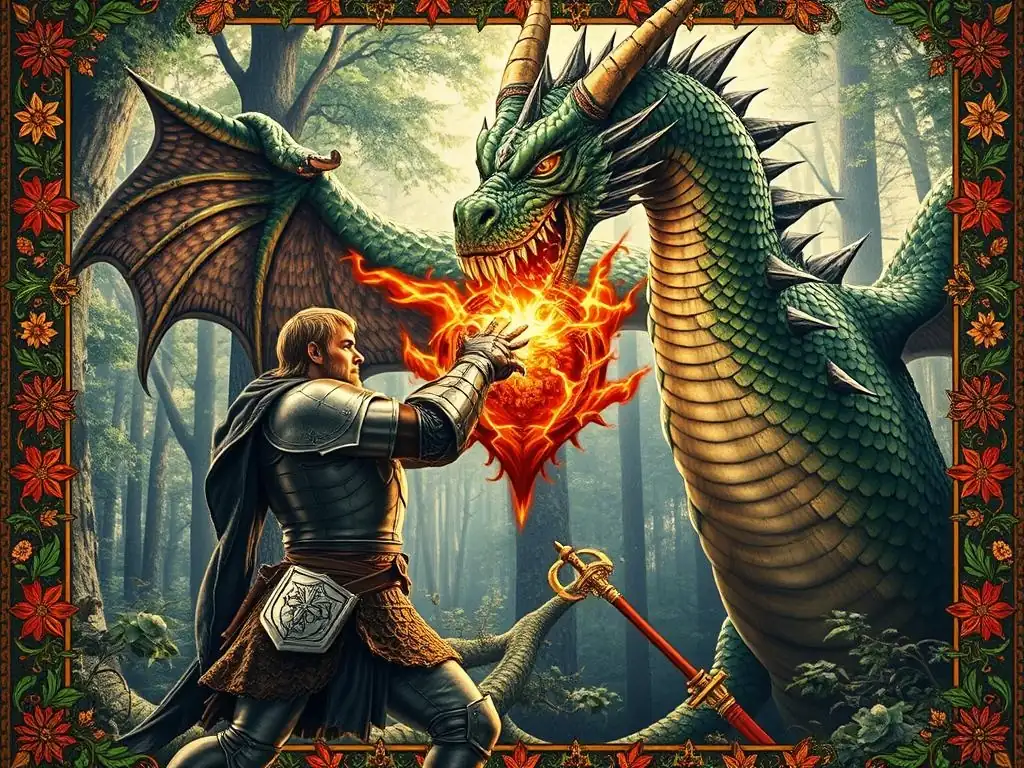
When Fafnir crawled from his lair towards the water, his immense, venomous body passing directly over the hidden pit, Sigurd seized his opportunity. Wielding the mighty sword Gram, reforged from his father's blade, Sigurd thrust the sword upwards with all his might, piercing Fafnir's soft underside. The blow was fatal, striking the dragon's heart or vital organs. Fafnir thrashed in his death throes, roaring his final curses and warnings to Sigurd about the treasure's curse.
With Fafnir slain, Sigurd emerged from the pit victorious. This act solidified his reputation as the dragon-slayer, fulfilling the quest Regin had set for him. However, Fafnir's death was not the end of the story, but the beginning of a new phase, bringing Sigurd into direct contact with the cursed hoard and the consequences of the dragon's blood. The events that immediately followed, particularly the handling of Fafnir's body and heart, are crucial to understanding Sigurd Fafnir’s heart meaning and its impact on his destiny.
The Power and Peril of Dragon's Blood
The Ritual of Cooking Fafnir's Heart
Immediately after Fafnir's death, Regin instructs Sigurd to roast the dragon's heart. Regin claims that eating the heart will grant wisdom and strength. As Sigurd is roasting the heart over a fire, some of the dragon's blood drips onto his hand, burning him. Instinctively, Sigurd puts his hand in his mouth to soothe the burn, tasting the dragon's blood. This accidental ingestion of Fafnir's blood is the critical moment that imparts to Sigurd a unique and powerful ability.
The act of roasting and tasting the heart is presented almost as a ritualistic consumption of the dragon's essence. While Regin intends to eat the heart himself to gain its power, it is Sigurd who inadvertently benefits first. This moment underscores the raw, untamed power associated with mythical creatures like dragons, and how interacting with them, even indirectly through their remains, can have profound and unexpected effects on a mortal hero. The subsequent events reveal the true Sigurd Fafnir’s heart meaning in terms of its magical properties.
The Gift of Understanding: Sigurd and the Language of Birds
As soon as Sigurd tastes Fafnir's blood, he gains the ability to understand the language of birds. Sitting near the fire, roasting the heart, he hears birds chirping in the trees around him, but now their sounds are clear and comprehensible speech. The birds, observing Sigurd and Regin, discuss the events that have transpired and, more importantly, reveal Regin's true intentions.
The birds discuss Regin's plan to kill Sigurd after he has eaten the heart and claimed the treasure. They warn Sigurd about Regin's treachery and advise him to strike first. This magical ability, gained from the dragon's blood (or possibly the heart itself, depending on the interpretation), is not merely a curious power; it is a vital piece of information that saves Sigurd's life.
The ability to understand the birds' language serves as an external, objective source of truth, cutting through Regin's deceit and revealing the hidden dangers surrounding Sigurd. This is a key part of Sigurd Fafnir’s heart meaning – the gain of supernatural perception that unveils hidden truths.
The Prophecy Revealed: A Glimpse into Sigurd's Fate
Beyond warning Sigurd about Regin, the birds also speak of other aspects of Sigurd's destiny. They mention the sleeping valkyrie Brynhildr, who lies behind a ring of fire, placed there by Odin. They hint at the fame and glory that await Sigurd, but also the potential for future conflicts and tragedies connected to the cursed treasure and his interactions with the world of heroes and gods.
This sudden access to prophetic knowledge through the birds gives Sigurd a glimpse into his future, suggesting a path laid out by fate. While the primary Sigurd Fafnir’s heart meaning derived from this incident is the immediate warning about Regin, the broader implication is that consuming the dragon's essence has opened Sigurd's mind to the underlying currents of destiny and prophecy that govern the mythological world. It links his victory over Fafnir directly to the larger, tragic fate that awaits him.
Regin's Treachery and Sigurd's Moral Dilemma
Regin's Motives and Deceptive Intentions
Regin's motivations throughout the saga are primarily driven by greed and a desire for revenge against his brother Fafnir. He feels he was unjustly deprived of his share of the family inheritance, particularly the cursed treasure and the ring Andvaranaut, when Fafnir murdered their father and took everything. Unable to confront the dragon himself, Regin fostered Sigurd with the explicit goal of using the young hero as a tool to reclaim the gold.
Despite presenting himself as a loyal foster-father and guide, Regin always intended to betray Sigurd. His plan was to have Sigurd slay Fafnir, then have Sigurd roast the dragon's heart (possibly intending to eat it himself for power), and finally, murder Sigurd to take sole possession of the hoard. His instructions to Sigurd, his talk of glory and destiny, were all part of a calculated manipulation aimed at achieving his own selfish ends. His deceit is revealed by the birds, highlighting the stark contrast between his outward appearance and his inner wickedness.
Sigurd's Realization of Regin's Betrayal
While roasting Fafnir's heart, Sigurd gains the ability to understand the language of birds after tasting the dragon's blood. The birds immediately begin discussing Regin's treacherous plot. Sigurd hears them clearly stating that Regin plans to kill him to get the treasure. One bird might say, "There sits Regin, planning to betray the one who killed Fafnir," while another replies, "He intends to kill Sigurd while he is busy with the heart."
This revelation is shocking and sudden. Sigurd had trusted Regin, who had raised him and taught him the skills necessary to become a hero. Hearing the birds expose Regin's hidden malice forces Sigurd to confront the reality of his foster-father's true character. This moment, enabled by the power gained from Fafnir's blood, is a critical turning point where Sigurd must decide how to respond to this impending threat from someone he once considered family. The wisdom gained from understanding the birds compels him to action.
The Decision to Kill Regin: Justice or Pragmatism?
Faced with the undeniable truth of Regin's treachery, Sigurd is presented with a difficult choice. He can wait for Regin to make his move and risk being killed, or he can act preemptively to eliminate the threat. After hearing the birds' warnings and their advice to strike first, Sigurd decides that he cannot allow Regin to succeed in his wicked plan.
Sigurd confronts Regin, who is likely resting or waiting nearby. The saga recounts that Sigurd, acting quickly and decisively, cuts off Regin's head with the sword Gram.
This act can be interpreted in several ways: as an act of self-preservation, preventing Regin's planned murder; as a form of justice for Regin's deceit and his earlier role in the family tragedy; or simply as a pragmatic removal of the only other claimant to the treasure who knew its history. Having overcome the monstrous external threat (Fafnir), Sigurd is immediately forced to deal with the insidious internal threat posed by human greed and betrayal, a consequence directly following the events linked to Sigurd Fafnir’s heart meaning and the knowledge it imparted.
The Aftermath: Sigurd, the Treasure, and the Curse

Sigurd's Acquisition of the Andvaranaut Ring and its Power
After killing Regin and ensuring his own safety, Sigurd returns to Fafnir's lair on Gnita-Heath. There, he finds the vast hoard of gold and treasures that Fafnir had guarded for so long. Among the riches, Sigurd discovers the most significant item: the ring Andvaranaut. This ring was the source of much of the gold's power and, more importantly, the vessel of the curse placed upon it by the dwarf Andvari.
Sigurd takes the ring and the treasure, loading it onto his horse Grani, a steed of remarkable lineage. While the ring Andvaranaut is said to have the power to multiply gold, making its owner immensely wealthy, its primary effect within the saga is to perpetuate the curse. By taking possession of the ring, Sigurd unknowingly binds himself to the tragic fate associated with the hoard. His acquisition of the treasure marks the transition from the heroic quest of dragon-slaying to the unfolding drama dictated by the curse's influence on human relationships.
The Burden of Treasure: The Onset of Sigurd's Tragic Fate
With the immense treasure acquired, Sigurd becomes one of the wealthiest and most famous heroes in the Norse world. However, the gold is a heavy burden, both literally (carried by Grani) and figuratively. The curse of Andvari follows the treasure, bringing strife and misfortune to its possessors. While Sigurd initially gains fame and fortune, the gold ultimately leads him down a path of betrayal, heartbreak, and death.
The curse operates by inciting greed and conflict in those who come into contact with the treasure or its owner. Sigurd's subsequent interactions with the Burgundians (Gjúkungar), particularly his marriage to Gudrun and his involvement with Brynhildr, are deeply affected by the presence of the cursed hoard. The wealth attracts envy and manipulation, and the curse seems to poison relationships, leading to misunderstandings, broken vows, and violent ends for almost everyone involved. The treasure, acquired after understanding the Sigurd Fafnir’s heart meaning and its immediate benefit, becomes the instrument of his eventual downfall.
The Curse Continues: The Cycle of Greed and Betrayal
The curse of Andvari's ring does not end with Sigurd's death. After Sigurd is murdered (a plot orchestrated by the Burgundians under the influence of the curse and Brynhildr's grief), the treasure passes to others, continuing its destructive path. The Burgundians take the gold, but it brings them only ruin. When Attila the Hun (Etzel in the saga) seeks the treasure, it leads to the complete annihilation of the Burgundian royal house.
The ring and the hoard pass from hand to hand, each owner meeting a tragic end. This relentless cycle of greed, betrayal, and death demonstrates the potent and enduring nature of Andvari's curse. The treasure, initially guarded by Fafnir and then claimed by Sigurd, acts as a catalyst for conflict, proving that the true peril was not just the dragon itself, but the corrupting influence of the gold and the inescapable power of fate tied to it. The saga illustrates how material wealth, especially when cursed, can dismantle families, kingdoms, and heroic legacies.
Modern Interpretations of the Fafnir Saga
Fafnir and Sigurd: Symbolism in Art and Literature
The saga of Sigurd and Fafnir has resonated deeply throughout history and continues to inspire artists and writers today. Fafnir is often depicted as the archetypal dragon guarding a vast hoard, symbolizing greed, corruption, and the monstrous consequences of avarice. Sigurd represents the archetypal hero who must confront and overcome this monstrous evil. Their clash symbolizes the struggle between heroic virtue and destructive greed.
In literature, the most famous adaptation is Richard Wagner's opera cycle Der Ring des Nibelungen, where Sigurd is Siegfried and Fafnir is a giant transformed into a dragon by the cursed ring (the Nibelung's hoard). J.R.R.
Tolkien was also heavily influenced by Norse mythology, and elements of Fafnir and the cursed gold can be seen in Smaug and the Arkenstone in The Hobbit. Visual artists have depicted Sigurd slaying Fafnir in various forms, from medieval stone carvings on churches (like the Ramsund carving in Sweden) to modern illustrations, capturing the dramatic confrontation and the subsequent events like Sigurd tasting the dragon's blood, a scene rich in Sigurd Fafnir’s heart meaning.
The Enduring Appeal of Norse Mythology
Norse mythology, with its pantheon of complex gods, its focus on fate (wyrd), and its dramatic tales of heroes, monsters, and the end of the world (Ragnarök), holds a powerful and enduring appeal. Stories like the Sigurd and Fafnir saga offer a glimpse into the worldview of the ancient Norse and Germanic peoples, exploring universal themes of courage, destiny, betrayal, and the nature of good versus evil.
The raw, often grim, nature of Norse myths, where even gods are subject to fate and heroes often meet tragic ends, contrasts with some other mythologies and provides a compelling narrative depth. The intricate relationships between gods, dwarves, elves, giants, and mortals, as well as the presence of powerful magical items and curses, create a rich and imaginative world that continues to capture the imagination of audiences worldwide through books, films, games, and other media.
Lessons from the Myth: Exploring Themes of Greed, Courage, and Fate
The saga of Sigurd and Fafnir offers several profound lessons. The most prominent theme is the destructive power of greed, exemplified by Fafnir's transformation and the curse of the gold that poisons everyone it touches. The story serves as a cautionary tale about the corrupting influence of wealth and the lengths to which individuals will go to acquire and keep it, even destroying family bonds and their own humanity.
Sigurd embodies courage, facing a terrifying dragon that no one else dared confront. His heroism is undeniable, yet the myth also explores the complexities of fate. Despite his bravery and strength, Sigurd cannot escape the tragic destiny woven by the curse and the actions of others.
The story highlights the interplay between individual agency (Sigurd's choice to kill Fafnir and Regin) and the seemingly inescapable hand of fate. Finally, the episode where Sigurd gains understanding from tasting Fafnir's blood and roasting the heart emphasizes the idea that power and knowledge often come at a price, and that understanding the Sigurd Fafnir’s heart meaning of these events is crucial to grasping the saga's depth.
Conclusion: The Timeless Legacy of Sigurd and Fafnir
Reflecting on the Saga's Central Themes
The saga of Sigurd and Fafnir is a masterpiece of Norse heroic literature, weaving together elements of divine intervention, monstrous foes, cursed treasure, and human drama. At its core, the story is a powerful exploration of the themes of greed, courage, and fate. Greed is the catalyst for the tragedy, transforming Fafnir and driving Regin's betrayal. Courage is embodied by Sigurd, the hero willing to face the dragon. Fate is the overarching force, suggested by Odin's subtle guidance, the curse of the ring, and the prophetic warnings of the birds (understood through the Sigurd Fafnir’s heart meaning moment).
The narrative demonstrates how these forces intertwine, showing that even the greatest hero, armed with a legendary sword and supernatural knowledge, cannot fully escape the consequences set in motion by past deeds and the inherent dangers of the world. The saga serves as a timeless reminder of the perils of unchecked ambition and the heavy burden that comes with great power and wealth, especially when tainted by a curse.
The Saga's Place in Norse Mythology and its Cultural Impact
The story of Sigurd the dragon-slayer is arguably one of the most famous and influential tales from Norse mythology, rivaled perhaps only by the myths of Ragnarök or the adventures of Thor and Odin. It is a central narrative in the Volsunga Saga and is referenced in other Eddic poems and sagas, indicating its widespread popularity and importance in medieval Scandinavia and Germanic regions. Its inclusion in the Poetic Edda gives it canonical status within Norse religious and mythological literature.
Its impact extends far beyond its original context. As mentioned, it directly inspired Wagner's Ring Cycle and has influenced countless works of fantasy literature, art, and music. The image of the dragon-slaying hero overcoming a hoard-guarding monster is a fundamental archetype in Western culture, largely shaped by this Norse tale. The detailed events, such as the forging of the sword Gram, the digging of the pit, and the significant moment where Sigurd Fafnir’s heart meaning is revealed through understanding the birds, are iconic elements that persist in modern retellings and adaptations.
The Enduring Power of Myth and Legend
The tale of Sigurd and Fafnir, like many great myths and legends, endures because it speaks to fundamental aspects of the human condition. It explores our fascination with heroes and monsters, our anxieties about wealth and corruption, and our contemplation of destiny and free will. Myths provide frameworks for understanding the world and our place within it, offering lessons, warnings, and sources of inspiration.
The specific details of the saga, from the cursed ring to the dragon's blood and the talking birds, create a vivid and memorable narrative that captures the imagination. The layers of meaning in the story, particularly the symbolic weight of events like Sigurd gaining wisdom from Fafnir's heart, ensure that the myth remains relevant and open to new interpretations across generations. The enduring power of the Sigurd and Fafnir saga is a testament to the timeless nature of mythological storytelling and its ability to connect us to the past while illuminating universal truths.
Frequently Asked Questions
What is Fafnir's heart in the context of the Sigurd legend?
Fafnir's heart refers to the dragon's heart that Sigurd cooks after slaying Fafnir. It plays a crucial role as it allows Sigurd to understand the language of birds, unlocking important knowledge.
Why did Sigurd cook Fafnir's heart?
Sigurd was instructed to cook the heart by Regin, Fafnir's brother, as part of Regin's plan to consume the heart and gain Fafnir's power. Sigurd was merely following orders.
What did Sigurd learn from Fafnir's heart?
By tasting the cooked heart, Sigurd understood the birds' warnings, which revealed Regin's treachery. This knowledge allowed Sigurd to anticipate and prevent Regin's betrayal.
What is the symbolic meaning of consuming Fafnir's heart?
Consuming the heart can be interpreted as a symbol of acquiring knowledge, wisdom, and understanding. It represents absorbing the dragon's power and insight, leading to personal growth.
How does the tale of Fafnir's heart contribute to the overall narrative of Sigurd's saga?
The incident with Fafnir's heart is a pivotal moment, revealing Sigurd's fate and the dangers of greed and betrayal. It sets the stage for further adventures and the ultimate acquisition of the cursed treasure.
Final Reflection: The Enduring Legacy of Fafnir's Heart
The tale of Sigurd and Fafnir's heart resonates deeply with modern anxieties about power, knowledge, and the corrupting influence of unchecked ambition. It's a timeless narrative that continues to speak to us, reminding us that even the most seemingly heroic quests can be tainted by unintended consequences. The acquisition of power, no matter how righteous the initial intention, demands constant vigilance and self-awareness.
The story's enduring power lies in its exploration of the human condition – our capacity for both great good and terrible evil. It's a cautionary tale, not just about dragons and treasure, but about the internal battles we all face. The very act of consuming Fafnir's heart, a symbol of immense power, irrevocably alters Sigurd's destiny, highlighting the unpredictable nature of our choices. Power tends to corrupt, and absolute power corrupts absolutely.
This quote, often attributed to Lord Acton, perfectly encapsulates the central theme of Sigurd's journey and the lasting impact of his decision.
Consider the implications of this ancient myth in your own life. What "Fafnir's hearts" do you encounter in your daily struggles? What seemingly beneficial pursuits might hold hidden dangers? This isn't a call to avoid ambition or the pursuit of knowledge, but rather an invitation to approach them with mindful awareness, recognizing the potential for both triumph and downfall. Let Sigurd's journey serve as a reminder to cultivate self-reflection and ethical consideration in all your endeavors. The true treasure lies not just in the acquisition of power, but in the responsible stewardship of it.
Unleash Your Inner Hero: Explore the Legend of Fafnir!
Thanks for delving into the fascinating tale of Fafnir and Sigurd! You've now gained a deeper understanding of this epic clash between man and dragon. Ready to take your knowledge further?
- Dive deeper into Norse mythology: Research other legendary figures and creatures connected to Fafnir's story. Consider exploring the significance of the Ring of Andvari!
- Share your thoughts: What aspects of Fafnir's story resonated most with you? Join the discussion in the comments below!
- Challenge your perspective: How does Fafnir's story compare to other dragon legends from around the world?
What other courageous heroes from mythology capture your imagination?