
Reimagining Medusa: Gorgons and Monsters with a Modern Twist

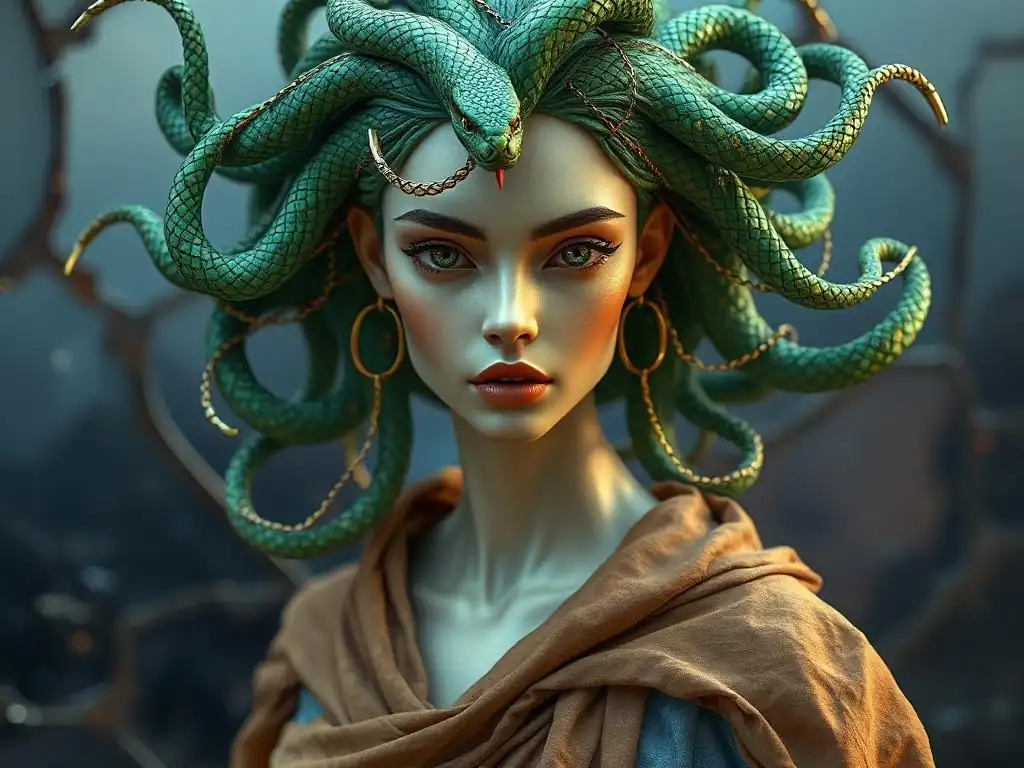
Welcome to Mythology and Legends, where we delve into the timeless tales that shape our world. Prepare to journey beyond the familiar and discover the enduring power of myth. Ever wondered how ancient monsters still haunt our imaginations? Dive into " Reimagining Medusa: Gorgons and Monsters with a Modern Twist" and unravel the surprising symbolism and modern interpretations that continue to resonate today. What secrets lie within the Gorgon's gaze? Read on to find out...
- Introduction: The Enduring Allure of Gorgons in Contemporary Culture
- The Ancient Gorgon: A Foundation of Fear and Fascination
- Modern Interpretations of Medusa: Beyond the Monster
- Gorgons in Visual Storytelling: Film, Art, and Video Games
- Gorgons: Symbolism in Modern Society
- Modern Gorgons: Medusa in Percy Jackson
- The Future of Gorgons: Continued Evolution and Reinterpretation
- Conclusion: The Gorgon's Enduring Legacy and Modern Relevance
-
Frequently Asked Questions
- What are the most common modern interpretations of Gorgons like Medusa?
- How has the symbolism of the Gorgons evolved in contemporary society?
- Besides Medusa, were there other notable Gorgons in Greek mythology, and how are they being reinterpreted today?
- How do modern interpretations address the monstrous aspects of the Gorgons, moving beyond simple villainization?
- What is the significance of exploring the symbolism of Gorgons in the context of contemporary society?
- Final Reflection: Reframing the Monster: Medusa's Enduring Legacy
- Unleash Your Inner Mythmaker: Reimagine Medusa's Story!
Introduction: The Enduring Allure of Gorgons in Contemporary Culture
Exploring the Gorgon Myth: From Ancient Greece to Today
The myth of the Gorgon, particularly the infamous Medusa, has captivated human imagination for millennia. Originating in ancient Greek mythology, these monstrous sisters, often depicted with venomous snakes for hair and a gaze that turned mortals to stone, served as potent symbols of terror and the unknown.
While their core narrative involves heroes like Perseus conquering fear in physical form, the story's resilience lies in its adaptability. Today, Gorgons appear across a vast spectrum of media, from literature and film to video games and fine art, proving that their symbolic power transcends their ancient origins and continues to resonate deeply in modern culture.
This enduring presence highlights the significant influence of Gorgons modern interpretations symbolism. Unlike many other ancient monsters that have faded into obscurity, the Gorgon, especially Medusa, has been continuously revitalized and recontextualized. This process involves stripping away layers of traditional narrative to explore the underlying psychological, social, and cultural meanings embedded in the myth. Contemporary creators are not merely retelling the old stories but actively engaging with them, asking new questions about victimhood, power, and representation, ensuring the Gorgon remains a dynamic and relevant figure in the 21st century.
Why Medusa Still Matters: The Power of Ancient Symbolism
Medusa's persistence in the modern consciousness isn't solely due to her striking appearance; it's rooted in the potent symbolism she embodies. In antiquity, she represented chthonic fears, the dangers of the feminine wild, and the ultimate, petrifying gaze of death or divine wrath. Yet, these ancient symbols are remarkably malleable and continue to be reinterpreted through a contemporary lens. Her story, often reduced to the heroic slaying of a monster, contains complex layers regarding beauty, transformation, and punishment that speak to ongoing societal issues.
The fascination with Medusa's symbolism in modern interpretations stems from its capacity to reflect current anxieties and empower marginalized narratives. For example, her petrifying gaze, once a symbol of dread, is now often reinterpreted as a protective shield or a weapon of justified rage against injustice. This shift underscores how Gorgons modern interpretations symbolism can evolve, taking elements from the original myth – like transformation or a powerful, dangerous gaze – and imbuing them with new, often subversive, meanings relevant to contemporary discussions around gender, trauma, and power dynamics.
The Ancient Gorgon: A Foundation of Fear and Fascination
Medusa's Origins: Tracing the Roots of the Myth
Tracing Medusa's origins involves navigating various ancient Greek texts, most notably Hesiod's Theogony (circa 700 BCE) and later accounts by authors like Apollodorus and Ovid. Hesiod describes the Gorgons as daughters of the sea deities Phorcys and Ceto, placing them among a lineage of monstrous, primordial beings. Early depictions often portrayed them as truly grotesque, with fangs, scales, and sometimes even wings, embodying primal fears associated with the untamed natural world and the chaotic forces of the deep sea.
Later accounts, particularly Ovid's Metamorphoses (8 CE), introduced a pivotal element that drastically shaped future interpretations: Medusa was originally a beautiful mortal priestess of Athena who was raped by Poseidon in Athena's temple. Athena, enraged not at Poseidon but at Medusa for the desecration of her sacred space, cursed her by transforming her into the monster with serpentine hair and a deadly gaze. This version adds a tragic layer to Medusa's story, shifting her from a purely monstrous entity to a figure marked by divine punishment and victimhood, a narrative arc crucial to Gorgons modern interpretations symbolism.
The Gorgon Sisters: Stheno, Euryale, and Medusa
While Medusa is the most famous, she was one of three Gorgon sisters: Stheno, Euryale, and Medusa. According to Hesiod, Stheno ("the Mighty") and Euryale ("the Far Springer") were immortal, whereas Medusa ("the Guardian") was mortal. This distinction is critical, as it is Medusa's mortality that makes her vulnerable to being slain by Perseus, setting her story apart from her sisters and cementing her place as the central figure of the myth.
The sisters resided far to the west, often described as living near the edge of the world. While less detailed accounts exist of Stheno and Euryale compared to Medusa, their inclusion emphasizes a collective, formidable force. They are often depicted together, a terrifying trio embodying the same petrifying power. The fact that Medusa is the only mortal sister highlights her unique fate and positions her as the nexus through which the Gorgon myth intersects with heroic narrative, a point of focus for analyzing Gorgons modern interpretations symbolism.
The Petrification Power: Symbolism of Fear and Transformation
The Gorgons' most iconic trait is their ability to turn onlookers to stone with a direct gaze. This petrification power is perhaps the most potent symbol associated with them. In ancient contexts, it represented the paralyzing effect of fear, the finality of death, or the overwhelming power of the divine or monstrous. To look upon a Gorgon was to lose one's life and autonomy, becoming a lifeless statue – a transformation from living being to inanimate object.
Beyond simple fear, the petrification can symbolize a state of being frozen by trauma, shame, or societal judgment. This particular interpretation is heavily explored in Gorgons modern interpretations symbolism. The act of being turned to stone can represent silencing, immobilization, or the objectification of the victim. Conversely, Medusa's head, post-mortem, retained this power and was used by Perseus as a weapon, demonstrating the complex duality of this ability – a source of terror for victims, but a tool of power for those who control it.
Modern Interpretations of Medusa: Beyond the Monster
Medusa as a Victim: Reframing the Narrative
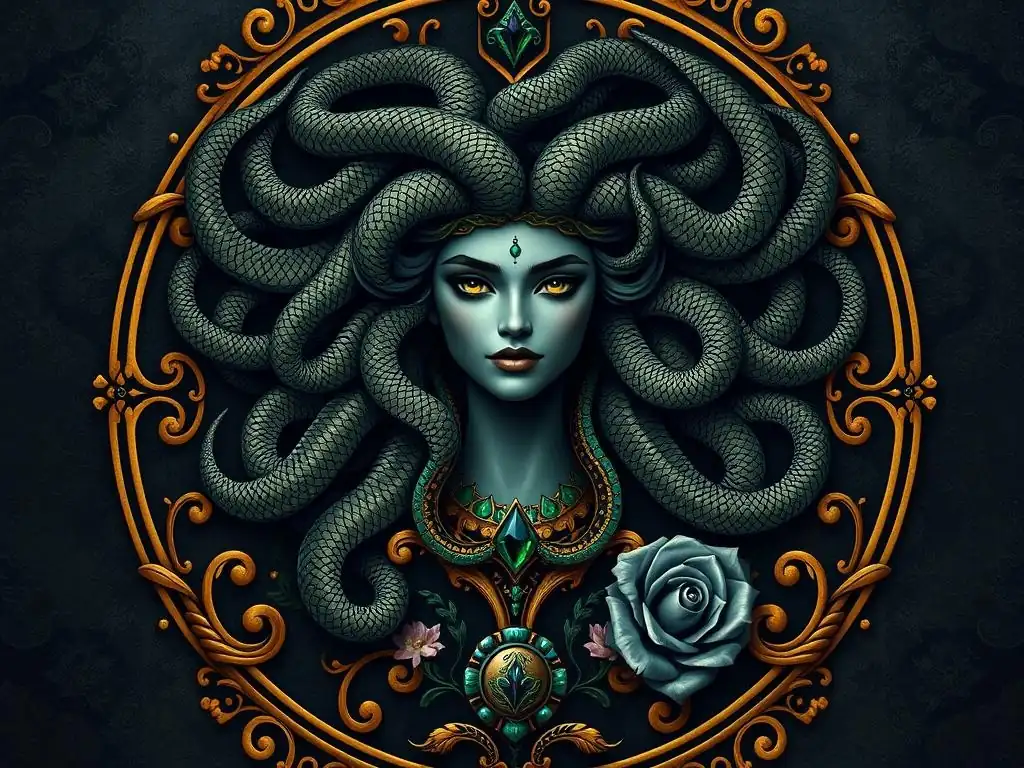
One of the most significant shifts in Gorgons modern interpretations is the widespread re-evaluation of Medusa not as a monstrous villain, but as a tragic victim. This perspective primarily draws from Ovid's account, focusing on her transformation as a punishment for being violated. Modern retellings often foreground this aspect, portraying Medusa's serpentine form and deadly gaze not as inherent evil, but as a defense mechanism or a curse imposed upon her against her will.
This reframing challenges the traditional heroic narrative where Perseus is solely a triumphant hero. Instead, stories explore Medusa's internal struggle, her isolation, and the injustice of her fate. Authors and artists delve into the psychological impact of her transformation and the burden of her petrifying gaze, presenting her as a figure worthy of empathy rather than fear. This victim-centric view is a cornerstone of contemporary analysis of Gorgons modern interpretations symbolism, offering a powerful allegory for those who have suffered injustice or trauma.
Medusa as a Symbol of Female Rage and Empowerment
Parallel to the victim narrative, Medusa has also been reclaimed as a powerful symbol of female rage and empowerment. In this interpretation, her monstrous form and deadly gaze are seen not as a curse, but as a source of formidable power wielded by a woman wronged. Her transformation, while tragic in origin, grants her the ability to defend herself and strike fear into those who might harm her.
This perspective resonates strongly within feminist discourse, where Medusa's image is often used to represent the justified anger of women against patriarchal violence and oppression. Her petrifying gaze becomes a metaphor for a woman's power to confront, challenge, and neutralize aggressors. T-shirts featuring Medusa's head with slogans like "Don't Look At Me" or "Nevertheless, She Persisted" illustrate this popular reclaiming of her image as an icon of fierce, protective, and unapologetic female strength, highlighting a potent aspect of Gorgons modern interpretations symbolism.
Gorgons in Modern Literature: Retellings and Reinterpretations
Modern literature has been a fertile ground for exploring complex Gorgons modern interpretations symbolism. Authors have approached the myth through various genres, offering diverse perspectives that challenge the traditional narrative. For instance, novels like Medusa's Daughter by Laurel A. Rockefeller (2012) or Stone Blind by Natalie Haynes (2023) explicitly center Medusa's perspective, detailing her life before and after her transformation, often portraying her as a sympathetic or even heroic figure forced into monstrousness.
These literary retellings often delve deep into the psychological aspects of the myth, exploring themes of isolation, trauma, and the burden of power. They frequently re-examine the roles of other characters, such as Athena and Perseus, offering critical perspectives on their actions. By giving Medusa a voice and agency, these works significantly contribute to the evolving understanding of Gorgons modern interpretations symbolism, moving beyond a simple monster tale to explore nuanced human (or formerly human) experiences.
Gorgons in Visual Storytelling: Film, Art, and Video Games
Medusa on Screen: From Classic Cinema to Modern Blockbusters
Medusa has been a recurring figure in cinema, evolving significantly over time. Early appearances, such as in the Ray Harryhausen stop-motion classic Clash of the Titans (1981), depicted her as a terrifying, snake-bodied monster, a pure embodiment of the ancient fear. This portrayal leaned heavily into the horrific aspects of the myth, focusing on the visual spectacle of her lair and her deadly gaze.
More recent films, including the remake of Clash of the Titans (2010) and appearances in franchises like Percy Jackson (2010), have varied in their portrayal. While still monstrous, some versions hint at her tragic backstory or present her with a degree of complexity. Her inclusion in major films underscores her enduring visual impact and the public's continued fascination with the Gorgon image, demonstrating how film adapts and disseminates Gorgons modern interpretations symbolism to a wide audience.
Gorgons in Contemporary Art: Challenging Traditional Representations
Contemporary art provides a powerful platform for challenging and reinterpreting mythological figures, and Medusa is a frequent subject. Artists use her image to explore themes of power, vulnerability, beauty standards, and the gaze. Unlike traditional art that often depicted her decapitated head as a symbol of victory over monstrosity, modern artists frequently portray Medusa as a living, complex being.
For example, Luciano Garbati's sculpture Medusa with the Head of Perseus (2008) flips the narrative entirely, depicting Medusa holding the severed head of her slayer. This provocative piece directly confronts the traditional power dynamic and serves as a potent symbol of retribution and female agency. Such artistic interventions are crucial in shaping Gorgons modern interpretations symbolism, prompting viewers to question established narratives and consider alternative perspectives on the ancient myth.
Gorgons in Video Games: Power, Myth, and Gameplay Mechanics
Video games offer interactive experiences that engage players directly with mythological figures like Gorgons. In games, Gorgons often appear as formidable enemies, utilizing their petrifying gaze as a challenging gameplay mechanic. Titles like God of War (since 2005) feature Medusa and other Gorgons as boss battles or recurring foes, requiring players to learn specific strategies to avoid their deadly stare.
Beyond simple combat, some games integrate Gorgons into deeper narratives, drawing on elements of their myths. For instance, their connection to transformation or their role as ancient, powerful beings is sometimes explored. The interactive nature of games allows players to directly experience the power and danger associated with Gorgons, solidifying certain aspects of their symbolism while also introducing new ones related to challenge, strategy, and overcoming seemingly insurmountable obstacles within the digital realm, further diversifying Gorgons modern interpretations symbolism.
Gorgons: Symbolism in Modern Society
Medusa as a Symbol of Trauma and Abuse
One of the most profound aspects of Gorgons modern interpretations symbolism is the connection drawn between Medusa's story and the experience of trauma, particularly sexual assault. Ovid's account of her violation by Poseidon and subsequent punishment by Athena resonates deeply with narratives of victim-blaming and the lasting, transformative impact of abuse. Her monstrous form can be seen as a manifestation of the trauma itself – a visible, physical representation of internal pain and violation.
The petrifying gaze, in this context, can symbolize the dissociative effects of trauma, the feeling of being frozen or unable to move or speak. It can also represent the survivor's gaze turning outward, a protective mechanism developed in response to violation, or the societal gaze that blames and ostracizes victims. This interpretation provides a powerful framework for understanding Medusa's transformation not as a divine curse for impurity, but as a tragic consequence of violence, making her a potent, albeit painful, symbol for survivors in contemporary discourse on Gorgons modern interpretations symbolism.
Gorgons and Feminist Interpretations: Reclaiming the Narrative
Feminist interpretations have been pivotal in reshaping Gorgons modern interpretations symbolism. By focusing on Medusa's victimhood and her subsequent power, feminists have reclaimed her image from that of a mere monster to an icon of female resilience, rage, and resistance. This involves analyzing the myth through a critical lens, questioning the patriarchal structures inherent in the original story where a powerful male god commits assault and a female goddess punishes the female victim.
This reclaiming effort positions Medusa as a symbol of defiance against oppressive systems. Her serpentine hair, once a mark of her monstrousness, is sometimes celebrated as a symbol of connection to nature or ancient, untamed power. Her deadly gaze becomes a tool for self-protection and empowerment, enabling her to turn the tables on those who would harm or objectify her. This feminist reframing has significantly broadened the scope of Gorgons modern interpretations symbolism, making her relevant to contemporary struggles for gender equality and justice.
The Enduring Power of the Gorgon: Relevance in the 21st Century
The Gorgon, particularly Medusa, remains profoundly relevant in the 21st century precisely because her myth is so adaptable to contemporary concerns. She embodies fundamental human experiences – fear, transformation, power, victimhood, and resilience – that continue to resonate across cultures and generations. As society grapples with issues like gender inequality, trauma, the nature of power, and the ethics of representation, Medusa's story provides a rich, mythological framework for exploration and discussion.
Her image persists in popular culture, academic analysis, and activist movements, demonstrating her continued symbolic power. Whether seen as a terrifying monster, a tragic victim, a symbol of righteous rage, or an icon of survival, the Gorgon myth offers a mirror to contemporary society's anxieties and aspirations. This ongoing engagement ensures that Gorgons modern interpretations symbolism remains a dynamic and evolving field, reflecting the changing cultural landscape.
Modern Gorgons: Medusa in Percy Jackson
Analysis of Medusa in Percy Jackson: Deconstructing the Symbolism
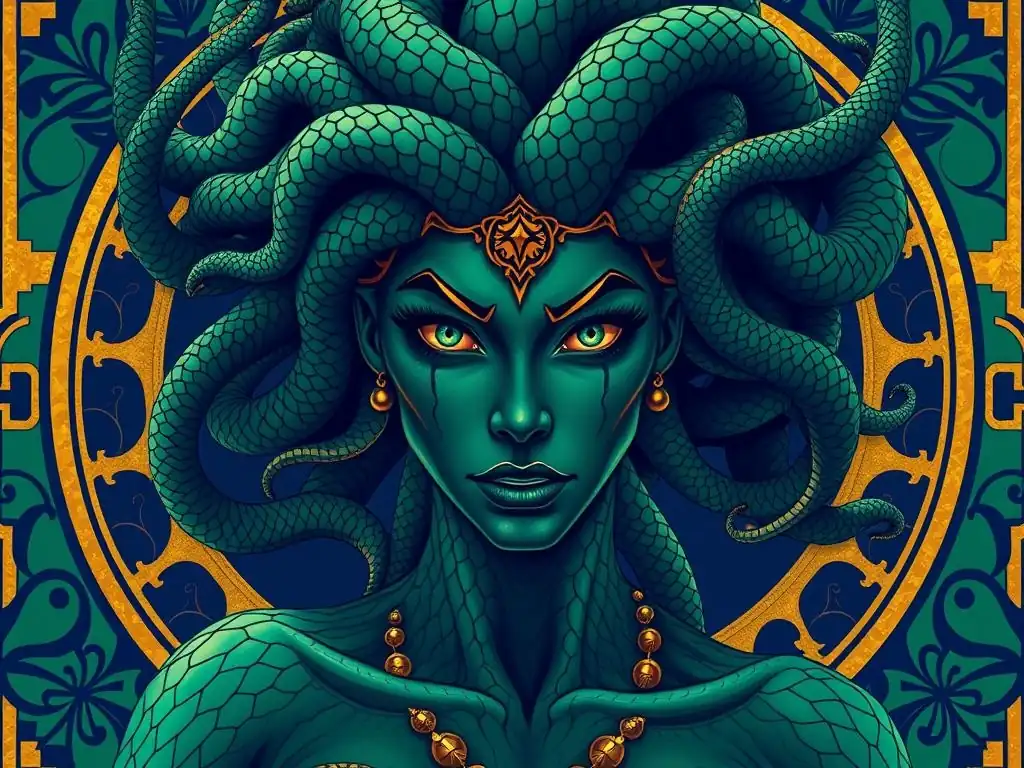
Rick Riordan's Percy Jackson & The Lightning Thief (2005) features a notable modern portrayal of Medusa (referred to as "Aunty Em"). Riordan incorporates several layers of Gorgons modern interpretations symbolism while adapting the myth for a young adult audience. He maintains her core ability to petrify but adds elements of deceptive hospitality, running a roadside curio shop filled with her stone victims.
Riordan's Medusa embodies elements of both the ancient monster and the modern victim interpretation. She is dangerous and actively seeks to turn Percy and his friends to stone, fulfilling her role as an antagonist. However, she also speaks with a certain bitterness about her fate and her treatment by the gods, hinting at the tragic backstory popularized by Ovid. Her disguise as a seemingly harmless figure adds a layer of symbolism about hidden dangers and appearances being deceiving, deconstructing the straightforward monster trope.
How Percy Jackson Reimagines the Gorgon Myth
The Percy Jackson series reimagines the Gorgon myth by placing it within a contemporary American setting. Medusa operates a business ("Aunty Em's Garden Gnome Emporium") rather than residing in a mythical lair, grounding the ancient monster in the mundane modern world. This juxtaposition highlights the idea that mythological dangers can lurk in unexpected places.
Furthermore, Riordan's narrative requires Percy to defeat Medusa using modern tools (a polished sphere from a quest item, a reflection in a garden gnome) alongside mythological strategy (using a reflective surface, as Perseus did). This blend of ancient myth and modern elements is central to the series' appeal and how it presents Gorgons modern interpretations symbolism to a new generation, making the old myths feel relevant and accessible.
The Impact of Percy Jackson on Modern Audiences
The portrayal of Medusa and other mythological figures in the Percy Jackson series has had a significant impact on modern audiences, particularly young readers. By integrating these myths into engaging, fast-paced adventure stories, Riordan has introduced millions to classical mythology. This exposure encourages curiosity about the original myths and their complex symbolism.
While Riordan's portrayal of Medusa simplifies some of the deeper tragic or feminist interpretations found elsewhere, it retains key elements like the petrifying gaze and the conflict with heroes. More importantly, it places the Gorgon within a context where gods and monsters are real but live among humans, normalizing mythological concepts. This broad exposure ensures the continued relevance of Gorgons modern interpretations symbolism by making the figure familiar and intriguing to a vast new readership who may then explore more complex retellings.
The Future of Gorgons: Continued Evolution and Reinterpretation
The Ongoing Fascination with Monsters and Myths
Humanity's fascination with monsters and myths is a constant across cultures and time periods. These stories provide frameworks for understanding the world, confronting fears, and exploring the boundaries of the known. Monsters like the Gorgon embody primal anxieties and serve as foils for heroic narratives, but they also offer fertile ground for symbolic exploration.
The enduring appeal of figures like Medusa stems from their malleability. They are powerful archetypes that can be stripped down and rebuilt to reflect contemporary concerns. As long as societies grapple with themes of power, fear, identity, and transformation, mythological monsters will likely continue to be reimagined. This inherent fascination ensures that Gorgons modern interpretations symbolism will remain a dynamic area of cultural production.
How Future Creators Might Reimagine the Gorgon Myth
Future reimaginings of the Gorgon myth could explore even further dimensions of Gorgons modern interpretations symbolism. Creators might delve deeper into the experiences of Stheno and Euryale, the immortal sisters, exploring themes of eternal grief or unchanging monstrousness versus Medusa's mortal tragedy. They might also imagine Medusa in speculative future settings, considering how her powers or symbolism would manifest in technological or post-human contexts.
Another avenue could involve exploring the perspective of those turned to stone – what is their experience? Are they conscious? This could lead to powerful allegories about objectification, paralysis, or even a silent, enduring form of witness. As social understandings of trauma, identity, and justice continue to evolve, the Gorgon myth offers a versatile canvas for creators to reflect these changes, ensuring the continued evolution of Gorgons modern interpretations symbolism.
The Importance of Understanding Ancient Symbolism in Modern Contexts
Understanding the ancient symbolism of the Gorgon is crucial for appreciating the depth and complexity of its modern interpretations. The power of figures like Medusa in contemporary culture is amplified by their long history. Knowing the original stories – the fear they inspired, the narratives of heroes and gods, the differing accounts of Medusa's origin – provides a vital context for understanding how and why modern creators choose to emphasize certain aspects and subvert others.
Recognizing the layers of meaning built up over millennia allows for a richer analysis of Gorgons modern interpretations symbolism. It highlights how ancient archetypes can be repurposed to speak to current issues, demonstrating the continuity of human experience and the enduring power of myth to provide language and imagery for our deepest concerns. Engaging with the ancient roots makes the modern branches all the more meaningful.
Conclusion: The Gorgon's Enduring Legacy and Modern Relevance
Gorgons: More Than Just Monsters
The journey from ancient Greek terror to modern cultural icon reveals that Gorgons, particularly Medusa, are far more than just simple monsters. They are complex symbols that have evolved alongside human society. Originally embodying primal fears and divine power, their narrative has been rewoven to explore themes of victimhood, trauma, resilience, and female empowerment.
Their persistence across diverse media – literature, film, art, games – underscores their potent symbolic resonance. Gorgons modern interpretations symbolism reflects a cultural need to revisit foundational myths and find new meaning in old stories, adapting them to address contemporary anxieties and aspirations.
The Power of Myth in Shaping Contemporary Culture
The continued prominence of the Gorgon myth exemplifies the profound power of ancient narratives in shaping contemporary culture. Myths provide a shared cultural language and a repository of powerful archetypes that creators and audiences alike can draw upon. They offer frameworks for understanding complex issues and exploring the human condition in ways that resonate deeply.
The ongoing reinterpretation of Gorgons modern interpretations symbolism demonstrates that myths are not static relics of the past but living narratives that continue to evolve and influence how we see ourselves and the world around us. As long as we tell stories, ancient figures like the Gorgon will likely continue to find new life and meaning.
Frequently Asked Questions
What are the most common modern interpretations of Gorgons like Medusa?
Gorgons are often seen as symbols of female rage and resistance against patriarchal oppression. Their monstrous appearance is reinterpreted as a manifestation of trauma and power.
How has the symbolism of the Gorgons evolved in contemporary society?
The Gorgons' symbolism has shifted from representing pure evil to embodying female empowerment and victimhood. They are now frequently used in art and literature to explore themes of abuse and survival.
Besides Medusa, were there other notable Gorgons in Greek mythology, and how are they being reinterpreted today?
Yes, Stheno and Euryale were Medusa's sisters. Modern interpretations often portray them as complex characters with their own distinct stories, challenging the traditional focus solely on Medusa.
How do modern interpretations address the monstrous aspects of the Gorgons, moving beyond simple villainization?
Modern narratives explore the origins of their monstrous traits, often attributing them to divine punishment or societal pressures, fostering empathy and understanding.
What is the significance of exploring the symbolism of Gorgons in the context of contemporary society?
Examining Gorgons helps us understand modern anxieties related to power dynamics, gender roles, and the consequences of trauma, prompting critical reflection on societal norms.
Final Reflection: Reframing the Monster: Medusa's Enduring Legacy
The enduring power of Medusa's myth lies not in her monstrous form, but in our ongoing struggle to redefine what constitutes monstrosity. Her image, once solely a symbol of fear and petrification, now serves as a potent lens through which we examine societal anxieties, female empowerment, and the complexities of otherness. This reimagining is not merely an academic exercise; it's a vital conversation reflecting our own evolving understanding of power, trauma, and the fluidity of identity.
Medusa's story, constantly reinterpreted through art, literature, and film, reveals the shifting sands of our cultural values. Her transformation from a purely villainous figure to a complex symbol of female rage and victimhood speaks volumes about our growing awareness of patriarchal structures and the silencing of marginalized voices. The monster is always the one who is different, the one who does not fit into the norm.
This quote, though not directly about Medusa, perfectly encapsulates the ongoing relevance of her myth in a world still grappling with prejudice and the demonization of the "other."
Consider Medusa's gaze. Once a weapon of destruction, it now invites us to confront our own fears and biases. What monsters do we create in our own minds, and how can we challenge the narratives that perpetuate them?
This article has explored various modern interpretations of Medusa, but the true power lies in your own reflection. Take this opportunity to examine the "monsters" in your life – the prejudices, the fears, the societal constructs that limit us – and reimagine them, just as we have reimagined Medusa. Let her gaze inspire you to create a more compassionate and understanding world.
Unleash Your Inner Mythmaker: Reimagine Medusa's Story!
Thanks for joining us on this fascinating journey into the world of Medusa and the Gorgons! We hope you gained a fresh perspective on this iconic figure. Now it's time to put your newfound knowledge to use.
- Craft your own Medusa story: Let your imagination run wild! How would you reimagine her tale in a modern context? Write a short story, poem, or even a song inspired by your new understanding.
- Share your creative reimagining: Post your creation on social media using #MyMedusaMyth and tag us! Let's build a community of myth-reimagining artists.
- Explore other monstrous legends: Dive deeper into our archive to uncover more fascinating stories of monsters and mythology. What other creatures deserve a modern retelling?
What unique twist would you add to Medusa's legacy? Let us know in the comments!