
David vs. Goliath: More Than Just a Stone and a Sling?

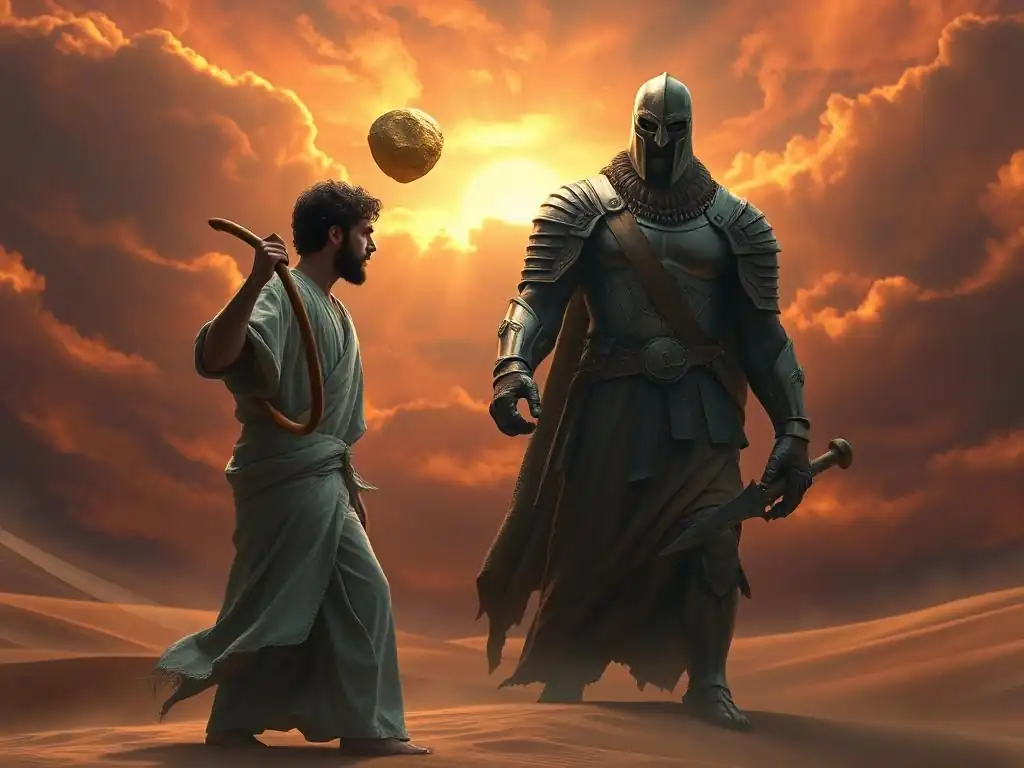
Welcome to Mythology and Legends, where we delve into the captivating stories that have shaped cultures for millennia. Ever wondered if the tale of David and Goliath holds deeper meaning than just a shepherd defeating a giant? Prepare to unravel the ancient David Goliath symbolism meanings and discover how this iconic battle resonates even today. Intrigued? The journey into the heart of hero myths and legendary figures begins now...
- David vs. Goliath: Unpacking Ancient Symbolism and Meanings
- Ancient David Goliath Symbolism: Deciphering the Deeper Meanings
- Examining the Cultural Impact of the David and Goliath Narrative
- Deconstructing the Myth: Historical Context and Possible Origins
- The Enduring Appeal of the David and Goliath Story: Why It Still Resonates Today
- Analyzing the Layers of Ancient David Goliath Symbolism Meanings
- David and Goliath: A Timeless Tale of Courage and Faith
-
Frequently Asked Questions
- ### What is the primary symbolic meaning associated with the story of David and Goliath?
- ### Beyond religious interpretations, what are some secular interpretations of the David and Goliath narrative?
- ### How has the David and Goliath story influenced contemporary society and popular culture?
- ### Are there different interpretations of the David and Goliath story across various cultures or religions?
- ### What aspects of the David and Goliath story contribute to its enduring appeal and relevance?
- Final Reflection: Reframing Power: The Enduring Legacy of David and Goliath
- Unleash Your Inner David: Conquer Your Giants Today!
David vs. Goliath: Unpacking Ancient Symbolism and Meanings
The Biblical Narrative: David's Triumph Over Goliath
The story of David and Goliath is recounted in the First Book of Samuel, chapter 17. It describes a confrontation between the Israelites, led by King Saul, and the Philistines in the Valley of Elah.
The Philistines presented a champion, Goliath of Gath, a giant described as standing "six cubits and a span" tall, which translates to approximately 9 feet 9 inches (or about 2.97 meters), though some textual traditions suggest a slightly shorter height of four cubits and a span (around 6 feet 9 inches, or 2.06 meters). Goliath wore bronze armor weighing an estimated 125 pounds (about 57 kg) and carried a spearhead alone weighing "six hundred shekels of iron," roughly 15 pounds (about 6.8 kg).
For forty days, Goliath challenged the Israelite army to send a champion to fight him, with the outcome of the duel determining the fate of the two nations – the losers would become subjects of the winners.
Into this stalemate steps David, a young shepherd boy, the youngest son of Jesse. He comes to the battlefield to bring supplies to his older brothers. Outraged by Goliath's defiance of the Israelite God and seeing the fear in the soldiers, David volunteers to fight the giant. Despite Saul's skepticism and attempt to equip him with heavy armor (which David discards), David approaches Goliath armed only with his shepherd's staff, five smooth stones from a stream, and his sling.
With remarkable skill and faith, David uses his sling to hurl a single stone that strikes Goliath in the forehead, felling the giant. David then uses Goliath's own sword to kill him and cut off his head, leading to the Philistine army's rout and the Israelite victory. This act instantly elevates David from an obscure shepherd to a hero and sets the stage for his eventual kingship.
Beyond the Bible: Exploring Interpretations of the David and Goliath Story
While rooted in the biblical text, the narrative of David and Goliath has transcended its original context to become a universal archetype. Beyond a simple historical or theological account, the story is widely interpreted as a powerful allegory for confronting insurmountable odds. Various traditions and scholars have explored its layers, viewing it not just as a military victory but as a testament to faith, courage, divine intervention, or the power of unexpected tactics. The ancient David Goliath symbolism meanings are rich and multifaceted, speaking to different aspects of human experience and conflict.
Interpretations vary across religious, cultural, and historical lines. In Jewish tradition, it is seen as a demonstration of God's power working through the humble. Christian interpretations often view David as a prefigurement of Christ, the seemingly weak figure who overcomes overwhelming evil.
Secular analyses often focus on the strategic elements – the agile, lightly-equipped fighter defeating a heavily armored, less mobile opponent – or the psychological aspect of courage in the face of fear. These diverse readings highlight the story's adaptability and its enduring relevance in explaining power dynamics and the potential for the seemingly weak to triumph over the strong.
Ancient David Goliath Symbolism: Deciphering the Deeper Meanings
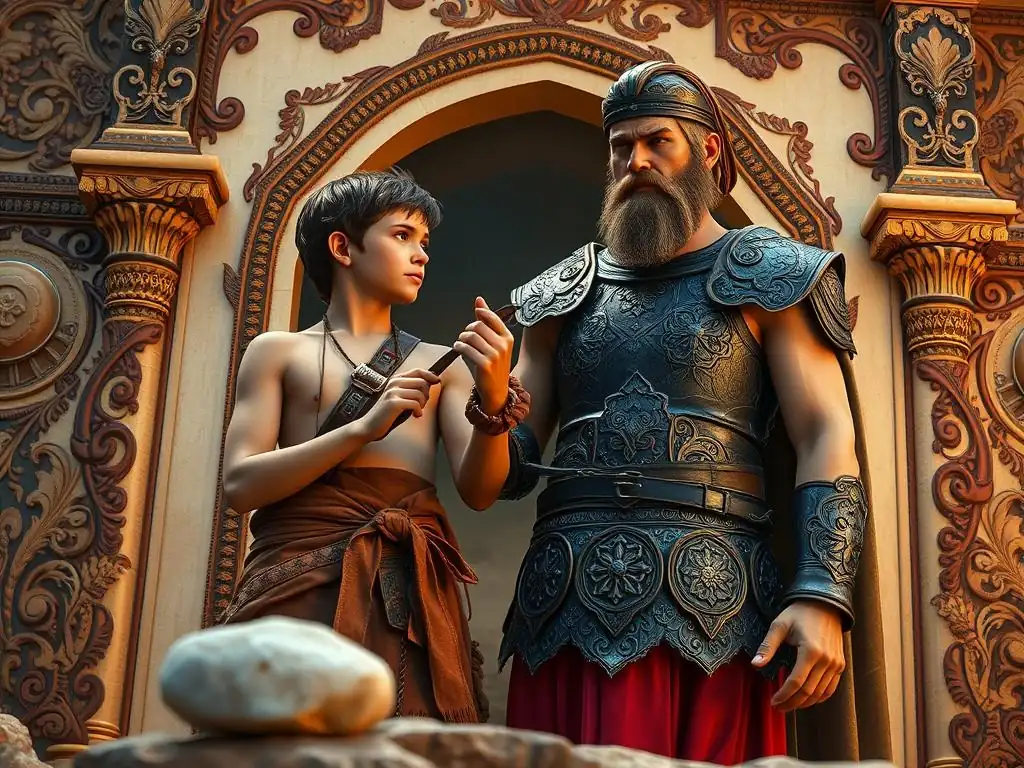
David as the Underdog: Symbolism of Courage and Faith
David, the young shepherd boy facing a seasoned, heavily armed giant, is the quintessential underdog. His willingness to confront Goliath when the entire Israelite army is paralyzed by fear symbolizes profound courage. He relies not on conventional military strength, which he lacks, but on his skill with a sling – a common tool for shepherds defending flocks against predators – and, more importantly, on his unwavering faith in his God.
This faith is explicitly stated when David tells Goliath, "You come against me with sword and spear and javelin, but I come against you in the name of the Lord Almighty... This day the Lord will deliver you into my hands."
The symbolism of David as the underdog resonates deeply because it represents the potential within each individual, regardless of their perceived status or power, to stand up against oppression or overwhelming challenges. His victory is often interpreted as a testament to the idea that inner strength, conviction, and belief – whether religious faith or self-confidence – can overcome superior physical force or resources. This aspect of the ancient David Goliath symbolism meanings provides hope and inspiration, suggesting that the size or apparent power of an adversary is not the sole determinant of the outcome of a conflict.
Goliath as a Symbol of Oppression and Overwhelming Power
Goliath of Gath embodies the symbol of overwhelming power, brute strength, and oppressive force. His immense size, formidable armor, and terrifying challenge represent everything that seems invincible and insurmountable. He is the embodiment of tyranny and the seemingly unbreakable status quo that instills fear and paralyzes action. For the Israelites, trapped and taunted for forty days, Goliath represented their powerlessness in the face of a superior enemy and a challenge to their very identity and faith.
Beyond the literal Philistine warrior, Goliath has come to symbolize any significant obstacle or oppressive system that appears too large and powerful to be challenged. This can range from personal fears and limitations to societal injustices, economic disparities, or political tyranny. The ancient David Goliath symbolism meanings associated with Goliath highlight the nature of these challenges – they are intimidating, they rely on their perceived strength to dominate, and they often provoke despair in those who face them. His eventual defeat underscores the narrative's central message: even the most formidable power can be overcome.
The Stone and Sling: Representing Innovation and Unexpected Victory
David's choice of weapon – a sling and five smooth stones – is highly symbolic, representing innovation, skill, and the power of unconventional approaches. In ancient warfare, the sling was primarily a skirmisher's weapon, effective at range but not typically used by champions in single combat against heavily armored opponents.
David's proficiency with the sling, developed through protecting his flock from lions and bears (as he recounts to Saul), demonstrates how humble, everyday skills can become powerful tools in unexpected contexts. The selection of five stones, while only one was needed, might symbolize preparedness or the abundance of simple resources available to the prepared individual.
The stone and sling, therefore, become potent symbols within the ancient David Goliath symbolism meanings for achieving victory through means that are underestimated or overlooked by the dominant power. Goliath, relying on traditional heavy weaponry and close combat, is unprepared for David's ranged attack. This represents the triumph of agility, precision, and smart tactics over brute force and conventional wisdom. It suggests that victory against a superior foe often requires thinking outside the box, leveraging unique skills, and exploiting the opponent's blind spots or overconfidence in their conventional strength.
Examining the Cultural Impact of the David and Goliath Narrative
David and Goliath in Art and Literature: Reflecting Societal Values
The story of David and Goliath has been a fertile source of inspiration for artists and writers across centuries, reflecting and shaping societal values. In art, masterpieces like Donatello's bronze David (c. 1440s) and Michelangelo's monumental marble David (1501-1504) depict David not in the act of combat but in its aftermath or anticipation, emphasizing themes of youthful triumph, civic virtue, and the potential of the seemingly weak city-state (Florence) to overcome larger adversaries.
Caravaggio's David with the Head of Goliath (multiple versions, early 17th century) often focuses on the grim reality of victory and the complex emotions involved. These artistic interpretations often mirrored the political or religious contexts of their time, using the ancient David Goliath symbolism meanings to comment on contemporary struggles against tyranny or the celebration of humanistic ideals.
Literature has similarly drawn upon the narrative's core themes. From medieval retellings in epic poems to modern novels and plays, the story provides a framework for exploring courage, faith, power dynamics, and social justice.
John Milton's Samson Agonistes (1671), while focusing on Samson, shares thematic elements of a single hero confronting overwhelming forces, drawing on the tradition of biblical strongmen that includes David. More recently, authors like Malcolm Gladwell have used the story in non-fiction works ( David and Goliath: Underdogs, Misfits, and the Art of Battling Giants, 2013) to analyze the advantages that perceived disadvantages can sometimes confer, demonstrating how the ancient David Goliath symbolism meanings remain relevant for understanding contemporary success and conflict.
The David and Goliath Metaphor in Contemporary Society: Facing Seemingly Insurmountable Challenges
The David and Goliath narrative is a pervasive metaphor used to describe any situation where a smaller, weaker, or less resourced entity takes on a larger, stronger, or more established one. This metaphor is commonly invoked in politics, sports, business, and social activism. For instance, a small political movement challenging a powerful incumbent party might be described as a "David vs. Goliath" battle. Similarly, an underdog sports team defeating a highly favored champion is often framed in these terms. The ancient David Goliath symbolism meanings provide a readily understood shorthand for communicating the nature of such unequal contests.
This metaphorical application highlights the enduring psychological power of the story. It offers a narrative of hope that the status quo is not invincible and that courage, strategy, and determination can overcome vast disparities in power or resources. Whether discussing a startup competing with a multinational corporation, a community group fighting against a large development project, or an individual challenging systemic injustice, the reference to David and Goliath immediately evokes the struggle of the underdog and the possibility of an unexpected victory, tapping into the deep-seated human desire to see justice or the improbable triumph.
David and Goliath in Tech Startups: Disrupting Established Industries
A particularly prominent modern application of the David and Goliath metaphor is found in the world of technology startups challenging established industry giants. Startups often begin with minimal funding, small teams, and unproven ideas, facing off against corporations with vast capital, extensive infrastructure, and dominant market share. Companies like Apple, initially a small operation in a garage, challenging giants like IBM in the early computer industry, or Netflix disrupting Blockbuster in the video rental market, are often cited as real-world examples of the David and Goliath dynamic.
In this context, the "stone and sling" represent disruptive technologies, innovative business models, agility, and a focus on specific market niches that the "Goliath" corporations might overlook or be too slow to adapt to. The ancient David Goliath symbolism meanings here emphasize that resources and size are not the only factors determining success. Speed, innovation, customer focus, and a willingness to take risks can allow a small player to challenge and even overturn the dominance of much larger competitors. This application validates the narrative's core message that the underdog has unique advantages that can be leveraged for victory.
Deconstructing the Myth: Historical Context and Possible Origins
The Historical David: Separating Fact from Legend
While the biblical account of David is rich with detail, separating the historical figure from the legendary hero is a complex task for scholars. Archaeological evidence provides some support for the existence of a King David who ruled in the 10th century BCE.
The Tel Dan Stele, discovered in 1993, contains an inscription from the 9th century BCE that refers to the "House of David," suggesting that a dynasty tracing its lineage to a figure named David existed relatively soon after the traditional timeline for the unified monarchy. The Mesha Stele, from approximately the same period, may also contain a reference to the "House of David," though this is debated among scholars.
However, these inscriptions confirm the existence of a ruling house named after David but do not corroborate the specific details of his life, including the battle with Goliath. Most historians agree that David was likely a historical figure who became king and was involved in conflicts with neighboring peoples like the Philistines.
The specific narrative of the single combat with a giant, while powerful symbolically, may have evolved over time through oral tradition or served a specific theological or political purpose in the later written compilation of the biblical texts, making it difficult to verify as a precise historical event.
Goliath's Philistine Origins: Understanding the Context of the Conflict
Goliath is identified as a Philistine from Gath, one of the five principal Philistine city-states (along with Ashdod, Ashkelon, Ekron, and Gaza) located in the southern coastal plain of Canaan. The Philistines were a seafaring people who settled in the region around the 12th century BCE, possibly originating from the Aegean world (like Crete or mainland Greece). They were known for their advanced metallurgy, particularly their early adoption of iron technology, which gave them a military advantage over the Israelites, who at the time primarily used bronze weapons and tools.
The conflict described in 1 Samuel reflects the historical tension between the expanding Israelite tribes in the hill country and the technologically superior Philistines controlling the fertile lowlands and vital trade routes. The Philistines frequently raided Israelite territory and sought to maintain their dominance.
Goliath, with his heavy iron-tipped spear and bronze armor (a combination of metals suggesting potential wealth or access to different technologies), embodies the military might and technological superiority that made the Philistines formidable adversaries for the early Israelites. Understanding this historical context enriches the ancient David Goliath symbolism meanings, highlighting the struggle not just between individuals but between different cultures, technologies, and political powers.
Archaeology provides valuable insights into the world depicted in the David and Goliath story, particularly regarding ancient warfare and technology during the Iron Age I and II periods (roughly 1200-600 BCE). Excavations in Israel and Philistine sites have uncovered fortifications, weapons, and artifacts that shed light on the military capabilities of both peoples.
For example, findings at Philistine sites confirm their proficiency in iron working, providing context for Goliath's iron spearhead. Sites like Khirbet Qeiyafa, overlooking the Valley of Elah, have yielded evidence of fortifications dating to the period often associated with David's kingdom, suggesting Israelite efforts to defend against Philistine incursions.
While no direct archaeological evidence specifically confirms the duel between David and Goliath as described, the general picture of conflict, weaponry, and the presence of fortified settlements in the region during that era aligns with the setting of the story. Sling stones, like those David used, are commonly found at ancient battle sites, confirming the sling's use as a weapon.
Analysis of skeletal remains from the period can sometimes provide insights into injuries sustained in combat, though attributing them to specific biblical events is impossible. This archaeological context helps ground the narrative in a plausible historical setting, even as the specific details of the legendary single combat remain part of the mythic tradition.
The Enduring Appeal of the David and Goliath Story: Why It Still Resonates Today

The Power of Hope: Finding Inspiration in David's Victory
One of the primary reasons the David and Goliath story maintains such potent appeal is its powerful message of hope. In a world where individuals and communities often face challenges that seem overwhelming – systemic injustices, economic hardship, powerful adversaries – the narrative offers a compelling vision of the seemingly impossible becoming reality. David's victory against the giant provides a powerful counter-narrative to fatalism and despair. It suggests that even when the odds are stacked heavily against you, victory is possible through courage, faith, and resourcefulness.
This message resonates because it speaks to a universal human desire for justice and the triumph of good over evil, of the weak over the strong. The ancient David Goliath symbolism meanings centered on hope provide comfort and inspiration in dark times, reminding people that size and power are not the only determinants of success. It encourages individuals and groups facing daunting tasks to believe in their own potential and the possibility of overcoming obstacles that appear insurmountable, fostering a sense of agency and optimism.
The Importance of Perseverance: Never Underestimating the Underdog
The story underscores the critical importance of perseverance and the folly of underestimating those who appear weak or disadvantaged. David, despite being dismissed by his brothers, King Saul, and Goliath himself, persists in his determination to fight. His victory is a direct result of his courage to step forward and his skill, honed through persistent practice as a shepherd. This highlights that preparation, dedication, and resilience are crucial factors that can compensate for a lack of conventional power or status.
The narrative teaches that the "underdog" status can sometimes be a source of strength, fostering creativity, agility, and a deeper commitment to the cause. Those who are underestimated are often overlooked by their powerful opponents, allowing them to employ unexpected strategies. The ancient David Goliath symbolism meanings related to the underdog serve as a reminder that judging capabilities based solely on outward appearances, size, or conventional power structures is a mistake. True strength can manifest in unexpected forms and places.
The David and Goliath story also carries significant moral and political implications, particularly regarding the challenging of authority and perceived power. David's act is not just a military one; it is also an act of defiance against the status quo – the Philistine dominance and the Israelite army's fearful inaction. He challenges Goliath, the symbol of oppressive authority, and in doing so, he challenges the prevailing power structure and the fear that maintains it.
This aspect of the ancient David Goliath symbolism meanings speaks to the moral imperative of standing up against injustice or tyranny, even when it seems dangerous or futile. It suggests that there are times when conventional obedience or passive acceptance is not the right course of action. David's success legitimizes the act of challenging overwhelming power, implying that courage in the pursuit of righteousness or freedom is a virtue, and that such challenges can indeed lead to liberation and change.
Analyzing the Layers of Ancient David Goliath Symbolism Meanings
The Spiritual Significance of David's Victory
For many, the most profound layer of the ancient David Goliath symbolism meanings lies in its spiritual significance. The biblical narrative explicitly frames David's victory not just as a result of his skill, but as an act of divine intervention. David attributes his success directly to the power of "the Lord Almighty," who delivered him from the lion and the bear and would now deliver him from the Philistine giant. This perspective emphasizes that true strength comes from faith and reliance on a higher power, rather than solely on human capabilities or material resources.
In this interpretation, Goliath represents not just a physical enemy but spiritual forces of evil or opposition to God's will. David's victory symbolizes the triumph of faith over doubt, of righteousness over wickedness, and the power of divine providence working through the humble. This spiritual reading underscores the idea that with faith, even the weakest individual can overcome the most formidable spiritual or moral challenges, making the story a foundational narrative within religious traditions about the power of belief and divine assistance.
Beyond the spiritual, the David and Goliath story carries significant social and political implications that have resonated throughout history. It is fundamentally a narrative about power dynamics: the weak challenging the strong, the marginalized confronting the dominant. Socially, it champions the cause of the underdog and suggests that origin or status (shepherd boy vs. champion warrior) does not dictate destiny. Politically, it can be interpreted as a justification for resistance against oppressive regimes or foreign invaders, portraying the smaller, indigenous group overcoming the larger, technologically superior force.
The story has been invoked in various political contexts, from national liberation struggles to civil rights movements, as an inspiring example of how determined resistance can overcome seemingly insurmountable power structures. The ancient David Goliath symbolism meanings in this context highlight themes of national identity, freedom from oppression, and the potential for collective action (the Israelite army routing the Philistines after Goliath's fall) spurred by individual courage. It provides a powerful archetype for understanding and motivating political and social change against entrenched power.
The Psychological Impact of Identifying with the Underdog
On a psychological level, the David and Goliath story has a powerful impact because it taps into the universal human experience of feeling like an underdog at some point in life. Whether facing personal struggles, professional challenges, or societal pressures, most people can relate to the feeling of being outmatched or underestimated. Identifying with David allows individuals to project their own struggles onto a narrative with a victorious outcome.
This psychological connection provides a sense of empowerment and resilience. By seeing David overcome Goliath, individuals can find inspiration to face their own "giants," believing that they too possess the inner resources – courage, skill, faith, determination – to overcome daunting obstacles. The ancient David Goliath symbolism meanings thus offer a potent psychological tool for building self-efficacy and fostering a belief in one's ability to influence outcomes, even in the face of significant adversity.
David and Goliath: A Timeless Tale of Courage and Faith
From Ancient Battle to Modern Inspiration
The journey of the David and Goliath narrative from an ancient battle account to a source of modern inspiration is a testament to its universal themes and enduring power. What began as a story rooted in the specific historical and religious context of ancient Israel has evolved into a global archetype for overcoming adversity. Its adaptability allows it to be applied to countless situations, from boardroom battles to personal health challenges, making it a perpetually relevant narrative.
This transition highlights how myths and legends, even those tied to specific historical claims, can transcend their origins to speak to fundamental human experiences. The core elements – the humble hero, the terrifying giant, the improbable victory – resonate across cultures and time periods, providing a framework for understanding conflict, courage, and the potential for change. The ancient David Goliath symbolism meanings have proven incredibly robust, capable of providing insight and motivation in vastly different contexts than their original setting.
The David and Goliath Story as a Framework for Understanding Conflict
The narrative serves as a powerful and accessible framework for understanding various forms of conflict, particularly those characterized by significant power imbalances. It provides a simple yet profound model for analyzing the dynamics between the strong and the weak, the oppressor and the oppressed, the incumbent and the challenger. By applying the ancient David Goliath symbolism meanings, one can gain perspective on the strategies, challenges, and potential outcomes inherent in such unequal contests.
It encourages an analysis that looks beyond conventional measures of strength (like size or resources) to consider other factors such as courage, strategy, faith, and adaptability. This framework is useful in diverse fields, including military strategy, business competition, social science analysis, and even personal development, providing a lens through which to examine how seemingly disadvantaged parties can effectively compete and succeed against dominant forces.
The Enduring Legacy of David and Goliath: Hope for the Oppressed
The most lasting legacy of the David and Goliath story is its unwavering message of hope, particularly for those who feel oppressed, marginalized, or powerless. It is a narrative that champions the cause of the underdog and asserts that the current distribution of power is not immutable. David's victory stands as an eternal symbol that giants can fall, that tyranny can be overthrown, and that faith and courage can indeed conquer fear and overwhelming force.
This enduring appeal ensures that the ancient David Goliath symbolism meanings will continue to inspire generations. It provides a powerful cultural touchstone for anyone facing a daunting challenge, reminding them that the battle is not decided solely by the size of the opponent but by the spirit and strategy of the fighter. The story of the shepherd boy and the giant remains a beacon of hope, a timeless reminder that even with just a stone and a sling, victory is possible.
Frequently Asked Questions
### What is the primary symbolic meaning associated with the story of David and Goliath?
The story primarily symbolizes the triumph of the underdog against seemingly insurmountable odds. It represents faith and courage overcoming superior power and size, often interpreted as a victory of the spirit.
### Beyond religious interpretations, what are some secular interpretations of the David and Goliath narrative?
Secular interpretations often focus on the power of strategy and innovation in overcoming conventional strength. It can represent the effectiveness of asymmetric warfare or the importance of unconventional approaches.
### How has the David and Goliath story influenced contemporary society and popular culture?
The story has become a ubiquitous metaphor for any situation where a weaker party defeats a stronger one. It's frequently used in business, sports, and political contexts to describe improbable victories.
### Are there different interpretations of the David and Goliath story across various cultures or religions?
While the core narrative remains consistent, interpretations can vary. Some cultures may emphasize divine intervention more strongly, while others focus on David's skill and resourcefulness.
### What aspects of the David and Goliath story contribute to its enduring appeal and relevance?
The story's enduring appeal lies in its universal themes of hope, courage, and the potential for the seemingly weak to triumph. It provides a powerful narrative of overcoming adversity that resonates across generations and cultures.
Final Reflection: Reframing Power: The Enduring Legacy of David and Goliath
The story of David and Goliath resonates far beyond a simple tale of underdog victory; it's a timeless parable that continues to challenge our perceptions of power, strength, and faith in the face of overwhelming odds. The seemingly insurmountable obstacles David faced—a giant warrior, a vast disparity in weaponry, and the doubt of his own people—mirror the struggles individuals and societies encounter even today. This enduring relevance speaks to the story's profound capacity to inspire hope and resilience in the face of adversity.
The David and Goliath narrative has profoundly shaped our cultural understanding of courage, ingenuity, and the potential for the seemingly weak to overcome the mighty. Its influence permeates our language, our art, and our collective consciousness. We use the phrase "David and Goliath" to describe any battle between a seemingly weaker force and a powerful opponent. This enduring legacy underscores the story's power to transcend its historical context. The battle is not to the swift, nor the battle to the strong, neither yet bread to the wise, nor yet riches to men of understanding, nor yet favour to men of skill; but time and chance happeneth to them all.
This Ecclesiastes verse, often associated with the David and Goliath story, highlights the unpredictable nature of power and the role of fate, reminding us that perceived advantages are not always decisive.
Consider the implications of this ancient story in your own life. What seemingly insurmountable "Goliaths" do you face? How can you, like David, harness your unique strengths, resources, and faith to overcome them?
Don't let the size of the challenge paralyze you; instead, embrace the opportunity to discover your own inner strength and resilience. The story of David and Goliath isn't just a historical anecdote; it's a call to action, a reminder that even the smallest among us possess the potential for greatness. Let the spirit of David inspire you to face your own giants with courage, faith, and unwavering determination.
Unleash Your Inner David: Conquer Your Giants Today!
Thanks for diving into the epic tale of David and Goliath! We hope you gained a new perspective on courage, faith, and the power of believing in yourself. Now it's time to take action and apply these timeless lessons to your own life.
- Identify and confront your own "Goliath": What challenges are you facing that seem insurmountable? Take a moment to write them down and brainstorm strategies to overcome them. This is your first step towards victory.
- Share your personal "Goliath" story: Inspire others by sharing your challenges and how you plan to tackle them in the comments below. Let's build a community of support!
- Celebrate your small victories: Acknowledge and appreciate every step you take, no matter how small. Remember, even David's victory started with a single, well-aimed stone.
What seemingly impossible obstacle are you ready to face today?