Heidegger's Mythic Roots: Rethinking Being Through Ancient Stories
🌟 Explore how Heidegger’s myths and philosophy draw from ancient stories to reshape our understanding of being, revealing the profound influence of…
Read article
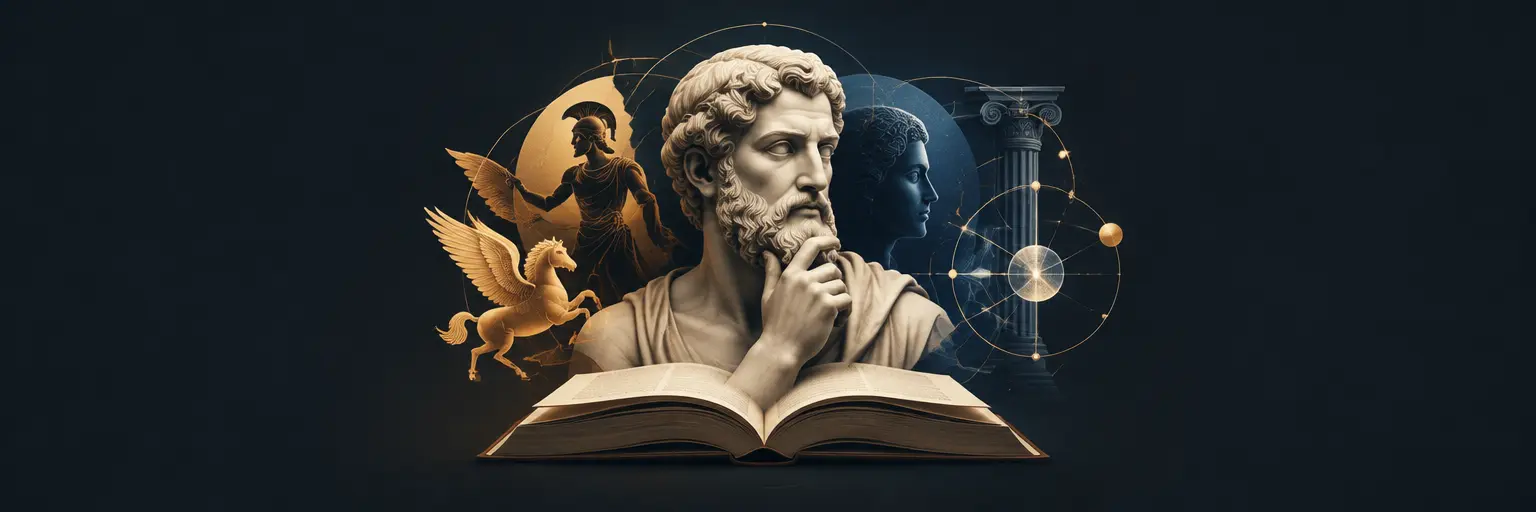
Unlock the enduring power of ancient stories and their deep philosophical roots, where timeless myths meet the big questions of existence. Explore how mythology shapes human thought, morality, and identity, and discover how these narratives continue to challenge and inspire modern life. From the wisdom of Greek tragedies to Eastern parables and Indigenous cosmologies, this interdisciplinary hub bridges narrative, ethics, and metaphysics, revealing why myths remain essential to understanding ourselves. Dive into a world where gods and mortals collide, and every story is a quest for meaning.

🌟 Explore how Heidegger’s myths and philosophy draw from ancient stories to reshape our understanding of being, revealing the profound influence of…
Read article
🌍 Stories shape philosophical thinking by weaving cultural myths and legends into our understanding of the world, illustrating how narratives influence beliefs,…
Read article
🌍 Discover how ancient myths served as the foundation for philosophical inquiry origins myths, shaping early human reasoning. This article explores the…
Read articleWelcome to the Myth and Philosophy subcategory, a vital part of Interdisciplinary Myth Studies here at Mythology and Legends. This space bridges timeless stories with enduring questions about existence, ethics, and knowledge. Whether you’re a student, educator, or curious mind, you’ll discover how ancient narratives shaped—and were shaped by—philosophical thought across cultures. From Plato’s myths to Hindu cosmology, our curated insights help you decode the symbolic logic behind creation tales, hero journeys, and moral fables. Dive in to see why myth is not folklore’s opposite, but philosophy’s oldest dialogue partner.
Here, we examine how early myths functioned as pre-scientific explanations of natural phenomena, human psychology, and social order. Think of Hesiod’s Theogony or Norse creation sagas—these are not just stories but ontological frameworks that asked “why” before Aristotle formalized logic. You’ll find comparisons to later Greek pre-Socratics, who repurposed mythic imagery into abstract principles like water or air as archetypes. This section helps you trace the evolution from narrative to concept, enriching your understanding of how philosophy borrowed mythic structure to launch reason itself.
Expect detailed analyses of cosmogony, theodicy, and destiny in traditions like Mesopotamia, Egypt, and Indigenous Australia. We highlight key philosophers—Thales, Heraclitus, and even early Indian Upanishadic thinkers—who used mythic metaphors to articulate non-mythic ideas. You’ll also learn about the “myth of the given” in contemporary epistemology, showing how the myth-philosophy boundary remains fluid. This resource is ideal for essays, lectures, or personal enlightenment on the birth of abstract thought.
Plato is the ultimate case study for myth and philosophy’s synergy. This section dissects his deliberate use of myth—like the Allegory of the Cave, the Myth of Er, and the charioteer—to express ideas that pure logic cannot. We explore why Plato, a critic of poets, employed mythos to illuminate metaphysical truths about justice, the soul, and the afterlife. Through close readings, you’ll see how philosophical dialectic and mythic storytelling complement each other, offering dual paths to wisdom.
Beyond Plato, we compare Neoplatonists (Plotinus, Proclus) who spiritualized myths as allegories of the One. You’ll also encounter critiques from Aristotle, who favored empirical reasoning, and modern scholars like Karl Popper, who called Plato’s myths politically dangerous. This balanced view helps you appreciate myth not as flawed philosophy but as a rhetorical technology for teaching the ineffable. Perfect for deepening your grasp of Western thought’s narrative foundations.
Shift your lens to Asia, where mythology is inseparable from philosophical systems. In Hinduism, we unpack the Vedas and Upanishads, where myths of creation and deities (like Indra, Vishnu, Shiva) encode advaita non-dualism. Buddhism’s Jataka tales and the myth of the Buddha’s enlightenment illustrate karma and śūnyatā as lived narratives. Similarly, Taoism’s mythic figures—Laozi, the Yellow Emperor—express wu wei and harmony with the Dao. We compare these with Confucian moral myths, showing how philosophy in Asia rarely abandoned its mythic skin.
This section also covers Shinto, Jainism, and Sikhism to show the variety of myth-philosophy interplays. You’ll learn how modern philosophers like Gandhi or D.T. Suzuki reinterpreted myths for contemporary ethics. We provide side-by-side textual comparisons, glossary terms, and critical questions—great for comparative religion courses or personal study. Discover how mythic cosmology becomes a living philosophical practice, not an antiquarian relic.
Here, we bridge cognitive science and existential ethics through myth. Explore how mythic archetypes (Jung’s shadow, hero, trickster) embody philosophical dilemmas of free will, identity, and evil. We analyze Freud’s Oedipus complex, Nietzsche’s Apollonian-Dionysian tension, and Camus’ Sisyphus as mythopoeic philosophy. You’ll see how myths function as thought experiments, testing moral boundaries (e.g., Prometheus’ defiance, Job’s suffering). This section emphasizes the practical value of myths for ethical decision-making and self-understanding.
We also investigate contemporary neurophilosophy—how mythic narratives activate brain regions linked to empathy and moral reasoning. Expect case studies on myths of sacrifice, redemption, and cosmic justice from Greek, Maya, and African traditions. By the end, you’ll grasp why philosophical ethics often returns to mythic patterns to validate or challenge their principles. Ideal for interdisciplinary research at the crossroads of psychology, philosophy, and anthropology.
Finally, we track how myth and philosophy converge in modern media—from Marvel films to dystopian novels. Writers like Philip Pullman (His Dark Materials) and films like The Matrix deliberately rework ancient myths to ask new philosophical questions. We analyze postmodern philosophy (Lyotard, Derrida) that deconstructs “grand narratives,” yet uses mythic irony to critique power. You’ll learn how advertising, politics, and tech (AI’s “creator myth”) weaponize mythological frames—making you a critical consumer of stories.
This section also features dialogues between academics and creators, plus bibliographies on mythocriticism (Roland Barthes) and transhumanist myths. We highlight indie games, graphic novels, and podcasts that revive philosophical myths for new audiences. Whether you’re a writer seeking inspiration or a critic unpacking symbolism, you’ll find tools to decode contemporary mythscapes with philosophical rigor. Don’t miss our curated links to essays, movies, and discussion groups.
Myth uses narrative, symbols, and divine agency to explain reality, while philosophy relies on rational argument and systematic logic. However, they overlap: myths often encode philosophical insights, and philosophers use mythic stories to illustrate abstract ideas. Think of myth as the “story before the proof,” not a lesser mode but a complementary one.
Yes, many myths function as proto-science, offering causal explanations for natural events like storms, seasons, or eclipses. They personify forces but still organize observations into predictable patterns. While not empirical in our modern sense, myths represent humanity’s first systematic attempts at understanding the cosmos—precursors to later scientific models.
Plato criticized traditional myths for immorality (e.g., gods lying or fighting). However, he crafted his own “noble lies” and mythic allegories to convey truths about justice, the soul, and the afterlife. He believed a philosopher should control myths, using them ethically to guide citizens—not accept all received stories uncritically.
Not at all. Eastern traditions like Hinduism, Buddhism, and Taoism integrate myth deeply into their philosophy—e.g., Buddha’s past-life stories or Taoist parables. Rather than rejecting myth, they treat it as a pedagogical vehicle for esoteric truths. The difference lies in how myths are interpreted (allegory, koan, metaphor) rather than discarded.
It sharpens critical thinking, cultural literacy, and ethical awareness. Understanding mythic structures helps you decode media, politics, and personal narratives. Philosophically, it reveals how belief systems form and evolve. This study fosters empathy for diverse worldviews and equips you to craft meaningful narratives in business, art, or social activism.