Mythic Legacies: How Ancient Tales Haunt Modern Political Conflicts
🌍 Discover how ancient myths influence modern political conflicts, revealing the enduring power of legendary narratives to shape societal tensions and national…
Read article
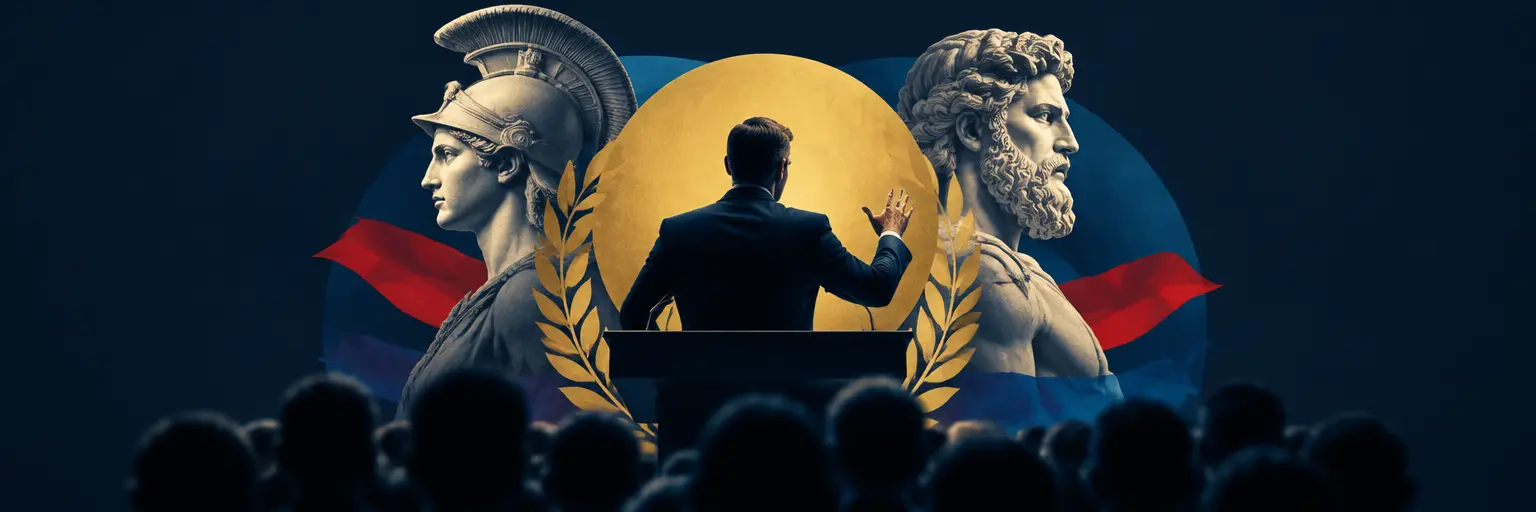
Myth in political discourse examines how ancient narratives, symbols, and archetypes shape modern power structures, national identities, and public persuasion. From the founding myths of nations to the rhetorical use of heroic tropes, political actors often tap into deep-rooted storytelling to legitimize authority, galvanize movements, or frame conflicts. This interdisciplinary approach reveals that myth is not a relic of the past, but a living force in speeches, media, and policy debates—where archetypes like the chosen people, the golden age, or the scapegoat subtly influence voter perception and collective memory. By decoding these narrative layers, we uncover how mythic frameworks can both inspire unity and justify division, making this field essential for understanding contemporary political communication, populist rhetoric, and ideological polarization. Explore how legends are repurposed, how folklore fuels propaganda, and how timeless stories continue to script the political dramas of our time—offering a critical lens on the intersection of imagination, identity, and governance.
🌍 Discover how ancient myths influence modern political conflicts, revealing the enduring power of legendary narratives to shape societal tensions and national…
Read article
🌍 Discover how myths shape nations by revealing the founding stories that continue to influence modern identities, politics, and culture. Explore the…
Read article
🌍 Throughout history, myths have often justified war globally, shaping perceptions of conflict as necessary and inevitable. This article explores how cultural…
Read articleWelcome to our deep dive into how ancient narratives shape modern power. In this subcategory, we explore the subtle yet powerful ways myths—creation stories, heroic archetypes, and apocalyptic visions—infiltrate speeches, campaigns, and policy debates. You’ll learn how political actors borrow symbolic frameworks to legitimize authority, forge national identity, and mobilize emotions. From the “chosen people” rhetoric to the “golden age” nostalgia, we decode the storytelling mechanisms behind contemporary ideology. Expect practical examples, theoretical insights, and critical tools to recognize mythic patterns in daily news.
Nation-states often rely on founding myths—stories of origin, sacrifice, and destiny—to create a shared sense of purpose. In political discourse, these myths are retold through flags, anthems, and commemorative speeches. By analyzing how leaders reference historical events (e.g., revolutions, wars) as sacred moments, you’ll see how collective memory is selectively edited to serve current agendas. This section covers case studies like American exceptionalism and the French Republic’s revolutionary narrative.
Expect to understand the rhetorical devices that turn historical facts into emotional rallying points. We break down how terms like “forefathers” or “manifest destiny” function as mythic shortcuts, bypassing rational debate. You’ll also explore the dangers of mythic nationalism, including exclusionary rhetoric that paints minorities as outsiders. This foundation is essential for any critical analysis of political language.
Political leaders often frame themselves—or are framed by media—as mythic heroes on a quest against evil. Whether it’s the “warrior” fighting corruption or the “wise sage” restoring order, these archetypes simplify complex governance into moral dramas. We dissect how campaigns use Hero’s Journey patterns: a call to adventure (candidacy), trials (scandals), and triumphant return (election). This helps you spot scripted narratives behind seemingly spontaneous speeches.
Our analysis includes comparisons across cultures—from Lincoln’s martyred heroism to contemporary populist strongmen. You’ll learn how challenger versus incumbent narratives adopt different mythic roles (rebel vs. protector). By understanding these archetypes, you can better evaluate whether a leader’s story aligns with factual policy or serves purely symbolic purposes. This section also touches on the “monomyth” and its psychological appeal during crises.
Political discourse frequently borrows apocalyptic myths—final battles, inevitable doom, or utopian rebirth—to justify extreme measures. Climate change debates, economic collapses, and immigration fears are often framed as existential “tipping points.” We examine how terms like “last chance” or “end of an era” trigger mythic anxiety, urging immediate action without deliberation. This section reveals the underlying structure of doom-laden prophecies in policy pitches.
You’ll explore millenarian movements in politics, from revolutionary socialism to nationalist rebirth fantasies. The rhetoric of a “new world order” or “restoration” often mirrors religious eschatology. By recognizing these patterns, you can identify when leaders manipulate fear versus when they present genuine urgency. We also discuss how ironic or satirical use of apocalyptic language can backfire in public perception.
Public rituals—inaugurations, memorials, rallies—are performative spaces where myths are enacted. Political actors use symbols like torches, laurel wreaths, or sacred texts to evoke shared heritage. This section decodes the semiotics of flag burning, oath-taking, and military parades, showing how these acts reinforce in-group solidarity. You’ll learn how visual and spatial elements (e.g., walking through a “gate” or standing on a “mountain”) subtly communicate mythic journeys.
Case studies include royal coronations, presidential swearing-ins, and revolutionary holidays. We analyze how repetition turns ordinary actions into sacred traditions, making political power feel timeless. Critical here is the notion of “invented traditions”—how modern states manufacture ancient customs for legitimacy. By understanding these rituals, you can better parse media coverage of political events beyond mere logistics.
Why do mythic narratives work on our brains? This section bridges neuroscience and political communication. Mythic structures tap into cognitive biases: confirmation bias (cherry-picking history), narrative fallacy (over-interpreting random events), and affect heuristic (emotional shortcuts). We explore how metaphors like “the body politic” or “the ship of state” shape reasoning about policies. Expect insights from cognitive linguistics and evolutionary psychology to explain myth’s grip.
You’ll also discover how digital echo chambers amplify mythic contagion, with fake myths spreading faster than facts. We discuss inoculation theory—how pre-exposing audiences to weakened mythic claims builds resistance. Practical tips include fact-checking frameworks and media literacy exercises. This section empowers you to deconstruct political lies without losing sight of the emotional truths they exploit. It’s a bridge between mythology studies and critical thinking.
A political myth is a shared narrative that simplifies complex realities into moral stories, often with symbolic heroes and villains. Unlike a deliberate lie, a myth isn’t necessarily false—it’s a lens that frames facts selectively. Myths persist because they satisfy emotional needs for identity and purpose. Lies are individual and verifiable; myths are collective and structural, making them harder to debunk outright.
Yes, when used ethically. Inclusive myths can galvanize social cohesion, human rights advocacy, or environmental stewardship. For example, the “arc of history bending toward justice” myth motivates reform. However, myths become destructive when they exclude outsiders or justify violence. The key is critical reflexivity—using myths to inspire but not to silence dissent or erase contrary evidence.
Look for words like “destiny,” “rebirth,” “betrayal,” “enemy,” or “golden age.” Pay attention to references to foundational events (e.g., “the spirit of 1776”) and archetypal roles (savior, traitor, martyr). Notice emotional peaks and metaphors that equate politics with epic journeys or battles. Also observe ritualistic gestures—pausing, raising a fist, referencing sacred documents—that signal mythic framing.
Mythic narratives are simple, emotionally charged, and shareable—they fit platform algorithms favoring outrage or awe. They provide ready-made meanings in attention-scarce environments. Visual memes and hashtags act as modern ritual objects, accelerating contagion. Moreover, algorithmic echo chambers reward confirmation of pre-existing mythic beliefs, making counter-narratives less visible. Understanding this helps you design better media literacy campaigns.
Avoid direct contradiction, which often strengthens mythic commitment. Instead, use narrative replacement—offer an equally compelling counter-story that meets the same emotional needs. Incorporate credible voices from within the myth’s own community. Emphasize shared values and acknowledge partial truths. Finally, teach critical thinking skills that expose mythic structures without ridiculing believers. Patience and empathy outperform fact-bombing in long-term persuasion.