
The Djinn: Unseen Forces and the Dangers of Unleashed Power

Welcome to Mythology and Legends, where the whispers of the past echo into the present! Delve into the captivating realm of forgotten lore and ancient tales. Are you ready to unravel the mysteries surrounding the Djinn, those unseen forces whose power can both shape and shatter worlds? Prepare to journey into their legends and origins, but be warned – some secrets are best left undisturbed. Your exploration of these mythical beings begins now...
- Djinn Legends and Origins: Exploring the Realm of Invisible Beings
- Djinn Powers and Abilities: Understanding Their Extraordinary Capabilities
- The Different Types of Djinn: A Hierarchy of Spirits
- Djinn Encounters in Folklore: Tales of Interaction and Intrigue
- The Dangers of Unleashed Djinn Power: Cautionary Tales
- Djinn as Social Metaphors: Reflecting Human Nature and Societal Fears
- Djinn in Contemporary Culture: From Literature to Modern Media
-
Frequently Asked Questions
- What are Djinn and where do they originate according to legends?
- Are Djinn always evil, as depicted in some modern media?
- What are some of the dangers associated with interacting with Djinn?
- How do different cultures portray Djinn, and are there variations in their abilities?
- Can Djinn be controlled or bound to serve humans, and what are the risks involved?
- Final Reflection: The Enduring Power of the Djinn and Our Own
- Unleash Your Inner Mythologist!
Djinn Legends and Origins: Exploring the Realm of Invisible Beings
The rich tapestry of Djinn legends and origins stretches back through millennia, predating organized religion in some regions and weaving itself deeply into the cultural fabric of the Middle East and beyond. These unseen beings, often described as spirits or supernatural entities, have fascinated and sometimes terrified humans for centuries.
Understanding the roots of beliefs surrounding the djinn is crucial to appreciating their complex role in folklore and their enduring presence in contemporary narratives. Their story is not just one of mythical creatures, but also a reflection of human attempts to explain the unknown, the uncanny, and the forces that seem to operate just beyond our perception.
Exploring the diverse Djinn legends and origins reveals a fascinating evolution of belief. From localized animistic spirits tied to specific places like deserts or ruins, they transformed into a more structured class of supernatural beings within later religious frameworks. This journey highlights how myths adapt and integrate with changing societal structures and belief systems, demonstrating the resilience and malleability of folklore across generations. The narratives surrounding their creation, their nature, and their interactions with humanity provide a unique window into the historical worldview of the cultures that embraced these tales.
Pre-Islamic Roots of Djinn Belief: Tracing the Earliest Mentions
Before the advent of Islam, beliefs in various spirits and supernatural entities were widespread throughout the Arabian Peninsula and surrounding regions. These entities were often associated with specific locations, natural phenomena, or tribal groups.
The concept of the jinn, in a less defined form than later interpretations, likely arose from these ancient animistic and polytheistic traditions, where spirits were thought to inhabit desolate places, wells, trees, or even wind. Archaeological evidence from pre-Islamic inscriptions occasionally mentions deities or spirits that some scholars link to early forms of djinn belief, suggesting a long-standing cultural awareness of such entities inhabiting the unseen world.
These early beliefs often depicted spirits that could be benevolent, malevolent, or simply indifferent, capable of influencing human affairs through illness, misfortune, or even providing secret knowledge. Travelers crossing vast, empty deserts would tell tales of encountering strange phenomena attributed to these spirits, reinforcing the idea of a parallel world inhabited by powerful, non-human entities.
While specific textual evidence detailing comprehensive Djinn legends and origins from this period is sparse compared to later eras, the pervasive theme of invisible forces interacting with the human world strongly indicates that the groundwork for later, more formalized djinn concepts was firmly in place long before the 7th century CE.
Djinn in the Quran: Creation from Smokeless Fire
The Quran, the holy book of Islam, significantly shapes and formalizes the understanding of djinn within a monotheistic framework. It explicitly mentions the creation of djinn, stating that they were created by God from "smokeless fire" (Arabic: nar al-samum). This places them as a distinct class of created beings, separate from humans (created from clay) and angels (created from light). The Quranic narrative introduces Iblis (often identified with Satan), a prominent figure among the djinn who famously refused God's command to prostrate before Adam, thus illustrating the djinn's capacity for free will and disobedience, a key distinction from angels.
Several chapters and verses in the Quran refer to djinn, detailing aspects of their nature, their interaction with prophets (like Solomon, who was said to have power over them), and their accountability to God. Chapter 72 of the Quran is even titled "Al-Jinn" and recounts a group of djinn hearing the Quran and accepting Islam, highlighting their ability to choose faith or disbelief, mirroring the choice given to humanity.
This scriptural foundation provided a definitive origin story and theological context for the djinn, solidifying their place in Islamic cosmology and profoundly influencing subsequent Djinn legends and origins within Islamic cultures.
Islamic Interpretations of Djinn: Good, Evil, and the Test of Faith
Following the Quranic revelations, Islamic scholars and storytellers developed extensive interpretations and folklore surrounding the djinn. These interpretations elaborated on their creation, their societies, and their interactions with humans, leading to a diverse body of Djinn legends and origins within the Islamic world. A central theme is the concept that, like humans, djinn have free will and can be believers or disbelievers, righteous or wicked. This led to the classification of djinn into categories such as Muslim djinn (believers who follow God's commands) and Kafir djinn (disbelievers).
Folklore and theological discussions further detailed the ways in which djinn might interact with humans, ranging from causing mischief and illness to potentially guiding or even falling in love with them. Stories abound of individuals encountering helpful or harmful djinn, often emphasizing the importance of faith and seeking refuge in God from malevolent entities.
This duality – the potential for both good and evil – makes the djinn complex figures in Islamic folklore, serving not just as supernatural beings but often as symbolic representations of the unseen forces that test human faith and morality, reinforcing the Islamic principle of individual accountability before God.
Djinn Powers and Abilities: Understanding Their Extraordinary Capabilities
Djinn are credited with a range of awe-inspiring abilities that set them apart from humans and often blur the lines between the natural and the supernatural. Their powers are central to countless Djinn legends and origins and explain their pervasive influence in folklore. These capabilities allow them to interact with the world in ways that defy human understanding, making them formidable figures in myth and cautionary tales.
Shapeshifting and Illusion: The Djinn's Mastery of Deception
One of the most widely recognized powers of the djinn is their ability to shapeshift. They are said to be able to take on the forms of animals (such as snakes, scorpions, or cats), objects, or even humans. This ability is frequently depicted in folklore as a means of deception, allowing djinn to interact with the human world unnoticed or to trick unsuspecting individuals. Stories in One Thousand and One Nights, for example, often feature djinn appearing in various guises to test or mislead characters.
This mastery of illusion and transformation is not merely physical; djinn are also said to be capable of creating elaborate illusions that can deceive the senses and manipulate perception. They might create visions of wealth, beauty, or terror to lure or frighten humans. This power highlights the elusive and often untrustworthy nature attributed to many djinn in Djinn legends and origins, emphasizing the difficulty humans face in discerning their true form or intentions. It underscores the theme that what appears real when dealing with djinn might be nothing more than a carefully crafted deception.
Influence Over the Material World: Djinn and Physical Manipulation
Beyond illusion, djinn are often depicted as possessing significant power to interact with and manipulate the physical world. Tales describe them moving heavy objects instantaneously, building elaborate structures overnight, or causing localized natural phenomena like dust storms or unexplained fires. The Quranic account of Prophet Solomon's control over djinn mentions them performing tasks like diving for pearls and constructing buildings for him, illustrating their capacity for immense physical labor and skill far exceeding human ability.
This power extends to influencing human bodies and minds, although often indirectly. Djinn are sometimes blamed for causing illness, madness, or sudden misfortune. While not always a direct physical attack, their influence is believed to manifest in tangible ways within the human realm. These accounts in Djinn legends and origins reflect a historical understanding of unexplained phenomena and human vulnerability, attributing them to the actions of powerful, unseen entities capable of manipulating the material world in ways humans cannot.
Precognition and Knowledge of the Unseen: Limits and Extent of Djinn Foresight
Djinn are often credited with possessing knowledge of the unseen ( al-ghayb), particularly concerning past events and certain aspects of the present that are hidden from human senses. Some traditions suggest they can eavesdrop on the lower heavens, gaining snippets of information that they might then convey (often mixed with lies) to human diviners or sorcerers. This purported access to hidden information contributes to their mystique and their association with forbidden knowledge or prophecy in some Djinn legends and origins.
However, Islamic theology places strict limits on this power. The Quran explicitly states that only God has complete knowledge of the unseen future. Therefore, while djinn might have greater awareness than humans of certain hidden things or the ability to move quickly across vast distances to gather information, they do not possess true precognition or absolute knowledge of the future. Their foresight is limited, often fragmented, and unreliable, particularly regarding divine will or destiny. This limitation serves a theological purpose, reinforcing the omnipotence and unique knowledge of the divine creator.
The Different Types of Djinn: A Hierarchy of Spirits
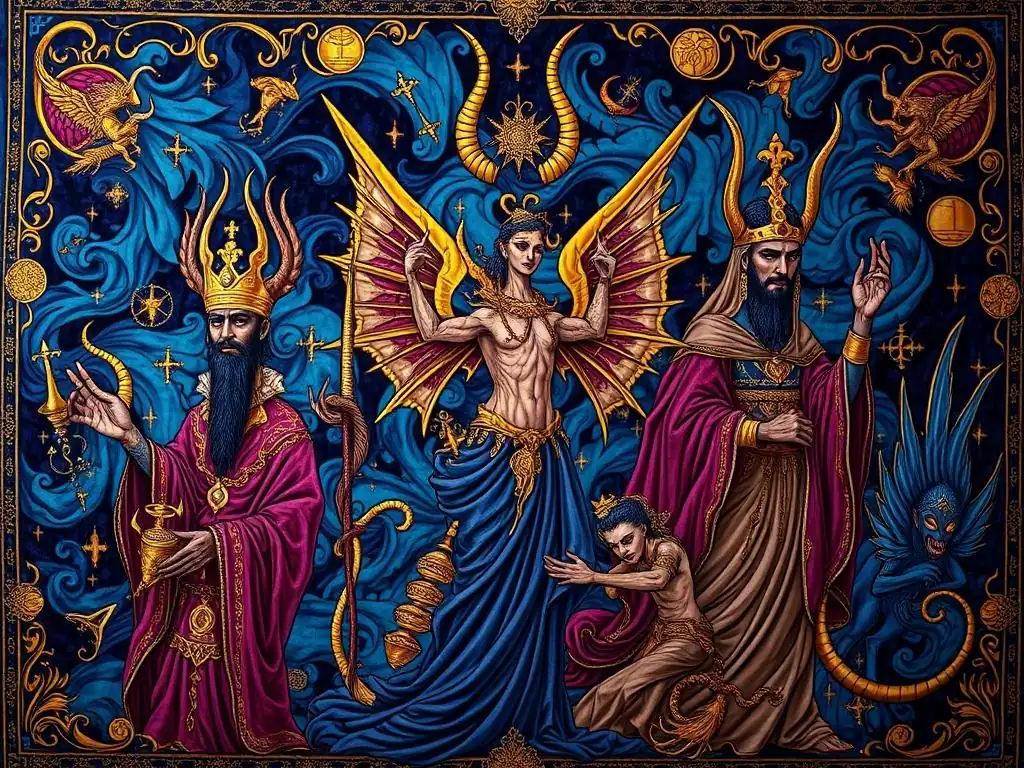
Within the vast realm of Djinn legends and origins, various types and classes of these entities are described, often forming a loose hierarchy based on their power, nature, and habitat. While classifications can vary across different regional folklore and interpretations, certain types are consistently mentioned and hold distinct characteristics. Understanding these different categories provides deeper insight into the multifaceted nature attributed to the djinn.
Marid: The Powerful Djinn of Water and the Seas
Marid (or Marids) are often depicted as among the most powerful and ancient classes of djinn. They are frequently associated with water, particularly seas, oceans, and sometimes large rivers or wells. In folklore, Marids are known for their immense strength, pride, and stubbornness. They are formidable beings, capable of causing great storms at sea or controlling vast bodies of water. Tales often portray them as difficult to control, even by powerful sorcerers or kings, requiring significant effort and potent magic to bind or command.
Their portrayal in Djinn legends and origins highlights their connection to the powerful and often unpredictable forces of nature, particularly the sea. Marids are sometimes depicted as residing in underwater palaces or hidden grottos, guarding treasures or ancient secrets. Their raw power makes them figures of both awe and fear, representing the untamable aspects of the natural world and the potential dangers lurking within its depths. Subduing or seeking the aid of a Marid is typically presented as a perilous undertaking due to their inherent might and often haughty disposition.
Ifrit: The Fiery Djinn of Strength and Destruction
Ifrit (or Afarit) are another prominent and powerful class of djinn, strongly associated with fire and smoke, reflecting their origin story. They are often depicted as large, winged creatures of smoke or fire, known for their immense strength, cunning, and malevolence. Ifrit are frequently found in desolate or ruined places and are commonly portrayed as rebellious and difficult to control. The tale of Prophet Solomon and the Queen of Sheba in the Quran mentions an Ifrit offering to bring the Queen's throne to Solomon "before you rise from your place," showcasing their extraordinary speed and power.
In Djinn legends and origins, Ifrit are commonly associated with destructive capabilities and a propensity for evil. They might cause fires, ruin buildings, or inflict harm upon humans out of malice. Their fiery nature symbolizes their volatile temperament and destructive potential. While some narratives suggest they can be bound or commanded, particularly through powerful rituals or divine authority, they are generally regarded as highly dangerous entities whose power is best avoided or approached with extreme caution.
Ghul: The Malevolent Djinn of Graveyards and Desolate Places
Ghul (or Ghouls) represent a particularly terrifying type of djinn, primarily known for their malevolent nature and association with death and decay. They are often depicted as shapeshifting, cannibalistic monsters that inhabit graveyards, deserted places, or ruins. Ghuls are said to feed on corpses, particularly those recently buried, and may also prey on unsuspecting travelers who wander into their territory. Their appearance is often described as hideous or changing, adding to their frightening nature.
These creatures in Djinn legends and origins embody primal fears surrounding death, the desecration of the dead, and the dangers of liminal or abandoned spaces. The Ghul serves as a cautionary figure, warning people away from dangerous locations after dark and reinforcing social norms around respecting the deceased. While sometimes classified as a type of djinn, they are often seen as among the most base and monstrous, lacking the complexity or potential for good sometimes attributed to other classes like the Jann.
Jann: The More Human-Like Djinn of the Desert
The Jann are often considered among the oldest or most fundamental types of djinn, sometimes even used as a collective term for all djinn. However, when distinguished as a specific class, they are often depicted as less powerful and more adaptable than Marids or Ifrit, and less malevolent than Ghuls. They are commonly associated with the desert, their original habitat according to many Djinn legends and origins. Jann are sometimes described as appearing as white-colored beings or as whirlwinds.
Unlike the purely monstrous Ghul or the overwhelmingly powerful Marid and Ifrit, the Jann are occasionally portrayed in ways that make them seem closer to humans in their motivations and interactions. They might be curious about human affairs, less inherently hostile (though still capable of harm if provoked), and more likely to engage in complex interactions, including communication or even cohabitation in some tales. Their connection to the vast, ancient desert landscape links them to the deep, untamed origins of the Djinn legends and origins themselves.
Djinn Encounters in Folklore: Tales of Interaction and Intrigue
The rich body of Djinn legends and origins is filled with countless stories recounting encounters between humans and these unseen beings. These narratives explore the myriad ways their worlds intersect, from fleeting glimpses and minor disturbances to profound, life-altering interactions. These tales serve not only to entertain but also to convey cultural values, cautionary lessons, and explanations for the inexplicable events of life.
Djinn and Humans: Stories of Love, Marriage, and Conflict
Folklore from various cultures influenced by Djinn legends and origins includes numerous accounts of relationships between humans and djinn. While often fraught with peril due to the fundamental differences in their natures, tales exist of djinn falling in love with humans, leading to marriages that can be either blissful or tragic. These stories often explore themes of forbidden love, cultural barriers, and the challenges of bridging the gap between the seen and unseen worlds. For example, certain regional myths tell of human families claiming descent from a djinn ancestor, attributing unique traits or abilities to this lineage.
Conversely, conflict is a prevalent theme in human-djinn interactions. Djinn might cause harm out of malice, territorial disputes, or offense taken at human actions (often unintentional). Stories describe djinn interfering with human lives through mischief, illness, or misfortune, sometimes requiring intervention from religious figures or those with specific knowledge of dealing with such entities. These narratives reflect anxieties about forces beyond human control and the potential consequences of disrespecting the unseen world or venturing into places considered the domain of the djinn.
Djinn as Guardians and Protectors: Instances of Benevolent Influence
While often feared, djinn are not universally portrayed as malevolent in Djinn legends and origins. Some tales depict benevolent djinn who act as guardians or protectors. They might watch over specific places, such as ancient ruins, hidden treasures, or sacred sites, preventing unauthorized access. Other stories tell of individual djinn forming bonds with humans, offering guidance, assistance, or protection against other, more harmful entities. These benevolent djinn are sometimes depicted as Muslim djinn who choose to aid righteous humans.
These positive portrayals offer a counterbalance to the more common cautionary tales. They suggest that interactions with the unseen world are not inherently negative and that some djinn might possess wisdom, compassion, or a sense of justice. Such stories often emphasize the human's good character, piety, or respect for the unseen as factors that might attract benevolent djinn, reinforcing moral lessons within the folklore. The idea of a helpful djinn is a recurring motif, albeit less frequent than tales of their mischievous or dangerous counterparts.
Djinn and Curses: The Consequences of Offending the Unseen
A significant body of Djinn legends and origins focuses on the negative consequences of offending djinn, often resulting in curses or misfortune. Offenses can be accidental, such as disturbing a djinn's dwelling (like pouring hot water down a drain without warning, stepping on an unseen entity, or entering a desolate ruin without seeking permission), or intentional, such as attempting to harm or control them. The retribution from an offended djinn can manifest in various ways, from causing illness, madness, or bad luck to inflicting physical harm or even death.
These cautionary tales serve a clear social function: they reinforce respectful behavior towards the unknown and emphasize the potential dangers of certain places or actions. They teach prudence and humility, suggesting that the world is inhabited by forces that demand respect. The concept of a djinn's curse highlights the belief that the unseen world is interconnected with the human one and that ignoring or disrespecting its inhabitants can have tangible and often severe repercussions, adding a layer of supernatural accountability to human actions within the framework of Djinn legends and origins.
The Dangers of Unleashed Djinn Power: Cautionary Tales
The immense power attributed to djinn in Djinn legends and origins comes with significant inherent dangers, particularly when this power is unleashed, uncontrolled, or directed by human folly. Numerous cautionary tales serve as warnings about the perilous nature of dealing with such potent entities. These stories underscore the unpredictable and often destructive consequences that can arise from meddling with forces beyond human comprehension or control.
Uncontrolled Wishes: The Perilous Nature of Djinn Granted Desires
Perhaps one of the most famous tropes associated with djinn, particularly in Western adaptations influenced by tales like Aladdin, is the granting of wishes. However, in traditional Djinn legends and origins, the act of having a wish granted by a djinn is rarely straightforward or beneficial without significant cost or peril. Djinn are often depicted as tricksters who grant wishes literally but maliciously, twisting the request to bring ruin or misery upon the wisher. The classic example involves wishes for wealth that lead to destruction, or wishes for love that result in obsession or tragedy.
These narratives serve as potent warnings against seeking easy power or attempting to bypass natural order. They highlight the dangers of greed, naivete, and the fundamental difference in perspective and morality between humans and powerful supernatural beings. The idea is that a djinn's power, when used to fulfill human desires, is inherently dangerous because the djinn's intentions are often self-serving or even malevolent, making the "gift" of a wish a poisoned chalice.
Possession and Madness: The Dark Side of Djinn Influence
Another significant danger associated with djinn in Djinn legends and origins is the risk of possession or causing mental distress and madness in humans. Malevolent djinn are believed to be able to enter a person's body, taking control of their actions, causing physical ailments, or afflicting them with psychological torment. Symptoms attributed to djinn possession in folklore often include erratic behavior, speaking in unknown voices, unusual strength, or knowledge of hidden things – symptoms that might today be associated with mental illness or neurological conditions.
Belief in djinn possession has historically been used to explain unexplained illnesses, madness, or extreme behavioral changes. Exorcism rituals, often involving recitation of Quranic verses or specific prayers, are practiced in some traditions to remove or ward off malevolent djinn. These stories reflect a deep-seated fear of losing control of one's mind and body, attributing this terrifying experience to the insidious influence of unseen, powerful entities capable of violating the sanctity of the human self.
Binding and Control: Ethical Considerations and Risks
Throughout Djinn legends and origins, there are accounts of sorcerers, kings (like Solomon), or exceptionally pious individuals attempting to bind or control djinn for their own purposes. This might involve powerful rituals, magical objects (like lamps or rings), or invoking divine authority. While some tales portray successful control, often for benevolent purposes (like building temples), many others highlight the extreme risks involved. Attempting to bind a djinn is often depicted as a dangerous endeavor that can backfire disastrously if the human lacks sufficient power, knowledge, or spiritual strength.
The ethical implications of enslaving or forcing a free-willed being, even a non-human one, are also often implicitly or explicitly raised. Tales of bound djinn plotting revenge or breaking free to wreak havoc serve as warnings against hubris and the dangers of seeking power over others. They suggest that such power is difficult, if not impossible, to truly control and that the act of attempting to subjugate a djinn is fraught with moral and physical peril, reinforcing the idea that unleashed or forced djinn power is inherently unstable and dangerous.
Beyond their literal interpretation as supernatural beings, djinn in Djinn legends and origins function powerfully as social metaphors. They embody abstract concepts, societal anxieties, and aspects of the human psyche that are difficult to articulate directly. By projecting these ideas onto unseen entities, cultures have been able to explore complex themes related to morality, temptation, internal struggles, and power dynamics within society.
Djinn as Symbols of Temptation: Exploring the Allure of Forbidden Knowledge
The figure of the djinn, particularly the rebellious or malevolent types, often serves as a potent symbol of temptation. Their association with hidden knowledge, forbidden practices (like sorcery), and the granting of wishes (which often lead to ruin) reflects the human struggle with desire and the allure of paths that lead away from righteousness or conventional morality. The Quranic narrative of Iblis's refusal to bow to Adam is a foundational example, portraying a djinn choosing pride and rebellion over obedience, symbolizing the ultimate temptation to defy divine will.
In folklore, djinn might tempt humans with promises of wealth, power, or forbidden pleasure, echoing the internal battles individuals face when confronted with choices between right and wrong, piety and sin. These stories act as moral allegories, using the external figure of the tempting djinn to represent the internal pull towards vice or the dangerous appeal of knowledge or power gained through illicit means, reinforcing the importance of spiritual fortitude and resistance to temptation within the context of Djinn legends and origins.
Djinn as Representations of Inner Demons: Confronting Personal Struggles
In a psychological interpretation, the negative aspects of djinn in Djinn legends and origins can be seen as externalizations of inner demons and personal struggles. The madness, illness, or misfortune attributed to djinn influence might represent psychological distress, addiction, or internal conflicts that feel external and uncontrollable to the individual. The idea of possession can symbolize a loss of self-control or the overwhelming power of negative thoughts or impulses.
By portraying these struggles as external entities that can be fought against (through faith, rituals, or seeking help), the myths provide a framework for understanding and potentially confronting personal challenges. The narratives offer a way to talk about difficult experiences – depression, anxiety, destructive behaviors – by attributing them to a known, albeit supernatural, force. This metaphorical use allows for the collective processing of psychological vulnerabilities and the search for spiritual or communal solutions within the cultural narrative of Djinn legends and origins.
The various classes of djinn, their hierarchies (Marid, Ifrit, etc. ), and the narratives surrounding human attempts to control or interact with them also serve as metaphors for social power dynamics. The powerful, untamable Marids and Ifrit can represent oppressive forces or powerful elites that are difficult for the common person to challenge. The stories of humans attempting to bind djinn reflect the desire for power and control over others, and the dangers inherent in such pursuits.
Furthermore, the concept of unseen forces influencing human affairs can reflect feelings of powerlessness in the face of societal structures, political forces, or fate. The Djinn legends and origins provide a framework for understanding why things happen beyond human control, sometimes attributing misfortune to capricious or malicious entities. Conversely, tales of pious individuals or prophets controlling djinn can symbolize the triumph of righteousness or divine authority over chaos and malevolence, offering hope within a world perceived as being influenced by powerful, unseen forces, mirroring struggles for power and control within human societies.
Djinn in Contemporary Culture: From Literature to Modern Media
The enduring appeal of Djinn legends and origins is evident in their continued presence and adaptation in contemporary literature, film, and television. Modern storytellers draw upon the rich mythological source material, reinterpreting djinn for new audiences and exploring their symbolic depth in fresh ways. While sometimes simplified or altered for mainstream consumption, the core elements of the djinn – their unseen nature, powers, and complex relationship with humanity – continue to captivate imaginations worldwide.
Djinn in Literature: Examining Their Portrayal in One Thousand and One Nights and American Gods
One Thousand and One Nights (also known as Arabian Nights) is arguably the most influential literary work in popularizing Djinn legends and origins to a global audience. Tales within this collection, such as "Aladdin's Wonderful Lamp" (though its origin is debated as possibly later addition) and "The Fisherman and the Jinni," vividly depict djinn of immense power, capable of granting wishes or inflicting terrible punishments. These stories solidified the image of the djinn as powerful, often capricious, beings who can be either servants or masters of human fate, heavily shaping subsequent Western understanding.
More recently, Neil Gaiman's novel American Gods features djinn as immigrants living secretly in modern America, struggling to maintain their identity and power in a world that no longer believes in them. His portrayal delves into the cultural displacement and adaptation of mythical beings, using the djinn to explore themes of faith, tradition, and the immigrant experience. Gaiman's jinn are complex characters with ancient powers navigating contemporary challenges, demonstrating how Djinn legends and origins can be recontextualized to address modern societal issues and philosophical questions.
Djinn in Film and Television: Analyzing Their Representation in Aladdin and Wishmaster
Film and television have offered varied interpretations of djinn, often focusing on their wish-granting abilities or their terrifying potential. Disney's animated film Aladdin presents a highly domesticated and benevolent (though still powerful) Genie, largely removing the darker, more complex aspects found in traditional Djinn legends and origins to create a family-friendly character. This portrayal, while globally popular, represents a significant departure from the often-feared figures of folklore, highlighting how myths are transformed for different media and audiences.
In contrast, the Wishmaster horror film series (beginning in 1997) leans heavily into the malevolent trickster aspect of the djinn. The entity in these films is a terrifying figure who grants wishes in ways that lead to horrific outcomes for the wisher and those around them, directly reflecting the cautionary tales about uncontrolled djinn power. These films tap into the darker side of Djinn legends and origins, focusing on their capacity for malice and the inherent danger of seeking power through them, appealing to a different audience than the benevolent Genie of Aladdin.
The Enduring Appeal of Djinn Legends: Why They Still Captivate Us Today
The continued fascination with Djinn legends and origins stems from several factors. Firstly, they inhabit the liminal space between the known and the unknown, the seen and the unseen, tapping into a universal human curiosity about what lies just beyond our perception. Their nature as free-willed entities capable of both good and evil makes them complex and compelling figures, unlike the often purely benevolent angels or purely malevolent demons of other mythologies.
Secondly, their powers – shapeshifting, influencing the physical world, granting wishes – speak to deep-seated human desires for transformation, control, and the ability to alter reality. Yet, the cautionary tales associated with these powers serve as important reminders of the potential costs and dangers of unchecked power and reckless ambition. Ultimately, the enduring appeal of Djinn legends and origins lies in their ability to embody our fears, temptations, and hopes, providing a rich narrative framework for exploring the mysteries of the world and the complexities of human nature.
Frequently Asked Questions
What are Djinn and where do they originate according to legends?
Djinn are supernatural beings in Arabian and Islamic mythology, believed to be created from smokeless fire. Their origins trace back to pre-Islamic Arabian folklore and are further elaborated in the Quran.
Are Djinn always evil, as depicted in some modern media?
No, Djinn are not inherently evil. They possess free will and can be good, evil, or neutral. Their actions depend on their individual character and choices.
What are some of the dangers associated with interacting with Djinn?
Interacting with Djinn can be dangerous due to their immense power and potential for manipulation. Unskilled or reckless interaction can lead to possession, misfortune, or even death, according to legend.
How do different cultures portray Djinn, and are there variations in their abilities?
Different cultures portray Djinn with variations in appearance, powers, and roles. Some traditions emphasize their ability to grant wishes, while others focus on their potential for mischief and malevolence.
Can Djinn be controlled or bound to serve humans, and what are the risks involved?
Legends speak of methods to control Djinn, often through powerful magic or religious rituals. However, attempting to bind them is exceptionally risky, as a Djinn's resentment can lead to severe consequences for the conjurer.
Final Reflection: The Enduring Power of the Djinn and Our Own
The enduring fascination with djinn legends speaks volumes about our own anxieties regarding unchecked power and the consequences of our actions. These ancient stories, far from being mere folklore, offer a potent reflection of humanity's ongoing struggle to control its own desires and understand the unseen forces that shape our world. The narratives surrounding djinn serve as cautionary tales, reminding us of the potential for both immense good and devastating destruction inherent in wielding power without wisdom or restraint.
The djinn's enduring presence in our cultural landscape underscores the timeless nature of these themes. Their stories continue to resonate because they tap into fundamental human fears and aspirations – the yearning for control, the terror of the unknown, and the ever-present possibility of unintended consequences. As the world grapples with increasingly complex technological advancements and ethical dilemmas, the djinn's cautionary tales feel more relevant than ever. The greatest danger is not that our aim is too high and we miss it, but that it is too low and we reach it.
- Michelangelo. This quote perfectly encapsulates the risk of unchecked power, a central theme woven throughout the djinn's various narratives.
Consider the stories you've encountered, the lessons learned, and the echoes of the djinn's power in your own life. What unseen forces influence your choices? How do you navigate the temptation of unchecked ambition?
Let the legends of the djinn serve not just as entertainment, but as a springboard for self-reflection, urging you to approach power with humility, wisdom, and a deep understanding of the potential consequences, both intended and unforeseen. The stories of the djinn are a timeless reminder that true strength lies not in the ability to control, but in the wisdom to understand and responsibly wield the forces at our disposal.
Unleash Your Inner Mythologist!
Thanks for exploring the fascinating world of Djinn with us! We hope you gained a deeper understanding of these powerful, unseen forces. Now it's time to take your newfound knowledge further.
- Dive deeper into Djinn lore: Research different cultural interpretations of Djinn and compare their unique characteristics. Consider exploring lesser-known myths and legends surrounding these enigmatic beings. This could inspire your own creative writing, perhaps even a short story!
- Share your thoughts: What resonated most with you from this article? What questions about Djinn do you still have? Let’s spark a discussion in the comments below!
- Challenge your perceptions: Consider how the concept of Djinn, and the control of immense power, reflects in modern contexts. How might these myths relate to current events, technology, or even personal experiences?
Ready to unlock the mysteries of the unseen world? What unexpected connections between Djinn and modern life can you uncover?