
Grendel's Rage: A Metaphor for Societal Outcasts and Violence

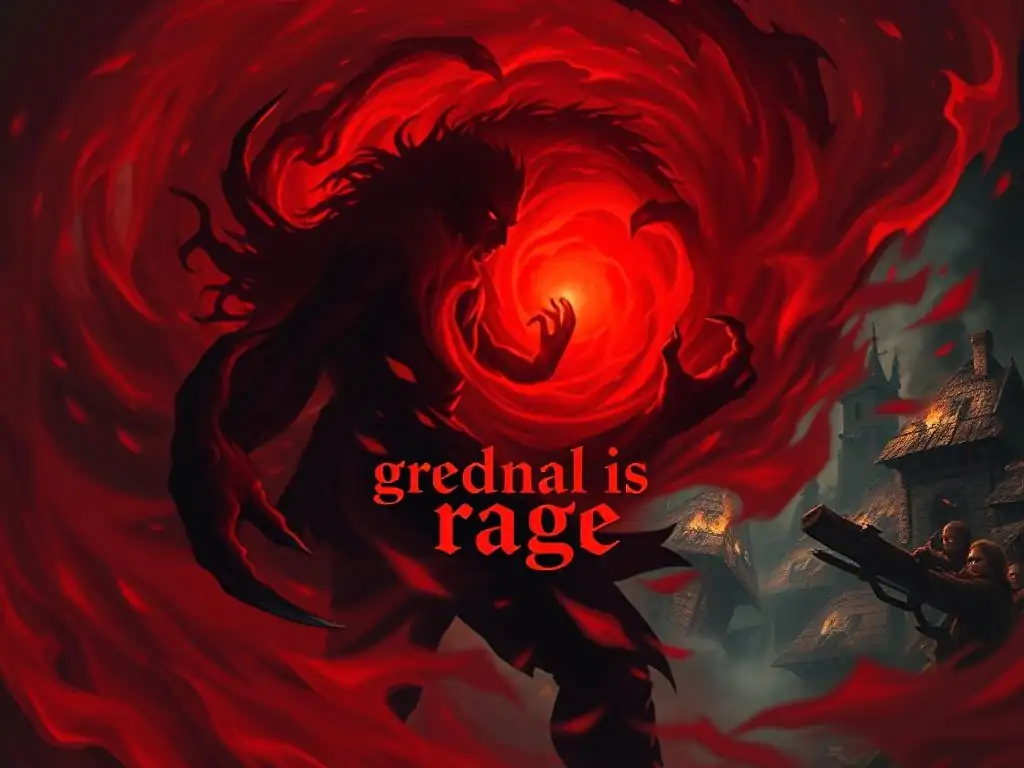
Welcome to Mythology and Legends, where ancient tales whisper secrets of the human condition. Ever pondered the monstrous rage of Grendel from Beowulf? Delve into our exploration of Grendel symbolism and discover how this terrifying figure serves as a chilling mirror reflecting the dark corners of societal violence and the plight of the outcast. Prepare to unravel the threads connecting ancient myth to modern realities.
- Introduction: Understanding Grendel Beyond the Monster
- Grendel: The Archetype of the Societal Outcast
- Grendel's Rampage: A Manifestation of Suppressed Rage
- Grendel Symbolism: Deconstructing the Monster's Meaning
- Grendel and Societal Violence: Parallels in the Modern World
- The Significance of Grendel's Defeat: A Call for Inclusion and Understanding
- Conclusion: Grendel as a Timeless Reflection of Societal Issues
-
Frequently Asked Questions
- What does Grendel's monstrous nature symbolize in the context of societal violence?
- How does the story of Grendel reflect anxieties about societal order and chaos?
- In what ways can Grendel's isolation be seen as a contributing factor to his violent behavior?
- Does Grendel's defeat signify a complete eradication of societal violence, or something else?
- How can the themes present in the Grendel narrative be applied to understanding modern instances of societal violence?
- Final Reflection: Echoes of Grendel in a Violent World
- Unleash Your Understanding: Explore Grendel's Legacy
Introduction: Understanding Grendel Beyond the Monster
The Enduring Allure of Grendel in Beowulf
The figure of Grendel, the monstrous antagonist in the epic poem Beowulf, has captivated audiences for centuries. Far from being a simple beast of destruction, Grendel embodies a complex array of fears and anxieties deeply rooted in human society.
His nocturnal attacks on Heorot, the magnificent mead-hall of King Hrothgar, are not merely random acts of terror but possess a potent symbolic resonance, touching upon themes of order versus chaos, community versus isolation, and the very definition of monstrousness. The poem's vivid descriptions and the mystery surrounding Grendel's true nature invite readers to look beyond the surface horror and explore the deeper implications of his existence and actions.
This enduring allure stems from the poem's masterful portrayal of Grendel as an outsider looking in, a creature fundamentally alienated from the world of men. His rage is palpable, driven by the joyous sounds emanating from Heorot, a stark contrast to his own desolate existence. This primal reaction resonates because it taps into universal feelings of envy and exclusion.
The poem, composed sometime between the 8th and 11th centuries, speaks to timeless human experiences, making Grendel's torment and subsequent violence tragically understandable, even as his actions remain horrific. Understanding Grendel symbolism helps us appreciate the layers of meaning within this ancient tale.
Grendel as More Than Just a Mythical Creature: Exploring Deeper Meanings
While often categorized simply as a mythical monster, Grendel serves as a powerful metaphor within Beowulf. He is not merely a physical threat but a symbolic representation of forces that challenge the stability and harmony of human society. His lineage, tied to the biblical Cain, immediately casts him as an inheritor of primal evil and fratricidal sin, an outcast from divine and human grace. This origin story elevates him beyond a simple bogeyman, suggesting that his monstrousness is not just biological but also spiritual and societal.
Exploring Grendel symbolism reveals him as a manifestation of the dark undercurrents that can disrupt civilized life. He embodies the fears of the unknown lurking outside the safety of the community, the potential for chaos to overwhelm order. Furthermore, his character invites interpretations related to psychological states, representing unchecked rage, resentment born of exclusion, or even the darker aspects of human nature projected onto an external entity. This complexity is crucial when analyzing Grendel symbolism societal violence within the narrative.
Grendel: The Archetype of the Societal Outcast
Grendel's Origins: Born of Cain and Marked by Rejection
The epic poem Beowulf explicitly links Grendel's lineage to Cain, the biblical figure cursed for murdering his brother Abel. The text states, "He had dwelt for a time in misery among the banished monsters, Cain’s clan, whom the creator had outlawed" (approximate translation).
This lineage immediately positions Grendel as an eternal outcast, inheriting a curse that predates the current human society but fundamentally defines his separation from it. Being of Cain's stock means he is inherently antithetical to the order and blessing associated with God and, by extension, the ordered Christian society that later interpretations of the poem often reflect.
This origin story is not just a genealogical detail; it is central to Grendel's character and the Beowulf poem's exploration of Grendel symbolism societal violence. It marks him as fundamentally other, a being whose very existence is a result of primal sin and divine rejection. Unlike other monsters who might be defeated and forgotten, Grendel carries the weight of biblical history, making his alienation profound and inescapable. This inherited status as an outcast is a foundational element in understanding his motivation and the societal implications of his actions.
The Monster's Isolation: A Reflection of Societal Exclusion
Grendel dwells in the fens and moors, a desolate wilderness far from the warmth and fellowship of human settlements. This physical isolation is a potent symbol of his societal exclusion. He is explicitly described as living "alone," a stark contrast to the communal life celebrated in Heorot. His existence is defined by what he lacks: community, acceptance, and belonging. The sounds of joy, music, and feasting from the hall are torment to him precisely because they represent everything he is denied.
This profound isolation is a key aspect of Grendel symbolism. It mirrors the experiences of individuals or groups marginalized and pushed to the fringes of society. While Grendel's exclusion is presented as inherent due to his lineage, it serves as a metaphor for how societal structures and attitudes can create outcasts. The poem suggests that being entirely cut off from the social fabric can breed resentment and hostility. This theme is crucial for understanding the connection between Grendel symbolism and societal violence.
Grendel's Envy and Resentment: The Seeds of Violence
The driving force behind Grendel's attacks is not mere hunger or territorial dispute, but a deep-seated envy and resentment of the happiness and harmony he witnesses in Heorot. The poem states that Grendel "suffered keenly, the monster grumbled," upon hearing the harp's "clear song" and the scop's tale of creation. This reaction highlights that his pain is psychological and emotional, stemming from his inability to partake in the human world.
This envy transforms into rage, becoming the seed of his violence. He cannot tolerate the sight and sound of communal joy that underscores his own misery and isolation. His attacks are, in this sense, an attempt to destroy what he cannot have, to silence the happiness that mocks his existence. This aspect of Grendel symbolism provides a powerful, albeit dark, commentary on the destructive potential of unchecked resentment born from exclusion. Understanding this link is vital for interpreting Grendel symbolism societal violence as depicted in the epic.
Grendel's Rampage: A Manifestation of Suppressed Rage

The Hall of Heorot: A Symbol of Societal Order and Harmony
Heorot, King Hrothgar's magnificent mead-hall, stands as a powerful symbol within Beowulf. It represents the pinnacle of Anglo-Saxon society's ideals: communal gathering, loyalty, feasting, storytelling, and the bonds between lord and warrior. It is a place of light, warmth, and fellowship, built by Hrothgar to share his prosperity and solidify his reign. The sounds emanating from Heorot – the harp, the singing, the laughter – signify order, creation, and the celebration of life within a structured community.
This hall is more than just a building; it is the heart of Hrothgar's kingdom and a microcosm of human civilization. Its construction and the activities within it are presented as pleasing to God, contrasting sharply with Grendel's cursed origins. The peace and prosperity enjoyed within Heorot represent the positive outcomes of societal cooperation and hierarchy. Thus, it becomes the natural target for a creature embodying chaos and exclusion, making the conflict between Grendel and Heorot a central element in the exploration of Grendel symbolism societal violence.
Grendel's repeated attacks on Heorot are not random acts of violence; they are a direct assault on the social fabric itself. By invading the hall and slaughtering Hrothgar's warriors, he disrupts the peace, instills terror, and makes the central gathering place of the kingdom uninhabitable. His actions shatter the sense of security and community that Heorot represents. For twelve long years, Heorot stands empty at night, a silent testament to Grendel's reign of terror and the breakdown of the kingdom's most vital social institution.
These attacks symbolize the vulnerability of societal order to external threats, particularly those born of the wilderness or the fringes. Grendel preys on the warriors while they sleep, highlighting the insidious nature of the threat – it strikes when the community is most vulnerable, during moments of rest and supposed safety. This disruption of the social fabric is a key aspect of Grendel symbolism societal violence, showing how unchecked rage from the margins can cripple the core of a community.
Interpreting Grendel's Violence: A Response to Marginalization?
While Grendel is undeniably portrayed as a monstrous killer, his violence can be interpreted, in part, as a response to his profound marginalization. Excluded from the world of men, cursed by his lineage, and tormented by the sounds of human joy he cannot share, his rampage can be seen as a distorted expression of his suffering. His attacks are a desperate, destructive reaction against the society that has cast him out and continues to flaunt its happiness in his perceived face.
This interpretation does not excuse Grendel's horrific actions, but it provides a deeper layer of understanding to his motivations. It suggests that extreme exclusion and the resulting resentment can manifest in destructive ways. The poem doesn't explicitly frame Grendel as a victim, but by detailing his torment and isolation, it opens the door to viewing his violence as a tragic, albeit monstrous, consequence of his existence outside the bounds of society. This nuance adds complexity to understanding Grendel symbolism societal violence.
Grendel Symbolism: Deconstructing the Monster's Meaning
Grendel as a Representation of Uncontrolled Aggression
At its most straightforward level, Grendel embodies uncontrolled, destructive aggression. His attacks are brutal, indiscriminate, and driven by an overwhelming urge to destroy the source of his pain – the joyous human community. He doesn't seek conquest or treasure; his goal is simply annihilation and terror. The description of him tearing apart and devouring warriors highlights the primal, savage nature of his violence, unchecked by reason or morality.
This representation of raw aggression is a fundamental aspect of Grendel symbolism. He is the embodiment of violent impulses that lie dormant, or are suppressed, within human society but can erupt with devastating consequences. His lack of speech and inability to interact with humans on any level other than violence further emphasize this point; he is a creature defined purely by his destructive actions. This portrayal is central to the poem's exploration of Grendel symbolism societal violence.
Grendel's Physical Appearance: Reflecting Inner Turmoil and Otherness
Although the poem provides limited explicit physical details about Grendel, what is mentioned emphasizes his monstrousness and otherness. He is described as a "fiend," a "monster," a creature of "darkness," with immense strength and sharp claws. Later accounts, though not strictly from Beowulf itself but influenced by it, often depict him with grotesque, distorted features. These physical characteristics are symbolic, reflecting his inner turmoil and his status as an outcast from the human form and human society.
His monstrous appearance is a visual representation of his spiritual and societal alienation. He is not just different; he is terrifyingly other. This physical manifestation of his monstrous nature reinforces the idea that his violence is inherent to his being, a consequence of his cursed lineage and his isolation. It solidifies his role as a figure of fear and repulsion, key elements in the complex tapestry of Grendel symbolism societal violence.
The Monster's Defeat: A Symbolic Victory Over Societal Ills?
Beowulf's defeat of Grendel, tearing off his arm, is more than just a heroic feat; it carries significant symbolic weight. Grendel's arm, ripped from his body and displayed in Heorot, represents the severing of the threat he posed to the community. His subsequent retreat to die in his lair signifies the expulsion of the destructive force from the human realm. This victory brings an end to the twelve years of terror and allows Heorot to be reclaimed as a place of peace and community.
This symbolic victory suggests the possibility, through strength and courage (represented by Beowulf), of overcoming the societal ills that Grendel embodies – the threat of chaos, the consequences of exclusion, and unchecked violence. While the poem is complex and doesn't offer simple solutions, Grendel's defeat provides a sense of hope that the forces threatening to tear society apart can be confronted and vanquished, at least temporarily. It is a crucial moment in the narrative's exploration of Grendel symbolism societal violence and the potential for restoration.
Grendel and Societal Violence: Parallels in the Modern World
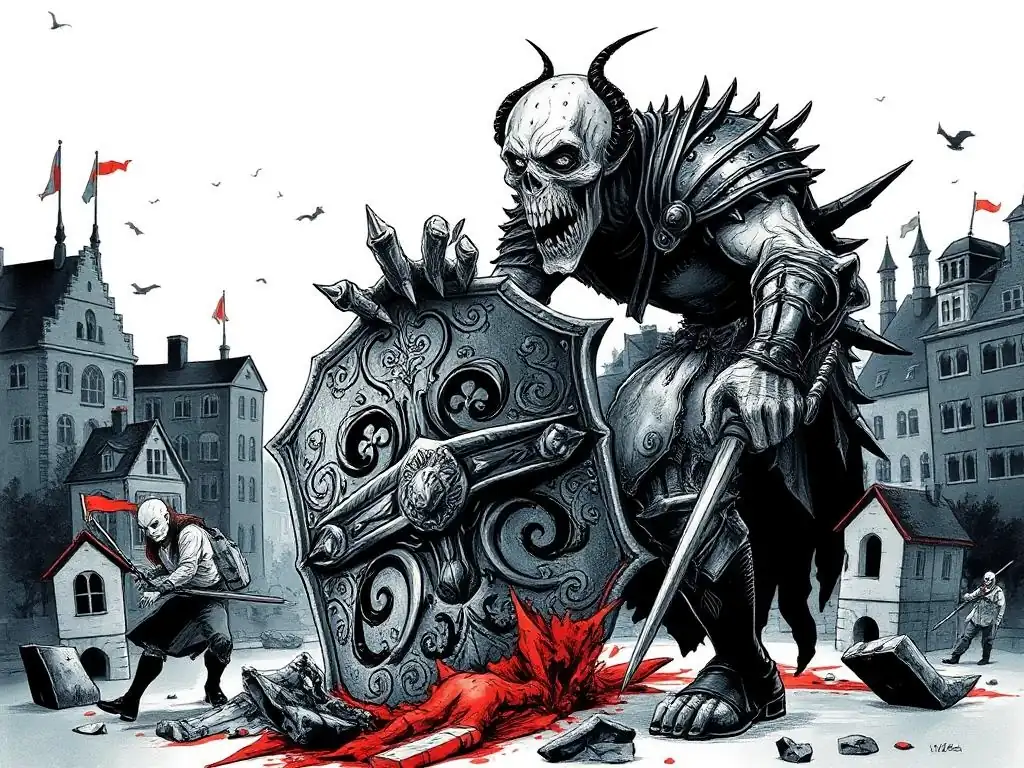
Understanding the Roots of Societal Violence: Systemic Inequality, Poverty, and Discrimination
While Beowulf is an ancient text, the themes of exclusion and resulting violence it presents hold disturbing parallels in the modern world. Societal violence often does not arise in a vacuum; it is frequently rooted in systemic issues that create marginalized groups. Factors such as extreme economic inequality, lack of opportunity due to poverty, and pervasive discrimination based on race, religion, or other characteristics can push individuals and communities to the fringes, creating conditions ripe for conflict.
Globally, research from organizations like the World Bank and the United Nations consistently points to a strong correlation between high levels of inequality and increased rates of violent crime and social unrest. For instance, studies in various urban centers have shown that neighborhoods with concentrated poverty and limited access to resources often experience disproportionately higher rates of violence compared to affluent areas. While correlation isn't causation, these systemic issues contribute to feelings of hopelessness, resentment, and alienation – conditions that, metaphorically speaking, mirror Grendel's own torment and link directly to the concept of Grendel symbolism societal violence.
The Cycle of Exclusion and Violence: Examining the Interplay of Marginalization and Retaliation
The story of Grendel illustrates a cycle: exclusion leads to resentment, which fuels violence, which in turn reinforces the exclusion. Modern societal dynamics can unfortunately reflect this pattern. Groups or individuals who feel systematically excluded or oppressed may see violence as a desperate means of striking back against the perceived source of their suffering or of asserting their existence. This can manifest in various forms, from individual acts of violence to collective unrest or gang activity in marginalized communities.
Consider historical examples like the urban riots in the mid-20th century in the United States, often sparked by incidents of police brutality but fueled by decades of systemic racial discrimination, housing segregation, and economic disenfranchisement. These events, while complex, demonstrate how long-standing marginalization can erupt into widespread violence against symbols of the dominant society. This interplay between being pushed to the outside and reacting violently resonates with the core narrative of Grendel's attacks on Heorot, highlighting the enduring relevance of Grendel symbolism societal violence.
Grendel's Legacy: Lessons for Addressing Societal Outcasts and Preventing Violence
Grendel's tale, when viewed through the lens of societal critique, offers crucial lessons for contemporary society. It underscores the potential dangers of creating and ignoring outcasts. While Grendel's monstrousness is literal in the poem, the metaphor suggests that failing to address the root causes of marginalization – whether they are systemic injustices, lack of opportunity, or social alienation – can contribute to the conditions from which destructive forces emerge.
Preventing societal violence requires more than just suppressing its symptoms; it necessitates addressing its underlying causes. This means working towards greater social inclusion, reducing inequality, ensuring equitable access to resources and opportunities, and fostering a sense of belonging for all members of society. Grendel's rage serves as a cautionary tale: ignoring the plight of those on the fringes, or actively pushing them there, can have devastating consequences for the entire community. Understanding Grendel symbolism societal violence encourages us to look inward at our own societal structures.
The Significance of Grendel's Defeat: A Call for Inclusion and Understanding
Beowulf's Victory: More Than Just a Heroic Feat
Beowulf's triumph over Grendel is celebrated as a heroic achievement, saving Hrothgar's kingdom from terror. However, looking deeper, this victory can also be interpreted symbolically. It represents the community's ability to confront and overcome the destructive forces that threaten its existence. Beowulf, as the embodiment of strength, courage, and perhaps external aid, succeeds where Hrothgar's own warriors could not, suggesting that confronting deep-seated societal problems may require extraordinary effort and a willingness to face the darkness head-on.
The victory is not just about brute strength; it's about restoring order and peace. By defeating Grendel, Beowulf makes Heorot safe again, allowing the community to rebuild and resume its communal life. This act symbolizes the reassertion of societal values over chaos and the possibility of healing after trauma. While it doesn't solve the problem of where monsters come from, it addresses the immediate manifestation of Grendel symbolism societal violence, offering a temporary resolution.
Fostering Empathy and Acceptance: Breaking the Cycle of Violence
While Beowulf doesn't portray Grendel sympathetically, the modern interpretation of his symbolism encourages reflection on the conditions that might create 'monsters' in society. Breaking the cycle of exclusion and violence requires fostering empathy and acceptance towards those who are different or marginalized. Understanding the potential roots of resentment in alienation is a crucial first step, even if it's challenging when faced with the consequences of violence.
This doesn't mean condoning violent acts, but rather addressing the systemic issues that contribute to them. Initiatives focused on community building, providing support for vulnerable populations, promoting understanding across social divides, and ensuring equitable justice are all ways society can work to prevent the conditions that breed Grendel-like rage. Moving beyond fear and towards understanding is key to dismantling the walls that create outcasts and contribute to Grendel symbolism societal violence.
Grendel's Enduring Relevance: A Reminder of the Dangers of Societal Division
Grendel's story remains relevant precisely because the dangers of societal division and the consequences of creating outcasts are timeless. The poem serves as an ancient reminder that ignoring those on the fringes, or actively casting them out, can have devastating repercussions for the entire community. The terror Grendel inflicts on Heorot is a dramatic illustration of how the suffering and rage of the marginalized can erupt and harm even the most seemingly secure and prosperous parts of society.
In an increasingly polarized world, the tale encourages us to consider the human cost of division and the importance of building inclusive societies. It prompts us to ask uncomfortable questions about who our modern "outcasts" are and what role societal structures play in their marginalization. The enduring power of Grendel symbolism societal violence lies in its ability to provoke these reflections across centuries.
Conclusion: Grendel as a Timeless Reflection of Societal Issues
The Monster's Continued Influence on Literature and Culture
Grendel's powerful figure has transcended the pages of Beowulf, influencing countless works of literature, film, and art. John Gardner's novel Grendel, for example, retells the epic from the monster's perspective, offering a deeply philosophical and somewhat sympathetic portrayal of his alienation and struggle for meaning. This reimagining highlights the character's capacity to serve as a vehicle for exploring complex existential and societal questions.
Modern interpretations often focus on the psychological or social dimensions of Grendel, seeing him as a metaphor for mental illness, social alienation, or the monstrous potential within humanity itself. His image persists as a symbol of the terrifying 'other' lurking outside the boundaries of civilized life, a testament to the character's potent and adaptable symbolism. This continued influence underscores the richness of Grendel symbolism societal violence as a theme.
Grendel's Story: A Cautionary Tale About the Consequences of Exclusion
Ultimately, Grendel's story functions as a profound cautionary tale. It illustrates the destructive power of unchecked rage born from profound exclusion and suffering. The epic poem, while not explicitly a social commentary in the modern sense, provides a vivid narrative that resonates with the understanding that pushing individuals or groups to the absolute margins of society, denying them any form of belonging or acceptance, can have terrible consequences not just for the excluded but for the entire community.
The twelve years of terror in Heorot serve as a stark warning: the problems of the marginalized cannot be ignored indefinitely. They can fester and erupt, causing widespread suffering and instability. This aspect of the narrative is central to its exploration of Grendel symbolism societal violence.
Moving Forward: Applying Grendel's Lessons to Create a More Just and Inclusive Society
Applying the lessons of Grendel's story to contemporary society means actively working to build more just and inclusive communities. It requires recognizing that while monstrous figures like Grendel are mythical, the forces of exclusion, inequality, and unaddressed suffering are real and can fuel destructive behavior. Creating a society where fewer people feel like cursed outcasts living in the wilderness is a vital step in preventing the modern manifestations of Grendel's rage.
This involves dismantling systemic barriers, fostering empathy, providing support for the vulnerable, and ensuring that everyone has the opportunity to participate fully in community life. By understanding Grendel symbolism societal violence, we are reminded that the health and safety of the whole community depend on the well-being and inclusion of all its members, even those who seem most different or challenging. The ancient epic thus continues to offer valuable insights into perennial human struggles.
Frequently Asked Questions
What does Grendel's monstrous nature symbolize in the context of societal violence?
Grendel's monstrous form often represents outsiders and those marginalized by society. His violent actions can be interpreted as a manifestation of the frustration and rage felt by those excluded and dehumanized, reflecting societal violence against them.
How does the story of Grendel reflect anxieties about societal order and chaos?
Grendel's attacks on Heorot, the mead hall, disrupt the established order and represent the threat of chaos. He embodies the destructive potential that exists when social structures fail to accommodate or protect all members of society.
In what ways can Grendel's isolation be seen as a contributing factor to his violent behavior?
Grendel's isolation and exclusion from the human community contribute significantly to his rage. This isolation can be seen as a form of societal violence, breeding resentment and ultimately fueling his destructive actions.
Does Grendel's defeat signify a complete eradication of societal violence, or something else?
Grendel's defeat offers a temporary reprieve but does not eliminate the root causes of societal violence. It highlights the ongoing need to address the underlying issues that lead to marginalization and conflict, not just suppress the symptoms.
How can the themes present in the Grendel narrative be applied to understanding modern instances of societal violence?
The story of Grendel provides a framework for understanding how exclusion, dehumanization, and social inequality can contribute to violence. By examining these themes, we can gain insight into the motivations and consequences of societal violence in contemporary contexts.
Final Reflection: Echoes of Grendel in a Violent World
Grendel's rage, a monstrous expression of alienation and societal rejection, remains chillingly relevant in our modern world. The brutal cycle of violence he embodies – born of exclusion, fueled by despair, and perpetuated through fear – continues to resonate in countless forms of societal conflict, from gang violence to political extremism. We see the shadow of Grendel in the marginalized and misunderstood, those pushed to the fringes and left to fester in their anger, ultimately inflicting pain on themselves and others.
The enduring power of Grendel's story lies in its ability to expose the fragility of societal structures and the devastating consequences of neglecting those on the margins. His monstrous form is a reflection of our own societal failings; a mirror reflecting our capacity for both cruelty and compassion. The monster in Grendel is not merely a creature of myth, but a symbol of the darkness that dwells within us all.
This quote, though not directly from the text, encapsulates the enduring truth at the heart of Grendel's narrative – a truth that continues to shape our understanding of violence and its roots.
Consider, then, the echoes of Grendel in your own life. How do we, as individuals and as a society, contribute to the creation of "monsters"? What responsibility do we bear in ensuring that those who feel alienated and unheard find a voice, a community, and a path towards healing, rather than succumbing to the destructive power of rage? Let Grendel's tale be a call to empathy, a challenge to examine our own complicity in cycles of violence, and an inspiration to build a more inclusive and compassionate world.
Unleash Your Understanding: Explore Grendel's Legacy
Thanks for delving into the complex world of Grendel! We hope you gained a new perspective on societal outcasts and the roots of violence. Ready to take your insights further?
- Craft your own Grendel interpretation: Write a short story or poem exploring a modern-day parallel to Grendel's rage. Let your imagination run wild!
- Share your thoughts: Leave a comment below – what resonated most with you in Grendel's story, and how does it relate to current events?
- Discover more: Explore our archive for other insightful analyses of mythological figures and their enduring relevance.
What hidden parallels to Grendel's plight do you see in the world around us today?