
Chimeras: Unholy Combinations of Mythical Terror

Welcome to Mythology and Legends, where ancient tales come to life! Ever wondered about the origins of the truly bizarre? Dive into the fascinating, and often terrifying, world of chimeric creatures. Uncover the secrets and symbolism behind these unholy combinations in our latest exploration of mythology and folklore. Prepare to be amazed... and perhaps a little disturbed. Intrigued? Read on to discover the captivating stories of the world's most iconic chimeras.
- Introduction to Chimeric Creatures in Mythology and Folklore
- Origins of the Chimera Myth: A Deep Dive into Ancient Greece
- Global Variations of Chimeric Creatures: A Cross-Cultural Exploration
- Symbolism and Interpretations of Chimeric Figures
- Chimeric Creatures in Modern Fantasy and Pop Culture
- The Enduring Power of the Chimera Myth: Why These Monsters Still Captivate Us
-
Frequently Asked Questions
- What are chimeric creatures in mythology and folklore?
- From which cultures do we find examples of chimeric creatures?
- What is the symbolic significance of chimeras in myths and legends?
- How have chimeras influenced contemporary society and popular culture?
- Where can I find more information on chimeras and other mythical creatures?
- Final Reflection: The Enduring Power of Chimeras
- Unleash Your Inner Mythmaker!
Introduction to Chimeric Creatures in Mythology and Folklore
Defining Chimeras: Beyond the Literal Meaning
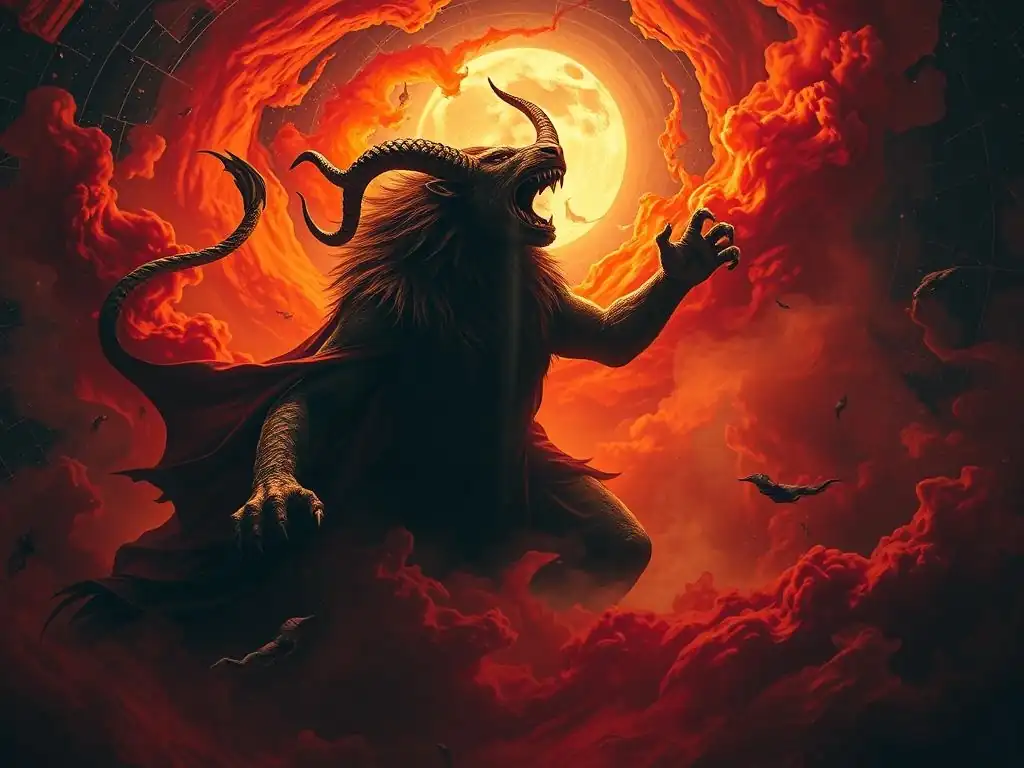
When discussing chimeric creatures mythology folklore, the term "chimera" most famously refers to the monstrous entity from Greek mythology. This original Chimera was a fearsome hybrid beast, typically described as having the body of a lion, a goat's head sprouting from its back, and a serpent's tail.
This specific creature, a direct offspring of the monstrous giants Typhon and Echidna, embodies the core concept of a chimera: a single being composed of parts from multiple different animals, often contradictory or incompatible in nature. The term has since evolved beyond this single Greek monster to describe any creature formed from disparate animal parts, becoming a recognized archetype across various mythologies and folktales.
However, the definition of "chimera" in the context of mythology and folklore extends beyond merely possessing parts from different species. It often implies a creature that defies the natural order, a monstrous aberration that represents chaos, danger, or the unknown. These chimeric creatures are frequently antagonists in myths, challenging heroes or embodying forces that threaten human civilization or the cosmic balance.
Their composite forms are not merely aesthetic choices but symbolic representations of mixed natures, primal fears, or the terrifying possibilities of unnatural combinations. Understanding this broader definition is key to appreciating the widespread presence and significance of such beings across global mythology.
The Enduring Appeal of Chimera-like Monsters in Mythology
The fascination with chimeric creatures is a persistent theme throughout human history, deeply embedded in global mythology and folklore. Part of their appeal lies in their inherent strangeness and violation of expected biological forms. A creature that is part lion, part goat, part serpent, like the Greek Chimera, or a being with a human head, lion body, and eagle wings, like the Mesopotamian Lamassu, sparks both awe and terror.
These impossible combinations ignite the imagination, pushing the boundaries of what creatures could exist and challenging our understanding of the natural world. They are tangible manifestations of the monstrous, embodying a primal fear of the unknown and the unnatural.
Moreover, chimeric creatures often serve powerful narrative and symbolic functions within their respective mythologies. They can represent the ultimate challenge for a hero, a physical manifestation of chaos to be overcome, or a guardian embodying complex forces. The visual impact of these composite beasts is undeniable, making them memorable figures in oral traditions and ancient art. From the multi-headed Hydra to the griffin, chimeric creatures populate tales of courage, conflict, and cosmic order, ensuring their continued relevance and appeal across generations and cultures, solidifying their place in the pantheon of enduring mythical figures.
Origins of the Chimera Myth: A Deep Dive into Ancient Greece
The Chimera in Greek Mythology: Lineage and Description
In classical Greek mythology, the most famous example of a chimeric creature is the Chimera itself, a monstrous female beast. She was the offspring of two of the most fearsome and monstrous figures in the Greek pantheon: Typhon, a colossal serpentine giant and father of monsters, and Echidna, a half-woman, half-serpent creature known as the "Mother of All Monsters."
This lineage immediately places the Chimera within a family of terrifying and chaotic beings, including her siblings like the Lernaean Hydra, Cerberus, and the Nemean Lion. Her birth from such formidable parents highlights her own status as a creature of immense power and malevolence, destined to wreak havoc.
The description of the Chimera in Greek texts is remarkably consistent, emphasizing her composite and unnatural form. Homer, in the Iliad (Book VI), describes her as "a thing of immortal make, not human, lion-fronted and snake behind, and in the middle a goat, breathing forth in terrible fashion the power of blazing fire."
Later accounts, such as those by Hesiod in the Theogony and Apollodorus in the Bibliotheca, corroborate this description, often adding details like multiple heads corresponding to the different animal parts (a lion's head, a goat's head on its back, and a serpent's head at the end of its tail). This vivid, multi-species portrayal solidified the Greek Chimera as the archetypal chimeric creature, a terrifying fusion of predatory power, stubborn resistance (goat), and venomous cunning (serpent), all underscored by its ability to breathe fire.
The Lycian Context: Exploring the Chimera's Homeland
The legend of the Chimera is strongly associated with the region of Lycia in ancient Anatolia (modern-day Turkey). Greek myths consistently place the creature's lair and reign of terror in this specific geographical area. The Chimera is said to have ravaged the countryside of Lycia, preying on livestock, people, and causing widespread destruction with its fiery breath. This geographical anchoring gives the myth a specific setting, grounding the fantastical creature in a real-world location known to the ancient Greeks, adding a layer of perceived reality to the tale.
Scholars have speculated about potential real-world inspirations for placing the Chimera in Lycia. One prominent theory links the myth to a geological phenomenon in the Lycian region, specifically the eternal flames of Yanartaş (known in antiquity as Mount Chimera). This site features numerous small fires fueled by natural gas vents escaping from the rock face, burning continuously for thousands of years.
The visual of flames issuing directly from the earth could easily have been interpreted by ancient observers as the fiery breath of a subterranean monster, particularly when combined with the rugged, mountainous terrain that might resemble a monstrous form. While not a direct one-to-one correlation, the association of the fire-breathing Chimera with the fire-emitting mountain in Lycia provides a compelling potential link between mythology and folklore and geological reality.
Bellerophon and the Chimera: A Heroic Encounter
The most famous narrative involving the Chimera is the myth of its slaying by the hero Bellerophon. Bellerophon, a prince from Corinth, had fled to Lycia after accidentally killing his brother. There, King Iobates of Lycia, under pressure from his son-in-law Proetus (whom Bellerophon had also offended), sought a way to get rid of the hero without violating guest-host sacred laws.
He assigned Bellerophon a seemingly impossible task: to kill the invincible Chimera that was plaguing his kingdom. This classic mythological trope of a hero being sent on a perilous quest against a monstrous foe is central to the narrative.
To accomplish this formidable task, Bellerophon sought the aid of the gods and, crucially, tamed the winged horse Pegasus. Mounted on Pegasus, Bellerophon gained a crucial advantage: the ability to attack the fire-breathing Chimera from the air, out of reach of its deadly flames and physical attacks. Various accounts detail the battle; some say he used arrows, while others describe him attaching a lump of lead to his spear.
By repeatedly striking the Chimera with the lead-tipped spear, the creature's own fiery breath melted the lead, causing it to flow down its throat and internal organs, ultimately killing the beast. This heroic feat cemented Bellerophon's reputation and provided a powerful narrative of order triumphing over chaos, represented by the defeat of the chimeric creature.
Global Variations of Chimeric Creatures: A Cross-Cultural Exploration
The Chimera's Counterparts: Similar Composite Beasts in Other Cultures
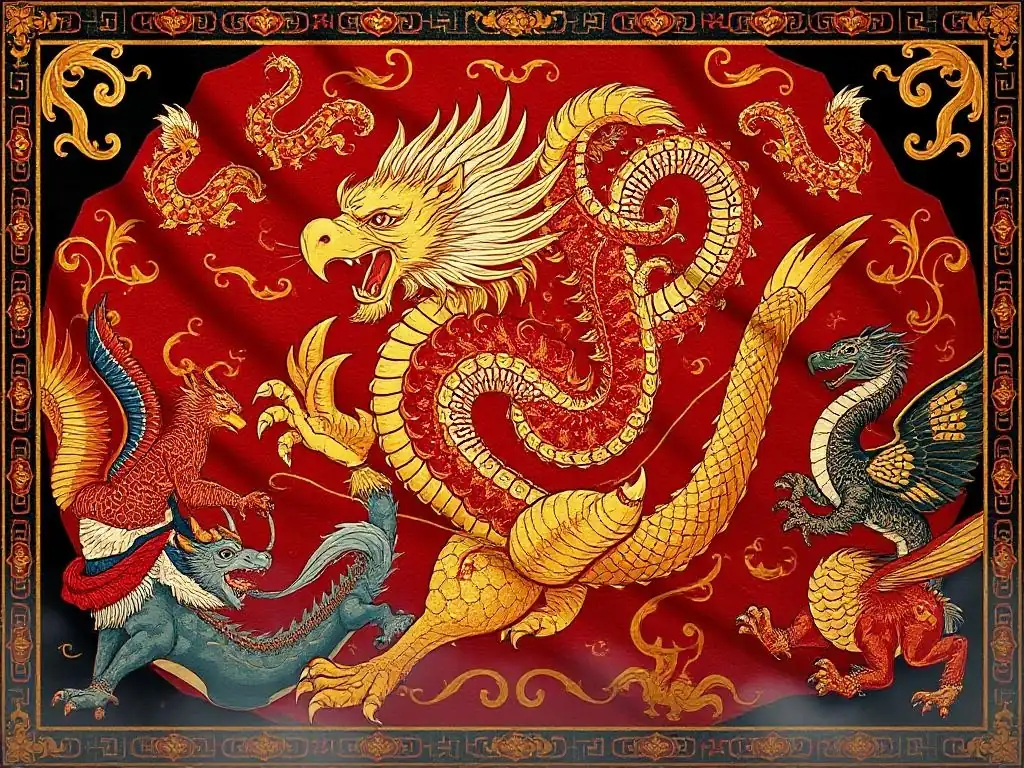
While the Greek Chimera is perhaps the most widely recognized, the concept of chimeric creatures – beings composed of parts from multiple animals or humans and animals – is a recurring motif across global mythology and folklore. These composite beasts appear in creation myths, heroic sagas, religious iconography, and cautionary tales from nearly every continent. They often serve similar functions to the Greek Chimera, acting as guardians, antagonists, symbols of divine power, or embodiments of chaotic forces. The prevalence of this archetype suggests a universal human fascination with hybridity and the blurring of natural boundaries.
Exploring these global counterparts reveals fascinating parallels and unique cultural interpretations. From the ancient Near East to Asia and beyond, cultures developed their own complex and visually striking chimeric creatures. These beings are not merely random assortments of parts but often carry deep symbolic meaning within their specific cultural contexts, reflecting local fauna, religious beliefs, and societal values. Studying these variations provides insight into how different civilizations conceptualized the interface between humanity, the animal kingdom, and the divine or monstrous realms, showcasing the rich diversity of chimeric creatures mythology folklore.
Egyptian Mythology: The Sphinx and Other Hybrid Beings
Ancient Egyptian mythology is replete with chimeric creatures, perhaps none more famous than the Sphinx. The most iconic form, the Great Sphinx of Giza, has the body of a lion and the head of a human (believed to represent the Pharaoh Khafre). However, variations exist, including sphinxes with ram heads (criosphinx) or falcon heads (hieracosphinx).
These creatures were not typically depicted as malevolent monsters like the Greek Chimera; instead, they were often seen as powerful guardians, symbols of royal authority, or representations of deities like Ra or Horus. Their composite form combined the strength and regal power of the lion with human intelligence or divine attributes (falcon/ram).
Beyond the Sphinx, Egyptian art and mythology feature a wide array of other composite beings. Deities were frequently depicted with animal heads on human bodies, such as Anubis with a jackal head, Horus with a falcon head, or Sekhmet with a lioness head. While not "monsters," these divine forms are fundamentally chimeric creatures, blending human form with animal characteristics to symbolize specific powers or aspects of nature.
Mythological beasts like the Ammit, the "Devourer of the Dead" (with the head of a crocodile, the torso of a lion, and the hindquarters of a hippopotamus), clearly fit the monstrous chimera archetype, serving as a terrifying judge in the afterlife. The prevalence of these hybrids highlights a distinct Egyptian approach to representing power, divinity, and the interface between different realms through composite forms.
Mesopotamian Mythology: Lamassu and Composite Deities
Mesopotamian civilizations, including the Sumerians, Akkadians, Assyrians, and Babylonians, also featured a rich menagerie of chimeric creatures in their mythology and folklore. Among the most prominent are the Lamassu (or Shedu), colossal protective deities often placed at the entrances of palaces and cities. These magnificent beings are typically depicted as having the body of a bull or lion, large eagle wings, and a human head, often adorned with a divine headdress.
Like the Egyptian Sphinx, Lamassu were benevolent guardians, embodying strength (bull/lion), freedom/divinity (wings), and intelligence (human head). Their imposing presence served to ward off evil and protect the inhabitants within.
Mesopotamian demonology and epic literature also feature various monstrous chimeric creatures. The Epic of Gilgamesh, one of the oldest surviving works of literature, describes Humbaba, the guardian of the Cedar Forest, as having a terrifying, ever-changing face and other monstrous attributes, though not always explicitly defined as a multi-animal composite in the same way as the Chimera. Earlier Sumerian and Akkadian texts depict fearsome hybrid demons and monsters, often with combined human and animal traits, used in religious rituals or as antagonists in myths.
The Ugallu (Big Weather Beast), for instance, is a lion-human hybrid demon associated with storms. These Mesopotamian chimeric creatures demonstrate a long-standing tradition of using composite forms to represent both protective divine power and chaotic, fearsome forces.
Asian Folklore: Dragons and Qilin as Chimeric Entities
Asian mythology and folklore, particularly in East Asia (China, Japan, Korea, Vietnam), boast a vast array of chimeric creatures, with the dragon arguably being the most iconic. The East Asian dragon is fundamentally a composite beast, typically described as having the body of a serpent, the scales of a fish, the claws of an eagle, the head of a camel, the horns of a stag, the eyes of a demon, and sometimes the ears of an ox.
Unlike the often malevolent dragons of European folklore, East Asian dragons are primarily benevolent beings associated with water, rain, rivers, and imperial power. Their composite form combines traits of various powerful animals, symbolizing control over different elements and realms.
Another significant chimeric creature in East Asian mythology is the Qilin (or Kirin in Japanese folklore). Often described as a creature with the head of a dragon (or sometimes a lion or deer), the body of a deer, the scales of a fish, the hooves of an ox or horse, and a bushy tail, the Qilin is a symbol of good fortune, prosperity, protection, and serenity.
It is a benevolent creature, said to appear during times of great prosperity or the birth of a sage. The Qilin's composite form, blending grace (deer), strength (ox/horse), and auspiciousness (dragon/scales), positions it as a powerful yet gentle guardian spirit, contrasting with the fearsome nature of the Greek Chimera but sharing the fundamental characteristic of being a creature formed from disparate animal parts.
Symbolism and Interpretations of Chimeric Figures
The Chimera as a Symbol of Chaos and Disorder
At its core, the chimeric creature in mythology and folklore often serves as a potent symbol of chaos and disorder. Its very existence defies the natural boundaries and classifications that humans impose on the world. The combination of parts from different species – predator and prey, terrestrial and serpentine, wild and domestic – creates a being that is fundamentally unnatural and disharmonious.
This violation of natural order makes the chimera archetype a perfect representation of forces that threaten stability, predictability, and the established world. The Greek Chimera, with its destructive fiery breath and rampage through Lycia, is a direct embodiment of this chaotic force, disrupting human life and the peaceful existence of nature.
Beyond mere physical destruction, chimeric creatures can symbolize deeper forms of disorder. They can represent the breakdown of societal norms, the perversion of creation, or the terrifying unknown that lies beyond the edges of the known world. Their monstrous forms challenge understanding and inspire fear, making them ideal antagonists in myths where heroes must restore order by defeating these embodiments of chaotic power. The struggle against a chimeric creature is often a metaphorical battle against the forces that seek to unravel the fabric of reality or society, reinforcing the importance of balance and order within the mythological worldview.
Psychological Interpretations: The Chimera as a Representation of Inner Conflict
Psychological interpretations of chimeric creatures often view them not just as external monsters but as symbolic representations of internal states or conflicts. The composite nature of the chimera can be seen as mirroring the fragmented or contradictory aspects within the human psyche. Different animal parts could symbolize conflicting desires, fears, instincts, or personality traits that are difficult to reconcile. A creature that is simultaneously a powerful lion, a stubborn goat, and a cunning serpent might represent the internal struggle to integrate diverse parts of one's own nature, some of which may be primal, aggressive, or difficult to control.
Furthermore, chimeric creatures can symbolize repressed fears or anxieties. The monstrous hybrid form gives tangible shape to abstract psychological threats or unresolved internal tensions. Facing and conquering a chimeric creature in myth can be interpreted as a metaphor for confronting and integrating these inner conflicts or overcoming deep-seated psychological obstacles. This perspective adds a layer of depth to chimeric creatures mythology folklore, suggesting that these terrifying hybrids speak not only to external dangers but also to the complex and often chaotic landscape of the human mind.
The Chimera as a Warning: Morality and the Natural Order
Many chimeric creatures in mythology and folklore function as cautionary tales or warnings. Their unnatural forms and often destructive behavior can serve as a reminder of the dangers of transgressing natural or divine laws. The creation of such beings, whether through monstrous parentage like the Greek Chimera or through forbidden magical experimentation (a theme more common in later folklore and fantasy inspired by the archetype), often results in uncontrollable terror. This suggests a message that certain combinations or manipulations are inherently wrong or dangerous, leading to monstrous outcomes.
The defeat of a chimeric creature by a hero often reinforces the importance of maintaining the natural or divinely ordained order. The hero's action restores balance and eliminates the unnatural aberration. This narrative structure implicitly warns against disrupting this order.
In some traditions, benevolent chimeric creatures like the Qilin serve as positive symbols of harmony and balance, their appearance signifying that the natural order is being upheld, thus reinforcing the inverse warning: their absence, or the presence of malevolent hybrids, signals that something is fundamentally wrong. Thus, chimeric creatures act as powerful moral symbols, illustrating the potential consequences of disorder and the value of adhering to established boundaries.
Chimeric Creatures in Modern Fantasy and Pop Culture
The Chimera's Legacy: Influence on Modern Literature and Film
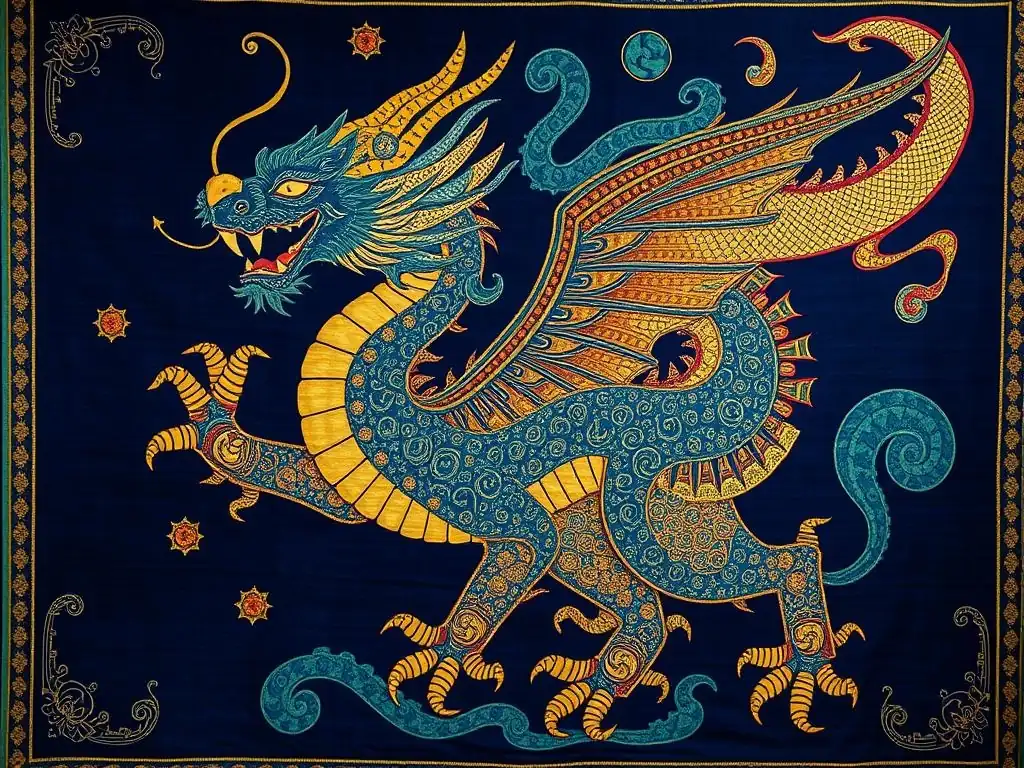
The archetype of the chimeric creature has left an indelible mark on modern fantasy literature and film. Writers and filmmakers frequently draw inspiration from the concept of hybrid monsters to create terrifying and visually striking antagonists or mysterious, awe-inspiring beings. The core idea of combining disparate animal parts to create something new and monstrously powerful is a versatile tool for generating fear and wonder. Creatures with multiple heads (like hydra-inspired beasts), combined animal forms (like griffins or manticores), or human-animal fusions are staples of the fantasy genre, directly lineage tracing back to ancient chimeric creatures mythology folklore.
Examples abound in popular culture. J.K. Rowling's Harry Potter series features creatures like the Acromantula (giant spider) and the Hippogriff (part eagle, part horse), clearly drawing on the hybrid tradition. The Chimera itself often appears directly, sometimes resembling the Greek original, other times reimagined.
Films like Clash of the Titans (both the original and remake) prominently feature the Greek Chimera as a central monster. The concept of genetic engineering gone wrong, leading to monstrous hybrids, seen in films like Splice or creature features, can be viewed as a modern, scientific take on the ancient fear embodied by chimeric creatures – the fear of unnatural combination and its terrifying consequences.
Chimeric Creatures in Video Games and Contemporary Art
Video games have enthusiastically embraced chimeric creatures, utilizing their complex forms to create challenging and memorable enemies. Role-playing games, fantasy strategy games, and action titles frequently feature creatures explicitly named "Chimera" or variations thereof, often depicted as powerful, multi-attacking beasts combining traits of lions, goats, serpents, or other animals, sometimes with added elements like wings or multiple heads.
Games like Dungeons & Dragons (and its video game adaptations) include the classic Chimera as a standard monster with specific stats and abilities reflecting its composite nature and fiery breath. Franchises like Final Fantasy, Monster Hunter, and countless others feature a wide variety of original chimeric creatures, designed to test players' combat skills and provide visually unique encounters.
Beyond gaming, chimeric creatures continue to inspire contemporary visual artists, sculptors, and digital illustrators. The striking and often grotesque forms offer rich material for creative expression. Artists explore the themes of hybridity, identity, the unnatural, and the monstrous through depictions of these beings.
Sculptures might physically combine elements of different animals in unsettling ways, while digital art can create hyper-realistic or highly stylized visions of these mythical beasts. This continued presence in modern art forms demonstrates the enduring power and visual appeal of chimeric creatures mythology folklore, proving that these ancient hybrids remain relevant sources of inspiration and fascination in the 21st century.
The Enduring Power of the Chimera Myth: Why These Monsters Still Captivate Us
Lessons from the Chimera: Exploring Humanity's Fascination with the Monstrous
The persistent fascination with chimeric creatures mythology folklore speaks volumes about human nature and our relationship with the unknown and the monstrous. These composite beasts embody primal fears: the fear of the wild, the fear of the unnatural, the fear of things that do not fit neatly into our categories. Their existence challenges our understanding of biological norms and the stability of the world. By creating and telling stories about these monsters, cultures throughout history have found a way to externalize these fears, explore them within a narrative context, and often, symbolically overcome them through the actions of heroes.
Furthermore, the monstrous, including chimeric creatures, serves as a foil against which humanity defines itself. By describing what is monstrous and unnatural, we implicitly define what is human and natural. The struggle against the Chimera or other hybrid beasts highlights human courage, ingenuity, and the desire to impose order on chaos.
These stories provide a framework for understanding danger, testing limits, and reinforcing cultural values. The enduring power of the chimera myth lies in its ability to tap into these fundamental aspects of the human experience – our fears, our capacity for heroism, and our need to understand the boundaries of our world.
The Chimera in Genetic Research and Bioethics: Modern Implications
In a fascinating modern twist, the term "chimera" has been adopted by the scientific community, specifically in the field of genetics and biology. A biological chimera is an organism that contains cells from two or more different individuals, resulting from processes like the fusion of multiple fertilized eggs, organ transplantation, or the absorption of a twin in utero.
This scientific definition directly references the mythical chimeric creature due to the organism's composite nature, containing genetically distinct cell lines within a single body. For example, a human who has received a bone marrow transplant from a donor is a form of chimera, as their blood cells will have the donor's DNA while the rest of their body has their own DNA.
This scientific reality has sparked significant ethical discussions, echoing some of the ancient concerns raised by chimeric creatures mythology folklore. The creation of interspecies chimeras in research, such as growing human cells or tissues in animal embryos (e.g., creating a mouse with human brain cells, or attempting to grow human organs in pigs), raises complex questions about identity, consciousness, the definition of species, and the moral boundaries of genetic manipulation.
While the goal is often noble (e.g., developing disease models or sources for transplant organs), the concept of intentionally creating composite life forms touches upon the same deep-seated unease about unnatural combinations that gave rise to the mythical Chimera thousands of years ago. The use of the term "chimera" in this context serves as a direct link between ancient fears of unnatural hybrids and contemporary bioethical debates, showcasing the myth's unexpected relevance in the age of genetic engineering.
Frequently Asked Questions
What are chimeric creatures in mythology and folklore?
Chimeric creatures are composite beings formed from the body parts of multiple animals. They often represent monstrous or unnatural combinations, embodying fear and chaos within the myths they inhabit.
From which cultures do we find examples of chimeric creatures?
Chimeric creatures appear in numerous cultures, though they are particularly prominent in Greek mythology. However, examples also exist in Egyptian, Mesopotamian, and Asian folklore.
What is the symbolic significance of chimeras in myths and legends?
Chimeras frequently symbolize danger, the unnatural, and the violation of natural order. They can also represent inner conflict or the merging of opposing forces, depending on the specific narrative.
How have chimeras influenced contemporary society and popular culture?
The concept of chimeric creatures has permeated art, literature, and film. They serve as inspiration for fantastical beasts in various forms of media, often representing powerful or terrifying adversaries.
Where can I find more information on chimeras and other mythical creatures?
Websites like Mythology and Legends offer comprehensive resources on myths, legends, and folklore. These resources often include detailed descriptions, cultural context, and symbolic interpretations of chimeric creatures.
Final Reflection: The Enduring Power of Chimeras
The unsettling allure of chimeric creatures persists, a testament to humanity's enduring fascination with the monstrous and the unknown. These unholy combinations, born from myth and folklore, continue to resonate in our collective unconscious, shaping our understanding of fear, power, and the very boundaries of nature itself. Their enduring presence in modern media only serves to amplify their timeless impact.
The exploration of chimeric creatures reveals much more than just a catalog of fantastical beasts; it unveils a reflection of our own anxieties and societal structures. These creatures, often born of discordant unions, represent the chaos and unpredictable nature of the world around us. Their very existence challenges our established norms and forces us to confront the unsettling possibilities that lie beyond the familiar. Monsters, it seems, are always reflections of ourselves.
This quote perfectly encapsulates the enduring power of chimeric figures to act as a mirror to our deepest fears and societal anxieties.
Consider the chimeras you've encountered, both in this article and throughout your own experiences with mythology and fiction. What aspects of these creatures resonate most deeply with you? What fears or desires do they represent? I urge you to continue exploring the world of chimeric creatures, not just as fantastical beings, but as powerful symbols that reflect our ongoing struggle to understand ourselves and the world we inhabit. Let their unsettling beauty inspire you to delve deeper into the rich tapestry of human imagination and the enduring power of myth.
Unleash Your Inner Mythmaker!
Thanks for exploring the terrifying world of chimeras with us! You've now unlocked a deeper understanding of these mythical beasts and their enduring power in storytelling. Ready to dive even further into the fantastical?
- Craft your own chimera: Let your imagination run wild! Design your unique creature, sketching its form and detailing its mythical abilities. Share your creation in the comments – let's see what unholy combinations you conjure!
- Explore related creatures: Delve into our archives to uncover more monstrous mythology. You might find inspiration for your own chimera or discover entirely new beasts to fear (and admire! ).
- Share this article with a friend who appreciates a good scare – spread the mythical mayhem!
So, what terrifying talents will your chimera possess? Let's hear your monstrous creations!