
Desert Demons: Beasts That Haunt the Sands of Ancient Lore

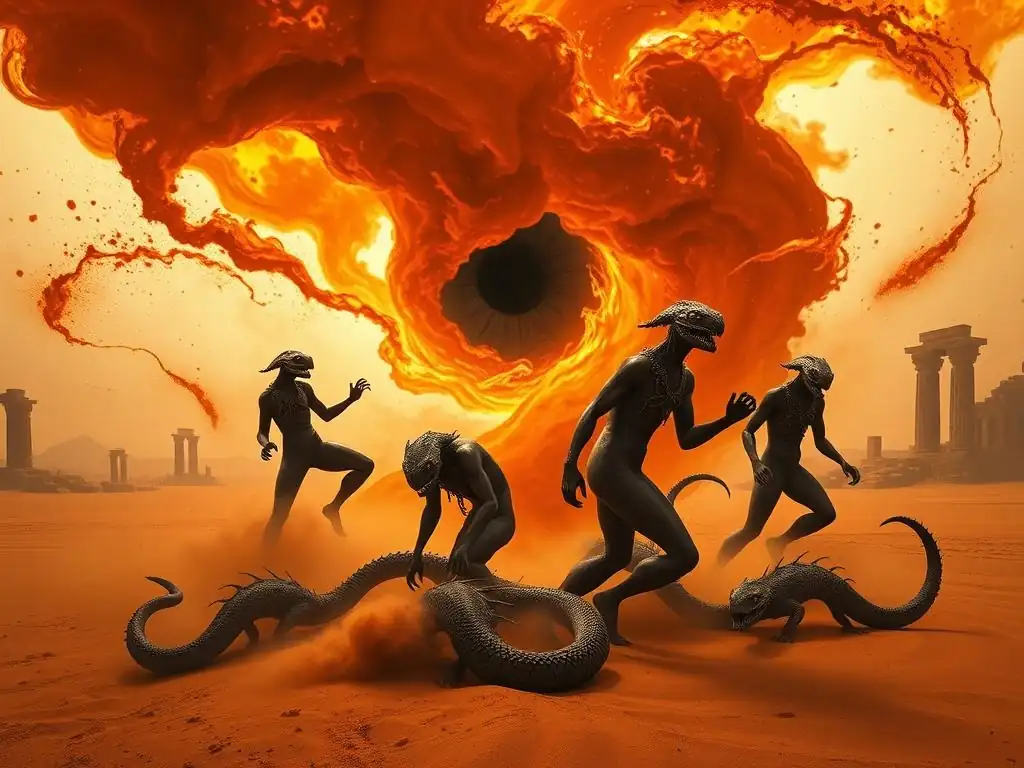
Welcome to Mythology and Legends, where whispers from the past echo through the present. Prepare to journey into the heart of forgotten tales, beginning with a chilling exploration of Ancient desert demon folklore stories. What secrets lie buried beneath the shifting sands, and what terrors stalk the moonlit dunes? Delve deeper to uncover the truth... if you dare.
- Introduction: Unveiling the Terrifying World of Ancient Desert Demon Folklore Stories
- The Harsh Landscape and its Mythical Inhabitants: Why Deserts Breed Demons in Ancient Lore
- Key Ancient Desert Demons Across Cultures: A Comparative Overview
- Common Characteristics of Ancient Desert Demons: Examining Shared Traits
- The Purpose of Desert Demon Stories: Lessons, Warnings, and Cultural Significance
- Ancient Desert Demon Folklore Stories in Modern Media: From Literature to Film
- Conclusion: The Enduring Legacy of Ancient Desert Demon Tales
-
Frequently Asked Questions
- What are some common characteristics attributed to desert demons in ancient folklore stories?
- How did the harsh environment of the desert contribute to the creation and perpetuation of desert demon folklore?
- Can you name some specific examples of desert demons found in different cultures' folklore?
- What is the typical role of desert demons in the narratives of ancient desert demon folklore stories?
- How have ancient desert demon folklore stories influenced contemporary society, if at all?
- Final Reflection: Echoes of the Desert's Whispers
- Unleash Your Inner Mythographer: Dive Deeper into Desert Lore!
Introduction: Unveiling the Terrifying World of Ancient Desert Demon Folklore Stories
Across vast, arid landscapes, where the sun beats down relentlessly and shadows stretch like grasping claws, ancient cultures whispered tales of malevolent entities dwelling in the desolate sands. These are the ancient desert demon folklore stories, narratives born from the harsh realities of survival in environments defined by scarcity and extreme conditions.
Far from being mere scary tales, these myths served vital cultural roles, explaining the inexplicable, reinforcing societal norms, and providing a framework for understanding the world and its inherent dangers. Exploring these ancient desert demon folklore stories offers a fascinating glimpse into the fears, beliefs, and imaginations of peoples who grappled daily with the unforgiving power of nature.
The mythology surrounding desert demons spans continents and millennia, encompassing figures from Mesopotamian, Egyptian, Arabian, and Jewish traditions, among others. Each culture, shaped by its unique desert experiences, developed distinct yet often overlapping portrayals of these creatures. From wind-whipped specters causing disease to ravenous ghouls preying on the dead, the diversity within ancient desert demon folklore stories reflects the varied ways humanity has perceived the unknown horrors lurking beyond the edges of civilization. Understanding these beings requires delving into the specific cultural contexts that gave them life and sustained their fearsome reputations through generations.
The Harsh Landscape and its Mythical Inhabitants: Why Deserts Breed Demons in Ancient Lore
Deserts, with their immense scale, unpredictable weather, and often hallucinatory heat haze, naturally lend themselves to the creation of myths about supernatural inhabitants. The isolation, the lack of familiar landmarks, and the constant struggle for water and shelter create an environment ripe for psychological projection and the attribution of malevolent intent to natural phenomena. In ancient desert demon folklore stories, the landscape itself becomes a character, an inhospitable realm patrolled by entities that embody its most dangerous aspects – thirst, disorientation, sudden storms, and the silence that can drive one mad.
The stark contrast between the life-giving river valleys or fertile plains and the surrounding barrenness amplified the desert's mystique and danger. For ancient peoples like the Egyptians along the Nile or the Mesopotamians between the Tigris and Euphrates, venturing into the desert was often a necessity for trade or exploration, but it was also a journey into the unknown, a place perceived as being outside the ordered cosmos.
This perception made the desert a fitting home for chaotic and malevolent forces, giving rise to terrifying ancient desert demon folklore stories that warned travelers of the perils beyond the safe zones.
The Psychological Impact of the Desert: Loneliness, Isolation, and Supernatural Beliefs
The profound loneliness and isolation experienced in vast desert expanses significantly contributed to the development of ancient desert demon folklore stories. When alone under an immense sky, with no other human presence for miles, the mind can play tricks. Heatstroke can induce hallucinations, thirst can lead to delirium, and the sheer silence can become oppressive. These experiences made it easy for ancient travelers and inhabitants to attribute strange sounds, fleeting movements in the periphery, or sudden feelings of dread to supernatural entities.
Furthermore, the lack of social structure and familiar societal rules in the wilderness could be perceived as a breakdown of cosmic order, making it a natural domain for chaotic beings. Myths often filled the void left by the absence of human community and the perceived proximity to the edges of the world. The ancient desert demon folklore stories thus served not only as warnings but also as psychological anchors, providing explanations for the terrifying sensations and events encountered in isolation.
Scarce Resources and the Attribution of Malevolence: Linking Survival to Demonology
Survival in the desert hinges entirely on access to scarce resources, primarily water and shelter. The sudden disappearance of a water source, the failure to find an oasis, or being caught exposed in a sandstorm were matters of life and death. In ancient belief systems, where natural events were often seen as the actions of gods or spirits, these life-threatening occurrences were frequently attributed to malevolent forces. Ancient desert demon folklore stories often depicted demons guarding water sources, causing droughts, or conjuring storms specifically to torment or kill travelers.
This link between resource scarcity and demonology is evident in many ancient desert demon folklore stories. A well drying up might not just be a natural event, but the work of a demon who had cursed it. A sudden, deadly sandstorm could be the manifestation of a powerful wind demon's wrath. By personifying these dangers, ancient peoples created narratives that helped them process and respond to the arbitrary and often brutal realities of desert life, offering rituals or protective measures against these perceived supernatural threats.
Key Ancient Desert Demons Across Cultures: A Comparative Overview
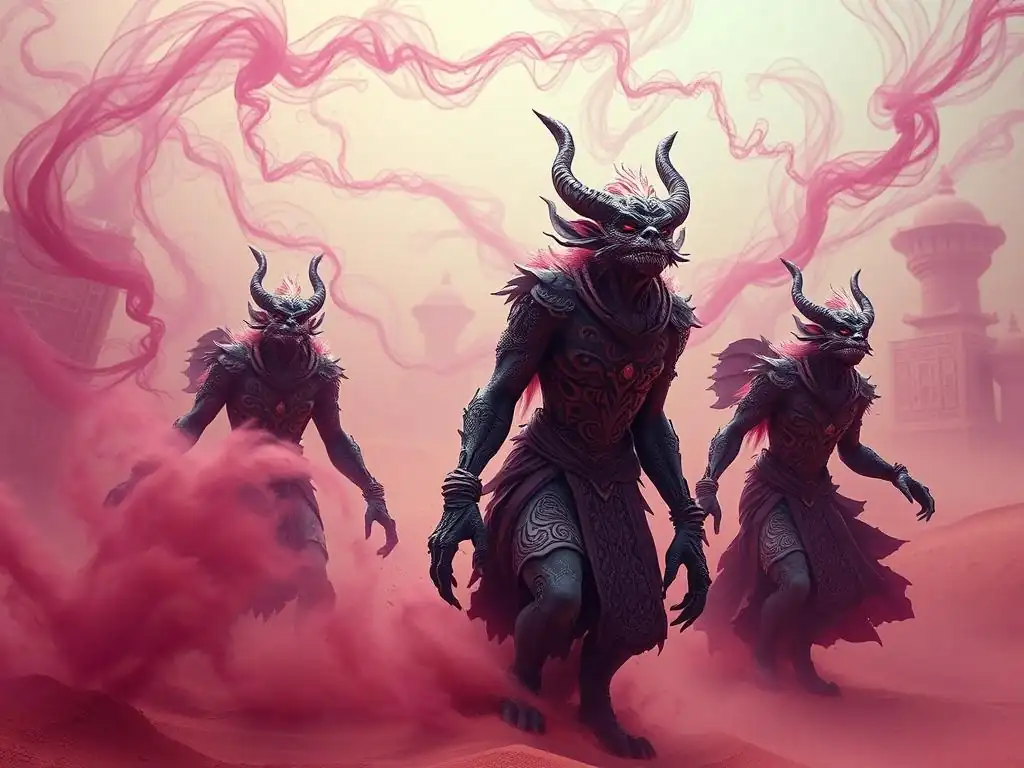
The arid regions of the world are home to some of the oldest civilizations, and consequently, some of the most enduring ancient desert demon folklore stories. While distinct in their specific attributes and cultural roles, figures like the Mesopotamian Pazuzu, the Egyptian Apep, the Arabian Ghoul, and the Jewish Lilith share a common connection to the desolate, dangerous landscapes they inhabit. Examining these figures provides insight into how different cultures conceptualized the evil that lurked beyond the fertile lands.
These demons often embodied the specific fears associated with their respective deserts – the unpredictable winds of Mesopotamia, the chaotic darkness outside the Egyptian cosmos, the desolate graveyards of Arabia, or the liminal spaces perceived as dangerous in Jewish mysticism. Their stories, passed down through generations, form a rich tapestry of ancient desert demon folklore stories, revealing shared anxieties about survival, the unknown, and the forces of chaos.
The Mesopotamian Pazuzu: King of the Wind Demons and Protector Against Evil Spirits
Pazuzu is a fascinating figure in ancient Mesopotamian religion, often depicted as a grotesque hybrid creature with a canine or leonine face, eagle's talons, two pairs of wings, and a scorpion's tail. Despite his terrifying appearance and title as "King of the Wind Demons," Pazuzu was paradoxically invoked to protect against other, more harmful demons, particularly Lamashtu, a female demon known for harming pregnant women and infants. This dual nature makes Pazuzu a complex character within ancient desert demon folklore stories.
His association with wind connects him directly to the desert environment, as sudden, powerful winds and sandstorms were a significant threat in Mesopotamia. While capable of bringing harm himself, Pazuzu's image was frequently used on amulets and statues placed in homes to ward off other evil spirits, particularly those believed to cause disease and misfortune. This protective role, though unusual for a demon king, highlights the nuanced understanding of supernatural forces in Mesopotamian belief.
Pazuzu's Origins and Powers: An Exploration of Mesopotamian Demonology
Pazuzu is believed to have originated in the first millennium BCE, appearing prominently in Neo-Assyrian and Neo-Babylonian periods. His powers are primarily linked to the winds, which in Mesopotamia could bring devastating sandstorms, drought, or disease. As the king of the lilû demons – a class of wind demons – he commanded considerable power over these forces. His fearsome appearance was not just for show; it was integral to his power to frighten away other malevolent entities.
Mesopotamian demonology was intricate, with a vast pantheon of benevolent and malevolent spirits, often associated with specific illnesses or misfortunes. Pazuzu, while a demon himself, occupied a unique position as a powerful force capable of overpowering lesser, more harmful demons, particularly those targeting the vulnerable. This made him a crucial figure in protective magic and ancient desert demon folklore stories focused on warding off evil.
Pazuzu's Role in Exorcism Rituals: Counteracting Lamashtu's Influence
Pazuzu's most significant role in Mesopotamian practice was as a counter-agent to Lamashtu. Lamashtu was widely feared as she targeted pregnant women, newborns, and young children, bringing sickness and death. Amulets depicting Pazuzu were commonly worn by pregnant women and mothers, and his image was placed in birthing rooms or hung over cribs. Rituals involving Pazuzu were performed to expel Lamashtu and the afflictions she caused.
A notable example involves a ritual text describing the use of a Pazuzu amulet alongside incantations to drive Lamashtu away. The text details how Lamashtu is forced back into the desert, her traditional home, by the power of Pazuzu. This highlights the belief that one powerful desert entity could be used to combat another, positioning Pazuzu as a necessary evil or a force of chaos that could be directed against even greater chaos. His presence in these rituals underscores his importance in ancient desert demon folklore stories related to protection and healing.
The Egyptian Apep (Apophis): The Serpent of Chaos and Eternal Enemy of Ra
In ancient Egyptian cosmology, Apep (also known as Apophis) is the quintessential force of chaos ( Isfet), an enormous serpent or snake dwelling in the Duat (the underworld). He is the eternal enemy of the sun god Ra, who traverses the Duat each night during his journey through the sky. Apep's sole purpose is to disrupt Ra's passage, attempting to swallow the sun boat and plunge the world into eternal darkness. His struggle against Ra is a central theme in Egyptian ancient desert demon folklore stories and cosmology.
Apep embodies everything the ordered cosmos ( Ma'at) is not: disorder, darkness, and destruction. While not strictly a "desert" demon in the sense of inhabiting the physical sand, his domain, the Duat, is often depicted as a dark, chaotic, and arid space beneath the earth, mirroring the perceived dangers and lack of order in the desolate wilderness outside the Nile Valley. His defeat by Ra and other deities each night ensured the continuation of creation and the daily cycle of the sun.
Apep's Symbolism: Darkness, Destruction, and the Underworld
Apep's symbolism is deeply intertwined with the forces that threatened the stability and order of the Egyptian world. As a massive serpent, he represented the primeval chaos that existed before creation. His attempts to devour the sun symbolized the threat of darkness overtaking the light, representing not just the literal night but also the forces of destruction, disorder, and death that constantly sought to undermine the cosmos.
His dwelling in the Duat further solidified his connection to the realm of the dead and the unknown. The journey through the Duat was perilous for both the sun god and the deceased, fraught with dangers and challenges. Apep was the ultimate obstacle in this journey, embodying the finality of death and the potential for the ordered afterlife to be consumed by chaos. His perpetual defeat, though temporary each night, was essential to the Egyptian worldview, ensuring that Ma'at ultimately triumphed over Isfet.
Ra's Daily Battle Against Apep: The Cosmic Struggle for Order
The most famous narrative involving Apep is the nightly battle against Ra and the deities accompanying him on the solar bark. As Ra travels through the Duat, Apep lies in wait, attempting to stop the boat by hypnotizing its crew or physically attacking it. Ra and his protectors, including deities like Set, Isis, and Thoth, must fight and subdue Apep using spells, spears, and other weapons. Apep is often depicted being stabbed, cut into pieces, or bound, but he is never permanently destroyed, reflecting the eternal nature of chaos.
This cycle of battle and temporary defeat was central to Egyptian religious practice. Rituals were performed by priests in temples to help Ra defeat Apep, ensuring the sun's return the next morning and the continuation of life. These rituals involved reciting spells, burning effigies of Apep, and symbolically wounding him. The daily struggle against Apep was a powerful allegory for the human effort to maintain order against the constant threat of chaos, a theme deeply embedded in their ancient desert demon folklore stories.
The Arabian Ghoul: A Shapeshifting Demon of the Wastelands
The Ghoul (from the Arabic ghūl, meaning 'demon') is a prominent figure in pre-Islamic Arabian folklore and later Islamic tradition, a monstrous creature associated with deserts, cemeteries, and other desolate places. Ghouls are typically depicted as shapeshifting demons that prey on the living, especially travelers, but are most famously associated with feeding on the flesh of the dead. Their habitat in remote, often desertified areas makes them classic examples of ancient desert demon folklore stories.
Ghoul lore is rich with tales of these creatures luring unsuspecting people into the wilderness, often by taking on deceptive forms, before attacking and consuming them. Their connection to graveyards reinforces their association with death and decay, adding another layer to their terrifying nature. The ghoul's ability to change shape makes it an unpredictable and particularly dangerous adversary in the ancient desert demon folklore stories of the Arabian Peninsula.
Ghoul Lore: Feeding on the Dead and Luring Travelers to Their Doom
The most defining characteristic of the ghoul in Arabian folklore is its necrophagous nature – its habit of feeding on corpses. Ghouls are said to haunt cemeteries, digging up graves to consume the bodies. This practice not only makes them terrifying but also marks them as unclean and associated with the defilement of the dead. Tales often describe the sounds of ghouls feasting in the night, a chilling warning to avoid desolate burial grounds after dark.
Beyond feeding on the dead, ghouls also pose a direct threat to the living. They are notorious for luring travelers off the path in the desert, often by mimicking familiar voices or appearing as attractive individuals or animals. Once the victim is isolated and disoriented, the ghoul reverts to its monstrous form and attacks. This predatory behavior highlights the dangers of venturing alone into the Arabian wilderness and is a common motif in ancient desert demon folklore stories.
Ghoul Variations in Arabian Folklore: Regional Differences and Unique Traits
While the core concept of a graveyard-haunting, corpse-eating shapeshifter is common, there are regional variations in ghoul lore across the Arabian world and beyond, influencing different ancient desert demon folklore stories. Some traditions differentiate between male ghouls ( ghūl) and female ghouls ( ghūlah), with the female often being depicted as more powerful or dangerous. The ghūlah is sometimes specifically described as a type of jinn (supernatural beings in Arabian and Islamic folklore).
In some tales, ghouls are vulnerable to a single blow, but multiple blows can revive them, a unique trait that adds a strategic element to encounters with them. Other stories describe ghouls having donkey-like feet or other distinguishing features that reveal their true nature despite their shapeshifted form. These variations demonstrate the dynamic nature of folklore, with stories adapting and developing unique traits as they were passed down through different communities and regions, adding depth to the body of ancient desert demon folklore stories.
The Jewish Lilith: Queen of the Night and Harbinger of Misfortune
Lilith is a complex figure in Jewish folklore, often associated with the night, demons, and causing harm, particularly to infants and women in childbirth. While her origins are debated and potentially pre-date Jewish tradition, she appears in various Jewish texts, notably the Babylonian Talmud and later mystical works like the Zohar. She is sometimes linked to desolate places and the wilderness, positioning her within the broader category of ancient desert demon folklore stories, though her domain is often more specifically the night and liminal spaces.
According to one well-known legend from the medieval Alphabet of Ben Sira, Lilith was the first woman created by God, equal to Adam, but she refused to obey him and fled the Garden of Eden to the Red Sea, a desolate region inhabited by demons. Here, she consorted with demons and gave birth to countless demonic offspring. This narrative solidifies her connection to the wilderness and her status as a powerful, independent, and often malevolent entity.
Lilith's Origins and Powers: A Figure of Rebellion and Female Empowerment
Lilith's origins are often traced back to Mesopotamian demonology, possibly related to the līlītu class of wind demons (like those associated with Pazuzu), who were believed to prey on infants and women. This connection to wind and night spirits links her to the unseen dangers associated with the wilderness and the dark. In the Alphabet of Ben Sira account, her rebellion against Adam and refusal to lie beneath him is a powerful assertion of independence, leading to her exile and transformation into a demonic figure.
Her powers in Jewish folklore include seducing men in their sleep, causing nocturnal emissions, and, most famously, harming infants and pregnant women. She is believed to be particularly dangerous to uncircumcised male infants until their eighth day and to mothers after childbirth. Her ability to fly and her association with the night make her a pervasive threat in ancient desert demon folklore stories that touch upon domestic and personal safety.
Lilith's Role in Jewish Folklore: Seducing Men and Threatening Infants
Lilith's primary roles in Jewish folklore revolve around threatening the continuation of the lineage and the sanctity of the home. She is the archetypal succubus, visiting men at night to conceive demonic children. This aspect of her legend serves as an explanation for nocturnal emissions and potentially as a cautionary tale against lustful thoughts outside of marriage.
Her more feared role is as a child-snatcher and killer. Amulets and incantations bearing the names of the three angels sent by God to retrieve her (Senoy, Sansenoy, and Semangelof) were traditionally placed around the beds of newborns and mothers to ward her off. These protective measures highlight the deep-seated fear of Lilith and her malevolent influence, making her a significant figure in ancient desert demon folklore stories related to domestic protection and the vulnerability of the young.
Despite their diverse cultural origins and specific mythologies, many ancient desert demons share common characteristics that reflect the harsh environment they inhabit and the fears they embody. These shared traits provide insight into the universal human experience of confronting the unknown and the dangerous. Understanding these commonalities helps to appreciate the underlying themes present across various ancient desert demon folklore stories.
These shared traits include the ability to change form, control over the elements associated with the desert, and a strong connection to death, the underworld, or liminal spaces. These characteristics make them formidable and unpredictable adversaries, perfectly suited to be the antagonists in terrifying ancient desert demon folklore stories.
Shapeshifting Abilities: Adapting to Deceive and Hunt
A frequently recurring trait among ancient desert demons is the ability to shapeshift. The Arabian Ghoul can appear as an animal or a human to lure victims. Lilith, in some traditions, can change her form or is associated with various animalistic aspects (like owl characteristics). While Pazuzu's form is relatively fixed in iconography, his association with unpredictable wind suggests a less concrete, shifting presence in the environment.
This ability to change form is highly practical for a predator in a vast, empty landscape. It allows the demon to deceive potential prey, blend into the environment, or appear suddenly in a terrifying guise. In the context of ancient desert demon folklore stories, shapeshifting adds an element of unpredictability and paranoia – who can you trust in the wilderness? Is that friendly face or helpful animal truly what it seems? This uncertainty amplifies the fear associated with these entities.
Control Over the Elements: Harnessing the Power of Sandstorms and Heat
Desert environments are defined by extreme elements: scorching heat, blinding sandstorms, and devastating drought. Many ancient desert demons are depicted as having control over these forces or being manifestations of them. Pazuzu is the king of wind demons. Apep attempts to prevent the sun (heat and light) from rising and is associated with the chaotic waters of the underworld. Ghouls inhabit the desolate, exposed places where the elements are harshest.
Attributing control over these life-threatening natural phenomena to demons provided ancient peoples with a narrative explanation for inexplicable disasters. A sudden, deadly sandstorm wasn't just weather; it was Pazuzu's wrath. A prolonged drought wasn't just bad luck; it was the work of a demon guarding the water sources. This link between demons and elemental power is a defining feature of ancient desert demon folklore stories, reflecting humanity's attempt to understand and cope with the overwhelming forces of nature.
Connection to Death and the Underworld: Guardians of Souls or Harbingers of Doom
Many ancient desert demons have a strong connection to death, the underworld, or realms associated with the deceased. Ghouls feed on corpses in cemeteries. Apep dwells in the Duat, the Egyptian underworld, and threatens the journey of both the sun god and the dead. Lilith is associated with child mortality and is sometimes linked to ghosts or spirits of the dead.
This connection makes sense given that deserts are often perceived as barren, lifeless places, akin to the realm of the dead. Cemeteries were frequently located in marginal or desertified lands outside settlements. Demons inhabiting these spaces served as guardians of the dead, feeders on corpses, or entities that sought to drag the living into the realm of death. This thematic link reinforces the idea that the desert is a threshold to the unknown, dangerous, and potentially fatal, a prevalent theme in ancient desert demon folklore stories.
The Purpose of Desert Demon Stories: Lessons, Warnings, and Cultural Significance
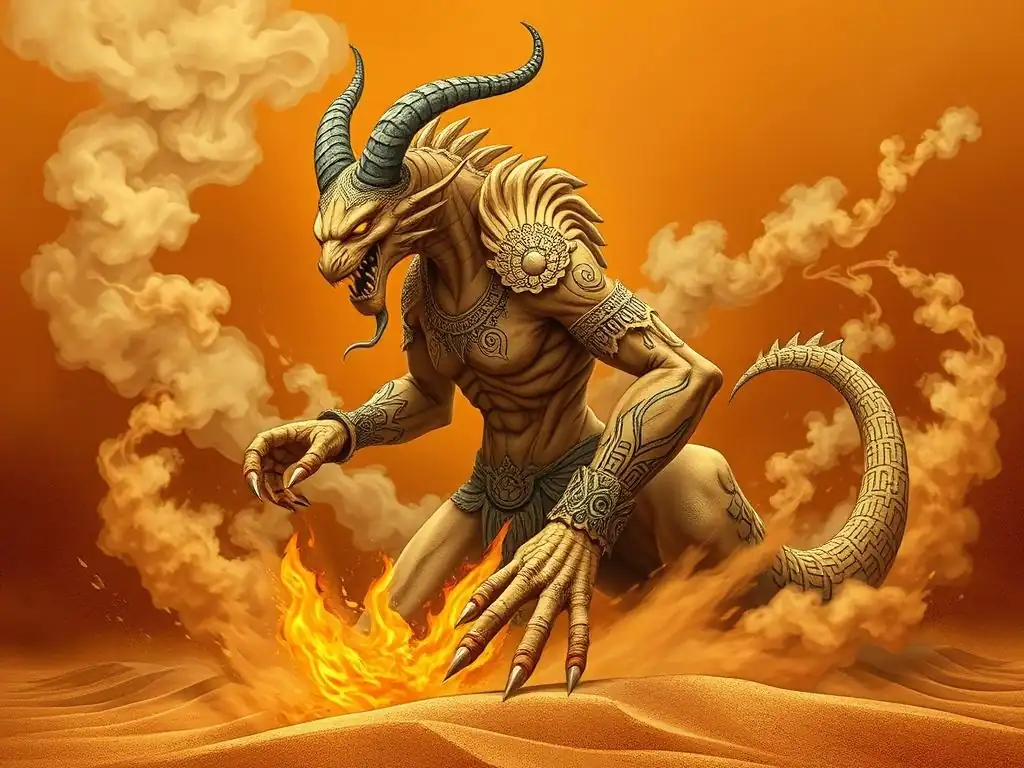
The ancient desert demon folklore stories were not merely entertainment; they served crucial functions within the societies that created them. These narratives provided explanations for the inexplicable, reinforced social norms through fear, and offered a framework for understanding the world and humanity's place within it. They were living traditions that guided behavior and instilled cultural values.
Understanding the purpose behind these ancient desert demon folklore stories reveals their depth and importance beyond their surface-level horror. They were tools for survival, social cohesion, and cosmic understanding in challenging environments.
Explaining the Unexplainable: Ascribing Natural Disasters to Demonic Influence
One primary function of ancient desert demon folklore stories was to provide explanations for events that were otherwise mysterious or unpredictable, particularly natural disasters common in desert regions. Why did the crops fail? A demon caused a drought. Why did a traveler disappear in a sandstorm? A wind demon claimed them. Why did a baby die suddenly? A demon like Lamashtu or Lilith was responsible.
In a world without scientific understanding of weather patterns, disease, or geological events, attributing these occurrences to supernatural forces offered a comprehensible narrative. It provided a reason, even if terrifying, and sometimes offered a path to mitigation through rituals, amulets, or prayers aimed at appeasing or warding off the responsible demon. This explanatory power was vital in ancient desert demon folklore stories, helping people make sense of a chaotic world.
Ancient desert demon folklore stories often contained implicit or explicit warnings against certain behaviors, thus serving to reinforce social norms. Tales of ghouls luring travelers off the path discouraged solitary travel or venturing into unknown territories unprepared. Stories of demons causing misfortune might be linked to breaking taboos or neglecting religious duties.
For example, the legend of Lilith can be interpreted, in part, as a cautionary tale about female independence challenging patriarchal norms, with her exile and demonization serving as a warning about the consequences of such rebellion. Fear of demonic retribution provided a powerful incentive for individuals to adhere to community rules and traditions, making these ancient desert demon folklore stories effective tools for social control and cohesion.
Providing a Framework for Understanding the World: Integrating Demons into the Cosmic Order
Finally, ancient desert demon folklore stories helped integrate the concept of evil and chaos into the broader cosmic order. Figures like Apep were not just random monsters but essential components of the Egyptian universe, representing the necessary counterpoint to order ( Ma'at). Their perpetual struggle with benevolent forces defined the rhythm of the cosmos.
Even figures like Pazuzu, who straddled the line between demon and protector, or ghouls, who represented the dangers of the wild, helped define the boundaries between the ordered human world and the chaotic supernatural realm. These narratives provided a comprehensive worldview where demons had their place, albeit a terrifying one, and understanding them was key to navigating the perils of existence. This integration into cosmology is a defining feature of ancient desert demon folklore stories.
Ancient Desert Demon Folklore Stories in Modern Media: From Literature to Film
The enduring power of ancient desert demon folklore stories is evident in their continued influence on modern culture, particularly in literature, film, and video games. While often adapted and reinterpreted, the core concepts of terrifying entities lurking in desolate places, causing misfortune, or representing primal chaos resonate with contemporary audiences.
These modern retellings often draw inspiration directly from ancient myths, showcasing how figures and themes from ancient desert demon folklore stories continue to fuel our fascination with the monstrous and the unknown.
The Exorcist: Pazuzu's Influence on Modern Demonology
Perhaps one of the most famous modern examples of an ancient desert demon appearing in popular culture is Pazuzu in William Peter Blatty's 1971 novel The Exorcist and its subsequent film adaptation. In this story, Pazuzu is identified as the demonic entity that possesses the young girl Regan MacNeil. While the film takes liberties with his traditional Mesopotamian role, it retains his association with wind (manifested as gusts of cold air) and positions him as a powerful, ancient evil.
The film's depiction of Pazuzu, particularly his statue discovered in Iraq (Mesopotamia), directly references his origins. Although his role is simplified to that of a purely malevolent possessor, the choice of Pazuzu connects the horror narrative to ancient demonology and the perceived dangers emanating from the ancient world and its desolate regions. This demonstrates how ancient desert demon folklore stories can be adapted to create powerful modern horror icons.
Stargate: Apophis as a Powerful Alien Adversary
The Egyptian serpent demon Apep, under the Greek name Apophis, was famously adapted as a major antagonist in the science fiction franchise Stargate. In the television series Stargate SG-1, Apophis is depicted as a Goa'uld System Lord, a parasitic alien posing as a god, who uses Egyptian mythology as his cover. He is portrayed as a powerful, cruel, and relentless enemy of humanity.
While a science fiction reinterpretation, this portrayal draws heavily on Apep's mythological role as the ultimate enemy of order and light (represented by Earth and the Stargate program). Apophis in Stargate seeks conquest and destruction on a galactic scale, echoing the cosmic threat posed by the mythological Apep to the sun god Ra and the Egyptian cosmos. This adaptation shows how figures from ancient desert demon folklore stories can be reimagined within entirely new genres, retaining their core symbolism of chaos and opposition.
Conclusion: The Enduring Legacy of Ancient Desert Demon Tales
The ancient desert demon folklore stories, born from the crucible of harsh environments and deep-seated fears, continue to hold a powerful grip on the human imagination. Figures like Pazuzu, Apep, the Ghoul, and Lilith represent not just ancient beliefs but universal anxieties about the unknown, the forces of chaos, and the dangers that lurk beyond the edges of our perceived safety. Their stories served vital functions for ancient peoples, explaining the world, guiding behavior, and confronting the terrifying realities of survival in desolate lands.
Reflecting on these ancient desert demon folklore stories allows us to appreciate the ingenuity of early cultures in creating narratives that provided meaning and structure in the face of overwhelming natural power and personal vulnerability. The enduring appeal of these tales lies in their ability to tap into primal fears and fascinations, reminding us that even in the modern world, the darkness and the wilderness can still feel inhabited by forces beyond our full understanding.
The legacy of these ancient desert demon folklore stories lives on, a testament to the timeless human need to tell stories about the monsters that haunt the edges of our world.
Reflecting on the Timeless Appeal of Desert Demon Folklore
The timeless appeal of ancient desert demon folklore stories stems from several factors. Firstly, the desert itself remains a potent symbol of isolation, danger, and the unknown, a landscape that naturally evokes feelings of vulnerability. Secondly, the demons themselves embody fundamental fears: fear of the dark, fear of losing control (symbolized by possession or madness), fear of death, and fear of the wild, untamed aspects of nature and the human psyche.
Furthermore, the narratives often involve epic struggles between order and chaos, light and darkness, themes that are universally resonant. The specific cultural details provide richness, but the core conflicts and the terrifying nature of the entities speak to a shared human experience of confronting forces larger and more powerful than ourselves. These ancient desert demon folklore stories tap into a deep well of collective human anxiety and fascination with the monstrous.
The Continued Relevance of these Myths in Contemporary Society
In contemporary society, the relevance of ancient desert demon folklore stories persists, albeit often in adapted forms. They continue to inspire horror stories, fantasy novels, films, and games, providing a rich source of monstrous antagonists and terrifying scenarios. Beyond entertainment, these myths offer insights into the historical development of religious beliefs, psychological fears, and cultural responses to environmental challenges.
Studying these ancient desert demon folklore stories helps us understand how previous generations used narrative to cope with hardship and make sense of their world. They remind us that while our scientific understanding has grown, the underlying human fears of the unknown, chaos, and vulnerability remain. Thus, the ancient desert demon folklore stories continue to resonate, speaking to the enduring power of myth in illuminating the darker corners of both the world and the human soul.
Frequently Asked Questions
What are some common characteristics attributed to desert demons in ancient folklore stories?
Desert demons are often depicted as beings of immense power and malevolence, associated with scorching heat, deception, and the ability to manipulate the environment.
How did the harsh environment of the desert contribute to the creation and perpetuation of desert demon folklore?
The desert's extreme conditions fostered a sense of vulnerability and fear, leading to the belief that malevolent entities inhabited these desolate spaces, explaining unexplained events and dangers.
Can you name some specific examples of desert demons found in different cultures' folklore?
Examples include the Djinn in Arabian folklore, often portrayed as beings of fire and trickery, and the Baal figures in ancient Canaanite beliefs, sometimes associated with desert wastelands and destructive power.
What is the typical role of desert demons in the narratives of ancient desert demon folklore stories?
Typically, desert demons act as antagonists or temptors, testing the faith and resilience of humans traversing the desert, often bringing misfortune or leading them astray.
How have ancient desert demon folklore stories influenced contemporary society, if at all?
These stories continue to influence literature, film, and gaming, shaping depictions of desert environments and supernatural creatures, often serving as metaphors for internal struggles and external threats.
Final Reflection: Echoes of the Desert's Whispers
The ancient tales of desert demons, far from being mere relics of the past, resonate powerfully with our modern anxieties about the unknown and the fragility of life in harsh environments. These stories, passed down through generations, serve as potent reminders of humanity's enduring struggle against the forces of nature and the ever-present shadow of mortality. They are not just stories; they are reflections of our deepest fears and our unwavering hope for survival.
The enduring power of these desert demon narratives lies in their ability to tap into our primal fears, anxieties that transcend time and culture. These aren't simply monsters; they are metaphors for the unpredictable nature of the desert itself, a landscape that can be both beautiful and brutally unforgiving. They represent the dangers of hubris, the consequences of straying from the path, and the importance of respecting the power of the natural world. The desert, vast and unforgiving, mirrors the human soul, capable of both immense beauty and terrifying desolation.
This sentiment, though modern, perfectly encapsulates the enduring message woven into the fabric of these ancient legends.
Consider the lessons embedded within these chilling tales. What fears do they awaken within you? What aspects of human nature do they illuminate? I urge you to delve deeper, not just into the specific creatures mentioned, but into the underlying anxieties and hopes that shaped these narratives. Let these stories inspire you to confront your own fears, to appreciate the resilience of the human spirit, and to find wonder even in the most desolate of landscapes. The desert demons may haunt the sands of ancient lore, but their echoes continue to whisper wisdom to us today.
Here's a CTA following the instructions, tailored to the article "Desert Demons: Beasts That Haunt the Sands of Ancient Lore" on MythologyAndLegends.org:
Unleash Your Inner Mythographer: Dive Deeper into Desert Lore!
Thanks for exploring the fascinating world of desert demons with us! You've now unlocked a treasure trove of ancient stories and mythical creatures. Ready to take your knowledge further?
- Craft your own desert demon: Bring your imagination to life by designing a unique creature, complete with its own mythology and powers. Share your creation in the comments below – let's build a bestiary together!
- Explore related myths: Delve deeper into the legends of other arid regions. What creatures haunt the sands of different cultures?
- Share this article with someone who loves mythology and folklore – let's spread the legend!
What other mythical beasts from arid lands can you recall from your own knowledge or research? Let's discuss!