
Is Beowulf a Hero Today? Reevaluating Ancient Ideals.

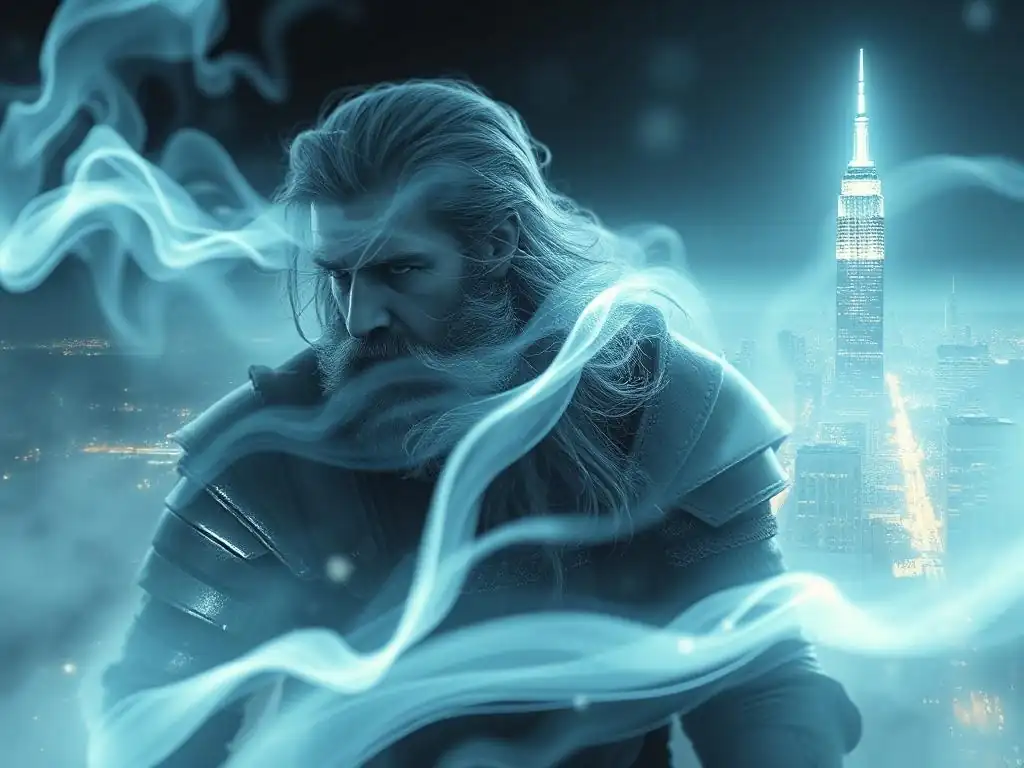
Welcome to Mythology and Legends, where ancient tales come alive. Delve into the captivating world of heroes, gods, and monsters from across the globe. Ever wondered if the very definition of heroism has shifted through time? Our latest exploration tackles that very question, asking: Is Beowulf's brand of heroism still relevant in the 21st century? Journey with us as we dissect the Beowulf heroism modern interpretation and uncover surprising insights. The adventure begins now...
The Battle with Grendel's Mother: A Reflection on the Monstrous Feminine and Societal Fears
The battle against Grendel's mother introduces a complex layer to the exploration of Beowulf heroism and its modern interpretation. Unlike her son, often depicted as a straightforward monster, Grendel's mother acts out of vengeance for her slain kin. She is a figure deeply rooted in the primal instincts of protection and retribution, residing in a dark, watery lair that contrasts sharply with the mead-hall civilization of Heorot.
Her depiction as a formidable, albeit unnamed, adversary underscores the societal fears of the time regarding untamed nature, maternal rage, and potentially, the power residing outside the established patriarchal order. Her strength is significant; she easily overpowers Hrothgar's trusted advisor, Aeschere, demonstrating a physical prowess that challenges the male warriors present and necessitates Beowulf's direct intervention in her underwater domain.
Interpreting Grendel's mother through the lens of the "monstrous feminine" reveals anxieties about female power that deviates from societal norms. While the epic doesn't explicitly condemn her maternal grief, her violent reaction and monstrous form align her with forces seen as disruptive and dangerous to the community's stability. The Beowulf heroism modern interpretation often considers this encounter not just a physical fight but a symbolic confrontation with aspects of the feminine perceived as threatening when unleashed and uncontrolled.
Her dwelling in the mere, a place of dark, primordial chaos, further solidifies her connection to the untamed, the unknown, and the forces that lie beyond the ordered human world represented by Heorot. Beowulf's victory over her, achieved with a giant's sword found within her own lair, is a crucial moment that solidifies his reputation not only as a warrior but as a restorer of order against formidable, almost elemental, threats.
- Is Beowulf's concept of heroism still relevant in modern society?
- How does the Beowulf epic define heroism, and how does that differ from modern definitions?
- What are some criticisms of Beowulf's heroism from a modern perspective?
- How can Beowulf's actions be interpreted to make him more relatable to modern audiences?
- What is the significance of re-evaluating Beowulf's heroism in the 21st century?
Frequently Asked Questions
Is Beowulf's concept of heroism still relevant in modern society?
While the ancient ideal of physical prowess and warrior culture may seem outdated, Beowulf's courage and self-sacrifice can be reinterpreted as standing up for what's right, even in the face of adversity. This resonates with modern values of moral courage and social justice.
How does the Beowulf epic define heroism, and how does that differ from modern definitions?
The epic primarily defines heroism through strength, loyalty, and bravery in battle. Modern definitions are broader, encompassing traits like compassion, empathy, and intellectual prowess, moving beyond solely physical attributes.
What are some criticisms of Beowulf's heroism from a modern perspective?
Some criticize Beowulf's actions as motivated by ego and glory, rather than purely altruistic motives. Others point to the violence inherent in his heroic deeds as problematic in a world striving for peace. He's also sometimes seen as representing a patriarchal worldview.
How can Beowulf's actions be interpreted to make him more relatable to modern audiences?
His battles against monsters can be viewed as metaphorical struggles against internal demons or societal ills. His willingness to confront evil, even at great personal risk, can be seen as a call to action against injustice in our own lives.
What is the significance of re-evaluating Beowulf's heroism in the 21st century?
Re-evaluating allows us to understand how heroic ideals evolve and how ancient narratives can still offer valuable lessons. It prompts us to consider what qualities we value in leaders and individuals, fostering a more nuanced understanding of heroism beyond simplistic notions.
Final Reflection: Redefining Heroism in a Modern Age
The enduring legacy of Beowulf challenges us to reconsider what constitutes heroism in the 21st century. While his strength and courage remain undeniably impressive, the brutal realities of his world and the methods he employs force us to confront the complexities of celebrating a figure whose actions, viewed through a modern lens, might be considered morally ambiguous. This reevaluation is not about diminishing Beowulf's impact, but about enriching our understanding of heroism itself.
Beowulf's influence on our cultural understanding of heroism is undeniable, shaping narratives and ideals for centuries. His story continues to resonate, prompting us to question the very nature of bravery, sacrifice, and leadership. The hero is someone who has given his or her life to something bigger than oneself.
This quote, while not directly about Beowulf, speaks to the core of the debate surrounding his heroic status. We must ask ourselves: does a hero always adhere to modern ethical standards? Or does the context of their time and the challenges they face shape our judgment? The answer, I believe, lies in a nuanced understanding of both the past and the present.
Consider Beowulf's tale, not as a simple judgment of "hero" or "not hero," but as a mirror reflecting our own evolving values. You, the reader, are now equipped to critically examine the heroes you admire, to question their motivations and methods, and to define for yourself what truly constitutes heroism in your own life. What sacrifices are you willing to make? What battles will you fight? The answer, like Beowulf's journey, will be unique to you, and that is precisely the enduring power of his story.
Unleash Your Inner Hero: Rethink Beowulf's Legacy
Thanks for exploring the complex question of Beowulf's heroism with us! You've gained a fresh perspective on ancient ideals and their relevance today. Now, it's time to put that knowledge into action.
- Engage in a discussion: Share your thoughts on what constitutes heroism in the modern world. What qualities would you look for in a hero today? Let's build a community around this powerful concept!
- Dive deeper: Research other legendary figures from different cultures and compare their heroic qualities to Beowulf's. Consider the evolution of heroic ideals across time.
- Craft your own heroic narrative: Write a short story or poem about a modern-day hero facing a contemporary challenge. Let your imagination run wild!
What unexpected traits might define a hero in the face of today’s challenges?