
The Oracle Temples: Hearing the Voice of the Gods

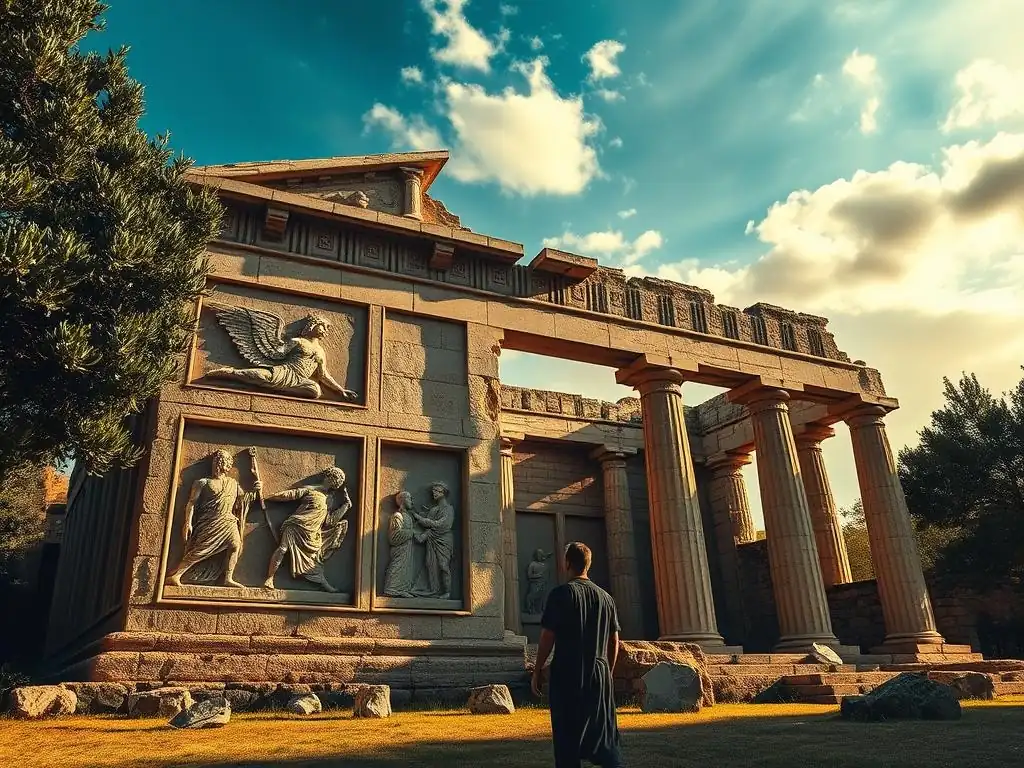
Welcome to Mythology and Legends, where the echoes of ancient stories resonate through time. Ever wondered what it was like to stand before the gods, seeking guidance in the heart of a sacred space? Prepare to delve into the captivating world of Ancient Greek oracle temple visits, and discover the secrets whispered within their hallowed halls.
But that's just the beginning! While today we explore the Delphic mysteries, remember to journey with us beyond Greece, as we uncover the profound influence of myths across cultures, including the powerful narratives of Egyptian and Mesopotamian Mythology. What wisdom awaits you in the whispers of the past?
- Ancient Greek Oracle Temple Visits: Hearing the Voice of the Gods
- The Significance of Oracle Temples in Ancient Greek Society
- Delphi: The Most Celebrated Oracle of Apollo
- Beyond Delphi: Exploring Other Notable Oracle Temples
- The Decline and Legacy of Oracle Temples
- Conclusion: Reflecting on the Voice of the Gods in Ancient Greece
-
Frequently Asked Questions
- What was the primary purpose of visiting an Ancient Greek oracle temple?
- What kinds of questions did people typically ask at Ancient Greek oracle temples?
- What was the most famous Ancient Greek oracle temple, and where was it located?
- What role did priests or priestesses play in the oracle temple rituals?
- Were there any fees or offerings required to consult an oracle temple?
- Final Reflection: Echoes of Prophecy in a Modern World
- Unlock Your Inner Oracle: Hear the Whispers of the Ancient World
Ancient Greek Oracle Temple Visits: Hearing the Voice of the Gods
Introduction: Exploring Divine Communication in Ancient Greece
- Setting the Stage: The Significance of Oracle Temples in Ancient Greece
- The Role of Oracles as Intermediaries Between Gods and Mortals
- Overview of Delphi, Dodona, and Didyma
For the people of ancient Greece, the world was intimately connected with the divine. Gods and goddesses were not distant figures but active participants in human affairs, influencing everything from harvests and health to war and political decisions. This belief fostered a deep-seated need for communication with the divine realm, a desire to understand the will of the gods and seek guidance for both personal matters and state affairs.
This need was most prominently fulfilled by the oracle temples, sacred sites scattered across the Greek world where mortals believed they could receive direct messages from deities through their designated intermediaries, the oracles. Undertaking an Ancient Greek oracle temple visit was a significant, often arduous, journey, steeped in ritual and expectation, representing one of the most profound ways individuals and city-states sought divine counsel.
These oracle temples were far more than just places of worship; they were vibrant centers of religious pilgrimage, political negotiation, and cultural exchange. Cities like Delphi, Dodona, and Didyma rose to prominence precisely because they housed famous oracles, attracting visitors from across the Hellenic world and beyond. The oracles themselves, often priestesses or priests, underwent specific rituals to enter a state believed to allow them to channel the divine voice.
Their pronouncements, though frequently cryptic, held immense authority and shaped the course of history, influencing everything from personal decisions like marriage and travel to major state actions like founding colonies or declaring war. The allure of hearing the voice of the gods made Ancient Greek oracle temple visits a central feature of religious and public life.
The Significance of Oracle Temples in Ancient Greek Society
Understanding the Religious Context of Oracle Consultations
- The Importance of Divine Guidance in Ancient Greek Life
- Oracle Temples as Centers of Religious and Political Influence
In a society where fate and divine favor were believed to dictate outcomes, seeking divine guidance was not merely a pious act but a practical necessity. Ancient Greeks consulted oracles on virtually every significant undertaking. Before embarking on a long voyage, founding a new city, marrying, or facing a difficult decision, individuals and communities would undertake the journey for Ancient Greek oracle temple visits.
The responses received were interpreted as direct pronouncements from the gods, offering validation, warning, or instruction. This reliance on divine insight permeated all levels of society, from the humble farmer seeking advice on crops to kings and assemblies contemplating war or peace treaties.
The authority granted to oracle temples elevated them to positions of immense influence, blurring the lines between religious and political power. Sites like Delphi amassed considerable wealth through gifts and offerings from grateful or hopeful supplicants, allowing them to maintain impressive sanctuaries and exert economic power.
More significantly, the oracles' pronouncements could legitimize political actions, settle disputes between city-states, or even rally support for military campaigns. The Amphictyonic League, a religious association overseeing the sanctuary of Apollo at Delphi, held significant political sway, demonstrating how these religious centers could become hubs of inter-state diplomacy and power projection, all stemming from the perceived divine authority housed within.
Oracle Temples as Architectural Marvels: A Reflection of Divine Power
- Architectural Styles and Symbolism in Oracle Temple Design
- The Placement and Layout of Temples to Enhance Spiritual Experience
The architecture of Ancient Greek oracle temples was designed to inspire awe and reflect the power of the deity they honored. These structures often followed established Greek architectural orders—Doric, Ionic, or Corinthian—but were frequently monumental in scale and adorned with elaborate sculptures depicting mythological scenes relevant to the god or the site's origin.
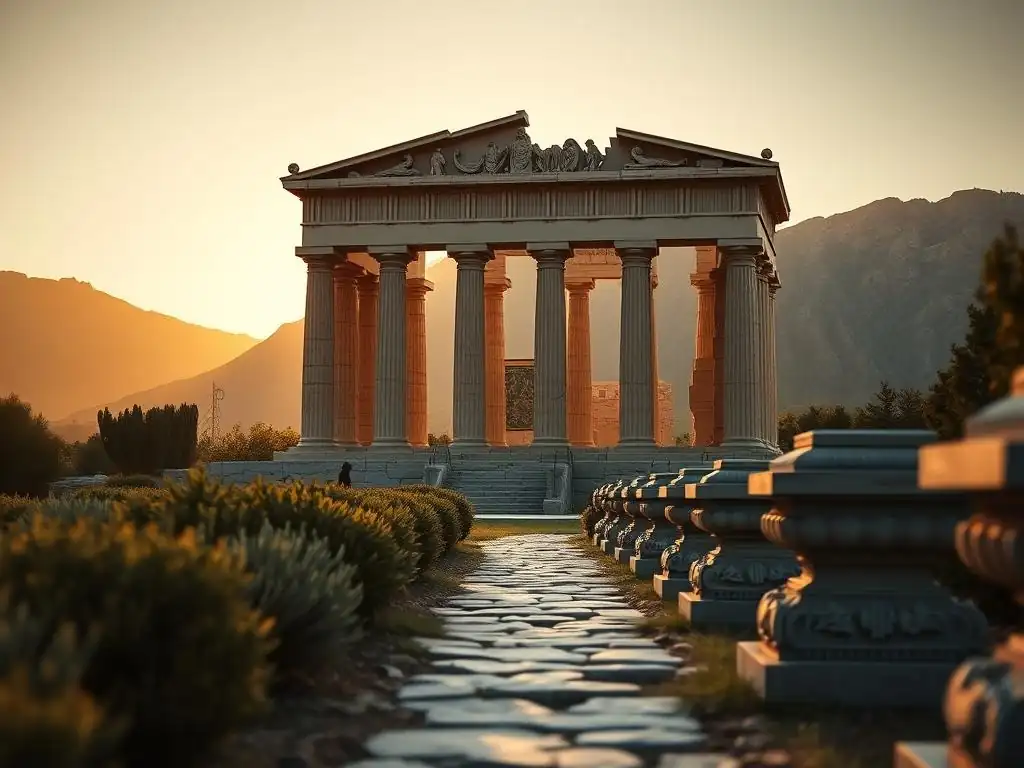
The Temple of Apollo at Delphi, for instance, was a grand structure, rebuilt multiple times, with its final major iteration being a peripteral Doric temple, approximately 60 meters long and 24 meters wide, housing the adyton where the Pythia delivered prophecies. These temples were not isolated buildings but the central focus of extensive sanctuaries, including treasuries built by various city-states to house offerings, stoas, altars, and theaters, creating a sacred landscape intended to prepare the visitor for divine communion.
The placement and layout of oracle temples were carefully chosen to enhance the spiritual experience and often incorporated natural features believed to be sacred. Delphi was situated on the slopes of Mount Parnassus, a dramatic and imposing location that added to its mystique and perceived closeness to the divine. The layout of the sanctuary at Delphi involved a winding Sacred Way leading up to the temple, a processional route designed to build anticipation and reverence.
At Dodona, the oracle was centered around a sacred oak tree, with the rustling of its leaves interpreted as the voice of Zeus. This integration of architecture with the natural environment underscored the belief that these were liminal spaces where the mortal and divine worlds intersected, making the journey for Ancient Greek oracle temple visits a pilgrimage through a landscape imbued with sacred meaning.
Delphi: The Most Celebrated Oracle of Apollo
The Mythological Origins of the Delphic Oracle
- The Legend of Apollo and Python: Establishing Delphi's Sacred Ground
- The Role of the Pythia: The Priestess Who Communicated with Apollo
The sanctity of Delphi is rooted in profound mythology, most famously the legend of Apollo's arrival. According to the myth, the site was originally guarded by Python, a monstrous serpent child of Gaia. Apollo, soon after his birth, journeyed to Delphi and slew Python, claiming the site as his own sacred ground.
This victory over a primeval earth deity solidified Apollo's association with prophecy and established Delphi as the omphalos, or "navel of the earth," a symbolic center of the world. The Pythian Games, held at Delphi every four years, commemorated Apollo's victory and were second in importance only to the Olympic Games, attracting athletes and spectators from across the Greek world and further cementing Delphi's status as a central religious and cultural hub, frequented by those making Ancient Greek oracle temple visits.
The voice of Apollo at Delphi was channeled through the Pythia, a priestess chosen from among the local women. Contrary to some later accounts, she was typically a woman of mature age, respected within the community. After undergoing purification rituals, including bathing in the Castalian Spring and burning laurel leaves, she would enter the adyton, a restricted inner chamber of the temple.
Seated on a tripod, she would enter a trance-like state, perhaps induced by natural vapors rising from the earth (though modern geological studies offer conflicting evidence) or by chewing laurel leaves. The sounds and words she uttered were believed to be Apollo's direct pronouncements, interpreted and transcribed by accompanying priests into verse or prose, ready to be delivered to the supplicant who had undertaken the Ancient Greek oracle temple visit.
The Process of Consulting the Delphic Oracle
- Preparing for a Visit: Rituals, Offerings, and the Quest for Divine Insight
- Interpreting the Oracle's Prophecies: The Ambiguity and Wisdom of Delphi
Undertaking an Ancient Greek oracle temple visit to Delphi was a complex process, demanding preparation and adherence to strict protocol. Supplicants, whether individuals or official state delegations, had to be ritually pure upon arrival. They paid a consultation fee, known as the pelanos, often a type of cake, and also made animal sacrifices, typically a goat or a sheep.
The animal was sprinkled with cold water; if it shivered, it was considered a favorable sign that Apollo was willing to communicate. Supplicants then waited in line, with priority often given to official state embassies who had paid a higher fee or been granted promanteia (the right to consult first) due to past services to the sanctuary. The queue could be long, sometimes requiring days or even weeks of waiting, especially during peak festival times, highlighting the dedication required for these Ancient Greek oracle temple visits.
When it was their turn, the supplicant would present their question to the priests, who would convey it to the Pythia. The Pythia's response was often delivered in fragmented, ambiguous, or poetic language, requiring the priests to interpret and formulate it into a coherent answer, usually in hexameter verse. This ambiguity was a hallmark of Delphic prophecy; it allowed for multiple interpretations and ensured that the oracle was rarely proven definitively wrong, as events could often be seen to fit the prediction in retrospect.
Famously, King Croesus of Lydia was told that if he crossed the Halys River, a great empire would be destroyed; he interpreted this as his enemy's empire, but it turned out to be his own. Understanding and acting upon the oracle's message required wisdom and often further consultation among the supplicant's advisors after their Ancient Greek oracle temple visit.
The Influence of Delphi on Ancient Greek Politics and Society
- Delphi's Role in Major Political Decisions and Wars
- Examples of Famous Oracular Predictions and Their Impact
Delphi's influence extended far beyond personal matters, deeply shaping the political landscape of ancient Greece. City-states frequently consulted the oracle before undertaking major actions, such as founding new colonies. The oracle's approval or guidance was seen as essential for the success of such ventures, and many colonies, from Cyrene in North Africa to Syracuse in Sicily, were established with Delphi's explicit blessing, demonstrating the oracle's geographical reach and impact on the expansion of the Greek world. Delphi also played a role in mediating disputes between city-states, using its religious authority to promote peace or justify military action when necessary.
Perhaps the most famous instances of Delphi's political influence occurred during the Persian Wars in the early 5th century BCE. When faced with the massive invading forces of Darius and later Xerxes, Athenian envoys sought the oracle's advice. The initial prophecy was dire, speaking of destruction. A second consultation yielded the famous prediction about a "wooden wall" that would save them.
Themistocles, the Athenian statesman, interpreted this as meaning their navy (ships being made of wood), successfully persuading the Athenians to invest in their fleet. This interpretation proved crucial, leading to the decisive naval victory at the Battle of Salamis in 480 BCE, which turned the tide of the war. While the oracle's pronouncements were open to interpretation, this event highlights the immense weight placed on the advice received during Ancient Greek oracle temple visits, even in matters of existential national defense.
Beyond Delphi: Exploring Other Notable Oracle Temples
Dodona: The Ancient Oracle of Zeus
- The Sacred Oak and the Whispering Leaves: Decoding Zeus's Messages
- Inquiries Made at Dodona and Their Outcomes
While Delphi reigned supreme, other oracle temples held significant regional or specialized importance, attracting their own stream of Ancient Greek oracle temple visits. Dodona, located in the remote region of Epirus in northwestern Greece, was the oldest known Greek oracle, dedicated to Zeus and Dione. Unlike the Pythia's trance-induced prophecies, the oracle at Dodona communicated through natural sounds.
Priests, known as Selloi or Helli, who slept on the ground and did not wash their feet, interpreted the rustling of the leaves of a sacred oak tree, the cooing of doves nesting in its branches, and the sounds of bronze tripods or cauldrons struck nearby. These sounds were believed to be the voice of Zeus himself, delivering his will through the elements of nature surrounding his sacred tree.
Consultations at Dodona often focused on practical matters, such as agricultural advice, favorable times for travel or business, personal health, and the lifting of curses. Surviving lead tablets from Dodona, on which questions were inscribed before being presented to the oracle, reveal a wide range of inquiries from ordinary people seeking guidance on everyday problems – "Should I buy this property? ", "Is it a good time to marry?
", "Has this person stolen my cloak?". While lacking the political drama often associated with Delphi, the oracle at Dodona provided essential divine counsel for the daily lives of people in northern Greece and beyond, showcasing the diverse reasons for Ancient Greek oracle temple visits.
Didyma: The Oracle of Apollo in Asia Minor
- The Branchidai Priests and the Transmission of Prophecies
- Features of the Didyma Oracle Temple and its Rituals
Located on the coast of Asia Minor (modern Turkey), the Sanctuary of Apollo at Didyma was another prominent oracle site, particularly important for the cities of Ionia and Lydia. The oracle here was associated with the Branchidai family, who served as hereditary priests.
Like Delphi, the oracle was dedicated to Apollo, and the prophecies were delivered through a prophetess, although the specific rituals and the nature of her trance are less well-documented than those of the Pythia. The Branchidai priests were responsible for receiving the questions, presenting them to the prophetess, and interpreting or transcribing her responses, acting as crucial intermediaries for those undertaking Ancient Greek oracle temple visits to Didyma.
The Temple of Apollo at Didyma was renowned for its colossal scale, intended to inspire awe and demonstrate the deity's power. Though never fully completed, it was one of the largest temples ever built by the Greeks, measuring approximately 109 meters by 51 meters, with massive columns reaching heights of nearly 20 meters.
The sanctuary included a large courtyard (adyton) open to the sky, where the sacred spring and a small shrine to Apollo were located, providing a unique architectural setting for the oracle's activities. Rituals likely involved purification and offerings, similar to other sites, leading up to the moment of divine consultation within this monumental sacred space.
Other Significant Oracle Sites in Ancient Greece
- Description of Other Relevant Oracle Temples
- Unique Aspects or Deities Associated with these Temples
Beyond the most famous, numerous other oracle sites dotted the landscape of ancient Greece, each with its own specific deity, methods of divination, and regional significance. The Oracle of Trophonius at Lebadeia in Boeotia was unique for its chthonic (underworld) nature. Supplicants underwent elaborate, fear-inducing rituals, including drinking from the waters of Forgetfulness (Lethe) and Memory (Mnemosyne), before descending into a deep cave where they were said to receive visions or voices from the hero Trophonius.
Unlike other oracles, the supplicant themselves experienced the prophecy directly, often emerging shaken and unable to speak, requiring priests to interpret their subsequent account. Visiting this oracle was considered one of the most terrifying Ancient Greek oracle temple visits one could undertake.
Other notable sites included the Oracle of Asclepius at Epidaurus, where divine guidance was sought primarily for healing through incubation (sleeping within the sanctuary grounds in hopes of receiving a dream vision from the god), and the Oracle of Amphilochus at Mallus in Cilicia, known for its reliability. These diverse oracles catered to different needs and preferences, reflecting the varied ways ancient Greeks sought to interact with the divine and highlighting the widespread practice of Ancient Greek oracle temple visits as a means of navigating life's uncertainties.
The Decline and Legacy of Oracle Temples
Factors Contributing to the Diminishment of Oracular Influence
- The Rise of Rationalism and Philosophical Inquiry
- Political Changes and the Erosion of Religious Authority
The peak influence of Ancient Greek oracle temple visits began to wane with the changing intellectual and political landscape of the Hellenistic and Roman periods. The rise of philosophy, particularly schools like Stoicism and Epicureanism, offered alternative frameworks for understanding the world and making decisions, emphasizing reason, ethics, and individual agency rather than sole reliance on divine pronouncements. Skepticism regarding the authenticity of oracular pronouncements also grew, fueled by instances where prophecies seemed to fail or were suspected of being politically manipulated. Writers like Cicero openly questioned their validity in the Roman era.
Political shifts also played a significant role. The decline of the independent Greek city-states and their absorption into larger empires, first Macedonian and then Roman, reduced the need for state-level consultations regarding wars, colonization, and alliances. Roman emperors, while sometimes paying homage to famous oracles like Delphi, often centralized power and decision-making, diminishing the political weight of religious institutions like oracle temples. Economic decline in certain regions and damage from wars or natural disasters also contributed to the decay and eventual abandonment of some sanctuaries, making Ancient Greek oracle temple visits less frequent and less impactful over time.
The Enduring Allure of Ancient Greek Oracle Temple Visits
- Oracle Temples as Archaeological Sites and Tourist Destinations
- The Continued Fascination with Prophecy and Divine Communication
Despite their eventual decline as active centers of prophecy, the sites of ancient Greek oracle temples retain a powerful allure. Archaeological excavations, particularly at Delphi, Dodona, and Didyma, have revealed impressive ruins that offer tangible connections to the past, attracting hundreds of thousands of tourists and scholars annually.
Walking the Sacred Way at Delphi, contemplating the sheer scale of Didyma's columns, or visiting the site of the sacred oak at Dodona allows visitors to imagine the experience of those who undertook Ancient Greek oracle temple visits centuries ago, seeking answers from the gods. These sites stand as monuments to the deep religious beliefs and architectural achievements of ancient Greece.
The concept of prophecy and the human desire to glimpse the future or understand a higher will remain compelling aspects of human nature. The stories of the oracles, their cryptic pronouncements, and the dramatic historical events they influenced continue to fascinate. Modern interest in Ancient Greek oracle temple visits persists, not for divine consultation, but for historical understanding and appreciation of a culture where the boundary between the mortal and divine was constantly negotiated. The mysteries surrounding how the oracles functioned and the impact they had ensure their continued place in popular imagination and academic study.
Conclusion: Reflecting on the Voice of the Gods in Ancient Greece
Summarizing the Importance of Oracle Temples in Ancient Greek Culture
Ancient Greek oracle temple visits were a cornerstone of religious, social, and political life. These sacred sites served as vital intermediaries between the human and divine realms, providing guidance that influenced everything from personal decisions to the fate of city-states. The oracles, particularly the Pythia at Delphi, held immense authority, shaping perceptions of divine will and impacting historical events like the Persian Wars and the founding of colonies. The temples themselves were not only places of worship but also architectural marvels and centers of cultural exchange, drawing pilgrims and ambassadors from across the Greek world.
The Enduring Lessons and Mysteries of Ancient Greek Oracle Temple Visits
The study of Ancient Greek oracle temple visits offers valuable insights into the ancient Greek worldview, their relationship with the divine, and the practical ways they sought to navigate uncertainty. The ambiguity of the prophecies highlights the importance of interpretation and human agency even within a system reliant on divine communication. While the active function of these oracles ceased centuries ago, the archaeological remains and historical accounts leave us with enduring mysteries about the nature of the oracular experience and the complex interplay between faith, politics, and human psychology that characterized these remarkable institutions.
Significance of Oracles in Understanding Ancient Greek Worldview
Ultimately, the practice of Ancient Greek oracle temple visits underscores the profound religious piety and existential anxieties of the time. It reveals a culture that deeply believed in the gods' active involvement in their lives and felt a constant need for divine affirmation and direction.
Understanding the role of oracles is crucial to grasping the motivations behind many key historical events and appreciating the intricate tapestry of beliefs and practices that constituted ancient Greek religion and society. They were places where mortals quite literally sought to hear the voice of the gods, shaping their present and attempting to discern their future.
Frequently Asked Questions
What was the primary purpose of visiting an Ancient Greek oracle temple?
The main purpose was to seek divine guidance and prophecies from the gods. People hoped to gain insight into the future or receive advice on important decisions.
What kinds of questions did people typically ask at Ancient Greek oracle temples?
Individuals sought answers to a wide range of queries, from personal matters like marriage and health to public concerns like war and politics. The oracle's responses influenced significant actions.
What was the most famous Ancient Greek oracle temple, and where was it located?
The most renowned oracle temple was the Oracle of Delphi, dedicated to the god Apollo. It was situated on the slopes of Mount Parnassus in Greece.
What role did priests or priestesses play in the oracle temple rituals?
Priests or priestesses, often called "Pythia" at Delphi, served as intermediaries between the gods and the seekers. They interpreted the god's messages, often in enigmatic or symbolic language.
Were there any fees or offerings required to consult an oracle temple?
Yes, visitors typically had to offer sacrifices or gifts to the god associated with the temple. These offerings demonstrated respect and were believed to encourage favorable responses.
Final Reflection: Echoes of Prophecy in a Modern World
The enduring fascination with ancient Greek oracle temples isn't merely historical curiosity; it's a testament to humanity's timeless yearning for guidance and meaning. These sacred sites, once bustling with pilgrims seeking divine pronouncements, continue to resonate deeply within our collective consciousness, reminding us of our shared quest for understanding the unknown. The power of prophecy, even in its enigmatic and often ambiguous forms, speaks to a fundamental human need to navigate life's complexities with a sense of purpose.
The influence of these oracles extends far beyond the dusty pages of history books. Their legacy is woven into the fabric of Western literature, philosophy, and even our modern-day anxieties. The very act of seeking counsel, of attempting to decipher the cryptic pronouncements of the Pythia at Delphi, speaks to a deep-seated human desire for clarity and direction. As the poet William Butler Yeats wrote, The best lack all conviction, while the worst / Are full of passionate intensity.
This reflects the enduring tension between the rational and the intuitive, a tension that the oracle temples dramatically embodied. The search for answers, even if shrouded in mystery, remains a powerful force shaping our world.
Consider the echoes of these ancient practices in your own life. Do you find yourself seeking guidance, whether through intuition, trusted advisors, or even modern-day forms of divination? Embrace the spirit of inquiry that drove those ancient pilgrims. Reflect on your own search for meaning and purpose. Let the legacy of the oracle temples inspire you to listen to your inner voice, to trust your intuition, and to approach the uncertainties of life with courage and a willingness to seek understanding, however elusive it may seem.
Unlock Your Inner Oracle: Hear the Whispers of the Ancient World
Thanks for delving into the mysteries of the Oracle Temples with us! You've now gained a deeper understanding of these sacred sites and the powerful connection they held with the divine. Ready to take the next step?
- Start your own divination journey: Explore simple techniques like journaling your intuition or practicing mindful meditation to connect with your inner voice. This is your chance to tap into a power that echoes through the ages.
- Share your thoughts: What resonates most with you about the Oracle's prophecies and the ancient practice of seeking divine guidance? Let’s spark a conversation in the comments below!
- Discover more ancient mysteries: Dive deeper into our archives – we have articles on a range of fascinating topics waiting for you.
What ancient wisdom calls to you now, and how will you answer its call?