
Comparing the Myth of the Fall: Loss of Innocence in Sacred Stories


Welcome to Mythology and Legends, where ancient narratives come to life! Ever wondered how different cultures grapple with the same fundamental human experiences? Prepare to delve into the heart of comparative mythology as we explore the universal theme of lost innocence. Our journey begins with a captivating analysis of loss of innocence mythology stories, starting with a fascinating comparison of the myth of the fall. What secrets do these tales hold about our own perceptions of good, evil, and the journey from naiveté to experience? Discover more within!
- Introduction: Exploring the Universal Theme of Lost Innocence in Mythology
- The Genesis Account: Adam and Eve and the Loss of Paradise
- Beyond Genesis: Cross-Cultural Perspectives on Lost Innocence
- Comparative Analysis: Key Elements and Recurring Motifs in Loss of Innocence Mythology
- The Psychological and Philosophical Implications of Loss of Innocence Stories
- Impact on Art, Literature, and Contemporary Society
- Conclusion: The Timeless Power of Loss of Innocence Mythology
-
Frequently Asked Questions
- What is the central theme explored in "Comparing the Myth of the Fall: Loss of Innocence in Sacred Stories"?
- How does the article define "loss of innocence" in the context of mythology?
- What are some examples of myths, besides the biblical Fall, that explore the theme of loss of innocence?
- How does the concept of "loss of innocence" in mythology relate to contemporary society?
- Why is understanding "loss of innocence mythology stories" important?
- Final Reflection: Echoes of Innocence Lost
- Unlock the Secrets of Sacred Falls: Your Journey Begins Now!
Introduction: Exploring the Universal Theme of Lost Innocence in Mythology
The Enduring Appeal of Fall From Grace Narratives
The concept of a "fall from grace" resonates deeply across human cultures, appearing in various forms within mythology and folklore. These narratives often describe a transition from a state of primordial perfection or innocence to one marked by struggle, suffering, and mortality.
This universal theme speaks to fundamental human anxieties and questions about our origins, our flaws, and the nature of good and evil. The enduring appeal lies in their ability to explain the perceived imperfections of the present world and the human condition, offering a narrative framework for understanding why life is often difficult and why we experience pain and death.
Such stories are not merely ancient tales; they continue to shape cultural identity and moral frameworks. Consider the profound influence of the Genesis account on Western thought, art, and law, or how indigenous myths of a lost golden age inform environmental ethics and community values.
These narratives provide a common language for discussing concepts like responsibility, consequence, temptation, and redemption, making the loss of innocence mythology stories central to understanding human history and cultural evolution. They offer a sense of shared experience, suggesting that the journey from naivety to knowledge, from perfection to imperfection, is a fundamental part of the human story.
Defining "Loss of Innocence" in a Mythological Context
In mythology, "loss of innocence" transcends a simple transition from childhood to adulthood; it often signifies a departure from a primal, often blissful, state of being, frequently involving a newfound awareness of duality, such as good and evil, life and death, or self and other. This state of innocence is typically characterized by harmony with the natural world, absence of shame or suffering, and sometimes, immortality or a close relationship with the divine. The "loss" is usually triggered by an act – often disobedience, curiosity, or the acquisition of forbidden knowledge – that disrupts this initial equilibrium.
This disruption introduces complexity and conflict into the world and the human experience. For instance, the acquisition of knowledge might bring shame or fear, as seen in the story of Adam and Eve gaining awareness of their nakedness.
Similarly, the introduction of duality can lead to separation – from the divine, from nature, or from others – and the imposition of hardship, like labor or mortality. Thus, in the context of loss of innocence mythology stories, the term describes a fundamental shift in the ontological state of humanity or the world, permanently altering existence from a state of effortless harmony to one requiring conscious effort, moral choices, and endurance of suffering.
The Genesis Account: Adam and Eve and the Loss of Paradise
The Forbidden Fruit: Symbolism and Interpretation
In the biblical account from Genesis 2-3, the forbidden fruit from the Tree of the Knowledge of Good and Evil serves as the pivotal object initiating the fall. While often depicted as an apple, the text itself does not specify the type of fruit, allowing for diverse interpretations. Symbolically, the fruit represents knowledge – specifically, the knowledge of good and evil, which God had reserved for Himself. Eating it signifies a desire to transcend the boundaries set by the Creator, to gain a divine perspective or autonomy that was not intended for humanity in its initial state.
Interpretation of the fruit's symbolism varies widely across theological and philosophical traditions. Some view the act of eating as humanity's first sin, a willful act of disobedience against a divine command, leading to moral corruption.
Others interpret it as a necessary step in human development, a transition from a state of ignorant bliss to one of moral awareness and the capacity for choice, albeit one fraught with difficulty. The fruit, therefore, embodies the complex relationship between knowledge, freedom, responsibility, and the consequences of seeking understanding outside prescribed limits, making it a powerful symbol in the Western canon of loss of innocence mythology stories.
Consequences of Disobedience: Expulsion and the Dawn of Mortality
The immediate consequences of Adam and Eve's disobedience are profound and far-reaching, fundamentally altering their existence and that of humanity. The most significant outcome is their expulsion from the Garden of Eden, a paradise characterized by ease, abundance, and direct communion with God. This expulsion marks a physical and spiritual separation from the divine presence and the state of effortless harmony they once enjoyed. Life outside the Garden is depicted as arduous: Adam is cursed with labor to work the ground, and Eve is cursed with pain in childbirth and subjugation to her husband.
Crucially, the act introduces mortality. Before eating the fruit, Adam and Eve had access to the Tree of Life, which presumably granted immortality or perpetual vitality.
After their transgression, God prevents them from eating from the Tree of Life, stating, "Behold, the man has become like one of Us, knowing good and evil; and now, lest he put out his hand and take also of the tree of life, and eat, and live forever..." (Genesis 3:22). Thus, the loss of innocence is directly linked to the introduction of death and the finite nature of human life, establishing mortality as a core element of the post-lapsarian human condition and a defining feature of this foundational narrative among loss of innocence mythology stories.
Parallels to the Sumerian Myth of Enki and Ninhursag
Interestingly, elements of the Genesis narrative share thematic similarities with older Mesopotamian myths, particularly the Sumerian myth of Enki and Ninhursag. In this story, the god Enki eats eight plants created by the goddess Ninhursag, despite being warned not to. Ninhursag, enraged by his transgression, curses Enki, causing him to fall ill. The gods intervene, and Ninhursag eventually heals him by creating eight goddesses to correspond to the eight ailing parts of his body. While not a direct "fall from grace" for humanity, the myth features divine transgression, a forbidden act involving plants, a curse, and consequential suffering.
A more specific parallel involves the creation of the goddess Ninti from Enki's rib to heal his rib ailment. The name Ninti can mean both "Lady of the Rib" and "Lady of Life."
This echoes the creation of Eve from Adam's rib and her role as the "mother of all living" (Hebrew: Havvah, related to hay "living"). Both myths involve a divine act related to a rib and the concept of life, suggesting a possible shared cultural substrata or thematic influence in the ancient Near East regarding origins, divine actions, and consequences, framing the Genesis story within a broader regional context of loss of innocence mythology stories.
Beyond Genesis: Cross-Cultural Perspectives on Lost Innocence

Pandora's Box: Unleashing Evils Upon the World
In Greek mythology, the story of Pandora offers another compelling narrative of a loss of primordial ease and the introduction of suffering into the world, often interpreted as a loss of innocence mythology story for humanity. Pandora, the first woman, is created by Hephaestus and Athena at Zeus's command as a punishment for Prometheus stealing fire for humanity.
She is given a jar (often mistranslated as a "box") and warned not to open it. However, her innate curiosity, a trait bestowed upon her by the gods, leads her to open the jar, releasing all forms of evils, plagues, sorrows, and hardships upon humanity.
Before Pandora opened the jar, humanity is often depicted as living in a golden age, free from sickness, labor, and misfortune. The opening of the jar shatters this state of innocence and introduces suffering and death into the human experience.
Only Hope remains inside the jar after she quickly closes it, offering a small solace amidst the unleashed woes. This myth highlights curiosity and divine punishment as catalysts for the world's suffering, presenting a parallel, yet distinct, account of how humanity lost a pristine state and became subject to hardship, aligning it with other tales of lost innocence mythology stories.
The Japanese Myth of Izanagi and Izanami: Defilement and Separation
The Shinto creation myth of Izanagi and Izanami contains elements that can be interpreted through the lens of a loss of innocence, specifically involving defilement and the introduction of death. As the primordial divine couple, Izanagi and Izanami are tasked with creating the world and the gods. After creating the islands of Japan, Izanami gives birth to various kami (gods). However, during the birth of the fire god, Kagutsuchi, Izanami is fatally burned.
Distraught, Izanagi follows Izanami to Yomi, the underworld, hoping to retrieve her. He finds her, but she has already eaten the food of the underworld and become a decaying corpse, inhabited by demons. Despite her warning not to look, Izanagi lights a torch and sees her horrific state. Ashamed and enraged, Izanami pursues him.
Izanagi escapes Yomi and performs an elaborate purification ritual to cleanse himself from the defilement of death and the underworld. This act of separation marks a definitive break between the living and the dead and introduces the concept of ritual purity and pollution, fundamentally changing the relationship between the divine, humanity, and the cycle of life and death. While different from a direct "fall," it represents a loss of the initial harmonious partnership and the introduction of irreversible defilement and separation, resonating with themes found in loss of innocence mythology stories.
The Aztec Myth of Quetzalcoatl's Fall From Grace: Intoxication and Shame
In Aztec mythology, the story of the god Quetzalcoatl, the Feathered Serpent, includes a significant episode often described as his "fall." Quetzalcoatl was revered as a benevolent deity associated with knowledge, priesthood, and civilization. According to one version of his myth, he was tricked by the malevolent god Tezcatlipoca (or his agents) into becoming intoxicated on pulque (an alcoholic beverage). In his drunken state, Quetzalcoatl committed shameful acts, including sleeping with his sister or a priestess.
Upon realizing his actions and the loss of his purity and standing, Quetzalcoatl was overcome with shame. He either voluntarily left his city of Tollan, burned his palaces, and went into exile, or was forced out.
This departure marked a loss of a golden age associated with his reign in Tollan and his direct benevolent influence. His fall from grace, induced by deception and intoxication leading to a lapse in moral conduct, serves as a powerful narrative about vulnerability, temptation, and the consequences of losing one's integrity, offering an Aztec perspective on loss of innocence mythology stories and the fragility of even divine perfection.
Comparative Analysis: Key Elements and Recurring Motifs in Loss of Innocence Mythology
The Role of Forbidden Knowledge and Temptation
A frequently recurring motif in loss of innocence mythology stories is the role of forbidden knowledge or temptation as the catalyst for the fall. In the Genesis account, the fruit is from the Tree of the Knowledge of Good and Evil; eating it grants knowledge but leads to expulsion. In the Pandora myth, it is curiosity, a form of seeking knowledge or experience, that drives her to open the jar, releasing evils. Quetzalcoatl's fall is precipitated by intoxication, which clouds his judgment and leads him to forbidden acts, a temptation orchestrated by other gods.
This emphasis on knowledge or temptation suggests a deep-seated human ambivalence towards awareness and experience. Knowledge, while potentially empowering, can also reveal unpleasant truths (like good and evil, or one's own flaws) and lead to actions with unforeseen negative consequences.
Temptation represents the allure of stepping outside prescribed boundaries, seeking immediate gratification or forbidden power, often resulting in a loss of a prior, simpler state. These narratives collectively explore the dangerous allure of the unknown and the difficult consequences of pursuing certain forms of understanding or experience, making the acquisition of knowledge a double-edged sword in these foundational loss of innocence mythology stories.
The Serpent/Trickster Figure: Catalyst for the Fall
Another common element is the presence of a figure who acts as a catalyst or agent of temptation, often a serpent or a trickster. In Genesis, the serpent directly tempts Eve, questioning God's command and presenting the forbidden fruit as a path to becoming "like God." The serpent is often interpreted as a symbol of cunning, deception, or even a manifestation of evil. Its role is crucial in persuading humanity to transgress.
Similarly, in the Quetzalcoatl myth, Tezcatlipoca functions as a trickster god, manipulating Quetzalcoatl into his downfall through deceit and temptation (the pulque). While not always a serpent, the trickster figure embodies chaos, disruption, and challenges to established order.
Their actions introduce doubt, temptation, or confusion, leading the protagonist (whether human or divine) to make a choice that results in a loss of their original state. These figures highlight the external forces of temptation and deception that can contribute to a loss of innocence mythology stories, suggesting that the fall is not always solely an internal failing but can be influenced by external malevolent or chaotic forces.
The Shift from Immortality to Mortality: A Common Consequence
A stark and frequently shared consequence in many loss of innocence mythology stories is the transition from a state of potential or actual immortality to one of mortality. In Genesis, access to the Tree of Life is revoked after the fall, sentencing humanity to death. While Pandora's myth doesn't explicitly state humanity was immortal before the jar was opened, the release of sickness, old age, and death implies a transition from a state where these were absent or rare to one where they are inevitable.
The myth of Izanagi and Izanami directly involves the introduction of death through Izanami's demise and the subsequent separation between the realms of the living and the dead. This shift underscores a fundamental change in the human condition – from potentially infinite existence to a finite lifespan marked by decay and eventual death.
The loss of immortality is often presented as a direct consequence of the loss of innocence, linking purity or obedience with perpetual life and transgression or impurity with finitude and decay. This consequence is perhaps the most tangible and universally understood outcome in many narratives about loss of innocence mythology stories.
The Psychological and Philosophical Implications of Loss of Innocence Stories
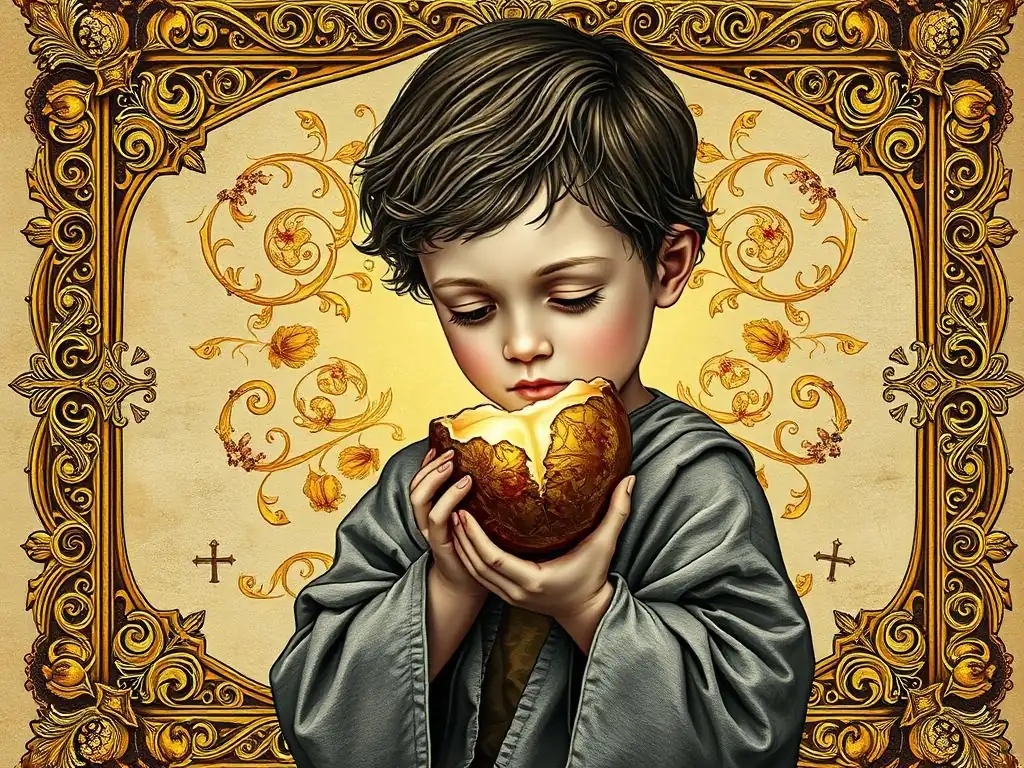
The Development of Self-Awareness and Consciousness
Many loss of innocence narratives can be interpreted as allegories for the development of human consciousness and self-awareness. The knowledge gained in these myths often involves a recognition of self distinct from the environment or others, an awareness of one's own body (as seen in Adam and Eve's shame about nakedness), and an understanding of abstract concepts like good and evil. This newfound awareness, while enabling moral choice and complex thought, also brings anxiety, self-doubt, and the burden of responsibility.
Philosophically, this aligns with existentialist thought, where consciousness is seen as separating humanity from the natural, unthinking world, leading to freedom but also anguish. The transition from an innocent state (perhaps akin to unconscious existence or a lack of distinct selfhood) to a state of knowing involves a painful awakening.
It suggests that the very qualities that make us uniquely human – our capacity for complex thought, moral judgment, and self-reflection – are intertwined with our separation from a simpler, perhaps happier, state. These aspects make loss of innocence mythology stories powerful tools for exploring the complexities of the human mind and its relationship with existence.
The Origin of Suffering and Evil in the World
A primary function of many loss of innocence mythology stories is to provide an etiology for the existence of suffering and evil in the world. If the initial state was one of perfection or harmony, the current reality of pain, hardship, and moral failing requires explanation. The "fall" provides this explanation, attributing suffering either to a foundational human error (disobedience, curiosity), divine punishment for that error, or the introduction of malevolent forces into the world.
For example, the Genesis account links suffering (labor, childbirth pain, death) directly to the curse following the consumption of the forbidden fruit. Pandora's myth explicitly states that evils were released into the world from the jar.
These narratives offer a framework for understanding why bad things happen, placing the responsibility either on a primal human act, the consequences of divine interaction, or the inherent dangers lurking beneath the surface of a seemingly perfect world. They attempt to reconcile the idea of a good creator or a harmonious origin with the undeniable reality of human suffering and moral imperfection, a central theme in loss of innocence mythology stories.
Exploring Archetypes of the Shadow and the Anima/Animus
From a Jungian psychological perspective, loss of innocence mythology stories can be seen as reflecting the integration of archetypes within the collective unconscious. The serpent or trickster figure might represent the Shadow archetype – the repressed, darker aspects of the psyche that must be confronted. The forbidden knowledge could symbolize the confrontation with these hidden aspects, leading to a more complete but less "innocent" understanding of self and reality.
Furthermore, the interaction between male and female figures (Adam and Eve, Izanagi and Izanami) in these narratives can be analyzed through the Anima (the unconscious feminine aspect in a male) and Animus (the unconscious masculine aspect in a female) archetypes. The fall often involves a crucial interaction between these principles, suggesting that the journey from an undifferentiated state to a conscious, morally aware individual involves the integration and understanding of these fundamental internal dualities.
The disruption of the initial harmony reflects the psychological tension that arises when the conscious ego must confront and integrate these powerful unconscious forces, making these tales rich ground for exploring psychological development through loss of innocence mythology stories.
Impact on Art, Literature, and Contemporary Society
Loss of Innocence as a Recurring Theme in Literature
The theme of loss of innocence is a cornerstone of world literature, frequently drawing upon or echoing the motifs found in ancient mythology. From epic poems to modern novels, authors explore this transition, whether on a societal or individual level. John Milton's Paradise Lost is a direct retelling and theological exploration of the Genesis fall, examining the themes of free will, disobedience, and the consequences of losing a state of grace.
Beyond direct religious narratives, works like J.D. Salinger's The Catcher in the Rye depict an individual's struggle to preserve a perceived state of innocence in a corrupt world, highlighting the painful transition to adulthood and disillusionment.
Similarly, William Golding's Lord of the Flies uses a microcosm of schoolboys on a deserted island to explore humanity's inherent capacity for savagery and the rapid loss of civilized innocence when societal constraints are removed. These examples demonstrate how ancient loss of innocence mythology stories provide a timeless framework for exploring human nature and the journey from naivety to experience in diverse literary contexts.
Artistic Representations of the Fall: From Renaissance Paintings to Modern Cinema
Art across centuries has been profoundly influenced by loss of innocence mythology stories, particularly the Genesis account. Renaissance painters like Masaccio ( The Expulsion from the Garden of Eden) and Michelangelo (the Sistine Chapel frescoes) created iconic and emotionally charged depictions of Adam and Eve's transgression and subsequent banishment, emphasizing shame, despair, and the physical consequences of the fall. These works solidified visual interpretations of the narrative for generations.
In more modern visual media, the theme persists, though often in secularized forms. Films frequently explore characters who lose their naivety through harsh experiences or moral compromises. The transition from idealized beginnings to harsh reality, the corruption of purity, or the painful acquisition of difficult knowledge are common cinematic tropes. While not always explicitly referencing religious myths, these narratives tap into the archetypal power of the fall, demonstrating the enduring resonance of loss of innocence mythology stories in contemporary visual storytelling.
The Enduring Relevance of These Myths in Modern Ethical Debates
The core questions raised by loss of innocence mythology stories remain highly relevant in modern ethical and philosophical debates. The tension between freedom and responsibility, the origin and nature of evil, the consequences of seeking forbidden knowledge (especially relevant in scientific and technological advancements), and the definition of human nature are all themes rooted in these ancient narratives.
For example, discussions around artificial intelligence, genetic engineering, or nuclear technology often implicitly touch upon the idea of gaining knowledge or power that could lead to unforeseen, potentially catastrophic "falls" for humanity, echoing the cautionary tales of forbidden fruit or Pandora's box. Debates about human rights, inherent dignity versus fallen nature, and the possibility of redemption or progress also draw, consciously or unconsciously, from the foundational ideas presented in these myths about humanity's initial state and its subsequent condition.
These ancient loss of innocence mythology stories continue to provide a powerful symbolic language for grappling with complex contemporary ethical dilemmas.
Conclusion: The Timeless Power of Loss of Innocence Mythology
Reflections on the Human Condition and the Nature of Perfection
Loss of innocence mythology stories offer profound reflections on the human condition. They suggest that our current state of suffering, mortality, and moral ambiguity is not the original design but a consequence of a fundamental shift or error. These narratives implicitly define perfection as a state of harmony, ease, and often, ignorance of suffering or evil. The fall highlights the fragility of this perfection and the inherent risks associated with consciousness, freedom, or challenging divine or natural order.
Ultimately, these myths compel us to ponder whether the "fall" was a tragic mistake, a necessary step in evolution, or an inevitable outcome of free will. They frame existence outside of the initial state as a struggle, a journey marked by labor, pain, and the constant presence of temptation and mortality. This perspective provides a framework for understanding our perceived flaws and limitations, suggesting they are not arbitrary but part of a universal narrative arc that began with a loss of a prior, idealized state.
The Continuing Significance of Fall Narratives in Shaping Our Understanding of the World
The narratives of lost innocence continue to shape our cultural understanding, moral frameworks, and psychological perspectives. They provide archetypal patterns for understanding transitions, consequences, and the nature of good and evil. Whether consciously recognized or operating on a subconscious level, the motifs of forbidden knowledge, temptation, expulsion, and the introduction of suffering influence how we tell stories, interpret history, and understand our place in the cosmos.
These myths offer cautionary tales about the dangers of hubris, disobedience, and unchecked curiosity. They also provide a narrative structure for personal journeys of growth, where disillusionment and the loss of naivety are necessary steps towards wisdom and resilience. The enduring power of loss of innocence mythology stories lies in their ability to capture fundamental truths about the human experience – the painful transition from ignorance to knowledge, the burden of freedom, and the search for meaning in a world marked by imperfection and mortality.
Further Exploration: Comparative Mythology and Religious Studies
Studying loss of innocence mythology stories across cultures offers rich insights into shared human concerns and diverse cultural responses to these concerns. Comparative mythology allows us to identify universal themes while appreciating the unique cultural contexts and interpretations. Examining how different societies conceptualize the transition from a perfect or innocent state to the current reality reveals variations in understanding sin, responsibility, divine justice, and the possibility of redemption.
Further exploration in religious studies delves deeper into the theological implications of these myths within their specific traditions. For example, understanding the concept of Original Sin in Christianity provides a particular lens for interpreting the Genesis account and its consequences for salvation. Similarly, studying concepts of purity and pollution in Shinto illuminates the significance of the Izanagi and Izanami myth. Engaging with comparative mythology and religious studies offers a deeper appreciation for the complexity, diversity, and enduring significance of these foundational loss of innocence mythology stories in shaping human thought and culture.
Frequently Asked Questions
What is the central theme explored in "Comparing the Myth of the Fall: Loss of Innocence in Sacred Stories"?
The article examines the loss of innocence as a recurring theme in various mythological narratives across different cultures. It specifically focuses on stories that parallel the biblical Fall from Grace.
How does the article define "loss of innocence" in the context of mythology?
The article defines "loss of innocence" as a transition from a state of naivety and purity to one of knowledge, awareness, and often, disobedience or transgression. This frequently results in expulsion or a significant change in existence.
What are some examples of myths, besides the biblical Fall, that explore the theme of loss of innocence?
While the article Comparing the Myth of the Fall: Loss of Innocence in Sacred Stories would need to be read for specific examples, myths relating to Pandora's Box, the story of Izanagi and Izanami and forbidden fruit or knowledge often explore this theme.
How does the concept of "loss of innocence" in mythology relate to contemporary society?
The theme of "loss of innocence" resonates in contemporary society as it explores universal human experiences like moral choices, the consequences of actions, and the transition from childhood to adulthood.
Why is understanding "loss of innocence mythology stories" important?
Understanding these stories provides insight into cultural values, moral frameworks, and the human condition. They illuminate how different societies grapple with themes of knowledge, temptation, and responsibility.
Final Reflection: Echoes of Innocence Lost
The enduring power of the "Fall" narrative, as explored across diverse mythologies, isn't merely a historical curiosity; it's a profoundly relevant lens through which to understand our contemporary anxieties about societal decay and the complexities of moral development. The stories we've examined – from the Garden of Eden to the tale of Persephone – resonate deeply because they grapple with universal human experiences: the bittersweet transition from childhood to adulthood, the struggle between temptation and virtue, and the enduring consequences of our choices. These myths aren't just ancient fables; they are timeless mirrors reflecting our own internal struggles.
The exploration of innocence lost has profoundly shaped our cultural understanding of morality, guilt, and the search for redemption. These narratives have provided frameworks for understanding the human condition for millennia, influencing art, literature, and even our legal and ethical systems. As the poet William Blake so eloquently stated: The true method of knowledge is experiment.
The myths of the Fall, in their various iterations, serve as powerful experiments in exploring the human psyche and the consequences of our actions, shaping our understanding of what it means to be human.
Consider the echoes of these ancient stories in your own life. What moments have marked your own transition from innocence to experience? How have these experiences shaped your understanding of good and evil, of responsibility and consequence? I invite you to reflect on the power of these narratives, not just as historical artifacts, but as living metaphors that continue to illuminate the human journey. By understanding the archetypal patterns embedded within these myths, we can gain a deeper understanding of ourselves and the world around us, and perhaps, navigate the complexities of life with greater wisdom and compassion.
Unlock the Secrets of Sacred Falls: Your Journey Begins Now!
Thanks for exploring the fascinating parallels in how different cultures depict the loss of innocence! You've gained valuable insights into the enduring power of these myths. Now it's time to take your understanding further.
- Dive deeper: Explore other creation myths and compare their unique interpretations of the "fall" – how do they differ, and what can we learn from these variations? Consider writing your own short myth based on your new knowledge.
- Share your thoughts: What resonated most with you in this comparison? Which myth's portrayal of the fall feels most relevant to contemporary society? Leave a comment below and let's spark a discussion!
- Uncover more: Delve into our archive of articles on related topics like archetypes, symbolism, and the human condition. You might discover surprising connections and new perspectives!
What unique interpretation of loss of innocence have you encountered in your own explorations?