
Divine Rulers: When Kingship Touched the Gods

Welcome to Mythology and Legends, where the echoes of ancient tales resonate through the ages. Ever wondered how the kingship gods of antiquity shaped not only their own divine realms but also the mortal world? Divine Rulers: When Kingship Touched the Gods delves into the fascinating intersection of power, divinity, and narrative. Prepare to uncover the surprising origins and enduring influence of these legendary figures, and perhaps question everything you thought you knew about power and belief. Intrigued? The story begins now...
- The Intertwined Realms of Kingship and Divinity in Ancient Mythology
- Kings as Gods: Pharaohs of Egypt and Their Divine Status
- Kings Claiming Divine Ancestry: Legitimacy Through Myth
- The King as Intermediary: Bridging the Gap Between Gods and Mortals
- Divine Kingship in Different Cultures: A Comparative Analysis
- The Decline of Divine Kingship: From God to Mortal
- Kingship Gods Ancient Mythology: Legacy and Enduring Influence
-
Frequently Asked Questions
- What is the core concept of "Divine Rulers: When Kingship Touched the Gods" as explored by Mythology and Legends?
- How does the concept of "Divine Rulers" relate to the keyword "Kingship gods ancient mythology"?
- What cultures are typically featured when discussing "Divine Rulers" within the context of Mythology and Legends?
- Why is understanding the idea of "Divine Rulers" important for studying ancient mythology?
- What impact did the belief in "Divine Rulers" have on contemporary society, as suggested by Mythology and Legends?
- Final Reflection: The Enduring Legacy of Divine Kingship
- Unveil Your Inner Mythmaker!
The Intertwined Realms of Kingship and Divinity in Ancient Mythology
Exploring the Divine Mandate of Ancient Kings
In numerous ancient civilizations, the concept of kingship was inextricably linked with the divine. Rulers were not merely political leaders; they were often seen as possessing a special connection to the gods, if not being divine themselves. This belief formed the bedrock of their legitimacy and authority, establishing a divine mandate that justified their rule over mortals. This complex relationship between kingship gods ancient mythology permeated daily life, influencing law, ritual, and social structure.
This divine mandate manifested in various forms across different cultures. In ancient Egypt, the pharaoh was considered a living god, the incarnation of Horus, and later associated with Ra and Osiris. Their primary duty was to uphold Ma'at, the cosmic order, justice, and truth, a task only one with divine authority could perform.
Similarly, in ancient China, the Emperor ruled under the Mandate of Heaven (Tianming), a concept asserting that divine approval was necessary for a ruler to govern. While not necessarily divine himself, the Emperor was the "Son of Heaven," uniquely positioned to mediate between the celestial and terrestrial realms. This highlights how the connection between kingship and gods in ancient mythology provided a spiritual foundation for worldly power.
From Mortal Ruler to God-King: A Blurred Line
The transition or perception of a ruler's status, moving from a mere mortal to a figure with divine qualities or even a god, represents a fascinating aspect of ancient kingship gods ancient mythology. This wasn't always a clear-cut distinction but rather a spectrum, varying significantly from one culture to another. In some cases, the ruler was born divine or semi-divine, while in others, deification occurred during their reign or posthumously.
Consider the Roman emperors, many of whom were declared divine after their death, becoming part of the state cult and worshipped by the populace. This contrasts sharply with the Egyptian pharaohs, who were believed to embody divinity while alive.
Mesopotamian kings, like Hammurabi of Babylon, often claimed to receive their laws and authority directly from the gods (such as Shamash, the sun god and god of justice), positioning themselves as divinely chosen rather than inherently divine. These diverse approaches illustrate the fluidity of the line between the mortal and the divine in ancient kingship gods ancient mythology, reflecting unique cultural cosmologies and political needs.
Kings as Gods: Pharaohs of Egypt and Their Divine Status
The Pharaoh's Role as a Living God: Maintaining Ma'at
The pharaoh of ancient Egypt stood as a prime example of a ruler considered a living god. From the earliest dynasties, the pharaoh was identified with the god Horus, the falcon-headed deity associated with kingship. Over time, this divine association expanded to include Ra, the sun god, and Osiris, the god of the afterlife. This meant the pharaoh was not merely a representative of the gods, but a divine being walking among mortals, holding the sacred responsibility for the well-being of Egypt and the cosmos.
The central duty of the pharaoh, as a living god, was the maintenance of Ma'at. Ma'at encompassed truth, justice, cosmic order, harmony, and balance. It was the fundamental principle that governed the universe according to Egyptian belief.
The pharaoh's actions – leading rituals, building temples, issuing decrees, leading armies – were all aimed at upholding Ma'at against the forces of chaos ( Isfet). This divine role was essential; a failure to maintain Ma'at could result in famine, invasion, or cosmic disruption, underscoring the immense spiritual and practical weight of the pharaoh's divine status within the system of kingship gods ancient mythology.
Divine Attributes and Royal Symbolism in Ancient Egypt
The divine status of the pharaoh was constantly reinforced through elaborate royal symbolism and iconography. Pharaohs were depicted in art with attributes typically associated with deities, such as specific crowns (like the Double Crown representing Upper and Lower Egypt or the Nemes headdress), scepters (like the Heka crook and Nekhak flail), and the divine false beard. These symbols visually communicated their unique status, bridging the human and divine realms.
Furthermore, the pharaoh's divine power was illustrated through depictions of them single-handedly smiting Egypt's enemies, performing crucial religious rituals, or interacting directly with the gods on temple walls. Titles reinforced this, with names like "Son of Ra" or "Perfect God." Even their palaces were not just residences but sacred spaces reflecting cosmic order. This rich tapestry of symbolism ensured that the pharaoh's divine nature was constantly visible and understood by the populace, solidifying their place at the apex of both temporal and spiritual power within the framework of kingship gods ancient mythology.
The Afterlife and the Pharaoh's Journey to Join the Gods
The pharaoh's divine status extended beyond their earthly life. Death for a pharaoh was not an end but a transformation, a journey to join the company of the gods in the afterlife. This belief was central to the elaborate mortuary practices of ancient Egypt, most famously the construction of pyramids and later, tombs in the Valley of the Kings. These monumental structures were designed to facilitate the pharaoh's transition and eternal life.
Mortuary texts, such as the Pyramid Texts, Coffin Texts, and the Book of the Dead, provided spells and instructions to guide the deceased pharaoh through the dangers of the underworld and ensure their successful rebirth and assimilation into the divine realm. Upon death, the pharaoh was often identified with Osiris, the god of the afterlife, who had himself overcome death. This final assimilation into the divine pantheon cemented their eternal status as a god, ensuring their continued power and influence in the cosmos and reinforcing the enduring connection between kingship gods ancient mythology across life and death.
Kings Claiming Divine Ancestry: Legitimacy Through Myth
Tracing Royal Lineage Back to the Gods: Justifying Power
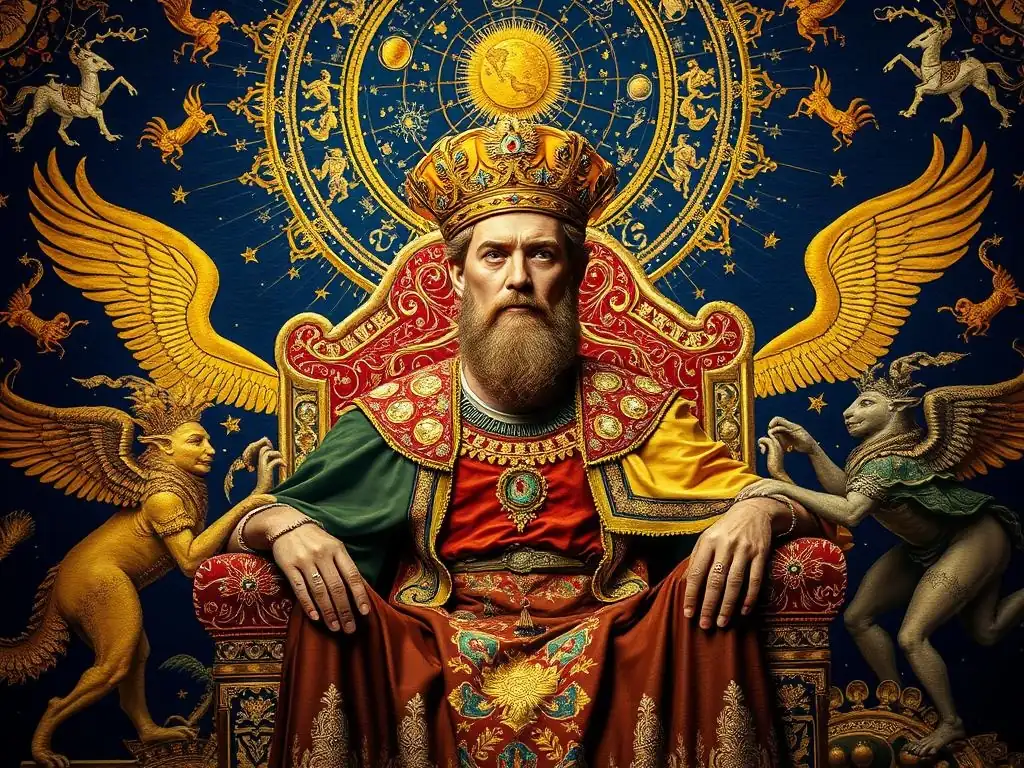
A common strategy employed by rulers across various ancient cultures to legitimize their power was claiming direct lineage from the gods. By asserting divine ancestry, kings positioned themselves not as mere mortals who happened to seize power, but as individuals with an inherent, often hereditary, right to rule, sanctioned by the highest cosmic authorities. This narrative of divine bloodlines provided an unassailable foundation for their authority, making challenges to their rule akin to challenging the gods themselves.
Examples abound in ancient mythology and history. The emperors of Japan traditionally traced their lineage back to Amaterasu, the sun goddess, making the imperial line sacred and unbroken. Many Greek city-state founders and kings claimed descent from the Olympian gods or their heroic demigod children, such as Heracles (son of Zeus). The Ptolemaic dynasty in Egypt, after Alexander the Great, adopted the Egyptian pharaonic tradition and also linked themselves to Greek deities. This practice underscores how claiming divine lineage was a powerful tool in the arsenal of kingship gods ancient mythology to secure and maintain political control.
Divine Birth Stories and the Heroic Origins of Kings
Complementing claims of divine lineage were myths surrounding the divine or miraculous births of rulers or their legendary ancestors. These stories often depicted a deity impregnating a mortal woman or orchestrating unusual circumstances surrounding a ruler's arrival, imbuing them with extraordinary qualities from birth. Such narratives served to explain a ruler's exceptional abilities, destiny, and right to command, framing their rise to power as preordained and divinely sanctioned.
Consider the myths surrounding Alexander the Great, who was sometimes said to be the son of Zeus, not Philip II of Macedon. This divine parentage explained his unparalleled military genius and ambition. Romulus, the legendary founder of Rome, was said to be the son of the god Mars and a Vestal Virgin, Rhea Silvia, highlighting the divine favor bestowed upon the city's origins and its future rulers. These stories were more than just folklore; they were crucial elements in the political theology of kingship gods ancient mythology, shaping collective identity and loyalty towards the ruling house.
The Myth of Gilgamesh: Divine Ancestry and the Quest for Immortality
The Epic of Gilgamesh, one of the oldest surviving works of literature from ancient Mesopotamia, provides a compelling example of a king whose divine ancestry shapes his story. Gilgamesh, the king of Uruk, is described as two-thirds god and one-third man. This unique divine heritage grants him immense strength, beauty, and restlessness, but also mortal limitations which he eventually confronts.
Gilgamesh's divine blood makes him an exceptional ruler, capable of great feats, but it also fuels his arrogance and tyrannical behavior at the beginning of the epic. His journey, particularly his quest for immortality after the death of his friend Enkidu (who was created by the gods), is a direct consequence of grappling with his partial mortality despite his divine nature.
The epic explores the limitations imposed even on those with divine ties, highlighting the human condition within the context of kingship gods ancient mythology and the ultimate separation between gods and mortals, even for a king of divine birth.
The King as Intermediary: Bridging the Gap Between Gods and Mortals
Performing Rituals and Sacrifices: Ensuring Divine Favor
In many ancient societies, the king served as the primary mediator between the human and divine realms. A crucial aspect of this role involved leading state rituals and performing sacrifices. These acts were not merely symbolic but were believed to be essential for maintaining cosmic balance, ensuring fertility of the land, bringing favorable weather, guaranteeing successful harvests, and securing divine favor for the entire community or nation. The king's effectiveness as a ruler was often judged by the perceived success of these religious duties.
In Mesopotamia, kings regularly oversaw the construction and maintenance of ziggurats and temples, the houses of the gods. They performed daily rituals and presided over major festivals, presenting offerings of food, drink, and precious items to appease the deities and gain their blessings. Failure to perform these duties correctly could be seen as a sign of divine displeasure, potentially leading to disaster and undermining the king's legitimacy. This active role in religious practice was fundamental to the function of kingship gods ancient mythology as a system of governance.
The King as High Priest: Communicating with the Divine Realm
Expanding on their role in rituals, kings often held the position of high priest or were considered the chief religious authority in the land. This allowed them direct access, or perceived access, to the divine realm, enabling them to communicate the will of the gods to the people and convey the people's needs and prayers back to the deities. This priestly function solidified their unique position as the bridge between heaven and earth.
The Egyptian pharaoh was the chief priest of every temple in Egypt, theoretically performing all rituals, though in practice, this was done through appointed priests acting on his behalf. However, the pharaoh initiated the most important ceremonies. Roman emperors eventually took the title Pontifex Maximus, the head of the Roman state religion. This religious authority granted kings immense power and influence, reinforcing the idea that their rule was not just earthly but also divinely guided and sanctioned, a key component of kingship gods ancient mythology.
The Role of Oracles and Divination in Royal Decision-Making
Kings in the ancient world frequently relied on oracles, seers, and divination practices to discern the will of the gods before making significant decisions, especially concerning war, treaties, or major construction projects. This reliance underscored the belief that the gods were actively involved in human affairs and that seeking their guidance was paramount for successful rule. The king, as the primary link to the divine, was responsible for interpreting or facilitating these divine communications.
Famous examples include Greek rulers consulting the Oracle of Delphi before embarking on campaigns or founding colonies. In Mesopotamia, kings employed various methods of divination, such as examining the entrails of sacrificed animals (haruspicy) or observing celestial phenomena, seeking omens from gods like Shamash or Adad. While not always leading to direct divine communication, these practices were integral to the decision-making process, demonstrating the king's piety and commitment to ruling in accordance with divine will, further embedding the concept of kingship gods ancient mythology into the fabric of governance.
Divine Kingship in Different Cultures: A Comparative Analysis
Mesopotamian Kings and Their Relationship with the Gods
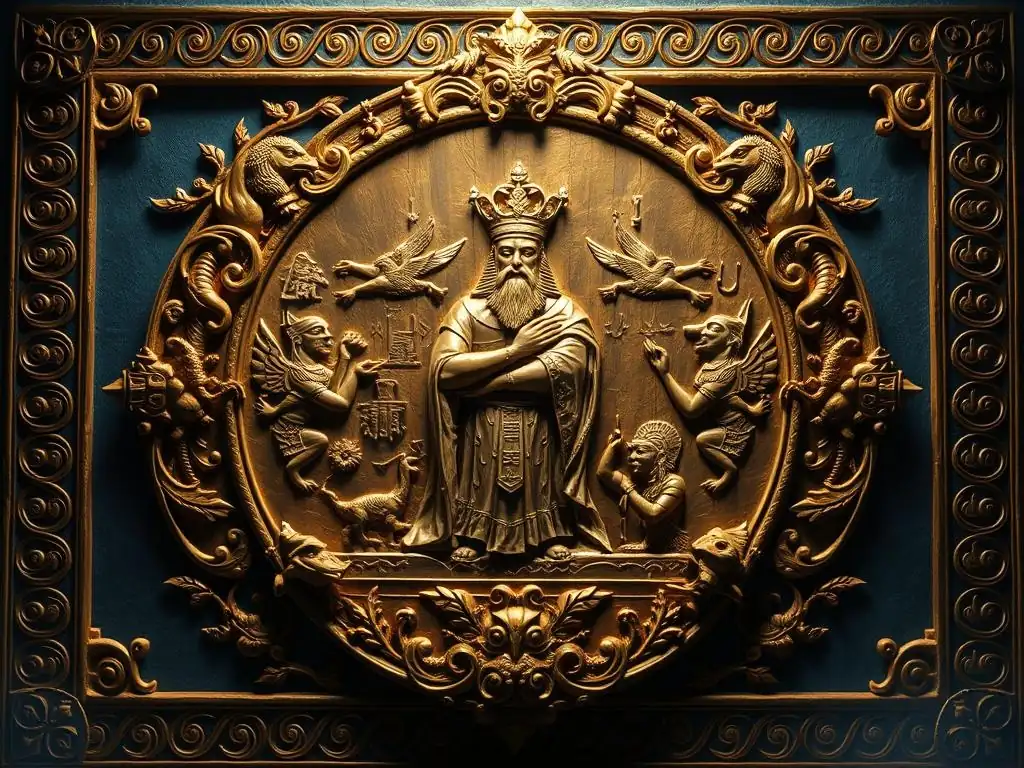
In Mesopotamia, the relationship between kings and gods was complex, often portraying the king as a steward or shepherd appointed by the gods to care for the people and maintain order. While some early rulers, like those of the Akkadian Empire (e.g., Naram-Sin), claimed personal divinity, this was not a consistent feature throughout Mesopotamian history. More commonly, kings derived legitimacy from being chosen and favored by the gods, particularly the patron deity of their city or the chief gods of the pantheon like Enlil, Marduk, or Shamash.
Mesopotamian kings were responsible for building and maintaining temples, ensuring the proper worship of the gods, and upholding justice according to divine law, as exemplified by Hammurabi receiving his law code from Shamash. They were powerful rulers on earth, but generally remained distinct from the gods themselves, serving as intermediaries and executors of divine will rather than being divine incarnations. This nuanced relationship highlights one variation in the spectrum of kingship gods ancient mythology, where divine approval and mandate were central, but inherent divinity of the ruler was less emphasized than in Egypt.
Divine Kingship in Ancient China: The Mandate of Heaven
Ancient China developed the concept of the Mandate of Heaven (Tianming) to justify the rule of the Emperor. This political and religious doctrine asserted that the right to rule was granted by Heaven (Tian), the supreme divine power, to a just and virtuous ruler. Unlike the Egyptian pharaoh, the Chinese Emperor was not typically considered a god himself, but rather the "Son of Heaven," a mortal entrusted with the mandate to govern the earthly realm in harmony with the celestial order.
The Mandate was not hereditary in perpetuity but was conditional. If a ruler became tyrannical, unjust, or failed to maintain harmony (manifested by natural disasters or rebellion), it was believed that Heaven would withdraw its mandate, justifying the overthrow of the dynasty by a new ruler who possessed the necessary virtue. This concept, first explicitly articulated by the Zhou dynasty (c. 1046–256 BCE) to legitimize their overthrow of the Shang dynasty, provided a moral and religious framework for dynastic change and remained a cornerstone of Chinese political thought for millennia, offering a distinct model of kingship gods ancient mythology.
Divine Kingship in the Inca Empire: The Sapa Inca and the Sun God
In the Inca Empire of pre-Columbian South America, the ruler, known as the Sapa Inca, held a position closely aligned with divinity. The Sapa Inca was considered the direct descendant and living representative of Inti, the Sun God, who was the most important deity in the Inca pantheon. This divine lineage was the foundation of the Sapa Inca's absolute authority over the vast empire.
As the Son of the Sun, the Sapa Inca was the head of the state religion, responsible for performing key rituals, particularly those honoring Inti and Pachamama (Earth Mother). His divine status meant that his word was law and his person was sacred. The capital city, Cusco, was designed to reflect the cosmic order, with the Sapa Inca at its center. This system represents a clear example of divine kingship where the ruler's authority stemmed directly from their perceived divine parentage and ongoing connection to the primary deity, showcasing another powerful manifestation of kingship gods ancient mythology.
The Decline of Divine Kingship: From God to Mortal
The concept of kings ruling with direct divine authority or as divine beings gradually eroded in many parts of the world, particularly with the rise of secular philosophical thought and political movements. As societies evolved, the sources of political legitimacy began to shift from the divine realm to more earthly considerations, such as law, popular consent, or military strength. This marked a significant challenge to the traditional framework of kingship gods ancient mythology.
The Enlightenment in Europe, for instance, championed reason, individual rights, and the separation of church and state, directly challenging the doctrine of the Divine Right of Kings, which held that a monarch's authority came directly from God and was not subject to earthly challenge. Thinkers like John Locke and Jean-Jacques Rousseau proposed social contract theories, arguing that governments derive their legitimacy from the consent of the governed, not from divine appointment. This intellectual shift provided a powerful alternative basis for political authority, contributing to the decline of divine kingship.
The Evolution of Royal Ideology: Adapting to Changing Beliefs
In response to changing societal beliefs and the rise of secularism, royal ideologies often adapted. While the explicit claim of being a god or having a direct divine mandate became less common or less emphasized in many cultures, rulers still sought to maintain a connection to higher authority or moral legitimacy. The concept of ruling by the grace of God persisted in some monarchies for centuries, but it often became more of a religious blessing on a temporal ruler rather than a claim of inherent divinity or direct divine communication.
Monarchs increasingly emphasized their role as protectors of the nation, upholders of law, or symbols of national unity, rather than solely as divine intermediaries. Royal coronations often retained religious elements, involving oaths before God, but the political power was increasingly vested in earthly institutions like parliaments or constitutions. This evolution shows how the idea of kingship gods ancient mythology transformed, with the divine connection becoming more symbolic or ceremonial than the direct source of absolute power.
The French Revolution: A Rejection of Divine Right
The French Revolution, beginning in 1789, stands as a watershed moment in the rejection of divine kingship and the Divine Right of Kings in Europe. The overthrow and execution of King Louis XVI, who ruled claiming absolute authority granted by God, was a dramatic and symbolic break from centuries of tradition linking kingship gods ancient mythology.
The Revolution replaced the monarchy with a republic founded on the principles of popular sovereignty, liberty, equality, and fraternity. Political legitimacy was explicitly derived from the will of the people, as expressed through their representatives, rather than from divine appointment. While later regimes in France included emperors, the fundamental challenge to the principle of divine right had been made, influencing political thought and revolutions across the globe and marking a definitive turning point away from the widespread acceptance of divine kingship as a legitimate form of governance rooted in ancient myths.
Kingship Gods Ancient Mythology: Legacy and Enduring Influence
The Enduring Appeal of Divine Kingship in Literature and Art
While the political reality of divine kingship has largely faded, the concept remains a powerful and enduring theme in literature, art, and popular culture. The image of a ruler chosen by destiny, imbued with divine power, or tasked with maintaining cosmic order continues to capture the imagination. Fantasy literature, in particular, frequently draws upon tropes of divine or magically sanctioned monarchy, heroic kings with legendary bloodlines, and rulers who must interact directly with supernatural forces.
From Arthurian legends, where the king's legitimacy is tied to a magical sword and divine favor, to modern fantasy series featuring kings with inherent magical abilities or divine heritage, the archetype persists. Art across centuries has depicted rulers with divine attributes or in scenes of mythological significance, reinforcing their elevated status. This continued presence in creative works demonstrates the lasting cultural impact of the ideas surrounding kingship gods ancient mythology, providing rich material for storytelling and symbolic exploration.
The Symbolism of Divine Rulers in Contemporary Culture
Even in societies without monarchs or where monarchs hold purely symbolic roles, the symbolism associated with divine kingship can sometimes be observed or referenced. Concepts like 'destined leader,' 'chosen one,' or leaders who embody the spirit of a nation echo, albeit distantly, the ancient idea of a ruler with a unique, perhaps even sacred, connection to their people or a higher purpose.
In national symbols, ceremonies, or rhetoric, there can be residual elements that harken back to older notions of leadership, power, and legitimacy. While explicitly claiming divinity is not part of modern political discourse, the idea of a leader possessing exceptional qualities, a profound connection to the collective identity, or a role in guiding the nation's destiny can be seen as secularized echoes of the powerful symbolism once inherent in kingship gods ancient mythology.
The Influence of Divine Kingship on Modern Political Ideologies
The historical legacy of divine kingship has also subtly influenced the development of political ideologies, even those that explicitly reject it. The very concept of state sovereignty, the idea of a supreme authority within a territory, can be traced back in part to the absolute power claimed by monarchs, often justified by divine right. The structure of some religious institutions and their hierarchies also bear resemblance to the models of authority established by divine rulers.
Furthermore, the historical narratives surrounding divine kingship provide case studies in the use of religion, mythology, and symbolism to legitimize power, build national identity, and maintain social order. Understanding the historical role of kingship gods ancient mythology offers insights into the deep-seated human tendency to sacralize authority and seek transcendent justification for political power, informing analyses of leadership, legitimacy, and the relationship between power and belief systems even in the modern world.
This article has explored the fascinating intersection of kingship and divinity in ancient mythology, examining how rulers across various cultures derived legitimacy, power, and identity from their perceived connections to the gods. From the living gods of Egypt to the Sons of Heaven in China and divine-blooded heroes, the concept of divine kingship profoundly shaped the ancient world and continues to resonate in cultural narratives today.
Frequently Asked Questions
What is the core concept of "Divine Rulers: When Kingship Touched the Gods" as explored by Mythology and Legends?
The article examines the intertwined relationship between kingship and divine beings in ancient mythologies. It delves into how rulers were often perceived as having a connection to the gods.
How does the concept of "Divine Rulers" relate to the keyword "Kingship gods ancient mythology"?
The article directly addresses the keyword by exploring how ancient mythologies frequently depicted kingship as divinely sanctioned or even originating from the gods themselves. This creates a direct link between the three concepts.
What cultures are typically featured when discussing "Divine Rulers" within the context of Mythology and Legends?
While the specific cultures vary, many ancient civilizations like Egypt, Mesopotamia, and Greece are often highlighted. These cultures frequently attributed divine lineage or favor to their kings, emphasizing their power.
Why is understanding the idea of "Divine Rulers" important for studying ancient mythology?
Understanding this concept provides crucial insight into the political and social structures of ancient societies. It reveals how mythology was used to legitimize royal authority and create a sense of order.
What impact did the belief in "Divine Rulers" have on contemporary society, as suggested by Mythology and Legends?
Although direct rule by "Divine Rulers" is largely absent, the idea of leadership connected to higher values persists. This influence can be seen in political symbolism and discussions about the legitimacy of power.
Final Reflection: The Enduring Legacy of Divine Kingship
The intertwining of earthly power and divine authority, explored throughout this article, remains a potent force shaping our understanding of leadership and societal structures even today. The echoes of ancient kings who claimed divine lineage or wielded god-like power resonate in modern political discourse and the persistent human desire for strong, almost mythical, leaders. This enduring fascination speaks to a fundamental human need for order, stability, and a sense of connection to something larger than ourselves.
The legacy of divine kingship is not merely historical; it continues to influence our cultural narratives and subconscious biases. We see its reflection in the language we use to describe leaders – "messianic," "charismatic," even "god-like" – terms that evoke the power and authority associated with ancient divine rulers. The gods do not die, they only change their names.
This quote, while not directly about divine kingship, perfectly encapsulates the enduring nature of the themes explored in this article. The power dynamics, the justifications for authority, and the very human desire for a divinely ordained leader continue to be relevant in our modern world, albeit in subtly different forms.
Consider, for a moment, the implications of this enduring legacy. How does the concept of divine kingship influence your own understanding of leadership and authority? Do you see echoes of this ancient paradigm in contemporary politics or social structures?
I urge you to reflect on these questions, to critically examine the narratives we tell ourselves about power and legitimacy, and to strive for a future where leadership is grounded in service and responsibility, rather than the echoes of a divinely ordained past. Let the exploration of ancient mythologies inspire a more thoughtful and responsible approach to leadership in our own time.
Unveil Your Inner Mythmaker!
Thanks for diving into the fascinating world of divine rulers! We hope you gained a deeper appreciation for the intertwining of power and divinity in ancient mythologies. Ready to explore further?
- Craft your own divine ruler: Imagine a deity-king or queen, complete with powers, weaknesses, and a compelling backstory. Let your imagination run wild!
- Share your creation: Discuss your mythical monarch in the comments below! Let's build a pantheon together.
- Explore the suggested readings in our Resources section to further your journey into the realms of myth and legend.
What unique power would your divine ruler possess to shape their kingdom?