
Simurgh: The Wise, Mythic Bird of Persian Lore

Welcome to Mythology and Legends!
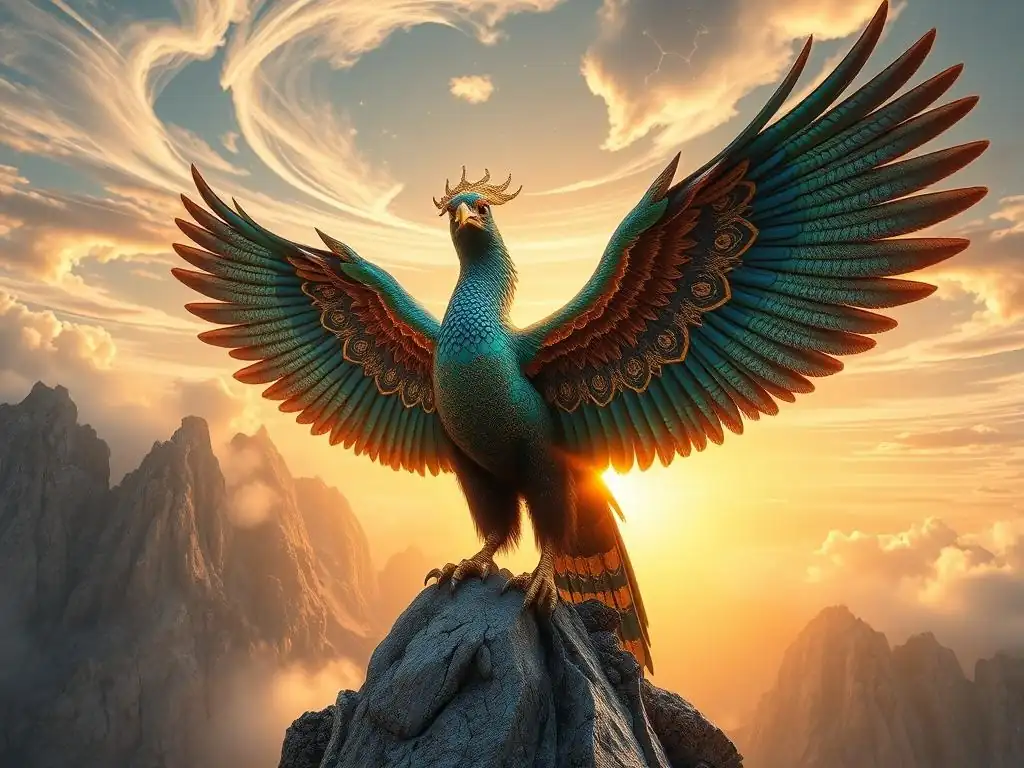
Delve into a world where ancient whispers echo through time. Curious about the Simurgh, the benevolent bird of Persian lore? Uncover the rich tapestry of Simurgh mythology, exploring its profound symbolism and enduring meanings. Prepare to be captivated by the wisdom woven into this legendary creature, and discover how its influence continues to resonate today. Let the journey begin...
- Unveiling the Simurgh: A Central Figure in Persian Mythology
- Simurgh Mythology: Tracing its Origins and Evolution
- Simurgh: Symbolism and Meanings Across Persian Culture
- The Simurgh's Appearance and Characteristics: A Detailed Description
- Simurgh and Other Mythical Birds: A Comparative Analysis
- Simurgh's Legacy: Influence on Modern Art and Culture
- Exploring Variations and Interpretations of the Simurgh Legend
- The Simurgh's Enduring Appeal: Why This Mythical Bird Still Captivates
-
Frequently Asked Questions
- What is the Simurgh and where does it originate?
- What are some common characteristics and abilities attributed to the Simurgh?
- What is the significance of the Simurgh in Persian culture and symbolism?
- How has the Simurgh myth influenced Persian art, literature, and music?
- What are some key stories or legends featuring the Simurgh?
- Final Reflection: The Enduring Legacy of the Simurgh
- Unleash Your Inner Mythmaker: Explore the Majestic Simurgh!
Unveiling the Simurgh: A Central Figure in Persian Mythology
Introduction to the Simurgh: A Hybrid Creature of Legend
The Simurgh, a magnificent and enigmatic creature, stands as one of the most prominent figures within the rich tapestry of Persian mythology. Often described as a massive, bird-like being, its form is a captivating amalgamation of various animals, embodying a hybrid nature that speaks to its multifaceted symbolism. This mythical entity is far more than just a fantastic beast; it is deeply woven into the cultural and spiritual fabric of Persia, appearing in ancient texts, epic poetry, and philosophical treatises, carrying profound layers of meaning related to wisdom, divinity, and connection.
Known by various names across different eras and regions, including Saēna in Avestan texts and variations in later Persian literature, the Simurgh represents a convergence of earthly power and celestial knowledge. Its hybrid appearance, frequently featuring elements of a bird of prey combined with mammalian traits like a dog's head or lion's claws, underscores its unique status—neither wholly animal nor entirely divine, but possessing attributes of both realms. This complexity makes the Simurgh a compelling subject for exploring Persian mythology, particularly its intricate symbolism and meanings that have evolved over centuries.
Simurgh's Role in Persian Folklore and Ancient Texts
The Simurgh plays a pivotal role in numerous Persian folktales and ancient scriptures, serving as a guardian, a source of ancient wisdom, and a bridge between the human and divine worlds. Its presence often signifies moments of great change, revelation, or intervention, highlighting its importance in the narrative structure of Persian lore. The creature is frequently depicted as dwelling in remote, mystical locations, reinforcing its connection to the spiritual or inaccessible realms of existence.
Across ancient texts, the Simurgh appears as a benevolent force, often associated with healing and protection. Early mentions in Zoroastrian scripture, though sometimes debated regarding direct identification, feature powerful, wise birds that hint at the Simurgh's lineage. Later, in epic and Sufi poetry, its role solidifies as a guide and ultimate goal. This consistent presence across different textual traditions underscores the Simurgh's enduring significance and its deep roots in the historical and mythological landscape of the Persian world, cementing its status as a central, revered figure.
Simurgh Mythology: Tracing its Origins and Evolution
The Simurgh in the Shahnameh: Epic Tales of the Persian Bird
Ferdowsi's Shahnameh, the epic poem recounting the history of Persia, provides some of the most detailed and influential accounts of the Simurgh. In this monumental work, the Simurgh is primarily known for its protective role in the story of Zal, the albino son of the hero Sam. Sam, seeing his son's unusual appearance, abandons him on Mount Alborz. It is here that the compassionate Simurgh discovers the infant and raises him as its own, nurturing him with its wisdom and providing him with sanctuary until he is rediscovered by his father.
The Shahnameh narrative further emphasizes the Simurgh's power and benevolence when it grants Zal a single feather, instructing him to burn it if he ever faces insurmountable danger. This feather becomes a direct link to the Simurgh's aid, symbolizing its continued protection and profound connection to Zal and his lineage, including his famous son, the hero Rostam. This episode is crucial to understanding the Simurgh mythology Persian symbolism meanings, particularly its association with guardianship, lineage, and divine intervention in critical moments of human destiny within the epic framework.
Zoroastrian Roots of the Simurgh: Exploring Ancient Beliefs
The origins of the Simurgh can be traced back to ancient Iranian beliefs, particularly within the context of Zoroastrianism, one of the world's oldest continuously practiced religions. While the exact term "Simurgh" isn't always used interchangeably with earlier figures, scholars often link it to the Saēna, a mythical bird mentioned in the Avesta, the primary collection of Zoroastrian religious texts. The Saēna is depicted as a powerful bird of prey, residing on the mythical tree Gaokerena, associated with healing properties and guarding sacred waters.
This connection suggests that the Simurgh evolved from an ancient avian deity or spirit associated with vitality, healing, and perhaps the cyclical nature of life, symbolized by its dwelling on a life-giving tree. The transition from the Saēna of Zoroastrian texts to the Simurgh of later Persian mythology shows a continuity of core symbolic attributes, such as wisdom, immense age, and a connection to life-giving forces. Exploring these Zoroastrian roots provides essential context for understanding the deep historical layers underpinning the Simurgh mythology and its enduring significance in Persian culture.
Simurgh’s Depiction in Art and Literature Throughout History
Throughout Persian history, the Simurgh has been a popular motif in various forms of art and literature, reflecting its enduring cultural importance and the evolving interpretations of its symbolism. From intricate miniature paintings adorning manuscripts to decorative elements in architecture and textiles, the Simurgh's image has been consistently employed. These artistic renditions often showcase its hybrid form with vibrant plumage, emphasizing its majesty and mythical status, and providing visual insights into how the Simurgh mythology Persian symbolism meanings were perceived across different eras.
In literature beyond the Shahnameh, the Simurgh appears in philosophical and mystical works, most notably in Farid ud-Din Attar's 12th-century allegorical poem, The Conference of the Birds (Mantiq al-Tayr). Here, the Simurgh represents the ultimate divine truth, the goal of the spiritual journey undertaken by a flock of birds. The poem's profound symbolism cemented the Simurgh's place in Sufi mysticism as a metaphor for God or ultimate reality, showcasing how its depiction evolved from a protective figure in epics to a symbol of divine unity and spiritual aspiration in later literary traditions.
Simurgh: Symbolism and Meanings Across Persian Culture
The Simurgh as a Symbol of Wisdom and Knowledge
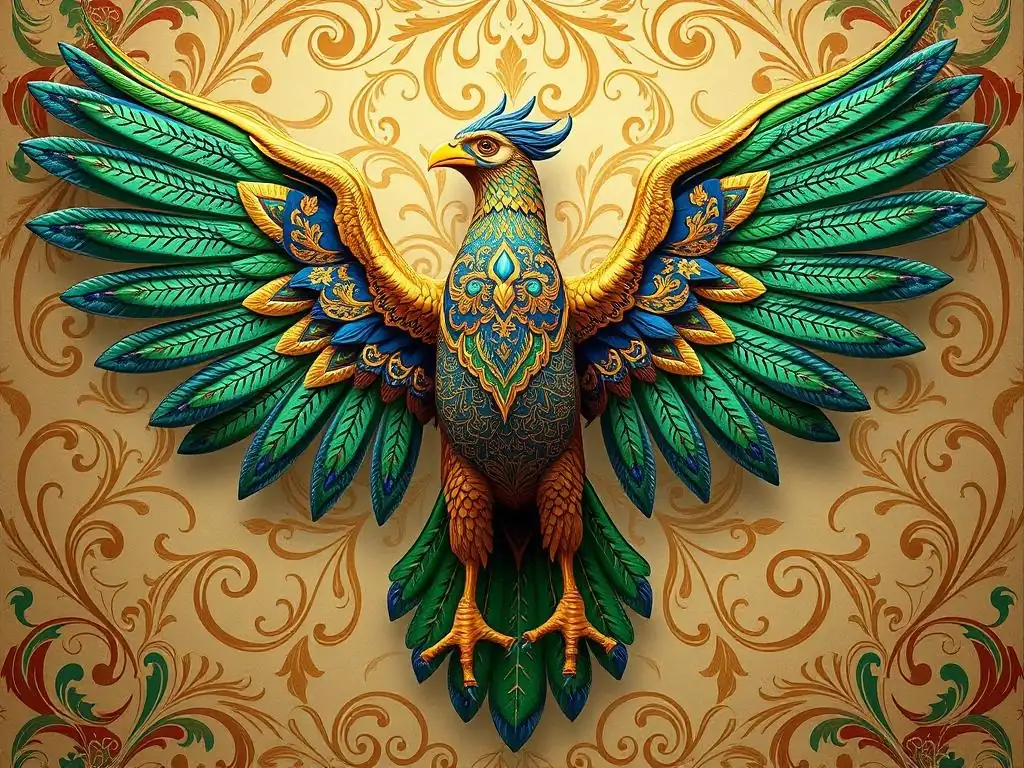
One of the most prominent symbolic meanings associated with the Simurgh in Persian mythology is its representation of profound wisdom and ancient knowledge. Due to its immense age – often said to have lived for several thousand years and witnessed the destruction and rebirth of the world multiple times – the Simurgh is believed to possess knowledge of all ages. This vast understanding makes it a sought-after advisor, capable of offering guidance on matters beyond human comprehension, embodying the accumulated wisdom of history and the cosmos.
This aspect of the Simurgh's symbolism is particularly evident in tales where it acts as a mentor or savior, such as in the story of Zal. Its ability to foresee consequences and offer practical, life-saving advice underscores its role not just as a powerful creature, but as an embodiment of enlightened understanding. The Simurgh mythology Persian symbolism meanings thus heavily lean into the concept of ancient, perhaps even divine, wisdom being accessible through this magnificent bird, making it a key figure representing enlightenment and insight in Persian lore.
Simurgh's Connection to Healing and Protection
Beyond wisdom, the Simurgh is strongly associated with healing and protection, capabilities often linked to its benevolent nature and ancient origins. Legends describe its feathers or even its mere presence as possessing curative properties, capable of mending ailments and warding off harm. This attribute might stem from its potential connection to the Saēna bird of Zoroastrianism, which was linked to the mythical tree Gaokerena and its healing properties, or simply from its portrayal as a powerful, benevolent entity in later narratives.
The protective aspect is vividly illustrated in the Shahnameh through the feather given to Zal. This artifact serves as a tangible symbol of the Simurgh's enduring safeguard, capable of summoning its aid in times of dire need. This connection to healing and protection highlights the Simurgh's role as a benevolent force in the world, actively intervening to restore health and ensure safety, further enriching the complex Simurgh mythology Persian symbolism meanings as a creature of both power and grace.
Simurgh as a Divine Messenger and Intermediary
In certain interpretations of Persian mythology, the Simurgh serves as a messenger or intermediary between the divine realm and the earthly world. Its ability to fly to the heavens and its dwelling on the high, mythical Mount Qaf, often seen as the boundary between the physical and spiritual realms, positions it uniquely as a link between mortals and the divine. This role is less explicitly defined than its wisdom or protective functions but is implied through its connection to sacred spaces and its often-benevolent interactions with humans.
In Sufi poetry, this aspect is heightened, where the Simurgh becomes synonymous with the divine presence itself, the ultimate object of spiritual quest. While not a messenger from God in the traditional sense, its representation as the divine in these allegories underscores its symbolic status as the ultimate truth or reality that seekers strive to reach. This interpretation adds another layer to the Simurgh mythology Persian symbolism meanings, portraying it as a bridge or the destination itself in the journey towards spiritual understanding and connection with the ultimate divine power.
The Simurgh's Appearance and Characteristics: A Detailed Description
Physical Attributes of the Simurgh: Feathers, Claws, and Beak
Descriptions of the Simurgh's physical appearance vary across different texts and artistic renditions, yet common features paint a picture of a creature of immense size and striking hybridity. It is typically depicted as a gigantic bird, large enough to carry off elephants or shelter humans in its wings. Its plumage is often described as vibrant and iridescent, sometimes said to change color or possess the colors of all birds, symbolizing its comprehensive nature or connection to the celestial light.
Specific features often mentioned include a head resembling that of a dog or mammal, equipped with sharp teeth, contrasting with its bird body. It commonly possesses the powerful claws of a lion and the magnificent tail of a peacock or other beautiful bird. This combination of mammalian and avian, predatory and beautiful features underscores its unique, composite nature, making the Simurgh's appearance as complex and layered as its symbolism within Persian mythology. The sheer scale and unusual combination of traits contribute significantly to its mystique and power.
The Simurgh's Habitat: Mount Qaf and its Mystical Significance
The traditional dwelling place of the Simurgh is the mythical Mount Qaf (also spelled Qafqaf or Qaf Kuh), a legendary mountain range said to encircle the world. Mount Qaf is not a geographical location in the conventional sense but a symbolic one, representing the edge of the known world, a boundary between the physical and the spiritual realms. Its remote and inaccessible nature reinforces the Simurgh's status as a creature of the transcendent or mystical.
Living atop this cosmic mountain, often associated with the legendary Tree of Knowledge or Tree of Life, the Simurgh's habitat underscores its connection to ancient wisdom, the origins of the world, and perhaps even the axis mundi. The mountain's height symbolizes proximity to the heavens and divine knowledge, while its isolation emphasizes the Simurgh's unique position, far removed from ordinary human affairs yet occasionally intervening in them. This mystical habitat is integral to understanding the Simurgh mythology Persian symbolism meanings, linking the bird intrinsically to the foundational elements of the cosmos in Persian belief.
The Sounds of the Simurgh: Exploring the Bird's Voice
While descriptions of the Simurgh's appearance are relatively consistent in their themes of hybridity and size, accounts of its voice are less detailed but equally significant. The sounds produced by the Simurgh are often described as beautiful, melodic, or even enchanting, sometimes compared to celestial music. This auditory characteristic aligns with its association with the divine and its role as a creature of wisdom and transcendence, suggesting its voice carries inherent power or beauty beyond mundane sounds.
In some narratives, the sound of the Simurgh's wings flapping is said to resemble thunder or a mighty wind, reflecting its immense size and power. Alternatively, its calls might be interpreted as prophetic utterances or expressions of ancient knowledge, understandable only to those pure of heart or on a spiritual quest. These varied descriptions, though less numerous than those of its appearance, contribute to the Simurgh mythology Persian symbolism meanings by highlighting its extraordinary nature, capable of producing sounds ranging from awe-inspiring power to divine melody.
Simurgh and Other Mythical Birds: A Comparative Analysis
Comparing the Simurgh to the Phoenix: Similarities and Differences
The Simurgh is frequently compared to the Phoenix, another famous mythical bird found in various cultures, particularly those influenced by Greek and Egyptian traditions. Both are large, majestic birds with colorful plumage, often associated with fire, renewal, and immense age. The Phoenix is renowned for its ability to cyclically burn itself and be reborn from its ashes, symbolizing resurrection and immortality, while the Simurgh is often said to have lived through multiple world cycles, gaining wisdom from their destruction and renewal.
However, key differences exist. The Phoenix's primary myth revolves around its death and rebirth cycle, a solitary act of renewal. The Simurgh, while ancient and perhaps associated with cosmic cycles, is more active in the human world, taking on roles as a protector, healer, and guide, as seen in the Zal story. The Simurgh's hybrid form also contrasts with the Phoenix's typically pure avian depiction. While both are powerful symbols of transformation and longevity, the Simurgh's focus leans more towards accumulated wisdom, protection, and serving as a divine intermediary within the specific context of Simurgh mythology Persian symbolism meanings.
The Simurgh Versus Other Mythical Birds of Prey
Comparing the Simurgh to other mythical birds of prey, such as the Roc of Arabian Nights or the Thunderbird of North American folklore, reveals both shared archetypes and unique characteristics. Like the Roc, the Simurgh is often described as being of colossal size, capable of carrying large creatures or people, embodying raw power associated with massive birds of prey. Both figures inspire awe and represent forces of nature or mythical power within their respective mythologies.
However, the Simurgh distinguishes itself through its profound intellectual and spiritual attributes. While the Roc is primarily a creature of immense physical power and scale, often appearing as a formidable challenge or spectacle, the Simurgh is defined by its wisdom, benevolence, healing abilities, and symbolic depth. Its hybrid nature and connection to specific mythological locations like Mount Qaf also set it apart from simpler, albeit powerful, bird-of-prey archetypes, emphasizing its unique place within the pantheon of mythical creatures and its rich Simurgh mythology Persian symbolism meanings.
Examining the Unique Aspects of the Simurgh in World Mythology
When viewed in the broader context of world mythology, the Simurgh possesses several unique aspects that make it stand out. Its distinct hybrid form, combining avian and mammalian traits in a specific way (dog-like head, lion claws, peacock tail), is not commonly replicated in other major mythical bird figures. This composite nature suggests a synthesis of different powers and symbols, perhaps representing mastery over multiple domains (air, land) or integrating diverse aspects of existence.
Furthermore, the Simurgh's consistent portrayal as a source of ancient, comprehensive wisdom derived from witnessing cosmic cycles is a particularly strong and defining trait. While other mythical beings may possess wisdom, the Simurgh's is tied directly to its immense age and observation of world epochs. Its role as a benevolent protector and guide, particularly its personal involvement in human affairs as seen in the Shahnameh, also gives it a unique narrative function compared to more abstract or purely destructive avian myths. These specific characteristics contribute to the enduring fascination with the Simurgh mythology Persian symbolism meanings globally.
Simurgh's Legacy: Influence on Modern Art and Culture
Simurgh-Inspired Art and Literature in Contemporary Times
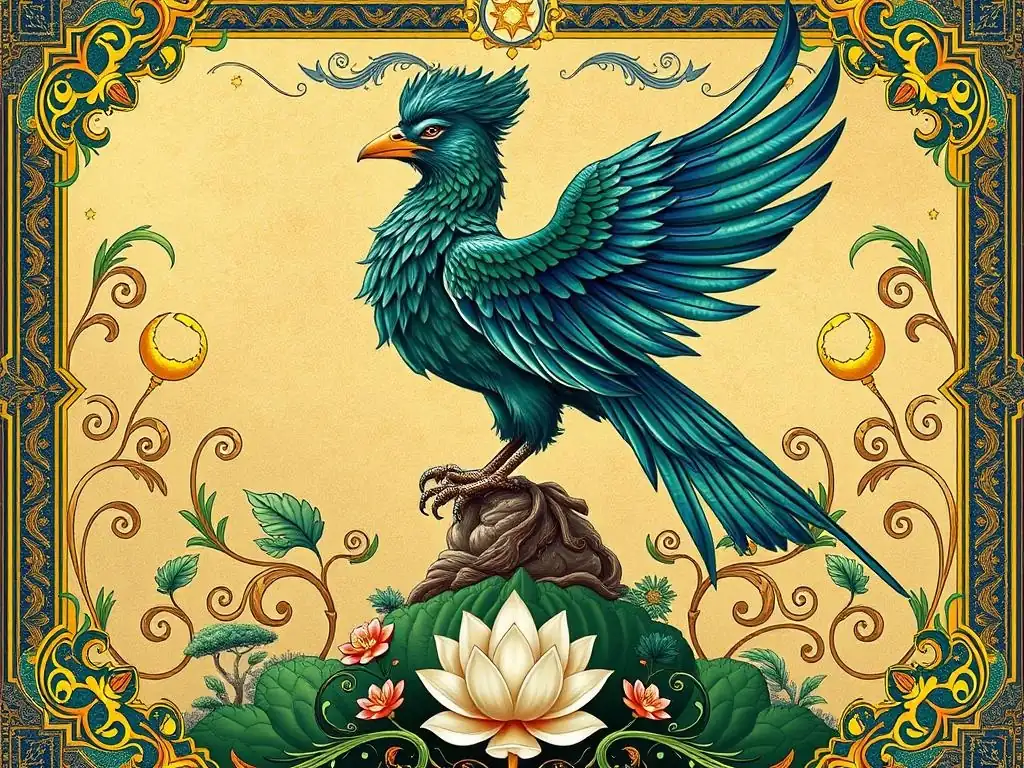
The Simurgh continues to inspire artists and writers in contemporary times, demonstrating the enduring power of its mythology and symbolism. In modern visual arts, the Simurgh appears in paintings, sculptures, and digital art, often reinterpreted through contemporary aesthetics while retaining its core features of hybridity and majesty. These works frequently explore themes of identity, transformation, and the connection between the ancient past and the present, leveraging the Simurgh's rich visual and symbolic heritage.
In literature, the Simurgh's presence can be found in fantasy novels, poetry, and even philosophical essays, both within Iran and internationally. Writers draw upon the Simurgh's association with wisdom, guidance, and the spiritual journey, often referencing Attar's Conference of the Birds or the Shahnameh tales. These contemporary works reinterpret the Simurgh mythology Persian symbolism meanings for a modern audience, exploring universal themes through the lens of this unique mythical creature and ensuring its legend remains vibrant and relevant.
The Simurgh in Persian Identity and Cultural Heritage
The Simurgh holds a significant place in Persian identity and cultural heritage, serving as a potent symbol of the nation's ancient history, rich mythology, and enduring spirit. It is often viewed not just as a mythical creature but as an emblem of wisdom, protection, and continuity, linking modern Iranians to their pre-Islamic past and the epic traditions like the Shahnameh. Its image and stories are part of the collective cultural memory, passed down through generations via literature, art, and oral tradition.
The Simurgh's presence in national symbols, decorative arts, and popular culture reinforces its status as an icon of Persian identity. While not an official national emblem in the same way as the Lion and Sun historically were, its deep roots in native mythology and its association with positive attributes like wisdom and benevolence make it a cherished part of cultural heritage. Understanding the Simurgh mythology Persian symbolism meanings is key to appreciating a fundamental element of Iran's rich and complex cultural landscape.
Simurgh in Modern Persian Naming Conventions
While using "Simurgh" as a personal name is not common in modern Persian naming conventions, the creature's influence is felt more subtly in cultural references and symbolic associations. Names related to birds or wisdom might carry an echo of the Simurgh's qualities, and the concept of the Simurgh remains a well-known cultural reference point. Its story is often taught in schools, and its image is recognized across society, maintaining its symbolic presence even if not directly used for nomenclature.
The Simurgh's power lies more in its symbolic weight within the language and cultural consciousness rather than being adopted into everyday personal names. It represents an ideal – of unattainable wisdom, divine presence, or ultimate unity – which functions better as a cultural archetype than a personal identifier. Thus, while you might not meet someone named Simurgh, the Simurgh mythology Persian symbolism meanings continue to resonate through cultural literacy and artistic expression.
Exploring Variations and Interpretations of the Simurgh Legend
Different Regional Accounts of the Simurgh
The legend of the Simurgh, originating in ancient Iran, spread and evolved across various regions influenced by Persian culture, leading to different regional accounts and interpretations. As the myth traveled through Central Asia, the Indian subcontinent, and into parts of the Ottoman Empire, it sometimes merged with local folklore or took on new characteristics. While the core identity as a wise, ancient bird often remained, specific details of its appearance, habitat, or interactions could vary.
For example, in some traditions, the Simurgh's connection to the Tree of Life might be emphasized differently, or its interactions with specific local heroes might be incorporated into the narrative. These variations highlight the dynamic nature of mythology as it adapts to new cultural contexts, demonstrating how the fundamental Simurgh mythology Persian symbolism meanings could be reinterpreted while retaining a recognizable core, reflecting the diverse cultural landscape touched by Persian influence over centuries.
Simurgh's Association with the Sasanian Dynasty
Historically, the Simurgh held particular significance during the Sasanian Empire (224–651 CE), the last pre-Islamic Persian empire. The creature was a popular motif in Sasanian art, appearing on textiles, metalwork, and architectural decorations. Its depiction in this era is notable; it often appears as a powerful, majestic bird, sometimes holding a branch or fruit, symbolizing prosperity, divine favor, or the king's glory.
The Sasanian use of the Simurgh suggests it functioned as a symbol of royal power, protection, and perhaps the Farr (divine glory or blessing) associated with legitimate rulers. Its presence on royal artifacts underscored the king's connection to ancient wisdom and benevolent power, reinforcing the idea that the monarch was divinely sanctioned and protected. This historical association is a concrete example of how the Simurgh mythology Persian symbolism meanings were integrated into the political and social fabric of ancient Persia, serving as a powerful emblem of the state.
The Simurgh in Sufi Mysticism and Islamic Interpretations
One of the most profound interpretations of the Simurgh legend occurs within Sufi mysticism, particularly as allegorized in Farid ud-Din Attar's The Conference of the Birds. In this masterpiece, the Simurgh represents the Divine Being, the ultimate reality (often equated with Allah in an Islamic context), which the birds, representing spiritual seekers, strive to find. The journey is arduous, and only thirty birds (si morgh in Persian) ultimately reach the Simurgh's dwelling.
The climax reveals that the Simurgh is not a separate entity but a reflection of the thirty birds themselves – the seekers realize that the divine is within them and in their collective unity. This powerful allegory reinterprets the Simurgh mythology Persian symbolism meanings from a focus on external protection or wisdom to an internal, spiritual truth.
It highlights the Sufi concept of Fana (annihilation of the self) and Baqa (subsistence in God), where the seeker realizes their unity with the divine, making the Simurgh a central metaphor for the mystical path and the nature of ultimate reality in Islamic thought.
The Simurgh's Enduring Appeal: Why This Mythical Bird Still Captivates
The Timeless Themes Embodied by the Simurgh
The Simurgh's enduring appeal lies in the timeless and universal themes it embodies, resonating with fundamental human concerns across cultures and generations. Its representation of ancient wisdom speaks to our innate desire for knowledge and understanding of the world. Its role as a protector and healer taps into our need for safety and well-being. Its connection to the divine or ultimate reality addresses humanity's spiritual quest and search for meaning beyond the material world.
Furthermore, the Simurgh's hybrid nature and association with cyclical destruction and renewal can be interpreted as symbols of transformation, adaptability, and resilience – themes highly relevant in a constantly changing world. These layers of meaning ensure that the Simurgh mythology Persian symbolism meanings remain fertile ground for interpretation and reflection, allowing the creature to transcend its origins and speak to contemporary audiences on profound levels.
Simurgh as a Symbol of Hope and Renewal in Persian Culture
In Persian culture, the Simurgh often functions as a potent symbol of hope and renewal. Its association with the cyclical nature of the cosmos, having witnessed multiple destructions and rebirths, positions it as a figure that endures through catastrophe and heralds new beginnings. This aspect is particularly significant in a culture with a long and sometimes turbulent history, where symbols of resilience and the promise of renewal hold deep resonance.
The Simurgh's benevolence, its willingness to aid those in need (like Zal), and its representation of ultimate wisdom also contribute to this sense of hope. It embodies the potential for guidance and salvation even in the darkest times. This positive symbolism, deeply embedded in the Simurgh mythology Persian symbolism meanings, makes the creature a cherished and optimistic figure in Persian folklore, representing the potential for overcoming adversity and the promise of a brighter future.
Conclusion: The Everlasting Wisdom of the Simurgh
The Simurgh is far more than just a mythical bird; it is a complex and enduring symbol that has shaped and been shaped by centuries of Persian culture. From its potential roots in ancient Zoroastrian beliefs and its prominent role in the epic Shahnameh as a protector and source of wisdom, to its profound allegorical significance in Sufi mysticism representing the Divine, the Simurgh embodies a rich tapestry of meanings. Its hybrid form, mystical habitat on Mount Qaf, and association with healing and knowledge all contribute to its unique place in mythology.
The Simurgh mythology Persian symbolism meanings continue to resonate today, influencing modern art, literature, and remaining a cherished part of Persian identity and heritage. Whether seen as a benevolent guardian, a symbol of cosmic wisdom, or the ultimate goal of the spiritual journey, the Simurgh's legend offers timeless insights into themes of protection, knowledge, and the pursuit of truth. Its enduring appeal lies in these deep, multifaceted symbols that speak to the core of human experience and aspiration, ensuring that the wise, mythic bird of Persian lore will continue to captivate hearts and minds for generations to come.
Frequently Asked Questions
What is the Simurgh and where does it originate?
The Simurgh is a benevolent, mythical bird in Persian mythology. It is depicted as a creature of immense size and wisdom, often associated with healing and protection. Its origins are deeply rooted in ancient Persian legends and folklore.
What are some common characteristics and abilities attributed to the Simurgh?
The Simurgh is commonly portrayed with features combining a peacock, eagle, and lion. It possesses extraordinary healing powers, immense knowledge, and the ability to purify the land.
What is the significance of the Simurgh in Persian culture and symbolism?
The Simurgh represents wisdom, benevolence, and divine protection in Persian culture. It symbolizes hope, purification, and the connection between the earthly and the spiritual realms.
How has the Simurgh myth influenced Persian art, literature, and music?
The Simurgh has been a recurring motif in Persian art, literature, and music for centuries. It serves as a powerful symbol of spiritual aspiration and national identity, inspiring countless artistic creations.
What are some key stories or legends featuring the Simurgh?
One prominent story involves the Simurgh raising Zal, the abandoned son of Sam, and later aiding him in his adventures. The Simurgh also plays a crucial role in Shahnameh, the Persian epic poem, showcasing its divine intervention and guidance.
Final Reflection: The Enduring Legacy of the Simurgh
The enduring power of the Simurgh myth resonates deeply with our modern world, reminding us of the interconnectedness of all things and the importance of seeking wisdom and understanding. Its symbolic weight, far from being relegated to ancient texts, continues to offer a potent framework for navigating the complexities of life, both personally and collectively. The Simurgh's ability to transcend boundaries and embody both destruction and creation speaks to the inherent duality present in all aspects of existence.
The Simurgh's influence on Persian art, literature, and spirituality is undeniable, shaping cultural narratives for millennia and continuing to inspire artists and thinkers today. Its image, a powerful blend of bird and lion, evokes a sense of awe and wonder, a reminder of the sublime mysteries that lie beyond our immediate grasp. The Simurgh is not merely a creature of myth; it is a mirror reflecting the human quest for knowledge, healing, and spiritual growth.
This quote, though not from a specific source, encapsulates the enduring relevance of the Simurgh's symbolism. Its capacity for transformation and renewal offers a potent message of hope and resilience in the face of adversity.
Consider the Simurgh's wisdom, its ability to see beyond the immediate, and its role as a guide and protector. What lessons can you glean from this magnificent creature? How can you incorporate the Simurgh's qualities of strength, compassion, and wisdom into your own life? Embrace the transformative power of myth and allow the Simurgh's enduring legacy to inspire you to seek knowledge, embrace change, and strive for a deeper understanding of yourself and the world around you. Let its image serve as a reminder of the boundless potential for growth and transformation that lies within each of us.
Unleash Your Inner Mythmaker: Explore the Majestic Simurgh!
Thanks for delving into the captivating world of the Simurgh! We hope you gained a new appreciation for this powerful symbol of wisdom and protection. Now it's time to take your fascination further.
- Craft your own Simurgh-inspired artwork or story: Let the imagery and symbolism of this magnificent creature inspire your creative spirit. This is your chance to build on what you learned and bring the Simurgh to life in your own unique way!
- Share your thoughts and interpretations of the Simurgh with our community: What resonated most with you? What new questions did the article spark? We’d love to hear from you in the comments below!
- Explore further research on Persian mythology: Delve into other creatures, symbols, and myths from this rich and ancient culture.
Ready to embark on your own mythological journey? What aspects of the Simurgh's legend will you explore next?