
Echidna's Legacy: The Mother of Greece's Most Feared Beasts

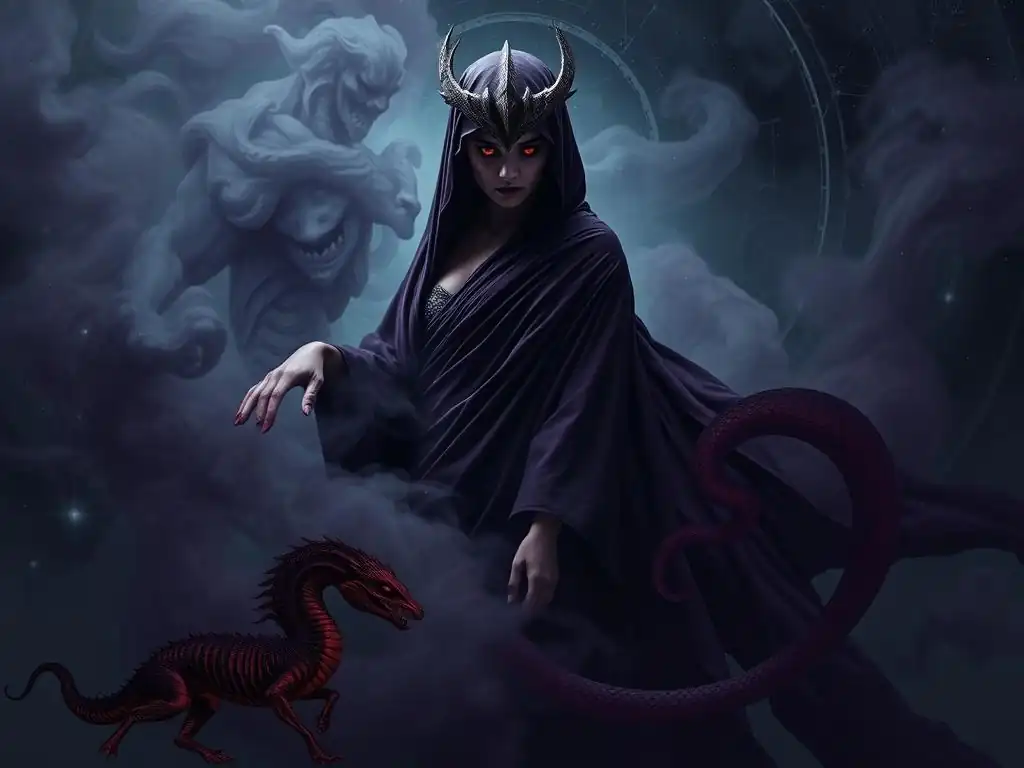
Welcome, seeker of ancient lore!
Delve into the captivating world of Mythology and Legends, where we unravel the threads of stories that have shaped civilizations. Curious about the monstrous matriarch of Greek mythology? Prepare to descend into the shadowy depths of the Echidna myths Greek legends, and discover how this half-woman, half-serpent birthed some of Greece's most terrifying creatures. What secrets lie within her serpentine coils? The journey begins now...
- Introduction to Echidna in Greek Mythology
- The Physical Appearance of Echidna: A Terrifying Hybrid
- Echidna's Family Tree: Mother of Mythical Monsters
- Echidna's Lair: A Hidden Cave and Her Solitary Existence
- Encounters with Heroes: Echidna's Battles and Fate
- The Enduring Legacy of Echidna in Greek Legends
- Echidna: Understanding Her Role in the Greek Pantheon
-
Frequently Asked Questions
- What is Echidna most known for in Greek mythology?
- Who was Echidna's mate, and how did this union contribute to her legacy?
- Where was Echidna said to live, and what characterized her dwelling?
- What kind of creature was Echidna herself, and what did she represent?
- How did Echidna ultimately meet her end, and who was responsible?
- Final Reflection: Echoes of Echidna in Modern Mythology
- Unleash Your Inner Myth-Maker!
Introduction to Echidna in Greek Mythology
Greek mythology is replete with monstrous figures, beings of terrifying power and grotesque appearance that challenge heroes and embody chaotic forces. Among these, few are as significant or as prolific as Echidna. Known as the "Mother of All Monsters," she holds a unique, albeit fearsome, place in the pantheon of mythical creatures, primarily due to her role in birthing many of the most infamous beasts encountered in the tales of heroes like Heracles and Perseus.
Her presence underscores the ancient Greek fascination with hybridity and the primordial forces from which chaos and danger emerged. Exploring Echidna myths and Greek legends reveals a foundational figure in the monstrous lineage that populated the mythical world.
The figure of Echidna is not merely a monster among many; she is often depicted as a primordial entity, a creature whose very existence predates many of the well-known Olympian gods. Her origins are shrouded in the mists of creation myths, aligning her with the earliest, most fundamental forces of the cosmos.
Understanding Echidna requires delving into these ancient layers of Greek thought, where the boundaries between gods, titans, and monsters were fluid. Her story is central to appreciating the landscape of dangers that heroes navigated, providing context for the challenges they faced and the very nature of the monstrous in Greek legends.
Exploring the Origins of Echidna Myths
The most prominent source detailing Echidna's origins is Hesiod's Theogony, a seminal work from around the 8th century BCE that attempts to systematize Greek creation myths and genealogies. According to Hesiod, Echidna was born in a cave, a child of Phorcys and Ceto, who were themselves ancient sea deities, children of Pontus (Sea) and Gaea (Earth).
This lineage places Echidna firmly within the realm of primordial, chthonic entities, connecting her directly to the raw, untamed forces of the earth and sea, distinct from the sky-dwelling Olympians. This deep ancestry solidifies her status as a foundational figure in the monstrous world described in Echidna myths and Greek legends.
Hesiod describes Echidna as a horrifying creature, stating she was "half a nymph with glancing eyes and fair cheeks, and half again a huge serpent, terrible and great, whose coils were vast." This dual nature, combining elements of human beauty with serpentine horror, immediately sets her apart and highlights her monstrous quality as a perversion of natural forms.
Other accounts offer slightly different parentage, sometimes linking her to Tartarus and Gaea, further emphasizing her connection to the deepest, darkest parts of the earth. Regardless of the specific lineage cited, the consistent theme across Echidna myths is her ancient, monstrous origin, rooting her deeply in the primeval layers of Greek cosmology.
Echidna's Role in Ancient Greek Legends
Echidna's primary and most enduring role in ancient Greek legends is that of a progenitor. She is famed almost exclusively for her monstrous offspring, fathered by the equally fearsome monster Typhon. Together, Echidna and Typhon represent a chaotic, destructive force that challenged the very order established by Zeus and the Olympians. Their union and progeny embody the wild, untamed aspects of the world that heroes were tasked with subduing. Many of the classic heroic labors involve confronting and defeating the children of Echidna, making her an indirect but crucial figure in the heroic narratives that define Greek mythology.
Beyond her role as a mother, Echidna herself was a formidable creature, though accounts of her direct interactions with heroes are less numerous than those of her children. She is described as living in a cave, often in a remote land like Arima or the land of the Arimoi, a place associated with the monstrous Typhon. Her solitary existence in such a desolate location reinforces her alien and dangerous nature.
While not often the main antagonist in a hero's quest, her existence and lineage are fundamental to understanding the landscape of dangers and the mythological ecosystem of ancient Greek legends. The pervasive threat represented by her progeny speaks volumes about the power and significance attributed to Echidna myths.
The Physical Appearance of Echidna: A Terrifying Hybrid
The descriptions of Echidna across various ancient texts consistently emphasize her terrifying hybrid nature, setting her apart from purely animalistic or purely human-shaped monsters. This combination of forms is central to her identity and her symbolic significance. Unlike creatures that are simply large or fierce animals, Echidna embodies a fundamental violation of natural order by merging disparate biological forms into a single, monstrous entity. This physical depiction is key to understanding the dread she inspired in ancient Greek legends and Echidna myths.
Her appearance serves as a visual metaphor for the monstrous itself – a fusion of familiar elements in an unnatural and horrifying way. The human upper body, often described with some degree of beauty or nymph-like features, contrasts sharply with the serpentine lower body, typically depicted as immense and coiled. This duality makes her both unsettling and fundamentally Other. It is a physical manifestation of the chaos and perversion she represents, a creature that does not fit neatly into the established categories of the natural or divine world.
Describing Echidna's Unique Form: Half-Woman, Half-Serpent
As described by Hesiod and echoed in later accounts, Echidna possessed the upper body of a woman, sometimes depicted as fair-faced and lovely, though this aspect is often overshadowed by her monstrous lower half. This human torso typically extended down to the waist or hips. From there, she transformed into a colossal serpent. The serpentine part was not just a tail but a massive, coiled body, sometimes described as scaly, terrifying, and immense. This lower half is often emphasized for its size and power, capable of crushing or constricting.
The contrast between the potentially human-like upper body and the monstrous serpent lower body is a defining feature. This isn't merely a visual curiosity; it highlights her liminal nature, existing between worlds – the human world and the monstrous realm, perhaps even between the earth and the underworld due to her chthonic connections.
The serpent half links her to ancient symbols of transformation, danger, and the chthonic forces of the earth, while the human half, even if monstrously paired, retains a disturbing semblance of familiarity. This unique hybrid form is a cornerstone of Echidna myths and her portrayal in Greek legends.
Symbolism of Echidna's Dual Nature: Beauty and Monstrosity
Echidna's half-woman, half-serpent form is rich in symbolism. The human aspect, even if only partially described with positive attributes like "fair cheeks," represents a deceptive allure or a perversion of beauty. It suggests that the monstrous can be hidden within or emerge from seemingly familiar forms. This duality can be interpreted as the inherent danger lurking beneath a surface appearance, a theme common in many myths involving seductive but deadly creatures. The combination hints at a primal fear of the uncanny, where the familiar is twisted into something terrifying.
The serpentine lower body carries significant symbolic weight in ancient Greece. Serpents were ambiguous creatures, associated with healing (Asclepius's staff) and wisdom, but also with death, the underworld, and chthonic powers. The vast, powerful serpent coils of Echidna emphasize her connection to the earth's depths, primal forces, and untamed nature.
Her monstrous size and strength in this form underscore her power and the threat she posed. Together, the combined forms symbolize a fundamental disruption of order, a monstrous entity born from the deepest, most ancient parts of the cosmos, embodying both a twisted reflection of humanity and the raw power of the earth's chaotic forces in Greek legends and Echidna myths.
Echidna's Family Tree: Mother of Mythical Monsters
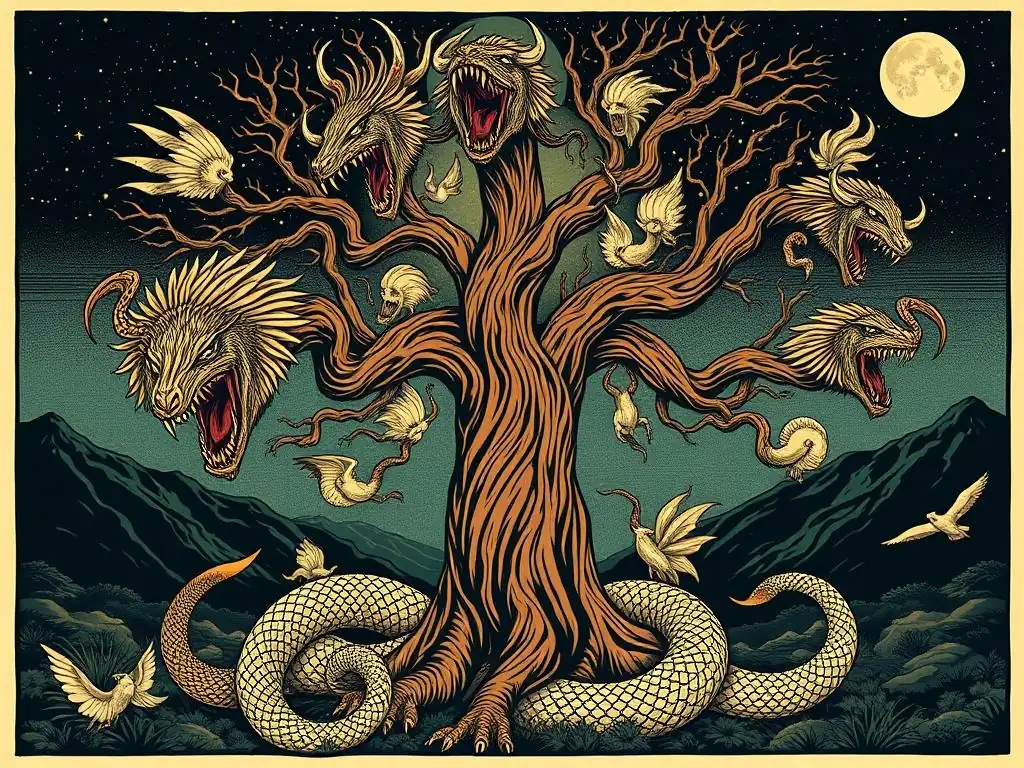
Echidna's most significant contribution to Greek mythology is her role as the mother of a vast and terrifying brood of monsters. Her union with Typhon, the most fearsome monster in Greek mythology, produced a lineage that would plague heroes for generations. This monstrous family tree is central to understanding the landscape of dangers in ancient Greek legends and solidifies Echidna's reputation as the "Mother of All Monsters." The sheer number and variety of her offspring highlight her prolific and destructive capacity.
The progeny attributed to Echidna and Typhon are not minor creatures; they are some of the most famous and formidable monsters in Greek mythology. Their offspring include guardians of terrifying places, scourges of the land, and challenges that required the greatest heroes to overcome. This lineage connects many seemingly disparate myths and heroic cycles, showing a shared, monstrous origin for many of the threats faced by figures like Heracles, Perseus, and Oedipus. The catalogue of her children is a testament to the pervasive influence of Echidna myths in shaping the world of Greek legends.
Echidna and Typhon: A Monstrous Union
Typhon, the father of Echidna's children, was arguably the most terrifying monster in Greek mythology. He was a colossal entity, often described with a hundred serpent heads, wings, and the power to unleash devastating storms and volcanic eruptions. Born from Gaea and Tartarus (or Hera alone in some accounts, out of anger at Zeus), Typhon represented the ultimate challenge to Zeus's reign and the cosmic order. His battle with Zeus is a pivotal event in the Gigantomachy, the struggle between the Olympians and earlier, chaotic forces.
The union of Echidna and Typhon, both chthonic and monstrous beings of immense power, was a coupling of primordial chaos. Their pairing in Hesiod's Theogony is presented as the source from which the most dreadful creatures sprang. Residing together, often in a dark cave or underworld-like region, they bred a generation of monsters that embodied the wild, untamed, and dangerous aspects of the world that existed before or alongside the ordered rule of the Olympians. This monstrous partnership is fundamental to the narrative of Echidna myths and the origins of many threats in Greek legends.
Offspring of Echidna: Listing the Legendary Beasts
Echidna and Typhon are credited with birthing a number of extremely famous and dangerous creatures. While the exact list can vary slightly across different ancient sources, several monsters are consistently identified as their children. These include guardians, destructive beasts, and mythological challenges that are central to various heroic tales. The sheer variety of their offspring speaks to the prolific nature of this monstrous pair.
The most commonly cited children of Echidna and Typhon are:
- Cerberus
- The Lernaean Hydra
- The Chimera
- The Nemean Lion (sometimes attributed to other parents, but often linked to Echidna)
- The Sphinx (sometimes attributed to other parents, but often linked to Echidna)
- The Caucasian Eagle (that tormented Prometheus)
- The Crommyonian Sow (sometimes attributed)
- Ladon (the dragon guarding the apples of the Hesperides, sometimes attributed)
This list alone represents a significant portion of the most challenging monsters in Greek heroic sagas, solidifying Echidna's title as the mother of these fearsome beasts and highlighting the widespread impact of Echidna myths on the landscape of Greek legends.
Cerberus: Guardian of the Underworld and Echidna's Child
Cerberus is one of the most iconic offspring of Echidna and Typhon. He is the monstrous hound who guards the entrance to the Underworld, preventing the dead from leaving and the living from entering without permission. Accounts typically describe him as having three heads, though some versions mention fifty or even a hundred. He often has a serpent's tail, a mane of snakes, and lion's claws, embodying further monstrous hybridity.
As the offspring of Echidna and Typhon, Cerberus embodies the terrifying nature of the Underworld itself. His role as a guardian reinforces the finality of death and the strict boundaries between the world of the living and the realm of Hades. Heracles's twelfth labor was to capture Cerberus and bring him to the surface, a seemingly impossible task that required the hero to confront death itself and the power of the Underworld's master. Cerberus's lineage from Echidna connects this crucial heroic feat directly back to the mother of monsters, showcasing the reach of Echidna myths.
The Hydra of Lerna: A Multi-Headed Serpent Born of Echidna
The Lernaean Hydra is another infamous child of Echidna and Typhon, renowned for its multiple heads and regenerative abilities. Descriptions vary, but it typically had between seven and twelve heads, with some accounts claiming one was immortal. When one head was severed, two would grow back in its place, making it incredibly difficult to kill. The Hydra also possessed venomous breath and blood, making it a deadly foe. It inhabited the swamps of Lerna, terrorizing the surrounding region.
Defeating the Hydra was the second labor of Heracles. Assisted by his nephew Iolaus, Heracles devised a strategy to cauterize each neck stump immediately after cutting off a head, preventing regeneration. This labor highlights the cunning and strength required to overcome the monstrous progeny of Echidna. The Hydra's serpentine nature directly echoes its mother's form, reinforcing the genetic link between Echidna and her terrifying offspring in Greek legends.
Chimera: The Fire-Breathing Hybrid Creature
The Chimera is one of the most visually striking and terrifying of Echidna's children. It was a composite monster, typically described as having the body of a lion, a goat's head rising from its back, and a serpent for a tail. Most famously, it breathed fire, making it a devastating force of destruction. The Chimera terrorized Lycia until it was defeated by the hero Bellerophon, who rode the winged horse Pegasus and used a lead-tipped spear to melt the lead inside the Chimera's throat when it breathed fire.
The Chimera's existence is a prime example of the monstrous hybridity prevalent in Echidna's lineage. It combines three different animal forms into one terrifying entity, a distortion of nature that mirrors its mother's own half-human, half-serpent body. Its defeat by Bellerophon is another key heroic narrative directly linked to the monstrous family tree originating with Echidna myths.
The Sphinx: Riddler of Thebes and Possible Offspring of Echidna
The Sphinx is often listed among the offspring of Echidna and Typhon, though some sources attribute her parentage differently (e.g., to Ladon and the Chimera, or Orthrus and Chimera). Regardless of specific lineage, she is a prime example of the monstrous hybrids associated with Echidna's family. The Sphinx is typically depicted with the body of a lion, the wings of a large bird, and the face and breasts of a woman. She famously terrorized the city of Thebes, posing a riddle to travelers and devouring those who could not answer.
The Sphinx's challenge was famously overcome by Oedipus, who correctly answered her riddle ("What walks on four feet in the morning, two in the afternoon, and three in the evening?" - Man). Upon hearing the correct answer, the Sphinx destroyed herself. The Sphinx's combination of human intelligence (the riddle) and monstrous form and appetite perfectly embodies the complex and terrifying nature of the creatures spawned from the lineage described in Echidna myths and Greek legends.
The Nemean Lion: Impenetrable Hide and Possible Offspring of Echidna
The Nemean Lion is another creature sometimes listed as a child of Echidna and Typhon (or sometimes Selene and Zeus, or born from the foam of the sea). This monstrous lion inhabited the region of Nemea and was known for its hide, which was impervious to conventional weapons like arrows and swords. It terrorized the local population, preying on livestock and people.
Defeating the Nemean Lion was the first labor of Heracles. Heracles found that his weapons were useless against the beast. He eventually cornered the lion in its cave and wrestled it to death with his bare hands, demonstrating incredible strength. He then used one of the lion's own claws to skin it, wearing its hide as armor thereafter. The Nemean Lion's association with Echidna, though not universally agreed upon, places it within the broader context of the monstrous challenges originating from the mother of monsters in Greek legends.
Echidna is consistently described as dwelling in a cave or a remote, desolate location. This choice of abode is significant in mythology, often symbolizing a separation from the civilized world and a connection to the earth's hidden, untamed aspects. Unlike many monsters who might roam freely or inhabit specific regions to terrorize, Echidna's primary dwelling is her lair, a place of origin and refuge for her and her monstrous mate, Typhon.
This solitary existence, shared only with her equally monstrous husband and their offspring before they venture out into the world, reinforces her status as an entity apart. She doesn't integrate into any form of society, even a monstrous one; she exists in a primal, hidden space. Her lair is less a point of attack for heroes (unlike the lairs of her children) and more a symbolic origin point for the monstrous lineage.
Locating Echidna's Abode in Ancient Greek Texts
Ancient Greek texts, particularly Hesiod's Theogony, place Echidna's dwelling in a remote and often vaguely defined region. Hesiod states she lives "in a hollow cave beneath the earth... in the land of the Arimoi." The land of the Arimoi is a mythical or legendary location associated with Typhon and volcanic activity, sometimes identified with regions in Cilicia (modern Turkey) or Italy. This geographical vagueness contributes to the mysterious and distant nature of her abode.
Later accounts and interpretations often depict her cave as being deep underground or in a desolate, rocky wilderness, far from human habitation. This isolation is key to her characterization; she is not a monster of the polis or the familiar landscape, but of the wild, untamed fringes of the world. Her lair is a place where the primordial monstrous can breed and exist undisturbed, a physical manifestation of the hidden dangers lurking beneath the surface of the ordered world in Greek legends and Echidna myths.
The Significance of Isolation in Echidna's Character
Echidna's solitary existence in her remote cave is highly symbolic. Unlike monsters who actively engage with the human world through destruction and terror (like the Chimera or Sphinx), Echidna's primary role is generative. Her isolation allows her to fulfill this role, breeding with Typhon away from the interference of gods or heroes. Her cave is a womb for monsters, a place where chaos takes form.
This isolation also emphasizes her ancient, almost elemental nature. She belongs to a different era and a different stratum of being than the creatures who interact daily with the heroic world. Her remoteness underscores her status as a source, a root cause of monstrous proliferation, rather than a creature primarily defined by her interactions with others. It highlights the idea that some forms of monstrousness are not just threats to be overcome but fundamental aspects of the deep, hidden world, originating from places untouched by civilization in Greek legends and Echidna myths.
Encounters with Heroes: Echidna's Battles and Fate
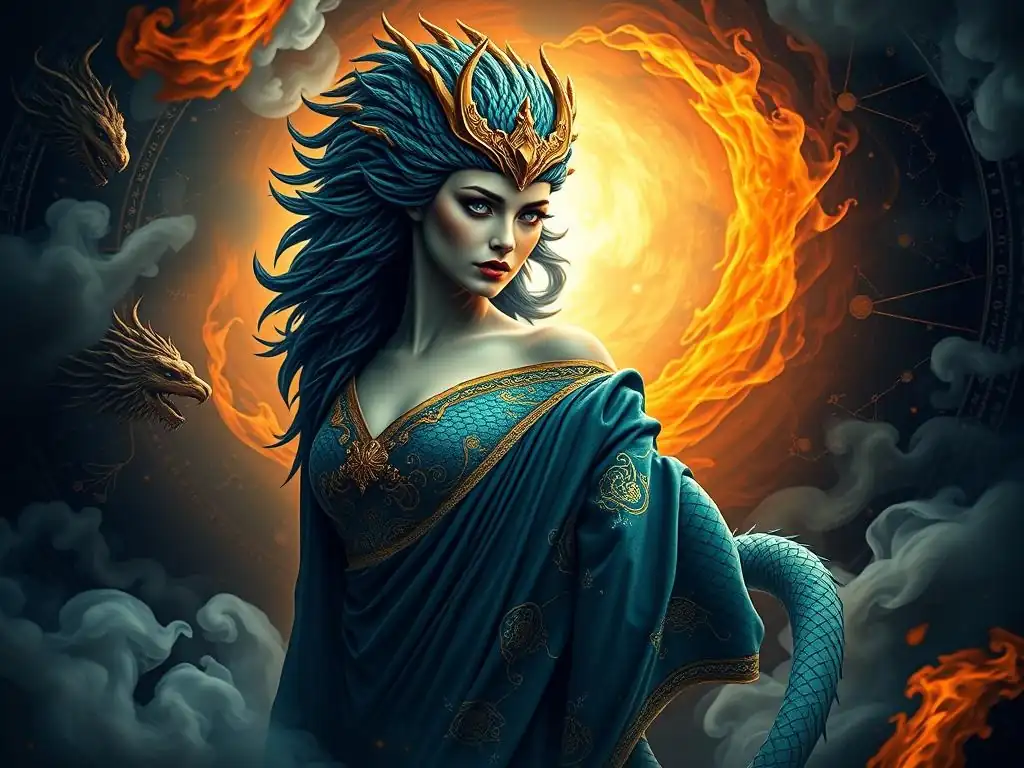
While Echidna is most famous for mothering monsters, she did have direct encounters with figures from Greek mythology, though these are less numerous and prominent than the battles against her children. Her own fate is also described in some accounts, providing a conclusion to her terrifying existence. These encounters, though few, serve to highlight her own formidable nature beyond her role as a mother.
Her most notable direct confrontation involves a figure known for his vigilance and numerous eyes. This encounter signifies a clash between one of the primordial sources of monstrosity and a guardian figure associated with the divine or semi-divine realm. The accounts of her death, while varying, mark the end of the physical threat she represented, though her legacy lived on through her offspring.
Echidna vs. Argus Panoptes: The Hundred-Eyed Giant's Victory
One significant account of a direct encounter with Echidna involves the giant Argus Panoptes, known for having a hundred eyes scattered across his body, allowing him to see in all directions, even while sleeping with only a few eyes closed at a time. According to Apollodorus's Bibliotheca, a summary of Greek myths, Argus was sent by Hera to guard the nymph Io, who had been transformed into a heifer by Zeus to hide her from Hera's jealousy.
Apollodorus lists the slaying of Echidna as one of Argus's feats. He describes Argus as a powerful giant who killed Echidna while she was asleep in her cave. This victory by Argus is presented as a significant achievement, suggesting that Echidna herself was a formidable opponent, requiring the unique vigilance and strength of the hundred-eyed giant to defeat. This specific detail is a key element in the less common narratives focusing on Echidna herself rather than just her progeny within Greek legends.
The Death of Echidna: Accounts and Interpretations
The account of Echidna's death at the hands of Argus Panoptes is perhaps the most widely cited. Apollodorus simply states that Argus killed her while she slept. This suggests that even the Mother of Monsters could be vulnerable, particularly to a figure like Argus, who was known for his tireless watchfulness. Her death while sleeping might also symbolize the overcoming of a primal, chaotic force by a more ordered, albeit still monstrous, entity associated with the divine (as Argus served Hera).
Other interpretations or less common accounts might suggest different fates or simply imply that she faded into obscurity after Typhon's defeat by Zeus. However, the version where Argus slays her is notable as it provides a specific mythological event for her demise. This narrative ensures that even the source of so many monsters ultimately faced a challenge she could not overcome, albeit not in a grand battle but through vigilance and surprise, adding a layer to the understanding of Echidna myths.
The Enduring Legacy of Echidna in Greek Legends
Despite her own death, Echidna's impact on Greek mythology is undeniable and long-lasting, primarily through her monstrous offspring. Her legacy is woven into the fabric of countless heroic narratives and the broader understanding of the monstrous within the Greek mythological framework. She represents a foundational element in the genealogy of fear and chaos that heroes were tasked with confronting and subduing.
Her influence extends beyond the specific myths of her children; she embodies an archetype of the monstrous mother, a source from which terrible dangers spring. This concept has resonated throughout history and continues to influence storytelling and mythological studies. The enduring presence of her children in popular culture ensures that the name of Echidna, the Mother of Monsters, remains relevant in discussions of Greek legends and Echidna myths.
Echidna's Influence on Monster Archetypes in Mythology
Echidna's role as the mother of such a diverse array of famous monsters has solidified her influence on monster archetypes across mythology. She embodies the concept of a single, powerful source of monstrous progeny, a matriarch of chaos and danger. This archetype of the "monstrous mother" or "progenitor of fear" appears in various forms in different mythologies, but Echidna is perhaps the most prominent example in the Western tradition derived from Greek legends.
Her lineage reinforces the idea that certain evils or dangers are fundamentally connected, stemming from a shared, dark origin. The fact that beasts like the Hydra, Chimera, and Cerberus are siblings suggests a thematic link between disparate challenges faced by heroes. This structure provided a mythological framework for understanding the sources of chaos and the interconnectedness of the monstrous world, a key contribution of Echidna myths to the broader mythological landscape.
Echidna Myths and Their Impact on Modern Literature and Art
The figures spawned by Echidna have had a significant impact on modern literature, art, and popular culture. Cerberus, the Hydra, the Chimera, and the Sphinx are instantly recognizable figures, appearing in countless books, films, games, and artworks. Their enduring popularity means that, by extension, Echidna herself maintains a degree of recognition as their source.
While modern interpretations often focus on her children individually, the concept of the Mother of Monsters occasionally appears, sometimes adapted or reinterpreted. Her hybrid form and her role as a progenitor of terrifying creatures continue to inspire creators exploring themes of hybridity, primal fear, and the origins of evil. The foundational nature of Echidna myths in establishing the lineage of Greek monsters ensures her continued, albeit sometimes indirect, presence in contemporary retellings and adaptations of Greek legends.
Echidna: Understanding Her Role in the Greek Pantheon
Echidna's place within the complex structure of Greek mythology is distinct. She is not an Olympian goddess, a Titan, or even a Gigante in the traditional sense, although she is often associated with primordial and chthonic forces. Her role is primarily that of a monstrous entity, a source of danger and chaos, existing largely outside the political and social structures of the Olympian hierarchy. Understanding her requires comparing her to other female monsters and considering how her image has been perceived and interpreted over millennia.
She represents a different kind of power than that wielded by the gods – a primal, generative power focused on producing terrifying life rather than ordering the cosmos or interacting with humanity in complex ways. Her existence highlights the boundaries between the ordered world of the Olympians and the wild, untamed realms of primordial chaos and monstrousness. Echidna myths provide insight into these boundaries.
Comparing Echidna with Other Female Monsters in Greek Mythology (e.g., Medusa, Lamia)
Comparing Echidna to other famous female monsters in Greek mythology, such as Medusa or Lamia, reveals both similarities and key differences. Like Medusa, Echidna is a hybrid creature with serpentine elements, and both are objects of fear and targets for heroes. However, Medusa is often presented as a victim of divine wrath (turned into a monster by Athena) before becoming a threat, whereas Echidna's monstrousness seems inherent and primordial. Medusa's power is primarily her petrifying gaze, while Echidna's lies in her immense physical form and, crucially, her prolific breeding.
Lamia, a queen cursed by Hera and transformed into a child-eating monster, shares the aspect of a tragic backstory leading to monstrousness, which is absent in Echidna myths. Lamia's monstrousness is also often tied directly to the loss of her children and her subsequent envy and rage, whereas Echidna's monstrousness is tied to her ancient lineage and her role as a mother of monsters from the outset. Echidna's defining characteristic is her maternity of monsters, setting her apart from figures whose monstrousness stems from transformation, curse, or specific actions.
The Evolution of Echidna's Image Through Time: From Ancient Texts to Modern Interpretations
Echidna's image has remained relatively consistent in its core elements from ancient texts like Hesiod's Theogony to later Greek and Roman accounts: a half-woman, half-serpent mother of monsters. However, the focus on her has shifted. In ancient times, she was important primarily as the mother of specific, famous monsters encountered by heroes. Her own story was secondary to the narratives of her children like the Hydra or Cerberus.
In more modern interpretations, particularly in fantasy literature and games, Echidna is sometimes depicted as a powerful figure in her own right, perhaps ruling over her monstrous brood or representing a primal force of nature or chaos. While the core hybrid form persists, modern retellings might elaborate on her personality, motivations, or direct abilities beyond breeding. However, her fundamental identity as the source of many terrors in Greek legends, as established in the original Echidna myths, remains her most enduring characteristic.
Frequently Asked Questions
What is Echidna most known for in Greek mythology?
Echidna is best known as the mother of monsters. She is credited with giving birth to some of the most feared beasts in Greek legends, like Cerberus and the Hydra.
Who was Echidna's mate, and how did this union contribute to her legacy?
Echidna's mate was Typhon, a monstrous giant. Their union resulted in a lineage of fearsome creatures, solidifying her reputation as a progenitor of terror within Greek narratives.
Where was Echidna said to live, and what characterized her dwelling?
Echidna resided in a cave in Arima, often described as a dark and isolated place. This secluded location contributed to her mystique and perceived danger.
What kind of creature was Echidna herself, and what did she represent?
Echidna was a half-woman, half-serpent. This duality might represent the untamed, primal aspects of nature and the blurring lines between human and bestial worlds.
How did Echidna ultimately meet her end, and who was responsible?
Echidna was killed by Argus Panoptes, the hundred-eyed giant. This event marked the end of her reign of terror and represented a triumph of order over chaos in some interpretations.
Final Reflection: Echoes of Echidna in Modern Mythology
The monstrous legacy of Echidna resonates far beyond the ancient Greek myths; her influence continues to shape our understanding of monstrosity, motherhood, and the complex interplay between nature and chaos. Her story isn't just a relic of the past; it's a powerful lens through which we can examine our own anxieties about the unknown, the untamed, and the power inherent in the feminine. The very act of remembering and retelling her tale ensures her enduring presence in our collective consciousness.
Echidna's enduring power lies not just in her terrifying offspring, but in the ambiguity of her character. She is both monstrous and mother, a creature of both terrifying power and undeniable creation. She challenges simple binaries, forcing us to confront the complexities of nature and the inherent duality within all beings. Monsters, it seems to me, are as necessary to our imagination as angels.
This quote, though not directly about Echidna, speaks to the vital role figures like her play in our cultural narratives, forcing us to confront our deepest fears and insecurities.
Consider Echidna's story. Let her tale serve as a reminder that even the most fearsome creatures can hold a place in our collective mythology, teaching us valuable lessons about the nature of good and evil, creation and destruction. What monsters do you grapple with in your own life? How can understanding the complexities of figures like Echidna help you navigate your own world? Embrace the ambiguity, explore the shadows, and discover the unexpected wisdom hidden within the myths of the past.
Unleash Your Inner Myth-Maker!
Thanks for exploring the fascinating legacy of Echidna! You’ve now unlocked a deeper understanding of Greek mythology's darker side. Ready to delve even further?
- Craft your own Echidna-inspired creature: Give it a name, unique abilities, and a place in your own mythological world. Let your imagination run wild!
- Share your creation with our community: Discuss your beast's origins, powers, and place in your imagined mythology.
- Explore other monstrous mothers of Greek myth: Research other creatures born from powerful unions and unearth their stories.
What unique characteristic would your mythical beast possess to make it truly terrifying, yet captivating?