
Celtic Mists of Creation: From Primordial Waters to the World Tree

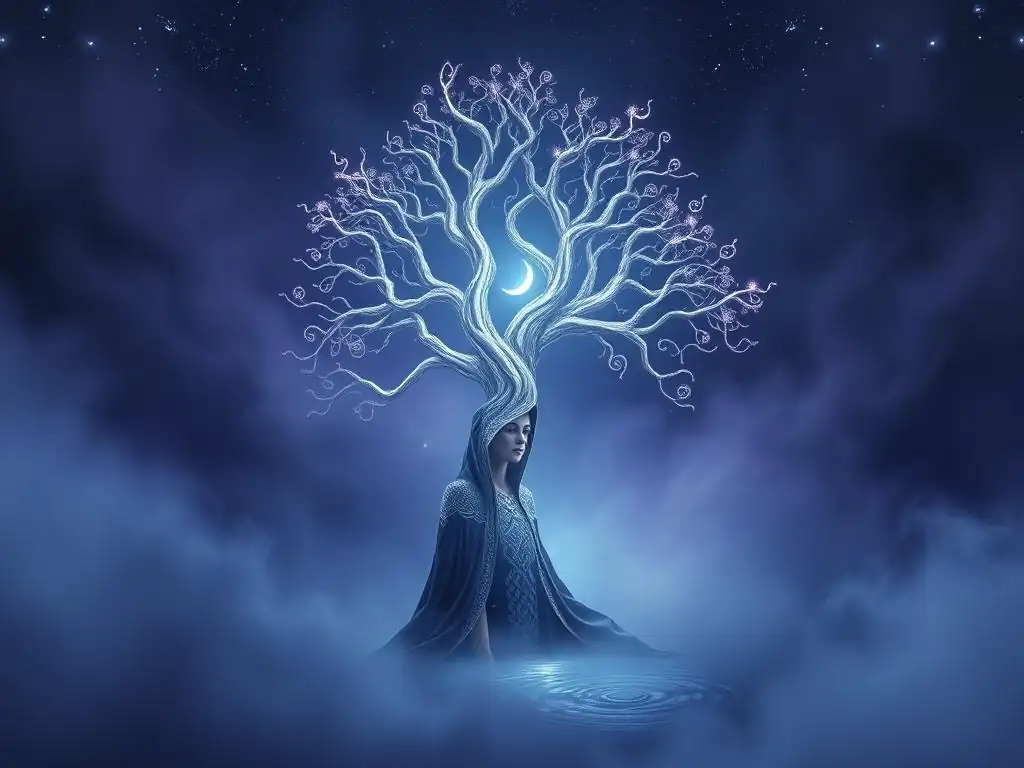
Welcome, seekers of ancient lore!
Prepare to journey into the heart of Mythology and Legends, where we unravel the threads of captivating narratives spun across cultures and time. Have you ever wondered how worlds are born? Today, we delve into the enchanting realm of Celtic myths creation stories, exploring how the mists cleared and the world took shape according to ancient Celtic beliefs. What secrets lie hidden within these primordial tales? Uncover the answers and more as we explore the rich tapestry of indigenous and folk traditions.
- Exploring Celtic Creation Myths: An Introduction to Cosmic Origins
- The Primordial Void: Origins of the Celtic Universe
- From Waters to Land: The Genesis of the Celtic World
- Celtic Gods and Goddesses of Creation: Shaping the World
- The Celtic World Tree: Axis Mundi and Connection to the Divine
- Celtic Creation Stories: Different Versions and Interpretations
- The Legacy of Celtic Creation Myths: Influence on Modern Culture
- Celtic Myths Creation Stories: A Summary and Conclusion
-
Frequently Asked Questions
- What are some of the primary sources used to understand Celtic creation myths?
- How does the concept of primordial waters feature in Celtic creation stories?
- What role does the World Tree play in Celtic cosmology?
- Are there specific Celtic deities directly associated with the creation of the world?
- How do Celtic creation myths compare to those of other Indo-European cultures?
- Final Reflection: Echoes of the World Tree in Our Modern World
- Embark on Your Own Celtic Mythological Journey!
Exploring Celtic Creation Myths: An Introduction to Cosmic Origins
The Allure of Ancient Celtic Cosmogony
The study of ancient Celtic cosmogony offers a fascinating glimpse into the worldview of pre-Christian Celtic peoples across Britain, Ireland, and continental Europe. Unlike the more unified creation narratives found in some other mythologies, the Celtic tradition presents a complex tapestry of regional variations and layered symbolism.
These stories, largely preserved through later medieval manuscripts filtered through Christian perspectives or archaeological interpretations of symbols, speak of origins shrouded in mist and mystery, reflecting a deep connection to nature, the elements, and the cyclical nature of life and death. Exploring these Celtic myths creation stories allows us to understand the fundamental beliefs that shaped their perception of the universe and their place within it.
These diverse accounts, pieced together from sources like the Irish Lebor Gabála Érenn (Book of Invasions) or Welsh triads and mythological tales, reveal common themes despite their differences. A pervasive sense of a primordial, formless state, often associated with darkness or water, seems to underpin many narratives.
From this initial void, powerful forces, often personified as deities or elemental energies, begin the process of bringing order and form to the cosmos. This journey from chaos to a structured world, culminating in the emergence of land and life, forms the core of many Celtic myths creation stories, highlighting their emphasis on transformation and the dynamic interplay of opposing forces.
The Importance of Creation Narratives in Celtic Culture
Creation narratives held profound significance in Celtic culture, serving as foundational myths that explained not only the origin of the world but also the lineage of tribes, the sacredness of the land, and the relationship between humanity and the divine. These stories were likely central to the teachings of the Druids, the learned class responsible for religious practices, legal judgments, and the preservation of oral traditions. Recounting these Celtic myths creation stories would have reinforced communal identity, provided moral frameworks, and explained natural phenomena, embedding individuals within a larger cosmic and historical context.
Furthermore, these origin tales often justified social structures and political power by tracing the ancestry of ruling families back to the first beings or mythological events. The land itself was imbued with sacred meaning, often depicted as being born from or shaped by primordial entities, reinforcing the deep spiritual connection the Celts had with their environment. Understanding these Celtic creation myths is therefore crucial not just for academic study but for appreciating the spiritual and cultural bedrock upon which Celtic societies were built, influencing everything from ritual practices to artistic expression.
The Primordial Void: Origins of the Celtic Universe
Dubno-maglos and the Celtic Equivalent: The Primordial Darkness
While no single, universally accepted term equivalent to a Greek Chaos or a Norse Ginnungagap exists across all Celtic traditions, linguistic evidence hints at a concept of a deep, dark, and possibly watery void preceding creation. The Proto-Celtic term *\ dubno- relates to depth and darkness, appearing in names like Dubno-maglos ("Dark Prince" or "World Prince"), a deity name attested in Gaulish inscriptions. This linguistic root suggests an ancient concept of a profound, dark realm associated with the origins or depths of the world, potentially representing the primordial state before light and form emerged.
This primordial darkness wasn't necessarily seen as evil, but rather as a state of potentiality, a formless abyss from which all things could eventually arise. It represents the 'unmanifested' state, a common theme in many world mythologies. While specific narratives detailing the Dubno-maglos acting as a creator are scarce, the linguistic connection between 'darkness/depth' and 'world/prince' in this name suggests a link between the primordial deep and the fundamental structure or ruler of the cosmos in some Celtic belief systems. This concept provides a starting point for exploring how Celtic myths creation stories envisioned the very beginning.
The Role of Chaos in Early Celtic World Creation
Rather than a destructive force, the "chaos" in Celtic creation myths often appears as an undifferentiated, fluid state brimming with potential energy. Early accounts or interpretations suggest a universe initially existing as a vast, dark, perhaps watery expanse lacking distinct boundaries or forms. This state required powerful forces—deities or elemental actions—to impose order and structure. The act of creation, therefore, was less about ex nihilo (creation out of nothing) and more about shaping and organizing this pre-existing, formless potential.
Consider the recurring motif of islands or mountains emerging from the sea or mist. This act represents the imposition of solid form upon a fluid, chaotic medium. The boundaries between land, sea, and sky, so crucial to the structured world, are established through divine or elemental action. This perspective on creation highlights the dynamic interaction between form and formlessness, order and potentiality, which is a hallmark of many Celtic myths creation stories. The "chaos" was not an enemy to be vanquished but the raw material from which the cosmos was forged.
From Waters to Land: The Genesis of the Celtic World
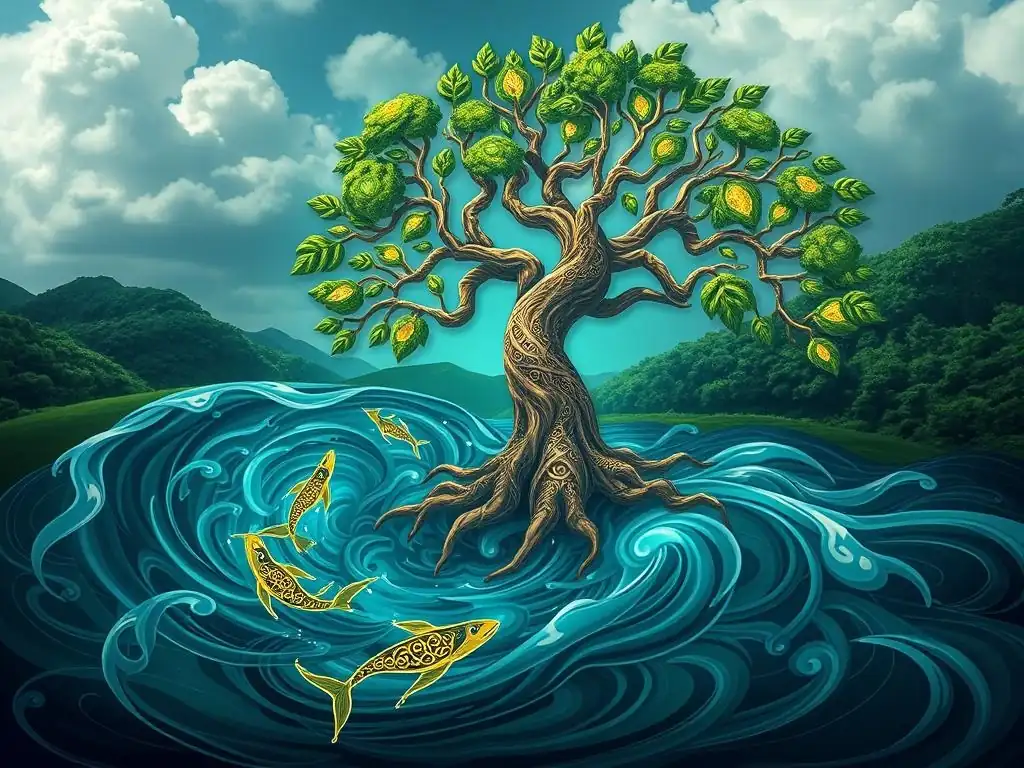
The Significance of Water in Celtic Creation Narratives
Water holds immense significance in Celtic mythology, often appearing as the primordial substance from which the world emerges or as a boundary to the Otherworld. Lakes, rivers, and the sea were considered sacred, inhabited by deities and spirits. In creation narratives, water frequently represents the initial, undifferentiated state of the cosmos. The world might begin as a vast, dark ocean or a realm of swirling mists and waters, reflecting the fluidity and mystery associated with origins.
This emphasis on water aligns with the geographical reality of Celtic lands, surrounded by seas and crisscrossed by numerous rivers. Water was essential for life, agriculture, and travel, naturally imbuing it with potent symbolic meaning. In some interpretations of Celtic myths creation stories, the first land appears to rise from these primordial waters, an act of solidification and definition. This motif connects the act of creation directly to the life-giving yet potentially chaotic nature of water, suggesting a universe born from its depths.
Emergence of the First Land: Donn's Mountain
While specific, detailed accounts are rare, some interpretations of Irish mythology point to the emergence of the first land from the primordial waters. One figure associated with the very beginnings, particularly in relation to death and the journey to the Otherworld, is Donn ("the Dark One").
His dwelling is often located on an island off the southwest coast of Ireland, believed to be the first point of land to emerge from the sea. This island, Tech nDuinn (Donn's House), serves as a gathering place for the souls of the dead before their final journey, linking the point of origin with the destination after life.
The concept of Donn's mountain or island rising from the waves symbolizes the transition from the formless, watery void to the tangible world. It is the first solid ground, the anchor point for existence. This specific example, though perhaps more linked to the origin of death and the afterlife than the entire cosmos, nonetheless provides a concrete instance within Irish tradition of land emerging from the primordial waters, a key step in the process described in many Celtic myths creation stories. It represents the initial act of differentiation and solidification in the cosmic process.
Celtic Gods and Goddesses of Creation: Shaping the World
The Mother Goddess: Danu and Her Creative Power
In Irish mythology, the figure of Danu (or Anu) is often considered the primordial mother goddess, the progenitor of the Tuatha Dé Danann, the "People of the Goddess Danu," who were the principal pantheon of deities. While specific myths detailing Danu's role in the physical creation of the world are not explicitly preserved, her title as the mother of the gods implies a fundamental, generative force. She represents the ancestral matrix from which divine and perhaps even mortal life sprang.
Danu is often associated with the land itself, particularly rivers (like the Danube, whose name is sometimes linked to her). This connection to water and the earth reinforces her role as a nurturing, life-giving force. Her existence at the head of the Tuatha Dé Danann lineage places her at the very beginning of the divine order, making her a crucial figure in understanding the foundational elements of Irish Celtic myths creation stories. She embodies the creative potential inherent in the primordial state, bringing forth the first race of gods who would then interact with and shape the world.
The Father God: Bile and His Role in Manifestation
Complementing the Mother Goddess Danu, some interpretations of Irish tradition identify Bile as an early, possibly primordial, father figure or ancestral deity, sometimes considered the consort of Danu. Like Danu, explicit, detailed myths about Bile's actions in physically creating the world are sparse. However, his name is sometimes associated with the sacred tree ( bile meaning 'sacred tree' or 'large tree' in Old Irish) and lineage. He is occasionally listed as an ancestor of the Milesians, the legendary ancestors of the Irish people, further linking him to origins and generations.
Bile's potential role alongside Danu suggests a dualistic principle at the heart of some Celtic myths creation stories – a pairing of generative forces, perhaps representing earth and sky, or potential and manifestation. While less prominent in surviving texts than Danu, his presence in genealogical lists and potential association with foundational symbols like the sacred tree positions him as a figure involved in the early structuring or ordering of the cosmos and the establishment of lineage, contributing to the manifestation of the world and its inhabitants.
Other Deities Involved in Celtic Cosmogenesis
Beyond these potential primordial figures, various other Celtic deities are associated with aspects of the natural world and its functions, implying their involvement in maintaining or shaping the cosmos after its initial formation. Figures like The Dagda, the "Good God," wielding a club that can kill and revive and possessing a cauldron of plenty, embodies power over life and death and abundance, essential elements of a functioning world. Brigid, goddess of poetry, healing, and smithcraft, represents creative inspiration and the shaping of materials.
Regional variations introduce other figures. In Welsh mythology, figures like Dôn (cognate with Danu) and Beli (cognate with Bile) head pantheons whose interactions shape the mythological landscape. The Mabon ap Modron myth involves the freeing of a divine prisoner, leading to the renewal of the world.
While not strictly creation ex nihilo myths, the actions of these deities in controlling seasons, forging tools, or interacting with the land and its creatures reflect ongoing cosmic processes that stem from the initial act of creation. Their roles demonstrate that in Celtic myths creation stories, the divine is intimately involved in the fabric and continued functioning of the world.
The Celtic World Tree: Axis Mundi and Connection to the Divine
The Significance of Trees in Celtic Mythology
Trees held profound spiritual significance for the Celts, often viewed as living entities, ancestors, or dwelling places of spirits and deities. Sacred groves were central to religious practices, and individual trees, particularly ancient ones like oaks, were revered. The Ogham alphabet, used for early Irish, was based on tree names, further cementing their importance in culture and knowledge. Trees symbolized life, growth, interconnectedness, and the cycle of death and rebirth, shedding leaves and regrowing anew.
This deep reverence for trees naturally extended to their symbolic representation in Celtic myths creation stories. They serve as potent symbols of the cosmos itself, connecting different realms and embodying the vital energy that flows through existence. The concept of a cosmic tree, or World Tree, appears in various Indo-European mythologies, and while explicit written accounts are less detailed than in Norse myth, the pervasive symbolism of trees in Celtic lore strongly suggests its presence in their cosmological understanding.
The Celtic Tree of Life: Crann Bethadh as a Symbol of Creation
The concept of a Celtic Tree of Life, often referred to by the Irish term Crann Bethadh, serves as a powerful symbol within Celtic myths creation stories, representing the axis mundi or cosmic center. While detailed narratives about its origin or specific role in the initial creation event are scarce in surviving texts, its widespread depiction in art and later folklore signifies its importance as a representation of the ordered cosmos. The Crann Bethadh typically shows a large tree with roots reaching deep into the earth and branches soaring towards the sky, often within a circle.
This imagery encapsulates the interconnectedness of all things. The roots delve into the underworld (the realm of ancestors, death, and hidden knowledge), the trunk exists in the middleworld (the realm of human life and nature), and the branches reach into the upperworld (the realm of the gods and celestial bodies).
The circle often enclosing it can symbolize the cyclical nature of life, the sun, or the totality of the cosmos. The Crann Bethadh is not just a passive symbol but represents the vital force that binds the realms together, essential for the world's harmony and existence, a central element in understanding how Celtic myths creation stories envisioned cosmic structure.
Connecting the Underworld, Middleworld, and Upperworld
The Crann Bethadh explicitly illustrates the Celtic cosmological structure, which often envisioned the universe as comprising three interconnected realms: the Underworld, the Middleworld, and the Upperworld. The Middleworld is the familiar realm of human existence, nature, and the physical landscape. The Underworld, accessed through caves, wells, or lakes, is not necessarily a place of punishment but rather the realm of the dead, ancestral spirits, and sources of mystical power and wisdom. The Upperworld, associated with the sky and celestial phenomena, is the dwelling place of many gods and possibly other spiritual entities.
The World Tree acts as the vital link between these distinct yet interdependent realms. Its roots draw sustenance from the Underworld, its trunk supports the Middleworld, and its branches reach for the Upperworld. This structure suggests a continuous flow of energy and influence between the realms. Events in one realm can affect the others, and beings can potentially travel between them (often with difficulty). This tripartite division and its connection via the Crann Bethadh is a fundamental aspect of the cosmic order depicted in Celtic myths creation stories, highlighting a holistic and integrated view of the universe.
Celtic Creation Stories: Different Versions and Interpretations
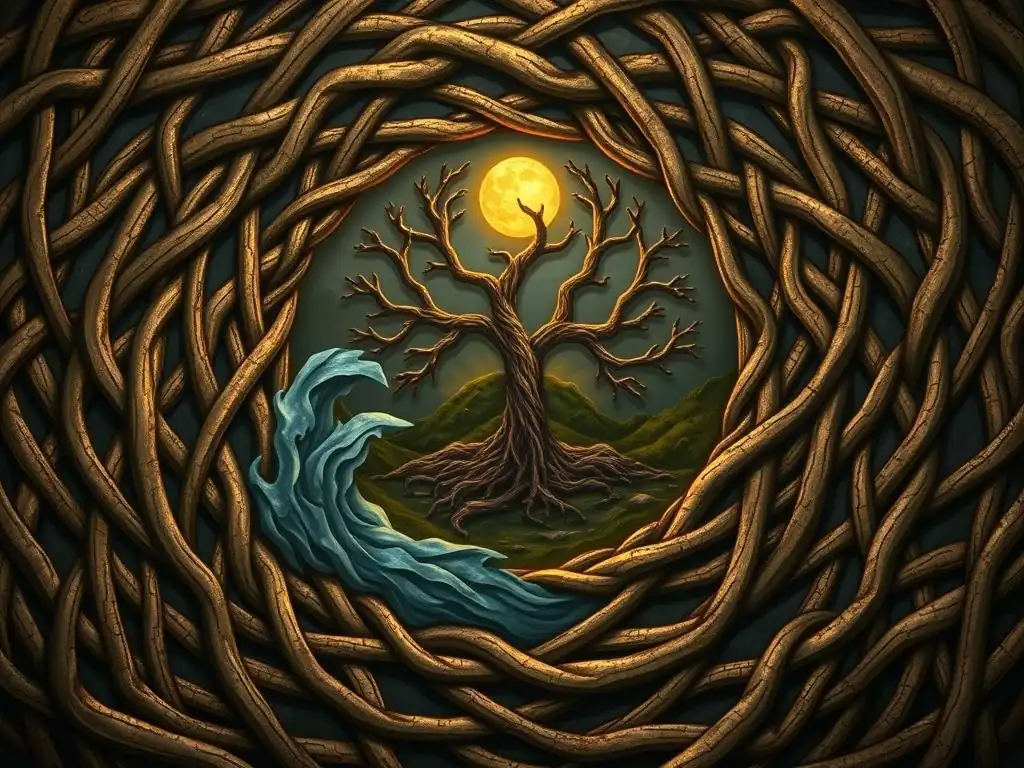
Variations in Regional Celtic Myths
One of the defining characteristics of Celtic myths creation stories is their regional variation. Because these traditions were primarily oral and spread across a wide geographical area encompassing Ireland, Wales, Scotland, Brittany, and other areas, distinct versions of origin myths developed in different localities and tribes.
For instance, Irish mythology, preserved relatively extensively in medieval manuscripts, offers narratives like the Lebor Gabála Érenn, which details successive invasions or settlements of Ireland, starting with mythological beings and eventually leading to the arrival of the Milesians. While not a creation ex nihilo story, it serves as an origin account for the island and its inhabitants.
In contrast, Welsh mythology, found in texts like the Mabinogion, focuses more on the interactions between mythological families and their influence on the landscape and people of Wales, with less emphasis on a cosmic creation event from scratch. Continental Celtic myths are even more fragmented, known primarily through classical writers and inscriptions, offering tantalizing but incomplete glimpses.
These variations mean there is no single, canonical "Celtic creation myth," but rather a collection of regional narratives that share common themes while differing in specific details, characters, and plot points, making the study of Celtic myths creation stories a complex comparative endeavor.
The Influence of Druidic Lore on Creation Accounts
The Druids, as the intellectual and spiritual leaders of Celtic society, played a crucial role in preserving and transmitting knowledge, including creation narratives. Their teachings were oral, and they were said to undergo long periods of training, memorizing vast amounts of lore. While the exact content of Druidic cosmogony is not fully known due to the lack of written records from the Druids themselves (what we know comes primarily from classical authors like Julius Caesar and later Irish monks), it is highly probable that they possessed sophisticated creation accounts and cosmological models.
These Druidic teachings would have likely provided the framework and interpretation for the regional myths. They may have emphasized specific symbols like the oak or the concept of the three realms and the interconnectedness of nature and the divine. The variations in surviving Celtic myths creation stories might reflect different Druidic schools or traditions across the Celtic world. The loss of direct Druidic accounts is a significant challenge in fully understanding the depth and complexity of the original Celtic creation narratives, leaving us to piece together the puzzle from later, often Christianized, sources.
Interpreting the Symbolism of Celtic Creation Myths
Interpreting the symbolism within Celtic myths creation stories requires navigating layers of meaning and acknowledging the limitations of the source material. Symbols like water, trees, mist, mountains, and specific animals (like the salmon of knowledge or the raven) carry deep significance, often representing transformative states, connections to the Otherworld, or fundamental life forces. For example, the emergence of land from water can symbolize the bringing of order from chaos, or the conscious from the unconscious.
The figures of deities often embody elemental or abstract principles – Danu representing the fertile earth and ancestral waters, Bile potentially representing the foundational structure or lineage. The cyclical nature of life, death, and rebirth is frequently woven into narratives, reflecting an understanding of creation as an ongoing process rather than a single, finished event. Understanding these layers of symbolism, while challenging due to the fragmented nature of the lore, is key to appreciating the philosophical and spiritual depth of Celtic myths creation stories and their enduring relevance.
The Legacy of Celtic Creation Myths: Influence on Modern Culture
Echoes of Celtic Cosmogony in Art and Literature
The themes and symbols found in Celtic myths creation stories continue to resonate in modern art and literature. The imagery of mist-shrouded landscapes, ancient trees connecting worlds, powerful elemental forces, and the cyclical nature of existence are frequent motifs in fantasy literature, poetry, and visual arts inspired by Celtic lore. Authors drawing on these traditions often incorporate elements like the Otherworld, the sacredness of nature, or the presence of ancient, powerful beings shaping the world.
Examples range from high fantasy novels that build entire worlds influenced by Celtic cosmology to contemporary poetry that evokes the spiritual connection to the land and its ancient origins. Artists frequently depict the Crann Bethadh, knotwork patterns that symbolize interconnectedness, or abstract representations of primordial forces like swirling water or mist. These modern interpretations demonstrate the enduring power of Celtic myths creation stories to inspire creativity and connect contemporary audiences with ancient ways of understanding the universe.
The Enduring Power of Celtic Myths Creation Stories
Despite the lack of a single, unified text and the challenges of reconstruction from fragmented sources, the core ideas within Celtic myths creation stories retain a compelling power. The emphasis on the interconnectedness of all things (humans, nature, gods, and the spirit world), the sacredness of the land, and the cyclical nature of existence speak to universal human concerns. In an era increasingly aware of ecological issues, the ancient Celtic reverence for nature and its role in creation feels particularly relevant.
Furthermore, the mystery and depth of these myths continue to capture the imagination. They offer alternative perspectives on origins compared to more widely known narratives, inviting contemplation on the fundamental questions of existence. The resilience of these stories, surviving centuries of cultural change and suppression, is a testament to their inherent strength and symbolic richness. The study and appreciation of Celtic myths creation stories remain vibrant, contributing to our understanding of human culture and spirituality.
Celtic Myths Creation Stories: A Summary and Conclusion
Recapping the Key Elements of Celtic Creation
Celtic myths creation stories, while diverse and regional, share several key elements that provide insight into the ancient Celtic worldview. These include:
- A concept of a primordial state, often dark and watery, representing formless potential.
- The emergence of land from these primordial waters or mists.
- The presence of powerful, often ancestral, deities (like Danu and potentially Bile) involved in the generative process.
- The profound significance of nature, particularly trees, as symbols of cosmic structure and vitality.
- The concept of a tripartite cosmos (Underworld, Middleworld, Upperworld) linked by a cosmic axis like the Crann Bethadh.
- A focus on the cyclical nature of existence and the ongoing interaction between the divine, human, and natural realms.
These elements, pieced together from various sources, paint a picture of a dynamic and interconnected universe born from elemental forces and divine action, deeply intertwined with the natural world.
The Continuing Relevance of Celtic Myths in the Modern World
The continuing relevance of Celtic myths creation stories in the modern world lies in their rich symbolism, their deep ecological sensitivity, and their exploration of fundamental human questions. They offer a window into a worldview that saw the divine not as separate from nature but as inherent within it, a perspective that resonates with contemporary environmental consciousness.
Their narratives, though fragmented, continue to inspire art, literature, and spiritual practices, demonstrating the enduring power of myth to provide meaning and connection across generations. Studying these ancient accounts allows us to appreciate the diversity of human thought regarding origins and to find timeless wisdom within the mists of Celtic lore. The journey through Celtic myths creation stories is a journey into the heart of a culture that found the sacred in the natural world and saw creation as a vibrant, ongoing process.
Frequently Asked Questions
What are some of the primary sources used to understand Celtic creation myths?
Our understanding relies heavily on fragmentary sources like the Lebor na hUidre (Book of the Dun Cow) and Lebor na Nuachongbale (Book of Leinster). These manuscripts contain early Irish texts that offer glimpses into Celtic cosmology.
How does the concept of primordial waters feature in Celtic creation stories?
Many Celtic myths depict a primordial sea or watery void as the origin point. From this formless expanse, the world and its inhabitants eventually emerge through various divine actions or cosmic events.
What role does the World Tree play in Celtic cosmology?
The World Tree, often associated with the bile (sacred tree), serves as a cosmic axis connecting the upper, middle, and lower worlds. It represents life, knowledge, and the interconnectedness of all things.
Are there specific Celtic deities directly associated with the creation of the world?
While there isn't a single "creator god" figure universally across Celtic cultures, deities like Danu (a mother goddess) and Donn (associated with the underworld) play significant roles in shaping the world and bringing life into being.
How do Celtic creation myths compare to those of other Indo-European cultures?
Celtic creation myths share some similarities with other Indo-European traditions, such as the presence of a cosmic struggle, a primordial being sacrificed to create the world, and the importance of natural elements in the creation process.
Final Reflection: Echoes of the World Tree in Our Modern World
The enduring power of Celtic creation myths resonates deeply with our contemporary understanding of origins and interconnectedness. These ancient stories, far from being relics of a distant past, offer a powerful lens through which to examine our own relationship with nature, community, and the very fabric of existence. They remind us that the narratives we tell ourselves shape our understanding of the world and our place within it.
The cyclical nature of creation and destruction, so central to Celtic mythology, continues to influence our cultural landscape. The image of the World Tree, a symbol of life's interconnectedness and the constant cycle of growth and decay, speaks to our modern anxieties about environmental sustainability and the fragility of our ecosystems. The oak is the king of the forest, and its roots reach down to the depths of the earth, while its branches reach up to the heavens.
This ancient wisdom reminds us of our responsibility to nurture the world around us, just as the Celts revered the natural world as sacred.
Consider the stories you tell yourself, the narratives that shape your worldview. How do these narratives reflect the cyclical nature of life, the interconnectedness of all things, and the enduring power of creation?
Embrace the wisdom of the Celtic mists; let the echoes of the World Tree inspire you to cultivate a deeper connection with the world and to actively participate in the ongoing story of creation. Let the ancient myths guide you towards a more sustainable and meaningful future, one rooted in respect for the earth and a profound understanding of our place within the grand tapestry of existence.
Embark on Your Own Celtic Mythological Journey!
Thanks for exploring the captivating world of Celtic creation myths! We hope you found the journey through primordial waters and the majestic World Tree as inspiring as we did. Now it's time to delve deeper and share your newfound knowledge!
- Craft your own Celtic-inspired creation story: Let your imagination run wild and weave a tale inspired by the myths we explored. Share it with us in the comments—we'd love to read it!
- Explore further into Celtic mythology by researching a specific deity or legend that piqued your interest. You might be surprised by what you discover!
- Share this article with a friend who loves mythology or fantasy – spread the wonder!
So, what part of the Celtic creation myth resonated most with you, and what inspired tales will you create next?