
The Hidden Souls of Ancient Trees: Sacred Forests in Folklore

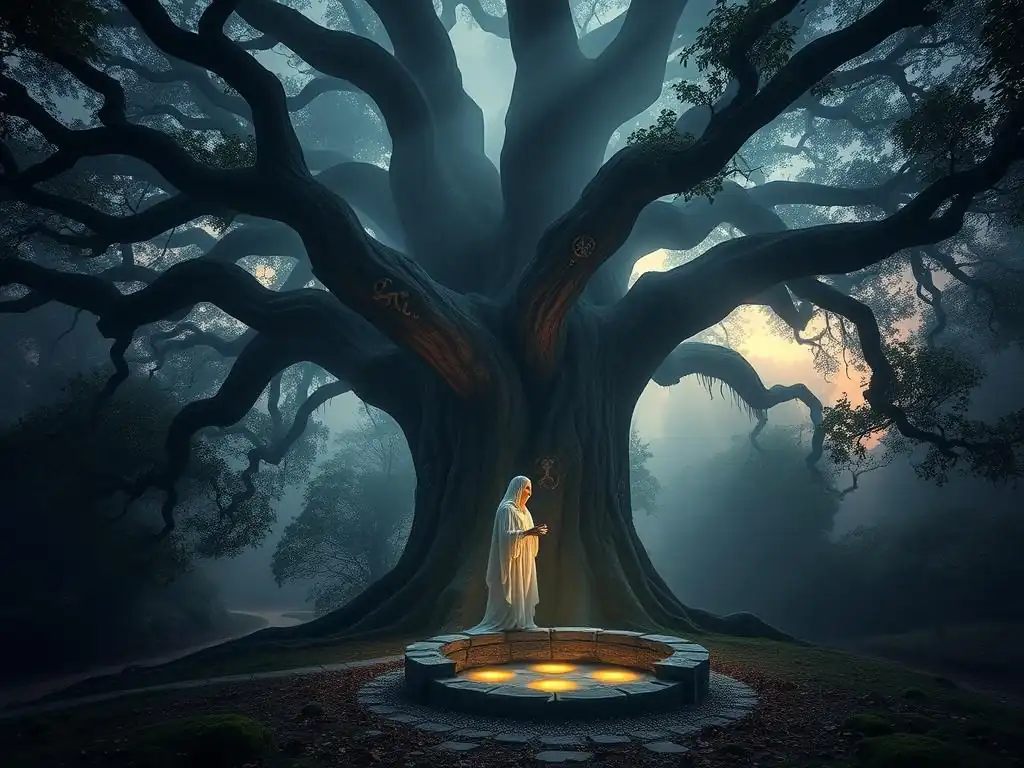
Welcome to Mythology and Legends, where we delve into the captivating narratives that shape our world. Have you ever felt a presence in the woods, a silent guardian watching over you? Prepare to journey into the whispering heart of ancient lore as we explore the profound connection between humanity and nature in "The Hidden Souls of Ancient Trees: Sacred Forests in Folklore." Discover the enduring power of sacred forests folklore beliefs and uncover the secrets held within their leafy canopies. Intrigued? The mysteries are just beginning...
- Introduction: Exploring the Mystical Connection Between Nature and Folklore
- The Significance of Ancient Trees in Indigenous Cultures
- Sacred Groves and Their Protectors: Tales of Forest Guardians
- Sacred Forests Around the World: A Comparative Analysis
- The Power of Storytelling: Preserving Forest Lore
- Modern Threats to Sacred Forests: Conservation and Cultural Preservation
- The Enduring Legacy of Forest Folklore
-
Frequently Asked Questions
- What are "sacred forests" in the context of folklore?
- What kinds of folklore beliefs are associated with sacred forests?
- How did ancient cultures interact with sacred forests?
- What role did sacred forests play in the social structure of past societies?
- How do beliefs about sacred forests impact contemporary society?
- Final Reflection: Whispers from the Woods, Echoes in Our Time
- Unveil the Whispers of Ancient Woods
Introduction: Exploring the Mystical Connection Between Nature and Folklore
Across millennia and continents, humanity has shared a profound, often mystical connection with the natural world, particularly with forests. These dense, ancient woodlands have not merely been sources of sustenance and shelter but have also served as potent symbols in the collective unconscious, appearing prominently in myths, legends, and folklore.
This deep-rooted relationship is perhaps most vividly expressed in the concept of sacred forests, areas revered for their spiritual significance, often believed to be inhabited by deities, spirits, or ancestral souls. Exploring these sacred groves offers a unique window into the diverse sacred forests folklore beliefs that have shaped cultures and traditions worldwide.
The reverence for trees and forests is a recurring theme in mythology, symbolizing life, wisdom, protection, and the interconnectedness of all things. From the World Tree Yggdrasil in Norse mythology to the Bodhi Tree under which Buddha attained enlightenment, individual trees hold immense symbolic power. However, it is the sacred forest as an entity – a collective of ancient life – that embodies a larger, more complex spiritual significance.
These areas are often considered off-limits to ordinary activities, reserved for rituals, meditation, or simply existing as untouchable natural cathedrals. Understanding the folklore and beliefs associated with these places reveals how deeply ingrained environmental respect and spiritual awe were in many ancient societies, shaping their worldview and practices.
The Significance of Ancient Trees in Indigenous Cultures
Ancient trees, often perceived as living elders of the natural world, hold immense cultural and spiritual significance for indigenous peoples across the globe. Their longevity, size, and resilience make them powerful symbols of endurance, wisdom, and connection to the past. In many indigenous cosmologies, these trees are seen not just as plants but as beings with their own consciousness, spirits, or souls, integral to the spiritual fabric of the land. This reverence forms a core component of many sacred forests folklore beliefs.
These towering sentinels are often central to creation myths, origin stories, and ancestral veneration. For example, in certain Native American traditions, specific ancient trees or groves are considered sacred sites where spirits reside or where important tribal ceremonies take place. The Great Banyan Tree in India, one of the largest trees in the world, is revered as sacred and is often associated with Hindu deities, serving as a place of worship and pilgrimage. The sheer scale and age of these trees evoke a sense of awe and humility, reinforcing their status as vital spiritual anchors within their respective cultures.
The Tree of Life: A Universal Symbol
The concept of a cosmic tree, often referred to as the Tree of Life or World Tree, is a ubiquitous archetype found in the mythology of numerous cultures. This powerful symbol typically represents the axis mundi, connecting the heavens, the terrestrial world, and the underworld, serving as a conduit between different realms of existence.
It embodies the interconnectedness of all life, the cyclical nature of birth, death, and rebirth, and often the source of creation or knowledge. The prominence of this symbol underscores the fundamental role trees play in human attempts to understand the cosmos and their place within it, influencing sacred forests folklore beliefs.
Examples of the Tree of Life abound: Yggdrasil in Norse mythology supports the nine worlds; the Kabbalistic Tree of Life in Jewish mysticism represents the path to the divine; the Bodhi Tree under which Siddhartha Gautama attained enlightenment is revered in Buddhism; and various indigenous cultures, such as the Maya with their Ceiba tree, also feature a cosmic tree connecting dimensions.
These symbols are not merely abstract concepts; they often root themselves in the physical reverence for ancient trees and forests, suggesting that earthly groves can mirror the cosmic tree, serving as earthly manifestations of spiritual connections and embodying profound sacred forests folklore beliefs.
Ancient Forests as Sanctuaries: Spiritual Retreats
Beyond individual trees, ancient forests themselves are frequently regarded as sacred sanctuaries, places set apart from the ordinary world, imbued with spiritual energy and meaning. These dense, undisturbed woodlands offer a sense of profound peace, mystery, and connection to something larger than oneself.
For many cultures, they serve as natural temples, ideal locations for meditation, prayer, vision quests, and communion with the divine or ancestral spirits. The very atmosphere of an ancient forest – the dappled light, the silence broken only by natural sounds, the feeling of ancient life surrounding you – fosters a sense of awe and reverence that underlies many sacred forests folklore beliefs.
Historically, many religious and spiritual practices were intimately tied to specific natural locations, with ancient forests being prime examples. The sacred groves of the Druids in ancient Celtic cultures were central to their religious ceremonies and philosophical teachings. Similarly, in Shintoism in Japan, forests surrounding shrines are often considered sacred shinrin, inhabited by kami (spirits or deities), and are carefully protected. These forests function as liminal spaces, thresholds between the human world and the spiritual realm, offering a retreat for spiritual reflection, healing, and renewal, reinforcing their status within sacred forests folklore beliefs.
Sacred Groves and Their Protectors: Tales of Forest Guardians

The concept of sacred forests is often intertwined with beliefs in supernatural beings or spirits that inhabit and protect these special places. These guardians serve to maintain the sanctity of the grove, often interacting with humans who venture into their domain, sometimes benevolently, sometimes with caution or even hostility towards those who disrespect the forest. Tales of these protectors are central to many sacred forests folklore beliefs and serve to reinforce the rules and taboos associated with entering or using these areas.
These forest guardians appear in countless forms across different mythologies – from powerful nature deities to minor spirits, mythical creatures, and even the spirits of the trees or the forest itself. Their existence underscores the idea that the forest is not merely a collection of plants but a living entity with its own consciousness and protectors. The stories about them often carry moral lessons about respecting nature, highlighting the consequences of greed or disrespect towards the natural world. These narratives are crucial in transmitting sacred forests folklore beliefs through generations.
Mythical Creatures and Forest Spirits: Slavic Leshy, Japanese Kodama
Folklore is rich with examples of mythical beings specifically associated with forests and their protection. The Slavic Leshy, for instance, is a shape-shifting spirit of the woods, capable of appearing as a man, a wolf, or even a whirlwind. Leshy are typically seen as protectors of the forest and its animals, sometimes guiding lost travelers but also known to lead people astray or tickle them to death if they disrespect the forest's rules.
Their domain is the deep woods, and encountering one often signifies entering a wild, untamed space governed by different rules than the human world. Tales of the Leshy are integral to Slavic sacred forests folklore beliefs.
In Japanese folklore, the Kodama are spirits or deities that inhabit trees. They are often depicted as small, ethereal beings or simply as the echo or spirit within the tree itself. Ancient trees, particularly those with unusual shapes or history, are believed to be more likely to house Kodama and are often marked with shimenawa (rope made of rice straw) to signify their sacred status.
Harming a tree inhabited by a Kodama is considered taboo and is believed to bring misfortune. These beliefs reflect a deep animistic respect for nature, where every part of the forest, especially the ancient trees, is potentially alive with spirit, central to Japanese sacred forests folklore beliefs.
The Role of Rituals in Protecting Sacred Forests: Offerings and Taboos
Maintaining the sanctity of sacred forests often involves specific rituals, offerings, and strict taboos designed to appease the spirits, honor the deities, and ensure the continued health and spiritual integrity of the grove. These practices are not merely symbolic; they are seen as essential acts of respect and reciprocity, acknowledging the forest's spiritual power and its role in sustaining life. Adherence to these rituals and taboos is a practical expression of sacred forests folklore beliefs.
Offerings can range from simple gestures like pouring libations of milk or grain at the base of a tree, leaving small gifts of food or crafted items, to more elaborate ceremonies involving prayers, chanting, or dance. These acts are intended to build a positive relationship with the forest spirits and ensure their continued favor. Taboos, on the other hand, are prohibitions designed to prevent disrespectful or harmful actions within the sacred space.
Common taboos include forbidding the cutting of trees (especially ancient ones), hunting, clearing land, or even speaking loudly or behaving disrespectfully. In some African sacred groves, for example, entry might be restricted to certain people or times, and specific activities like farming or building are absolutely forbidden, reinforcing the sacred forests folklore beliefs that protect these areas from exploitation. Breaking these taboos is often believed to result in misfortune, illness, or angering the forest spirits.
Sacred Forests Around the World: A Comparative Analysis
While the concept of sacred forests is globally widespread, the specific forms, beliefs, and practices associated with them vary significantly depending on the cultural and ecological context. Comparing sacred forests from different regions highlights both universal themes – like reverence for nature and belief in forest spirits – and unique regional expressions of sacred forests folklore beliefs. This comparative analysis reveals the diverse ways in which humans have interwoven spirituality with the natural world.
From the ancient oak groves of Europe to the dense tropical forests of Africa and Asia, the specific characteristics of the local environment often influence the nature of the sacredness attributed to the forest. The types of trees, the presence of specific animals, geographical features like springs or caves within the forest – all contribute to the unique spiritual profile of a sacred grove. These regional variations underscore how sacred forests folklore beliefs are deeply rooted in the specific landscapes in which they arise.
European Sacred Forests: From Druids to Fairy Rings
In ancient Europe, particularly among Celtic and Germanic peoples, forests held profound religious significance. The Druids, the priestly class of the ancient Celts, conducted their rituals in sacred groves, often composed of oak trees, which were considered particularly holy. These nemetons were places of worship, education, and judgment, completely set apart from profane use. The Roman historian Tacitus described the sacred groves of the Germanic tribes as awe-inspiring places where deities resided, accessible only for worship. These early European sacred forests folklore beliefs were deeply intertwined with the worship of nature deities and ancestral spirits.
Later European folklore, even after the decline of paganism, retained a sense of the forest as a magical or enchanted place. Tales of fairy rings – circles of mushrooms or darker grass where fairies were said to dance – and enchanted woods where mythical creatures dwelled persisted.
While not always explicitly religious sanctuaries, these places were often considered liminal zones, treated with a mix of reverence, caution, and belief in their extraordinary nature. The Black Forest in Germany, for example, is steeped in folklore involving witches, spirits, and mythical beasts, reflecting the enduring sacred forests folklore beliefs tied to European woodlands.
Asian Sacred Forests: Animism and the Spirit of the Woods
Asia boasts a rich tapestry of sacred forests folklore beliefs, often rooted in animistic traditions that perceive spirits in all natural phenomena. In Japan, as mentioned, Shintoism reveres kami residing in natural objects, including forests and ancient trees. Forests surrounding shrines are considered sacred shinrin, providing a buffer zone between the human world and the divine. These forests are protected not just ecologically but spiritually.
In India, 'sacred groves' (known by various names like sarnas, kovil kaadu, devrai) are patches of forest protected by local communities based on religious beliefs and traditional ecological knowledge. It is estimated that there are tens of thousands of these sacred groves across India, some covering significant areas. These groves are dedicated to local deities or ancestral spirits, and traditional rules strictly prohibit cutting trees, hunting, or collecting forest produce within them. Studies have shown that these sacred groves often harbor higher biodiversity compared to surrounding non-sacred areas, demonstrating the practical conservation outcomes of sacred forests folklore beliefs.
African Sacred Forests: Ancestral Connections and Healing Practices
Across the African continent, sacred forests are vital components of cultural, spiritual, and social life for numerous indigenous communities. These forests are often seen as dwelling places of ancestors, deities, or spirits, serving as sites for rituals, initiations, burials, and traditional healing practices. The reverence for these forests is deeply embedded in local sacred forests folklore beliefs.
The Kaya forests along the coast of Kenya, for example, are remnants of forested settlements of the Mijikenda people. These forests, declared UNESCO World Heritage sites, are considered sacred and are home to numerous shrines and ritual sites. Traditional laws and taboos strictly govern activities within the Kayas, protecting their ecological integrity and cultural significance.
Similarly, in West Africa, many communities maintain sacred groves where traditional religious ceremonies are performed, and which serve as important reservoirs of medicinal plants and biodiversity. These forests are not just physical places but living entities connected to the community's identity and spiritual well-being, central to African sacred forests folklore beliefs.
Indigenous American Sacred Forests: Respect for the Earth and its Spirits
Indigenous peoples of the Americas have long held deep reverence for the natural world, viewing forests and trees as integral to their spiritual and physical survival. Many tribes have specific sacred sites within forests, often tied to creation stories, historical events, or the presence of powerful spirits. These sites are treated with great respect and are often protected through traditional laws and practices, reflecting indigenous sacred forests folklore beliefs.
For tribes in the Pacific Northwest, specific old-growth forests might be considered sacred, inhabited by spirits or serving as places for vision quests. The concept of "all my relations" extends to the trees, plants, and animals within the forest, all seen as interconnected and deserving of respect.
In the Amazon basin, indigenous communities possess intricate knowledge of the forest's ecology and spiritual dimensions, viewing the forest as a living being with its own intelligence and spirits. Their sacred forests folklore beliefs emphasize reciprocity and sustainable living, where taking from the forest must be balanced with giving back and showing respect.
The Power of Storytelling: Preserving Forest Lore
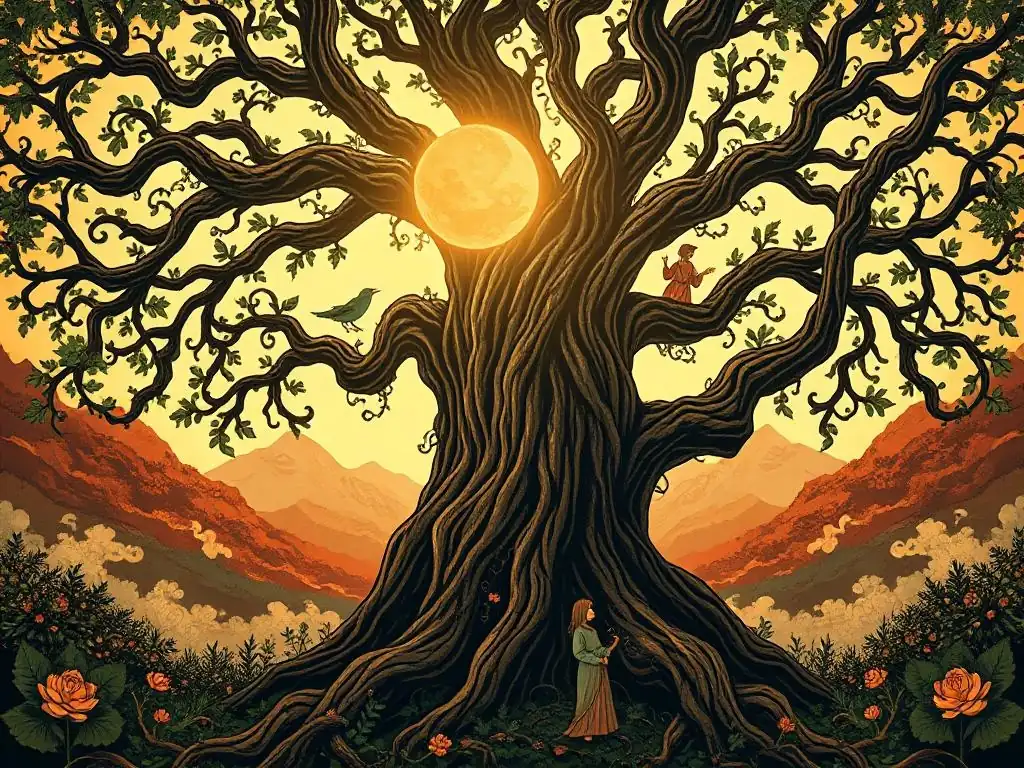
Folklore, myths, and legends serve as powerful vehicles for transmitting cultural values, ecological knowledge, and spiritual beliefs across generations. When it comes to sacred forests, storytelling plays a crucial role in preserving the lore associated with these special places, detailing the sacred forests folklore beliefs, the spirits that inhabit them, the taboos that must be observed, and the consequences of disrespecting nature.
These narratives are often more than just entertaining tales; they are repositories of accumulated wisdom about the natural world and humanity's relationship with it. They encode ecological principles, moral lessons, and spiritual insights in memorable and engaging ways. Through the repetition and retelling of these stories, communities reinforce their connection to their sacred landscapes and perpetuate the traditional knowledge necessary for their preservation.
Folktales and Legends: Passing Down Wisdom
Folktales and legends about sacred forests often feature encounters between humans and forest spirits or deities, explaining the origins of certain natural features, or recounting the outcomes of respecting or violating forest taboos. These stories provide practical guidance wrapped in narrative form. For instance, a story about someone getting lost in the woods after cutting down a sacred tree serves as a cautionary tale, reinforcing the taboo against logging in specific areas, a direct expression of sacred forests folklore beliefs.
Consider the numerous European folktales featuring enchanted forests like the one in "Hansel and Gretel" or the woods in "Little Red Riding Hood." While not always explicitly "sacred" in a religious sense, these forests are often depicted as places where ordinary rules don't apply, where magical beings reside, and where one must tread carefully – reflecting a lingering cultural memory of the forest as a powerful, potentially dangerous, but also magical space, linked to earlier sacred forests folklore beliefs. These stories pass down a sense of awe and caution regarding deep woodlands.
The Importance of Oral Tradition
For many cultures, particularly those without written language or where literacy was not widespread, oral tradition has been the primary means of transmitting knowledge, including sacred forests folklore beliefs. Elders and storytellers play a vital role in recounting myths, legends, and historical accounts related to sacred sites, ensuring that the knowledge and reverence associated with them are passed down to younger generations.
The nuances of oral tradition – the intonation, the performance, the communal setting in which stories are shared – add layers of meaning and emotional resonance that can be difficult to capture in written form. This living transmission ensures that the sacred forests folklore beliefs remain dynamic and relevant to the community. The erosion of oral traditions due to modernization and cultural shifts poses a significant threat to the preservation of this valuable forest lore.
The Role of Sacred Forests in Shaping Cultural Identity
Sacred forests are often deeply intertwined with the cultural identity of the communities that protect them. They are not just physical places but symbolic landscapes that embody the history, spirituality, and connection to the land of a people. The stories, rituals, and beliefs associated with these forests contribute significantly to a community's sense of self and continuity. Sacred forests folklore beliefs are often foundational to this identity.
For communities whose ancestors are believed to reside in sacred groves, these forests are literal links to the past and the spiritual realm. The protection of these areas becomes an act of cultural preservation, a way of honoring ancestors and maintaining cultural heritage. The continued existence of sacred forests and the practices surrounding them serve as tangible expressions of enduring cultural identity in the face of external pressures and change, reinforcing the power of sacred forests folklore beliefs.
Modern Threats to Sacred Forests: Conservation and Cultural Preservation
Despite their deep cultural and spiritual significance, sacred forests face numerous threats in the modern world. Deforestation driven by logging, agriculture, infrastructure development, and mining poses a direct physical threat to these vital ecosystems. Simultaneously, the erosion of traditional beliefs and practices due to globalization, urbanization, and the influence of external religions or value systems threatens the cultural framework that has historically protected these sites. Addressing these challenges requires integrated approaches that combine environmental conservation with cultural preservation, recognizing the importance of sacred forests folklore beliefs in protecting these areas.
The loss of sacred forests is not merely an ecological disaster; it is also a profound cultural tragedy. It means the loss of biodiversity, medicinal plants, and ecological services, but also the disappearance of unique spiritual sites, traditional knowledge systems, and cultural heritage. Protecting sacred forests is therefore essential for both environmental sustainability and cultural survival.
Deforestation and the Loss of Traditional Knowledge
Global deforestation rates remain alarmingly high, driven by economic pressures and unsustainable land-use practices. This directly impacts sacred forests, which are often located in areas rich in natural resources. For instance, the expansion of palm oil plantations in Southeast Asia or logging operations in the Amazon directly threatens forests considered sacred by local indigenous communities. When a sacred forest is destroyed, the physical manifestation of sacred forests folklore beliefs is lost, along with the unique biodiversity it harbors.
Furthermore, the destruction of sacred forests often goes hand in hand with the displacement or assimilation of the communities that protect them. As traditional ways of life are disrupted, the oral traditions, rituals, and knowledge systems tied to the forest begin to fade. This loss of traditional ecological knowledge, accumulated over centuries and often embedded in sacred forests folklore beliefs, is irreparable and weakens the ability of communities to manage and protect their environment sustainably.
The Importance of Protecting Sacred Sites: The Green Belt Movement in Kenya
Recognizing the intertwined nature of environmental degradation and cultural loss, many conservation efforts now actively involve local communities and incorporate traditional knowledge. Protecting sacred sites is increasingly seen as a key strategy for biodiversity conservation. These areas, protected by long-standing cultural rules and sacred forests folklore beliefs, often serve as refuges for endangered species and valuable genetic resources.
A notable example is the Green Belt Movement founded by Nobel Laureate Wangari Maathai in Kenya. While primarily focused on tree planting and environmental restoration, the movement recognized the importance of community involvement and traditional values. Although not solely focused on sacred groves, its philosophy aligns with the idea that environmental healing is linked to cultural empowerment and respecting the land. Community-led initiatives to protect specific sacred groves in various parts of Africa, often revitalizing traditional sacred forests folklore beliefs and governance structures, have proven effective in preserving these vital ecosystems against external pressures.
Reconnecting with Nature: Reviving Ancient Forest Traditions
In some areas, there is a growing movement to revive ancient forest traditions and sacred forests folklore beliefs as a way to foster a deeper connection with nature and promote conservation. This involves educating younger generations about the cultural and ecological significance of sacred groves, documenting traditional stories and rituals, and integrating this knowledge into contemporary conservation strategies.
Efforts to revitalize indigenous languages and cultural practices often go hand-in-hand with initiatives to protect sacred natural sites. By reconnecting with the stories and beliefs of their ancestors, communities can strengthen their resolve to protect the places that embody their heritage. This revival is not just about looking to the past; it's about finding sustainable ways forward that honor both ecological needs and cultural values, demonstrating the enduring power and relevance of sacred forests folklore beliefs.
The Enduring Legacy of Forest Folklore
The influence of sacred forests and their associated folklore extends far beyond the communities that traditionally protect them. The powerful imagery, archetypes, and narratives of forest lore have permeated global culture, inspiring artists, writers, and thinkers across centuries. This enduring legacy speaks to the universal human fascination with the wild, mysterious, and spiritual dimensions of forests, and the deep-seated sacred forests folklore beliefs that resonate across cultures.
From ancient epic poems to modern fantasy novels and films, the forest continues to serve as a potent symbol – a place of transformation, danger, enchantment, and profound connection to the primordial forces of nature. This cultural resonance helps keep the idea of the sacred forest alive in the collective imagination, highlighting its ongoing relevance.
Sacred Forests as Inspiration for Art and Literature: Tolkien's Mirkwood, Miyazaki's Forests
Literature and art are replete with examples inspired by sacred forests folklore beliefs and the concept of enchanted or sacred woods. J.R.R. Tolkien's Mirkwood in "The Hobbit" is a dark, dangerous forest with an ancient, malevolent presence, drawing on European folklore about foreboding woods. Lothlórien, with its wise, ancient trees (the Mallorn), represents a more benevolent, yet equally sacred and protected, elven forest, echoing themes of ancient, powerful forest spirits and places set apart.
Hayao Miyazaki's animated films, particularly "My Neighbor Totoro" and "Princess Mononoke," are deeply influenced by Japanese Shinto animism and the reverence for forests. The forest in "Totoro" is home to powerful, benevolent nature spirits ( kami), centered around a giant camphor tree marked with shimenawa, clearly representing a sacred grove. "Princess Mononoke" depicts a primeval forest inhabited by animal gods and spirits, highlighting the conflict between human industrialization and the sacredness of the natural world. These works introduce global audiences to concepts akin to sacred forests folklore beliefs, fostering appreciation for the spiritual dimensions of nature.
The Ongoing Relevance of Forest Spirituality
In a world increasingly disconnected from nature, the concept of forest spirituality and sacred forests folklore beliefs holds ongoing relevance. As concerns about environmental degradation and climate change grow, there is a renewed interest in traditional ecological knowledge and worldviews that emphasize humanity's interconnectedness with the natural world.
Many people today seek spiritual connection and solace in nature, finding a sense of awe and peace in forests that echoes the experiences of those who revered sacred groves in the past. Practices like forest bathing (Shinrin-yoku) originating in Japan, which involves immersing oneself in the forest atmosphere for well-being, reflect a modern search for the restorative and spiritual benefits that ancient cultures found in their sacred woods. This contemporary interest suggests that the underlying human need to find the sacred in nature, a core element of sacred forests folklore beliefs, remains powerful.
Conclusion: A Call to Respect and Protect the Sacred Groves
The stories and beliefs surrounding sacred forests offer valuable lessons for the modern world. They remind us that forests are not just resources to be exploited but complex, living systems with profound ecological, cultural, and spiritual value. The diverse sacred forests folklore beliefs from around the globe highlight a shared human intuition that certain places in nature are special, deserving of reverence and protection.
Protecting the remaining sacred forests is crucial not only for conserving biodiversity and mitigating climate change but also for preserving invaluable cultural heritage and traditional knowledge. It requires listening to and supporting the indigenous and local communities who have been the custodians of these places for generations. By recognizing the sacredness inherent in these ancient woods and respecting the sacred forests folklore beliefs that have protected them, we can work towards a future where humanity lives in greater harmony with the natural world, ensuring that the hidden souls of ancient trees can continue to thrive for generations to come.
Frequently Asked Questions
What are "sacred forests" in the context of folklore?
Sacred forests are areas of woodland considered spiritually significant by a culture, often believed to be inhabited by deities, spirits, or ancestors. These forests are frequently subject to strict rules and taboos, protecting them from exploitation.
What kinds of folklore beliefs are associated with sacred forests?
Common beliefs include the presence of guardian spirits protecting the forest, the idea that trees possess souls or are animated beings, and the belief that entering the forest without proper respect can bring misfortune.
How did ancient cultures interact with sacred forests?
Ancient cultures often approached sacred forests with reverence and caution, performing rituals or making offerings before entering. They might also have limited access to certain areas or resources within the forest to maintain its sanctity.
Sacred forests often served as community gathering places for ceremonies, initiations, or conflict resolution. They could also act as important resource management zones, ensuring sustainable use of forest products.
How do beliefs about sacred forests impact contemporary society?
While often diminished, beliefs about sacred forests can influence conservation efforts, promoting the protection of old-growth forests and biodiversity. These beliefs can also inform cultural identity and spiritual practices within certain communities.
Final Reflection: Whispers from the Woods, Echoes in Our Time
The reverence for sacred forests, once a cornerstone of countless cultures, remains a potent symbol in our increasingly disconnected world. The stories woven around these ancient groves, detailed throughout this article, are not mere relics of the past; they are potent reminders of our intrinsic connection to the natural world and the vital role it plays in shaping our spiritual and cultural identities. The dwindling number of these sacred spaces underscores the urgency of preserving both the physical forests and the rich tapestry of beliefs they represent.
The enduring power of these folklore traditions lies in their ability to transcend time and geography, speaking to a universal human need for spiritual grounding and a sense of belonging within a larger ecosystem. The trees themselves are a kind of living archive, holding within their rings the memory of centuries.
This sentiment, though not directly from a folklore source, perfectly encapsulates the profound connection between humanity and the ancient forests that have witnessed our history unfold. The stories shared, the rituals performed, and the deep respect shown for these places continue to resonate, shaping our understanding of environmental stewardship and the importance of biodiversity.
Consider, for a moment, the impact of these ancient beliefs on your own life. Do you feel a pull towards nature? Do you find solace in the quiet of a forest?
I invite you to explore the echoes of these sacred forest traditions within yourself, to seek out the whispers of the woods in your own community, and to become a guardian of the natural world, ensuring that future generations can also experience the profound connection to nature that these ancient beliefs represent. Let the legacy of sacred forests inspire you to protect and cherish the natural wonders that surround us.
Unveil the Whispers of Ancient Woods
Thanks for exploring the fascinating world of sacred forests and their place in folklore! You've now uncovered some truly captivating stories – let's keep the magic alive.
Here's how you can delve deeper into this enchanting realm:
- Share your own family's folklore or local legends about trees: Do you have a special tree in your family history or a local tale passed down through generations? We’d love to hear it!
- Research the sacred groves in your region: Discover the hidden history and traditions connected to the trees in your area. You might be surprised by what you find!
- Explore the mythology and legends associated with different tree species. This journey of discovery can lead to unexpected connections and new insights.
What ancient tree whispers are calling to you, ready to share their secrets?