
Masters of the Sea: Njord vs. Manannán mac Lir – Divine Domains

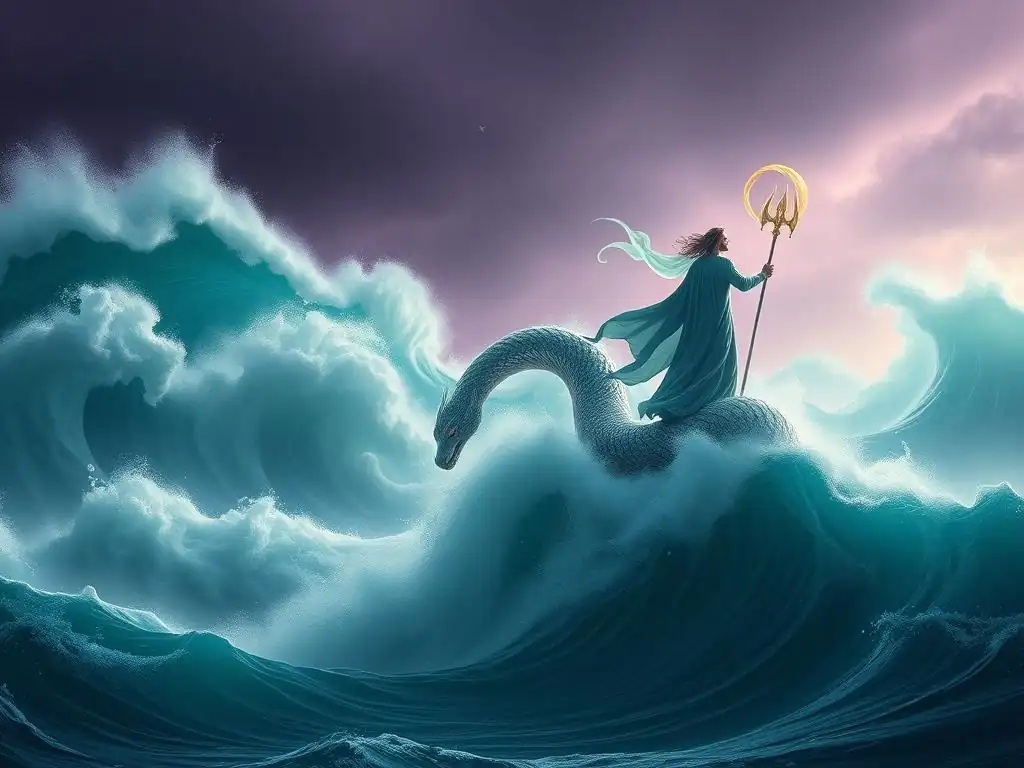
Welcome to Mythology and Legends, where we delve into the epic tales that have shaped civilizations. Ever wondered who truly reigns supreme over the boundless ocean? In this article, we embark on a thrilling comparative journey into the depths of Norse sea god mythology, pitting the calm authority of Njord against the mystical power of Manannán mac Lir. Prepare to be captivated by their divine domains – but who will emerge as the ultimate master of the sea? Dive in and discover the secrets that lie beneath the waves...
- Masters of the Sea: Njord vs. Poseidon – Divine Domains
- Introduction: Exploring the Realms of Norse and Greek Sea Gods
- Njord: The Norse God of the Sea, Wind, and Prosperity
- Poseidon: The Greek God of the Sea, Earthquakes, and Horses
- Divine Domains Compared: Njord vs. Poseidon
- Cultural Impact and Legacy: Norse and Greek Traditions
- Conclusion: The Enduring Power of Sea Gods in Mythology
-
Frequently Asked Questions
- How are Njord and Manannán mac Lir similar in their roles as sea gods?
- What are the key differences in the Norse and Celtic depictions of sea gods, as exemplified by Njord and Manannán?
- What aspects of Norse sea god mythology does Njord embody?
- How did the worship or reverence of Njord and Manannán mac Lir impact the societies that believed in them?
- How does Norse sea god mythology, particularly the figure of Njord, continue to influence contemporary society?
- Final Reflection: Navigating the Tides of Power – A Legacy of Sea Gods
- Unlock the Mysteries of the Sea Gods!
Masters of the Sea: Njord vs. Poseidon – Divine Domains
Introduction: Exploring the Realms of Norse and Greek Sea Gods
Across the vast tapestries of global mythology, the sea stands as a potent symbol – a source of life and bounty, yet also a realm of unpredictable power and peril. Cultures whose lives were intimately tied to the rhythm of the waves often developed complex pantheons featuring deities who held sway over these watery domains. Among the most compelling are Njord of Norse mythology and Poseidon of Greek mythology, two figures who, while both mastering the oceans, embody vastly different aspects of maritime power and influence.
The Significance of Sea Deities in Norse and Greek Mythology
For ancient peoples, particularly those dwelling near coastlines or relying on maritime trade and fishing, the sea was a force dictating survival and prosperity. In Norse lands, where fjords cut deep into the landscape and the Vikings ventured across treacherous northern waters, a benevolent sea god was crucial for safe passage, successful fishing, and bountiful harvests gleaned from the sea's edge. Their beliefs, steeped in the lore of the Norse sea god mythology, reflected a deep respect and sometimes fear of the ocean's might.
Similarly, in ancient Greece, a civilization of islanders and seafarers, control over the Aegean, Ionian, and Mediterranean seas was paramount. Navigators, fishermen, and inhabitants of coastal cities looked to their sea deity to grant calm voyages, protect against storms, and even shape the very land through seismic activity.
The significance of these deities extended beyond mere weather control; they were often intertwined with wealth, fertility, and the unpredictable nature of fate. Their favor could bring immense fortune, while their wrath could unleash devastating storms, floods, or earthquakes. This dual nature underscores their vital role in cosmogony and daily life, reflecting the precarious balance between human endeavor and the overwhelming power of nature as perceived by these ancient cultures.
Njord and Poseidon: A Comparative Overview
Njord, hailing from the Vanir tribe of gods in Norse mythology, is primarily associated with the sea, wind, fishing, and wealth. He is often depicted as a benevolent figure, a bringer of prosperity and calm conditions for those who worship him. His domain is typically the coastline and sheltered waters, suggesting a connection to the gentler aspects of the sea.
Poseidon, an Olympian god and one of the "Big Three" in Greek mythology, rules the seas, but also earthquakes and horses. Unlike the generally pacific Njord, Poseidon is known for his volatile temper and immense power, capable of summoning colossal waves and shattering the earth with his trident.
Comparing Njord and Poseidon offers a fascinating insight into how different cultures perceived and personified the same powerful natural force. While both command the oceans, their origins, personalities, domains, and interactions with mortals present a study in contrasts, revealing the unique cultural values and experiences that shaped their respective mythologies.
Njord: The Norse God of the Sea, Wind, and Prosperity
Njord (or Njörðr) is a prominent figure in the Norse pantheon, though distinct from the primary Æsir gods like Odin or Thor. His story is deeply interwoven with the themes of wealth, peace, and the vital relationship between humans and the sea in the Viking Age.
Njord's Origins: Vanir God and Father of Freyja and Freyr
Njord belongs to the Vanir, a tribe of gods associated with fertility, wisdom, prophecy, and prosperity, who eventually integrated with the Æsir after a war. He came to Asgard as a hostage during the peace settlement between the two tribes, bringing with him some of the Vanir's inherent connection to wealth and abundance. Njord is famously the father of two of the most significant Vanir deities: Freyja, goddess of love, beauty, fertility, gold, seiðr (sorcery), and war, and Freyr, god of fertility, sunshine, rain, prosperity, and virility.
This lineage firmly places Njord within the Vanir's domain of wealth and fruitfulness, extending his influence beyond just the sea itself to the prosperity derived from it. His home, Nóatún ("Ship-town"), is described in the Poetic Edda as being near the sea, reinforcing his maritime connection.
His presence among the Æsir signifies the merging of different divine functions and cultural priorities. While the Æsir often embody war, sovereignty, and knowledge (Odin), and strength and protection (Thor), the Vanir, represented by Njord and his children, brought vital aspects of life like fertility, peace, and material wealth. This integration highlights Njord's importance not just as a sea god, but as a deity essential for the overall well-being and prosperity of the Norse people, particularly those whose livelihoods depended on the ocean and its bounty.
Within Norse sea god mythology, Njord held a crucial position for anyone who sailed or fished. Sailors would pray to Njord for fair winds and calm seas to ensure safe voyages across the often-treacherous northern waters, whether for trade, exploration, or raiding. Fishermen sought his favor for abundant catches, recognizing that the sea's generosity ultimately lay in the hands of its divine master.
Unlike the turbulent storms attributed to giants or other chaotic forces, Njord was associated with the control necessary for successful maritime activities. The sagas and Eddas, while sometimes sparse on details of daily worship, imply that offerings and prayers to Njord were a common practice among those whose lives were dictated by the sea's moods.
His role extended to the practical aspects of maritime life. Viking longships, marvels of their time, were symbols of both power and vulnerability on the open water. Entrusting passage to Njord was a vital part of setting sail. While other gods might be invoked for protection in battle (Thor) or wisdom (Odin), Njord was the primary deity for ensuring the very possibility of reaching one's destination and returning safely with goods or spoils. This aspect of Norse sea god mythology underscores Njord's benevolent nature and his direct relevance to the economic and travel needs of the Norse people.
Njord's Domains: Wealth, Fertility, and Maritime Power
Njord's influence encompasses more than just the physical sea; he is deeply connected to the wealth and fertility derived from it. As a Vanir god residing in Asgard, he bridges the gap between the raw power of the ocean and the prosperity it can bring.
His domain includes not only the waves and winds near the shore but also the abundance of fish, the success of trade voyages, and the overall economic health of coastal communities. The Poetic Edda mentions that Njord is "so rich in temples and shrines" and that he "can grant wealth and prosperity" to those who seek his favor, indicating his strong association with material blessings.
This connection to wealth is typical of the Vanir, who were often invoked for good harvests and material gain. Njord's specific contribution is the wealth that comes from the sea – trade goods carried by ships, the bounty of the fishing grounds, and perhaps even treasures washed ashore. His maritime power, therefore, isn't just about controlling storms, but about ensuring the sea serves as a source of life and riches. This multifaceted domain makes him a central figure for a society reliant on both agriculture (linked to Freyr and Freyja) and the sea.
Njord's Associations: Ships, the Coastline, and Peaceful Seas
Njord is strongly associated with elements that define the interaction between land and sea. His home, Nóatún, is specifically located by the sea, highlighting his preference for the interface between the stable land and the shifting waters. This contrasts sharply with the dwelling of his reluctant wife, the giantess Skadi, who preferred the cold mountains and skiing. Their myth, detailing their inability to live comfortably in each other's preferred environment (Njord disliked the howling of wolves in the mountains, Skadi disliked the crying of seagulls by the sea), further emphasizes Njord's intrinsic connection to the coast and its sounds.
His association with ships is fundamental; they are the primary means by which humans navigate his domain. By extension, he is the god of safe harbor and peaceful voyages. Unlike deities who might revel in the chaos of storms, Njord is the force that brings calm and order to the waves, allowing ships to sail smoothly and return safely. This makes him a god of peace and stability within the maritime sphere, a stark contrast to deities known for their tempestuous natures. His domain is not the deep, terrifying abyss, but the productive, navigable waters near the shore.
Poseidon: The Greek God of the Sea, Earthquakes, and Horses
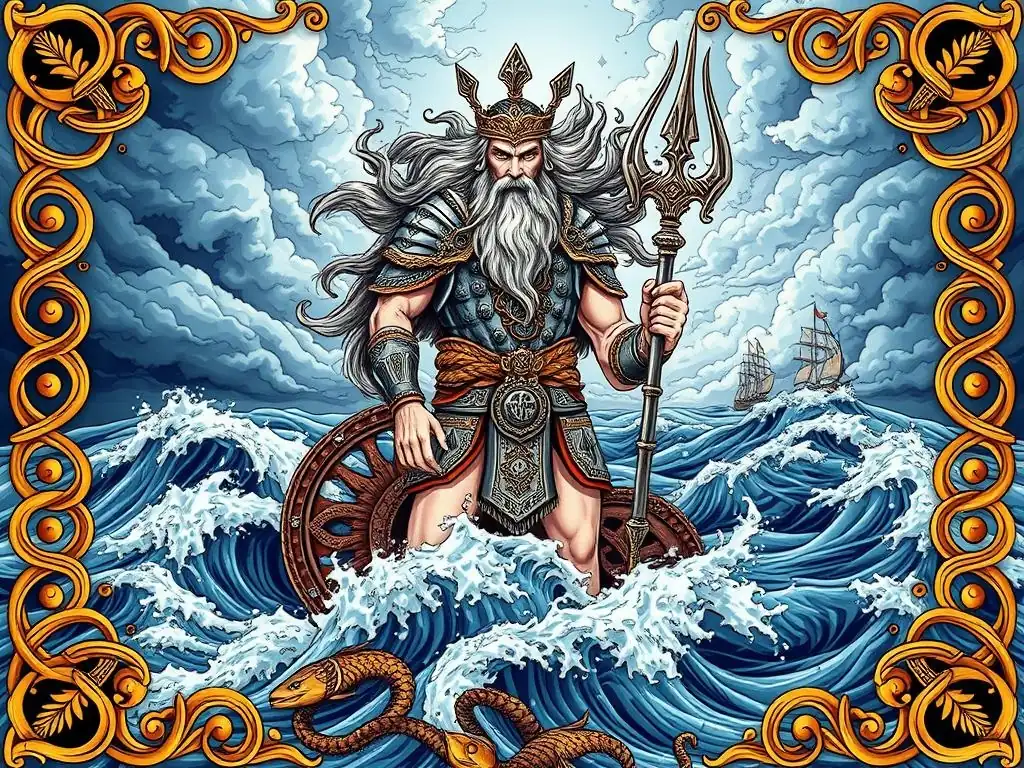
Poseidon is one of the most powerful and widely worshipped gods in the Greek pantheon, his influence extending over vast natural forces and aspects of human life.
Poseidon's Origins: Olympian God and Brother of Zeus and Hades
Poseidon was a son of the Titans Cronus and Rhea, destined along with his siblings to be swallowed by his fearful father. Rescued by his youngest brother, Zeus, he joined the fight against the Titans in the great war known as the Titanomachy. Following the defeat of the Titans, the three brothers – Zeus, Poseidon, and Hades – drew lots to divide the cosmos.
Zeus won the sky, Hades the underworld, and Poseidon the sea. This established his domain as the vast, unpredictable realm of the ocean, making him one of the three supreme rulers of the Greek cosmos. As an Olympian, he resided on Mount Olympus, but his true kingdom was the depths of the sea, where he had a magnificent palace.
His shared origin with Zeus and Hades underscores his immense power and fundamental role in the structure of the Greek world. While Zeus held ultimate authority, Poseidon commanded a force that was equally vital and potentially more immediately destructive to mortals than the sky or the underworld. His position as brother to the king of the gods placed him at the very top of the divine hierarchy, granting him authority over a significant portion of the physical world.
Greek Sea God Mythology: Poseidon's Trident and Temper
At the core of Greek sea god mythology regarding Poseidon is his iconic weapon: the trident. This three-pronged spear was not merely a symbol but a tool of immense power. With his trident, Poseidon could stir the seas into a frenzy, causing massive storms and tidal waves capable of swallowing ships and flooding coastal lands.
He could also use it to strike the earth, causing violent earthquakes, a phenomenon intrinsically linked to his domain over subterranean waters and tremors. Legends abound with instances of him using the trident to assert his power or express his anger. For example, he struck the island of Thera, splitting it into multiple islands, and caused an earthquake that destroyed the walls of Troy when he was denied payment for building them.
Poseidon was notorious for his volatile and often wrathful temper. Unlike the generally benevolent Njord, Poseidon was easily angered by mortals or other gods, and his rage manifested as devastating natural disasters. The most famous example is his relentless persecution of Odysseus in Homer's Odyssey, unleashing storm after storm upon the hero for blinding his son, the Cyclops Polyphemus. This depiction of Poseidon highlights the Greek perception of the sea not just as a resource, but as a powerful, unpredictable force capable of immense destruction, often reflecting the stormy nature of its divine ruler.
Poseidon's Domains: Storms, Earthquakes, and Horses
Poseidon's primary domain is the sea in all its aspects – from the calm surface to the deepest trenches, from the gentle lapping of waves to the most violent hurricanes. However, his power uniquely extends beyond the water to control earthquakes. It was believed that his movements or strikes with his trident caused the earth to tremble, leading him to be known as the "Earth-Shaker." This dual control over sea and land tremors reflects the ancient observation that earthquakes often occur near coastlines or are somehow linked to water.
Perhaps surprisingly, Poseidon is also the god of horses. Myths offer various explanations for this connection, including the story that he created the first horse by striking a rock with his trident. He is often depicted riding a chariot pulled by Hippocampi (sea-horses) or terrestrial horses. This association links the power and wildness of horses to the untamed force of the sea and earthquakes, perhaps symbolizing the raw, untamed power he commanded over both land and water. This unusual combination of domains makes Poseidon a god of significant and diverse power within the Greek cosmos.
Poseidon's Associations: Dolphins, Horses, and the Trident
Poseidon is closely identified with several powerful symbols and creatures. The trident, as mentioned, is his primary emblem of authority and power over the sea and earth. Dolphins, often seen leaping through waves, were considered sacred to him and were sometimes depicted pulling his chariot or accompanying him. They represented the sea's vitality and were seen as good omens by sailors.
Horses are another strong association, symbolizing his power over both land and sea (through the Hippocampi). He was worshipped as Poseidon Hippios ("of the horses") in some regions, and contests involving horses were held in his honor, such as the Isthmian Games near Corinth. These associations reinforce the diverse aspects of Poseidon's power – the destructive force of the trident, the wild energy of horses, and the life-giving but unpredictable nature of the sea represented by dolphins.
Divine Domains Compared: Njord vs. Poseidon
Examining Njord and Poseidon side-by-side reveals fundamental differences in how Norse and Greek cultures conceptualized divine power over the sea and its relationship with humanity.
Power Over the Seas: Contrasting Control Over Weather and Tides
The most significant contrast lies in their fundamental influence over the maritime environment. Njord is primarily associated with calm seas, fair winds, and conditions favorable for navigation and fishing. While he is the master of the waves, his power is often depicted as bringing order and tranquility to the water's surface. He is the god invoked for a smooth voyage, not for survival against a tempest. In Norse sea god mythology, the chaotic and destructive aspects of storms were often attributed to giants, serpents like Jörmungandr, or other forces of chaos, rather than Njord himself.
Poseidon, conversely, is the very embodiment of the sea's turbulent and destructive potential. His power is demonstrated through violent storms, towering waves, and the ability to shake the very foundations of the earth. While he could, theoretically, grant calm seas, his mythology focuses far more on his capacity for unleashing natural fury.
He is the source of hurricanes and tidal waves. This difference reflects potentially varying degrees of control perceived by the respective cultures – perhaps Norse people saw Njord as the one who could tame the inherent wildness (attributed elsewhere), while Greeks saw Poseidon as the source of that wildness.
Influence on Mortals: Blessings, Protection, and Vengeance
Their interactions with humans also differ markedly. Njord is predominantly a benefactor. He is worshipped and offered sacrifices in exchange for wealth, good fortune, and safe passage. His relationship with mortals is largely transactional and positive – seek his favor, and he will grant prosperity tied to the sea. There are few myths depicting Njord actively punishing mortals with maritime disasters, reinforcing his image as a relatively peaceful and benevolent deity within the Norse pantheon. He offers protection by ensuring favorable conditions.
Poseidon's influence on mortals is far more varied and often negative. While he could be a protector of sailors and cities (like Corinth), he was far more frequently a source of divine wrath. His temperamental nature meant that slighting him could lead to devastating consequences, from personal misfortune at sea (Odysseus) to the destruction of entire cities by earthquake or flood. Mortals feared Poseidon as much as they worshipped him, recognizing his immense power to both grant safe passage and utterly destroy. His blessings were sought, but his vengeance was a constant threat.
Temperament and Personality: Calm vs. Wrathful Depictions of Sea Gods
The personalities attributed to Njord and Poseidon represent almost opposite ends of the spectrum for powerful deities. Njord is consistently portrayed as calm, peaceful, and somewhat passive, especially when compared to the more dynamic and often aggressive Æsir gods like Thor or Odin. His dwelling by the quiet coast in Nóatún, his preference for peace over the mountain's wildness, and his association with wealth and calm seas all contribute to this image of a serene, benevolent figure.
Poseidon, in stark contrast, is one of the most volatile and easily angered gods in the Greek pantheon. His myths are replete with instances of his rage causing destruction. He is depicted as proud, stubborn, and vengeful. This tempestuous personality mirrors the unpredictable and often violent nature of the seas he commanded, making him a god to be appeased and feared. This fundamental difference in temperament is perhaps the most striking distinction between the two sea masters.
Symbolism and Representation: Ships vs. Trident and Chariot
The symbols associated with each god reflect their core nature and domains. Njord is closely tied to ships and the coastline. Ships represent the human endeavor on his domain, and the coastline represents the safe boundary between land and sea – his preferred dwelling. His symbols are practical and related to the beneficial interaction between humans and the sea, aligning with his role as a god of prosperity and safe travel in Norse sea god mythology.
Poseidon's symbols are tools of raw power and majestic transport. The trident is an instrument of destruction and creation (earthquakes, springs). His chariot, often pulled by mythical sea creatures or powerful horses, represents his ability to move swiftly and commandingly across his vast domain. These symbols emphasize his power, his dominion over both water and land tremors, and his status as a formidable ruler, rather than focusing solely on the human use of the sea.
Cultural Impact and Legacy: Norse and Greek Traditions
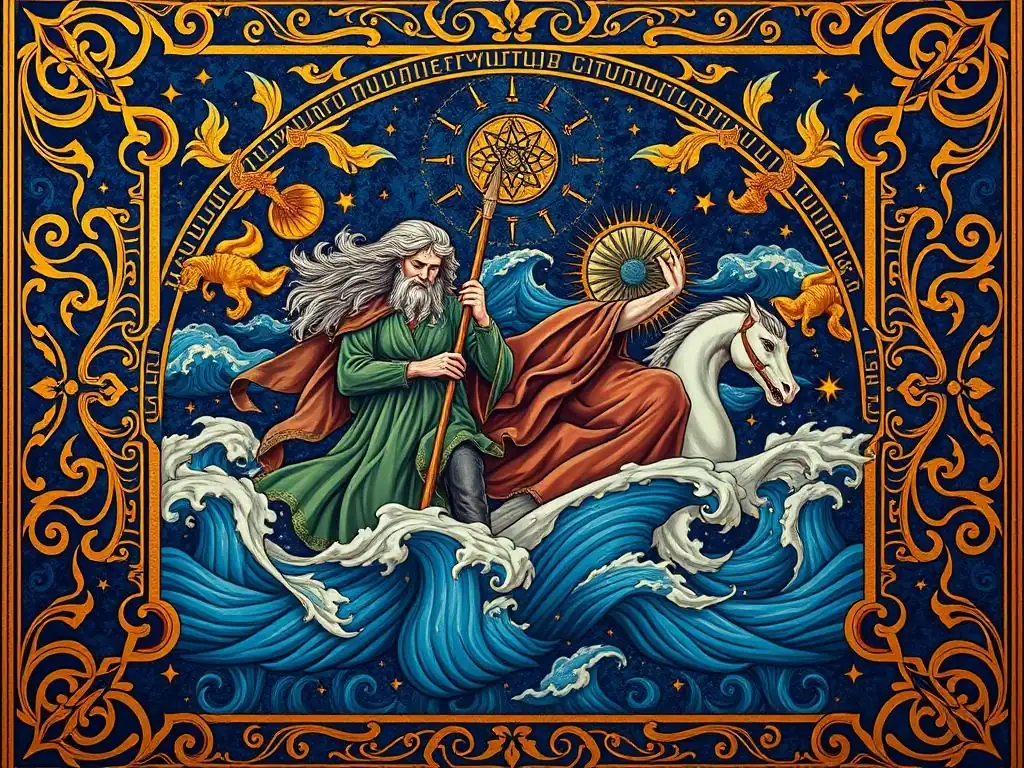
Both Njord and Poseidon played significant roles in the religious and cultural lives of their respective peoples, and their influence can still be seen, albeit in different forms, today.
Njord in Norse Sagas and Viking Age Beliefs
Njord appears in key Old Norse texts, notably the Poetic Edda and the Prose Edda, which are our primary sources for Norse mythology. In the Poetic Edda, he is mentioned in poems like Vafþrúðnismál and Grímnismál, where his wisdom and dwelling place are described. Snorri Sturluson's Prose Edda elaborates on his origins as a Vanir god, his marriage to Skadi, and his role as the father of Freyr and Freyja.
While direct accounts of worship practices are scarce compared to gods like Thor or Odin, the texts imply his importance, particularly for seafarers and those seeking wealth. Archaeological evidence, such as place names (like Njardarlag in Norway) or potential depictions on artifacts, is debated but suggests his veneration in certain regions.
The emphasis on Njord in Norse sea god mythology reflects the pragmatic needs of the Viking Age. A god who could ensure safe passage and provide the bounty of the sea was essential for a society that relied heavily on fishing, trade, exploration, and raiding by sea. His association with wealth aligns with the Viking drive for prosperity and acquisition. While perhaps less dramatic than Thor battling giants, Njord's role was foundational to the economic and physical survival of many Norse communities.
Poseidon in Greek Myths and Ancient Temples
Poseidon is a central figure in numerous Greek myths and epic poems. He plays a significant role in the Iliad, sometimes supporting the Greeks and sometimes the Trojans, and is the primary antagonist in the Odyssey, hindering Odysseus's return home for years. His contests with other gods for patronage of cities (like his famous rivalry with Athena for Athens) are prominent stories.
Evidence of his widespread worship is abundant throughout the Greek world. Temples dedicated to Poseidon were erected in coastal cities and on promontories overlooking the sea, such as the impressive Temple of Poseidon at Sounion, which served as a landmark for sailors.
Major festivals, like the Isthmian Games held near Corinth, were celebrated in his honor, featuring athletic and equestrian contests. Votive offerings, ranging from simple figurines to elaborate ship models, were made to him by sailors before embarking on voyages. This rich body of literary and archaeological evidence demonstrates Poseidon's immense importance in ancient Greek religious practice and cultural identity, highlighting his power over crucial aspects of life and the natural world.
Modern Interpretations: Sea Gods in Contemporary Art and Literature
Both Njord and Poseidon continue to appear in modern cultural works, albeit often in reimagined forms. Poseidon, as one of the major Greek Olympians, is a frequent character in fantasy literature, films, and video games, often retaining his association with the sea, his trident, and his volatile temper. He appears in series like Rick Riordan's Percy Jackson & the Olympians, where he is a key figure. His image as a powerful, often bearded ruler of the waves remains potent.
Njord, while perhaps less widely known globally than Poseidon, features in modern fantasy drawing on Norse mythology. He appears in novels, games, and other media related to Viking themes or the Norse pantheon. Modern interpretations of Norse sea god mythology sometimes emphasize his connection to the Vanir's nature aspects or his role in wealth and peace, offering a different divine archetype compared to the more common portrayals of Thor or Odin. These modern appearances demonstrate the enduring fascination with these ancient deities and the powerful forces they represent.
Conclusion: The Enduring Power of Sea Gods in Mythology
The figures of Njord and Poseidon, masters of their respective mythological seas, offer profound insights into the cultures that created them. They embody not only the raw power of the ocean but also the hopes, fears, and practical realities faced by peoples reliant on its unpredictable nature. While both rule the waves, their contrasting personalities, domains, and relationships with mortals highlight the distinct worldviews of Norse and Greek societies.
Reflecting on the Divine Domains of Njord and Poseidon
Njord, the benevolent Norse sea god associated with calm, wealth, and the productive coastline, reflects a desire for harmony and prosperity derived from the sea. His domain is one of potential bounty and safe passage, crucial for a society of seafarers and fishermen. Poseidon, the tempestuous Greek god of storms, earthquakes, and the vast, deep ocean, embodies the sea's untamed power and potential for destruction. His domain is one of awe-inspiring, often terrifying, force.
Comparing these two powerful deities underscores the universal human experience of interacting with the sea – its beauty, its generosity, and its overwhelming power. Whether sought for calm passage and wealth like Njord in Norse sea god mythology, or feared for wrath and destruction like Poseidon in Greek myths, sea gods remain potent symbols of humanity's enduring relationship with the vast and mysterious watery world that covers most of our planet. Their stories continue to resonate, reminding us of the deep historical and cultural ties between human civilization and the sea.
Frequently Asked Questions
How are Njord and Manannán mac Lir similar in their roles as sea gods?
Both Njord and Manannán mac Lir are considered divine figures of the sea in their respective mythologies. They both possess command over the oceans and are associated with maritime affairs, though their specific domains and powers differ.
What are the key differences in the Norse and Celtic depictions of sea gods, as exemplified by Njord and Manannán?
Njord is primarily associated with safe seafaring, wealth, and fertility, while Manannán is often seen as a more mystical figure, connected to magic, storms, and the Otherworld. The Norse view is more practical, while the Celtic is more ethereal.
What aspects of Norse sea god mythology does Njord embody?
Njord embodies aspects of abundance, peace, and the power of the sea to provide. He is a Vanir god associated with favorable winds, fruitful catches, and safe voyages.
How did the worship or reverence of Njord and Manannán mac Lir impact the societies that believed in them?
Their worship likely influenced maritime practices and beliefs in their respective cultures. Coastal communities may have offered sacrifices and prayers for safe passage and successful fishing, reflecting their dependence on the sea.
How does Norse sea god mythology, particularly the figure of Njord, continue to influence contemporary society?
Though direct worship is rare, Norse mythology, including Njord, inspires art, literature, and popular culture. Themes of adventure, exploration, and respect for nature often draw from these ancient stories, demonstrating their enduring impact.
The enduring fascination with Norse mythology, specifically its powerful sea deities, reflects our own ongoing struggle to understand and harness the immense power of the ocean. The contrasting domains of Njord and Manannán mac Lir, explored in this article, highlight not only the diverse interpretations of sea-god mythology across cultures but also the timeless human need to find order and meaning within the unpredictable forces of nature.
The comparison between these two figures reveals a deeper truth about the human relationship with the sea: a mixture of reverence, fear, and a persistent desire to control its boundless energy. The very act of comparing and contrasting these gods, from different pantheons and cultural contexts, speaks to the universality of these themes. The sea, once it casts its spell, holds one in its net of wonder forever.
This sentiment, though not directly from a Norse or Celtic source, perfectly captures the enduring power of these myths and their ability to resonate across time and cultures.
Consider the implications of these powerful narratives. How do the stories of Njord and Manannán mac Lir, with their strengths and weaknesses, inform our own understanding of leadership, power, and the delicate balance between humanity and the natural world?
You, the reader, are now invited to reflect on the ways in which these ancient myths continue to shape our perception of the sea and our place within its vast, mysterious realm. Let the echoes of these divine figures inspire you to explore the depths of your own understanding, and to approach the ocean – and life itself – with a renewed sense of awe and respect.
Unlock the Mysteries of the Sea Gods!
Thanks for diving into the fascinating world of Njord and Manannán mac Lir! You've now gained a deeper understanding of these powerful sea deities and their contrasting domains. Ready to explore further?
- Delve deeper: Research other Celtic and Norse sea deities and compare their myths and powers. See how their stories intertwine and diverge! This will further enrich your knowledge and understanding of maritime mythology.
- Share your insights: Discuss your favorite aspect of Njord or Manannán mac Lir on our community forum – let's spark a conversation about these compelling figures! Sharing your thoughts can enrich the mythological tapestry we are weaving together.
- Craft your own sea god: Based on what you learned, try creating your own sea deity, complete with powers, symbols, and a captivating backstory. Let your imagination run wild!
Which sea god's power most resonates with you, and why? Let's hear your thoughts in the comments below!