
Heimdall: The Watchman, His Horn, and the Coming of Ragnarok

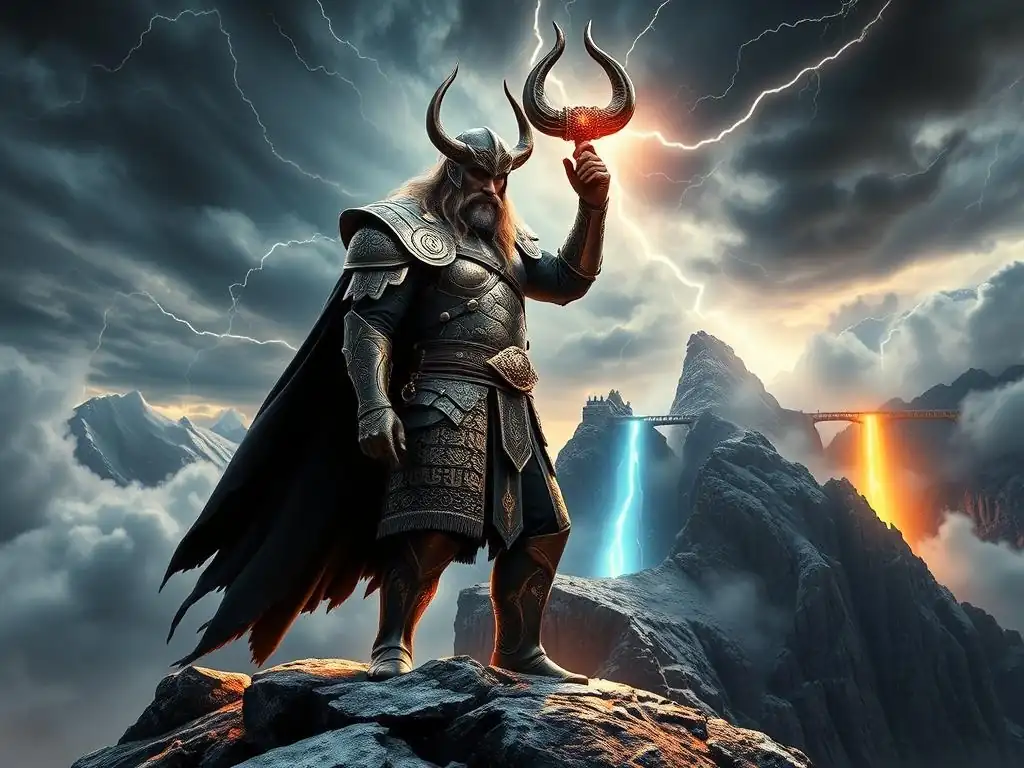
Welcome, seekers of ancient truths! Delve into the captivating world of Mythology and Legends, where we unravel the threads of forgotten stories and their enduring influence. Prepare to journey into the heart of Norse lore, as we explore a pivotal figure and a chilling prophecy. What secrets lie within Heimdall’s horn and its connection to the impending Ragnarok? Dare to read on and discover the fate that awaits...
- Heimdall: Guardian of Bifrost and Herald of Ragnarok
- Who is Heimdall? Exploring the Norse Watchman Deity
- Heimdall's Role in Norse Mythology: Protector of Asgard
- The Gjallarhorn: Heimdall's Horn and Its Significance
- Heimdall and Ragnarok: The Final Battle
- Heimdall in Popular Culture: Modern Interpretations of the Norse God
- Understanding Heimdall's Legacy: The Enduring Importance of the Watchman God
-
Frequently Asked Questions
- What is the significance of Heimdall's horn, Gjallarhorn, in Norse mythology?
- Who is Heimdall, and what is his role in Norse mythology?
- How does Heimdall's role connect to the "Ragnarok prophecy"?
- What are some interpretations of the sound of Gjallarhorn, and what does it signify?
- Besides blowing the horn, what else does Heimdall do during Ragnarok?
- Final Reflection: The Enduring Echo of Heimdall's Horn
- Unleash Your Inner Viking: Explore the Myths of Ragnarok!
Heimdall: Guardian of Bifrost and Herald of Ragnarok
In the rich tapestry of Norse mythology, few figures are as distinct and vital as Heimdall. Often described as the shining god, he occupies a unique position among the Aesir deities. His primary role is that of the eternal watchman, standing guard over the Bifrost, the rainbow bridge connecting the realm of Asgard, home of the gods, to Midgard, the world of humans.
Heimdall's vigilance is legendary, a necessary quality given the potential threats from giants and other creatures dwelling beyond the borders of Asgard. His story is not merely one of passive guardianship; it is deeply intertwined with the fate of the cosmos, particularly the foretold end times known as Ragnarok. His actions, specifically the sounding of his mighty horn, Heimdall's horn (Gjallarhorn), are prophesied to signal the beginning of this catastrophic event, highlighting his crucial role in the Ragnarok prophecy.
Who is Heimdall? Exploring the Norse Watchman Deity
Heimdall is a prominent figure in the Norse pantheon, known for his extraordinary senses and his pivotal role as the guardian of the gods. While not as frequently featured in myths as Odin, Thor, or Loki, his importance is undeniable, particularly concerning the security of Asgard and the unfolding of cosmic events. He is often depicted as a noble and ancient deity, possessing wisdom and patience cultivated over eons of solitary watch.
His attributes set him apart from other gods. Unlike the warrior gods focused on battle or the trickster gods defined by cunning, Heimdall's essence lies in perception and foresight. His acute awareness of the world around him makes him indispensable to the safety of the divine realm, ensuring that no threat approaches unseen or unheard.
Heimdall's Origins and Etymology: Unraveling the Meaning of His Name
The origins of Heimdall are described in fascinating and somewhat cryptic verses within the Eddic poems. One account, found in the Hyndluljóð, states that he was born of nine giantesses, sisters, a detail that underscores his ancient and possibly primal nature, perhaps linking him to the very forces of creation or the sea.
This unusual birthright distinguishes him from most other Aesir, who are typically born of divine or giant parents in more conventional unions. The precise location of his birth is often associated with the edge of the world or the sea, further emphasizing his connection to boundaries and the liminal spaces between realms.
The etymology of the name "Heimdall" is debated among scholars, but common interpretations link it to concepts of "world-brightener" or "home-power." Some theories suggest a connection to the word "heim," meaning home or world, and "dallr," potentially related to brightness or flourishing. This could imply his role as a benevolent force protecting the world or illuminating the path to Asgard. Another proposed origin connects his name to the concept of a "world-pillar" or axis, reflecting his position as a steadfast guardian supporting the cosmic order, vigilant against forces that seek to undermine it.
Heimdall's Unique Attributes: Sight, Hearing, and the Gjallarhorn
Heimdall possesses sensory abilities far exceeding those of other gods, or indeed, any mortal. The Prose Edda describes his sight as so keen that he can see for a hundred leagues (an approximation of vast distance, perhaps equivalent to several hundred kilometers) equally well by night as by day.
Furthermore, his vision is said to be so acute that he can observe the growth of grass upon the earth and the wool upon sheep, illustrating an almost microscopic level of detail perceived across immense distances. This unparalleled vision is crucial for his duty as watchman, allowing him to detect even the most subtle movements on the fringes of the worlds.
Complementing his extraordinary sight is Heimdall's equally remarkable hearing. He is said to be able to hear things that are imperceptible to any other being, including the sound of grass growing and the wool growing on sheep. This hyper-sensitive hearing ensures that nothing approaches Asgard silently.
These attributes, combined with his need for very little sleep—reportedly less than a bird—make him the perfect, tireless guardian. Central to his identity and role is Heimdall's horn, the Gjallarhorn, which is not just an attribute but a powerful tool used to communicate across the realms and, ultimately, to announce the coming of Ragnarok.
Heimdall's Role in Norse Mythology: Protector of Asgard
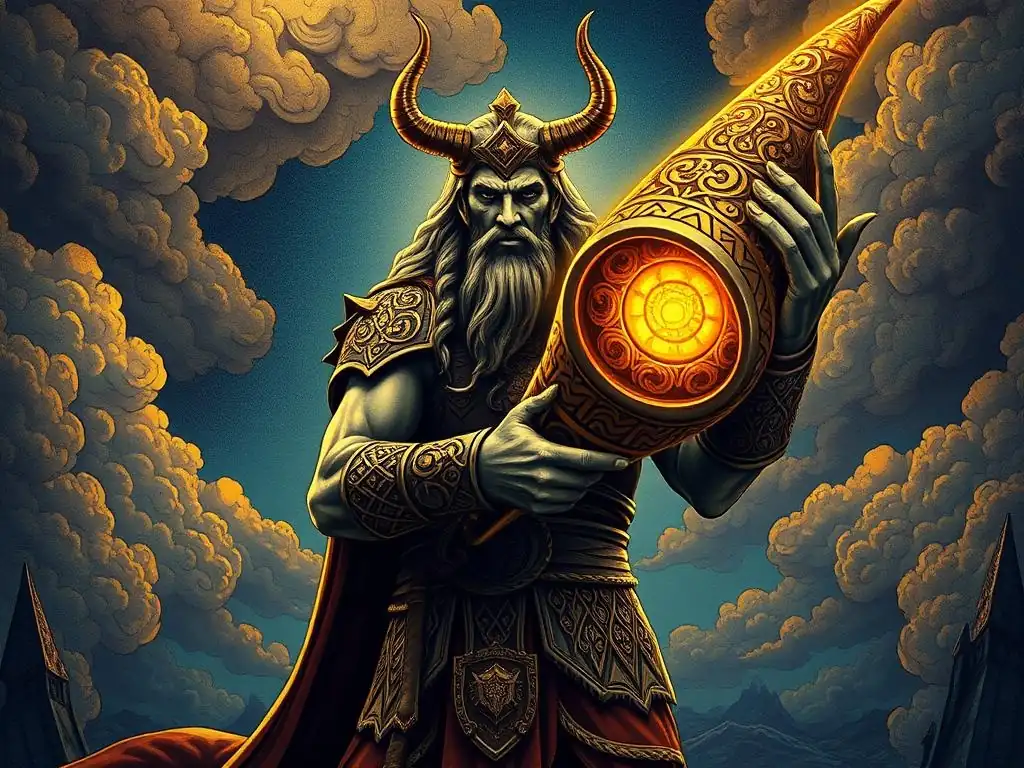
Heimdall's primary and most celebrated role in Norse mythology is that of the unwavering guardian of Asgard. Stationed at the head of the Bifrost bridge, he acts as the first and last line of defense against any threats attempting to enter the gods' realm. His existence is dedicated almost entirely to this task, requiring constant vigilance and readiness.
Beyond simply standing watch, Heimdall is depicted as actively involved in maintaining the order and security of the cosmos. He is sometimes associated with the social structure of humanity, as seen in the Rígsþula poem, where he is presented as a divine figure named Ríg who travels through Midgard and fathers the ancestors of the three classes of human society: thrall (slave), karl (freeman), and jarl (nobleman). This suggests a broader connection to the world beyond Asgard and an interest in its well-being, reinforcing his protective nature.
The Legend of Heimdall and the Nine Mothers: His Divine Birth
The birth of Heimdall is one of the most unusual and debated accounts in Norse mythology, primarily detailed in the poem Hyndluljóð. This source states that Heimdall was born to nine giantesses, all sisters, who were daughters of the sea-god Ægir or a similar primordial figure. These mothers are often identified by names that suggest waves or watery forces, such as Gjalp, Greip, Eistla, Eyrgjafa, Ulfrun, Aurgelmir's daughters, Sindri, and others.
This unique lineage implies several possibilities about Heimdall's nature. Being born of the waves or primordial forces could signify his connection to the fundamental elements of the cosmos. It might also explain his exceptional sensory abilities, perhaps inherited from powerful, ancient beings. The image of nine mothers collectively giving birth to one god is a striking and memorable detail, setting Heimdall apart from the more common divine family structures and hinting at a deep, perhaps older, layer of mythological belief surrounding his origins.
Heimdall and the Bifrost Bridge: Guarding the Gateway to Asgard
Heimdall's most iconic association is with Bifrost, the shimmering rainbow bridge that serves as the sole pathway between Midgard and Asgard. This bridge is depicted as a magnificent, yet fragile, structure that can only be traversed by the gods and those they permit. Its strategic importance is paramount, as it represents the vulnerability of Asgard to external threats, particularly from Jotunheim, the realm of the giants.
Heimdall's duty at the head of Bifrost is relentless. He stands watch day and night, requiring minimal sleep, his sharp eyes scanning the horizon of all nine realms connected by Yggdrasil. His presence ensures that no enemy can sneak across the bridge unchallenged. The bridge itself is said to be guarded by fire, a protective measure that only the gods' horses can withstand, adding another layer of security to Heimdall's watch. His role here is not just passive observation but active deterrence and the readiness to sound the alarm should danger arise.
Heimdall's Keen Senses: All-Seeing and All-Hearing
The remarkable sensory abilities of Heimdall are central to his function as watchman. His vision is described in the Grímnismál as allowing him to see "a hundred leagues" distant, implying an incredibly vast range of sight necessary to monitor the borders of the realms. This detail is often poetically elaborated upon, stating he can see things as small as the growth of grass, emphasizing the incredible detail his sight encompasses.
Similarly, his hearing is unparalleled. The ability to hear the growth of grass or the wool on sheep highlights a sensitivity to the subtlest vibrations and movements across the world. This means that no sound, no matter how faint or distant, escapes his notice. These combined senses make him the ultimate sentinel, capable of detecting any intrusion or disturbance long before it reaches Asgard, ensuring the gods are never caught unawares. This constant state of heightened awareness is unique among the Aesir and underscores the critical nature of his guardianship.
The Gjallarhorn: Heimdall's Horn and Its Significance
Among the many powerful artifacts in Norse mythology, the Gjallarhorn holds a unique place, intrinsically linked to the god Heimdall. This isn't merely a musical instrument; it is a tool of immense power and cosmic significance. Its name, often translated as "Resounding Horn" or "Yelling Horn," hints at its incredible volume and reach.
The horn is more than just a means of communication; it is a symbol of warning and the herald of destiny. Its sound is tied to the most dramatic event in Norse cosmology, the final conflict of Ragnarok. Understanding the Gjallarhorn requires delving into its physical description, its legendary sound, and its prophesied role in the end times. It is perhaps the most famous attribute of Heimdall, central to his identity and his function within the larger mythological narrative, particularly concerning the Ragnarok prophecy.
What is the Gjallarhorn? A Description of the Horn and Its Power
The Gjallarhorn is depicted as a potent and sacred artifact. While physical descriptions in the Eddas are sparse, it is understood to be a horn of immense size and power, capable of producing a sound that can be heard across all nine realms of the Norse cosmos. It is said to be kept hidden near the roots of Yggdrasil, the world tree, close to Mímir's Well, a source of wisdom. This placement suggests a connection to primal knowledge and the fundamental structure of the universe.
The power of the Gjallarhorn lies in its ability to transcend the boundaries between realms. Its blast is not merely loud; it is a cosmic alarm. Some interpretations suggest the horn might also be used for drinking mead, perhaps drawing wisdom from Mímir's Well, as mentioned in the Prose Edda. This dual function—as a vessel of wisdom and a horn of warning—adds layers to its significance, suggesting it is tied to both the knowledge of the cosmos and the fate it portends. Its primary known power, however, is its capacity to sound the alarm for Ragnarok.
The Sound of the Gjallarhorn: Signalling the Imminent Arrival of Ragnarok
The most crucial function of the Gjallarhorn is to announce the beginning of Ragnarok. According to prophecy, when the signs of the end times become undeniable—such as the Fimbulwinter, the great winter that lasts for three years—Heimdall will raise Heimdall's horn and sound a single, deafening blast. This sound will echo throughout all the nine realms, alerting gods, giants, dwarves, elves, and mortals alike that the final conflict is upon them.
The sound of the Gjallarhorn is not a mere call to arms; it is the sound of destiny unfolding. It signifies that the cosmic clock has run out and the preordained events of Ragnarok are beginning. This blast serves as a final warning, a signal for the gods to gather their forces and prepare for the ultimate battle against the giants and other forces of chaos. The sound is so profound and far-reaching that it ensures no one in the cosmos can claim ignorance of the impending doom.
Heimdall Blowing the Gjallarhorn: The Prophecy of the End Times
The act of Heimdall blowing the Gjallarhorn is a pivotal moment in the Ragnarok prophecy. It is the definitive signal that the sequence of catastrophic events leading to the world's destruction and rebirth has commenced. The Völuspá, the most important Eddic poem detailing Ragnarok, explicitly mentions this event: "Heimdall has his horn uplifted, loudly it blows; Odin speaks with Mímir's head." This verse places the horn's sound at the very beginning of the final sequence of events.
Once the Gjallarhorn is sounded, the forces of chaos are unleashed. Fenrir the wolf breaks his chains, the Midgard Serpent rises from the sea, and the giants sail towards Asgard on the ship Naglfar. The gods, alerted by the sound of Heimdall's horn, gather for their last stand on the plain of Vígríðr. Thus, Heimdall, through the sounding of his horn, acts as the cosmic alarm clock, triggering the fulfillment of the Ragnarok prophecy and setting the stage for the final confrontation between the forces of order and chaos.
Heimdall and Ragnarok: The Final Battle
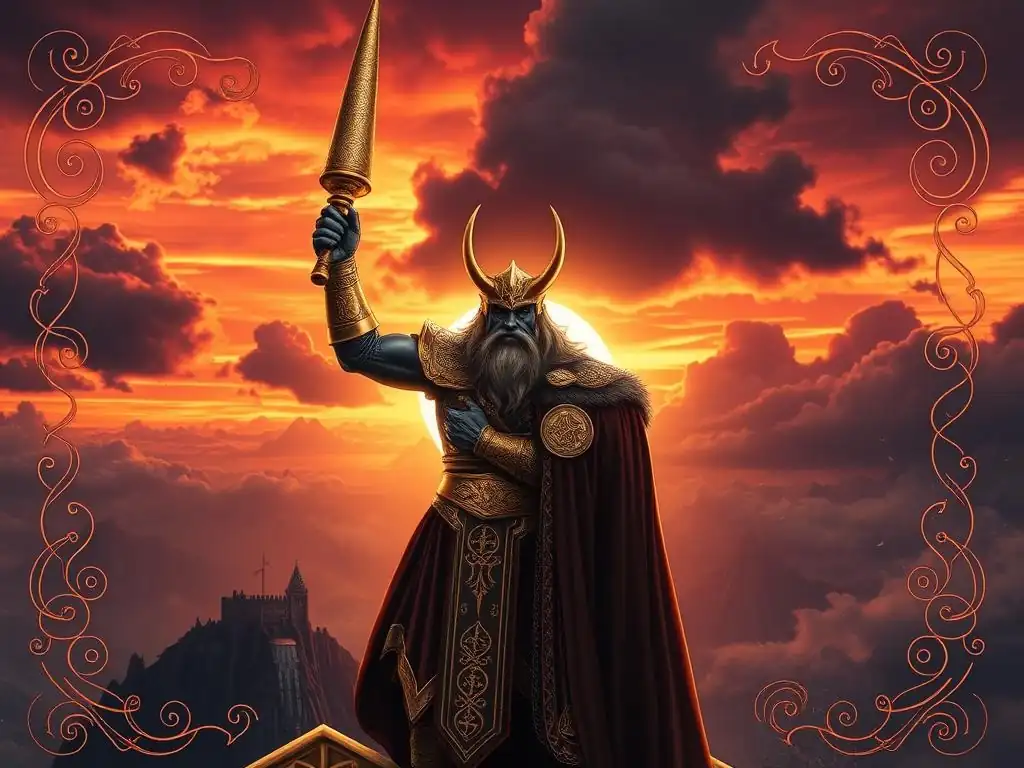
Heimdall's role reaches its climax during the events of Ragnarok. As the perpetual watchman, he is the first to perceive the undeniable signs of the impending doom and it is his duty to alert the cosmos. His actions during this period are not just those of an announcer but also those of a participant in the final, cataclysmic battle.
The Ragnarok prophecy dictates specific roles for many deities, and Heimdall is no exception. He is destined to engage in a fated duel with one of the most significant figures of chaos, a clash that underscores the fundamental opposition between order and disorder in the Norse worldview. His involvement in the final battle highlights that even the vigilant guardian must eventually lay down his horn and take up arms to defend what he protects.
Heimdall's Role in the Ragnarok Prophecy: Preparing for the End
As the guardian of Bifrost, Heimdall is inherently positioned to be the first to witness the signs of Ragnarok approaching. The prophecy includes events like the three-year Fimbulwinter and the breaking of cosmic bonds (such as Fenrir's chain) that would likely be visible or audible to one with Heimdall's senses. His role is to interpret these signs and act decisively by sounding the Gjallarhorn, thereby fulfilling a crucial part of the Ragnarok prophecy.
Once the horn is sounded, Heimdall likely joins the other gods on the plain of Vígríðr, the prophesied site of the final battle. While his primary task is the alarm, his presence among the fighting gods is expected. He transitions from his role as a solitary sentinel to an active combatant, ready to defend Asgard and the cosmic order against the encroaching forces of destruction. His long vigil culminates in this ultimate defense, a testament to his unwavering loyalty and duty.
Heimdall vs. Loki: The Fated Clash at Ragnarok
One of the specific, prophesied duels of Ragnarok is the confrontation between Heimdall and Loki. This pairing is significant because it pits the embodiment of order, vigilance, and light (Heimdall is sometimes associated with light or whiteness) against the embodiment of chaos, cunning, and mischief (Loki). Their antagonism is hinted at in earlier myths, such as the tale of Loki stealing Freyja's necklace Brísingamen, which Heimdall recovers after a shape-shifting battle.
At Ragnarok, this underlying tension erupts into a final, fatal confrontation. According to the Prose Edda, Heimdall and Loki will slay one another during the battle of Vígríðr. This mutual destruction signifies the profound opposition between their natures—neither the perfect guardian of order nor the ultimate agent of chaos can survive the other in the final dissolution of the world. Their fated clash is a dramatic representation of the cosmic struggle that defines Ragnarok.
The Aftermath of Ragnarok: Heimdall's Fate and the Rebirth of the World
The Ragnarok prophecy foretells the death of most of the old gods, including Odin, Thor, and Heimdall. Having fulfilled his duty by sounding Heimdall's horn and engaging in his final battle with Loki, Heimdall is among those who perish. His death, like that of many other gods, is a necessary part of the cosmic cycle of destruction and rebirth.
However, Ragnarok is not merely an end but also a beginning. After the world is consumed by fire and sinks into the sea, it is prophesied to rise again, renewed and fertile. A few gods are said to survive the cataclysm, and a new generation of humans will emerge. While Heimdall himself does not survive to inhabit this new world, his actions, particularly the sounding of his horn that initiated the cleansing destruction, are crucial to its eventual emergence. His fate is tied to the old world, allowing for the possibility of a new one.
Heimdall in Popular Culture: Modern Interpretations of the Norse God
The enduring power of Norse mythology means that figures like Heimdall continue to capture the imagination, finding new life in modern literature, art, and media. His distinctive characteristics—the vigilant watchman, the keen senses, and especially Heimdall's horn—make him a compelling figure for contemporary retellings and adaptations.
These modern interpretations often draw upon the core elements of his myth, but they also adapt and expand upon them for new audiences and narratives. From fantasy novels to comic books and blockbuster films, Heimdall's presence in popular culture demonstrates the lasting resonance of his archetype and the Norse Ragnarok prophecy.
Heimdall in Literature and Art: Depictions Throughout History
Throughout history, artists and writers have been inspired by Norse mythology, including the figure of Heimdall. Early depictions might be found in illustrations accompanying translations or retellings of the Eddas. For example, some 19th-century illustrations of Norse myths portray Heimdall standing watch at Bifrost, often emphasizing the rainbow bridge and his horn.
In literature, Heimdall has appeared in various forms. He might feature as a character in fantasy novels drawing on Norse themes, or his attributes might inspire characters with similar roles as guardians or seers. While perhaps not as frequently centered as Odin or Thor, his unique position and abilities offer rich material for authors exploring themes of vigilance, destiny, and the boundary between worlds. His connection to Heimdall's horn and the Ragnarok prophecy often makes him a figure associated with significant, world-altering events in these narratives.
Heimdall in Modern Media: From Comics to Movies
Heimdall has gained significant visibility in modern media, most notably through his portrayal in Marvel Comics and the subsequent Marvel Cinematic Universe (MCU). In these adaptations, Heimdall is typically depicted as the stoic, all-seeing, and all-hearing guardian of the Bifrost, played by actor Idris Elba in the films. While differing in some details from the original myths (for instance, his ultimate fate and relationship with Odin), this portrayal has introduced the character of Heimdall, his role as watchman, and his connection to the Bifrost to a global audience.
Beyond the MCU, Heimdall appears in various video games, role-playing games, and other forms of media that draw inspiration from Norse mythology. These interpretations often utilize his iconic imagery—the armor, the sword Hofund (mentioned in some myths), and of course, Heimdall's horn. His role as the one who sounds the alarm for Ragnarok is a dramatic element frequently incorporated into narratives focusing on the end of the Norse cosmic cycle.
Understanding Heimdall's Legacy: The Enduring Importance of the Watchman God
Heimdall remains a significant figure in Norse mythology, not just for his dramatic role in Ragnarok, but for what he represents. His myth offers insights into Norse cosmology, their understanding of order and chaos, and the inevitability of fate. His legacy extends beyond the ancient texts, influencing how we perceive themes of vigilance, responsibility, and the interconnectedness of the world.
Exploring Heimdall's story allows us to reflect on the importance of awareness and preparedness. His horn, the Heimdall's horn, and its connection to the Ragnarok prophecy serve as powerful symbols of cosmic cycles and the moment of irreversible change.
Heimdall's Symbolism: What He Represents in Norse Mythology
Heimdall primarily symbolizes vigilance, order, and the boundary between worlds. As the guardian of Bifrost, he represents the crucial need to protect the established order from external threats. His keen senses symbolize perfect awareness and perception, highlighting the importance of being fully cognizant of one's surroundings and potential dangers.
He can also be seen as a symbol of loyalty and duty, as he remains at his post for eternity, never faltering in his watch. His association with light and whiteness in some descriptions might link him to purity, the dawn, or benevolent illumination, contrasting with the darkness and chaos he guards against. His unique birth and connection to the sea or primordial forces also suggest a link to the fundamental, underlying structures of the cosmos itself.
The Significance of Heimdall's Horn, Ragnarok Prophecy, and the End of the World
Heimdall's horn, the Gjallarhorn, is more than just a warning device; it is a symbol of cosmic destiny. Its sound signifies the point of no return, the moment the inevitable events of the Ragnarok prophecy begin to unfold. The horn represents the voice of fate itself, announcing the end of one cycle and the potential for a new beginning.
The intertwined narrative of Heimdall, his horn, and the Ragnarok prophecy underscores a key theme in Norse mythology: the concept of predetermined fate (wyrd). Despite the gods' power, they are bound by prophecy, and Heimdall's sounding of the horn is merely the trigger for events that have long been foretold. This highlights the Norse understanding of cosmic cycles—creation, order, disruption, destruction, and eventual rebirth—with Heimdall's horn marking the dramatic transition point.
Heimdall's Influence on Contemporary Thought: Exploring Themes of Vigilance and Sacrifice
Heimdall's archetype resonates in contemporary thought through themes of vigilance and sacrifice. In a modern context, the idea of a tireless guardian dedicated to watching over a crucial threshold speaks to concerns about security, monitoring, and the responsibility of protecting valuable assets or information. His story can be seen as a metaphor for the need for constant awareness in a complex world.
Furthermore, Heimdall's ultimate fate at Ragnarok, where he dies fighting Loki, embodies the theme of sacrifice in the face of inevitable destruction. He fulfills his duty to the bitter end, demonstrating unwavering commitment even when the outcome is predetermined. This aspect of his character can inspire reflections on duty, loyalty, and the willingness to stand firm in defense of principles or community, even when faced with overwhelming odds.
Frequently Asked Questions
What is the significance of Heimdall's horn, Gjallarhorn, in Norse mythology?
Gjallarhorn is Heimdall's horn, used to signal the beginning of Ragnarok, the end of the world. Its sound will alert the gods of the impending doom.
Who is Heimdall, and what is his role in Norse mythology?
Heimdall is the vigilant watchman of Asgard, the realm of the gods. He possesses exceptional senses and guards the Bifrost bridge, anticipating the events of Ragnarok.
How does Heimdall's role connect to the "Ragnarok prophecy"?
The Ragnarok prophecy details the end of the world and the death of many gods. Heimdall's blowing of Gjallarhorn directly fulfills a crucial part of this pre-determined fate.
What are some interpretations of the sound of Gjallarhorn, and what does it signify?
The sound is interpreted as a call to arms for the gods and a warning of the impending chaos. It signifies the beginning of the end and the start of the final battle.
Besides blowing the horn, what else does Heimdall do during Ragnarok?
Heimdall actively participates in the final battle, engaging in a fatal duel with Loki. This demonstrates his dedication to defending Asgard even in the face of destruction.
Final Reflection: The Enduring Echo of Heimdall's Horn
The myth of Heimdall and Ragnarok isn't just a dusty relic of Norse mythology; it's a potent metaphor for the anxieties and uncertainties we face in our own time. The impending doom depicted in the prophecy resonates deeply with our modern concerns about climate change, societal collapse, and the unknown future. The very act of watching, of waiting for the Gjallarhorn's blast, mirrors our own collective vigilance in the face of global challenges.
The enduring power of Heimdall's story lies in its ability to tap into our primal fears and hopes. It speaks to our inherent need for warning, for a sentinel to alert us to impending danger, and for a sense of order even in the face of chaos. The end is not the end. It is but the beginning of the end.
This sentiment, though not directly from the original Norse texts, encapsulates the cyclical nature of Ragnarok and the potential for rebirth and renewal that follows destruction. This cyclical nature offers a powerful message of hope, even within the context of seemingly insurmountable challenges.
Consider the sound of the Gjallarhorn. Imagine its echoing call, piercing the veil of complacency and forcing us to confront the realities of our world. What is your Gjallarhorn? What is the warning sign that demands your attention?
Take a moment to reflect on the challenges facing our society and your own life. Embrace the responsibility of vigilance, not with fear, but with a determined spirit to build a future worthy of surviving the metaphorical Ragnarok of our time. Let the legend of Heimdall inspire you to be a watchman, not just for yourself, but for the world around you.
Unleash Your Inner Viking: Explore the Myths of Ragnarok!
Thanks for diving deep into the world of Heimdall and the impending Ragnarok! You've gained valuable insights into Norse mythology and its rich tapestry of heroes and prophecies. Now it's time to take your knowledge further.
- Craft your own Ragnarok prophecy: Imagine a twist on the classic tale! What new heroes emerge? What unexpected events unfold? Let your creativity run wild and share your vision in the comments below.
- Delve deeper into Norse mythology: Explore other figures and stories within this fascinating pantheon. Research the Valkyries, Odin's ravens, or the mystical world of Yggdrasil.
- Share this captivating tale with a friend: Spread the wonder of Norse mythology by introducing someone new to the epic saga of Ragnarok.
What unexpected twist would you add to the prophecy of Ragnarok? Let's discuss!