
The Divine Twins: Freyr and Freyja's Shared Power


Welcome to Mythology and Legends!
Delve into the captivating realm of ancient tales, where gods and goddesses walked the earth and shaped the destinies of mortals. Ever wondered about the shared power and intertwined fates of Freyr and Freyja? Unravel the mysteries of these divine twins in Norse mythology and discover how their influence resonates even today. Prepare to embark on an unforgettable journey through legends that have shaped civilizations – the adventure begins now!
- The Divine Twins: Freyr and Freyja's Shared Power in Norse Mythology
- Introduction to Freyr and Freyja: Exploring Norse Twin Deities
- Freyr: God of Prosperity, Peace, and Fertility
- Freyja: Goddess of Love, Beauty, and Seidr Magic
- Shared Powers and Responsibilities: The Divine Partnership
- The Vanir Gods and Their Influence on Freyr and Freyja's Power
- Freyr and Freyja in Modern Interpretations of Norse Mythology
- Conclusion: The Enduring Legacy of Freyr and Freyja in Norse Lore
-
Frequently Asked Questions
- ### What is the significance of Freyr and Freyja being considered "divine twins" in Norse mythology?
- ### What are some of the key powers or domains associated with Freyr?
- ### How does the concept of "Norse mythology" influence our understanding of Freyr and Freyja's roles?
- ### Where can I find more information about Freyr, Freyja, and other figures in Norse mythology?
- Final Reflection: The Enduring Legacy of Freyr and Freyja
- Unlock the Secrets of the Divine Twins!
Introduction to Freyr and Freyja: Exploring Norse Twin Deities
The Importance of Freyr and Freyja in the Norse Pantheon
Freyr and Freyja stand as two of the most prominent and beloved deities within the complex tapestry of Norse mythology. As twin siblings, they share a unique bond and influence, representing vital aspects of life for the ancient Norse people. Their presence permeates the sagas and eddas, highlighting their significance not just as powerful gods but as figures deeply connected to prosperity, love, and the very cycles of nature. Understanding Freyr Freyja Norse mythology requires recognizing their individual strengths as well as their intertwined destinies.
These deities are central to the Vanir, one of the two main tribes of gods in Norse cosmology, distinct from the more war-like Aesir. Their importance is underscored by their role in the Vanir-Aesir War and the subsequent exchange of hostages, which brought them and their father Njörðr into the Aesir stronghold of Asgard. This integration solidified their place in the wider pantheon, ensuring their continued veneration and influence across various aspects of Norse life, from agriculture and seafaring to magic and the afterlife.
Understanding the Connection Between Freyr and Freyja: More Than Just Siblings
The relationship between Freyr and Freyja is often depicted as exceptionally close, reflecting their shared lineage as Vanir and their parallel domains. While siblings, some interpretations suggest a connection that transcends typical familial bonds, potentially hinting at the Vanir's more permissive views on incestuous relationships among deities, though this is debated among scholars based on the limited source material. What is clear is their shared origin and their influence over similar spheres, particularly fertility, wealth, and aspects of magic.
Their connection is not just genealogical but thematic. Both are associated with abundance, vitality, and the arts of seidr (magic). Freyr brings good harvests and peace, while Freyja embodies love, beauty, and powerful sorcery. This thematic overlap suggests a partnership or complementary dynamic, where their combined powers ensure the well-being and prosperity of those who honor them. Exploring the nuances of this divine sibling relationship is key to grasping their full power within Freyr Freyja Norse mythology.
Freyr: God of Prosperity, Peace, and Fertility
Freyr's Domains: Agriculture, Abundance, and Good Harvests
Freyr, whose name can be translated as "Lord," is primarily revered as a god of fertility, prosperity, and fair weather. His domain is deeply rooted in the agrarian lifestyle of the Norse people, who relied heavily on successful harvests for survival. Freyr is invoked for good yields from the land, for sunshine and rain at the right times, and for the general abundance that sustains communities. His influence extends beyond crops to encompass peace and the cessation of conflict, making him a god associated with times of plenty and harmony.
The sagas depict Freyr as a benevolent deity, particularly popular in Sweden, where Uppsala was a major center of his worship. Accounts, such as those found in Adam of Bremen's Gesta Hammaburgensis Ecclesiae Pontificum, mention a prominent temple at Uppsala where Freyr, Thor, and Odin were venerated, with Freyr associated with peace and pleasure. This historical evidence, though potentially biased, points to his significant role in ensuring the well-being and continuation of life for his worshippers.
Key Attributes and Symbols of Freyr: Gullinbursti, Skidbladnir, and the Sword of Summer
Freyr is associated with several remarkable artifacts that symbolize his power and domains. One is Gullinbursti, a golden-bristled boar forged by the dwarves Brokkr and Sindri. This boar is incredibly fast, capable of running through air and water, and its bristles light up the darkest night. Gullinbursti represents fertility, strength, and the sun, often associated with agricultural cycles and the bringing of light and warmth essential for growth.
Another key symbol is Skidbladnir, a ship crafted by the dwarves for Freyr. This ship is large enough to hold all the Aesir gods but can be folded up small enough to fit in a pouch when not in use. It can sail on land or sea and always finds favorable winds. Skidbladnir symbolizes the ease with which abundance and prosperity can travel, as well as the ingenuity and wealth associated with the Vanir.
Freyr also possesses a magical sword, often called the Sword of Summer or the Sword of Victory, which can fight on its own. However, he famously gives this sword away for the hand of the giantess Gerðr, a decision that leaves him vulnerable during Ragnarök. This sacrifice highlights the theme of love and desire overriding even divine foresight and power.
Freyr's Role in Norse Mythology: From Vanir Hostage to Beloved God
Freyr's journey in Norse mythology begins in Vanaheimr, the realm of the Vanir. Following the Vanir-Aesir War, he, along with his father Njörðr and twin sister Freyja, were sent to Asgard as hostages to secure peace. This act signifies the merging of the two divine tribes and the integration of Vanir powers, particularly those related to fertility, wealth, and magic, into the Aesir pantheon. Freyr quickly became a respected and beloved god among the Aesir and humans alike.
Despite being a hostage, Freyr held a position of honor. He resided in Alfheimr, the realm of the elves, which was given to him as a gift. This association with the elves further links him to fertility and nature spirits.
His story of falling in love with Gerðr, as told in the Skírnismál, is a central myth, illustrating his deep desire and the lengths he would go for love, even sacrificing his powerful sword. This act, while ensuring his union, also foreshadows his fate at Ragnarök, where he is fated to fall due to the lack of his primary weapon, emphasizing the interwoven themes of love, fate, and sacrifice in Freyr Freyja Norse mythology.
Freyja: Goddess of Love, Beauty, and Seidr Magic
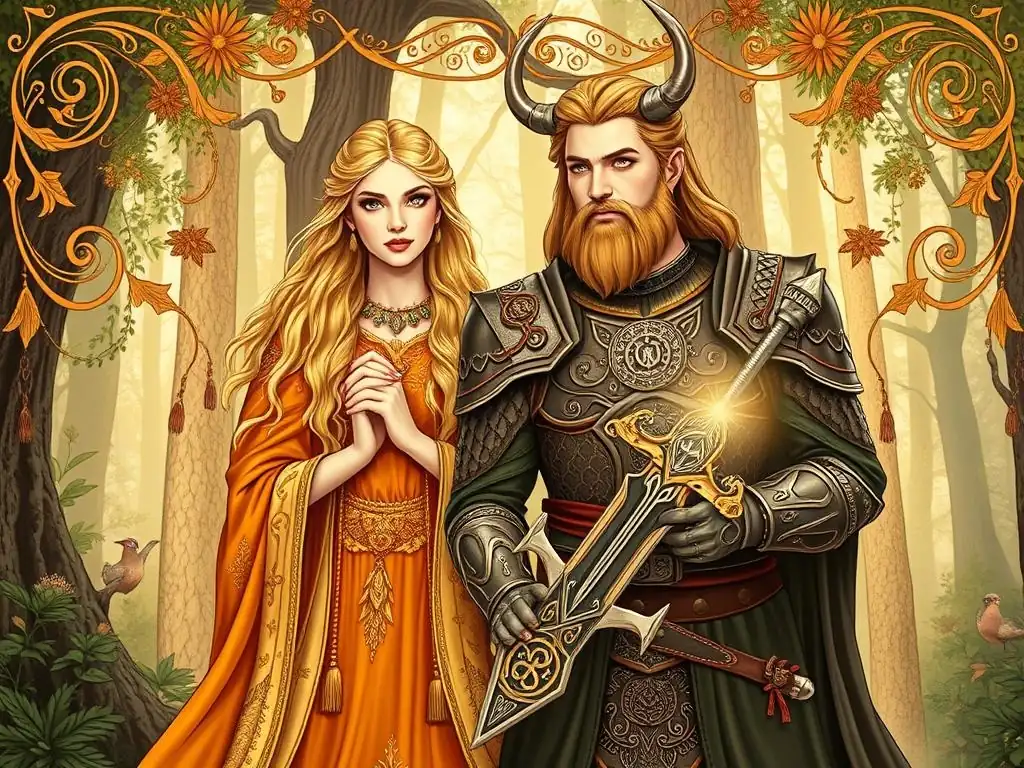
Freyja's Domains: Love, Fertility, and the Art of Seidr
Freyja, meaning "Lady," is one of the most complex and multifaceted goddesses in the Norse pantheon. Her domains are vast and deeply intertwined, encompassing love, beauty, sex, fertility, gold, war, and death. She is also the foremost practitioner of seidr, a powerful and often mysterious form of Norse magic involving divination, shaping destiny, and communicating with spirits. Her influence touches upon the most fundamental aspects of human experience and the cosmic order.
As a goddess of love and beauty, Freyja is highly desired by gods, giants, and dwarves alike, as seen in various myths where her hand or possessions are sought after. Her association with fertility mirrors her twin brother Freyr's, emphasizing the Vanir connection to the generative forces of nature. However, her domain extends significantly into the realms of war and death, particularly through her role in selecting fallen warriors. This duality makes her a powerful and sometimes fearsome figure, embodying both the allure of life and the finality of death.
Key Attributes and Symbols of Freyja: Falcon Feather Cloak, Brisingamen, and the Chariot Pulled by Cats
Freyja is associated with several potent symbols and possessions that highlight her diverse powers. One is her falcon feather cloak, which allows her to shapeshift into a falcon or travel great distances quickly, signifying her connection to the spiritual realms and her ability to traverse boundaries. This cloak is famously borrowed by Loki in the myth of Þrymr's theft of Thor's hammer.
Her most prized possession is the necklace Brisingamen, a magnificent piece of jewelry forged by four dwarves. The acquisition of Brisingamen is often linked to tales involving sexual favors granted to the dwarves, highlighting Freyja's association with sensuality and desire, as well as the lengths she might go to acquire beauty and power. Freyja also travels in a chariot pulled by two large cats, likely Norwegian Forest Cats.
This unique mode of transport connects her to wild nature, independence, and possibly the domestic sphere, given cats' role in Norse households. These symbols collectively portray Freyja as a goddess of immense beauty, power, and connection to both the wild and the magical aspects of existence within Freyr Freyja Norse mythology.
Freyja's Role in Norse Mythology: Leading the Valkyries and Claiming the Slain
Freyja holds a unique and significant role in the realm of death and the afterlife. Unlike Odin, who claims half of the warriors slain in battle for Valhalla, Freyja claims the other half for her own hall, Sessrúmnir, located in her realm called Fólkvangr ("Field of the Host"). This prerogative highlights her status as a powerful war goddess and a leader of the Valkyries, who are often associated with choosing the slain. Her claim on warriors suggests a different kind of afterlife or purpose for those who go to Fólkvangr compared to Valhalla.
Beyond her role in war and death, Freyja is the foremost authority on seidr magic among the gods. She is said to have taught Odin this powerful art, which was traditionally practiced by women. This makes her a crucial figure for understanding Norse shamanistic practices and the divine source of magic. Her influence extends from the battlefield to the spiritual realm, solidifying her position as a formidable and indispensable deity in the Norse pantheon, a key figure when discussing Freyr Freyja Norse mythology.
The Balance of Power: How Freyr and Freyja Complement Each Other
While Freyr and Freyja have distinct domains and attributes, their shared Vanir heritage and sibling bond create a complementary dynamic. Freyr is often associated with the outward aspects of fertility and prosperity – good weather, abundant harvests, peace among people. Freyja, conversely, deals with the more internal and intense aspects – human love and desire, the wealth of gold, the deep mysteries of magic, and the ultimate transformation of death.
Together, they represent a complete picture of life's vital forces as understood by the Norse. Freyr ensures the sustenance and peaceful continuation of the community through the land's bounty and harmonious relations, while Freyja governs the passions, wealth, magic, and the transition to the afterlife. This balance between the nurturing, outward focus of Freyr and the intense, inward, and transformative focus of Freyja demonstrates a comprehensive divine partnership essential to the well-being of both gods and humans in Freyr Freyja Norse mythology.
Fertility and Abundance: Their Combined Influence on Norse Society
The most evident shared domain of Freyr and Freyja is fertility and abundance. As Vanir deities, they are intrinsically linked to the generative powers of nature and life. For an agricultural society like that of the Norse, the ability to produce food and sustain life was paramount. Worship of Freyr and Freyja was thus crucial for ensuring the survival and prosperity of communities.
Their combined influence covers both the fertility of the land (Freyr's domain) and the fertility of people and animals (often associated with both, but especially Freyja). Offerings and rituals directed towards them would seek blessings for successful crops, healthy livestock, numerous offspring, and general wealth. Their presence in Asgard, following the Vanir-Aesir exchange, meant that these vital Vanir blessings were now available to the Aesir and the wider world under their protection, cementing their importance in the daily lives and long-term survival of the Norse people.
Seidr Magic and Prophecy: Freyja's Influence on Freyr's Foresight
While Freyja is the primary deity of seidr magic, this powerful art has implications for Freyr's domains as well. Seidr involves not only divination and shaping destiny but also understanding the flow of fate and time. Freyja's mastery of seidr, to the extent that she taught it to Odin, suggests her profound insight into the workings of the cosmos and the threads of wyrd (fate).
Although Freyr is not depicted as a practitioner of seidr himself, his association with the Vanir and his twin's expertise suggest that he might possess a degree of foresight or an understanding of the natural cycles and their outcomes. The myth of his sacrifice of the sword for Gerðr, knowing it would lead to his demise at Ragnarök, could be interpreted not merely as blind passion but as a fated event he might have foreseen, perhaps through Vanir insight or even indirectly influenced by his sister's domain of destiny-shaping magic.
While not explicitly stated, Freyja's deep connection to seidr likely provides a magical undercurrent to the Vanir's powers, potentially influencing aspects of Freyr's foresight or his connection to the future harvest and prosperity.
The Vanir Gods and Their Influence on Freyr and Freyja's Power
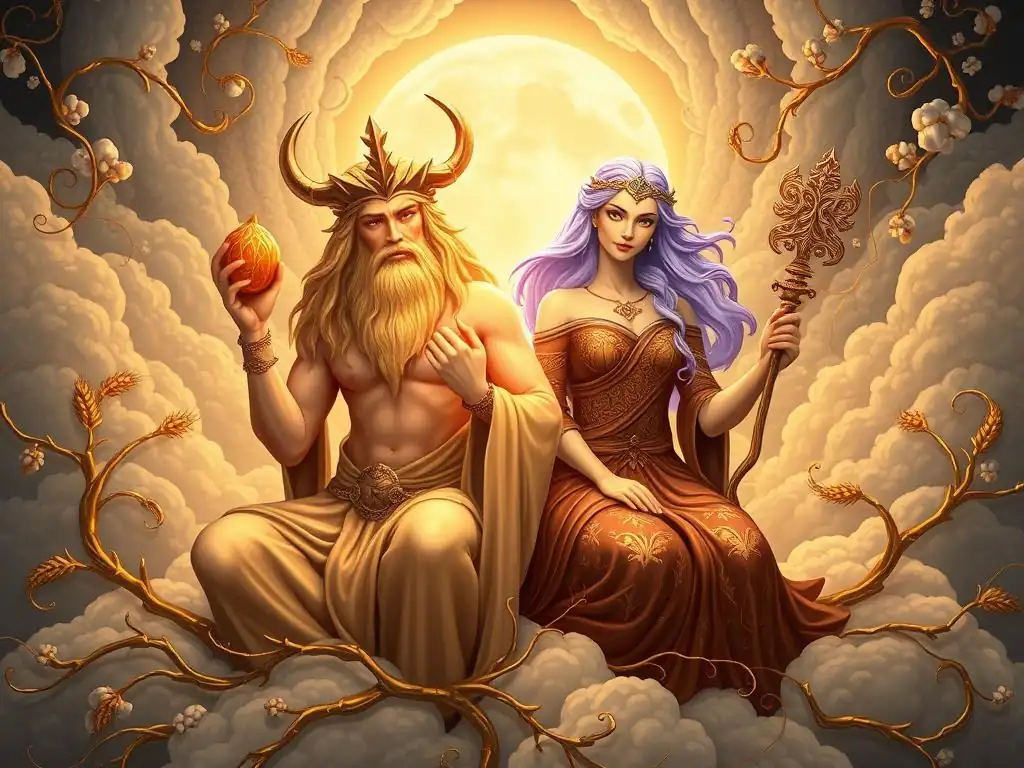
Understanding the Vanir: Origins of Freyr and Freyja's Divine Lineage
Freyr and Freyja belong to the Vanir, one of the two major groups of deities in Norse mythology, the other being the Aesir. The Vanir are primarily associated with fertility, wisdom, foresight, and the sea. Their realm is Vanaheimr. Unlike the Aesir, who are often characterized by strength, war, and kingship (like Odin and Thor), the Vanir represent a different, perhaps older, layer of Norse cosmology, more closely tied to the natural world's cycles and inherent magic.
The Vanir lineage provides Freyr and Freyja with their core strengths. Their father, Njörðr, is a sea god associated with wealth and seafaring, linking them to prosperity from both land and sea. Their mother is often suggested to be Njörðr's sister, reflecting a tradition within the Vanir that was not practiced by the Aesir (and was considered taboo by humans). This origin story emphasizes their deep connection to fertility and the continuation of their divine line, setting them apart from the Aesir and providing the foundation for their powers over abundance, love, and magic.
The Vanir-Aesir War: Shaping Freyr and Freyja's Destiny
A pivotal event in Norse mythology is the war between the Vanir and the Aesir. The reasons for the war are debated, but one prominent account involves the goddess Gullveig/Heiðr, a Vanir figure associated with gold and seidr, who was mistreated and killed by the Aesir. This conflict was devastating, with neither side gaining a decisive victory. It ultimately led to a truce and an exchange of hostages to ensure peace.
Freyr, Freyja, and their father Njörðr were the primary Vanir hostages sent to live among the Aesir in Asgard. In return, the Aesir sent Hœnir and Mímir to the Vanir. This exchange fundamentally altered the structure of the Norse pantheon, bringing the Vanir's unique powers and knowledge, particularly regarding fertility and magic, into the Aesir sphere. It solidified Freyr and Freyja's place among the most important gods worshipped by humans, integrating their distinct Vanir strengths into the broader framework of Freyr Freyja Norse mythology.
The Legacy of the Vanir: How They Influenced Norse Beliefs
The integration of the Vanir into the Aesir pantheon had a lasting impact on Norse beliefs and practices. The Vanir brought with them a focus on fertility cults, peace treaties, and the practice of seidr magic. Their presence ensured that these aspects remained central to the religious life of the Norse people alongside the more martial concerns associated with gods like Odin and Thor.
Freyr and Freyja, as the most prominent Vanir figures in Asgard, embodied this legacy. Freyr's association with kingship, peace, and agricultural success became crucial for rulers and farmers alike. Freyja's mastery of seidr made her the divine source for those practicing magic and divination, and her role in the afterlife provided an alternative or complementary destination for warriors. The Vanir legacy, carried forward by Freyr and Freyja, ensured a more balanced and comprehensive religious system that addressed both the needs of war and peace, life and death, magic and prosperity, defining key aspects of Freyr Freyja Norse mythology.
Freyr and Freyja in Modern Interpretations of Norse Mythology
Freyr and Freyja in Popular Culture: Neil Gaiman's "American Gods," Marvel Comics, and Video Games
Freyr and Freyja continue to capture the imagination in modern times, appearing in various forms of popular culture. Neil Gaiman's novel American Gods features both deities as "Old Gods" living in America, struggling to maintain relevance against the "New Gods" of technology and media. Freyr appears as a somewhat diminished figure, while Freyja is depicted as powerful and sensual, reflecting their core attributes from the myths.
In Marvel Comics, variations of Norse deities are prominent, though their portrayals often diverge significantly from traditional mythology. While Thor and Odin are central, Freyja (often depicted as the mother of Thor) and Freyr have also appeared, sometimes in roles that combine or alter their mythological characteristics to fit the comic book narrative.
Video games, particularly those with Norse themes like the God of War series (especially the later entries set in the Norse world) and Assassin's Creed Valhalla, often feature figures inspired by or directly named after Freyr and Freyja, integrating elements of their myths, symbols, and domains into the game's world and story. These modern interpretations, though often fictionalized, introduce Freyr Freyja Norse mythology to new audiences.
The Enduring Appeal of Freyr and Freyja: Why They Still Matter Today
The enduring appeal of Freyr and Freyja lies in their connection to fundamental human experiences and the forces of nature. Fertility, love, beauty, prosperity, and the mysteries of magic and death are timeless concerns. Freyr embodies the desire for peace, abundance, and the simple yet vital blessings of a good harvest, while Freyja represents passion, wealth, independence, and the profound power of destiny and transformation.
In a world that still grapples with cycles of growth and decay, love and loss, wealth and scarcity, the domains of Freyr and Freyja remain relevant. They offer archetypes that resonate with contemporary concerns about environmental sustainability (Freyr's connection to the land), personal relationships (Freyja's connection to love and desire), and the search for meaning and power (Freyja's seidr). Their stories, filled with passion, sacrifice, and power, continue to provide rich material for reflection and inspiration, keeping Freyr Freyja Norse mythology alive.
Reclaiming the Divine Twins: Modern Paganism and the Worship of Freyr and Freyja
In modern Heathenry and other forms of Norse-inspired paganism, Freyr and Freyja are among the most widely venerated deities. Practitioners seek to reconnect with the old ways and honor the gods of their ancestors (or chosen path). Freyr is often honored in rituals focused on fertility, prosperity, peace, and the home, particularly around agricultural festivals or times of planting and harvest.
Freyja is venerated for her connections to love, beauty, sex, seidr, and independence. Followers might seek her blessing for relationships, artistic endeavors, personal empowerment, or guidance through divination. The worship of both Freyr and Freyja highlights their importance as sources of life, power, and connection to the spiritual and natural worlds. Modern pagans often emphasize the balance between their energies – the nurturing, grounding force of Freyr and the passionate, transformative power of Freyja – seeing their combined influence as essential for a balanced life and a deeper understanding of Freyr Freyja Norse mythology.
Conclusion: The Enduring Legacy of Freyr and Freyja in Norse Lore
Reflecting on the Power of the Norse Divine Twins
Freyr and Freyja, the divine twins of the Vanir, represent a powerful and essential duality within Norse mythology. Individually, Freyr is the beloved god of peace, prosperity, and the earth's bounty, while Freyja is the formidable goddess of love, beauty, magic, and the chosen dead. Together, they embody the vital forces of life, growth, passion, and fate, offering a comprehensive vision of divine influence over the human experience and the natural world.
Their journey from Vanaheimr to Asgard, their roles in the Vanir-Aesir War, and their distinct yet complementary domains underscore their importance. From ensuring successful harvests and peaceful communities to governing the deepest desires of the heart and the mysteries of magic and death, Freyr and Freyja are indispensable figures in the Norse pantheon. Their myths, preserved in the Eddas and sagas, continue to reveal layers of meaning about the values, fears, and aspirations of the people who worshipped them.
The Importance of Understanding Freyr and Freyja's Roles in Norse Mythology
To truly grasp the richness and complexity of Norse mythology, it is crucial to understand the significant roles played by Freyr and Freyja. They are not merely minor deities but central figures whose influence permeated daily life, religious practices, and cosmic understanding. Their connection to the Vanir highlights the distinct characteristics and contributions of this divine tribe, particularly regarding fertility, wealth, and magic, which were integrated into the broader Aesir-dominated pantheon.
Studying Freyr and Freyja provides insight into Norse perspectives on sex, gender, wealth, war, death, and the interconnectedness of the natural and spiritual realms. Their myths, such as Freyr's sacrifice of his sword for love or Freyja's claim on half the fallen warriors, offer profound narratives about fate, desire, and the nature of divinity. The enduring presence of Freyr Freyja Norse mythology in modern culture and religious practice is a testament to the lasting power and relevance of these fascinating divine twins.
Frequently Asked Questions
### What is the significance of Freyr and Freyja being considered "divine twins" in Norse mythology?
The term "divine twins" implies a shared origin and intertwined destinies. In Freyr and Freyja's case, it suggests a close relationship and complementary powers, reflecting the interconnectedness of fertility, love, and war in Norse belief.
### What are some of the key powers or domains associated with Freyr?
Freyr is primarily associated with fertility, prosperity, and peace. He is also linked to agriculture, sunshine, and rain, ensuring bountiful harvests and overall well-being for the land and its people.
Freyja is the goddess of love, beauty, and fertility, but she also has a strong connection to war and death. She rules over her own afterlife realm, Fólkvangr, and claims half of the slain warriors.
### How does the concept of "Norse mythology" influence our understanding of Freyr and Freyja's roles?
Norse mythology provides the cultural context for understanding their roles and significance. It reveals the values and beliefs of the Norse people, highlighting the importance of fertility, warfare, and the cyclical nature of life and death.
### Where can I find more information about Freyr, Freyja, and other figures in Norse mythology?
Websites like Mythology and Legends offer a comprehensive resource for exploring Norse mythology. They provide detailed accounts of the gods, myths, and legends, and examine their cultural impact on contemporary society.
Final Reflection: The Enduring Legacy of Freyr and Freyja
The enduring power of Freyr and Freyja resonates far beyond the sagas and Eddas; their intertwined destinies continue to shape our understanding of divinity, gender, and the very nature of power itself. Their story, one of shared dominion and contrasting approaches to rulership, offers a rich tapestry of archetypes that remain strikingly relevant in our modern world, challenging simplistic notions of power and authority.
The influence of Freyr and Freyja's complex relationship extends beyond academic circles, permeating modern interpretations of Norse mythology in art, literature, and popular culture. Their images and stories are constantly reinterpreted, reflecting our own evolving societal values and perspectives on gender roles and leadership. The gods are not dead, but they sleep,
a phrase often attributed to the enduring power of mythology, perfectly encapsulates the continued relevance of Freyr and Freyja in our collective consciousness. Their enduring appeal lies in their multifaceted nature, allowing for diverse interpretations and applications across time and cultures.
Consider the duality inherent in their power: Freyr's fertile abundance juxtaposed with Freyja's fierce independence and mastery of magic. What aspects of their divine natures resonate most strongly with you? How can we learn from their contrasting approaches to leadership and harness the power of collaboration and individual strength in our own lives? Let their story inspire you to explore the complexities of power, gender, and the enduring legacy of the divine twins, Freyr and Freyja.
Unlock the Secrets of the Divine Twins!
Thank you for exploring the fascinating world of Freyr and Freyja! You've now gained a deeper understanding of their intertwined power and influence. Ready to delve even further?
- Begin your own exploration of Norse mythology by researching other powerful deities. Consider delving into the stories of Odin or Thor to see how their narratives connect with Freyr and Freyja.
- Share this article with a friend who loves mythology or history—let's spread the knowledge!
- Leave a comment below and tell us: Which aspect of Freyr and Freyja's shared power resonated most with you, and why?