
Irkalla: The Akkadian Land of No Return's Desolate Landscape

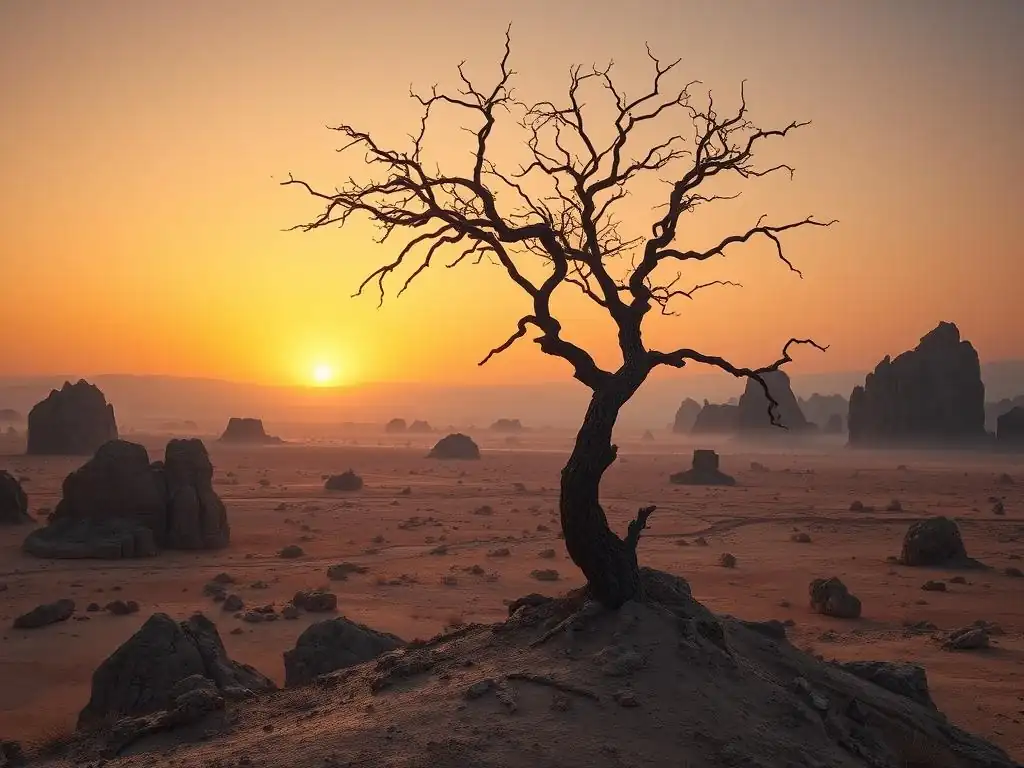
Welcome, seeker of ancient whispers! Delve into the enthralling world of Mythology and Legends, where we unearth the tales that have shaped civilizations. Prepare to journey to forgotten realms, for within these pages, we explore the chilling and fascinating Akkadian underworld landscape details. What secrets lie hidden in Irkalla, the Land of No Return? Discover the desolate beauty and haunting truths that await...
- The Duat: The Ancient Egyptian Underworld's Perilous Realm
- Introduction to the Duat: The Egyptian Underworld
- The Duat's Landscape: Exploring the Geography of the Afterlife
- Inhabitants of the Duat: Gods, Demons, and the Dead
- The Journey Through the Duat: Navigating the Afterlife's Trials
- Eternal Life in the Egyptian Afterlife
- Comparing the Duat to Other Ancient Underworlds
- The Legacy of the Duat: Influence on Later Religions and Cultures
- Conclusion: Reflecting on the Egyptian Underworld and its Meaning
-
Frequently Asked Questions
- What are some key features of Irkalla's landscape as described in Akkadian texts?
- How does Irkalla's landscape compare to other ancient Mesopotamian underworld beliefs?
- What kind of environment and atmosphere are depicted in the Akkadian descriptions of Irkalla?
- What role does the physical landscape of Irkalla play in shaping the Akkadian understanding of death?
- Are there any specific geographic features or landmarks consistently mentioned in connection with Irkalla's landscape?
- Final Reflection: Echoes of Irkalla in the Modern World
- Unlock Irkalla's Secrets: Your Journey Begins Now!
The Duat: The Ancient Egyptian Underworld's Perilous Realm
Introduction to the Duat: The Egyptian Underworld
Defining the Duat: Realm of Osiris and the Afterlife Journey
The Duat served as the ancient Egyptian conception of the underworld, the realm through which the sun god Ra traveled each night and where the souls of the deceased faced judgment and sought passage to the afterlife. It was considered the domain of Osiris, who became its king after his resurrection, symbolizing death and rebirth. For the ancient Egyptians, the Duat was not merely a final resting place but a dynamic and perilous region, a transitional space where the deceased underwent trials and transformations necessary for achieving eternal life.
This complex realm was meticulously mapped out in funerary texts like the Book of Amduat ("Book of That Which Is In the Underworld") and the Book of Gates, which divided the Duat into twelve regions or "hours" corresponding to the twelve hours of the night. These texts provided detailed descriptions of the landscapes, inhabitants, and challenges encountered during the nocturnal journey. The deceased, guided by knowledge gained from spells and rituals performed by the living, hoped to successfully navigate these dangers and arrive at the Hall of Two Truths for the pivotal judgment before Osiris and the divine tribunal.
The Significance of the Egyptian Underworld in Ancient Beliefs
The Duat held profound significance in ancient Egyptian religious cosmology, representing a crucial stage in the cycle of existence. It was intrinsically linked to the daily rebirth of the sun god Ra and the annual flooding of the Nile, both powerful symbols of regeneration. The journey through the Duat mirrored this cosmic cycle; just as Ra battled the forces of chaos each night to be reborn at dawn, the deceased had to overcome obstacles in the underworld to achieve rebirth in the Field of Reeds.
Belief in the necessity of successfully traversing the Duat underscored the importance of proper burial practices, mummification, and the inclusion of funerary texts and amulets. These preparations were not just rituals for the dead but essential tools to aid the soul in navigating the underworld's challenges.
The ultimate goal was to become an akh, a transfigured spirit, capable of existing effectively in the afterlife and potentially joining the gods in their cosmic journeys, thus maintaining the divine order (Ma'at). The Duat was therefore the crucible where the deceased's earthly life was judged and their potential for eternal existence was realized or extinguished.
The Duat's Landscape: Exploring the Geography of the Afterlife
A prominent and perilous feature described in various underworld texts, particularly the Book of Amduat and the Book of Gates, is a fiery river or lake. This isn't a single, static geographical element but often appears in different forms within the twelve hours of the Duat. One significant association is with the nightly journey of the sun god Ra through the underworld, where he confronts his arch-enemy, the serpentine demon Apophis (or Apep). Apophis, the embodiment of chaos, attempts to disrupt Ra's passage, often by trying to swallow him or the river upon which his solar bark sails.
Navigating this "River of Fire" or confronting fiery obstacles was a major trial for both Ra and the deceased. The intense heat and hostile inhabitants of these regions represented the destructive forces that sought to prevent cosmic order and individual rebirth. Spells from the Book of the Dead, such as those intended to repel Apophis or pass through fiery gates, were crucial for protection. These descriptions emphasize the hazardous nature of the Duat's geography, where even fundamental elements like water could be transformed into deadly threats, highlighting the constant struggle against chaos.
Beyond the fiery rivers, the landscape of the Duat as depicted in funerary texts is varied, mysterious, and often desolate. Descriptions from texts like the Book of Gates reveal regions characterized by deep darkness, shifting sands reminiscent of the Egyptian desert, and hidden, often treacherous pathways. The terrain is not uniformly mapped or easily navigable; it changes from one "hour" to the next, presenting different environmental challenges and inhabited by distinct, often terrifying, entities.
Some sections depict barren plains, while others feature mountains, caverns, and lakes. The lack of clear, stable geography underscored the chaotic and unpredictable nature of the underworld compared to the ordered world of the living. Navigating these shifting sands and finding the correct, often hidden, pathways required not physical strength but magical knowledge derived from the funerary spells. Success depended on knowing the names of gatekeepers, understanding the specific challenges of each region, and possessing the correct incantations to command or bypass the hostile environment and its inhabitants.
The Halls of Osiris: Architecture and Features of the Afterlife Courts
At the culmination of the Duat journey, or in a central location often associated with the fifth hour, lies the Hall of Two Truths (or Hall of Ma'at), the site of the crucial judgment before Osiris. While not a typical geographical feature like a river or mountain, this hall represents a significant architectural and functional space within the underworld landscape. Texts like the Papyrus of Ani provide detailed visual and textual accounts of this hall, depicting it as a formal, sacred court.
Key architectural elements include the scales upon which the heart of the deceased is weighed against the feather of Ma'at (truth/cosmic order). Surrounding the judgment scene are depictions of the divine tribunal, including Osiris enthroned as judge, Anubis guiding the deceased and overseeing the scales, Thoth recording the verdict, and the fearsome creature Ammit ("Devourer") waiting nearby.
The hall is also often shown lined with the 42 Assessors, minor deities before whom the deceased must recite the Negative Confession, proclaiming their innocence of various sins. This formal, structured space stands in contrast to the wild and unpredictable terrain of much of the Duat, representing the point where order is imposed and destiny is determined.
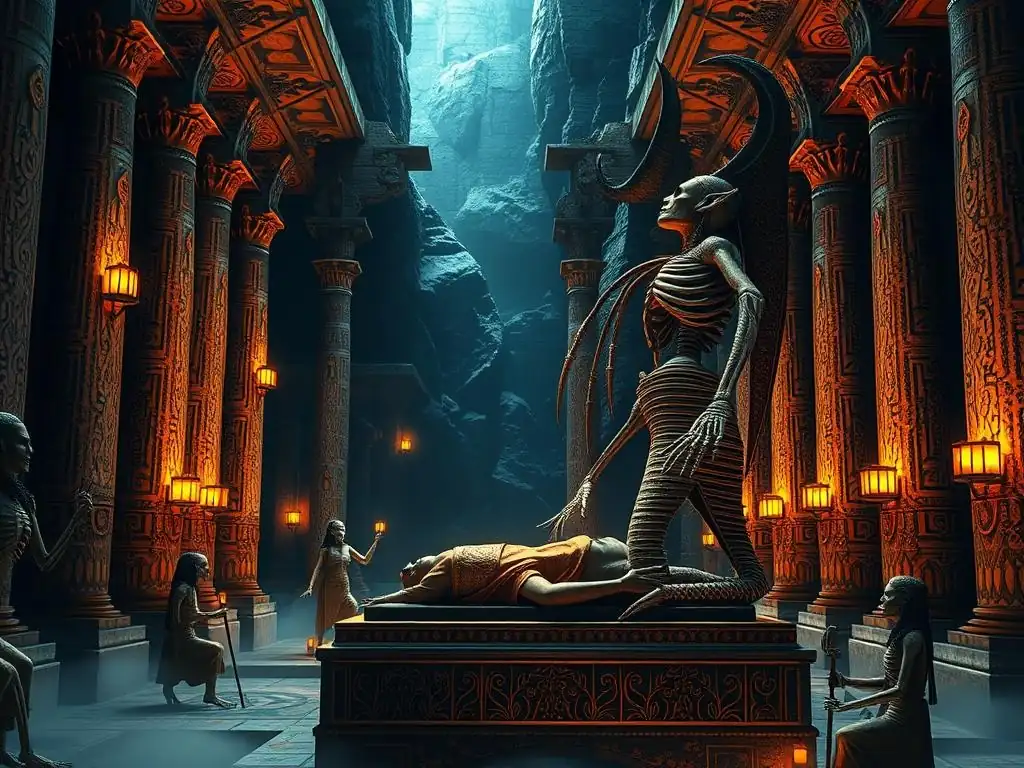
Inhabitants of the Duat: Gods, Demons, and the Dead
Osiris: King of the Underworld and Judge of Souls
Osiris holds the supreme position within the Duat as its king and the primary judge of the deceased. His association with the underworld stems from his myth: murdered by his jealous brother Set, he was resurrected by his sister-wife Isis, but could not return fully to the land of the living. Instead, he became the ruler of the dead, embodying the cycle of death and rebirth. His green or black skin in depictions symbolizes vegetation, regeneration, and the fertile soil of the Nile, further linking him to life emerging from death.
As the central figure in the judgment process, Osiris presides over the Hall of Two Truths. The deceased's fate rests on his verdict after the Weighing of the Heart. Success means joining him in the afterlife paradise; failure means annihilation by Ammit. His presence signifies hope for resurrection and eternal life, but also the ultimate authority that determines worthiness. His rule brought order to the realm of the dead, much as he had sought to civilize Egypt during his earthly reign.
Anubis: Guide and Protector of the Dead
Anubis, the jackal-headed or canine-headed deity, played a vital role in the funerary process and the journey through the Duat. He was closely associated with mummification and funerary rites, believed to protect the deceased's body and guide their soul to the underworld. His epithets often included "He Who Is In the Place of Embalming" and "Foremost of the Westerners" (referring to the land of the dead, typically located west of the Nile).
In the Hall of Two Truths, Anubis is depicted as the deity who leads the deceased into the hall and oversees the crucial Weighing of the Heart ceremony. He is shown adjusting the scales, ensuring the process is fair and accurate. His role as guide and protector was essential for the deceased, providing a benevolent presence in the often terrifying landscape of the Duat and ensuring they reached the point of judgment safely.
Thoth: Recorder of Judgement and Keeper of Knowledge
Thoth, often depicted with the head of an ibis or as a baboon, was the god of writing, knowledge, magic, and wisdom. His intelligence and impartiality made him an indispensable figure in the divine court of the underworld. He is present in the Hall of Two Truths, acting as the divine scribe who records the outcome of the Weighing of the Heart.
Thoth's role was not merely passive; he represented the divine validation of the judgment. His accurate recording of the weight of the heart against the feather of Ma'at ensured the cosmic significance of the verdict. Furthermore, as the god of magic and knowledge, Thoth was implicitly linked to the funerary texts themselves – the spells and incantations that provided the deceased with the necessary knowledge to navigate the Duat and pass its tests. His presence underscored the importance of wisdom and truth in achieving the afterlife.
Demons and Monsters: Guardians and Testers of the Deceased
The Duat was populated by a vast array of fearsome creatures, demons, and minor deities, many of whom served as guardians or testers of the deceased. These entities were not necessarily evil in the modern sense, but represented the challenges, dangers, and chaotic forces inherent in the underworld. Texts like the Book of Gates depict numerous gatekeepers, often monstrous in form, who demanded recognition (knowledge of their names and passwords) before allowing passage.
Other demons personified threats like darkness, fire, or the destruction of the body or spirit. Ammit, the "Devourer of the Dead," a composite beast with the head of a crocodile, the body of a lion, and the hindquarters of a hippopotamus, is perhaps the most infamous. Stationed beside the scales of justice, she awaited the hearts of those deemed impure, consuming them and thus ending the deceased's chance for eternal life. These inhabitants emphasized the perilous nature of the Duat journey, where the deceased faced constant threats that required magical knowledge and moral purity to overcome.
The Weighing of the Heart: Judgment Before Osiris
The most critical event in the deceased's journey through the Duat was undoubtedly the Weighing of the Heart (or psychostasia) in the Hall of Two Truths. This ceremony, vividly depicted in numerous papyri such as the Papyrus of Ani, determined whether the deceased was morally worthy of entering the Field of Reeds. The heart ( ib), considered the seat of consciousness, memory, and morality, was placed on one side of a scale, balanced against the feather of Ma'at, the symbol of cosmic order and truth.
Presided over by Osiris and overseen by Anubis and Thoth, this judgment was the ultimate test of a person's life. If the heart was lighter than or balanced the feather, it indicated a life lived in accordance with Ma'at, and the deceased was declared "true of voice" or "justified." If the heart was heavy with misdeeds, it was devoured by Ammit, resulting in the dreaded "second death" – the permanent annihilation of the soul. This ritual underscored the Egyptian belief that actions in life had direct consequences for the afterlife.
Spells and Charms: Protecting the Deceased on Their Journey
Navigating the perilous landscape and inhabitants of the Duat required more than just moral purity; it also demanded magical protection and knowledge. The Egyptians equipped the deceased with an array of spells, incantations, and charms, often inscribed on sarcophagi, tomb walls, or papyrus scrolls. These texts provided guidance, protection, and the necessary passwords to bypass dangers.
Spells from collections like the Coffin Texts and the Book of the Dead offered protection against specific threats, such as spells to prevent the deceased from having to eat excrement in the underworld, spells to repel snakes and demons, or spells to ensure the heart did not speak against its owner during the judgment (e.g., Spell 30B). Amulets, such as the scarab beetle (often inscribed with Spell 30B) or the Eye of Horus, were also placed on the mummy for physical and magical protection.
These magical tools were considered essential for successfully navigating the Duat's trials and ensuring safe passage.
The collection of spells known today as the Book of the Dead (its ancient Egyptian title translates closer to Ru nu peret em heru, "Book of Coming Forth by Day") served as the ultimate guidebook for the deceased's journey through the Duat. Compiled over centuries, these texts were not a single, canonical book but a personalized anthology of spells chosen for the individual. They provided instructions for every stage of the afterlife journey, from preserving the body to navigating the underworld and achieving rebirth.
Copies of the Book of the Dead, often beautifully illustrated papyrus scrolls, were placed in the tomb with the deceased. The spells contained within provided the necessary knowledge to overcome obstacles: identifying and addressing hostile demons, knowing the names of the gatekeepers of the hours, transforming into various animals or forms to evade danger, and crucially, the texts and declarations required for the judgment before Osiris, including the Negative Confession. The Book of the Dead was thus the essential tool for the deceased to become an akh and secure their place in the afterlife.
Eternal Life in the Egyptian Afterlife
Rebirth and Resurrection: Achieving Immortality in the Field of Reeds
For the "true of voice," those who successfully passed the Weighing of the Heart, the ultimate reward was entry into the Field of Reeds ( Aaru or Sekhet-Aaru). This was the Egyptian equivalent of paradise, depicted as an idyllic land mirroring the fertile Nile Valley but perfected and eternal. It was a place of abundant harvests, peaceful existence, and reunion with deceased family members.
Entry into the Field of Reeds represented the successful achievement of rebirth and resurrection. The justified deceased became an akh, a transfigured, effective spirit, capable of independent movement and participation in the afterlife. Life in Aaru was envisioned as continuing earthly activities but free from hardship – farming was performed with ease, food and drink were plentiful, and dangers were absent. It was the perfect culmination of the journey through the perilous Duat.
Sustenance and Offerings: Maintaining Existence in the Afterlife
While the Field of Reeds was a place of abundance, the deceased still required sustenance to maintain their existence as an akh. This was primarily provided through offerings made by their living relatives at their tomb or mortuary temple. These offerings, which included food, drink, incense, and other necessities, were believed to magically sustain the spirit in the afterlife.
To alleviate the potential burden on the living and to ensure tasks like farming in the Field of Reeds were performed, the Egyptians included shabti (or ushabti) figures in tombs. These small mummiform figurines were inscribed with a spell (Spell 6 from the Book of the Dead) that compelled them to come alive in the afterlife and perform any manual labor required of the deceased. Thus, a combination of offerings and magical servants ensured the comfort and continued existence of the justified dead.
Divine Companionship: Joining the Gods in the Afterlife
Achieving the state of akh and successfully navigating the Duat also opened the possibility of a closer relationship with the divine. The justified dead could potentially join the retinue of the sun god Ra on his nightly journey through the underworld and his daily rebirth in the sky. This participation in the cosmic cycle represented a profound connection to the divine order and eternal renewal.
Furthermore, the deceased could potentially interact with or even become associated with certain deities, particularly Osiris. Becoming "true of voice" meant aligning oneself with the principles of Ma'at and the cosmic order upheld by the gods. This divine companionship was the highest form of eternal existence, moving beyond mere comfortable survival in the Field of Reeds to participating in the fundamental rhythms of the cosmos alongside the divine pantheon.
Comparing the Duat to Other Ancient Underworlds
Similarities and Differences with Greek Conceptions of Hades
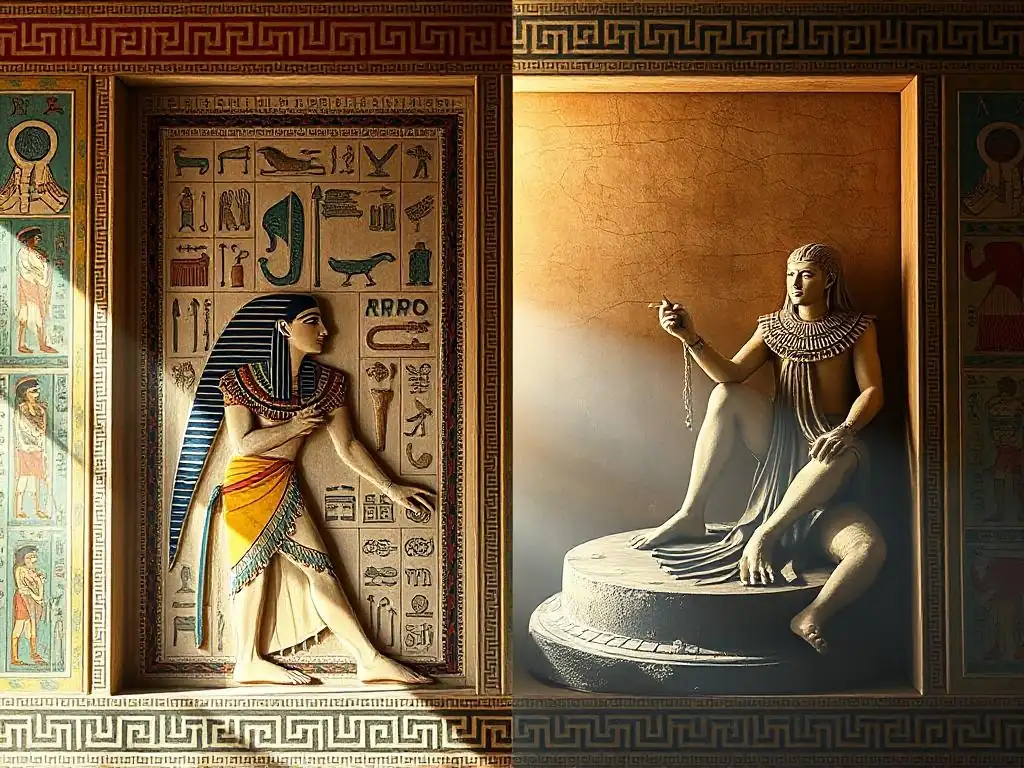
Comparing the Egyptian Duat to the Greek underworld, Hades (the realm, not the god), reveals both parallels and significant divergences in ancient conceptions of the afterlife. Both were considered realms of the dead, typically located beneath the earth, and required a journey to reach. Both involved some form of judgment or assessment of the deceased, though the processes differed greatly.
However, the purpose and nature of the afterlife were fundamentally different. The Duat was a realm of active transformation and potential rebirth, with the ultimate goal being a vibrant, eternal existence in the Field of Reeds or even participation in divine cycles.
Greek Hades, in contrast, was often depicted as a gloomy, shadowy realm where the souls (shades) led a diminished existence, regardless of their earthly deeds, unless they were heroes destined for Elysian Fields or villains for Tartarus. The Egyptian focus was on overcoming chaos to achieve regeneration, while the Greek conception often emphasized the inevitability of decline after death.
Evolution of Underworld Beliefs in Ancient Egypt
Ancient Egyptian beliefs about the afterlife and the Duat were not static but evolved significantly over more than 3,000 years. In the Old Kingdom (c. 2686–2181 BCE), the afterlife was initially conceived primarily for the pharaoh, who ascended to the stars to join the gods. The earliest funerary texts, the Pyramid Texts, were inscribed on the walls of royal tombs to facilitate this celestial journey.
During the Middle Kingdom (c. 2055–1650 BCE), access to the afterlife became more democratized. The Coffin Texts, inscribed on the sarcophagi of non-royal individuals, adapted and expanded upon the Pyramid Texts, making the journey through the underworld accessible to a wider population. The New Kingdom (c. 1550–1070 BCE) saw the emergence and widespread use of the Book of the Dead, further popularizing the spells and imagery associated with navigating the Duat and passing the judgment, solidifying the concept of the Duat as the primary realm of the deceased's journey.
The Legacy of the Duat: Influence on Later Religions and Cultures
Echoes of Egyptian Afterlife Beliefs in Other Ancient Cultures
The complex and detailed Egyptian conception of the afterlife, particularly the judgment of the soul and the perilous journey through a subterranean realm, may have influenced other ancient cultures, although direct lines of transmission are often debated by scholars. Parallels can be drawn, for example, with some aspects of Greek mystery cults or philosophical ideas about the soul's fate after death.
Later religious and philosophical traditions, including some Gnostic texts and even certain aspects of Abrahamic faiths, contain concepts that bear superficial resemblances to Egyptian beliefs, such as a posthumous judgment, a division between the righteous and the wicked, and the existence of a paradise or a place of punishment. While proving direct influence is challenging, the Egyptian ideas about the soul's journey, moral accountability in the afterlife, and the concept of a structured underworld realm were prominent in the ancient world and contributed to the broader tapestry of afterlife beliefs.
The Enduring Appeal of the Egyptian Underworld in Modern Imagination
The mysteries of the Duat and the Egyptian afterlife continue to capture the modern imagination, appearing frequently in popular culture. The imagery of mummies, pyramids, the Book of the Dead, and the judgment scene before Osiris are instantly recognizable symbols of ancient Egypt. This fascination stems from the detailed and visually rich depictions found in tombs and papyri, which offer a vivid, albeit complex, picture of an ancient belief system.
From adventure stories and films featuring cursed tombs and awakened mummies to video games that incorporate Egyptian mythology and board games centered around navigating the afterlife, the Duat remains a compelling setting. Its blend of perilous trials, powerful deities, monstrous guardians, and the promise of eternal life provides fertile ground for storytelling and exploration, ensuring that the ancient Egyptian underworld continues to resonate in contemporary culture.
Conclusion: Reflecting on the Egyptian Underworld and its Meaning
The Duat was far more than just a place for the dead in ancient Egyptian belief; it was a dynamic, perilous, and ultimately transformative realm essential to the cosmic cycle and the individual's quest for eternal life. From its fiery rivers and shifting sands to the structured judgment hall of Osiris, its landscape was a reflection of the chaotic forces that had to be overcome by order (Ma'at). Its inhabitants, both divine and demonic, represented the challenges and aid available to the deceased traveler.
The journey through the Duat, guided by funerary texts like the Book of the Dead and culminating in the crucial Weighing of the Heart, was the ultimate test of a life lived. Success meant rebirth and a vibrant existence in the idyllic Field of Reeds or even joining the company of the gods, while failure meant annihilation. The enduring legacy of the Duat lies in its complex cosmology, its detailed mapping of the afterlife, and its profound emphasis on judgment and the possibility of regeneration, concepts that have echoed through history and continue to fascinate us today.
Frequently Asked Questions
What are some key features of Irkalla's landscape as described in Akkadian texts?
Irkalla, the Akkadian underworld, is typically portrayed as a dark, desolate, and dusty place. It lacks light and is often described as a "land of no return" from which escape is virtually impossible.
How does Irkalla's landscape compare to other ancient Mesopotamian underworld beliefs?
While details vary, Irkalla shares similarities with other Mesopotamian underworlds. It's consistently presented as a grim contrast to the world of the living, a shadowy realm where existence is a pale imitation of life.
What kind of environment and atmosphere are depicted in the Akkadian descriptions of Irkalla?
Akkadian texts emphasize a bleak and oppressive environment. The atmosphere is one of suffering and despair, reflecting the Akkadian perception of death as a negative transition.
What role does the physical landscape of Irkalla play in shaping the Akkadian understanding of death?
The landscape significantly reinforces the Akkadian view of death as a terrifying and undesirable fate. The unpleasant environment serves as a constant reminder of the loss of earthly pleasures and vitality.
Are there any specific geographic features or landmarks consistently mentioned in connection with Irkalla's landscape?
While specific landmarks are not always consistent, descriptions often mention a gate or entrance guarded by netherworld deities. The land itself is often depicted as a vast, barren plain offering no comfort.
Final Reflection: Echoes of Irkalla in the Modern World
The desolate landscape of Irkalla, the Akkadian underworld, remains chillingly relevant today. Our fascination with death and the afterlife, with the unknown and the unyielding power of nature, continues to resonate deeply within us, mirroring the anxieties and awe that fueled the Akkadian creation myths. The very concept of a place of no return, a landscape shaped by loss and despair, speaks to our inherent fear of mortality and the enduring mystery of what lies beyond.
The imagery of Irkalla, with its dark rivers and desolate plains, has profoundly influenced our cultural understanding of the underworld, shaping narratives and artistic expressions across millennia. Its influence can be seen in countless works of literature, art, and film, a testament to the enduring power of ancient myths to capture the human condition. The dead are but shadows; yet shadows have power over the living.
This sentiment, though not directly from Akkadian texts, encapsulates the enduring impact of Irkalla's bleak beauty and its ability to evoke powerful emotions. The fear and fascination it inspires continue to shape our perspectives on life, death, and the mysteries that surround us.
Consider, for a moment, the landscapes you find desolate or terrifying. What echoes of Irkalla do you hear in them? What fears and anxieties do these landscapes evoke within you?
Let the chilling beauty of Irkalla serve not as a source of dread, but as a catalyst for reflection. By understanding the ancient anxieties reflected in the Akkadian underworld, we can better understand our own relationship with mortality, loss, and the enduring power of the human spirit in the face of the unknown. Let the desolate landscape of Irkalla inspire you to appreciate the beauty and fragility of life, and to live each moment with intention and purpose.
Unlock Irkalla's Secrets: Your Journey Begins Now!
Thanks for exploring the desolate yet fascinating landscape of Irkalla with us! You've now gained a deeper understanding of this crucial aspect of Akkadian mythology. Ready to delve even further?
- Craft your own Irkalla-inspired artwork: Let your imagination run wild and visualize the land of no return in your own unique style. Share it on social media with #IrkallaMyths – we'd love to see your creations!
- Research a related Akkadian deity: Explore the rich pantheon connected to Irkalla. Which god or goddess intrigues you the most and why?
- Discuss your thoughts: What aspect of Irkalla's depiction resonated most with you, and what questions does it raise about the Akkadian worldview?
So, what intriguing detail from the land of no return will you uncover next?