
Tír na nÓg: Stepping into the Land of Eternal Youth and Beauty

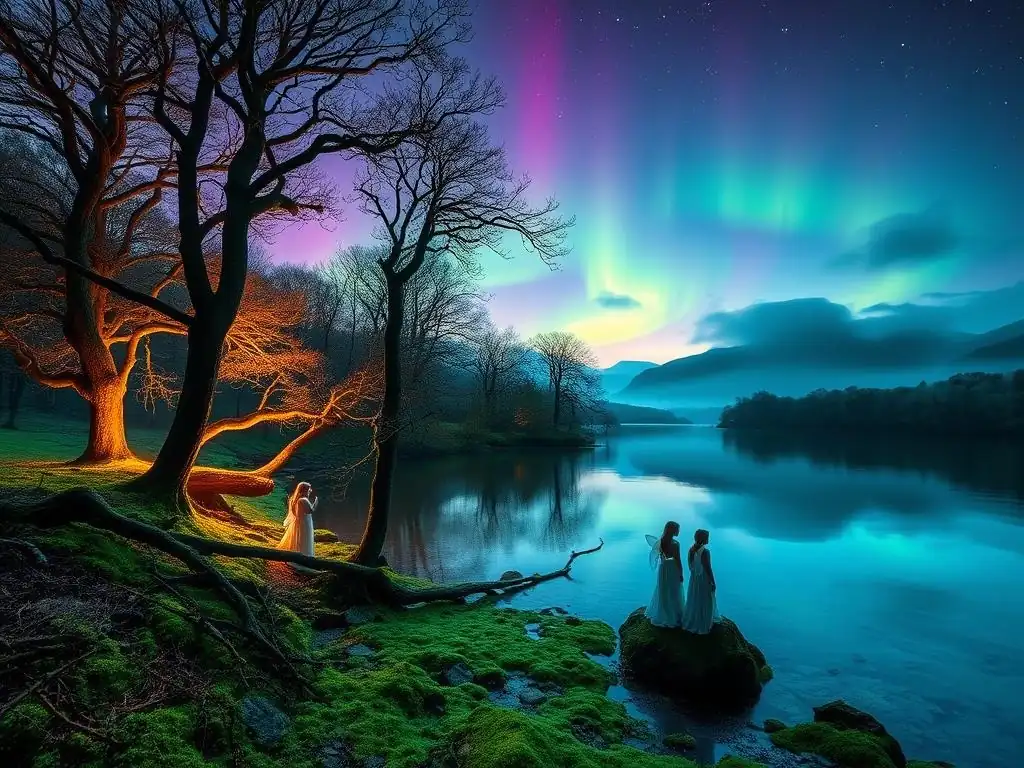
Welcome to Mythology and Legends, where we delve into the captivating stories that have shaped civilizations. Ever wondered about realms beyond our own, where time holds no sway and beauty reigns supreme? Today, we embark on a journey to uncover the secrets of Tír na nÓg, the legendary Irish paradise. Prepare to be enchanted as we explore the alluring promise of Irish mythology eternal youth and its enduring legacy. What awaits those who dare to cross the veil? Read on to discover more...
- Introduction to Tír na nÓg: The Realm of Everlasting Youth in Irish Mythology
- The Meaning of Tír na nÓg: Unveiling the Land of Eternal Youth
- Locating Tír na nÓg: Where Does the Land of Eternal Youth Reside?
- Key Figures and Deities Associated with Tír na nÓg
- The Allure of Immortality: Why Tír na nÓg Captivates
- Stories and Legends of Journeys to Tír na nÓg
- Time Dilation in Tír na nÓg: A Different Perception of Time
- Tír na nÓg's Enduring Influence on Irish Culture and Beyond
- Conclusion: Reflecting on the Timeless Appeal of Tír na nÓg
- Frequently Asked Questions
- Final Reflection: Echoes of Tír na nÓg in the Modern World
- Unlock the Secrets of Tír na nÓg: Embrace Your Inner Myth
Introduction to Tír na nÓg: The Realm of Everlasting Youth in Irish Mythology
Exploring the Enchanting World of Irish Folklore: Tír na nÓg
Tír na nÓg stands as one of the most evocative and enduring realms within the vast tapestry of Irish folklore. Often translated as the "Land of the Young," it represents a mystical island or otherworld where time does not pass, and its inhabitants remain perpetually youthful and beautiful.
This realm is a cornerstone of various myths and legends, particularly those involving journeys from the mortal world to the Otherworld, offering a captivating glimpse into the ancient Celtic perception of paradise and immortality. The tales associated with Tír na nÓg are rich with themes of adventure, love, loss, and the profound difference between mortal time and the timelessness of the Otherworld, making it a fascinating subject for anyone interested in the deeper currents of Irish mythology eternal youth.
The concept of a hidden, perfect realm is common across many mythologies, but Tír na nÓg possesses unique characteristics deeply rooted in Irish tradition. It is frequently depicted as a place of unparalleled beauty, filled with blooming flowers, abundant fruit trees bearing ripe produce year-round, and a general atmosphere of peace and joy. The inhabitants suffer no sickness, old age, or death.
They spend their days in merriment, feasting, playing music, and engaging in leisurely pursuits. This idyllic portrayal starkly contrasts with the harsh realities of mortal life, highlighting the allure of the land and explaining why it features so prominently in stories about seeking escape from the human condition.
Understanding the Significance of Tír na nÓg in Celtic Mythology
Within the broader context of Celtic mythology, Tír na nÓg holds significant cultural and symbolic weight. It is often categorized as one of the Sí realms, mystical dimensions or islands inhabited by supernatural beings, most notably the Tuatha Dé Danann, a race of divine or semi-divine beings who were said to have ruled Ireland before the arrival of the Milesians (mortals).
These Sí realms, including Tír na nÓg, represent not just geographical locations but also states of being, existing parallel to or interwoven with the mortal world. They embody the ancient Celtic understanding of the supernatural and its profound connection to the natural landscape, particularly islands and mounds.
The concept of Irish mythology eternal youth, as embodied by Tír na nÓg, serves as a powerful symbol of potentiality and escape. It speaks to a deep-seated human desire to transcend the limitations of mortality – aging, decay, and death.
Furthermore, the tales of journeys to and from Tír na nÓg often carry moral or philosophical undertones, exploring the consequences of seeking such eternal life and the unbreakable bonds that tie mortals to their own time and place. The enduring presence of Tír na nÓg in folklore, literature, and art underscores its central role in defining the Irish mythological landscape and its continued resonance in cultural identity.
The Meaning of Tír na nÓg: Unveiling the Land of Eternal Youth
Decoding the Name: A Literal Translation of Tír na nÓg
The name "Tír na nÓg" itself provides the most direct insight into the nature of this mythical realm. In the Irish language, Tír means "land" or "country," na is a genitive plural article meaning "of the," and Óg means "young" or "youthful." Therefore, the literal translation is "Land of the Young." This simple name encapsulates the primary characteristic of the realm: it is a place where youth is eternal and aging is unknown. The name itself is a promise, immediately conveying the central theme of immortality that defines the land.
This literal translation is fundamental to understanding the myths associated with Tír na nÓg. It is not merely a paradise in a general sense, but specifically a realm where the passage of time, as experienced by mortals through aging and decay, is absent. The focus on "youth" suggests not just the absence of old age, but a state of perpetual vitality, beauty, and freedom from the ailments that plague the mortal world. This precise naming convention distinguishes Tír na nÓg from other potential Otherworld realms which might offer different forms of paradise or supernatural experiences.
Tír na nÓg as a Symbol: What it Represents in Irish Tradition
Beyond its literal meaning, Tír na nÓg functions as a potent symbol within Irish tradition, representing various aspects of human desire and the mystical unknown. Primarily, it symbolizes the ultimate escape from mortality and the promise of eternal life free from suffering. For a people whose lives were often challenging and short due, perhaps, to famine, disease, or conflict, the idea of a place where such hardships did not exist would have held immense appeal. It embodies hope for a better existence, a paradise that is perhaps attainable, though often with significant cost.
Furthermore, Tír na nÓg symbolizes the allure and danger of the Otherworld. It is a place of great beauty and joy, but also one that operates under different rules, particularly concerning time. The stories of mortals visiting Tír na nÓg invariably involve a stark contrast between the timeless realm and the rapid passage of centuries in the mortal world.
This serves as a cautionary tale, highlighting the separation between the human domain and the supernatural. It represents the boundary between the known and the unknown, the finite and the infinite, and the profound consequences of attempting to bridge that divide in pursuit of Irish mythology eternal youth.
Locating Tír na nÓg: Where Does the Land of Eternal Youth Reside?
Geographical Accounts: Is Tír na nÓg a Real Place?
From a modern, empirical perspective, Tír na nÓg is not considered a real geographical location on Earth. It belongs firmly to the realm of myth and folklore, existing within the narrative landscape of ancient Irish beliefs. However, within the context of the myths themselves, there are consistent, albeit mystical, descriptions of its location. It is almost always depicted as an island, located far to the west of Ireland, often beyond the edge of the known world or shrouded in mist, making it difficult, if not impossible, for ordinary mortals to find without guidance from its inhabitants.
The descriptions of its location are not fixed coordinates on a map but rather evocative, liminal spaces. Sometimes it is reached by sailing across the sea; other times, it is accessed through magical mists or even underwater entrances. This fluidity in location reinforces its nature as an Otherworld realm, separate from the mundane physical world. While sailors of old Ireland certainly explored the Atlantic, perhaps encountering islands that fueled legends, Tír na nÓg itself remains a mythical destination, a place of the imagination rather than a point on a compass.
Mythical Positioning: Tír na nÓg Beyond the Western Sea
The most common mythical positioning of Tír na nÓg is as an island far out in the Atlantic Ocean, to the west of Ireland. This westward orientation is significant in many mythologies, often associated with the setting sun, the end of the day, and sometimes, the direction of the afterlife or Otherworld realms. For an island nation like Ireland, the sea was both a boundary and a pathway, and the mysteries held beyond the horizon were fertile ground for mythological imagination.
Stories frequently describe heroes undertaking long, arduous voyages across the sea to reach Tír na nÓg. The journey itself is often fraught with peril or magical encounters, emphasizing the distance and separation from the mortal world. Upon arrival, the island often appears suddenly out of the mist or is revealed through magical means. This mythical positioning underscores Tír na nÓg's status as an extraordinary place, not easily accessible, reserved for those who are chosen, guided, or perhaps stumble upon it through fate or magic, seeking the promise of Irish mythology eternal youth.
Key Figures and Deities Associated with Tír na nÓg
The Tuatha Dé Danann's Connection to the Land of Youth
The Tuatha Dé Danann, meaning "People of the Goddess Danu," are central to many Irish myths, particularly those concerning the Otherworld realms. After being defeated by the Milesians, the mortal invaders of Ireland, the Tuatha Dé Danann were said to have retreated into the sídhe (fairy mounds) and Otherworld locations, including islands like Tír na nÓg. They are often depicted as beings of immense beauty, power, and magical ability, possessing the very qualities associated with the Land of the Young.
Many accounts portray the Tuatha Dé Danann as the primary inhabitants of Tír na nÓg. They live there in perpetual joy and abundance, undisturbed by the concerns of the mortal world. Their presence reinforces the idea that Tír na nÓg is not a human realm but a divine or supernatural one, a place fitting for these powerful, ancient beings. Their association with the land further solidifies its status as a place of magic, immortality, and otherworldliness within the framework of Irish mythology.
Notable Residents of Tír na nÓg: Niamh Chinn Óir and Manannán mac Lir
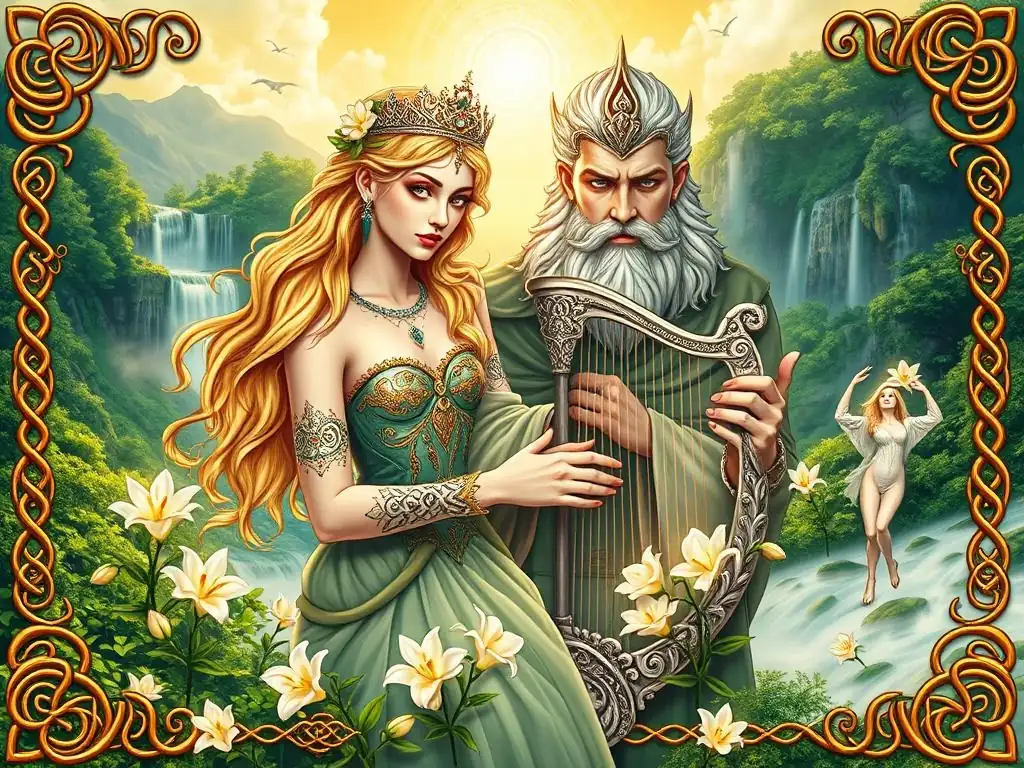
Among the most famous inhabitants of Tír na nÓg who feature prominently in tales involving mortals are Niamh Chinn Óir and Manannán mac Lir. Niamh Chinn Óir, whose name means "Niamh of the Golden Hair," is often depicted as a beautiful princess or daughter of the King of Tír na nÓg.
She is most famous for seeking out the mortal hero Oisín and inviting him to her land, initiating one of the most beloved narratives of a journey to Tír na nÓg. Her role is often that of the guide and beloved, representing the allure and beauty of the Land of the Young.
Manannán mac Lir, meaning "son of the Sea," is a prominent sea deity and often considered the king or guardian of the Otherworld realms, including Tír na nÓg. He is a master of illusion and magic, possessing powerful artifacts like his boat, Scuabtuinne (Wave Sweeper), and his horse, Enbarr (Foam), which can travel over water and land.
Manannán's connection to Tír na nÓg emphasizes its maritime nature and its status as a magical, protected realm. He sometimes acts as a ferryman or guide to the Otherworld, and his presence signifies the deep ties between the sea, magic, and the realms of Irish mythology eternal youth.
The Allure of Immortality: Why Tír na nÓg Captivates
The Promise of Eternal Youth and Beauty in Irish Mythology
The primary allure of Tír na nÓg lies in its central promise: eternal youth and beauty. In a world where aging inevitably leads to decline and death, the concept of a place where one remains forever young, vibrant, and free from physical decay is profoundly captivating. The myths describe the inhabitants as possessing radiant beauty, never experiencing sickness or weakness. This state of perpetual perfection is the ultimate attraction for mortals, offering a seemingly perfect alternative to the transient and often difficult nature of human existence.
This promise taps into a universal human desire to overcome the limitations of the physical body and escape the inevitability of death. Tír na nÓg is not just a place without aging; it is a place where joy, health, and beauty are constant. The fruits are always ripe, the music always plays, and sorrow is unknown. This idyllic portrayal makes the land the ultimate symbol of paradise within Irish folklore, representing a perfect state of being that transcends the imperfections of the mortal realm and embodies the pinnacle of Irish mythology eternal youth.
Escaping Mortality: The Human Desire for Tír na nÓg
The stories of mortals journeying to Tír na nÓg, such as Oisín or Bran, highlight the human desire to escape mortality. These heroes are often drawn to the land by its promise of eternal life and happiness, seeking refuge from the sorrows, conflicts, and eventual death that await them in the mortal world. The appeal is not merely curiosity but a deep yearning for a different kind of existence, one free from suffering and loss.
However, the myths also serve as a reminder that escaping mortality comes at a cost. The most famous stories emphasize the irreversible separation from one's mortal life, loved ones, and familiar world.
While the individual might gain eternal life in Tír na nÓg, their original life continues without them, often for centuries. This duality – the powerful desire for escape versus the tragic consequences of achieving it – is a core theme that makes the tales of Tír na nÓg resonate so deeply, exploring the complex human relationship with time, life, and death through the lens of Irish mythology eternal youth.
Stories and Legends of Journeys to Tír na nÓg
The Tale of Oisín and Niamh: A Classic Tír na nÓg Narrative
The most famous and detailed account of a mortal journeying to Tír na nÓg is the story of Oisín, son of Fionn mac Cumhaill, leader of the Fianna. One day, while Oisín was with the Fianna, a beautiful woman named Niamh Chinn Óir, riding a white horse, appeared from over the sea.
She declared her love for Oisín and invited him to come with her to Tír na nÓg, the Land of the Young, describing its wonders and the promise of eternal youth. Captivated by her beauty and the allure of the land, Oisín agreed and rode away with her on her magical horse, leaving his family and the Fianna behind.
Oisín spent what felt like a few years in Tír na nÓg with Niamh, living a life of perfect happiness, feasts, and leisure. However, after a time, he grew homesick and longed to see his father and the Fianna again. Niamh reluctantly agreed to let him visit the mortal world but gave him strict instructions: he must not dismount her magical horse, as touching the soil of Ireland would cause the centuries that had passed to catch up with him instantly.
Oisín returned to Ireland, finding it vastly changed. The great Fianna were gone, replaced by smaller, weaker men. While lifting a stone to help some men, he leaned from the horse and his foot touched the ground.
Other Accounts of Mortals Reaching the Land of Eternal Youth: The Voyage of Bran
Another significant narrative involving a journey to an Otherworld island often associated with Tír na nÓg or similar realms is Immram Brain, "The Voyage of Bran." This tale precedes the Oisín story in some traditions and describes the journey of Bran mac Febail, an Irish prince, who is enticed to sail westwards by a silver branch with white blossoms given to him by a mysterious woman from the Otherworld. He sets out with a company of men, often numbered around 27.
Their voyage takes them to various wondrous islands, including the Island of Joy and the Island of Women, where they are welcomed by a queen and her companions. They stay on this island for what seems like a year, but the queen warns them that time passes differently there. Eventually, one of Bran's companions grows homesick. Against the queen's warning, they decide to return to Ireland.
The queen advises Bran not to allow the homesick man, or any of his companions, to set foot on Irish soil. Upon reaching Ireland, they find that centuries have passed, similar to Oisín's experience. The homesick companion jumps ashore and instantly turns to dust, illustrating the perilous nature of returning from realms of Irish mythology eternal youth. Bran recounts his tale from the boat before sailing away again, perhaps back to the Otherworld island, never to return.
Time Dilation in Tír na nÓg: A Different Perception of Time
The Paradox of Time: Years in Tír na nÓg vs. Years in the Mortal Realm
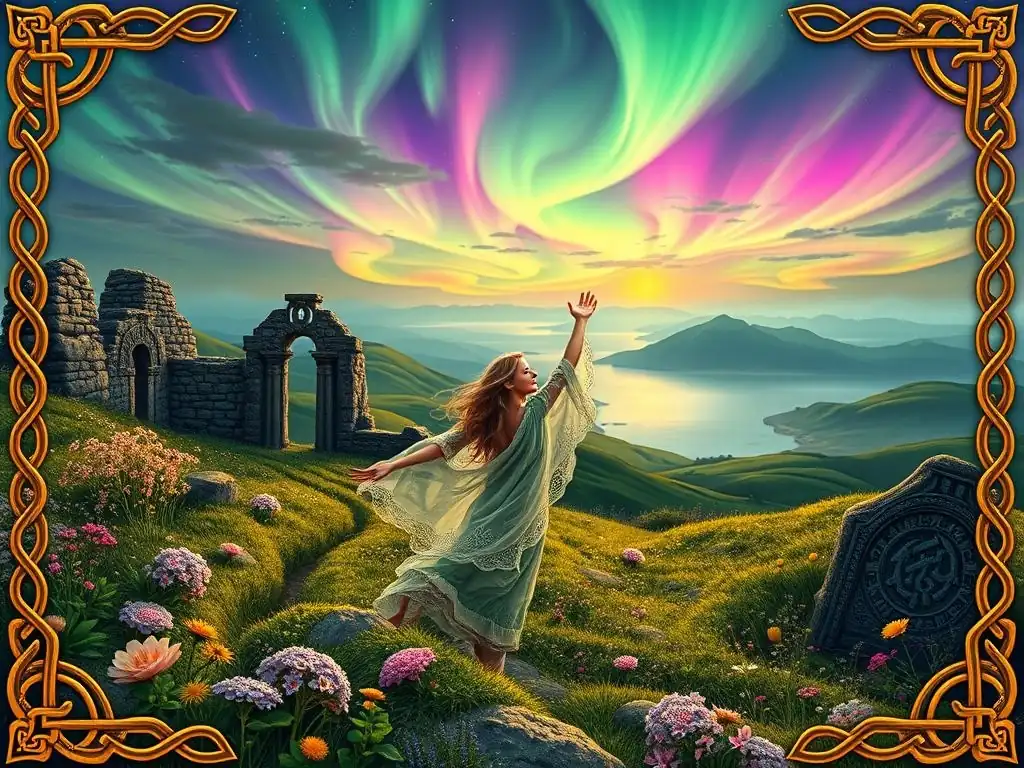
One of the most striking and consistent features of Tír na nÓg in Irish mythology is the phenomenon of time dilation. While inhabitants of the Land of the Young experience time normally, or perhaps not at all in the sense of aging, visitors from the mortal world perceive their stay as relatively short, often just a few years. However, simultaneously, vast stretches of time pass in the mortal realm, typically centuries. This creates a profound paradox: a brief period in Tír na nÓg corresponds to an immense duration back home.
For instance, Oisín believed he had spent merely three years with Niamh. Upon his return to Ireland, he discovered that 300 years had elapsed since he departed with the Fianna.
Similarly, in The Voyage of Bran, the crew stays on the Island of Women for what feels like a year, only to find that centuries have passed in Ireland upon their return. This dramatic difference in time is not just a narrative device; it is a core element that defines the separation between the realms and highlights the alien nature of the Otherworld's temporal laws compared to the linear, aging time of the mortal world.
Consequences of Returning: The Price of Eternal Youth
The time dilation in Tír na nÓg leads directly to the tragic consequences faced by mortals who attempt to return to their original world. The myths are clear: once a mortal has lived in the timeless realm, they cannot reintegrate into the world where time has continued its relentless march. The magic of Tír na nÓg preserves their youth and vitality within that realm. Stepping out of it, and particularly touching the ground of the mortal world, breaks the enchantment and causes the accumulated time to instantly catch up.
The fate of Oisín is the most poignant example. After 300 years passed in Ireland, his body was sustained only by the magic of Tír na nÓg while he remained on the horse.
The moment his foot touched the soil of Ireland, the 300 years of aging instantly afflicted him, transforming him from a youthful hero into an ancient, withered man who crumbled to dust shortly after. This serves as a powerful cautionary element in the tales of Irish mythology eternal youth, illustrating the irreversible break with one's past and the ultimate price of attempting to live outside the natural cycle of mortal life.
Tír na nÓg's Enduring Influence on Irish Culture and Beyond
Tír na nÓg in Literature, Art, and Music: W.B. Yeats and Celtic Revival Interpretations
The captivating myth of Tír na nÓg has exerted a significant and lasting influence on Irish culture, particularly in literature, art, and music, especially during periods like the Celtic Revival in the late 19th and early 20th centuries. Poets like William Butler Yeats, a central figure of the Revival, frequently drew upon Irish folklore and mythology in their work.
While Yeats didn't write extensively about Tír na nÓg itself in the same way he explored other figures like Cú Chulainn or Oisín's fate, the themes of the Otherworld, enchantment, the pull between the mystical and the mundane, and the sorrow of separation from the magical realms are pervasive in his poetry. The spirit of Tír na nÓg's allure and the tragedy of its loss are subtly woven into many of his poems exploring the fading of ancient magic in the modern world.
Beyond Yeats, numerous other writers, artists, and composers have been inspired by the tale. The story of Oisín's journey and return has been retold and interpreted countless times in poetry, prose, and dramatic works. Artists have depicted the beautiful landscape of Tír na nÓg, the enchanting figure of Niamh, and the poignant moment of Oisín's return.
In music, folk songs and classical compositions have drawn on the themes of the sea voyage, the timeless land, and the sorrow of the hero's fate. This continued artistic engagement demonstrates the deep cultural resonance of the myth and its ability to inspire creative expression across different mediums, reflecting the enduring fascination with Irish mythology eternal youth.
The Legacy of Irish mythology eternal youth: Relevance in Contemporary Society
The legacy of Tír na nÓg and the concept of Irish mythology eternal youth remains relevant in contemporary society, albeit in different forms. The tale continues to be a popular story for children and adults, serving as an introduction to Irish folklore and its rich imaginative world. It features in retellings, adaptations, and educational materials, keeping the ancient narrative alive for new generations. Its themes resonate with modern audiences who are often fascinated by ideas of immortality, escaping the constraints of time, and the nature of paradise.
Furthermore, Tír na nÓg has influenced modern fantasy literature, film, and video games, contributing to the broader cultural fascination with Celtic mythology. Elements like hidden magical realms, time distortion, and the allure of eternal life are common tropes that find echoes in the ancient Irish tale.
The story serves as a reminder of the power of myth to explore fundamental human questions about life, death, time, and happiness. The enduring appeal of Tír na nÓg underscores the timeless nature of the desire for a perfect world and the wisdom embedded in the old stories about the complex consequences of seeking such a realm of Irish mythology eternal youth.
Conclusion: Reflecting on the Timeless Appeal of Tír na nÓg
Tír na nÓg, the Land of the Young, stands as a powerful and enduring symbol in Irish mythology. Its promise of eternal youth, beauty, and happiness represents a profound human longing to escape the limitations of mortality. Through captivating narratives like those of Oisín and Bran, the myths explore the allure of this timeless realm located beyond the western sea, often inhabited by the mystical Tuatha Dé Danann and figures like Niamh and Manannán mac Lir.
However, the tales of Tír na nÓg are not simply escapist fantasies. They are also cautionary stories about the irreversible nature of time and the profound separation between the mortal world and the Otherworld.
The dramatic time dilation experienced by visitors and the tragic consequences of attempting to return highlight the complex relationship between mortals and the realms of Irish mythology eternal youth. The enduring presence of Tír na nÓg in Irish culture and its influence on contemporary media attest to its timeless appeal and its continued ability to speak to fundamental aspects of the human condition – our dreams of paradise and our inescapable reality of time.
Frequently Asked Questions
What is Tír na nÓg, and where is it located?
Tír na nÓg is a realm in Irish mythology often described as the "Land of Eternal Youth" and beauty. It's said to be located across the Western Sea, accessible by magical means.
What are the main characteristics of Tír na nÓg?
The key characteristics include eternal youth, beauty, happiness, and abundance. Time flows differently there, making a short visit feel like years in the mortal world. It is also often associated with magical beings and otherworldly creatures.
Who can enter Tír na nÓg, and how?
Entry is typically reserved for those chosen by the inhabitants of Tír na nÓg, often fairies or other supernatural beings. The most common method of reaching it is through a magical journey across the sea, or sometimes through a portal.
What are some famous stories or legends associated with Tír na nÓg?
The most famous story is that of Oisín and Niamh, where Oisín, a renowned warrior, travels to Tír na nÓg with Niamh Chinn Óir. He returns to Ireland after what he believes is a short time, only to find centuries have passed.
What is the significance of Tír na nÓg in Irish mythology and folklore?
Tír na nÓg embodies the Irish fascination with the Otherworld and the allure of escaping earthly concerns. It represents a longing for perfection, beauty, and immortality, and continues to inspire art and literature.
Final Reflection: Echoes of Tír na nÓg in the Modern World
The enduring allure of Tír na nÓg, the mythical Irish land of eternal youth and beauty, speaks volumes about our deepest human desires. We are a species obsessed with defying time, with clinging to vitality and avoiding the inevitable decay of age. This yearning, reflected in countless myths and legends across cultures, remains as potent today as it was centuries ago, driving advancements in medicine, beauty standards, and our very understanding of life itself.
The pursuit of eternal youth, as depicted in the tales of Tír na nÓg, isn't merely a fantastical escape; it's a powerful reflection of our anxieties and aspirations. It forces us to confront our mortality and the fleeting nature of beauty. The stories serve as a potent reminder that the true value of life may not lie in its endless extension, but in how we choose to live each precious moment. We do not remember days, we remember moments.
– Cesare Pavese. This quote encapsulates the essence of Tír na nÓg's enduring power: it highlights the importance of cherishing experiences over the illusion of endless time.
Consider the implications of this ancient myth in your own life. What truly matters to you? Is it the relentless pursuit of youth, or the cultivation of meaningful relationships, experiences, and personal growth? Let the legend of Tír na nÓg inspire you to embrace the present, to find beauty in the impermanence of life, and to create a legacy that transcends the boundaries of time. Let the echoes of this ancient land resonate within you, guiding you towards a life lived fully and with purpose.
Unlock the Secrets of Tír na nÓg: Embrace Your Inner Myth
Thanks for exploring the captivating world of Tír na nÓg with us! We hope you've gained a deeper appreciation for this legendary land of eternal youth and beauty. Ready to weave a little myth into your own life?
- Craft your own Tír na nÓg: Imagine your personal paradise – what elements of eternal youth and beauty would you include? Write it down and share your vision in the comments! This is your chance to create your own mythic escape.
- Explore other Celtic myths: Delve deeper into the rich tapestry of Celtic mythology. There’s a world of wonder waiting to be discovered!
- Share the magic: Tell a friend about the captivating legend of Tír na nÓg – maybe they'll be inspired to create their own mythic realm too!
What element of Tír na nÓg resonates most strongly with you, and how could you incorporate that element into your daily life to cultivate a sense of wonder and rejuvenation?