
The Lion: Sekhmet's Strength and Royal Authority in Egypt

Welcome to Mythology and Legends!
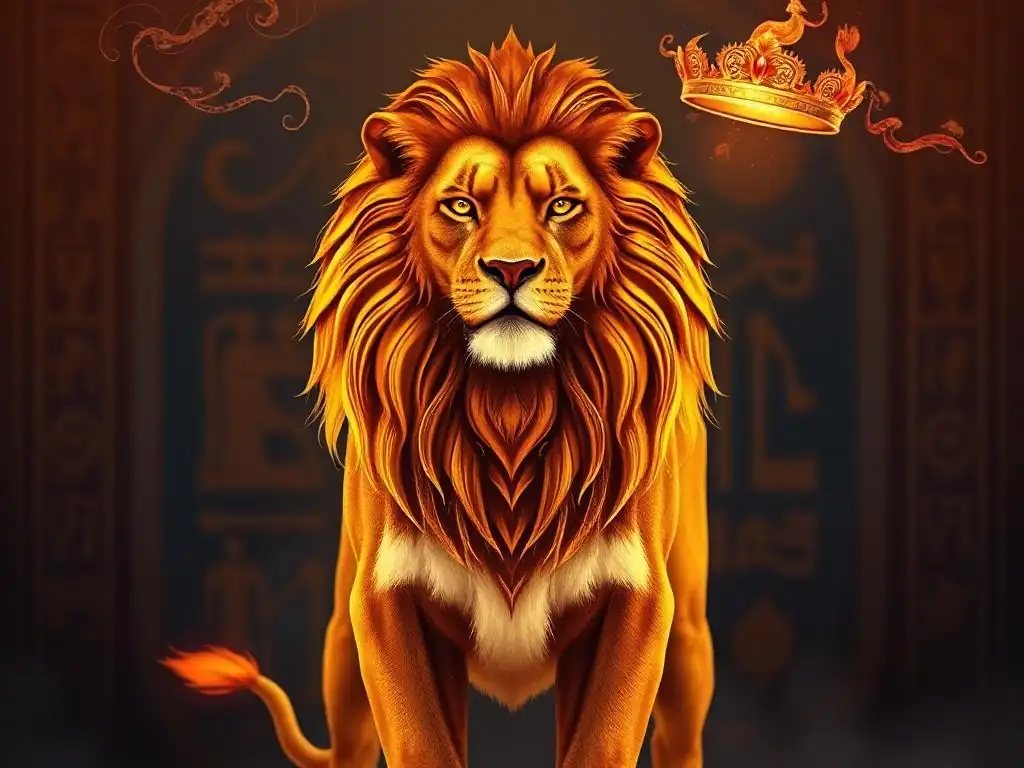
Delve into the captivating world of ancient narratives, where gods walked among mortals and extraordinary tales shaped civilizations. Ever wondered how a single animal could embody both divine wrath and regal power? Explore the fascinating Egyptian lion symbolism, a potent blend of Sekhmet's ferocious strength and the unwavering authority of pharaohs. Read on to uncover the secrets held within these powerful symbols and discover their lasting impact on Egyptian culture.
- Ancient Egyptian Deities: Power, Protection, and Royal Authority
- Introduction: The Pantheon of Ancient Egypt
- Bastet: The Cat-Headed Goddess of Protection and Fertility
- The Pharaoh as Divine Ruler: Embodying Strength and Authority
- Deities in Egyptian Art and Architecture
- Egyptian Divine Symbolism: Beyond Individual Deities
- Deities in Egyptian Religious Beliefs and Rituals
- The Enduring Legacy of Egyptian Deities
- Conclusion: The Eternal Gods - Shaping Ancient Egypt
-
Frequently Asked Questions
- What role did lions play in ancient Egyptian symbolism, particularly concerning royalty?
- How is the goddess Sekhmet connected to lions and what does she represent?
- Beyond deities, were lions associated with specific aspects of the Pharaoh's rule?
- Did the Egyptians believe in any specific mythical creatures that were part lion?
- How did the association of lions with royalty and power influence Egyptian art and architecture?
- Final Reflection: The Enduring Roar of Sekhmet's Legacy
- Unleash Your Inner Sekhmet: Embrace the Power of the Lion Goddess
Introduction: The Pantheon of Ancient Egypt
Exploring the Significance of Deities in Egyptian Culture
Ancient Egyptian civilization was deeply intertwined with its complex pantheon of gods and goddesses. These divine beings were not distant, abstract concepts but active participants in the daily lives of the Egyptians, influencing everything from the annual flooding of the Nile, crucial for agriculture, to the fate of the soul in the afterlife. The gods represented natural forces, human emotions, and essential aspects of existence, each possessing specific domains and powers. Their significance extended beyond religious worship, shaping social structures, political authority, and artistic expression.
The relationship between humans and deities was seen as reciprocal. Egyptians performed rituals, made offerings, and built elaborate temples to honor the gods and ensure their favor. This divine favor was believed to maintain maat, the cosmic order, truth, and justice, which was fundamental to the stability and prosperity of Egypt. Deities like Ra, the sun god, and Osiris, the god of the afterlife, held paramount importance, while numerous others, often localized or representing specific functions, populated the spiritual landscape. Understanding this intricate web of divine relationships is key to grasping the worldview of ancient Egypt.
The Dual Nature of Deities: Benevolence and Destruction
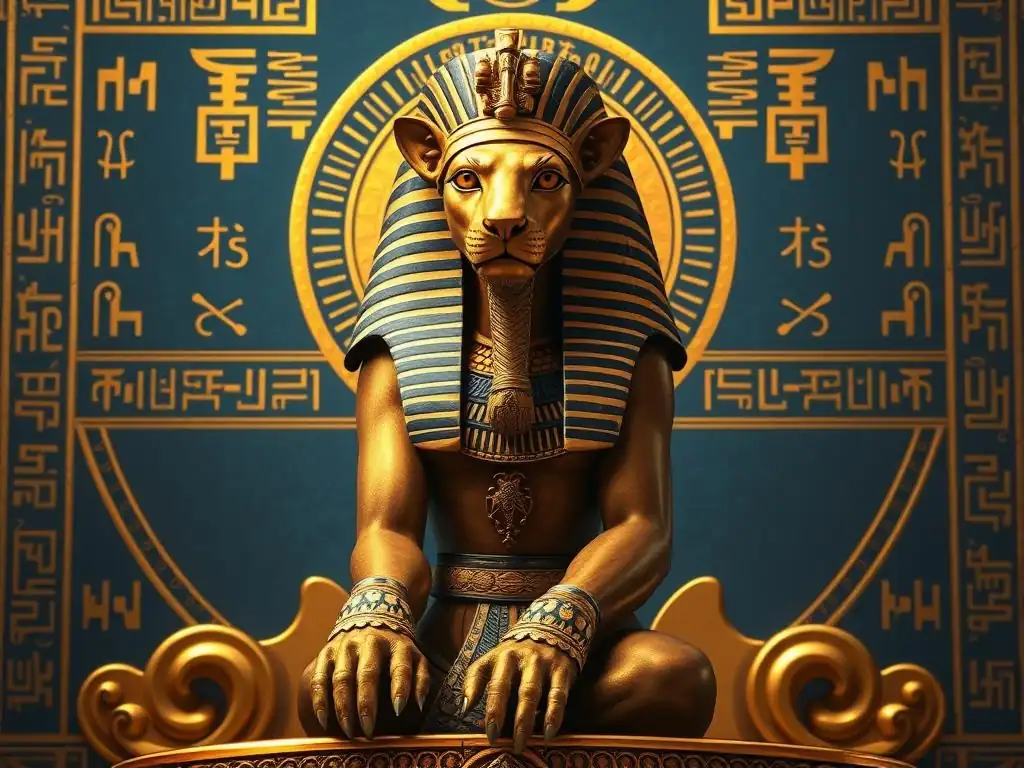
Many Egyptian deities embodied a dual nature, capable of both immense benevolence and terrifying destruction. This duality mirrored the unpredictable forces of the natural world, such as the life-giving flood of the Nile which could also bring devastation, or the scorching sun that nurtured crops but could also wither them. For instance, the goddess Sekhmet, often depicted with the head of a lioness, represented both the fierce, destructive power of the sun and divine retribution, capable of bringing plague and warfare. Yet, she also had a benevolent side, associated with healing and protection, particularly for the pharaoh.
This inherent duality necessitated careful handling by their human devotees. While Egyptians celebrated the protective and nurturing aspects of their gods, they also performed rites and made offerings to appease their wrathful sides. The Sed festival, a jubilee celebrating the continued rule of the pharaoh, often included rituals aimed at pacifying Sekhmet, highlighting the need to balance the potent forces she represented. This complex understanding of divine character underscored the Egyptians' pragmatic approach to religion, acknowledging that the same power that sustained life could also threaten it.
Bastet: The Cat-Headed Goddess of Protection and Fertility
Bastet's Role as the Protector of the Home and Family
Bastet, initially depicted as a lioness but later and more commonly as a domestic cat or a woman with a cat's head, was revered as a protector goddess. Her primary domain shifted over time, but she became strongly associated with the home, family, childbirth, and women's secrets. Unlike her fiercer counterpart Sekhmet, Bastet embodied the gentler, nurturing aspects of feline nature.
She was believed to ward off evil spirits and disease, bringing good fortune and joy to households. Her cult center at Bubastis (modern Tell Basta) in the Nile Delta was renowned for its lavish festivals celebrating music, dance, and fertility.
The transition in her depiction from a lioness to a cat reflects a broader change in Egyptian society's relationship with felines. While the lion retained its powerful symbolism, often linked to Egyptian lion symbolism royalty and divine might, the domestic cat became increasingly valued for its ability to control pests like snakes and rodents, essential for protecting grain stores.
This practical benefit, combined with the cat's independent yet affectionate nature, elevated its status and contributed to Bastet's popularity as a benevolent household deity. Thousands of mummified cats have been found at her temple complexes, testifying to the devotion she inspired.
The Origins and Mythology of Bastet
Bastet's origins are rooted in the early periods of Egyptian history. Initially, in the Old Kingdom (c. 2686–2181 BCE), she was often depicted as a lioness or a woman with a lioness head, sometimes holding a sistrum (a musical instrument). In this form, she shared characteristics with other powerful lioness goddesses like Sekhmet and Mut, embodying strength and protection, sometimes even vengeance. Her name is thought to be connected to the word for "ointment jar" or "perfume," linking her to protective salves and pleasant scents, which were also associated with healing and purification.
As the New Kingdom (c. 1550–1070 BCE) progressed, her depiction softened, and she became predominantly associated with the domestic cat. This transformation coincided with her growing popularity as a goddess of joy, music, dance, and fertility. Her mythological role expanded to include being a daughter of Ra and a protector of the king, sometimes even linked to the Eye of Ra, representing the sun god's protective and sometimes destructive power. The festival at Bubastis, described by Herodotus, involved large numbers of pilgrims and raucous celebrations, highlighting her role as a bringer of merriment and good cheer.
Bastet and the Concept of Divine Femininity
Bastet stands as a significant representation of divine femininity within the Egyptian pantheon, embodying both fierce protection and gentle nurturing. In her lioness form, she shared traits with powerful female deities who could act as avengers or protectors, reflecting the strength and intensity attributed to the female principle in certain contexts. However, her later association with the domestic cat emphasized aspects of femininity related to home, family, sensuality, and joy. This dual representation allowed her to resonate with a wide range of human experiences related to womanhood.
Her role as a goddess of fertility and childbirth further cemented her connection to feminine power. Women prayed to Bastet for safe deliveries and healthy children. The sistrum, an instrument often held by Bastet, was used in temple rituals and was also associated with fertility and warding off evil, linking her musical aspect to her protective and life-giving roles. The shift from the formidable lioness to the approachable cat illustrates how divine femininity in Egypt could encompass both formidable power and comforting presence, providing a multifaceted deity for devotion.
The Pharaoh's Connection to Horus and Ra
The pharaoh of ancient Egypt was not merely a political ruler but was considered the living embodiment of divine power on Earth. This divine authority was primarily linked to two major deities: Horus, the falcon-headed god associated with kingship and the sky, and Ra, the sun god and creator. From the earliest dynasties, the pharaoh was identified with Horus, seen as the earthly manifestation of the god who triumphed over chaos. Royal names often included a "Horus name," written within a serekh, symbolizing the palace facade and representing the king as dwelling within it under the protection of Horus.
Later, particularly from the Fifth Dynasty (c. 2494–2345 BCE) onwards, the cult of Ra gained prominence, and the pharaoh also became closely associated with the sun god. The title "Son of Ra" was adopted by kings, emphasizing their lineage from the creator deity and reinforcing their supreme authority. This dual connection to Horus and Ra provided a powerful theological basis for royal legitimacy. The pharaoh, as the intermediary between the human and divine realms, was responsible for maintaining maat throughout Egypt, ensuring cosmic harmony through rituals, lawmaking, and leading the military.
Royal Iconography: Crowns, Scepters, and Symbolic Animals
The power and divine status of the pharaoh were visually communicated through rich and complex royal iconography. Crowns, such as the Double Crown (Pschent), combining the White Crown of Upper Egypt and the Red Crown of Lower Egypt, symbolized the pharaoh's rule over the unified land. Scepters, like the Heka (crook) and Nekhakha (flail), represented kingship and authority, often linked to Osiris, the god of the afterlife and a former king himself. These regalia were not just symbols but were imbued with magical and divine power.
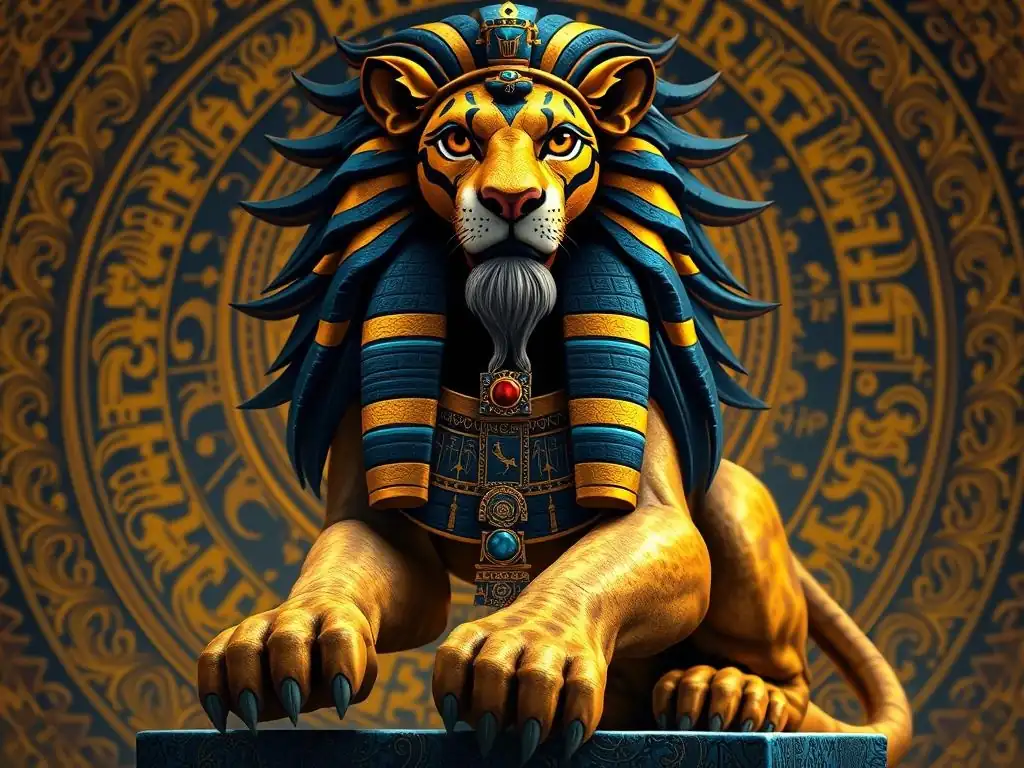
Among the most potent symbolic animals used in royal iconography was the lion. The strength, ferocity, and courage of the lion made it a natural representation of the pharaoh's power and ability to protect Egypt from enemies. Sphinxes, mythical creatures with the body of a lion and the head of a human (often the pharaoh), were prominent symbols of royal power and guardianship, frequently placed guarding temples and tombs.
This Egyptian lion symbolism royalty reinforced the king's role as the mighty defender and ruler, drawing a direct parallel between his authority and the apex predator's dominance. The uraeus, the upright cobra often worn on the pharaoh's forehead, also symbolized divine authority and protection, sometimes paired with a vulture.
The Throne: A Symbol of Royal Power and Divine Mandate
The pharaoh's throne was far more than just a seat; it was a central symbol of royal power, legitimacy, and divine mandate. Elaborate thrones, often crafted from precious materials like gold, ivory, and ebony, were designed to convey the king's connection to the gods and his supreme authority. The designs frequently incorporated powerful symbols reinforcing the king's role as ruler of both Upper and Lower Egypt, such as the sematawy motif, depicting the binding of the Two Lands.
Crucially, thrones often featured lion motifs. The legs of the throne were commonly shaped like lion's paws or entire lions, symbolizing the king sitting upon the strength and power of the lion. This pervasive Egyptian lion symbolism royalty on the throne visually linked the pharaoh's seat of power directly to the animal's potent attributes – strength, ferocity, and dominion.
Examples like the thrones found in Tutankhamun's tomb showcase this practice, with carved lions supporting the structure, emphasizing that the pharaoh's rule was as formidable and unassailable as the lion's might. Sitting on a lion-supported throne was a clear statement of divine-backed royal authority.
Deities in Egyptian Art and Architecture
Depictions of Deities in Temples and Tombs
Ancient Egyptian art and architecture served as crucial mediums for communicating the power, roles, and stories of the deities. Temples, considered the "houses" of the gods, were adorned with intricate reliefs and paintings depicting deities interacting with the pharaoh, receiving offerings, or participating in mythological narratives.
These depictions were not merely decorative; they were integral to the rituals performed within the temples, believed to ensure the continued favor of the gods and the maintenance of cosmic order ( maat). For instance, scenes in the temple of Karnak show pharaohs making offerings to Amun, Mut, and Khonsu, the Theban triad, solidifying the divine relationship.
Tombs, particularly royal tombs in the Valley of the Kings and nobles' tombs, were also rich with divine imagery, primarily focused on the journey to the afterlife and the deceased's interaction with underworld deities. Guides to the afterlife, such as the Book of Gates or the Book of Amduat, were inscribed on tomb walls, illustrating the deceased's passage through various realms populated by specific gods and demons.
Deities like Osiris, Anubis (jackal-headed god of mummification), and the judgment-weighing Thoth (ibis-headed god of wisdom) are frequently depicted, guiding or judging the soul. Sekhmet, in her fierce lioness form, sometimes appears in underworld contexts, representing protective power or challenges faced by the deceased.
The Temple of Karnak: A Monument to the Gods
The Temple Complex at Karnak, near Luxor, stands as one of the largest religious sites ever built and a prime example of how architecture was used to glorify the gods. Constructed over nearly 2,000 years, it is primarily dedicated to Amun-Ra, the king of the gods during the New Kingdom, but also includes precincts for his consort Mut and their son Khonsu.
The scale of Karnak, with its massive pylons, hypostyle halls (like the Great Hypostyle Hall with its 134 colossal columns), obelisks, and sanctuaries, was intended to overwhelm visitors and convey the immense power and majesty of the deities housed within.
Reliefs covering almost every surface at Karnak depict pharaohs performing rituals, battling enemies (often shown smiting foes while identified with powerful animals like the lion, reinforcing Egyptian lion symbolism royalty), and interacting with the gods. Specific chapels within the complex were dedicated to various deities, including Sekhmet, where statues and offerings were made to appease her fierce aspect and invoke her protective power.
The architectural layout itself mirrored Egyptian cosmology, with the inner sanctuaries representing the primordial mound of creation. Karnak's enduring structure serves as a powerful testament to the central role of deities in the state religion and the pharaoh's efforts to secure divine support through monumental construction.
Statues and Reliefs: Communicating Divine Power
Statues and reliefs were fundamental elements of Egyptian religious art, serving not only as representations but often believed to be vessels for the divine essence. Cult statues of deities, typically housed in the innermost sanctuary of temples, were the focus of daily rituals, receiving food, clothing, and purification.
These statues were often made of precious materials and were considered sacred, rarely seen by the public. The style of divine statues evolved over time but aimed to convey the god's power, serenity, and eternal nature, often through idealized forms and specific attributes (like the falcon head for Horus or the sun disk for Ra).
Reliefs, carved or painted on temple and tomb walls, narrated myths, depicted rituals, recorded historical events involving divine intervention, and illustrated the relationship between the gods and the pharaoh. The scale and detail of reliefs communicated the importance of the depicted subjects.
Colossal statues of pharaohs, often placed in front of temple entrances, emphasized the king's divine connection and his role as the protector of the temple and Egypt, sometimes depicting the pharaoh in poses of triumph over enemies, drawing upon the power symbolized by the lion. The sheer volume of these artistic expressions across Egypt underscores their vital role in communicating divine power and maintaining religious belief.
Egyptian Divine Symbolism: Beyond Individual Deities
The Ankh: A Symbol of Life
The Ankh, a hieroglyphic symbol resembling a cross with a loop at the top, is perhaps one of the most recognizable symbols of ancient Egypt. It represents "life" or "breath of life." Deities are frequently depicted holding the Ankh, often touching it to the pharaoh's lips, symbolizing the bestowal of life and vitality upon the ruler and, by extension, upon Egypt. The Ankh was widely used in art, amulets, and funerary objects, representing not just earthly life but also eternal life in the afterlife.
Its prevalence across various religious and secular contexts highlights the Egyptian preoccupation with life, health, and immortality. In temple reliefs, long processions of deities are shown offering Ankhs to the king, signifying divine validation of his rule and the promise of a long and prosperous reign. As an amulet, the Ankh was believed to provide protection and promote the wearer's well-being in both life and death.
The Scarab Beetle: A Symbol of Rebirth and Transformation
The Scarab beetle (Khepri in Egyptian) held profound symbolic meaning, representing rebirth, regeneration, and the journey of the sun. Egyptians observed the scarab beetle rolling balls of dung across the ground, in which it laid its eggs. From these balls, new beetles would emerge, seemingly spontaneously. This process was likened to the sun god Ra rolling the sun disk across the sky, being reborn each morning after its journey through the underworld.
As a result, the scarab became a powerful symbol of creation, resurrection, and the cyclical nature of life and death. Scarab amulets were extremely popular, worn by the living for protection and good luck, and placed on mummies to ensure rebirth in the afterlife. Heart scarabs, often inscribed with a spell from the Book of the Dead (Chapter 30B), were placed on the chest of the deceased to prevent the heart from testifying against them during the judgment of the soul by Osiris.
The Eye of Horus: A Symbol of Protection and Royal Power
The Eye of Horus, also known as the Wedjat or Udjat eye, is a powerful symbol of protection, healing, and royal power. It represents the eye of the god Horus, which was injured during his conflict with his uncle Seth for the throne of Egypt. Thoth miraculously restored the eye, making it a symbol of healing and wholeness. Because Horus was intrinsically linked with the pharaoh, the Eye of Horus also became a potent symbol of royal authority and the king's divine right to rule.
The Eye of Horus was widely used as a protective amulet, believed to ward off evil and bring good health and prosperity. It appeared on coffins, tombs, temples, and boats, ensuring safe passage and protection. Its association with Horus, the divine king, directly linked it to the concept of Egyptian lion symbolism royalty, representing the pharaoh's divinely sanctioned power to protect his land and people. The eye incorporates mathematical fractions used by Egyptians, further linking it to concepts of order and measurement, essential for maintaining maat.
Deities in Egyptian Religious Beliefs and Rituals
Festival of Opet: A Celebration of Rebirth and Renewal
The Festival of Opet was one of the most important annual religious celebrations in ancient Egypt, primarily centered in Thebes (modern Luxor). Held during the inundation season, it celebrated the rejuvenation of the pharaoh's kingship and his connection to the gods, particularly Amun-Ra, Mut, and Khonsu. The festival involved a grand procession where the cult statues of the Theban triad were carried from the Karnak Temple to the Luxor Temple along the Avenue of Sphinxes, a journey of about 2.5 kilometers.
This procession was a symbolic reenactment of the gods' journey and their union, reinforcing the divine legitimacy of the pharaoh. The pharaoh played a central role, performing rituals within the Luxor Temple's inner sanctum, believed to renew his divine power and connection to the gods, ensuring the continued prosperity of Egypt. The festival was a time of great public celebration, involving feasts, music, and revelry, demonstrating the deeply ingrained role of divine worship in the social and political fabric of the nation.
The Book of the Dead: Guiding Souls Through the Afterlife
The collection of spells and incantations known today as the Book of the Dead (its ancient Egyptian title translates roughly to "Book of Coming Forth by Day") was not a single, unified text but a compilation of funerary spells used from the New Kingdom onwards. These spells were written on papyri, tomb walls, or sarcophagi, intended to assist the deceased's soul (the ba and ka) in navigating the dangers of the underworld and successfully reaching the afterlife.
The spells provided knowledge of passwords, names of protective deities and demons, and instructions for various challenges, most famously the Weighing of the Heart ceremony in the Hall of Two Truths. Here, the heart of the deceased was weighed against the feather of maat (truth/justice) by Anubis, with Thoth recording the result, before a tribunal of 42 assessor deities.
If the heart was lighter than the feather, the deceased was deemed worthy and entered the afterlife; if heavier, it was devoured by the monstrous Ammit (a creature combining crocodile, lion, and hippopotamus parts), signifying eternal oblivion. The Book of the Dead thus illustrates the critical role of deities in determining the soul's fate.
Offerings and Prayers: Maintaining Divine Favor
Maintaining the favor of the deities was paramount in ancient Egyptian religious practice, achieved primarily through offerings and prayers. Daily rituals in temples involved priests presenting food, drink, incense, and other valuable items to the cult statues of the gods. These offerings were seen as essential sustenance for the divine ka (life force), ensuring the gods' continued presence and benevolent action in the world. The pharaoh, as the high priest of Egypt, was theoretically the one performing these rituals, though in practice, priests acted on his behalf.
Individuals also made offerings and prayers to deities at local shrines, in their homes, or during public festivals. These personal devotions sought divine intervention for specific needs, such as healing, fertility, protection from harm, or success in endeavors. For example, Sekhmet, despite her fearsome aspect, received offerings and prayers for healing, particularly during times of plague. The vast quantity of votive offerings found at temple sites, ranging from small amulets to statues and stelae inscribed with prayers, attests to the widespread practice of seeking divine favor through personal devotion.
The Enduring Legacy of Egyptian Deities
The Influence of Egyptian Mythology on Other Cultures
The rich and complex mythology of ancient Egypt exerted a notable influence on surrounding cultures throughout antiquity. During the Ptolemaic and Roman periods, Egyptian deities like Isis, Osiris, and Serapis (a syncretic deity combining Egyptian and Greek elements) gained followings beyond Egypt's borders, spreading across the Mediterranean world. Cults of Isis, in particular, became widespread, reaching as far as Britain, admired for her roles as a nurturing mother goddess, magician, and savior deity.
Elements of Egyptian artistic conventions and symbolism, including powerful animal motifs like the lion, also appeared in the art of neighboring civilizations, such as the Levant and Nubia. While direct narrative influence is sometimes debated, the sheer longevity and prominence of Egyptian civilization ensured that its religious ideas and symbols were known and, to some extent, adapted or reacted against by other cultures with whom they interacted through trade, conquest, and cultural exchange.
Modern Interpretations of Egyptian Deities
In the modern era, ancient Egyptian deities continue to capture the imagination, appearing in various forms of popular culture, literature, and art. They are frequently featured in fantasy novels, video games, and films, often reinterpreted to fit new narratives. Sekhmet, with her powerful lioness imagery, is often depicted as a formidable warrior or a symbol of fierce feminine strength. Bastet is commonly portrayed as a graceful, protective figure associated with cats and sometimes magic.
Beyond popular culture, elements of Egyptian religious thought and symbolism are sometimes explored in New Age spirituality and esoteric traditions. While these interpretations often differ significantly from ancient practices, they demonstrate the enduring fascination with Egyptian spirituality and the potential for these ancient figures to serve as archetypes or sources of inspiration for contemporary ideas about divinity, power, and the afterlife.
The Continued Relevance of Ancient Egyptian Religion
Although ancient Egyptian religion as a state-sponsored system of worship ceased with the rise of Christianity and later Islam, its legacy persists. The monumental temples and tombs remain standing, testaments to the profound religious beliefs that motivated their construction. Hieroglyphic texts continue to be studied, providing invaluable insights into the Egyptian worldview, ethics, and understanding of the cosmos.
Furthermore, the symbols created by the Egyptians – the Ankh, the Eye of Horus, the scarab, and the powerful imagery of the lion – have transcended their original religious context to become universally recognized icons. These symbols are used today in art, jewelry, and design, often representing concepts like life, protection, rebirth, and power, echoing their ancient meanings. The fascination with mummies, pyramids, and the afterlife also reflects a continued human interest in the existential questions that were central to Egyptian religious thought.
Conclusion: The Eternal Gods - Shaping Ancient Egypt
Summarizing the Multifaceted Roles of the Gods
The deities of ancient Egypt were central to every aspect of life, embodying the forces of nature, aspects of the human condition, and the principles of cosmic order. They were seen as creators, protectors, destroyers, and guides, each with specific domains and responsibilities. From the sun god Ra governing the cosmos to local deities overseeing specific towns or professions, the pantheon was vast and interconnected. Deities like Sekhmet exemplified the terrifying power of destruction alongside potential for healing, while Bastet represented the more benevolent aspects of protection and joy.
The pharaoh's authority was inextricably linked to the divine, validated by his connection to gods like Horus and Ra. Royal iconography, including crowns, scepters, and the powerful Egyptian lion symbolism royalty, served to visually communicate this divine mandate and the king's role as protector and ruler. Temples and tombs, adorned with divine imagery, acted as vital spaces for ritual, worship, and the assurance of passage into the afterlife, underscoring the pervasive influence of religion on Egyptian society and its structures.
Reflecting on the Impact of Religion on Egyptian Civilization
Religion was the bedrock upon which ancient Egyptian civilization was built. It provided a framework for understanding the world, governed social hierarchies (with the pharaoh at the apex, divinely sanctioned), motivated monumental architectural achievements like the pyramids and temples, and shaped daily life through rituals and beliefs. The concept of maat – cosmic order, truth, and justice – was a fundamentally religious one, enforced by the pharaoh in collaboration with the gods.
The intricate system of deities, myths, and rituals fostered a sense of cultural unity and continuity for millennia. While the specific forms of worship and the prominence of certain gods shifted over time, the fundamental belief in a divine realm that actively interacted with the human world remained constant. The enduring legacy of Egyptian deities, their symbols, and the civilization they inspired continues to fascinate and inform our understanding of human spirituality and the profound impact of religious belief on the development of complex societies.
Frequently Asked Questions
What role did lions play in ancient Egyptian symbolism, particularly concerning royalty?
Lions were deeply intertwined with royal power and divine authority. They represented strength, courage, and protection, often depicted guarding temples and tombs, reinforcing the Pharaoh's role as a protector.
How is the goddess Sekhmet connected to lions and what does she represent?
Sekhmet, the lion-headed goddess, embodies fierce power and divine retribution. She is a protector of the pharaoh and a symbol of the sun's destructive energy, but also possesses healing abilities.
Beyond deities, were lions associated with specific aspects of the Pharaoh's rule?
Yes, lions were strongly associated with the Pharaoh's military prowess and ability to conquer enemies. Statues and depictions often showed the pharaoh as a lion vanquishing foes, highlighting their dominance.
Did the Egyptians believe in any specific mythical creatures that were part lion?
The Sphinx, a creature with a lion's body and a human head, is a prominent example. It symbolized royal wisdom and guarded important sites, acting as a powerful protector.
How did the association of lions with royalty and power influence Egyptian art and architecture?
Lion imagery was prevalent in monumental architecture, statues, and tomb paintings. This reinforced the Pharaoh's divine status and conveyed the kingdom's strength and enduring power through visual representation.
Final Reflection: The Enduring Roar of Sekhmet's Legacy
The potent symbolism of the lion in ancient Egypt, particularly as embodied by Sekhmet, remains strikingly relevant today. We see echoes of her fierce protection and regal authority in modern representations of power and strength, reminding us of the enduring human need to grapple with concepts of both destruction and creation, justice and mercy. The lion's image continues to resonate, a powerful testament to the enduring impact of ancient beliefs and their ability to transcend time.
The exploration of Sekhmet's multifaceted role – warrior goddess, healer, and protector of pharaohs – reveals the complex interplay between divine power and earthly authority. Her image, whether depicted as a serene lioness or a terrifying warrior, speaks to the inherent duality within leadership and the delicate balance between benevolent rule and necessary force. The lion's strength is not in its roar, but in its ability to protect its pride.
This quote, while not ancient Egyptian, perfectly encapsulates the nuanced understanding of power that Sekhmet's symbolism represents. Her legacy continues to inspire awe and contemplation, shaping our understanding of ancient Egyptian culture and the enduring power of symbolic representation.
Consider, for a moment, the ways in which you perceive power and authority. How do these concepts manifest in your own life, and in the world around you? Let Sekhmet's enduring roar inspire you to examine your own strengths and responsibilities, to embrace both the fierce protection and the gentle nurturing that are essential for true leadership. By understanding the complexities of her symbolism, we can gain a deeper appreciation for the enduring power of ancient beliefs and their continued relevance in our modern world.
Unleash Your Inner Sekhmet: Embrace the Power of the Lion Goddess
Thanks for exploring the majestic world of Sekhmet, the lion-headed goddess of Egypt! You've now gained insights into her incredible strength, royal authority, and complex symbolism. Ready to delve deeper into this fascinating figure?
- Craft your own Sekhmet-inspired artwork: Let your creativity flow and visually represent her power and beauty. Share it with us!
- Research other powerful lion goddesses from different cultures: Discover how the lioness archetype manifests across diverse mythologies.
- Join the discussion: What aspect of Sekhmet's story resonated most with you, and why?
What other powerful female figures from mythology capture your imagination and why?