
Contemporary Artists Reimagining Ancient Pantheons

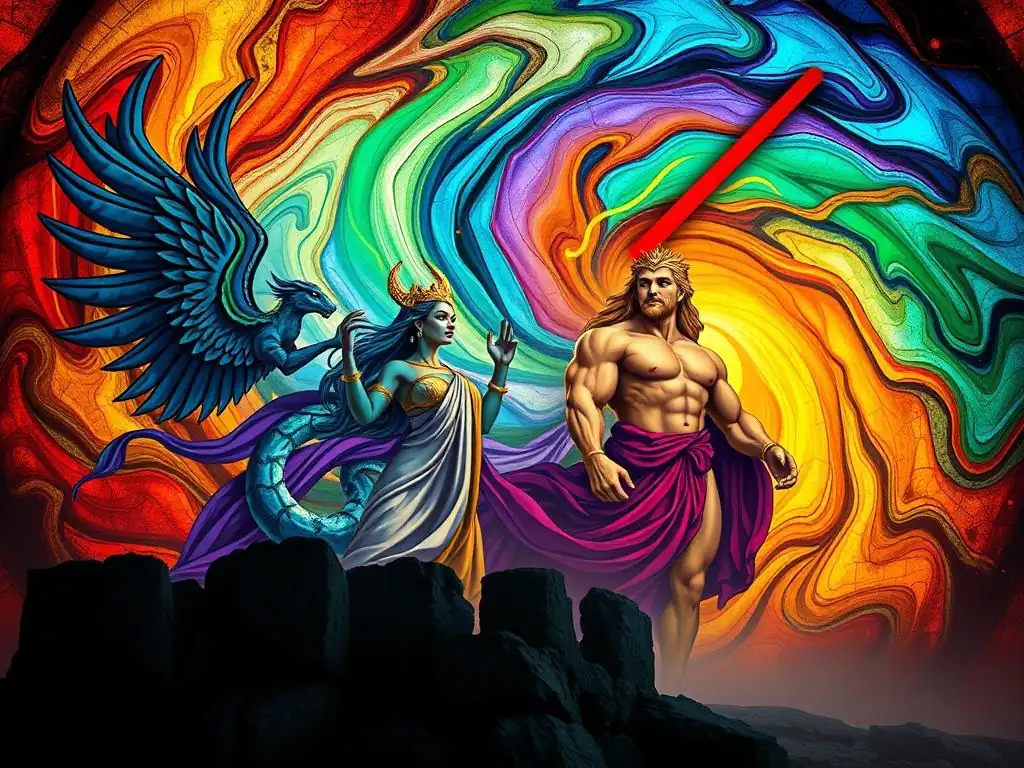
Welcome to Mythology and Legends, where timeless tales echo through the ages. Have you ever wondered how the gods and goddesses of old whisper to us in the present day? Prepare to be amazed as we delve into the fascinating intersection of ancient pantheons and modern art. Discover how contemporary artists are breathing new life into these iconic figures, sparking a conversation that transcends millennia. Intrigued? Let's explore the captivating ways these legendary beings are being reimagined for a modern audience...
- Introduction: Ancient Pantheons in Modern Art
- Visual Interpretations of Greek Mythology in Modern Art
- Egyptian Deities in Contemporary Visual Culture
- Norse Gods and Goddesses Through a Modern Lens
- Hindu Deities in Modern Artistic Expressions
- Examining the Techniques and Styles Used
- The Significance of Reinterpreting Ancient Pantheons
- Conclusion: The Timeless Relevance of Ancient Pantheons
-
Frequently Asked Questions
- How are contemporary artists incorporating themes from ancient pantheons into their modern artwork?
- What is driving the recent resurgence of interest in ancient pantheons within the contemporary art world?
- In what ways does modern art offer a fresh perspective on the characters and stories of ancient pantheons?
- Can the reimagining of ancient pantheons in modern art help us better understand contemporary society?
- What are some examples of modern art pieces that actively engage with the iconography and symbolism of ancient pantheons?
- Final Reflection: Echoes of the Gods in a Modern World
- Unleash Your Inner Mythmaker!
Introduction: Ancient Pantheons in Modern Art
The Enduring Appeal of Mythology to Contemporary Artists
Mythology, a tapestry woven from ancient beliefs, heroic sagas, and divine narratives, continues to exert a profound influence on contemporary artistic expression. Artists today find in these age-old stories a rich source of inspiration, drawing upon the archetypal characters, universal themes, and symbolic imagery that resonate across cultures and time.
The figures from ancient pantheons – be they the powerful Olympians, the mysterious Egyptian gods, the formidable Norse deities, or the multifaceted Hindu divinities – offer artists a framework to explore fundamental human experiences, from love and loss to power and morality, within a context that is both familiar and open to radical reinterpretation. This persistent fascination underscores the timeless relevance of these narratives in understanding the human condition, providing artists a language through which to comment on contemporary society.
The inherent flexibility and symbolic depth of mythological figures allow contemporary artists to transcend traditional boundaries and engage with complex issues. By placing figures like Zeus, Isis, Odin, or Shiva within modern contexts or rendering them through contemporary aesthetics, artists can challenge established perceptions, critique social structures, and explore identity in nuanced ways.
This dynamic engagement transforms ancient myths from relics of the past into vibrant, living concepts, demonstrating that the stories of old are not merely historical curiosities but powerful tools for contemporary critique and creative exploration. The output of this engagement is a diverse body of work falling under the umbrella of ancient pantheons modern art, showcasing a continuous dialogue between antiquity and the present day.
Exploring the Intersection of Ancient Myths and Modern Aesthetics
The convergence of ancient myths and modern aesthetics results in a fascinating interplay of historical narrative and contemporary artistic sensibilities. Today's artists are not merely illustrating old stories; they are actively deconstructing, reimagining, and reconstructing mythological figures through a vast array of modern techniques and styles, from digital art and street art to abstract painting and conceptual sculpture.
This process involves translating the visual language of ancient cultures – be it the rigid forms of Egyptian hieroglyphs, the dynamic poses of Greek sculpture, the intricate patterns of Norse carvings, or the vibrant iconography of Hindu temples – into a visual vocabulary that speaks to a 21st-century audience. The result is often surprising, sometimes provocative, and always reflective of the artist's unique perspective and the cultural moment in which they create.
This intersection is particularly evident in how artists utilize modern technology and media to bring ancient figures to life. Digital artists, for instance, can create immersive, ephemeral representations of deities that were unimaginable in previous eras. Performance artists might embody mythological archetypes to explore contemporary social issues.
Painters and sculptors blend classical forms with avant-garde techniques, producing works that feel both deeply rooted in history and distinctly modern. This innovative approach ensures that ancient pantheons modern art remains a dynamic and evolving field, constantly pushing the boundaries of how we perceive and interact with the stories that have shaped human civilization for millennia. The visual output ranges from photorealistic depictions placed in surreal settings to abstract expressions capturing the essence of divine power or heroic struggle.
Visual Interpretations of Greek Mythology in Modern Art
Reimagining Olympian Gods: Iris van Herpen's Take on Zeus
Fashion designer Iris van Herpen, renowned for her futuristic and sculptural haute couture, offers a compelling, albeit indirect, reimagining of the power and form associated with Olympian gods like Zeus. While not explicitly creating garments named after the king of the gods, her collections frequently explore themes of transformation, energy, and the synthesis of natural and artificial forms, concepts deeply embedded in mythological narratives. Her intricate, laser-cut, and 3D-printed designs, often appearing weightless yet possessing immense structural complexity, evoke the ethereal yet formidable presence attributed to deities.
Consider pieces from her 'Syntopia' collection (2019), which visualized the intricate patterns of bird flight, or 'Aeriform' (2017), inspired by the fluidity and power of air and water. These works, through their innovative materials and complex forms, capture a sense of divine energy and control over the elements, echoing Zeus's dominion over the sky and thunder.
Van Herpen's approach moves beyond literal representation, focusing instead on translating the feeling or essence of divine power into wearable art. Her designs often feature radial patterns and dynamic lines that suggest bursts of energy or celestial phenomena, visual metaphors that can readily be associated with Zeus's lightning bolts or his commanding presence on Mount Olympus.
The meticulous craftsmanship and architectural quality of her creations also imply a level of mastery and creation akin to the divine. This abstract yet powerful interpretation demonstrates how contemporary artists, working in diverse mediums like fashion, can draw upon the conceptual weight of ancient pantheons to inform modern aesthetics, contributing significantly to the body of work classified as ancient pantheons modern art by exploring the very nature of power and form through mythological lenses.
Contemporary Depictions of Greek Heroes: Jenny Saville's Achilles
Jenny Saville, known for her monumental paintings of the human body, offers a powerful contemporary lens through which to view the themes inherent in the myths of Greek heroes, particularly figures like Achilles. While her work primarily focuses on the female form, exploring themes of identity, vulnerability, and the physicality of existence, the raw intensity and exploration of damaged or altered bodies in pieces like "Propped" (1992) or "Shift" (1996) resonate deeply with the narrative of the vulnerable hero.
Achilles, despite his near invincibility, is defined by his single point of weakness and his eventual, inevitable mortality. Saville's unflinching gaze upon flesh, often layered with marks, bruises, or surgical lines, can be seen as a powerful commentary on the fragility underlying apparent strength, a theme central to Achilles' story.
Furthermore, Saville's large-scale canvases demand attention and confront the viewer with the sheer mass and presence of the body, much like the larger-than-life status of mythological heroes. Her technique of building up layers of paint, sometimes scraping or distorting the surface, mirrors the complex, often messy reality of heroism that involves pain, sacrifice, and imperfection.
While not a direct portrait of Achilles, her work captures the weight of embodiment and the cost of being a physical being subject to injury and decay, providing a modern, visceral interpretation of the themes of vulnerability and tragic heroism found in the Greek epics. This thematic resonance adds a layer of depth to ancient pantheons modern art by exploring the enduring human aspects of heroic myths through contemporary figurative painting.
The Influence of Hellenistic Art on Modern Greek Mythology Paintings
Hellenistic art, characterized by its dramatic realism, emotional intensity, and dynamic movement, continues to be a significant influence on contemporary artists depicting Greek mythology. Unlike the more idealized forms of the Classical period, Hellenistic sculpture and painting embraced pathos, individual expression, and complex compositions, qualities that appeal strongly to modern sensibilities seeking to reinterpret ancient stories with psychological depth and narrative urgency.
Artists today study works like the Laocoön Group or the Winged Victory of Samothrace not just for anatomical accuracy but for their ability to convey powerful emotion and narrative tension through form and gesture. This historical visual language provides a rich foundation for contemporary painters and sculptors seeking to imbue their mythological subjects with similar dramatic force.
Contemporary painters often borrow compositional strategies, lighting techniques, and anatomical rendering styles from Hellenistic masters while applying modern mediums and perspectives. For instance, an artist might depict a scene from the Gigantomachy using the dynamic, contorted figures reminiscent of the Pergamon Altar frieze but rendered in vibrant, non-traditional colors or placed within a surreal landscape.
Sculptors might create figures with the emotional expressiveness of Hellenistic portraiture but utilize abstract forms or industrial materials. This conscious engagement with the visual legacy of Hellenistic art allows contemporary artists to create works that feel historically informed yet entirely new, demonstrating how ancient pantheons modern art can bridge millennia by drawing inspiration from specific historical art movements to fuel contemporary creative expression.
Egyptian Deities in Contemporary Visual Culture
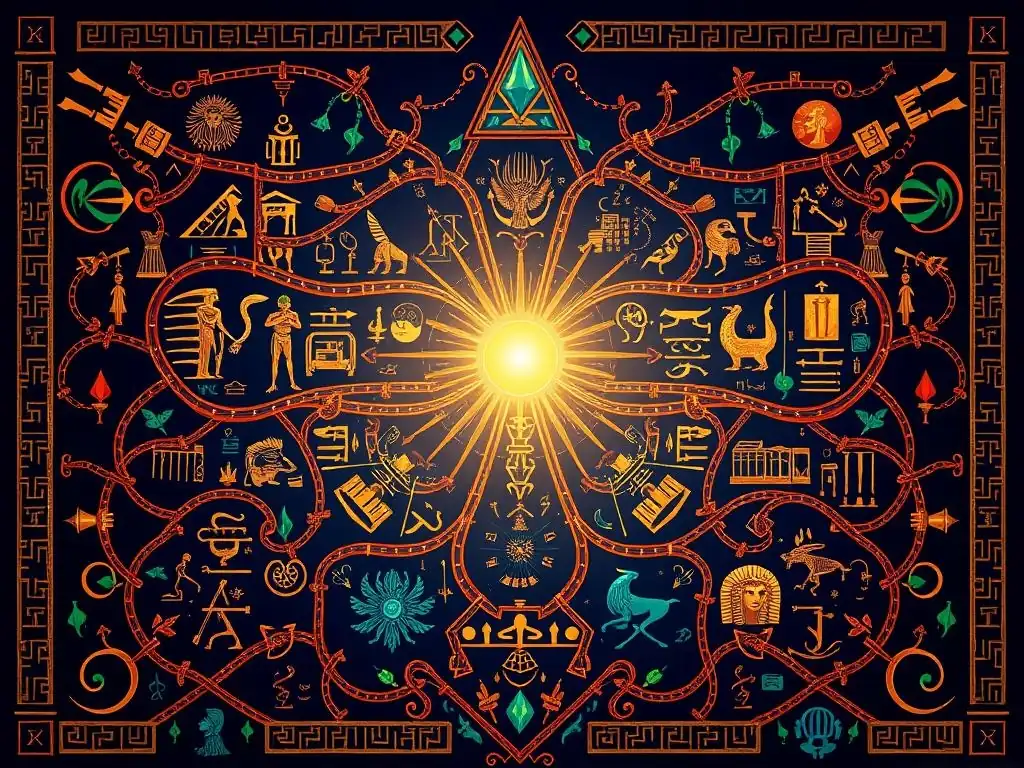
Isis and Osiris Reborn: Modern Interpretations of Egyptian Mythology
The enduring saga of Isis and Osiris, a tale of death, resurrection, and divine love, holds a powerful symbolic resonance that contemporary artists continue to explore. This myth, central to ancient Egyptian beliefs about life, death, and the afterlife, provides a potent framework for addressing themes of loss, healing, fertility, and the cyclical nature of existence in modern art.
Artists often depict Isis as a symbol of maternal strength, healing power, and mystical knowledge, while Osiris represents regeneration, the afterlife, and the enduring power of life over death. Modern interpretations move beyond traditional hieroglyphic styles, utilizing diverse media from painting and sculpture to digital illustration and street art to bring these ancient figures into dialogue with contemporary concerns.
Contemporary artists might portray Isis as a powerful, independent figure challenging modern societal constraints, or depict the fragmented body of Osiris as a metaphor for trauma, division, or the difficulty of achieving wholeness in the modern world. The narrative of resurrection offers a potent symbol of hope and renewal, frequently explored in works dealing with environmental themes, social justice, or personal transformation.
For example, an artist might create a digital collage where images of urban decay are interwoven with symbols of fertility and rebirth, presided over by a modern, stylized representation of Isis. These reinterpretations ensure that the story of Isis and Osiris remains relevant, contributing to the diverse landscape of ancient pantheons modern art by applying ancient symbolic narratives to contemporary human experiences.
Anubis in the 21st Century: Wafaa Bilal's Exploration of the Afterlife
The jackal-headed god Anubis, guide of souls and guardian of the afterlife in ancient Egyptian mythology, has found a unique and provocative interpreter in contemporary artist Wafaa Bilal. Bilal, known for his performance art and interactive installations that often confront difficult political and social issues, has explored themes related to death, memorialization, and the digital afterlife in ways that echo Anubis's ancient role.
In his project "And Counting..." (2010), Bilal tattooed dots on his back representing Iraqi casualties, a visceral act of memorialization that confronts mortality on a personal and political level. While not a direct depiction of Anubis, this work, and others that deal with the weight of death and the recording of lives lost, resonate with the god's function in guiding souls and overseeing the judgment process.
Bilal's exploration of the digital realm as a space for memory and continued existence also touches upon themes related to the afterlife, albeit through a distinctly modern lens. Projects like "The 3rd I" (2010), where he had a camera surgically implanted to stream images, or "Domestic Autopsy" (2008), which streamed his life online, raise questions about legacy, surveillance, and the persistence of identity beyond physical presence – concepts that align thematically with Anubis's role in the transition between life and death and the preservation of the soul (Ka).
By engaging with mortality, memory, and the digital footprint we leave behind, Bilal's work offers a contemporary, often unsettling, dialogue with the ancient concerns embodied by Anubis, demonstrating how artists can explore mythological functions through modern technological and conceptual frameworks within ancient pantheons modern art.
Contemporary Egyptian Artists and Their Mythological Inspirations
Contemporary artists from Egypt and the wider Middle East continue to draw deeply from their rich cultural heritage, including the vast pantheon of ancient Egyptian deities. These artists often navigate the complex relationship between a glorious ancient past and the realities of the modern world, using mythological figures and symbols to comment on national identity, historical memory, political change, and social issues.
Unlike Western artists who might approach Egyptian mythology from an external perspective, these artists often possess an intrinsic connection to the history and landscape from which these myths arose, leading to nuanced and personal interpretations. Their work ranges from traditional painting and sculpture incorporating ancient motifs to experimental video art and installations that deconstruct and reassemble mythological narratives.
For example, an Egyptian artist might use the figure of Sekhmet, the lioness goddess of war and healing, to explore themes of anger, power, and resilience in the face of political upheaval. Another might depict Thoth, the god of knowledge and writing, within a contemporary library or digital space to comment on information dissemination and intellectual freedom.
The use of hieroglyphic-like symbols or architectural elements from ancient temples often appears in their work, blended with modern visual languages. This continuous engagement by artists directly connected to the source culture ensures that the interpretation of Egyptian deities remains vibrant and relevant, offering unique perspectives on ancient pantheons modern art rooted in lived experience and historical continuity.
Norse Gods and Goddesses Through a Modern Lens
Thor and Odin in Contemporary Paintings and Sculptures
The powerful figures of Thor and Odin from Norse mythology have long captured the artistic imagination, and contemporary artists continue to reinterpret these deities of thunder, war, wisdom, and kingship through modern mediums. Thor, with his mighty hammer Mjölnir, embodies strength, protection, and the forces of nature, while Odin, the All-Father, represents complex concepts like knowledge, sacrifice, and fate.
Contemporary painters often depict Thor as a brooding, powerful figure, perhaps in a modern urban setting or a stylized, abstract stormscape, using bold lines and dynamic compositions to convey his immense power. Sculptors might create abstract forms in metal or stone that suggest the weight and force of Mjölnir or the stoic presence of Odin.
Modern interpretations move away from purely illustrative fantasy art towards more symbolic or conceptual representations. An artist might focus on the sound of Thor's thunder, translating it into abstract patterns or vibrations in a painting. Odin's quest for knowledge, involving the sacrifice of an eye, might be explored through fragmented imagery or mixed-media works that layer different visual information.
Some artists place these gods within contemporary narratives, using them as archetypes to discuss modern heroism, leadership, or the search for meaning. These diverse approaches ensure that figures like Thor and Odin remain potent symbols in ancient pantheons modern art, capable of conveying powerful ideas relevant to the modern world through varied artistic expressions.
Valkyries Reimagined: Kara Walker's Feminist Perspective on Norse Mythology
Kara Walker, known for her provocative cut-paper silhouettes exploring themes of race, gender, and history, offers a powerful, albeit indirect, feminist reimagining of figures akin to the Valkyries. While her work primarily focuses on the legacy of slavery and racial stereotypes in America, the fierce, often violent, and complex female figures that populate her panoramas share a thematic resonance with the Valkyries – female figures in Norse mythology who choose who lives and dies in battle and carry the chosen to Valhalla.
Walker's figures are not passive victims; they are dynamic agents, sometimes heroic, sometimes terrifying, navigating brutal landscapes of power and subjugation with a fierce, often ambiguous, agency.
Walker's use of the silhouette format, which simultaneously conceals and reveals, creates figures that are both archetypal and deeply unsettling. Her female characters, often depicted in scenes of grotesque fantasy and historical trauma, embody a raw power and a complex relationship with violence and destiny that parallels the Valkyries' role as choosers of the slain.
By presenting black female bodies in positions of power, vulnerability, and resistance within historical narratives of oppression, Walker's work can be seen as offering a contemporary, critical perspective on female figures who operate in realms of conflict and fate, much like the Valkyries. This critical lens contributes significantly to ancient pantheons modern art by challenging traditional, often male-centric, heroic narratives and exploring female agency through conceptually related mythological archetypes.
The Impact of Norse Mythology on Contemporary Art Movements
Norse mythology has had a notable impact on several contemporary art movements and styles, particularly those that value raw expression, symbolism, and a connection to nature or primal forces. Movements like Symbolism in the late 19th and early 20th centuries drew heavily on mythological and literary sources, including Norse sagas, to create evocative and often mysterious works. While not strictly contemporary, this historical influence laid groundwork for later artists. In more recent times, aspects of Norse mythology appear in Neo-Expressionism, where the raw energy and dramatic narratives resonate with the movement's focus on subjective experience and intense emotion.
Furthermore, the visual culture surrounding genres influenced by Norse mythology, such as certain subgenres of metal music and fantasy illustration, though sometimes considered outside the realm of 'high art,' has fostered distinct aesthetic styles that occasionally cross over into contemporary art galleries. Artists exploring themes of environmentalism might draw upon Norse concepts of Ragnarök, the twilight of the gods and world's end, to comment on ecological disaster. Those interested in identity and heritage might reference Viking symbols or runic script.
The enduring popularity of Norse themes in popular culture also filters into fine art, influencing artists who seek to engage with widely recognized archetypes. This pervasive cultural presence ensures that Norse mythology remains a fertile ground for inspiration across various contemporary art practices, enriching the field of ancient pantheons modern art.
Hindu Deities in Modern Artistic Expressions
Contemporary Representations of Shiva and Vishnu
Shiva, the destroyer and transformer, and Vishnu, the preserver, two principal deities of the Hindu pantheon, are frequently reinterpreted by contemporary artists seeking to explore complex ideas about creation, destruction, balance, and the cyclical nature of the universe. These deities, with their multifaceted forms and extensive mythologies, offer artists a vast symbolic language.
Contemporary painters might depict Shiva performing the Tandava, his cosmic dance, using dynamic, abstract forms and vibrant colors to convey the energy of creation and dissolution. Vishnu, often shown in his various avatars, provides opportunities to explore themes of divine intervention, dharma (righteousness), and the preservation of cosmic order within contemporary narratives.
Artists might place Shiva in a modern, chaotic landscape, symbolizing the destructive forces at play in the world today, or depict Vishnu's avatars interacting with contemporary social or environmental challenges. Sculptors might create multi-limbed figures in unconventional materials, referencing the traditional iconography while giving it a modern twist.
The symbolic attributes of these gods – Shiva's third eye representing wisdom, his trident representing the three gunas; Vishnu's discus representing the mind, his conch representing the cosmic sound – are often incorporated into contemporary designs, sometimes subtly, sometimes overtly. These diverse approaches demonstrate how artists use the rich symbolism of Shiva and Vishnu to create compelling ancient pantheons modern art that speaks to both ancient wisdom and contemporary concerns.
The Goddesses of Hinduism: Modern Interpretations by Arpana Caur
Arpana Caur, a prominent Indian contemporary artist, is known for her powerful and often socially conscious paintings that frequently draw upon the rich iconography of Hindu goddesses, offering modern interpretations of figures like Kali, Durga, and Lakshmi. Caur uses these divine feminine forms to explore themes pertinent to contemporary India, including the strength and suffering of women, environmental degradation, and spiritual reflection. Her work translates the traditional multi-limbed and symbolic representations of goddesses into a modern visual language, often featuring vibrant colors and narrative compositions that blend mythological elements with scenes from everyday life or contemporary issues.
Caur's depiction of Kali, the goddess associated with time, change, power, creation, preservation, and destruction, often emphasizes her fierce power as a force for overcoming evil and injustice, reinterpreting her as a symbol of female strength and resistance in the face of adversity. Her representations of Lakshmi, the goddess of wealth and prosperity, might explore themes of economic disparity or the true meaning of abundance beyond material wealth.
By integrating these ancient, powerful female figures into her contemporary narratives, Caur not only pays homage to her cultural heritage but also utilizes the symbolic weight of these goddesses to make powerful statements about the world today. Her work exemplifies how ancient pantheons modern art can be deeply rooted in tradition while critically engaging with present-day realities through the lens of divine feminine power.
The Influence of Hindu Mythology on South Asian Contemporary Art
Hindu mythology serves as a foundational source of inspiration for a vast number of contemporary artists across South Asia, providing a shared cultural language and a wealth of narrative possibilities. Artists from India, Nepal, Bangladesh, and other regions with significant Hindu populations frequently incorporate deities, epic stories (like the Mahabharata and Ramayana), and philosophical concepts from Hinduism into their work.
This influence is not limited to religious themes; artists use mythological references to explore identity, history, social structures, and the human condition in both sacred and secular contexts. The visual influence ranges from direct depictions of gods and goddesses to the subtle use of symbolic motifs, colors, and compositional structures derived from traditional Hindu art forms.
For many South Asian artists, engaging with Hindu mythology is a way to connect with their cultural roots, challenge colonial legacies, and assert a distinct artistic identity. They might reinterpret classic mythological scenes through a post-colonial lens, or use divine figures as metaphors for contemporary political leaders or social movements.
The vibrant visual culture of Hindu festivals, temples, and popular religious art also feeds into contemporary aesthetics, influencing palettes, forms, and narrative styles. This deep and multifaceted engagement ensures that Hindu mythology remains a dynamic force in South Asian contemporary art, contributing a unique and culturally specific dimension to the broader field of ancient pantheons modern art.
Examining the Techniques and Styles Used
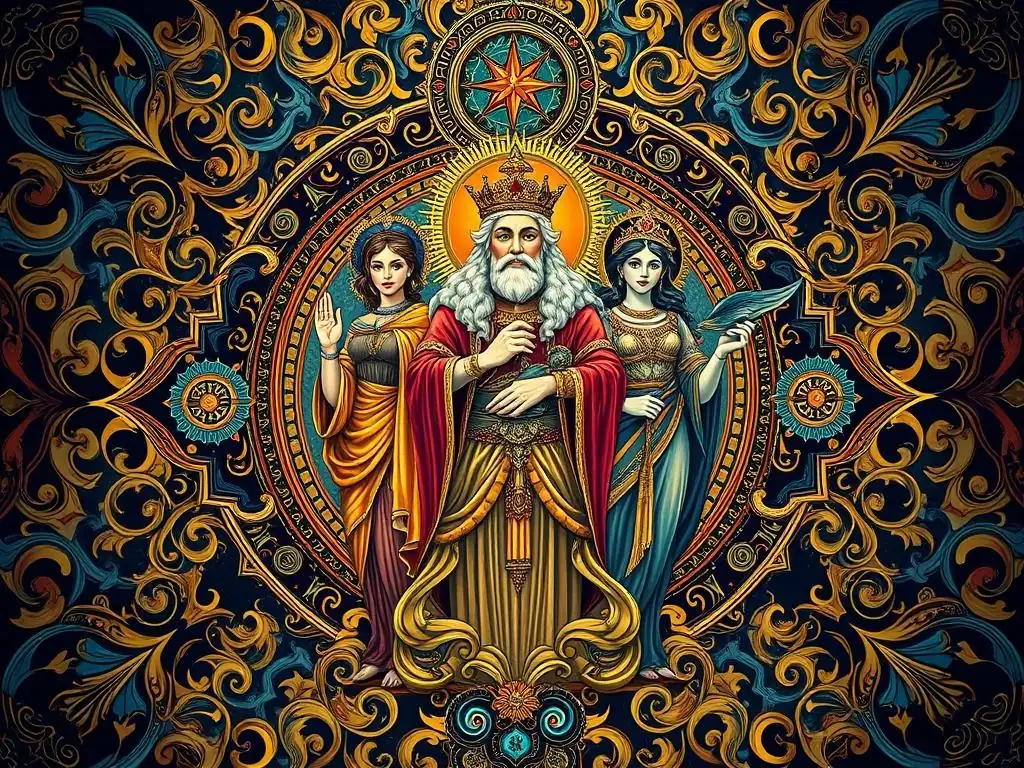
The Use of Surrealism in Depicting Ancient Myths
Surrealism, with its emphasis on dreams, the unconscious, and the juxtaposition of incongruous elements, provides a particularly fertile ground for contemporary artists reinterpreting ancient myths. Mythology itself often contains fantastical elements, impossible transformations, and narratives that defy conventional logic, making it a natural fit for surrealist exploration.
Artists employing surrealist techniques can depict gods and heroes in dreamlike landscapes, combine disparate mythological figures in unexpected ways, or distort known forms to reveal deeper psychological or symbolic truths hidden within the myths. This approach allows for a departure from literal or historical representation, opening up new avenues for interpretation and meaning.
For example, a surrealist painter might depict Zeus with melting clocks, symbolizing his dominion over time, or show Isis reconstructing Osiris's body in a bizarre, anatomical landscape filled with floating eyes and disembodied hands. The Leda and the Swan myth could be rendered as a disquieting fusion of human and animal forms in an eerie, deserted setting.
By stripping away the familiar narrative structure and presenting mythological figures in illogical, dreamlike contexts, surrealism invites viewers to reconsider the myths on a symbolic or subconscious level. This technique is highly effective in creating ancient pantheons modern art that is both visually striking and psychologically resonant, revealing the timeless, sometimes unsettling, power of ancient stories through a modern, unconventional lens.
Abstract Interpretations of Ancient Pantheons: A Modern Approach
Abstract art offers another powerful avenue for contemporary artists seeking to reimagine ancient pantheons, moving beyond figurative representation to capture the essence, energy, or conceptual weight of mythological figures and narratives. Instead of depicting the physical form of a god like Thor, an abstract artist might focus on conveying the raw power of thunder through dynamic lines, bold colors, and turbulent textures.
The complex relationships within a pantheon might be represented through interconnected forms or contrasting shapes on a canvas. This approach allows artists to explore the intangible aspects of mythology – divine power, cosmic forces, emotional states, philosophical ideas – in a purely visual language.
Abstract interpretations might use color palettes inspired by specific deities (e.g., deep blues and golds for Egyptian gods, fiery reds and blacks for certain Norse figures) or employ gestures and textures that evoke mythological actions or environments (e.g., swirling patterns for creation myths, sharp, broken lines for tales of conflict). A sculptor might create an abstract form in metal that suggests the weight and authority of Odin or a fluid, ethereal structure in glass that represents the transformative power of a goddess like Kali.
This non-representational approach allows for highly personal and symbolic interpretations, demonstrating how ancient pantheons modern art can be expressed through the universal language of form, color, and texture, inviting viewers to connect with the myths on an intuitive, emotional level.
The Role of Digital Art in Reimagining Mythological Figures
Digital art plays a transformative role in contemporary artists' reimagining of mythological figures, offering unprecedented tools for creation, manipulation, and dissemination. Software for digital painting, 3D modeling, animation, and interactive installation allows artists to create highly detailed, fantastical, and dynamic representations of gods, goddesses, and heroes that push the boundaries of traditional media.
Digital artists can render mythological figures with photorealistic detail and place them in hyper-real or entirely imaginary environments, creating visually stunning and often immersive experiences. The ease of manipulation in digital media also facilitates experimentation with form, scale, and perspective, allowing for fluid transformations and complex layering of imagery.
Furthermore, digital platforms and the internet have become crucial for sharing and experiencing ancient pantheons modern art. Online galleries, social media, and virtual reality environments allow artists to reach a global audience and present their mythological interpretations in interactive or experiential ways.
A digital artist might create a series of animated GIFs depicting the labors of Hercules, a 3D-modeled sculpture of Anubis that can be viewed from any angle online, or an interactive installation where viewers can 'step into' a scene from the Ramayana. This medium's flexibility, accessibility, and potential for dynamic presentation make it an increasingly vital tool for contemporary artists exploring ancient myths, contributing significantly to the evolution and reach of ancient pantheons modern art in the 21st century.
The Significance of Reinterpreting Ancient Pantheons
Why Artists Are Drawn to Mythology Today
Contemporary artists are drawn to mythology for a multitude of reasons that reflect both the enduring power of these stories and the specific concerns of the modern age. Firstly, myths provide a shared cultural vocabulary, offering archetypes and narratives that resonate deeply with audiences, allowing artists to communicate complex ideas through familiar frameworks.
Secondly, mythological figures embody universal human experiences – love, death, betrayal, heroism, sacrifice – in heightened, dramatic forms, providing rich material for exploring the fundamental aspects of the human condition. These narratives offer a timeless stage upon which to examine contemporary issues, from political power dynamics to personal struggles.
Moreover, in a rapidly changing and often fragmented world, mythology offers a sense of connection to the past and to a shared cultural heritage. Artists may engage with ancient pantheons as a way to explore their own cultural identity, challenge dominant historical narratives, or find meaning in a world that can feel increasingly devoid of it.
The inherent symbolism and allegorical nature of myths also appeal to artists seeking to create works that operate on multiple levels, inviting viewers to interpret and find personal relevance in the ancient stories. This confluence of factors ensures that mythology remains a compelling and relevant source of inspiration, driving the creation of diverse and meaningful ancient pantheons modern art across the globe.
Exploring Themes of Power, Identity, and Morality Through Ancient Myths
Ancient pantheons provide a powerful vehicle for contemporary artists to explore fundamental themes of power, identity, and morality that remain highly relevant today. The relationships and conflicts between gods and mortals, and among the gods themselves, offer nuanced perspectives on the nature of authority, responsibility, and the consequences of actions.
Artists can use the stories of Zeus's power, Isis's determination, Odin's sacrifices, or Kali's destructive force to comment on political leadership, social control, or the dynamics of human relationships in the modern world. The very structure of a pantheon, with its hierarchy and specialized roles, can serve as a metaphor for societal structures.
Furthermore, mythological narratives frequently involve transformations, quests for self-knowledge, and the negotiation of personal destiny, making them ideal for exploring themes of identity. Artists can reinterpret the journeys of heroes or the struggles of deities to understand their place in the cosmos as allegories for contemporary identity formation, cultural belonging, or the search for purpose.
The clear-cut (though often complex) moral frameworks and consequences depicted in myths – divine justice, punishment for hubris, rewards for virtue – offer a lens through which to examine modern ethical dilemmas and societal values. By engaging with these ancient narratives, contemporary artists create ancient pantheons modern art that not only looks back at history but also forward, prompting reflection on the timeless questions that continue to shape human experience.
Ancient Pantheons Modern Art: A Reflection of Contemporary Society
The body of work categorized as ancient pantheons modern art serves as a fascinating mirror reflecting the concerns, values, and aesthetics of contemporary society. How artists choose to depict ancient gods and heroes, which aspects of their myths they emphasize, and the techniques they employ reveal much about the cultural moment in which they are creating.
For instance, increased focus on female deities or heroic figures in modern art might reflect growing interest in feminist perspectives and gender equality. Reinterpretations that place gods in dystopian futures or ruined urban landscapes could speak to anxieties about environmental issues or societal decay.
The diversity of styles and mediums used – from traditional painting and sculpture to digital art, performance, and street art – reflects the pluralism and experimental nature of the contemporary art world itself. The global reach of the internet allows for cross-cultural pollination, leading to interpretations of, say, Greek myths by Asian artists or Hindu deities by Western artists, reflecting an increasingly interconnected world.
Ultimately, ancient pantheons modern art is more than just a rehashing of old stories; it is a dynamic, evolving field that uses the rich legacy of mythology as a framework to explore the complexities of modern life, demonstrating the enduring power of these ancient narratives to remain relevant and resonant across millennia.
Conclusion: The Timeless Relevance of Ancient Pantheons
The Future of Mythological Art in the Contemporary World
The trajectory of ancient pantheons modern art suggests a vibrant and evolving future for mythological themes in contemporary creative expression. As new technologies emerge and global cultures continue to intersect, the ways in which artists engage with ancient myths will undoubtedly diversify further. We can anticipate increasingly immersive digital experiences, perhaps incorporating virtual and augmented reality, that allow viewers to step directly into mythological worlds or interact with divine figures. Cross-cultural interpretations are likely to become even more prevalent, fostering a global dialogue around shared human experiences as embodied by different pantheons.
Furthermore, as societal challenges such as climate change, technological advancement, and identity politics continue to evolve, artists will find new resonances and allegorical potential within ancient stories. Mythological figures may become symbols for artificial intelligence, environmental forces, or fluid identities, adapted to speak to the specific anxieties and aspirations of future generations. The fundamental human need for narrative, meaning, and connection to something larger than ourselves ensures that the wellspring of mythology will continue to inspire artists, providing a rich source of characters and themes to explore the ever-changing landscape of the human condition.
Celebrating the Creativity of Artists Who Reimagine Ancient Legends
The contemporary artists who dedicate their practice to reimagining ancient pantheons are engaged in a vital act of cultural preservation and creative innovation. They ensure that stories that have shaped human civilization for thousands of years remain alive, relevant, and capable of inspiring new generations.
By translating ancient narratives and figures into modern visual languages, they bridge the gap between the past and the present, demonstrating the timeless appeal and adaptability of mythological archetypes. Their work challenges us to look at familiar figures with fresh eyes, to find new meanings in old stories, and to appreciate the continuous dialogue between tradition and innovation.
Celebrating these artists is an acknowledgment of the power of myth to transcend time and culture, offering a universal language for exploring the most profound aspects of human existence. Their diverse creations, whether paintings, sculptures, digital works, or performances, enrich the cultural landscape and provide valuable insights into both the ancient worlds that conceived these stories and the contemporary world that continues to find inspiration within them.
The field of ancient pantheons modern art is a testament to the enduring creativity of the human spirit and the inexhaustible potential of ancient legends to fuel artistic expression in the 21st century and beyond.
Frequently Asked Questions
How are contemporary artists incorporating themes from ancient pantheons into their modern artwork?
Contemporary artists are drawing inspiration from ancient myths and legends, reinterpreting them through modern mediums and perspectives. This often involves exploring themes of power, morality, and the human condition.
What is driving the recent resurgence of interest in ancient pantheons within the contemporary art world?
The renewed interest stems from a desire to explore universal themes and archetypes found in these narratives. Artists are finding relevance in these stories for understanding contemporary issues and societal challenges.
In what ways does modern art offer a fresh perspective on the characters and stories of ancient pantheons?
Modern art allows artists to deconstruct and reinterpret traditional narratives, offering new insights into the motivations and complexities of the gods and heroes. This can challenge established interpretations and provide alternative viewpoints.
Can the reimagining of ancient pantheons in modern art help us better understand contemporary society?
Yes, by examining the timeless themes of human nature and societal structures present in myths, artists can create works that reflect and comment on current social, political, and cultural issues.
What are some examples of modern art pieces that actively engage with the iconography and symbolism of ancient pantheons?
Examples include sculptures, paintings, and digital art that feature recognizable gods and goddesses, or that use symbolic imagery associated with specific myths and legends, often with a contemporary twist.
Final Reflection: Echoes of the Gods in a Modern World
The reimagining of ancient pantheons in contemporary art isn't merely an aesthetic exercise; it's a powerful reflection of our ongoing struggle to define ourselves in relation to the past. These artistic reinterpretations, as explored throughout this article, resonate deeply with our current anxieties and aspirations, forcing us to confront the enduring power of mythology in a seemingly secular age. The very act of recontextualizing these ancient deities speaks volumes about our own cultural anxieties and the search for meaning in a rapidly changing world.
The influence of these ancient narratives continues to shape our cultural landscape, subtly informing our storytelling, our values, and even our political discourse. These reinterpretations, far from being niche artistic endeavors, are a vital part of the ongoing conversation about identity, power, and the human condition. Myth is a point of view, a way of seeing the world.
- Joseph Campbell. This quote perfectly encapsulates the enduring relevance of these ancient stories, constantly being reinterpreted and re-examined through the lens of contemporary art. The artists featured here demonstrate the enduring power of myth to both reflect and shape our understanding of ourselves.
Consider, for a moment, the implications of these artistic reinterpretations. How do these modern depictions of ancient gods challenge your own preconceptions? What new perspectives do they offer on the enduring power of mythology?
I urge you to engage with these works not just as aesthetic objects, but as potent symbols reflecting our collective consciousness. Seek out these exhibitions, explore the artists' statements, and allow yourself to be moved by the echoes of the gods reverberating in the art of today. Let the enduring power of these ancient stories inspire your own creative explorations and deepen your understanding of the human experience.
Unleash Your Inner Mythmaker!
Thanks for exploring the fascinating world of contemporary artists reimagining ancient pantheons! We hope you gained a fresh perspective on mythology and its enduring power. Ready to dive deeper?
- Create your own modern interpretation of a god or goddess: Let your imagination run wild! Sketch, paint, write a poem – any creative expression counts. Share your creation with us in the comments!
- Explore further: Research the artists mentioned in the article and delve into their other works. You might uncover hidden connections and fresh inspiration.
- Engage the community: Share this article with friends who appreciate art and mythology – let's build a vibrant conversation around this exciting intersection!
What modern deity would you create, and what unique powers would they possess? Let's discuss!