
Hellboy's Encounters with Global Folklore and Mythic Monsters

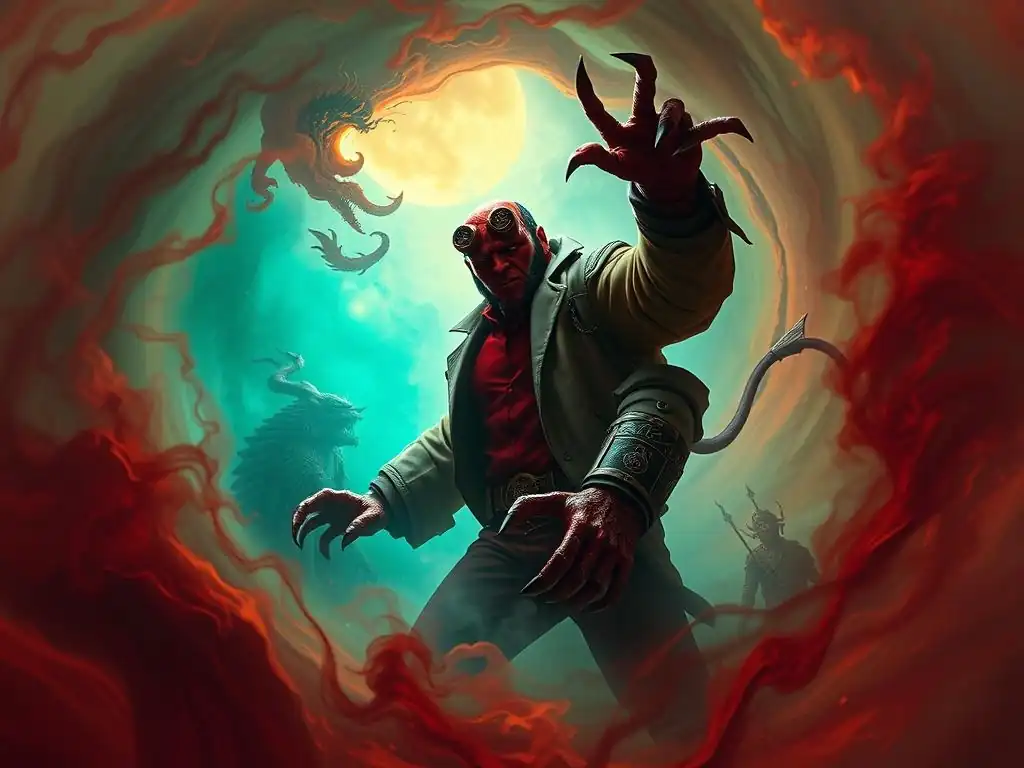
Welcome, seeker of forgotten lore.
Delve into the captivating realm where ancient tales intertwine with modern narratives. Are you ready to explore the threads that connect Hellboy's demon-hunting adventures to the rich tapestry of global folklore myths? Uncover the legendary creatures and forgotten deities lurking within his stories, and discover how these age-old narratives continue to shape our world. Prepare to be amazed – the journey begins now...
Hellboy's Journey Through Asian Myths and Legends
Hellboy's extensive travels have taken him far beyond the familiar landscapes of Europe, leading him into the rich and complex mythologies of Asia. These encounters showcase the incredible breadth of Mike Mignola's universe, demonstrating how Hellboy global folklore myths intersect to create unique challenges and narratives. From ancient spirits haunting remote islands to monstrous entities lurking in bustling cities, Hellboy's adventures in Asia highlight the diversity and depth of the region's mythological traditions.
These storylines often delve into concepts fundamentally different from Western folklore, exploring themes of karma, spiritual balance, and the intricate relationships between humans, spirits, and the natural world. Hellboy's perspective as an outsider, an American demon hunter navigating these ancient beliefs, provides a fascinating lens through which readers can explore these complex systems. His interactions with Asian entities, whether benevolent or malevolent, add significant layers to his character and the overarching narrative of Hellboy global folklore myths.
Encounters with Japanese Yokai and Kami in Hellboy's Adventures
Japan's folklore is teeming with yōkai (supernatural beings) and kami (spirits or deities), and Hellboy has had his share of run-ins with them. One notable instance is the story "Heads," where Hellboy encounters a collection of bizarre, animated severed heads in a remote Japanese village. These heads are clearly inspired by various Japanese folk beliefs and the concept of tsukumogami – inanimate objects that gain sentience after existing for a hundred years. The sheer strangeness and variety of these creatures illustrate the unique visual language of Japanese folklore that Mignola expertly adapts.
Another story, "The Iron Shoes," draws directly from a Japanese folk tale about a powerful, malevolent spirit forced to wear heavy iron shoes. Hellboy's confrontation with this entity demonstrates how deeply Mignola integrates specific narrative elements and character types from these traditions. These encounters are not just random monster fights; they often reflect the underlying moral or cautionary tales present in the original yōkai stories, highlighting the pervasive influence of Hellboy global folklore myths within the comic series.
Exploring Chinese Mythology Through Hellboy's Eyes
While perhaps less frequent than his European or Japanese encounters, Hellboy has also brushed against elements inspired by Chinese mythology and folklore. The vastness of Chinese spiritual beliefs, from Taoism and Buddhism to ancient folk religions, offers a deep well of potential adversaries and allies. Stories featuring powerful ancient beings or artifacts with origins in the East often hint at connections to Chinese cosmological concepts or legendary figures, even if the direct link isn't always explicit.
The broader B.P.R.D. universe, closely tied to Hellboy global folklore myths, has explored threats that resonate with Chinese concepts of spiritual imbalance or the cyclical nature of cosmic events.
While a specific, standalone Hellboy story purely focused on classical Chinese myths might be less common, the influence appears in the background tapestry of the Mignolaverse, particularly when dealing with world-ending threats or ancient, elemental forces that have parallels in Chinese philosophy and legend. For example, the concept of powerful, elemental spirits tied to specific locations or natural forces has strong roots in both Chinese and other Asian belief systems, and Hellboy often confronts such entities.
Hellboy in Mexico: Encounters with Aztec Mythology
Though geographically located in North America, Hellboy's adventures in Mexico provide a vivid example of his encounters with pre-Columbian mythology, particularly elements inspired by Aztec and Mesoamerican beliefs. The storyline "Hellboy in Mexico" is a prime example, featuring Hellboy teaming up with a trio of luchadores (Mexican wrestlers) to battle monstrous creatures. These adversaries are drawn from the rich tapestry of Mexican folklore, which includes fascinating syncretic elements blending indigenous myths with later influences, but retains strong ties to ancient Aztec concepts.
Specific creatures encountered in this arc include variations of figures like the Camazotz, a bat-god figure found in Mayan mythology (a related Mesoamerican culture), and other terrifying beasts rooted in the region's ancient spiritual beliefs about sacrifice, the underworld, and monstrous deities. These stories showcase a vibrant and distinct set of Hellboy global folklore myths, far removed from his usual haunts. The juxtaposition of Hellboy's brute force with the colorful world of Mexican wrestling and the dark, ancient power of Aztec-inspired monsters makes for a memorable exploration of this unique cultural mythology.
- What specific global folklore myths inspired the creation of Hellboy and his adversaries?
- How does Hellboy's narrative reflect the broader themes found in global folklore myths?
- Does Hellboy's universe incorporate elements of global folklore myths that are less commonly known or explored in popular culture?
- In what ways does Hellboy's interpretation of global folklore myths differ from traditional depictions?
- How does the popularity of Hellboy contribute to a renewed interest in exploring global folklore myths among contemporary audiences?
Frequently Asked Questions
What specific global folklore myths inspired the creation of Hellboy and his adversaries?
Mike Mignola drew inspiration from numerous sources, including Arthurian legends, Slavic folklore, and Lovecraftian horror, weaving them into Hellboy's unique universe.
How does Hellboy's narrative reflect the broader themes found in global folklore myths?
Hellboy's story often explores themes of fate versus free will, a common trope in many myths. He also grapples with his own demonic heritage, echoing tales of monstrous beings with complex motivations.
Does Hellboy's universe incorporate elements of global folklore myths that are less commonly known or explored in popular culture?
Yes, Mignola frequently delves into obscure and regional folklore, such as the Baba Yaga from Slavic mythology and various lesser-known demons from different cultural traditions.
In what ways does Hellboy's interpretation of global folklore myths differ from traditional depictions?
Mignola often puts his own unique spin on mythological figures and stories. He might reimagine their motivations or blend different mythologies together to create new and compelling narratives.
How does the popularity of Hellboy contribute to a renewed interest in exploring global folklore myths among contemporary audiences?
Hellboy's success has introduced many people to elements of world mythology they might not have otherwise encountered. This can spark interest in further exploration of those myths and legends, increasing their cultural visibility.
Final Reflection: Hellboy's Enduring Legacy: A Bridge Between Worlds
Hellboy's adventures aren't just comic book escapades; they're a vibrant tapestry woven from the threads of global folklore, a testament to the enduring power of myth and the universality of human storytelling. The creatures he confronts, from the Baba Yaga to the Ogdru Jahad, aren't simply antagonists; they are reflections of our deepest fears and anxieties, refracted through the lens of diverse cultural traditions. This enduring relevance is what makes Hellboy's world so captivating and endlessly fascinating.
The impact of Hellboy's mythos extends far beyond the pages of the comic books. It has demonstrably influenced popular culture, inspiring artists, writers, and filmmakers to explore the rich tapestry of global folklore in new and exciting ways. The series' success lies in its ability to take these ancient stories and present them with a fresh, modern perspective, making them accessible to a wider audience. Monsters are real, and ghosts are real too. They live inside us, and sometimes, they win.
This quote, though not directly from the Hellboy comics, perfectly encapsulates the series' exploration of the internal monsters we all face, mirroring the external ones Hellboy battles.
Consider the monsters you face in your own life – the anxieties, the fears, the challenges that seem insurmountable. Hellboy, despite his monstrous appearance and often brutal methods, reminds us that even in the darkest corners of the world, even when facing seemingly unbeatable odds, hope and resilience can prevail. Embrace the power of myth, explore the diverse stories of our shared human experience, and find your own strength to confront the "monsters" in your life. Let Hellboy's journey inspire you to delve deeper into the rich tapestry of global folklore and discover the enduring power of storytelling.
Unleash Your Inner Myth Hunter!
Thanks for delving into the wild world of Hellboy and his encounters with global folklore! You've now gained a deeper appreciation for the rich tapestry of myths and legends woven into his adventures. Ready to explore further?
- Craft your own Hellboy-inspired creature: Let your imagination run wild and design a terrifying (or surprisingly adorable!) monster based on your favorite folklore tradition. Share your creation in the comments below – let's see what monstrous masterpieces you conjure!
- Deepen your knowledge: Research a specific myth or legend mentioned in the article and uncover its historical context and cultural significance.
- Share the article: Introduce a friend to the exciting world of Hellboy and global mythology.
So, what legendary creature from your own cultural background would you pit against Hellboy, and why?