
Secrets of the Scribes: Pro Digital Art Tips for Mythological Scenes

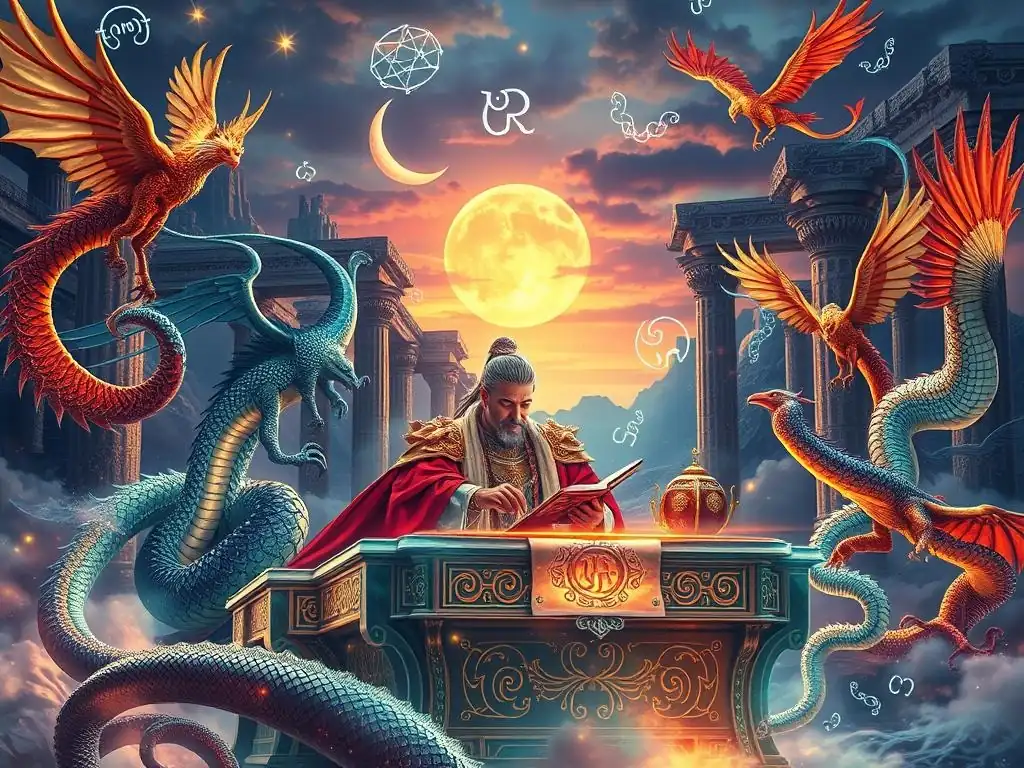
Welcome, seeker of ancient echoes!
Delve into the vibrant tapestry of "Mythology and Legends," where we unravel the timeless stories that shape our world. Ever wondered how to bring these epic tales to life through art? This week, we unveil the Secrets of the Scribes with our spotlight on digital art mythology tutorials. Prepare to unlock the techniques to craft breathtaking mythological scenes, transforming legends into captivating visual narratives. Are you ready to wield the digital brush and breathe new life into the gods and heroes of old? Let the journey begin...
- Secrets of the Brush: Pro Digital Art Tips for Norse Mythology Scenes
- Unleash Your Inner Viking: Digital Art Tutorials for Beginners to Advanced
- Step-by-Step: Creating a Stunning Digital Art Norse Mythology Scene
- Advanced Digital Art Techniques for Norse Mythology Illustration
- Monetizing Your Digital Art Norse Mythology Skills
- Conclusion: Embracing the Power of Digital Art to Bring Norse Mythology to Life
-
Frequently Asked Questions
- How can I improve my understanding of mythology to create more accurate digital art?
- What digital art techniques are best for depicting fantastical creatures from mythology?
- Are there any specific color palettes that are traditionally associated with mythological themes?
- Where can I find inspiration for composing dynamic and engaging mythological scenes in digital art?
- What are some common pitfalls to avoid when creating digital art based on mythology?
- Final Reflection: Unveiling the Gods Through Pixels
- Unleash Your Inner Mythmaker: Bring Your Legends to Life!
Secrets of the Brush: Pro Digital Art Tips for Norse Mythology Scenes
Unleash Your Inner Viking: Digital Art Tutorials for Beginners to Advanced
Transforming Viking Sagas: Why Digital Art is Perfect for Norse Illustration
Norse mythology, rich with epic tales of gods, giants, and mythical creatures, provides a fertile ground for artistic expression. Digital art offers unparalleled flexibility and power for bringing these ancient sagas to life. Unlike traditional media, digital tools allow for non-destructive editing, easy experimentation with colors and compositions, and the ability to quickly iterate on ideas.
This is particularly valuable when tackling complex scenes involving multiple characters, intricate armor, or sweeping landscapes like the frozen realms of Niflheim or the majestic halls of Valhalla. Mastering digital art mythology tutorials opens up a world of creative possibilities, enabling artists to depict everything from Thor's thunderous battles to the subtle magic of Freya.
Furthermore, digital art streamlines the process of creating finished pieces, making it easier for artists to share their interpretations of Norse myths. Features like layers, blending modes, and digital brushes that can mimic traditional textures allow for a depth and complexity that might be time-consuming or difficult to achieve otherwise.
The ability to easily correct mistakes, adjust lighting after the fact, or even completely change a character's pose saves significant time and encourages bold creative choices. For anyone looking to illustrate the dramatic narratives and vibrant characters of the Viking world, exploring digital art mythology tutorials is an essential step.
Essential Digital Art Tools for Bringing Norse Mythology to Life
Choosing the right tools is fundamental for any digital artist, and for Norse mythology illustration, certain software and hardware stand out. Software like Clip Studio Paint is highly popular, known for its robust brush engine, excellent line-art capabilities, and powerful perspective tools, making it ideal for intricate details on armor or architectural elements like longhouses. It offers a one-time purchase option, making it a cost-effective long-term investment for many artists delving into digital art mythology projects.
Alternatively, Corel Painter excels at emulating traditional media textures, which can be perfect for rendering rough fabrics, weathered wood, or the feel of ancient stone found in Norse settings. For hardware, pen displays like those in the XP-Pen Artist series provide a direct drawing experience on screen at a more accessible price point compared to some industry leaders, offering a good balance of features and value.
For artists prioritizing portability and a seamless workflow, the iPad Pro with Apple Pencil is a powerful combination, allowing sketching and painting on the go, perfect for capturing fleeting inspirations for a scene set in Midgard or Asgard.
Step-by-Step: Creating a Stunning Digital Art Norse Mythology Scene
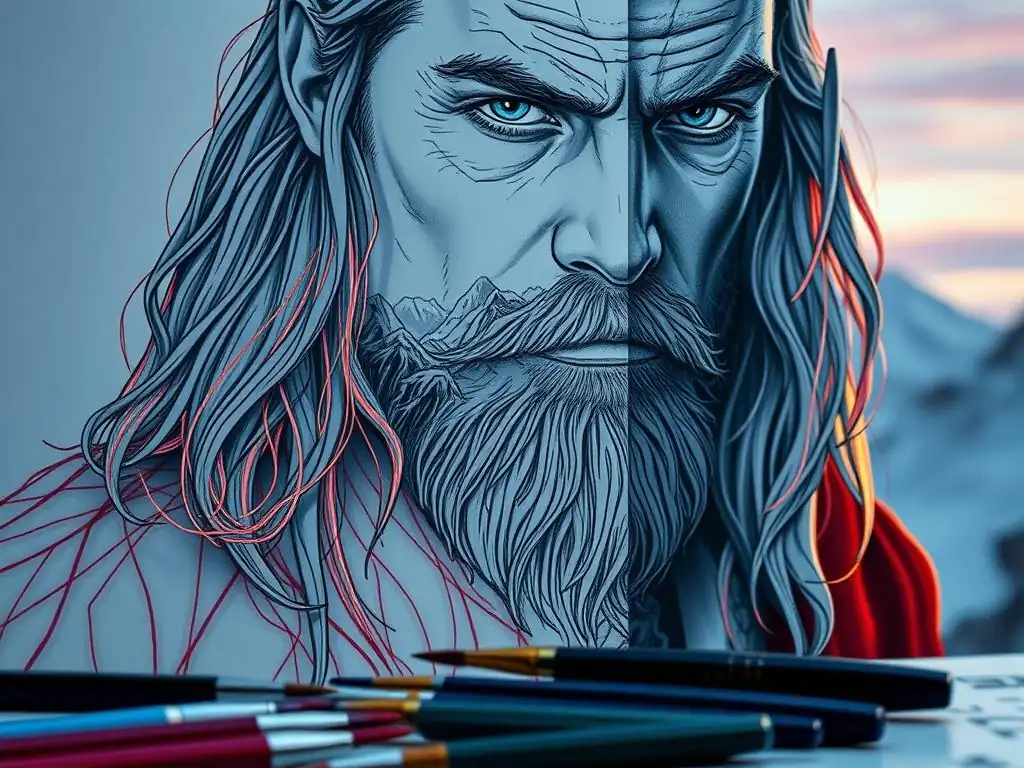
Phase 1: Concept & Sketching - Laying the Foundation for Your Masterpiece
Researching Your Myth: Understanding the Lore and Visual Cues
Before lifting your digital stylus, a deep dive into the specific myth you wish to illustrate is crucial. Understanding the nuances of characters like Odin, Loki, or the Valkyries, the appearance of creatures like Fenrir or Jörmungandr, and the settings like Yggdrasil or Bifrost ensures accuracy and authenticity in your artwork.
Relying on established resources, even modern retellings like Neil Gaiman's "Norse Mythology," can provide a compelling narrative framework and visual cues to spark ideas. For historical context on clothing, weapons, and ships, resources like The Viking Answer Lady website offer valuable, detailed information that grounds your fantastical elements in some reality.
Accurate representation not only respects the source material but also resonates more deeply with viewers familiar with the lore. For instance, depicting Thor with his hammer Mjölnir is expected, but understanding specific details about the hammer's origin or powers, or the traditional depictions of his appearance (often red-haired and bearded), adds layers of authenticity. Researching the typical flora and fauna of Scandinavia during the Viking Age can also inform your environmental design, making even mythical landscapes feel more grounded and believable within the context of the sagas.
Sketching Techniques: From Thumbnails to Refined Line Art
The initial sketching phase is where the core idea takes shape. Starting with small, quick thumbnail sketches is an effective way to explore various compositions and camera angles for your scene without committing too much time to any single idea. These rough sketches, perhaps just 2-3 inches wide, help you decide on the overall layout, character placement, and flow of the image. You might sketch dozens of these before finding the one that best captures the drama or mood of the myth.
Once a promising thumbnail is selected, you move to a more refined sketch. This involves blocking out major forms, establishing proportions for characters and elements, and refining the composition. Using digital pencils in software like Clip Studio Paint, which offer various line weights and textures, allows for expressive and dynamic linework. For artists preferring a more traditional feel, Corel Painter's RealBristle brushes can mimic the look and feel of actual pencils or charcoal, providing a naturalistic sketching experience digitally. This refined sketch serves as the blueprint for the subsequent stages of painting.
Phase 2: Color & Lighting - Adding Depth and Atmosphere
Choosing Your Color Palette: Evoking the Mood of Your Myth
Color is a powerful tool for setting the mood and atmosphere of your Norse mythology scene. The harsh, cold environments often associated with the Norse world might call for a palette dominated by blues, grays, and whites, perhaps punctuated by warm reds or oranges representing fire or battle. Referencing historical Viking Age artifacts, such as preserved textiles or painted wood carvings, can offer insights into the colors available and used during that period, providing a unique source of inspiration beyond typical fantasy tropes.
Applying color theory principles, like using complementary colors to create contrast and visual interest (e.g., placing a warm, fiery element against a cool, icy background), helps ensure your palette is harmonious and impactful. Tools like Adobe Color allow artists to explore different color schemes, generate palettes based on specific moods or themes, and ensure color accessibility. A well-chosen palette not only makes your artwork visually appealing but also reinforces the narrative and emotional core of the myth you are depicting.
Lighting Techniques: Creating Dramatic Effects
Lighting is essential for defining form, creating depth, and adding drama to your digital art. Understanding basic principles of light and shadow – how light interacts with different surfaces, the difference between hard and soft shadows, and how ambient light affects a scene – is fundamental. For a scene depicting a battle under a stormy sky, dramatic, harsh lighting with strong contrasts might be appropriate, while a scene set in a mystical forest might benefit from soft, dappled light filtering through trees.
Digital art software provides powerful tools for manipulating light. Using different layer blending modes in Clip Studio Paint, such as 'Overlay', 'Screen', or 'Multiply', allows you to easily add highlights, shadows, and atmospheric effects non-destructively. For instance, painting highlights on a separate layer set to 'Screen' can make them glow, while painting shadows on a 'Multiply' layer darkens the base color realistically. Experimenting with light sources – whether it's the sun, a fire, or magical energy – can dramatically change the look and feel of your artwork, guiding the viewer's eye and enhancing the narrative.
Phase 3: Detailing & Rendering - Polishing Your Artwork
Texture Creation: Adding Realism and Visual Interest
Adding textures is key to making digital art feel tangible and visually rich. In Norse mythology scenes, textures like weathered wood on a longship, rough-spun wool clothing, intricate metalwork on weapons and armor, or the coarse fur of a mythical beast add layers of realism and visual interest. While you can paint textures manually, using custom brushes designed for specific textures in software like Clip Studio Paint or Corel Painter can significantly speed up the process.
Many artists utilize texture packs, available from marketplaces like ArtStation, which provide high-resolution images or brush sets specifically created for adding realism to digital paintings. These can include brushes that simulate fabric weaves, stone surfaces, wood grain, or even atmospheric effects like mist or snow. Applying textures subtly, varying their opacity and blending mode, prevents them from looking repetitive or artificial, helping to bring the world of the Norse myths to life with believable detail.
Rendering Techniques: Bringing Your Characters to Life
Rendering is the process of refining your artwork, adding subtle shading, highlights, and details to make characters and objects appear three-dimensional and polished. This involves careful attention to how light and shadow fall on forms, defining muscles, folds in cloth, and the glint of metal. Using blending modes in Clip Studio Paint, similar to the lighting phase, allows you to build up realistic shading and highlights layer by layer, adjusting intensity and color as needed.
Applying subtle filters can also enhance the overall polish of your piece. While overuse of filters should be avoided, a slight sharpening filter can make details pop, or a subtle color correction filter can unify the palette. Techniques like painting subsurface scattering on skin or adding rim lighting to separate characters from the background further enhance the realism and visual impact. This phase is where the hours of sketching and painting come together to create a finished, compelling piece of digital art mythology.
Advanced Digital Art Techniques for Norse Mythology Illustration
Mastering Perspective and Composition in Mythological Art
Using Perspective Grids: Creating Depth and Realism
Creating believable environments, whether it's the vast plains of Vanaheim or the cramped interior of a dwarf forge, requires a solid understanding of perspective. Perspective grids are invaluable tools for establishing accurate spatial relationships and creating a sense of depth. Digital art software like Clip Studio Paint includes built-in perspective rulers that allow you to set up one-point, two-point, or three-point perspective grids, or even complex radial and curve perspectives.
Drawing along these guides ensures that structures, objects, and even characters diminish correctly in size as they recede into the distance. This is particularly useful for depicting large-scale scenes, like a battle unfolding across a wide landscape or the towering scale of Jötunheim. Using perspective tools consistently throughout your sketching and rendering process contributes significantly to the overall realism and immersion of your digital art mythology scene.
Compositional Techniques: Guiding the Viewer's Eye
Composition is how you arrange the elements within your artwork to create a visually appealing and effective image. It's about guiding the viewer's eye through the scene and emphasizing the key focal points, whether it's the hero mid-battle or a mystical artifact. Principles like the rule of thirds, where important elements are placed along lines or intersections dividing the image into a 3x3 grid, often lead to more dynamic and engaging compositions than simply centering everything.
Other techniques include using leading lines (roads, rivers, or even implied lines formed by character gazes) to direct the eye, balancing positive and negative space, and using framing elements within the scene. For a Norse mythology piece, you might frame a character within a doorway of a longhouse or use the branches of Yggdrasil to draw the eye towards a central figure. Effective composition ensures that your powerful rendering and detailed textures are presented in a way that tells the story clearly and captivates the viewer.
Creating Dynamic Poses and Anatomy for Mythological Figures
Studying Anatomy: Understanding the Human Form
Mythological figures, whether gods, heroes, or giants, are often based on or interact with the human form. A strong understanding of anatomy is crucial for creating believable and dynamic characters, even when they possess superhuman strength or unusual proportions. Studying anatomical references, such as books like "Anatomy: A Complete Guide for Artists" by Giovanni Civardi or online resources like Line of Action which provides figure drawing references, helps artists understand muscle structure, skeletal forms, and how the body moves.
Even fantastical creatures often have anatomical underpinnings derived from real animals or distorted human forms. Knowing the basic structure allows you to convincingly exaggerate or alter anatomy for mythological beings while maintaining a sense of physical integrity. This foundational knowledge is indispensable for any artist serious about creating compelling figures in their digital art mythology illustrations.
Posing Techniques: Bringing Your Characters to Life
Once you understand anatomy, posing becomes about expressing action, emotion, and personality. A dynamic pose can convey strength, vulnerability, tension, or grace. For action-packed Norse myths, creating poses that suggest movement, force, and impact is key. This might involve using contrapposto, depicting characters in mid-swing, or showing the strain on muscles during a feat of strength.
Many digital artists utilize 3D modeling software or poseable 3D models as a reference base for their character sketches. Programs allow you to pose a basic figure model from any angle, providing a solid foundation for perspective and anatomy before you begin sketching your character's specific features and clothing over it. This can be a significant time-saver and accuracy booster when tackling complex or foreshortened poses in your digital art mythology projects.
Monetizing Your Digital Art Norse Mythology Skills
Selling Prints and Merchandise: Sharing Your Art with the World
Once you've created compelling digital art of Norse mythology, there are various avenues to share it and potentially earn income. Selling prints of your work is a popular option. Print-on-demand (POD) services like Printful or Teespring handle the production, shipping, and even integrate with e-commerce platforms, allowing artists to sell prints, posters, and other merchandise like apparel or mugs featuring their artwork without managing inventory themselves.
These platforms typically allow artists to set their own retail price above the base cost, with the artist receiving a percentage of the profit, often ranging from 10% to 30% or more depending on the product and platform. Setting up a shop on a POD service is relatively straightforward, allowing artists to focus on creating more digital art mythology pieces while the service handles the logistics of getting the art into customers' hands.
Creating Digital Art Norse Mythology Tutorials: Sharing Your Knowledge
If you've developed expertise in creating digital art mythology, sharing your knowledge can also be a fulfilling and profitable path. Creating and selling online courses or individual tutorials allows you to teach others the techniques you've mastered. Platforms like Domestika or Teachable provide the infrastructure for hosting video lessons, written materials, and interacting with students.
Building a reputation through free content on social media or YouTube can drive interest in your paid offerings. Pricing for online courses can vary widely, from $20 for a short tutorial to $200 or more for a comprehensive course covering multiple techniques and projects. Sharing your unique approach to digital art mythology tutorials not only helps others but also establishes you as an authority in the field.
Commissioned Art: Creating Custom Pieces for Clients
Creating custom digital art pieces for clients is another direct way to monetize your skills. Clients might seek illustrations for books, games, personal collections, or gifts, often requesting specific characters or scenes from Norse mythology. Building a strong portfolio showcasing your best work is essential for attracting clients. Platforms like ArtStation or Behance serve as professional online galleries where artists can display their artwork to a wide audience of potential clients and employers.
Finding clients can involve actively promoting your work on social media, participating in online art communities, or listing your services on freelance marketplaces. Platforms like Dribbble or Guru connect artists with clients seeking creative services, though competition can be high. Pricing for commissions is often based on factors like complexity, size, usage rights, and the artist's experience, potentially ranging from a few hundred to several thousand dollars per piece for detailed illustrations.
Conclusion: Embracing the Power of Digital Art to Bring Norse Mythology to Life
Continuing Your Learning Journey: Resources and Inspiration
The journey of mastering digital art, particularly for a rich and complex subject like Norse mythology, is continuous. The digital art landscape is constantly evolving, with new software updates, techniques, and hardware emerging regularly. Staying inspired is key; immerse yourself in the mythology itself, study the work of other artists who interpret myths, and explore various digital art mythology tutorials covering different styles and approaches.
Utilizing online communities, forums, and social media can provide valuable feedback, support, and exposure to new ideas. Many artists share their processes and tips, offering informal learning opportunities. Regularly challenging yourself with new projects, perhaps illustrating a lesser-known myth or depicting a familiar scene from a unique perspective, keeps your skills sharp and your creativity flowing.
The Future of Digital Art in Mythology: Trends and Opportunities
The intersection of digital art and mythology is a dynamic space with exciting trends and opportunities. Technologies like virtual reality (VR) and augmented reality (AR) are opening new possibilities for creating immersive mythological experiences. Artists are experimenting with interactive digital art that allows viewers to explore mythical landscapes or characters in 3D space.
Furthermore, the growing popularity of fantasy media across film, television, and video games ensures a continued demand for compelling mythological artwork. Digital art is at the forefront of concept design and production art for these industries. For artists passionate about Norse mythology and skilled in digital tools, the future holds significant potential for creating impactful, engaging, and perhaps even interactive interpretations of these timeless tales. Continued learning through digital art mythology tutorials and practice will be the key to unlocking these opportunities.
Frequently Asked Questions
How can I improve my understanding of mythology to create more accurate digital art?
To create accurate mythological art, focus on researching the specific culture and stories you're depicting. Use resources like Mythology and Legends to verify details and avoid misinterpretations.
What digital art techniques are best for depicting fantastical creatures from mythology?
Experiment with layering techniques and digital painting brushes to achieve realistic textures for creatures like griffins or dragons. Study anatomy references, even if fantastical, for a believable final result.
Are there any specific color palettes that are traditionally associated with mythological themes?
While not universally strict, earthy tones and rich jewel tones are often used to evoke a sense of history and magic. Research the specific culture's symbolism to inform your color choices.
Where can I find inspiration for composing dynamic and engaging mythological scenes in digital art?
Look at classical paintings and sculptures depicting mythological events for inspiration on composition and posing. Don't be afraid to adapt these historical references to your unique style.
What are some common pitfalls to avoid when creating digital art based on mythology?
Avoid cultural appropriation by thoroughly researching the context and meaning behind the myths. Also, ensure your depictions are respectful and accurate, avoiding harmful stereotypes.
Final Reflection: Unveiling the Gods Through Pixels
The digital realm has become a modern-day Olympus, where artists wield tablets and styluses to breathe life into mythological narratives. This exploration into the secrets of creating compelling digital mythological art reveals a powerful synergy between ancient stories and contemporary technology. The techniques discussed—from mastering dynamic posing to utilizing atmospheric perspective—aren't just tools; they're keys to unlocking the emotional depth and visual power inherent in these timeless tales.
The enduring appeal of mythology lies in its ability to reflect our own hopes, fears, and aspirations. By engaging with these narratives through digital art, we not only reinterpret ancient myths but also create new avenues for self-expression and cultural dialogue. Myth is the secret history of the world.
- Joseph Campbell. This quote resonates deeply, as the act of digitally recreating these myths allows us to engage with their enduring power in a fresh and accessible way, shaping our own understanding of the human condition.
Now, it's your turn. Consider the mythological figures that resonate most with you. What stories do you want to tell? What techniques from this article can you adapt to bring your own unique vision to life? Pick up your stylus, embrace the power of digital creation, and let your imagination weave its own tapestry of gods, goddesses, and epic tales. The world awaits your digital masterpieces.
Unleash Your Inner Mythmaker: Bring Your Legends to Life!
Thanks for diving into the world of digital mythological art! We hope you’ve picked up some powerful techniques to elevate your creations. Ready to put your newfound knowledge into practice?
- Craft your own mythical masterpiece: Choose your favorite creature or scene from the article and start sketching! Let your imagination run wild and see what unique twist you can add. This is your chance to truly own the techniques you've learned.
- Share your progress (or finished artwork!): Post your work on social media using #MythologyAndLegendsArt and tag us – we'd love to see your artistic journey! Let's inspire each other.
- Explore our other articles: Delve deeper into the world of digital art techniques and mythological inspirations. Many more creative avenues await!
What mythical being or scene is calling to you next? Let's hear your ideas in the comments!