The Blurred Lines: Navigating Fact, Fiction, and Online Myths
🧠 Explore how online folklore myth debunking strategies help distinguish fact from fiction, revealing the influence of global myths and legends on…
Read article
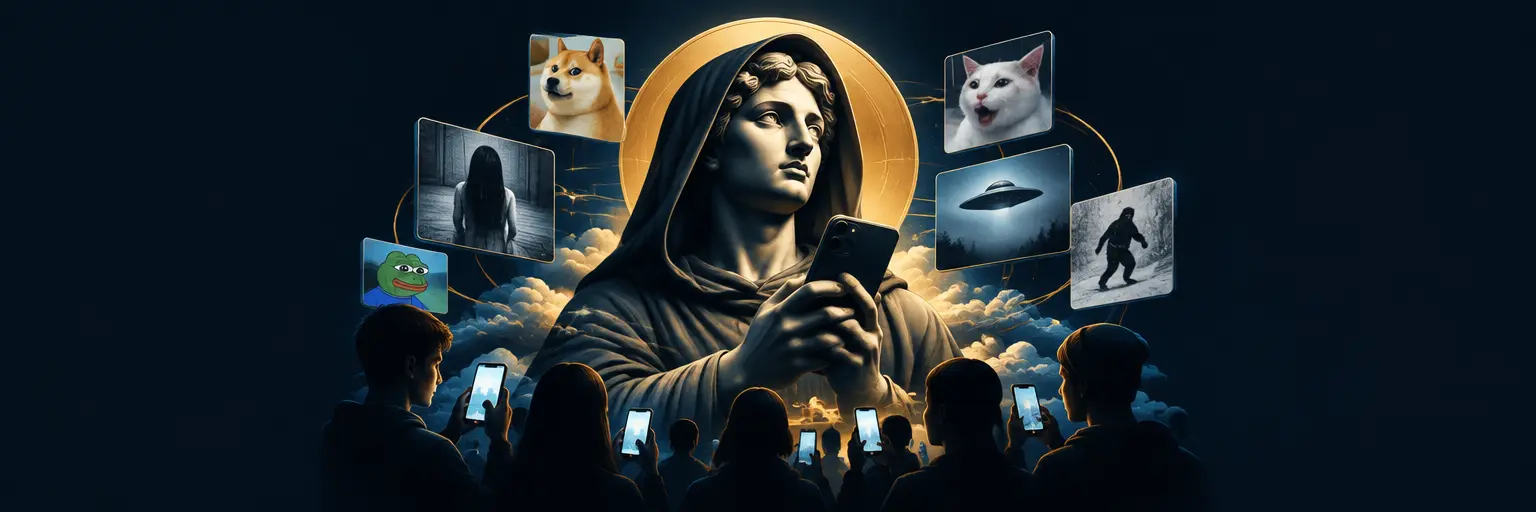
From viral tweets to deep-fried memes, the internet has become the new campfire where modern myths are born, mutated, and immortalized. In this digital era, folklore no longer waits for generations—it evolves in real-time through hashtags, remixes, and shared inside jokes. Urban legends now spread as creepypasta, while ironic characters like *Pepe the Frog* or *Slenderman* morph into bona fide mythological figures with their own origin stories, rituals, and taboos. Meme culture acts as a collective storytelling engine, where absurdity meets sincerity, and anonymous users collectively craft heroes, villains, and cautionary tales. From “The Backrooms” to “NPC Wojak,” these modern myths reflect our anxieties about technology, isolation, and identity—just as ancient fables mirrored their societies. By analyzing the life cycle of a meme—creation, mutation, virality, and canonization—we uncover a living, breathing mythology that challenges the line between fiction and shared belief. Here, the audience isn’t passive; they are co-authors, remixing symbols and narratives at lightning speed.

🧠 Explore how online folklore myth debunking strategies help distinguish fact from fiction, revealing the influence of global myths and legends on…
Read article
🌐 Dive into the intriguing world of online reality simulation theories, questioning whether our digital lives are mere legends or genuine experiences,…
Read article
🕵️♀️ Dive into the mysterious realm of Deep Web folklore narratives, uncovering chilling stories and legends lurking beneath the surface of the…
Read articleWelcome to the digital crossroads where ancient storytelling meets the viral speed of the modern web. This subcategory delves into how urban legends, folklore motifs, and mythological archetypes are reborn, twisted, and amplified through memes, social media threads, and participatory internet culture. Here, we decode how a screenshot, a hashtag, or a looping video can evolve into a living myth—complete with its own origin story, moral lessons, and devoted believers. Expect a blend of media studies, cultural anthropology, and digital forensics as we trace the lifecycles of contemporary legends.
Every meme that spreads like wildfire shares structural DNA with classic myths: a simple, emotionally charged narrative, a relatable hero or villain, and a twist that invites retelling. We explore how platforms like Twitter, TikTok, and Reddit become digital campfires where users remix, exaggerate, and embellish stories in real time. The "chupacabra of the feed" might be a cryptid photo, but its mythic power comes from collective belief and iterative tweaking—each share adds a new layer of folklore.
This section also examines the psychological hooks behind virality, such as the fear of missing out, schadenfreude, or the sheer absurdity that makes content quotable. You’ll learn how algorithmic amplification mimics oral tradition’s selectivity—only the most resonant mutations survive. By analyzing case studies like "Slender Man" or "The Backrooms," we show how a single image can spawn a sprawling mythology with its own lore, rules, and even real-world consequences, proving that digital mythmaking is no less serious than its ancient counterpart.
Creepypasta—short horror stories shared on forums—has become the foundation for modern urban legends. Unlike traditional tales passed down by elders, these narratives are authored anonymously and openly invite sequels, alternate endings, and fan art. We dissect how characters like "Jeff the Killer" or "Smile Dog" transition from niche internet jokes to recognized figures in pop culture, sometimes even crossing into mainstream media and academic study.
Here, you’ll find a glossary of terms like canon, headcanon, and fanon, and how these concepts blur the line between creator and audience. The section highlights the collaborative nature of modern mythmaking—where every comment section can propose a new “truth” about a legend. We also compare this process to how ancient Hindu or Greek epics accumulated variations over centuries, showing that digital co-authorship is a high-speed echo of oral tradition’s fluidity. Expect practical tips on identifying the "ur-text" of a meme and tracking its mutation across subreddits and Discord servers.
Beneath the humor, many viral memes encode moral lessons about digital citizenship, trust, and risk. For instance, the "Karen" meme serves as a contemporary fable about entitlement and social norms, while "scam baiting" stories warn against naivety in a hyperconnected world. We analyze how internet folklore functions as a safety net—teaching users to avoid phishing, cryptid-like strangers, or toxic communities through cautionary tales masked as entertainment.
This part of the subcategory also explores the role of "deepfake" and AI-generated content in creating new myths about identity and reality. The "This Person Does Not Exist" phenomenon, for example, has spawned urban legends about AI doppelgangers stalking users. By mapping these moral frameworks, we show how memes aren’t just jokes—they’re social glue that reinforces group boundaries and shared values, much like the didactic fables of Aesop or the parables of various religious traditions. You’ll leave with a toolkit to decode any meme’s underlying ethical message.
Internet culture is inherently global, and memes frequently hybridize myths from different cultures, creating new syncretic legends. A Japanese yokai might be merged with a Scandinavian troll to birth a novel internet creature. We look at how cultural appropriation, translation errors, and deliberate mashups lead to unexpected mythological evolutions. For example, the "Momo Challenge" blended Japanese doll aesthetics with Western panic, sparking a global moral panic—a modern witch hunt built on digital hearsay.
This section offers a case study of how K-pop fan communities adopt and modify mythic tropes to defend their idols, turning celebrities into demi-gods with creation stories and protective rituals. Similarly, we examine how Latin American "Leyendas" find new life as viral TikTok videos, preserving old stories while updating their settings to urban apartments and smartphones. By understanding these remixes, you’ll grasp how the internet acts as a global folklore engine, breaking down geographic barriers while also creating new forms of cultural friction and exchange.
Myths once relied on oral recording; today, they depend on screenshots, share counts, and internet archives. This H3 discusses how we preserve these fleeting digital legends for future scholars. Tools like the Internet Archive’s Wayback Machine and Know Your Meme function as modern-day mythographers, cataloging origins and variations. But challenges arise: broken links, deleted accounts, and the vaporization of viral moments complicate the archival process.
We explore how “folk archives”—curated subreddits and Discord servers—attempt to timestamp evolving stories, sometimes creating their own mythology around "lost" memes. You’ll also learn about the ethics of preserving harmful myths, like those that incite violence, versus academic duty. This section provides practical guidance for creators and researchers wanting to document internet folklore responsibly, including how to cite a Reddit thread as a primary source and how to distinguish between authentic memetic lineage and deliberate disinformation. The digital realm is fleeting, but our mythic impulse endures—and archiving is our new bardic tradition.
A meme becomes a myth when it accumulates a narrative depth and emotional resonance that outlives its initial viral spike. It acquires origin stories, recurring characters, and moral interpretations that users collectively believe in and expand upon. Unlike a fleeting joke, a mythic meme gains a "lore" that invites reinterpretation—think Slender Man’s backstory or the Backrooms’ levels. The key is sustained communal engagement that treats the meme as a quasi-sacred or cautionary tale, not just a punchline.
The core functions are similar—teaching lessons, building community, encoding fears—but the reflexivity and speed differ. Traditional folklore often evolves over generations with anonymous contributors; internet myths mutate in days, and creators are sometimes identifiable (though often pseudonymous). Moreover, digital myths are heavily influenced by algorithms and platform economics, which can accelerate or suppress certain narratives. Yet both rely on oral-style repetition, variation, and collective belief, making them structurally analogous.
Absolutely. The Momo Challenge and Blue Whale Challenge are prime examples where viral warnings, though largely debunked, sparked moral panics and, in rare cases, stimulated copycat behavior. Similarly, "Slender Man" inspired a real stabbing attempt. Digital folklore, like any mythology, can be weaponized—whether for hoaxes, harassment, or inciting fear. This is why critical media literacy is essential: mythmakers online aren’t always benign, and separating fiction from risk is crucial.
Start with archival sites like Know Your Meme, Reddit’s r/creepypasta, and the Wayback Machine to find earliest known instances. Reverse image search or Google Trends can help date appearance spikes. Then cross-reference with social media timestamps and community discussions about “original” posts. Keep in mind that many myths are deliberately obfuscated—some originators delete their traces. For rigorous research, treat each variation as a text and map its mutations, much like a folklorist would trace a fairy tale’s variants across regions.
No—they symbiotically expand it. Internet myths often borrow and modernize ancient archetypes, ensuring their survival in new forms. Traditional myths still thrive in books, films, and festivals, while digital folklore adds a participatory layer. In many ways, the internet is just the latest medium for an age-old human behavior. As new platforms emerge, the core need to tell stories that explain uncertainty and foster belonging will persist, blending the ancient with the hyper-modern seamlessly.