
The Mythic Warrior: Examining Iconic Fighters from Legend in Cinema


Welcome, seeker of ancient tales!
Prepare to journey beyond the veil of reality and into the realms of Mythology and Legends. Are you captivated by the clash of steel, the roar of battle, and the indomitable spirit of legendary heroes? Then delve into our exploration of epic cinematic warrior legends! Discover how these timeless figures, born from myth and folklore, continue to inspire and resonate on the silver screen. What makes these warriors so enduring? Let's begin...
- Introduction: Exploring the World of Renowned Culinary Artists
- From Kitchen to Screen: Adapting Culinary Journeys for Film and Television
-
Iconic Culinary Figures: A Comparative Analysis
- Julia Child (Julie & Julia): The Joy of French Cooking and American Inspiration
- Auguste Escoffier (The Godfather Part III): The Master of French Cuisine and Kitchen Brigade
- Ferran Adrià (El Bulli: Cooking in Progress): The Pioneer of Molecular Gastronomy
- Jiro Ono (Jiro Dreams of Sushi): The Pursuit of Perfection in Sushi Craftsmanship
- Massimo Bottura (Chef's Table): The Art of Transforming Culinary Tradition
- Common Threads: Themes and Tropes in Culinary Narratives
- The Impact of Culinary Legends on Modern Cuisine
- Conclusion: The Enduring Legacy of Culinary Alchemists
-
Frequently Asked Questions
- What makes a cinematic warrior legend "epic"?
- How does cinema adapt traditional warrior legends from mythology?
- What role does folklore play in shaping the cinematic portrayal of warriors?
- What are some examples of iconic cinematic warrior legends rooted in mythology?
- How have "Epic cinematic warrior legends" influenced modern society?
- Final Reflection: Echoes of the Mythic Warrior in Modern Cinema
- Unleash Your Inner Warrior: Dive Deeper into Legendary Combat!
Introduction: Exploring the World of Renowned Culinary Artists
The Enduring Appeal of Chef Biographies and Culinary Documentaries
The fascination with food extends far beyond the plate; it encompasses the stories of those who create it. Chef biographies and culinary documentaries capture this public interest, offering windows into the demanding, creative, and often eccentric lives of culinary masters. These narratives resonate because they blend artistry with relatable human struggles – the pursuit of perfection, the challenges of the kitchen environment, and the sheer passion required to excel.
The rise of food-centric media has turned chefs into cultural icons, making their personal and professional journeys compelling subjects for film and television. Audiences are drawn to the transformative process, witnessing raw ingredients become extraordinary dishes, mirroring a form of alchemy that captivates the imagination.
This enduring appeal is reflected in viewership numbers and book sales. For instance, shows like Chef's Table on Netflix have garnered significant global audiences, with episodes focusing on individual chefs becoming widely discussed cultural touchpoints. Similarly, books detailing chefs' lives or culinary philosophies consistently feature on bestseller lists.
The 2009 film Julie & Julia, which intertwined blogger Julie Powell's attempt to cook every recipe in Julia Child's cookbook with a biographical look at Child, grossed over $129 million worldwide, demonstrating the commercial viability and broad interest in culinary narratives centered on real-life figures. This trend highlights a deep-seated curiosity about the personalities behind the food and the dedication required to reach the pinnacle of the culinary world.
Defining the "Culinary Alchemist" Archetype in the Modern Kitchen
The term "culinary alchemist" describes a chef who transcends mere cooking, transforming ingredients through innovation, technique, and vision to create something truly magical and often unexpected. This archetype embodies not just technical skill but also a profound understanding of flavors, textures, and the emotional impact of food. A culinary alchemist pushes boundaries, challenging traditional norms and experimenting fearlessly. They are often seen as innovators, artists who use the kitchen as their laboratory and the plate as their canvas. Their work goes beyond sustenance, aiming to evoke memory, provoke thought, and deliver a unique sensory experience.
This concept of the culinary alchemist is exemplified by chefs who have significantly altered the landscape of gastronomy. Think of Ferran Adrià deconstructing traditional dishes at El Bulli, or Massimo Bottura reinterpreting classic Italian flavors with modern sensibilities. These figures don't just follow recipes; they invent new culinary languages. Their influence permeates the modern kitchen, inspiring a new generation of chefs to explore uncharted territory. Understanding this archetype helps us appreciate the revolutionary impact certain individuals have had on how we perceive, prepare, and consume food, turning simple ingredients into gold through skill, creativity, and relentless dedication.
From Kitchen to Screen: Adapting Culinary Journeys for Film and Television
Challenges and Triumphs in Cinematic Culinary Portrayals
Translating the sensory experience of cooking and eating to the screen presents unique challenges. Film and television rely primarily on sight and sound, while cooking is fundamentally about taste, smell, and texture. Capturing the aroma of a simmering sauce or the nuanced flavor profile of a complex dish is impossible through visuals alone.
Filmmakers must find creative ways to convey these elements, often relying on close-ups of sizzling pans, vibrant ingredient colors, and evocative sound design – the crackle of searing meat, the gentle pour of a liquid, the rhythmic chop of a knife. Conveying the feeling of food, the comfort of a home-cooked meal, or the excitement of a groundbreaking dish, requires skillful direction and performance.
Despite these hurdles, cinematic culinary portrayals achieve significant triumphs. They can build compelling character arcs around the chef's journey, showcasing their passion, struggles, and eventual mastery. The visual medium excels at depicting the artistry and precision involved in high-level cooking, turning the preparation process itself into a form of performance.
Documentaries like Jiro Dreams of Sushi successfully convey the dedication and philosophy behind a chef's craft, making the abstract concept of perfection tangible through observing meticulous actions. Fictional narratives, like Chef, use food preparation montages to not only showcase skill but also build emotional connections, demonstrating how cooking can be an expression of love, creativity, or self-discovery. The screen becomes a powerful tool for exploring the human element of gastronomy.
Authenticity vs. Dramatic License in Culinary Narratives
A key tension in cinematic culinary narratives is balancing authenticity with dramatic license. Documentaries often strive for high authenticity, showing real techniques, kitchen environments, and the actual pace of work. Films like El Bulli: Cooking in Progress offer an almost vérité look at the creative process, prioritizing factual representation over manufactured drama. This authenticity can educate viewers about specific culinary practices, ingredients, and the realities of kitchen life, including the long hours and intense pressure. For example, observing Jiro Ono's precise movements in his documentary provides a genuine insight into the discipline of traditional sushi-making.
However, dramatic narratives frequently employ license to enhance storytelling. Kitchen chaos might be exaggerated for tension, timelines compressed for pacing, or specific techniques simplified or romanticized for broader audience appeal. A film focusing on a chef might invent conflicts or relationships to create a more engaging plot, even if they didn't exist in reality.
While this can make the story more compelling, it risks misrepresenting the actual culinary world or the chef's true story. The success lies in finding a balance where dramatic elements serve to illuminate, rather than distort, the core truths about the chef's passion, challenges, and culinary philosophy, ensuring the narrative remains anchored in a recognizable reality of kitchen life.
Iconic Culinary Figures: A Comparative Analysis

Julia Child (Julie & Julia): The Joy of French Cooking and American Inspiration
Julia Child's Passion for Food and Unconventional Approach
Julia Child brought French cuisine to the American home kitchen with infectious enthusiasm and a remarkably unconventional approach for her time. Born in California in 1912, her culinary journey began relatively late, after moving to France with her husband. She enrolled at Le Cordon Bleu and later co-authored Mastering the Art of French Cooking, published in 1961.
What set Child apart was her belief that complex French cooking could be demystified and made accessible to the average American cook. Her television show, The French Chef, which debuted in 1963, showcased her lively personality, practical tips, and willingness to embrace imperfections, famously dropping a turkey on air but recovering with humor. She wasn't afraid to use butter, cream, and traditional techniques, advocating for quality ingredients and the pleasure of cooking and eating.
Her passion was palpable and transformative for American culinary habits. Before Child, French cooking was often seen as intimidating and reserved for professional chefs or the elite. Child broke down these barriers, encouraging experimentation and confidence in the kitchen. She emphasized understanding why a technique works, not just following steps blindly.
This educational approach, combined with her charismatic on-screen presence, made her a beloved figure. Her impact was profound; she inspired countless home cooks to attempt dishes like Boeuf Bourguignon or Coq au Vin, expanding their culinary horizons and fostering a greater appreciation for food and cooking as a joyful activity. Her legacy is one of empowerment and demystification in the kitchen.
The Portrayal of Child's Determination and Culinary Philosophy
The film Julie & Julia (2009) effectively portrays Julia Child's unwavering determination and her foundational culinary philosophy. Meryl Streep's portrayal captures Child's larger-than-life personality, her distinctive voice, and her deep-seated passion for food. The film shows Child's persistence in learning French cooking, her collaborative writing process for Mastering the Art of French Cooking, and her efforts to get the massive cookbook published.
It highlights her resilience in the face of setbacks and her commitment to her goal of teaching Americans how to cook French food. The narrative emphasizes that her success wasn't overnight but a result of years of hard work, study, and an unyielding belief in the value of her project.
Furthermore, the movie subtly illustrates Child's culinary philosophy – that cooking should be enjoyable, liberating, and achievable for everyone. Scenes depict her genuine pleasure in preparing food, her pragmatic approach to potential kitchen mishaps, and her emphasis on the importance of good taste and technique over fussy presentation.
The film contrasts her adventurous, joyful approach with the sometimes-anxious perspective of the modern blogger, Julie Powell, highlighting how Child's fundamental message was about embracing the process and finding joy in the kitchen. This portrayal cemented Child's image as not just a chef, but a culinary icon who changed how a nation cooked and thought about food.
Auguste Escoffier (The Godfather Part III): The Master of French Cuisine and Kitchen Brigade
Escoffier's Innovations in Culinary Organization and Technique
Georges Auguste Escoffier (1846–1935) is widely regarded as the father of modern French cuisine and the architect of the modern kitchen structure. Working during the late 19th and early 20th centuries, a period of rapid growth in grand hotels and restaurants, Escoffier revolutionized kitchen operations. His most significant innovation was the "brigade de cuisine" system, a hierarchical structure that organized kitchen staff into specialized stations (e.g., saucier, poissonier, rôtisseur). This system dramatically improved efficiency, consistency, and workflow in large kitchens, a model still used globally today. Before Escoffier, kitchens were often chaotic environments with poorly defined roles.
Beyond organization, Escoffier simplified and refined Antonin Carême's elaborate haute cuisine, moving away from excessive garnishes and focusing on the essence of ingredients and perfect technique. He codified classic French sauces into five "mother sauces" (Béchamel, Velouté, Espagnole, Hollandaise, Tomate), from which countless others could be derived, standardizing French culinary practice. His cookbooks, notably Le Guide Culinaire (1903), remain foundational texts for chefs worldwide, containing thousands of recipes and techniques. Escoffier's focus on hygiene, seasonality (though limited by the era), and service elevated dining to a refined experience, shaping the standards of fine dining for over a century.
Cinematic Depictions of Escoffier's Influence on Fine Dining
While Auguste Escoffier himself is rarely the central figure in a film, his pervasive influence on fine dining is often referenced or subtly present in cinematic depictions of high-end restaurants. One notable, albeit brief, mention occurs in Francis Ford Coppola's The Godfather Part III (1990).
During a scene set in a luxurious hotel restaurant, a character explicitly references Escoffier when discussing the quality and tradition of the cuisine, highlighting his status as the benchmark for classical French cooking and sophisticated dining. This reference, though fleeting, serves to immediately establish the restaurant's pedigree and adherence to the highest culinary standards of the time, linking it directly back to Escoffier's legacy.
Cinematic portrayals of classic, opulent dining rooms and meticulous kitchen operations in historical dramas or films about the upper class often implicitly showcase Escoffier's impact. The organized chaos and specialized roles seen in the kitchen brigades depicted on screen, or the formal structure of multi-course menus served in elegant settings, are direct descendants of his work at establishments like the Savoy or Carlton hotels.
Films aiming to represent the zenith of traditional European gastronomy inevitably draw upon the standards, techniques, and organizational principles that Escoffier championed, even if his name isn't explicitly spoken, solidifying his role as the silent architect of cinematic fine dining.
Ferran Adrià (El Bulli: Cooking in Progress): The Pioneer of Molecular Gastronomy
Adrià's Experimental Approach and Deconstruction of Cuisine
Ferran Adrià, the chef behind the legendary restaurant El Bulli in Roses, Spain, is a pivotal figure in the culinary world, often credited with pioneering the widespread adoption of molecular gastronomy techniques. Rather than simply cooking food, Adrià and his team spent half the year in a workshop environment, intensely researching and developing new concepts. His approach was deeply experimental, treating the kitchen as a laboratory.
He famously deconstructed traditional dishes, separating their components and reassembling them in surprising forms – think olive oil caviar or spheres that burst with liquid flavor. This involved using scientific principles and equipment like siphons, centrifuges, and ingredients like sodium alginate and calcium chloride to create foams, gels, and spheres.
Adrià's goal was not just to cook but to provoke thought and challenge diners' expectations. He aimed to stimulate all the senses and create novel textures and temperatures that were previously impossible. El Bulli's tasting menu could feature upwards of 30 small, intricate courses, each designed to be a unique "experience."
This relentless pursuit of innovation led El Bulli to be named "World's Best Restaurant" by Restaurant magazine a record five times between 2002 and 2009. His work fundamentally changed the perception of what food could be, inspiring chefs globally to look beyond traditional methods and embrace scientific inquiry in the kitchen.
Different Interpretations of Adrià's Culinary Vision
Ferran Adrià's complex and often controversial culinary vision has been interpreted in various ways, particularly in media. The documentary El Bulli: Cooking in Progress (2011) offers perhaps the most direct and authentic portrayal. It provides an observational look at the creative process during the six months of the year when the restaurant was closed, focusing on the intense research, testing, and refinement of new dishes. This film interprets Adrià's work as a rigorous, intellectual, and highly collaborative artistic endeavor, akin to a science lab or art studio, emphasizing the dedication and sheer brainpower involved in developing his avant-garde cuisine.
Other media interpretations have sometimes focused more on the "shock value" or the perceived strangeness of molecular gastronomy, occasionally portraying it as overly scientific, inaccessible, or even gimmicky. This interpretation misses the underlying philosophy of flavor, texture, and experience that drove Adrià.
However, broader culinary shows and articles often highlight El Bulli's influence by showcasing chefs who use similar techniques but integrate them into more traditional frameworks, demonstrating how Adrià's radical experiments filtered into the mainstream, albeit in a diluted form. His vision is often seen as a catalyst that pushed the entire culinary world forward, forcing a re-evaluation of ingredients, techniques, and the very definition of a meal.
Jiro Ono (Jiro Dreams of Sushi): The Pursuit of Perfection in Sushi Craftsmanship
Ono's Dedication to Quality and Unwavering Work Ethic
Jiro Ono, the subject of the acclaimed documentary Jiro Dreams of Sushi (2011), embodies an almost spiritual dedication to the pursuit of perfection in the craft of sushi. Working from his tiny, ten-seat restaurant Sukiyabashi Jiro in Tokyo's Ginza subway station since 1965, Ono has spent over 80 years refining his skills.
His approach is characterized by an unwavering focus on quality ingredients, meticulous preparation, and a deep understanding of the subtle nuances of fish and rice. He personally selects the fish from the market each morning and supervises every step of the process, from massaging the octopus for tenderness for 45 minutes to ensuring the rice is cooked to the perfect temperature and consistency.
Ono's work ethic is legendary. He is often the first to arrive and the last to leave, constantly observing, adjusting, and seeking marginal improvements. He trains his apprentices for years, sometimes over a decade, before they are allowed to prepare certain items.
This dedication is not driven solely by business; it's a profound commitment to his craft, a lifelong quest for an unattainable ideal of perfection. He views making sushi not just as a job but as a calling, a meditative practice requiring complete focus and humility. This single-minded devotion has earned his restaurant three Michelin stars, despite its unassuming location, and a reputation as one of the best sushi establishments in the world.
The Philosophical Depth of Ono's Craft in Cinema
Jiro Dreams of Sushi beautifully captures the philosophical depth inherent in Jiro Ono's craft. The film portrays his work not just as technical skill but as a form of living philosophy centered on the concept of shokunin, a Japanese term for an artisan who has dedicated their life to their craft and strives for continuous improvement. The documentary highlights Ono's belief that one must "fall in love with their work" and devote their life to mastering a single skill. It explores themes of patience, discipline, humility, and the relentless pursuit of excellence.
The film uses quiet observation and reflective interviews to convey these ideas. It shows the repetitive nature of the work – making thousands upon thousands of sushi pieces – but frames it not as monotony, but as a path to deeper understanding and refinement.
The relationship with his son Yoshikazu, who is expected to take over the restaurant, adds another layer, exploring the transmission of knowledge and the weight of legacy. The film doesn't just show how Jiro makes sushi; it illustrates why he does it with such intensity, presenting his kitchen as a dojo where the pursuit of culinary perfection becomes a metaphor for achieving mastery and meaning in life itself.
Massimo Bottura (Chef's Table): The Art of Transforming Culinary Tradition
Bottura's Innovative Reinterpretation of Italian Cuisine
Massimo Bottura, the chef behind Osteria Francescana in Modena, Italy, is renowned for his innovative reinterpretation of classic Italian cuisine. Operating in a country with deep-seated culinary traditions, Bottura dared to challenge conventions, sometimes controversially. He takes iconic Italian dishes and deconstructs, reconstructs, or playfully modifies them, transforming familiar flavors and forms into something new and thought-provoking.
His famous dish "Oops! I Dropped the Lemon Tart" is a deliberate act of imperfection that celebrates the beauty in brokenness, while also playing with texture and acidity. Another signature, "Five Ages of Parmigiano Reggiano," showcases the region's most famous cheese in different textures and temperatures, telling a story of the ingredient's evolution.
Bottura's approach is deeply rooted in Italian history and ingredients but filtered through a modern, artistic lens. He is inspired by art, music, and philosophy as much as by traditional recipes. His cooking is a dialogue between the past and the future, respecting heritage while pushing culinary boundaries. This balance has earned Osteria Francescana three Michelin stars and the coveted title of "World's Best Restaurant" in 2016 and 2018. He has demonstrated that Italian cuisine is not static but a living, evolving entity capable of extraordinary creativity and global relevance.
His Commitment to Social Responsibility and Culinary Excellence
Beyond his innovative dishes, Massimo Bottura is equally known for his profound commitment to social responsibility, particularly through his Food for Soul project. Recognizing the immense food waste in the culinary industry, Bottura launched initiatives to transform surplus food into nutritious and delicious meals for the homeless and vulnerable populations.
His "Refettorios" around the world, often set up during major events like the Milan Expo or the Rio Olympics, bring together chefs to cook for those in need, served in beautiful, dignified settings created by artists and designers. This work highlights the power of food not just as sustenance or art, but as a tool for social change and community building.
Bottura seamlessly integrates this social mission with his pursuit of culinary excellence. He demonstrates that a chef at the highest level can also be a powerful advocate for ethical practices and social good. His appearances in media, including the first episode of Netflix's Chef's Table, often highlight this duality – showcasing both his boundary-pushing artistry in the kitchen and his compassionate work outside of it. This blend of culinary innovation and social consciousness makes Bottura a truly modern culinary alchemist, transforming not just ingredients but also societal perspectives on food waste and dignity.
Common Threads: Themes and Tropes in Culinary Narratives
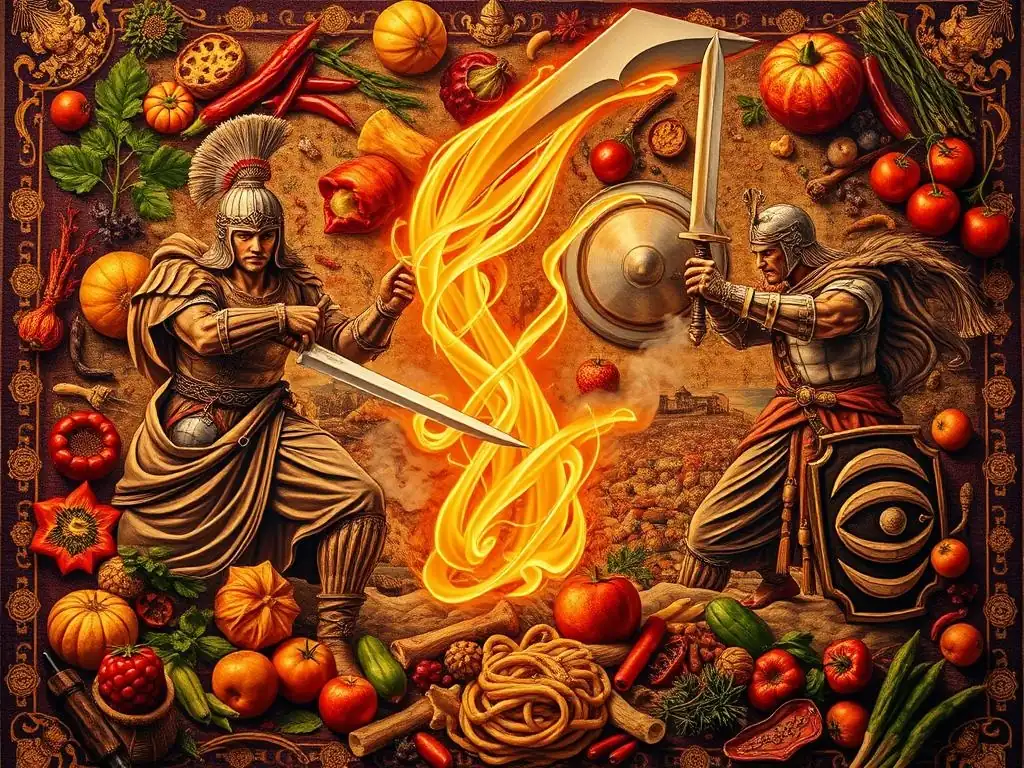
The Pursuit of Perfection: A Driving Force for Culinary Innovation
A recurring theme across cinematic culinary narratives is the relentless pursuit of perfection. Whether it's Jiro Ono striving for the ideal piece of sushi after decades of practice, Julia Child meticulously testing recipes until they are foolproof, or Ferran Adrià endlessly experimenting in his workshop, the drive to achieve an unattainable standard is a powerful motivator. This pursuit often involves countless hours of practice, rigorous testing, and an almost obsessive attention to detail. It's not just about making food that tastes good; it's about perfecting technique, elevating ingredients, and creating an experience that is flawless in its execution.
This quest for perfection is also a primary engine for culinary innovation. Chefs pushing boundaries often do so because they are dissatisfied with existing methods or results. They seek new ways to extract flavor, manipulate texture, or present dishes to get closer to their ideal vision.
Escoffier systematized kitchens to ensure consistent quality on a grand scale, while Adrià dismantled dishes to explore their fundamental elements. This constant striving, while sometimes portrayed as a source of internal conflict or external pressure, is fundamentally what drives the evolution of cuisine, leading to new techniques, dishes, and dining experiences that redefine excellence.
The Importance of Passion, Dedication, and Creativity
Underpinning the pursuit of perfection in culinary stories are the essential qualities of passion, dedication, and creativity. Every iconic cinematic chef, from Julia Child's infectious enthusiasm to Jiro Ono's quiet intensity, is depicted as being deeply passionate about food and cooking. This passion is what fuels the long hours, the physical demands, and the mental challenges of working in a kitchen. It's the intrinsic motivation that keeps them going even when faced with failure or criticism.
Dedication is equally crucial. Culinary mastery requires years, often decades, of focused effort and learning. Chefs must dedicate themselves to honing their skills, understanding ingredients, and managing complex operations. This often means sacrificing personal time and enduring significant pressure.
Finally, creativity is what distinguishes a great chef from a merely competent one. It's the ability to envision new flavor combinations, invent novel techniques, and transform familiar ingredients into something original and exciting. Cinematic narratives frequently highlight moments of creative inspiration, showcasing how chefs translate ideas, experiences, or emotions into edible art. These three traits – passion, dedication, and creativity – are consistently portrayed as the bedrock of culinary success and innovation.
The Power of Food to Connect People and Cultures
Beyond technique and artistry, culinary narratives often emphasize the fundamental power of food to connect people and cultures. Food is more than just sustenance; it's a universal language that bridges divides, evokes memories, and forms the basis of social rituals. Cinematic stories frequently show how sharing a meal can bring families together, foster community, or facilitate understanding between individuals from different backgrounds. The simple act of cooking for others or breaking bread together is portrayed as a powerful form of communication and connection.
Furthermore, food is intrinsically linked to cultural identity. Traditional dishes carry the history, values, and stories of a region or a people. Chefs like Massimo Bottura, who reinterpret Italian classics, or those who master the centuries-old art of sushi like Jiro Ono, are not just working with ingredients; they are engaging with cultural heritage.
Culinary narratives explore how chefs act as custodians and innovators of cultural traditions, sharing their heritage with the world through their cooking. The act of eating becomes an experience that connects the diner not only to the chef but also to the history and culture embedded within the dish.
The Impact of Culinary Legends on Modern Cuisine
Inspiring Chefs and Home Cooks with Tales of Innovation and Perseverance
The cinematic portrayals and biographies of culinary legends have a significant and lasting impact, serving as powerful sources of inspiration for both aspiring professional chefs and amateur home cooks. Stories like Julia Child's journey from cooking novice to television icon encourage home cooks to be bold and experiment in their own kitchens.
Her message that anyone can learn to cook well, combined with her relatable on-screen persona, demystified French cuisine and empowered a generation. The sheer perseverance shown by figures like Jiro Ono, dedicating a lifetime to perfecting a single craft, provides a compelling model of dedication and the rewards of deep specialization for professional chefs.
Furthermore, the innovative spirit of chefs like Ferran Adrià and Massimo Bottura inspires contemporary chefs to push creative boundaries. Witnessing their willingness to challenge norms, experiment with ingredients and techniques, and infuse their personality into their cooking encourages others to find their own unique voice in the kitchen.
These narratives demonstrate that culinary success is often built on a foundation of hard work, resilience in the face of failure, and an unwavering belief in one's vision. They provide tangible examples of how passion and dedication can lead to extraordinary achievements, motivating individuals at all levels to pursue their culinary goals with greater intensity and creativity.
The Enduring Influence of Culinary Masters on Contemporary Dining
The influence of culinary masters extends far beyond inspiration; it shapes the very landscape of contemporary dining. Auguste Escoffier's brigade system and standardized techniques remain foundational in professional kitchens worldwide, ensuring efficiency and consistency in restaurants from casual bistros to fine dining establishments. His codification of sauces and classic recipes continues to inform culinary education and practice globally. Even modern chefs who innovate heavily often do so from a base understanding of the classical principles Escoffier championed.
The revolutionary work of chefs like Ferran Adrià has permeated modern gastronomy, even if full-blown molecular gastronomy restaurants are less common now. Techniques like sous vide, spherification, and the use of foams or gels, once avant-garde staples at El Bulli, are now found in mainstream restaurants.
Adrià's emphasis on the dining experience as a total sensory event, including presentation, texture, and surprise, has influenced how many chefs conceptualize their menus and service. Similarly, Massimo Bottura's blend of tradition and innovation has shown that it's possible to honor culinary heritage while simultaneously reinventing it, influencing chefs globally to look at their own regional cuisines with fresh eyes and a willingness to experiment.
Examples of Modern Restaurants and Dishes Influenced by Culinary Legends
Numerous modern restaurants and specific dishes bear the clear imprint of these culinary legends. For instance, the structured organization and disciplined approach in many high-end kitchens directly reflects Escoffier's brigade system. Chefs trained in classical French techniques worldwide are inheritors of his legacy. Look at restaurants that specialize in deep-dish French cuisine; their foundations are often built on Escoffier's principles.
Ferran Adrià's influence is visible in restaurants that feature elements of molecular gastronomy, even if not exclusively. Many contemporary tasting menus incorporate foams, gels, or surprising textural components that stem from the techniques pioneered at El Bulli. Specific dishes like 'deconstructed' versions of classics or innovative uses of spherification (like balsamic vinegar spheres) are direct descendants of Adrià's work. For example, many fine dining restaurants now offer 'culinary foams' or 'airs' on dishes, a technique popularized by Adrià.
Massimo Bottura's impact is seen in chefs who creatively reimagine traditional dishes, particularly within Italian cuisine. Restaurants might offer playful, modern takes on pasta carbonara or tiramisu that echo Bottura's approach at Osteria Francescana. His social mission has also inspired chefs globally to engage in food waste reduction and community projects, extending his influence beyond the plate into ethical and social realms.
Conclusion: The Enduring Legacy of Culinary Alchemists
Why We Continue to be Fascinated by Culinary Innovation
Our fascination with culinary innovation and the figures behind it stems from several deep-seated human interests. Firstly, food is universal; everyone eats, making the subject inherently relatable. Yet, the transformation of raw ingredients into something extraordinary feels like a form of magic, tapping into our innate curiosity about creation and mastery. We are drawn to the "culinary alchemist" because they perform this transformation at the highest level, turning the mundane into the magnificent. Their stories satisfy our desire to understand how excellence is achieved, revealing the dedication, skill, and vision required.
Secondly, food is intimately connected with culture, memory, and emotion. Innovations in cuisine often reflect societal changes or challenge cultural norms, making them compelling narratives. We are fascinated by chefs who push boundaries because they are not just changing how we eat, but potentially how we think about food, tradition, and identity. Their stories offer insights into creativity, perseverance, and the pursuit of passion, themes that resonate universally. Furthermore, in an increasingly visual world, the artistry and presentation of modern cuisine are inherently captivating, making the subject matter perfect for visual storytelling and maintaining our enduring interest.
The Future of Culinary Storytelling in Film and Television
The future of culinary storytelling in film and television appears bright and is likely to continue evolving. As global cuisines become more accessible and diverse, we can expect to see narratives exploring a wider range of culinary traditions and the chefs who champion them, moving beyond predominantly Western perspectives. There will likely be a continued focus on the human stories behind the food – the struggles, triumphs, and philosophies of chefs – but perhaps with an increased emphasis on social and environmental issues within the food system, mirroring trends championed by figures like Massimo Bottura.
Technological advancements may also play a role, potentially finding new ways to convey the sensory aspects of food on screen, perhaps through more immersive techniques. We might see more experimental formats, blending documentary, drama, and even interactive elements. The rise of streaming platforms allows for niche topics to find large audiences, ensuring that detailed explorations of specific crafts, like Jiro Ono's sushi mastery, will continue to find a home. Ultimately, as long as food remains central to human life and culture, the stories of the "culinary alchemists" who transform it will continue to captivate audiences worldwide.
Frequently Asked Questions
What makes a cinematic warrior legend "epic"?
An "epic" cinematic warrior legend usually involves a grand scope, heroic feats, and a significant impact on the story's world and characters. This often includes elements of fantasy and mythology.
How does cinema adapt traditional warrior legends from mythology?
Cinema adapts traditional warrior legends by reinterpreting stories for a modern audience, often focusing on visual spectacle and emotional resonance, while sometimes taking creative liberties.
What role does folklore play in shaping the cinematic portrayal of warriors?
Folklore provides the building blocks for many warrior legends. Cinema draws upon these stories to create relatable and compelling characters and narratives, enhancing their epic quality.
What are some examples of iconic cinematic warrior legends rooted in mythology?
Examples include characters like Achilles from Troy, Hercules from various adaptations, and Beowulf, all drawing inspiration from ancient mythological tales of warrior prowess.
How have "Epic cinematic warrior legends" influenced modern society?
These legends often influence modern society by shaping our understanding of courage, honor, and sacrifice, and by serving as inspiration for art, literature, and other forms of media.
Final Reflection: Echoes of the Mythic Warrior in Modern Cinema
The enduring power of the mythic warrior archetype resonates deeply within our collective consciousness, shaping not only our cinematic landscapes but also our understanding of heroism, sacrifice, and the human condition. These iconic figures, born from legend and forged in the fires of storytelling, continue to inspire awe and ignite debate, proving their relevance far beyond the silver screen. Their struggles mirror our own, their triumphs offer hope, and their flaws remind us of our shared humanity.
The exploration of these legendary warriors across various cinematic interpretations has revealed a fascinating evolution of the archetype. Their journeys, though often fantastical, reflect our ongoing societal grappling with themes of justice, power, and the cost of conflict. The hero is someone who has given his or her life to something bigger than oneself.
This quote, though not directly about cinematic warriors, perfectly encapsulates the selflessness and dedication often displayed by these iconic figures, a quality that continues to inspire audiences and shape our cultural understanding of heroism. The impact of these characters extends beyond mere entertainment; they serve as powerful metaphors for our own internal battles and aspirations.
Consider the echoes of these mythic warriors in your own life. Who are the heroes you admire? What qualities do they possess that resonate with you?
Take a moment to reflect on the power of narrative and the enduring legacy of these cinematic legends. Let their stories inspire you to confront your own challenges with courage, to strive for justice, and to find your own path towards becoming a hero in your own life. The journey of the mythic warrior is not just a story on screen; it's a reflection of the human spirit, a journey we all, in our own way, undertake.
Unleash Your Inner Warrior: Dive Deeper into Legendary Combat!
Thanks for exploring the world of mythic warriors with us! We hope you've gained a new appreciation for the enduring power of these iconic figures. Ready to take your understanding further?
- Craft your own legendary warrior: Describe your ideal fighter, drawing inspiration from the legends we explored. What makes them unique? What are their strengths and weaknesses? Share your creation in the comments below!
- Delve into the source material: Research the myths and legends that inspired these cinematic heroes. You might be surprised by what you uncover!
- Share your favorite cinematic warrior: Which on-screen fighter resonates most with you and why? Let's spark a discussion in the comments.
What legendary warrior inspires you to overcome challenges and strive for greatness?